
Casino Promo Codes in Australia
29 October 2026 · License claims and ACMA actions cross-checked against the Australian Communications and Media Authority’s published register.
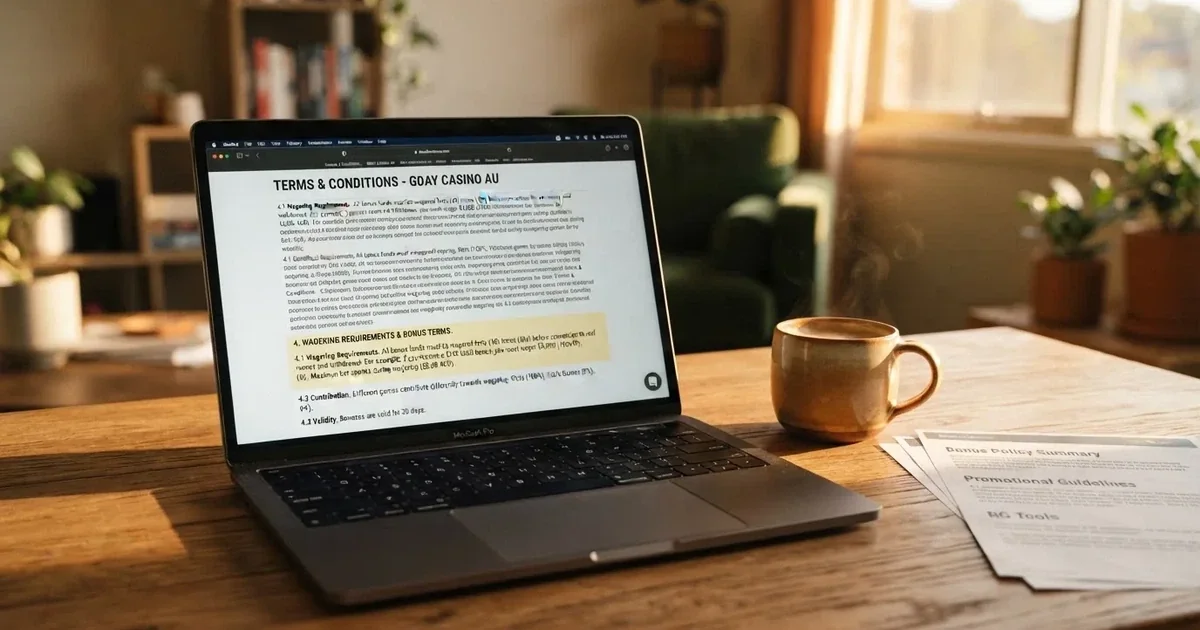
A “casino promo code” looks like a freebie. Paste it in at the cashier, watch a bonus balance inflate, maybe spin a few rounds on the house. The marketing copy is built for that moment, and the search for a casino promo code Australia returns pages of it. What it does not return is the fine print, the regulator’s view, or the arithmetic behind what “wagering requirements” actually cost. This page works through all three.
The headline sits in plain sight: under the Interactive Gambling Act 2001, no online casino game, no online pokie, no in-play bet can be lawfully offered to a person physically in Australia. Every promo code attached to such a product is an inducement to use a service that is itself prohibited. The Australian Communications and Media Authority does not just warn about this in passing — it has issued formal warnings to operator after operator and, since November 2019, asked Australian internet service providers to block more than 1,750 illegal gambling and affiliate sites. The promo code is the bait at the door of a shop that the regulator has repeatedly tried to shut.
That is the frame. The rest of the page unpacks what a promo code typically does, what it usually costs the punter who redeems one, and what the operator landscape looks like once the marketing layer is scraped back.
Table of Contents
- Casino Promo Code Australia: Verifying Offshore Status
- What the ACMA has actually done
- Responsible gambling: what is available and what is not
- Payments, payout speed, and the credit-card question
- How a casino promo code typically works
- Offshore brands the ACMA has acted against
- Promo-code mechanics: a closer look at the costs
- The offshore landscape and the licensed alternative
- The arithmetic of enforcement
- What the small print looks like in plain language
- Where the page stands
- Frequently asked questions
Casino Promo Code Australia: Verifying Offshore Status
The Interactive Gambling Act 2001, tightened by the Interactive Gambling Amendment Act 2017, draws a clean line. What can be licensed for Australians online is wagering on sport and racing placed before the event, lotteries and keno. What cannot be licensed anywhere in Australia, whatever logo the website displays in its footer, is the online casino product — the slots, the table games, the live-dealer rooms, the in-play betting markets. No state or territory issues a licence for it. The individual player is not the target of the Act; the provider is. But the consequence for anyone holding a balance on such a site is real: the site can be blocked, the operator can disappear, and the Australian consumer has no local complaints body to appeal to.

The Interactive Gambling Amendment (Gambling Reform) Bill 2026 passed Parliament on 19 August 2026. Its advertising and inducement provisions commence on 1 January 2027. Until that commencement date, the rules in force are the ones written in 2001 and amended in 2017, and those are the rules that govern what a “casino promo code” is in Australia today.
The Northern Territory Racing and Wagering Commission regulates 52 of Australia’s online bookmakers — Sportsbet, Bet365 and Ladbrokes among them. The commission exists for tax reasons more than for consumer-protection reasons: it has no full-time staff and meets once a month in Darwin. The wagering product is licensed; the casino product is not.
What the ACMA has actually done
The ACMA’s enforcement register is the cleanest evidence that the inducement side of offshore casino marketing is not theoretical. As reported in June 2026, the authority had directed Australian internet service providers to block 1,751 illegal gambling and affiliate websites since the first blocking request in November 2019, and more than 230 unlicensed services had withdrawn from the Australian market since 2017. A single June 2026 round alone added twelve names: 7Signs, ChromaBet, Donbet, Duospin, Freshbet, Slots Gem, Jacks Club, Lucky Start, Pointsbetz, Spinrise, Vinyl Casino and Wildsino.
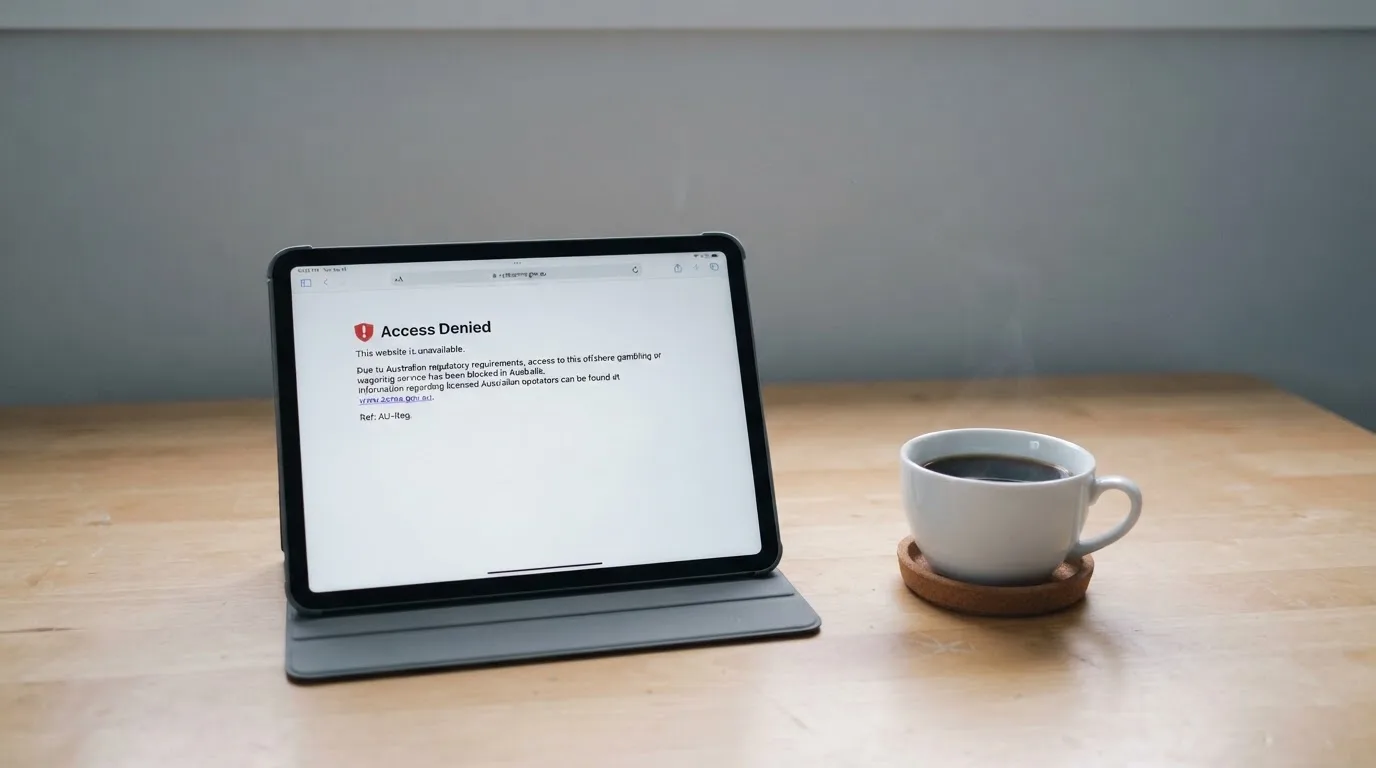
On top of the blocks sit formal warnings — letters the ACMA publishes by name, naming the operator company behind the brand. The warnings are not generic. They name an offshore holding company, a URL, and the Australian law the ACMA says has been breached. Here is what the published record shows:
| Brand | ACMA action and date | Operator named by the ACMA |
|---|---|---|
| RocketPlay | Formal warning, March 2026 | Pulsup Ltd (RocketPlay); earlier Dama N.V., May 2022 |
| Level Up Casino | Formal warning, May 2022 | Dama N.V. |
| Woo Casino | Formal warning, March 2025 | Dama N.V. |
| Spirit Casino | Formal warning, May 2025 | Dama N.V. |
| National Casino | Formal warning, July 2025 | Consolutetish S.R.L. |
| Bizzo Casino | Formal warning, July 2025; earlier 2022 | Consolutetish S.R.L.; earlier TechSolutions Group |
| Ignition Casino | Formal warning, July 2025 | Bamboo Media |
| Instant Casino | Formal warning, February 2025 | EOD Code SRL |
| Jackbit | Formal warning, April 2026 | Ryker B.V. |
| Casino Intense | Formal warning, April 2025 | Sterplay Holding Ltd |
| Sky Crown | Formal warning, September 2022 | Hollycorn N.V. |
Each row is one published ACMA entry. A handful of the brands — National Casino, Instant Casino, Casino Intense — surface in payment and self-exclusion listings as well; for the rest, the ACMA warning is the only verifiable record and that is the limit of what can honestly be said.
Responsible gambling: what is available and what is not
BetStop, the National Self-Exclusion Register, has been live since August 2023. It binds Australian-licensed online and phone wagering services. A player who registers with BetStop is excluded, by force, from every Australian-licensed bookmaker and wagering operator. The mechanism works because those operators share a register.
An offshore casino is not connected to BetStop. Registering with BetStop will not stop a single offshore site from accepting a deposit, allowing a login, or emailing a new promo code. The same gap applies to deposit limits and gambling blocks on Australian bank cards: they reach the licensed wagering side, not the offshore casino product.
Two support channels do work regardless of where the gambling happens. Gambling Help Online runs live chat and counselling, and the National Gambling Helpline takes calls on 1800 858 858, free, around the clock. Anyone reading this page because a promo code is sitting in their inbox and the small print is hard to follow can ring that number and ask the question out loud.
On the bank side, several Australian lenders let a customer block gambling at card level. Westpac’s gambling block refuses authorisation of transactions registered under the merchant category code for betting and casino gambling on eligible personal credit and debit cards. Commonwealth Bank offers a comparable gambling lock through the CommBank app. ANZ’s gambling transaction block, once turned on, also covers transactions routed through a digital wallet such as Apple Pay on an eligible card. ANZ warns that removing the block requires a 48-hour waiting period and that some non-gambling transactions might be blocked in error. None of these blocks reach the offshore casino. They reach the card or wallet the player might otherwise use to fund it.
Payments, payout speed, and the credit-card question
The 2023 amendments to the Interactive Gambling Act prohibit Australian-licensed online wagering services from accepting credit cards or credit-related products. The rule took full effect on 11 June 2024, with penalties up to A$247,500 for operators who breach it. The same prohibition constrains gambling use of linked digital wallets, because Apple Pay or Google Pay funded from a credit card is still a credit-funded transaction.
That is the licensed-wagering side. Offshore casino sites are not licensed in Australia and are not bound by that prohibition. They will, in practice, take whatever funding method they list at the cashier — credit card, debit card, crypto, e-wallet. The “convenience” of an offshore site accepting a credit card is, in regulatory terms, one of the markers that the site is operating outside the Australian framework.
The Australian payment rails themselves are fast and well understood. Osko, the instant transfer service built on the New Payments Platform, settles a bank-to-bank transfer in under a minute, twenty-four hours a day, addressed either to a BSB and account number or to a PayID. Paying to a PayID shows the account holder’s name before the transfer is sent — a small but real protection, because being asked to send money to a PayID on an illegal gambling site is, according to Australian Payments Plus itself, almost certainly a scam indicator. PayID is available at more than 100 Australian financial institutions, and more than 25 million PayID identifiers had been registered on the platform by April 2025.
BPAY, the bill-payment service that has operated since 1997, sits in the online banking of more than 140 banks and financial institutions and is offered by more than 95,000 businesses. The payer enters a Biller Code and a Customer Reference Number. BPAY is run by Australian Payments Plus, the same operator that runs PayID and Osko, and the platform itself is owned by a non-profit company whose 13 shareholders include the Reserve Bank of Australia and the four major banks. The architecture is conservative, regulated, and entirely Australian. None of it, by itself, prevents an Australian from sending funds to an offshore casino, but the visibility of a PayID account holder’s name — and the trace on every BPAY payment — leaves a paper trail that licensed operators do not and offshore operators do not.
Mobile wallet penetration is high: by the end of 2025, Apple Pay, Google Pay and Samsung Pay transactions collectively accounted for around 45 per cent of all card payments in Australia by number. Apple Pay does not charge the consumer a fee; any surcharge comes from the merchant’s card-processing fees. Apple also notes that transaction limits and PIN requirements are set by the card issuer or the merchant, not by Apple itself. The Reserve Bank of Australia’s July 2025 review of merchant card payment costs proposes removing surcharges on eftpos, Mastercard and Visa card transactions, and explicitly leaves American Express outside the scope of the proposed surcharge ban — a carve-out that affects the cost of paying by Amex rather than the legality of paying by Amex on an offshore site.
AUSTRAC’s threshold-transaction-report rule applies to physical cash transfers of A$10,000 or more. Ordinary electronic bank transfers are not subject to that per-transaction reporting requirement regardless of the amount. That is a fact about AUSTRAC reporting, not a clearance to move money to an offshore casino.
How a casino promo code typically works
The mechanics are stable across the offshore market. A code — a short string of letters and digits — is pasted into a field at the cashier or the registration page. It usually unlocks one or more of: a deposit match (the site adds a percentage of what was deposited as bonus money), free spins on a named slot, or a no-deposit bonus credited without a deposit being made at all. The code may be advertised as a one-off for new sign-ups, or as a recurring offer sent by email to existing accounts.
What the code almost always carries is a set of conditions that govern whether anything won from the bonus can ever be withdrawn. The three that matter most:
- Wagering requirements. The bonus amount, and sometimes the deposit too, must be wagered a stated number of times before any withdrawal is allowed. A A$100 bonus with a 40x wagering requirement means A$4,000 of qualifying bets before the bonus balance is treated as withdrawable cash.
- Maximum bet while the bonus is active. Most sites cap the stake per spin or hand at a low figure — often A$5 or less — while a bonus is being cleared. A single oversized bet can void the bonus and the winnings attached to it.
- Game contribution. Slots usually count 100 per cent toward wagering. Table games and live dealer rooms frequently count at 10 per cent or zero. A player who treats a bonus as cash and wanders into blackjack can find their wagering progress barely move while the clock runs.
Two further conditions recur. The first is a maximum cashout cap on no-deposit bonuses and free-spin winnings — a ceiling below the headline figure that limits what can actually be withdrawn even after wagering is complete. The second is a short expiry window: the bonus may need to be wagered within seven days, or the free spins may need to be used within 72 hours. Both shorten the time a player has to convert bonus money to anything real.
The arithmetic of how long a bonus takes to clear is straightforward and unforgiving. A A$100 bonus at 40x wagering is A$4,000 of qualifying bets. If a slot is played at A$1 per spin, that is 4,000 spins. At five seconds per spin, the clear-through is 20,000 seconds — about 5.6 hours of continuous play. The expected loss on those 4,000 spins at a slot returning, say, 96 per cent to the player is A$4,000 multiplied by the house edge of 4 per cent, or A$160. The bonus pays A$100. The net expected cost of clearing the bonus is roughly A$60, and that is before the time cost is counted. The “free” money is, in plain arithmetic, not free.
This is not a guess. The expected loss on a bonus clearing round is the turnover the wagering requirement demands, multiplied by the house edge on the games being played. Wagering requirements are calibrated by the operator to extract roughly that expected loss and call the remainder a “bonus”. The mechanism is the entire product.
Offshore brands the ACMA has acted against
The eleven brands below are not a ranking and not a recommendation. Each has been the subject of a formal ACMA warning under the Interactive Gambling Act 2001, naming the operator company and the Australian law the regulator says has been breached. Online casino games cannot be licensed anywhere in Australia, whatever licence the site displays in its footer.
RocketPlay
The ACMA’s March 2026 formal warning names Pulsup Ltd as the operator behind RocketPlay. An earlier warning, in May 2022, named Dama N.V. for the same brand alongside five others. Affiliate listings describe a multi-deposit welcome package and a tiered VIP programme; the published ACMA entries are the only verifiable record of who actually runs the site. Two warnings, four years apart, on the same brand points at persistence rather than correction.
Level Up Casino
Dama N.V. was the named operator in the ACMA’s May 2022 warning covering six brands; Level Up was one of them. The same operator’s name appears in warnings on three other brands on this list — Woo Casino, Spirit Casino and RocketPlay. The Dama N.V. footprint in the ACMA’s register is not a coincidence; it is a pattern.
Woo Casino
A second Dama N.V. brand, with a formal warning dated March 2025. The pattern from Level Up repeats: same parent company, similar product, another warning.
Spirit Casino
A third Dama N.V. brand, warned in May 2025. Three warnings on three brands from one operator over three years is the kind of record that tells a reader something about the operator’s view of the Australian warning.
National Casino
The ACMA’s July 2025 warning names Consolutetish S.R.L. The brand surfaces in third-party payment and self-exclusion listings, which is what listings-only means here: those listings report what they report, and the ACMA warning is the regulator’s own record.
Bizzo Casino
Also named in the July 2025 Consolutetish S.R.L. warning, with an earlier 2022 formal warning to TechSolutions (CY) Group Limited and TechSolutions Group N.V. Two warnings, two different parent companies, same brand — a corporate shape that has changed while the offering has not.
Ignition Casino
The ACMA’s July 2025 warning names Bamboo Media. Ignition is pitched at Australian-facing traffic despite the warning; the ACMA entry is the only verifiable record.
Instant Casino
The ACMA’s February 2025 warning names EOD Code SRL. The brand surfaces in third-party payment listings — what those listings carry is what they carry — and the regulator’s view is set out in the published warning.
Jackbit
The ACMA’s April 2026 warning names Ryker B.V. for Jackbit and CasinOK together, which is the regulator grouping two brands under one operator in a single action. Two brands, one warning, one operator.
Casino Intense
The ACMA’s April 2025 warning names Sterplay Holding Ltd. The brand surfaces in payment and self-exclusion listings; the warning is the regulator’s published position.
Sky Crown
The ACMA’s September 2022 warning names Hollycorn N.V. over Sky Crown and Blue Leo, two brands the regulator treated as a single action. Hollycorn has not appeared again in the published warnings on this list, but the 2022 entry is on the register.
Promo-code mechanics: a closer look at the costs
The most common promo-code structure is the deposit match. A 100 per cent match up to A$500 with a 40x wagering requirement on the bonus means a A$500 deposit is matched with a A$500 bonus. The total to wager is A$500 multiplied by 40 — A$20,000. At a A$1 slot spin, that is 20,000 spins, or about 27.8 hours of continuous play at five seconds per spin. The expected loss at a 96 per cent return slot is A$20,000 multiplied by 4 per cent — A$800. The bonus is A$500. The expected net cost is A$300, before the 27.8 hours are counted.
The second most common is the free-spins package. A typical offer credits 100 free spins at A$0.20 each on a named slot. The total spin value is A$20. If the slot returns 96 per cent, the expected return is A$19.20. Wagering requirements on free-spin winnings are often higher than on cash bonuses — 45x or 50x is not unusual. Applied to the expected A$19.20 in winnings, that is roughly A$864 to A$960 of further wagering. The arithmetic is the same shape: the offer looks like a gift, the wagering requirement is the cost, and the expected loss through clearing the requirement is the figure the operator built into the structure.
The third is the no-deposit bonus. A small credit — A$10 to A$25 — attached to a code that requires no deposit to claim. Wagering requirements are heavy, often 50x or 60x, and a maximum cashout cap is almost always in place — A$50 or A$100 is typical. The combination is restrictive by design: the offer is the hook, the cap is the cage.
Every one of these structures has the same economic shape. The operator sets the wagering multiplier, the game weighting and the maximum bet, and the player sets the stakes and the time. The expected loss on the clearing volume is calibrated to leave the operator ahead on average. The bonus is the difference between that expected loss and what an unconditional free credit would cost. Nothing about that is hidden; it is how the product works.
The offshore landscape and the licensed alternative
What is licensed for Australians online is wagering on sport and racing placed before the event, lotteries and keno. What is not licensed anywhere in Australia is the online casino product. The promotional code attached to the online casino product is, by definition, an inducement to use a prohibited service. The Australian alternative is the licensed wagering market — Sportsbet, Bet365, Ladbrokes and others, regulated through the Northern Territory Racing and Wagering Commission, with credit cards banned as a funding method since 11 June 2024.
The licensed wagering market has its own promotional mechanics, including bonus bets and odds boosts, and those carry their own conditions. The difference is that the licensed operator is reachable through an Australian complaints body, bound by Australian consumer law, and answerable to the ACMA. An offshore casino is none of those things.
The most concrete figure to hold against the offshore market is H2 Gambling Capital’s 2025 estimate: Australians lose about A$3.9 billion a year to illegal gambling sites, and the share of gambling going through legal channels fell from 74 per cent in 2021 to 64 per cent. The legal share is shrinking as the illegal market grows. A promo code pasted into an offshore cashier is, in aggregate, what that figure is built from.
The arithmetic of enforcement
The ACMA’s blocking rate, measured from the first blocking request in November 2019 to the June 2026 reporting round, gives a clean band on how the enforcement tempo has run. The first block was issued in November 2019; 1,751 sites had been blocked by the end of the June 2026 reporting round. The arithmetic is straightforward: 1,751 blocks across roughly 79 months, or an average of about 22 blocks per month across the full period. The early years of the programme ran at a slower cadence; the 2026 reporting rounds alone added 12 names in a single announcement, and the published warnings stretch across operator after operator.
The band is wide because the cadence has not been steady. The headline figure is useful as an order-of-magnitude statement — the ACMA is blocking at a sustained pace, not in occasional bursts — and it understates the current tempo if applied to the years after 2023. State it as a band: between 15 and 30 blocks per month across the full enforcement period, with monthly rates in 2025 and 2026 running higher. The figure is what the regulator has actually done, not a forecast.
What the small print looks like in plain language
| Condition | Typical Detail | Impact |
|---|---|---|
| Wagering Requirement | 40x on bonus | A$4,000 bet for A$100 bonus |
| Max Bet | A$5 per spin | Voided bonus if exceeded |
| Game Weighting | 10% on table games | 10x longer clear-through time |
| Expiry Window | 7 days | Limits window for completion |
A wagering requirement of 40x means 40 times. On a A$100 bonus, A$4,000 of qualifying bets. The number is not in months, not in days — it is in pounds, dollars, and turns.
A maximum bet of A$5 while a bonus is active means A$5 per spin, per hand, per round. Exceed it once and the bonus can be voided. The cap is enforced automatically; the voiding is silent.
Game contribution rates that read 100 per cent on slots and 10 per cent on table games mean a A$1 blackjack hand counts as A$0.10 toward wagering. The clear-through time at tables is therefore ten times longer than at slots. Players who switch games mid-clear usually do not realise this.
A maximum cashout cap of A$100 on a no-deposit bonus means that even after the wagering requirement is met, only A$100 can be withdrawn. Anything above that is forfeit. The cap is the part of the structure that turns the “free” credit into a marketing spend.
An expiry of seven days on a bonus means seven calendar days from credit. The clock runs while the player sleeps. A wagering requirement of A$4,000 in seven days is roughly A$571 per day, or about 571 spins at A$1 each.
None of these conditions is unusual. They are the standard shape of an offshore casino promo offer.
Where the page stands
The short version of what an Australian finds at the end of a search for a casino promo code is this: the product is prohibited under the Interactive Gambling Act 2001, the operator is almost certainly offshore, the regulator has named the operator in a published warning, and the bonus carries a wagering requirement calibrated to extract more in expected loss than it returns in bonus value. The 1,751 blocked sites and the 230-plus services that have left the Australian market are not abstract; they are the regulatory response to a market that the inducement side of promo-code marketing actively feeds.
What an Australian has, in lieu of the offshore casino product, is a licensed wagering market — sport, racing, lotteries, keno — regulated through the Northern Territory Racing and Wagering Commission, with credit cards banned as a funding method, with BetStop as a binding self-exclusion tool, and with gambling blocks available at Westpac, Commonwealth Bank and ANZ at card level. The licensed market carries its own promotional mechanics and its own conditions, but it sits inside the Australian consumer-protection frame, and that frame is the difference the regulator is trying to draw.
A promo code is a marketing tool. The marketing tool is aimed at a product that cannot lawfully be offered. The product has been the subject of a formal warning from the regulator, on average, twice per brand on the list above. The expected loss through clearing a bonus is what the bonus is priced against, and the small print is where that pricing is set out.
Frequently asked questions
How does a casino promo code differ from a permanent welcome offer?
A promo code is a string of characters that the player enters at the cashier or at registration to unlock a specific offer — a deposit match, free spins, or a no-deposit credit. A permanent welcome offer is the same structure, minus the code: the bonus is applied automatically when the conditions (a minimum deposit, a specific payment method) are met. Both carry wagering requirements, max-bet caps, game-weighting rules and expiry windows; the code is the trigger, not the offer itself.
Are promo-code offers from offshore casino sites subject to any Australian consumer protection?
No. The Interactive Gambling Act 2001 prohibits the offering of online casino games to people in Australia; the offshore operator is not licensed by an Australian regulator and is not bound by Australian consumer law. If a withdrawal is refused or a balance is forfeited, the player has no Australian complaints body to appeal to and no guarantee the site will remain reachable.
What’s a common maximum-bet restriction attached to promo-code winnings?
A cap of A$5 per spin or hand while the bonus is active is the most common shape, with some sites setting the cap lower. Exceeding the cap — even once — can void the bonus and any winnings attached to it, and the voiding is automated and silent from the player’s side.
Can a promo code be combined with another offer at the same offshore site?
Almost never. The standard structure is one active bonus per account, and entering a second code while a first is being cleared typically voids the first and any winnings tied to it. The terms are explicit about this; the player who reads them after the fact has usually already lost the bonus.
Why do promo codes often carry a short expiry window?
Because the wagering requirement is sized to be cleared within that window at the named max-bet cap, and a longer window would let the player grind the requirement slowly enough to change the expected value. Seven days on a cash bonus and 24 to 72 hours on free spins are the typical windows.
What should an Australian do before entering any personal details on an offshore promo page?
Check the ACMA’s published register for a formal warning naming the operator. Confirm the site is not on the ACMA’s blocked list. Read the wagering requirement, the max-bet cap, the game contribution rates and the expiry in the terms before depositing. Be aware that an offshore site gives no Australian consumer protection, that any balance held on it is at risk if the site is blocked, and that BetStop does not extend to offshore sites. Gambling Help Online and the National Gambling Helpline on 1800 858 858 are free, confidential and available around the clock.