Keno online in Australia in 2026: the licence gap the marketing glosses over
 Available in US
Data current as of 23 September 2026, cross-checked against the ACMA’s register of formal warnings and blocking requests.
Anyone searching for an online casino that takes Australian players for keno is going to be handed the same list by every review page that ranks for the phrase. Most of those lists are written by affiliate sites that earn a commission for every signup. What follows is not that list. The Interactive Gambling Act 2001 prohibits offering online casino games to anyone physically in Australia, and no state or territory issues a licence for it. The brands Australian readers are most often pointed at — RocketPlay, Level Up, Woo Casino, Spirit Casino, National Casino, Bizzo Casino, Ignition Casino, Instant Casino, Jackbit, Casino Intense, Sky Crown — are all on the ACMA’s own record of formal warnings. That is the starting point of any honest read of the market, and the one most reviews skip past.
What is legitimate is keno offered in licensed pubs and clubs, keno at the two land-based casinos, and sports and racing wagering through Australian-licensed bookmakers. BetStop covers those licensed services; it does not cover offshore casino sites. Everything in this page is built around that split, with the cost — what an offshore account costs an Australian reader in lost protections, in blocked withdrawals, in a balance the player cannot get back — as the lens on every section that follows.
Table of Contents
- The licence gap: why no Australian operator offers online keno
- What lawful keno actually looks like in Australia
- The cost an offshore account actually carries
- What an Australian reader is actually being offered
- Payment-method consequences for an Australian reader
- Gameplay fundamentals an Australian reader should know
- Frequently asked questions
The licence gap: why no Australian operator offers online keno
The Interactive Gambling Act 2001 makes it an offence to provide a “prohibited interactive gambling service” to a person in Australia. The 2017 amendments closed most of the earlier loopholes. Online casino games, online pokies and in-play betting sit inside that prohibition. Keno online, as a casino-style game with a draw and a paytable, sits with them. The Act targets the provider, not the player, which is why individual Australians are not prosecuted for opening an account — but it is also why the offer itself is illegal in the first place, and the consequences flow downstream from that fact.
What is licensable looks narrower than most readers expect. The product set the IGA leaves room for is wagering on racing and sport placed before the event, lotteries, and keno offered through state and territory licences. In practice most online wagering is licensed in the Northern Territory — 52 of Australia’s online bookmakers, including Sportsbet, Bet365 and Ladbrokes, sit under a single regulator, the Northern Territory Racing and Wagering Commission. The NTRWC has no full-time staff and meets once a month in Darwin. That is the regulator the Australian online wagering industry actually runs through. Keno is a different stream again: it is licensed state by state, with a single licensee in Queensland and a joint-licence arrangement in New South Wales, and two licensees in Victoria.
The first practical consequence for a reader typing “best keno online casino australia 2026” is that no honest answer can be a list of brands with a bonus code at the bottom. Every page that hands one over is built on the assumption that the reader either is not in Australia or does not mind the prohibition. The Australian reader is the one being lied to. The rest of this page is built for that reader.
How the prohibition has been enforced
The ACMA’s enforcement record is the most concrete evidence that the prohibition is real and active. By June 2026 the regulator had directed Australian internet service providers to block 1,751 illegal gambling and affiliate marketing websites since the first blocking request in November 2019. More than 230 unlicensed services have left the Australian market since enforcement was strengthened in 2017. The blocking rate, on the data the ACMA itself publishes, runs at roughly one site per day across the seven years the regime has been operating — with spikes when a round of warnings goes out and a quiet baseline in between. A site that is operating today can be on a block list next month, with player balances in limbo.
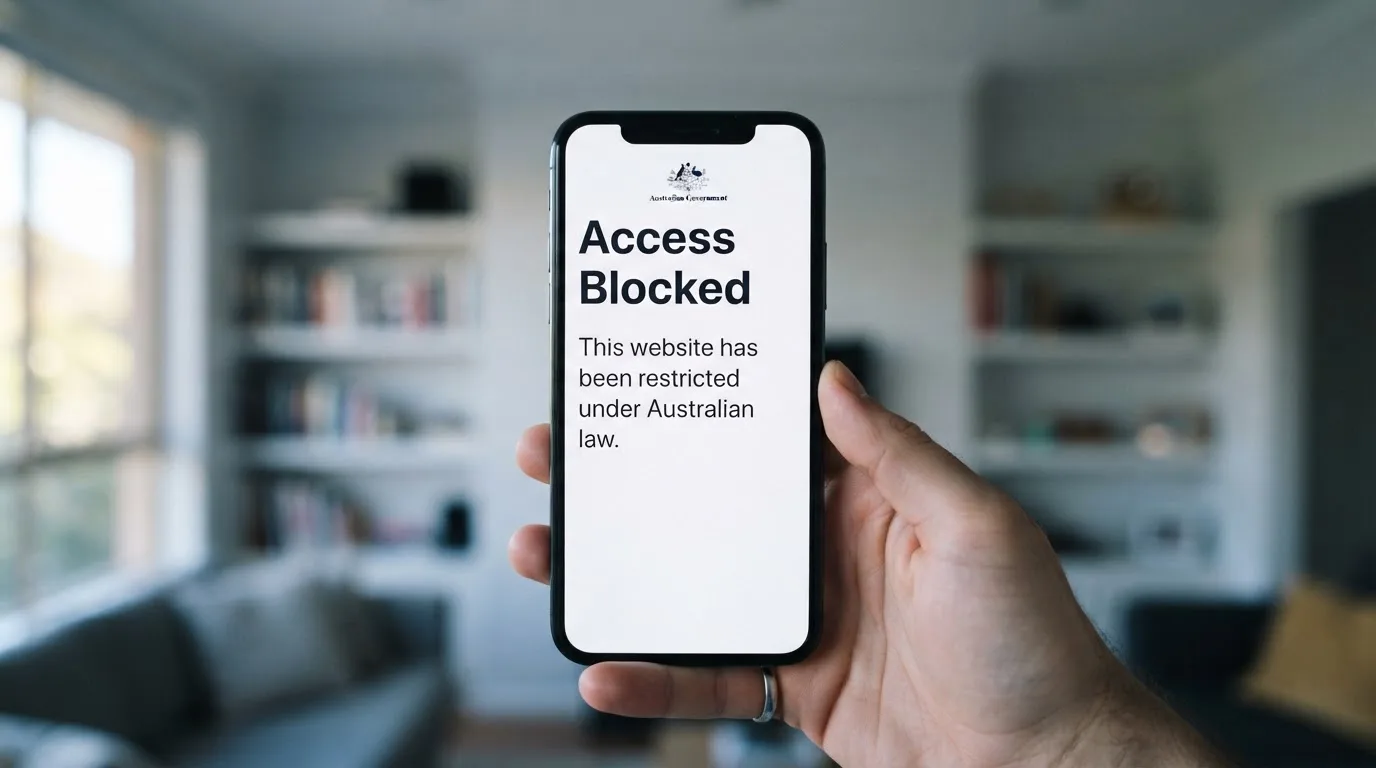
The 26 June 2026 blocking round alone added twelve sites: 7Signs, ChromaBet, Donbet, Duospin, Freshbet, Slots Gem, Jacks Club, Lucky Start, Pointsbetz.com, Spinrise, Vinyl Casino and Wildsino. Each name is a brand that was being marketed to Australians the week before. None of them is on the ACMA list because the regulator objects to the marketing; it is on the list because offering the product is the offence. The distinction matters when a reader is weighing the offer.
Estimated cost to Australians
H2 Gambling Capital’s 2025 estimate puts the money Australian players send to illegal gambling sites at about A$3.9 billion a year. The same report records the share of gambling going through legal channels falling from 74% in 2021 to 64% in 2025. Both numbers should be read with care — they are estimates, and the methodology behind illegal-market figures is always softer than the licensed side. The direction, though, is consistent with what the ACMA’s enforcement record implies: the offshore market is not being thinned out, it is being held in place by the marketing spend of the brands that the regulator has warned or blocked. A reader who finds a “best keno online casino” list online is, on these numbers, more likely than not looking at the illegal side of that split.
What happens to a balance when a site is blocked
The site goes off the Australian internet. The provider does not, and usually keeps operating in other jurisdictions. The player with funds on the site is left in the gap: no Australian complaints body has jurisdiction, no Australian court order moves money across borders cheaply, and the operator’s own terms usually put the burden of proving the account is in good standing on the customer. There is no public data on how much of players’ balances is lost this way. The ACMA’s blocking request is a content-removal measure, not a fund-recovery mechanism. A reader who hears “blocked” and assumes “money returned” has the wrong picture of what blocking does.
What lawful keno actually looks like in Australia
Keno is a legal product in Australia. That is the sentence most “keno online casino” pages never quite write, because writing it ends the funnel. The product exists in pubs and clubs, at Crown Melbourne and at Star Sydney, and through licensed wagering services that run keno products on their own licences. The federal prohibition on online casino games does not extend to those channels, because they are not online casino games.
Keno in pubs and clubs
State and territory keno licences put keno terminals into pubs and clubs. In Queensland the licensee is Keno (QLD) Pty Ltd, regulated by the Office of Liquor and Gaming Regulation under the Keno Act 1996, the Keno Regulation 2007 and the Keno Rule 2010. Keno (QLD) holds the exclusive Queensland licence; there is no second supplier. New South Wales granted its keno operator and product licence a 28-year extension to 1 April 2050, with the licensees agreeing to pay the state more than A$230 million across the term — an upfront A$25 million fee plus annual licence duty. Victoria issued 20-year keno licences from 15 April 2022 under the Gambling Regulation Act 2003, with the Victorian Gambling and Casino Control Commission (VGCCC) as regulator; Lottoland Australia, one of the two Victorian licensees, renamed to KenoGo Pty Ltd on 9 September 2025.
For a reader, the practical upshot is simple: keno terminals inside licensed venues are lawful, regulated, and tied to state-level complaints and consumer-protection channels. They are also not what most readers typing “keno online casino” had in mind. The trade-off is real — the convenience of a phone or laptop against the legal standing of the venue — and pretending it is not is the bulk of the misleading content the marketing attracts.
Land-based casino keno
Crown Melbourne and Star Sydney run keno among their table products. The games themselves are approved by the VGCCC and by Liquor & Gaming NSW under the relevant Casino Control Acts. A reader sitting at a keno terminal in a licensed casino has, in practical terms, the most protected way to play keno in Australia: regulator-approved rules, on-premises dispute channels, and AML/KYC oversight that the offshore market does not match.
Keno inside a wagering account
A wagering service provider licensed in Australia — a Sportsbet, a Ladbrokes, a Bet365 — can offer keno-style products under its licence if the product is approved. The product set licensed wagering services can carry is narrower than what an offshore casino can carry, but it sits inside the IGA’s exception for wagering and is supervised by the NTRWC and the relevant state regulator. A keno bet placed through a licensed wagering service is the closest online equivalent the law recognises, and it is the route the rest of this page treats as the lawful alternative.
The cost an offshore account actually carries
The marketing word at the top of most offshore keno pages is some version of “easy”, “fast”, “no questions”. The arithmetic, and the consumer-protection record, says the opposite. Three costs sit underneath the offer, and each one eats a different piece of the bankroll a player thinks they are putting on the line.
Lost recourse
An offshore operator is not subject to Australian consumer law. There is no Australian regulator with jurisdiction over a withdrawal dispute, no Australian court that can compel a payout cheaply, and no Australian ombudsman to file with. The operator’s own terms govern, and the operator wrote the terms. A player whose withdrawal is refused has the choice of giving up, escalating through the operator’s own dispute channel, or pursuing a complaint in the operator’s home jurisdiction at the player’s own cost. None of these routes typically returns a balance that has been flagged for bonus-abuse or KYC re-verification after a large win.
Lost protection if the site is blocked
The ACMA’s blocking regime targets the site, not the funds. A player who wins and asks for a payout just before a blocking round lands has the funds on an account the player can no longer reach from Australia. There is no statutory mechanism to recover them, and the operator is under no obligation to refund. The 1,751 blocked sites since November 2019 represent a market that has been thinned by enforcement, and a player balance caught in a block is the most concrete cost on the page.
Lost interaction with BetStop
BetStop, the National Self-Exclusion Register, has been live since August 2023. It binds every Australian-licensed online and phone wagering service. It does not bind offshore casino sites. A punter who has self-excluded through BetStop and then opens an offshore account is starting from scratch with the offshore operator’s own self-exclusion — usually thinner, often opt-in, and not connected to the Australian register. The protection a person thought they had given themselves does not travel with them.
What an Australian reader is actually being offered
Eleven brands dominate the affiliate lists ranking for “keno online casino” searches from Australia. All eleven have been the subject of ACMA formal warnings, with the operator and date as published by the regulator. The product these brands offer is a prohibited interactive gambling service. The brand’s own offshore licence — usually a Curaçao or Anjouan licence — does not change the status of the offer inside Australia, because the offence is offering the service to a person in Australia, not the operator’s corporate status.
What follows is a short assessment of each brand on the same footing, side by side. None of these assessments is a recommendation to play. They are written for a reader trying to understand what the marketing does not say.
| Brand | ACMA action and date | Operator named by the ACMA | Subject support |
|---|---|---|---|
| RocketPlay | Formal warning, March 2026 | Pulsup Ltd (Rocketplay.com.au) | — |
| Level Up Casino | Formal warning, May 2022 | Dama N.V. | Game provider listings (BGaming) |
| Woo Casino | Formal warning, March 2025 | Dama N.V. | — |
| Spirit Casino | Formal warning, May 2025 | Dama N.V. | — |
| National Casino | Formal warning, July 2025 | Consolutetish S.R.L. | Game provider listings |
| Bizzo Casino | Formal warnings, 2022 and July 2025 | TechSolutions (2022); Consolutetish S.R.L. (2025) | — |
| Ignition Casino | Formal warning, July 2025 | Bamboo Media | — |
| Instant Casino | Formal warning, February 2025 | EOD Code SRL | — |
| Jackbit | Formal warning, April 2026 | Ryker B.V. | — |
| Casino Intense | Formal warning, April 2025 | Sterplay Holding Ltd | Industry listings |
| Sky Crown | Formal warning, September 2022 | Hollycorn N.V. | — |
The first column is the ACMA’s own record. The second column is the corporate entity the regulator named at the time the warning was issued — important because the same brand often moves between operators as licences and shell companies are rotated. The third column records what research could verify about keno specifically, and where research only found the brand listed on game-provider catalogues rather than as a confirmed keno operator, that is the level of claim the table makes.
RocketPlay
RocketPlay sits at the top of most affiliate shortlists for Australian readers. The ACMA’s March 2026 formal warning names Pulsup Ltd as the operator of Rocketplay.com.au, which is the .com.au mirror that distinguishes the Australian-facing site. Dama N.V., the operator of the earlier Dama-N.V.-licensed iteration of RocketPlay, was warned by the ACMA back in May 2022 over six brands. The product is the same: online casino games, keno included, offered to people in Australia. The site is what the marketing calls “fast signup”; what the regulator calls it is a prohibited interactive gambling service. Verdict: the brand readers meet first is also the brand the ACMA named most recently.
Level Up Casino
Level Up Casino sits in the Dama N.V. cluster warned in May 2022, alongside Bambet, Dazard, Rocketplay, Wild Tornado and Cobra Casinos. BGaming, a Curaçao-registered studio, lists Level Up as a partner for its keno-style titles, which is the closest a third-party source comes to confirming keno on the site. Verdict: the game catalogue carries keno by virtue of BGaming’s distribution, not because Level Up is a keno specialist.
Woo Casino
Woo Casino came in for a separate formal warning in March 2025, again to Dama N.V. The brand runs a broad casino catalogue and is one of the more heavily marketed sites on the Australian-facing affiliate circuit. No third-party keno-specific listing was found for Woo, so the keno claim is the operator’s own. Verdict: heavily marketed, recently warned, no independent verification of the keno product.
Spirit Casino
Spirit Casino, also Dama N.V., received its formal warning in May 2025. The Dama cluster — RocketPlay, Level Up, Woo Casino, Spirit Casino — represents a single operator running several skins across the market, which is a common pattern and is itself useful information for a reader: the warnings travel with the operator, not the brand. Verdict: same operator, different wrapper.
National Casino
National Casino was warned in July 2025, with Consolutetish S.R.L. named as the operator. The brand has a presence in third-party listings for keno-style titles. Verdict: the brand surfaces in some game-provider catalogues, but the operator named by the ACMA is the dispositive fact for an Australian reader.
Bizzo Casino
Bizzo Casino has been warned twice: first to TechSolutions (CY) Group Limited and TechSolutions Group N.V. in 2022, then to Consolutetish S.R.L. in July 2025. Two warnings, two different operators, same brand. The pattern matches the broader Dama/Consolutetish cluster: the shell rotates, the brand stays. Verdict: the brand has been on the regulator’s record across multiple corporate iterations.
Ignition Casino
Ignition Casino, operated by Bamboo Media, was the subject of a July 2025 formal warning. The brand markets heavily to Australian readers through affiliate networks. Verdict: another recently-warned brand with the same regulatory status as every other entry on this list.
Instant Casino
Instant Casino was warned in February 2025, with EOD Code SRL named. Verdict: the second-earliest warning in the current set and one of the more frequently recommended brands on Australian-facing affiliate pages. The recency of the warning is the relevant number, not the brand’s own ranking on those pages.
Jackbit
Jackbit received a formal warning in April 2026, with Ryker B.V. as the named operator. Jackbit is one of the brands at the crypto end of the affiliate circuit, which is the segment of the market that overlaps most heavily with bitcoin-deposit keno searches. Verdict: the brand appears on crypto-keno shortlists, and on the ACMA’s own record.
Casino Intense
Casino Intense was warned in April 2025, with Sterplay Holding Ltd named. The brand is listed in some industry catalogues as carrying keno, but the ACMA warning is the dispositive public record for an Australian reader. Verdict: a smaller brand in the warned set with the same legal standing as the rest.
Sky Crown
Sky Crown was the subject of a Hollycorn N.V. formal warning published in September 2022. The ACMA also named Blue Leo in the same action. Verdict: the longest-standing entry on the warned list, with the same operator pattern as the others.
Payment-method consequences for an Australian reader
The lawful and unlawful routes diverge sharply on payment, and the divergence is not incidental. The payment a reader can make is itself evidence of which side of the line the operator is on.
What Australian-licensed wagering accepts
Since 11 June 2024, credit cards, credit-related products and digital currency are banned as payment for licensed online wagering in Australia. Operator penalties run up to A$247,500. The lawful routes are debit card, bank transfer, PayID/Osko and BPAY. A licensed bookmaker’s payment screen mirrors that list. If a reader sees a licensed wagering site asking for a credit card or a crypto deposit, the operator is outside the Australian regime; if a reader sees an offshore casino site doing the same, that is the same answer from the other side of the line.
What offshore casinos ask for
Offshore casinos take credit cards, e-wallets in the usual mix, and — for the brands that rank for “bitcoin keno casino” — a range of crypto assets. Bitcoin, Ethereum, Litecoin, Tether and a handful of others are common. None of those payment rails is supervised by AUSTRAC in the same way that a wagering service provider’s bank rails are. The crypto angle is sometimes sold as a privacy feature. For an Australian reader it has a more concrete character: the payment itself is irreversible and unmediated, which means the consumer-protection gap that an offshore casino already runs widens further once the deposit is in crypto.
Reversibility and consumer protection
A debit-card deposit through a licensed Australian operator is reversible through the bank’s chargeback process if the operator fails to deliver. A bank transfer through PayID or BPAY carries the same consumer-protection umbrella. A Bitcoin deposit through an offshore operator carries none of that. The transaction is final once it has confirmations on-chain, and the operator’s own dispute process is the only path to a refund. For a reader comparing the two routes, that is the practical cost of the marketing word “easy” when it sits next to a crypto deposit box.
Gameplay fundamentals an Australian reader should know
Keno itself is a simple game. Knowing what the paytable looks like, and what the house edge actually runs, is what separates a player who has read the terms from a player who has only read the marketing.

How a keno draw works
In modern keno a player chooses up to 20 numbers from a field of 1 to 80. The house draws 20 numbers, either by ball machine or random number generator. Payout depends on how many of the player’s numbers match. The structure varies by venue: online keno typically lets the player pick between 1 and 15 or 20 spots depending on the variant, with paytables scaling to the number of spots chosen. The mechanics are the same as the pub version, with the draw compressed into a few seconds.
House edge, in plain numbers
Wizard of Odds puts keno’s house edge at 25%–29% in most settings — the highest of the common casino games. Wikipedia’s article gives a wider band: under 4% to over 35% in online play, and 20%–40% in in-person casino play. Live keno in Las Vegas returns 65%–80% of stake. The takeaway is not one number: it is that keno’s edge is far above the comparable games. Baccarat runs 1.06% on the Banker bet, 1.24% on the Player bet and 14.36% on the Tie. Blackjack with optimal strategy on liberal Las Vegas Strip rules sits around 0.28%; Atlantic City rules, around 0.43%. Keno at 25%–29% is roughly ten times the edge of baccarat and a hundred times the edge of liberal-rules blackjack. The shape of the bet is the same kind of lottery bet it has always been; the only thing modern online keno has changed is the speed at which a player can put another ticket in.
Long-odds reality check
A 20-spot keno ticket that hits all 20 drawn numbers carries odds of about 1 in 3.5 quintillion. The number is large enough to be abstract, which is itself useful information: a player comparing keno’s headline payouts to its headline odds should know that the top payout is the prize for an event that will not happen in any player’s lifetime, in any single venue’s lifetime, or in most venues’ combined history.
Live keno versus an automated draw
Live keno, in a casino, uses a ball machine and runs a draw every few minutes with a visible result. Automated online keno uses a random number generator and resolves the draw in seconds. The structural difference is more than cosmetic: live keno’s slower cadence gives a player time to think between draws; automated keno’s faster cadence lets a player place far more bets in the same hour. For a player comparing the two, the question is not which one pays better — both run roughly the same house edge — but which cadence lets the player stay inside a budget.
Frequently asked questions
How does keno’s house edge compare with other casino games?
Keno typically carries a house edge of 25%–29%, with online variants ranging from under 4% to over 35% and in-person casino play commonly 20%–40%, depending on the paytable. By comparison baccarat runs 1.06% on the Banker bet and 1.24% on the Player bet, and blackjack with optimal strategy on liberal Las Vegas Strip rules sits around 0.28%. Keno’s edge is the highest of the common casino games, and a player should treat the bankroll as being spent at roughly that rate per ticket.
Is keno available at licensed pubs and clubs, not just casinos?
Yes. Keno is licensed state by state for pub and club venues. Keno (QLD) Pty Ltd holds the exclusive Queensland licence; New South Wales has granted its keno operator and product licence a 28-year extension to 1 April 2050; Victoria issued 20-year licences from 15 April 2022. These are the lawful in-person channels for keno in Australia, and they sit under state-level consumer-protection and complaints regimes that the offshore market does not match.
Is it legal for an online casino to offer keno to players in Australia?
No. The Interactive Gambling Act 2001 prohibits offering online casino games, online pokies and in-play betting to a person in Australia. Online keno, as a casino-style game, falls inside that prohibition. The Act targets the provider, not the player, which is why individual Australians are not prosecuted for opening an account, but the offer itself is the offence and the consequences — blocked sites, lost balances, no Australian recourse — fall on the player rather than the operator.
How does live keno differ from an automated keno draw?
Live keno runs a draw every few minutes using a ball machine with the result visible on a monitor. Automated online keno uses a random number generator and resolves each draw in seconds. The structural difference is cadence: live keno lets a player sit with a ticket across multiple draws, while automated keno lets a player place many more bets in the same hour. The house edge is broadly similar across both formats.
Can keno be played with a Bitcoin deposit at an offshore site?
Yes — the offshore sites that market to Australian readers, including Jackbit, routinely take Bitcoin and other crypto deposits, and credit cards have been banned for Australian-licensed wagering since 11 June 2024. The payment is also the consumer-protection gap: Bitcoin transactions are irreversible once confirmed on-chain, and the offshore operator is not subject to Australian consumer law, so the usual chargeback path is unavailable. A crypto deposit widens the gap that an offshore account already runs.
Why do keno returns vary so widely between venues?
Keno’s house edge depends on the paytable rather than the draw. Wizard of Odds reports an edge band of 25%–29% across common paytables; Wikipedia gives a wider range from under 4% to over 35% online, and 20%–40% in in-person casino play. Two venues can run the same draw mechanics and return very different amounts to the player depending on how the paytable is set, which is why the headline return figure is worth checking rather than assuming.
Written by the editors at Casino Venues Info.