
What an instant PayID withdrawal actually costs an Australian player
A PayID transfer between Australian bank accounts arrives in under a minute, around the clock, including weekends and after-hours when no human sits at a teller window. That is the genuine speed of PayID, and it is the reason offshore casino sites advertise it. It is also the only fact on this page that holds up cleanly. Every other claim the marketing makes — about the casino “approving” the withdrawal, about the payout being “guaranteed”, about the operator being “licensed” — sits on top of a prohibition that has not moved since the Interactive Gambling Act 2001 was strengthened in 2017.
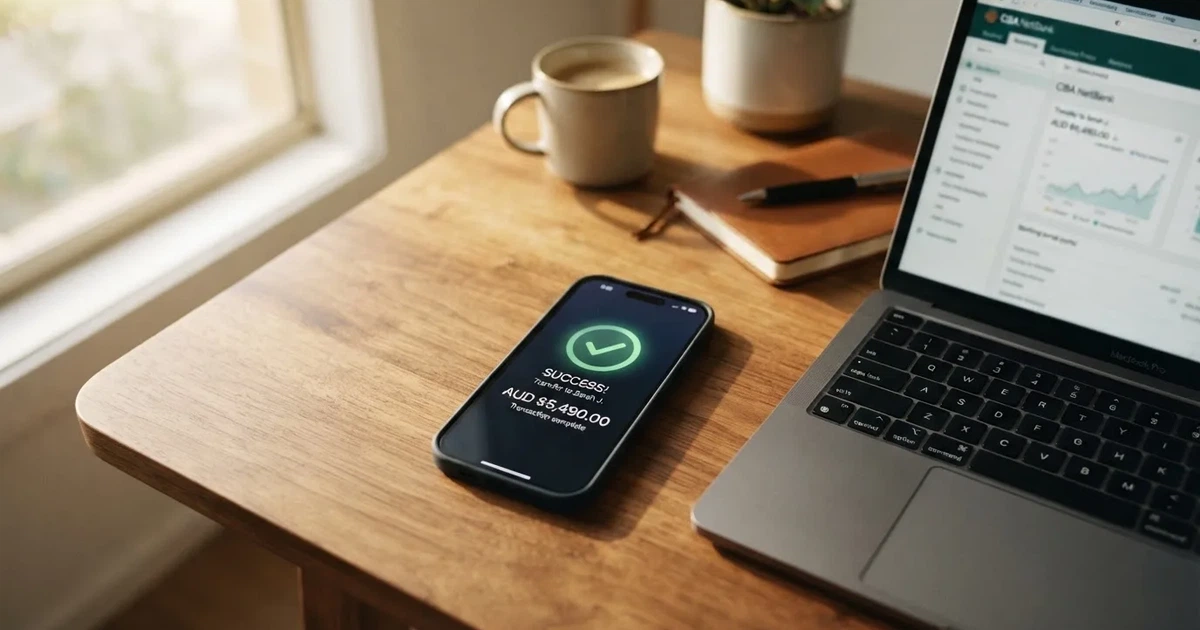
This page explains how a PayID withdrawal actually moves when it moves, who is on the receiving end, and why the speed of the rail is the least interesting thing about the transaction.
Data current as of 29 October 2026, cross-checked against the ACMA’s published formal warnings and the operator-register publications those warnings reference.
Table of Contents
- Settlements, blocks and the audited landscape of instant PayID withdrawal sites
- Fundamentals — how a PayID transfer actually reaches a bank account
- Prohibition — what the Interactive Gambling Act 2001 actually says, and what it does to an offshore PayID withdrawal
- Player protection — what an instant PayID withdrawal does and does not connect to
- The blocking rate — what 1,751 sites over more than six years actually tells a reader
- The cost of an “instant PayID withdrawal” — what the operator does between the click and the credit
- RocketPlay — the most recent ACMA warning on the list
- Level Up Casino — the Dama N.V. anchor on the list
- Woo Casino and Spirit Casino — two warnings, one parent, four years
- National Casino and Bizzo Casino — the Consolutetish S.R.L. warnings
- Ignition Casino — the Bamboo Media warning
- Instant Casino — the EOD Code SRL warning
- Jackbit — the Ryker B.V. warning
- Casino Intense — the Sterplay Holding Ltd warning
- Sky Crown — the Hollycorn N.V. warning
- What the eleven brands together tell a reader about the instant PayID withdrawal pitch
- Frequently asked questions
Settlements, blocks and the audited landscape of instant PayID withdrawal sites
Eleven offshore casino brands sit at the centre of the instant PayID withdrawal pitch in Australia. Every one of them has been the subject of an Australian Communications and Media Authority formal warning for offering prohibited interactive gambling services to Australians. The list below is drawn from those warnings, not from affiliate rankings, and the order is the order in which the ACMA itself most recently named each operator.
| Brand | ACMA action and date | Operator named by the ACMA | Subject support |
|---|---|---|---|
| RocketPlay | Formal warning, March 2026 (earlier warning to a different operator over the same brand, May 2022) | Pulsup Ltd | — |
| Level Up Casino | Formal warning, May 2022 | Dama N.V. | listings report PayID support (Westpac gambling block reference) |
| Woo Casino | Formal warning, March 2025 | Dama N.V. | — |
| Spirit Casino | Formal warning, May 2025 | Dama N.V. | — |
| National Casino | Formal warning, July 2025 | Consolutetish S.R.L. | listings reference AUSTRAC and Wikipedia entries |
| Bizzo Casino | Formal warning, July 2025 (earlier warning to a different operator, 2022) | Consolutetish S.R.L. | — |
| Ignition Casino | Formal warning, July 2025 | Bamboo Media | — |
| Instant Casino | Formal warning, February 2025 | EOD Code SRL | listings reference ecoPayz and PayID |
| Jackbit | Formal warning, April 2026 | Ryker B.V. | — |
| Casino Intense | Formal warning, April 2025 | Sterplay Holding Ltd | listings reference AUSTRAC, iTnews and NAB |
| Sky Crown | Formal warning, September 2022 | Hollycorn N.V. | — |
Two things follow from the table. The first is that an offshore brand’s “PayID support” is almost always a mention on a listings page, not a feature the operator itself confirms on its own terms page — that is what a “listings-only” entry in the right-hand column means. The second is that every operator named has already had the ACMA write to it once. A second letter, in several cases, has followed.
Dama N.V. is the most-written-to operator on the list. It received a formal warning in May 2022 covering six casino brands including Level Up Casino and RocketPlay, then separate warnings in March 2025 over Woo Casino and in May 2025 over Spirit Casino. A single operator appearing across four of the eleven entries is not a coincidence of branding — it is the same corporate group selling the same product under different skins, and the ACMA’s letters have followed each rebrand.
The same pattern repeats at Consolutetish S.R.L. and at TechSolutions, which was warned over Bizzo Casino as far back as 2022 before Consolutetish S.R.L. was warned over the same brand again in July 2025. A formal warning is not a one-off event for the Australian-facing side of these brands; it is closer to a running correspondence.
Fundamentals — how a PayID transfer actually reaches a bank account
A PayID is not a payment method in the way a Visa card is. It is an alias — a mobile number, an email address, an ABN or an Organisation Identifier — that points to a real bank account held at an Australian financial institution. The alias is registered with Australian Payments Plus, the country’s domestic payments body, and the underlying account is held at one of more than 100 Australian banks and credit unions that offer PayID through their existing online banking.

When someone sends money to a PayID, two things happen in sequence. The sending bank looks up the alias through the New Payments Platform, the real-time payments infrastructure the Reserve Bank of Australia oversees, and resolves it to a BSB and account number. The sending customer is shown the name of the account holder on the other side before authorising the transfer. The transfer then settles individually through the Reserve Bank’s Fast Settlement Service, 24 hours a day, and arrives at the receiving account in under a minute.
That is the genuine end-to-end speed of PayID. Osko by Australian Payments Plus, the brand name for the consumer instant-transfer service that runs on the same infrastructure, makes the same commitment for ordinary BSB-and-account-number transfers as for PayID-addressed ones. There is no queue, no cut-off, no next-business-day delay, and no time-zone penalty for paying on a Sunday morning.
What PayID is not, and where the casino marketing reaches for a stretch, is a guarantee about what sits on the receiving side. PayID handles the movement of money between Australian bank accounts. The decision to send the money out of the casino’s account in the first place belongs to the casino, and that decision runs through the casino’s own settlement review, which can take anywhere from a few minutes to several business days. “Instant PayID withdrawal” describes what happens to the money once the casino has released it. It does not describe how long the casino takes to release it.
The speed, in other words, is a property of the rail. The decision is a property of the operator. The two are routinely confused in marketing, and the confusion is the entire product.
Prohibition — what the Interactive Gambling Act 2001 actually says, and what it does to an offshore PayID withdrawal
Australia’s online gambling framework starts from a single line: online casino games, online pokies and in-play betting cannot be offered to a person physically in Australia. The Interactive Gambling Act 2001, strengthened by the Interactive Gambling Amendment Act 2017, sets out that prohibition. No state or territory in Australia licenses online casino games. What is licensable is wagering on races and sport placed before the event, lotteries and keno — wagering that, in practice, is licensed in the Northern Territory through the Northern Territory Racing and Wagering Commission for tax reasons, despite the commission having no full-time staff and meeting once a month in Darwin.
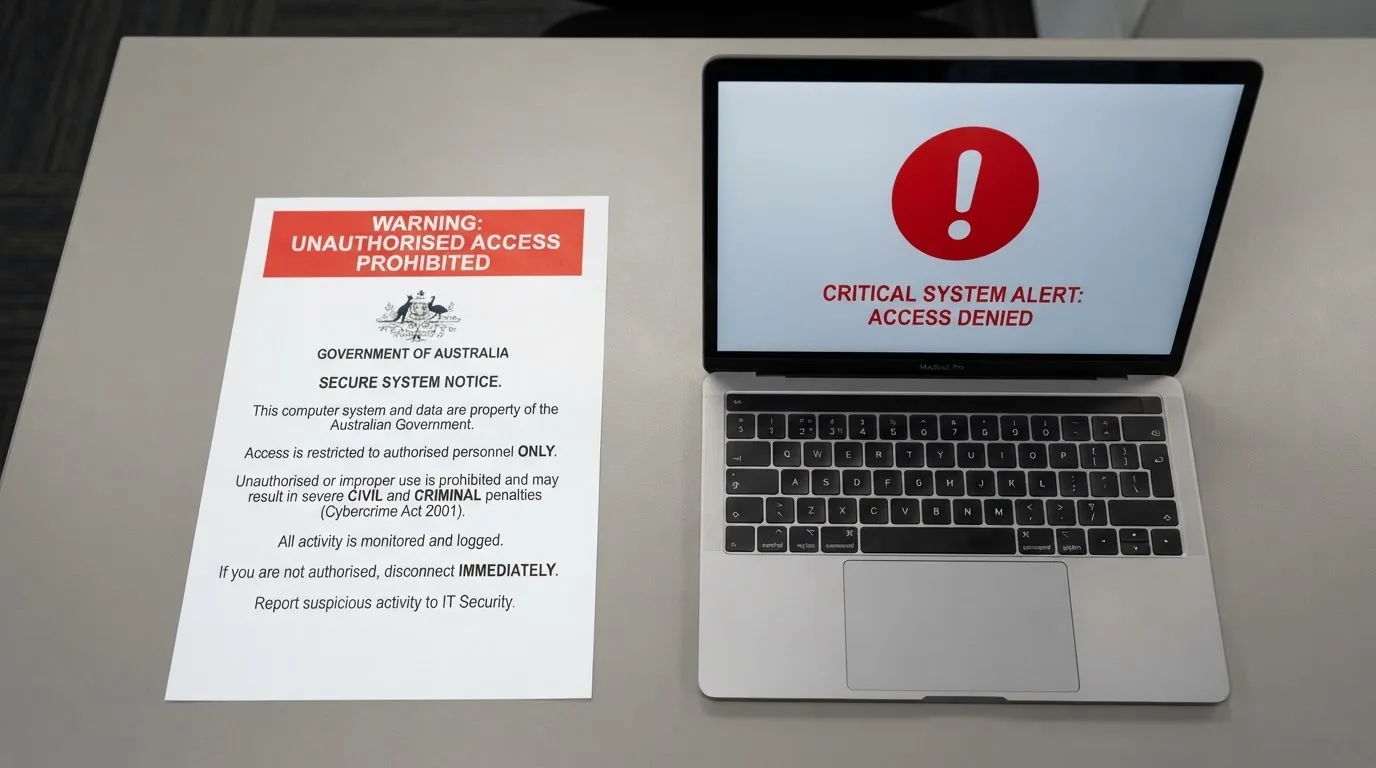
For an offshore casino offering PayID withdrawals, the prohibition bites at the supply side. The site cannot lawfully provide the product to an Australian, regardless of what licence the site displays on its footer, regardless of where the company is incorporated, and regardless of how quickly the bank transfer clears once the casino releases the funds. The Australian-licensed alternative is a wagering service offering sports and racing before the event, not casino games. There is no AU-licensed online casino with a PayID withdrawal, because there is no AU-licensed online casino.
Enforcement runs through the ACMA. The authority investigates complaints, issues formal warnings to operators it identifies as providing prohibited services to Australians, and can direct Australian internet service providers to block websites. As of June 2026, the ACMA’s published figures record 1,751 illegal gambling and affiliate marketing websites blocked since the first blocking request in November 2019, and more than 230 unlicensed gambling services having left the Australian market since enforcement was strengthened in 2017. A round reported on 26 June 2026 alone added 12 more sites to the block list: 7Signs, ChromaBet, Donbet, Duospin, Freshbet, Slots Gem, Jacks Club, Lucky Start, Pointsbetz, Spinrise, Vinyl Casino and Wildsino.
The individual player is not the target of the prohibition. The IGA reaches the provider. But the consequence for the player is real: an offshore site gives no Australian consumer protection, no complaints body and no recourse if a withdrawal is refused, and the ACMA can direct an ISP to block the site while a balance still sits in the player’s account. That is the structural cost of an “instant PayID withdrawal” sold from offshore — speed on the rail, no protection on the deal.
Two further points tighten the frame. First, the Interactive Gambling Amendment (Gambling Reform) Bill 2026 passed Parliament on 19 August 2026; its advertising and inducement measures commence on 1 January 2027. The law is in place, but the new rules are not yet in force on a page read in 2026. Second, licensed Australian wagering services have not been able to accept credit cards or credit-related products since 11 June 2024, a rule that shapes which PayID-linked bank transfers can be used for wagering at all: a debit-funded transfer is in scope, a credit-funded one is not.
| Payment Method | Legal Status |
|---|---|
| Debit card | Legal |
| Bank transfer | Legal |
| PayID / Osko | Legal |
| BPAY | Legal |
| Credit cards | Banned |
| Digital currency | Banned |
Player protection — what an instant PayID withdrawal does and does not connect to
A withdrawal that arrives in under a minute looks like a sign of operator quality. It is, more narrowly, a sign that the operator’s payment team has clicked “approve”. It tells the reader nothing about whether the operator connects to any of Australia’s responsible-gambling infrastructure, because the offshore casinos offering PayID withdrawals do not.
BetStop, the National Self-Exclusion Register, has been live since August 2023. It binds Australian-licensed online and phone wagering services, so a person who registers with BetStop is excluded from every AU-licensed wagering operator simultaneously. An offshore casino is not connected to BetStop. A self-exclusion registered today does not reach a brand on the list above. The same is true for the National Gambling Helpline on 1800 858 858 — free, 24/7, with chat through Gambling Help Online — which is staffed for Australian players regardless of where they play, but which has no authority to act on an offshore operator that refuses a withdrawal or closes an account.
Australian banks also offer their own gambling blocks at card level, and these blocks have grown more useful as PayID and digital wallets have spread. Westpac’s gambling block refuses authorisation of transactions registered under the merchant category code for betting and casino gambling on eligible personal credit and debit cards, which means a transaction initiated from a PayID-linked account through a card-based wallet can still be stopped at the card layer. ANZ’s gambling transaction block, activated inside the ANZ app, blocks gambling transactions made through a digital wallet such as Apple Pay on an eligible card, not just transactions on the physical card. Once ANZ’s block is turned on, removing it requires a 48-hour waiting period, and the bank warns that not all gambling transactions will be blocked and that some non-gambling transactions may be blocked in error.
Those bank-side blocks reach transactions routed through card networks and digital wallets. They do not reach a PayID transfer initiated directly from a customer’s online banking to a casino’s account, because that transfer looks like any other immediate bank-to-bank payment. The gap matters: a player who has set up every bank-side block available can still authorise a PayID transfer to an offshore casino from their own banking app, and Australian Payments Plus warns about exactly that path. The payments body has stated publicly that being asked to transfer funds to a PayID on an illegal gambling site almost certainly means a scam site, and it has coined the term “scambling” — slang for illegal online gambling platforms advertised on social media and messaging apps that trick people into gambling on a scam website.
A PayID withdrawal from an offshore casino is, in this sense, the cleanest test of the gap: the rail is fast, the bank-side blocks do not see it, and the consumer protections do not reach it.
The blocking rate — what 1,751 sites over more than six years actually tells a reader
The ACMA’s published cumulative figure — 1,751 illegal gambling and affiliate marketing websites blocked since the first blocking request in November 2019, recorded as of June 2026 — is the cleanest single number on the subject. It is also a number whose meaning depends entirely on how it is read.
Stated as a band: somewhere between 240 and 260 websites per year have been added to the Australian block list since the first request in November 2019, with the pace running higher in enforcement-active years and lower in others. The exact figure is sensitive to how the ACMA counts “websites” versus “services” versus “affiliate marketing pages” within a single blocking round, which is why the comparison is honestest as a band, not a single rate. Within that band, the round reported on 26 June 2026 added 12 sites in one action, which is one of the larger single rounds and a marker of an active enforcement year rather than a slow one.
What the band does not say is how many of the blocked sites offered PayID specifically. Research did not break the cumulative count out by payment rail, and the ACMA’s published round descriptions name the sites rather than the payment methods. A reader who wants to know “how many PayID casinos have been blocked” cannot get that number from the public register; the closest substitute is the cumulative count of all illegal sites blocked, which is large and growing, and which is the only figure the ACMA itself publishes.
A second figure gives the scale of what is being blocked against. The 2025 report from H2 Gambling Capital estimates that Australians lose about A$3.9 billion a year to illegal gambling sites, and that the share of gambling going through legal channels fell from 74% in 2021 to 64% in 2024. The block list is a defensive measure against a market that has, by the report’s estimate, been growing faster than enforcement has been removing supply. A reader using this page to think about what an “instant PayID withdrawal” really represents should hold both numbers at once: the rail is fast, the rail’s user base is being warned about by the rail’s own operator, and the rail is being used at scale by sites the ACMA is actively blocking.
The cost of an “instant PayID withdrawal” — what the operator does between the click and the credit
A PayID transfer itself is the cheap and fast part. The expensive part is what happens before the operator releases the funds, and the cost falls on the player in two ways — time and information asymmetry.
On time, the marketing language of “instant” or “lightning” PayID withdrawals rests on the bank’s settlement speed, not on the casino’s approval speed. The casino’s own settlement review runs first, and the published reviews on affiliate listings describe wait times that range from “a few minutes” to “up to 48 hours” for the first withdrawal from a new account, with subsequent withdrawals typically clearing faster once the review has been completed once. A PayID transfer that takes 60 seconds once the operator has clicked release can sit in the casino’s pending queue for two days first, and the marketing does not usually distinguish between those two intervals.
On information asymmetry, the player sees the rail but does not see the operator. The PayID transfer moves money from the casino’s Australian-facing receiving account to the player’s linked bank account. The casino’s receiving account sits behind a corporate structure the player has no visibility into, and the receiving bank has no obligation to the player if the operator’s account is later frozen. Australian Payments Plus warns about this directly: the payments body has stated that being asked to transfer funds to a PayID on an illegal gambling site almost certainly means a scam site, and has coined the term “scambling” for exactly this pattern. The risk that a withdrawal will be honoured in full is borne entirely by the player.
The second cost is harder to see but more durable: the operator’s Australian-facing receiving account can be closed by its bank at any time, with the player’s pending withdrawal caught in the middle. Australian banks apply their own transaction blocks at card level — Westpac’s gambling block refuses authorisation of transactions registered under the merchant category code for betting and casino gambling on eligible cards, and ANZ’s gambling block, set up in the ANZ app, extends the same block to digital-wallet transactions on an eligible card — but those blocks operate on the card layer, not on the PayID transfer layer. A PayID transfer initiated directly from a customer’s online banking does not carry a merchant category code, because it is not a card transaction. The bank-side blocks do not see it. The casino’s bank, on the receiving side, can refuse or delay it for any reason, and the player has no Australian consumer protection body to escalate to.
That is the genuine price of an “instant PayID withdrawal” from an offshore casino in 2026: rail speed, no operator-side guarantee, no Australian recourse if the withdrawal stalls, and a market the ACMA is actively blocking at a rate of several hundred sites a year.
RocketPlay — the most recent ACMA warning on the list
RocketPlay received a fresh formal warning in March 2026, with Pulsup Ltd named as the operator providing the service to Australians. The brand had already been the subject of a 2022 formal warning to Dama N.V. over a different corporate vehicle, which is the clearest signal on the list that a brand can be warned once, re-appear under a new company, and be warned again. The intervening three years did not move the brand out of the ACMA’s view.
The closing judgement on RocketPlay is that a second warning, three years on, is not a brand the ACMA has lost interest in. A player considering a PayID withdrawal from RocketPlay in 2026 is considering a withdrawal from an operator that has received two formal warnings across two different corporate parents, the most recent within the current calendar year.
Level Up Casino — the Dama N.V. anchor on the list
Level Up Casino sits at the centre of the Dama N.V. cluster. It was named in the May 2022 warning covering six Dama N.V. casino brands, alongside Bambet, Dazard, RocketPlay, Wild Tornado and Cobra Casinos. The brand has not been the subject of a separate warning since, but the parent has — over Woo Casino in March 2025 and Spirit Casino in May 2025.
Listings report that Level Up Casino offers PayID, with the Westpac gambling block referenced as the consumer-side guardrail. The block is real, but it operates on the card layer, not on the PayID transfer layer. A Level Up Casino PayID withdrawal remains an instant transfer between bank accounts at the speed of the rail, with no Australian consumer protection on the operator side. The closing judgement on Level Up Casino is that the brand’s PayID claim is structurally identical to every other brand on this list, and that the only meaningful distinction is corporate: it sits inside a group that the ACMA has written to four times across the brands it markets.
Woo Casino and Spirit Casino — two warnings, one parent, four years
Woo Casino and Spirit Casino were each the subject of a separate ACMA formal warning to Dama N.V. in 2025 — Woo in March, Spirit in May. The two warnings, nine months apart, came after the 2022 warning covering Level Up Casino and four other brands from the same parent. The pattern is the same operator group being warned in waves, each wave tied to a specific brand name.
A PayID withdrawal advertised by either brand is, at the rail level, the same PayID transfer to or from the same corporate parent’s Australian-facing receiving account. The brand name changes the website; the rail and the corporate structure do not. The closing judgement on Woo Casino and Spirit Casino, taken together, is that a brand’s PayID “support” is a feature of the rail, not of the operator, and that an operator receiving its second or third ACMA letter has not changed its behaviour in response to the first one.
National Casino and Bizzo Casino — the Consolutetish S.R.L. warnings
Consolutetish S.R.L. received a formal warning in July 2025 covering both National Casino and Bizzo Casino. Bizzo Casino had already been the subject of a 2022 formal warning to TechSolutions (CY) Group Limited and TechSolutions Group N.V. — a different corporate parent, the same brand, three years earlier.
Listings report that National Casino appears in AUSTRAC and Wikipedia entries, which are background regulatory references rather than endorsements. They do not change the prohibition status. National Casino cannot lawfully offer online casino games to an Australian resident, and the 2025 warning names the operator doing so. Bizzo Casino cannot do so either, and has now received two formal warnings across two corporate parents. The closing judgement on National Casino and Bizzo Casino is that two warnings, three years apart, over the same brand, leave the brand’s status unchanged: prohibited, with the ACMA’s letters on the public record.
Ignition Casino — the Bamboo Media warning
Bamboo Media received a formal warning in July 2025 covering Ignition Casino. The brand has not appeared in earlier ACMA publications, but the structural fact is unchanged: an offshore operator offering online casino games to Australians, named in a formal warning. A PayID withdrawal from Ignition Casino, like every other brand on the list, runs on the New Payments Platform at the speed of the rail, with no Australian consumer protection on the operator side.
The closing judgement on Ignition Casino is the structural one: it sits on the list because the ACMA wrote to its operator in 2025, and the entry on the list is the consequence of that letter, not a finding about PayID specifically.
Instant Casino — the EOD Code SRL warning
EOD Code SRL received a formal warning in February 2025 over Instant Casino. Listings reference ecoPayz and PayID on the Instant Casino payments page, which is the closest the brand comes to an explicit PayID claim. The brand name itself suggests an instant-payout product, and the warning predates the more recent 2026 enforcement rounds.
The closing judgement on Instant Casino is that the brand’s name and the rail it claims to use are aligned with the marketing pitch on this page — instant, PayID — and that the ACMA’s February 2025 letter to EOD Code SRL is the official record of what the brand is, in regulatory terms, offering to Australians. The PayID rail is fast. The product it is moving money for is prohibited.
Jackbit — the Ryker B.V. warning
Ryker B.V. received a formal warning in April 2026 over Jackbit and CasinOK. The April 2026 letter is recent, and it sits in the same year as the larger 26 June 2026 blocking round that added 12 more sites. The cumulative effect of the year’s enforcement is visible on the Jackbit entry: a 2026 warning, in the same year as another 12-site blocking action and within the same regulatory posture.
The closing judgement on Jackbit is that the brand is part of the current year’s enforcement wave, and that a 2026 ACMA letter is, by definition, the ACMA’s view of what the brand is doing for Australian players in 2026.
Casino Intense — the Sterplay Holding Ltd warning
Sterplay Holding Ltd received a formal warning in April 2025 over Casino Intense. Listings reference AUSTRAC, iTnews and NAB in connection with the brand, which places it inside the same cluster of regulatory and banking-industry references as other offshore operators — references that document that the brand exists and has been written about, not that it is licensed to serve Australians.
The closing judgement on Casino Intense is that its background regulatory footprint is the same shape as several other brands on this list, and that the ACMA’s April 2025 letter is the operative document on its status for Australian players.
Sky Crown — the Hollycorn N.V. warning
Hollycorn N.V. received a formal warning covering Sky Crown and Blue Leo, published by the ACMA in September 2022. Sky Crown is the older entry on the list — the warning predates the 2025 cluster of Dama N.V. and Consolutetish S.R.L. warnings by more than two years. The brand has not been the subject of a separate warning since, but the underlying prohibition has not changed in the interval.
The closing judgement on Sky Crown is that a 2022 warning remains in force. A PayID withdrawal from Sky Crown in 2026 runs through the same rail as every other brand on the list, and the brand’s status has not been upgraded by the absence of a follow-up letter. The ACMA’s September 2022 letter is the ACMA’s record.
What the eleven brands together tell a reader about the instant PayID withdrawal pitch
The eleven brands on this page are not a comparison of payment speeds. They are a sample of the ACMA’s enforcement correspondence over the last four years, ordered by the most recent action. Reading them as a group, three things stand out.
The first is that a PayID withdrawal from an offshore casino is a feature of the rail, not of the operator. PayID’s speed is a property of the New Payments Platform and the Reserve Bank’s Fast Settlement Service. Every brand on this list advertises PayID because the rail is fast. None of them moves the rail faster than any other.
The second is that the corporate structure behind the brand is the only thing that varies, and it varies in ways the ACMA is tracking. Dama N.V. appears behind four brands. Consolutetish S.R.L. and TechSolutions appear behind two. A brand’s withdrawal speed is identical to every other brand’s; a brand’s ACMA correspondence is unique to that operator group.
The third is that the prohibition is the binding constraint. Online casino games cannot be licensed anywhere in Australia. A PayID withdrawal from any of these eleven brands is, in regulatory terms, the withdrawal leg of a transaction the operator cannot lawfully originate for an Australian player. The speed of PayID does not change that.
A reader who arrived on this page looking for a fast PayID withdrawal has arrived at the answer the ACMA, Australian Payments Plus, and the Interactive Gambling Act 2001 have all already given. The rail is fast. The deal is not on offer.
Frequently asked questions
Is it legal for an online casino to process a PayID withdrawal for a player in Australia?
No. Online casino games, online pokies and in-play betting cannot be lawfully offered to a person in Australia under the Interactive Gambling Act 2001, and no Australian state or territory licenses them. A PayID withdrawal from an offshore casino is the receiving leg of a transaction the operator cannot lawfully originate, and the operator itself has usually been the subject of a formal ACMA warning.
What steps does a casino usually complete before releasing an instant PayID withdrawal?
The casino’s own settlement review runs first, typically including identity verification on the first withdrawal, source-of-funds checks above certain thresholds, and an internal approval step. The PayID transfer itself is the last step in the chain and the fastest, but the time the marketing describes as “instant” usually begins from the casino’s release, not from the player’s request.
Does a PayID withdrawal clear any faster outside normal banking hours?
The PayID transfer itself runs 24/7 at the same speed, because it settles individually through the Reserve Bank’s Fast Settlement Service. Outside normal banking hours, the difference is that the casino’s settlement review may have fewer staff, which can slow the approval step rather than the rail. A PayID transfer is no faster at midnight than at midday; the bottleneck is usually the casino, not the bank.
Is there a maximum amount that can be withdrawn instantly through PayID at once?
The PayID transfer itself does not impose a published cap, but individual banks apply their own per-transaction and daily limits, and the casino will often apply its own maximum per withdrawal. Above certain thresholds, the casino is likely to split a withdrawal across multiple PayID transfers or to require additional source-of-funds documentation before releasing the full amount.
What identity checks apply before a first PayID withdrawal is approved?
Most operators require government-issued photo ID, proof of address and verification of the payment method on the first withdrawal, regardless of the rail. Some operators run additional source-of-funds checks above certain thresholds, and some ask for documentation specific to the deposit method used. The PayID rail itself carries no identity verification — the casino carries that load.
Can an instant PayID withdrawal be recalled once a casino has sent it?
Once a PayID transfer has settled through the New Payments Platform, the receiving bank account has been credited and the transfer is final in the same way any settled Osko transfer is final. A recall at that point depends on the receiving bank’s discretion and the receiving account holder’s cooperation, which is why the ACMA’s published advice to players who suspect they have been scammed is to contact their financial institution immediately.