
Best High Roller Casino With Bonus in Australia
A “high roller” package, in the marketing sense the phrase carries online, is a tier of deposit match and reload built for players moving four-figure sums at a time. In Australia, that whole category of offer arrives wrapped in a contradiction: the Interactive Gambling Act 2001 prohibits providing online casino games to anyone in Australia, and every brand on the regulator’s published warning list operates against that prohibition. The bonus maths in this article is real arithmetic from real turnover multiples, and the legality question is settled in a separate court of law. They apply at the same time, and this page treats them that way.

Data current as of 29 October 2026; ACMA formal warnings and blocking orders cross-checked against the regulator’s published register.
Table of Contents
- Best High Roller Casino With Bonus Australia: Payment Limits
- What the bonus is actually worth
- Playing on a phone
- High-roller games, providers and live tables
- The shortlist — eleven sites the ACMA has acted against
- The fundamentals of high-roller casino play
- What the law actually says
- Player safeguards and the BetStop register
- How often blocking lands — the arithmetic of ACMA enforcement
- How to read the offer as an Australian reader
- The arithmetic of a session, restated
- Frequently asked questions
- A short reading list for the player who wants more
Best High Roller Casino With Bonus Australia: Payment Limits
The fastest way to test an offshore casino’s withdrawal pipeline is to look at how it asks the other to deposit in the first place. The high-roller tier is, almost by definition, built around payment rails that can carry five figures in one move, settle quickly, and not charge a percentage on the way through.
PayID, Osko and the under-a-minute transfer
PayID sits on Australia’s New Payments Platform, which went live on 13 February 2018 and is owned by a non-profit whose thirteen shareholders include the Reserve Bank of Australia and the country’s major banks. Osko, the instant-transfer layer on top, gets a bank-to-bank payment across participating institutions in under a minute, twenty-four hours a day including weekends, whether the transfer points at a BSB and account number or at a PayID. More than twenty-five million PayID identifiers had been registered by April 2025, and the rail is available through over a hundred Australian financial institutions. For a player moving a four- or five-figure deposit, the practical ceiling is the sending bank’s own daily limit, not the network’s.
A second feature of PayID matters more for the decision to send money in the first place: it shows the name registered to the receiving account before the transfer is confirmed. Australian Payments Plus warns that being asked to send money to a PayID by an unlicensed gambling site almost certainly indicates a scam. That single check is worth more than any bonus comparison, because it runs before the player has lost the deposit.
Credit cards, credit-related products and the wallet loophole
The 2023 amendments to the Interactive Gambling Act banned credit cards and other credit-related products as a way to fund licensed online wagering, and the prohibition took practical effect across the licensed wagering sector from 11 June 2024. The intent covers digital wallets linked to a credit account as well. For an offshore site, the same prohibition is not in force, which is one of the structural reasons a Visa or Mastercard payment to an illegal operator can work at all.

Apple Pay and Google Pay are not blocked by name. They sit on top of whatever card the wallet is loaded with, and the issuer is the one that decides whether the underlying transaction clears. ANZ’s gambling block, activated in the ANZ app, refuses Gambling Transactions made through a digital wallet such as Apple Pay on an eligible card, not just the physical card. Commonwealth Bank’s gambling lock works the same way: it cuts off most gambling transactions at the card level, with the bank’s own caveat that it cannot guarantee every gambling-related purchase is stopped. Westpac refuses authorisation on transactions registered under the merchant category code “Betting/Casino Gambling” on eligible personal credit and debit cards. Across the four majors, the rail looks the same in principle; the per-account execution is the variable.
The Reserve Bank of Australia’s July 2025 review of merchant card payment costs proposed removing surcharges on eftpos, Mastercard and Visa transactions, and the proposal explicitly left American Express outside the scope of the ban. Amex operates as a three-party scheme, which is the structural reason it has never been folded into a four-party surcharge rule. The point lands on the bonus question because Amex-accepting casinos have, for some years, charged a surcharge that the issuer-side change would have killed on a Visa transaction; the proposed rule leaves that surcharge in place.
BPAY and the bill-payment rail
BPAY has been around since November 1997, is available through the online banking of more than a hundred and forty Australian institutions, and is run by Australian Payments Plus, the same operator as PayID and Osko. The system works on a Biller Code and a Customer Reference Number printed on a bill, which is the wrong shape for a casino deposit and the reason BPAY shows up here as a comparison rather than a payment option. Where BPAY does touch a casino decision is the structural one: a casino asking for a Biller Code and CRN is asking the customer to type numbers into a bill-payment screen, and no licensed Australian wagering operator does that. The rail is one of the cleanest markers that a deposit method offered to an Australian is travelling outside the licensed system.
AUSTRAC thresholds and what is, and is not, reportable
The threshold-transaction-report rule that requires a transfer of A$10,000 or more to be flagged applies only to physical cash. Ordinary electronic bank transfers, regardless of size, are not subject to the per-transaction reporting requirement. The implication for a high-roller player is practical: a five-figure deposit to an offshore casino moves through normal banking without an automatic report at A$10,000, but the bank still sees the merchant category code and the receiving account, which is how its own gambling block catches the transaction before it leaves.
What the rail looks like in practice
For a player who has chosen to deposit anyway, the realistic rails at the offshore brands on the ACMA list are a debit card linked to a wallet, an instant bank transfer (PayID or Osko where the casino accepts them) and, at the few that still run it, a credit card payment that the issuing bank may or may not refuse. Apple Pay, Google Pay and Samsung Pay together accounted for around 45% of Australian card payments by number at the end of 2025, which is roughly the share of attempts the gambling block on those cards is sitting behind. The wallet looks like convenience; the issuing bank’s block is what actually determines whether the payment goes through.
What the bonus is actually worth
A high-roller casino bonus looks like more money than the deposit behind it. The honest reading of that is: it is, and the cost of converting it to withdrawable cash is the wagering multiple the small print puts on it.
The shape of the package
High-roller packages in this market cluster around a tiered deposit match, often structured as a 50% match above a four-figure minimum and a 100% match or reload above a still larger threshold, layered with free spins and a VIP host. The headline number is the match percentage, and the number that decides the package’s real cost is the wagering multiple on the combined bonus-plus-deposit amount.
The market also runs a parallel product called a no-deposit bonus: a small credit issued for opening an account, intended as a sampler rather than as a path to a meaningful balance. The wagering multiple on a no-deposit offer is usually higher than on a deposit offer, partly because the offer is free and partly because the casino is pricing for the small number of players who will clear it. Either way, the mechanism is identical: turnover divided by the average stake yields the number of spins needed to clear the credit, and that number divided by a typical spin interval gives the play time.
How the maths comes out
Assume a high-roller match of 50% on a A$2,000 deposit, with a wagering multiple of 40x on the bonus amount. The bonus is A$1,000; the required turnover is A$40,000. At a slot stake of A$1 per spin, the player runs forty thousand spins. At a five-second interval per spin, the play time runs to roughly fifty-six hours of continuous spinning, which is six to seven working days of full-screen play, with no guarantee of a balance at the end. The expected loss on those forty thousand spins depends on the RTP of the slot the bonus is locked to; the slot’s house edge times the turnover is the casino’s statistical take, and the bonus does not move that number.
The arithmetic is mechanical. The conclusion it earns is sharper: a high-roller package costs the player the turnover’s house-edge haircut regardless of the headline, and the headline’s job is to make that cost invisible.
Where the small print changes the answer
Three terms recur, and each of them moves the calculation in a direction the marketing copy does not name.
The first is the wagering base. Some packages apply the multiple to bonus plus deposit; others apply it to the bonus alone. A 40x on bonus-plus-deposit is roughly twice the cost of a 40x on bonus alone, and the two offers with the same headline sit at opposite ends of the market.
The second is the maximum cashout. A bonus that can only convert to a capped amount of withdrawable cash is, in practice, a sampler with a ceiling on what it can ever return. The ceiling is silent in the headline.
The third is the game-weighting table. Most bonuses apply a hundred per cent to slots but a lower percentage, often zero, to table games. A player who takes a bonus intending to play blackjack is reading a different offer than the one a slots player reads, and the headline is the same. Where research does not supply a number, the prudent reading is that the weighting is the kind the player should check before the deposit is sent.
A worked reading of the most common shape
Take a deposit of A$1,500, a 100% match and a 35x wagering multiple on the bonus amount. The bonus is A$1,500; the required turnover is A$52,500. At A$1 a spin, fifty-two thousand five hundred spins; at five seconds a spin, roughly seventy-three hours of continuous play. With an RTP of 96% on the qualifying slot, the expected loss over those spins is about A$2,100 — comfortably more than the deposit itself. The bonus does not change the loss; it spreads it across more spins, and it adds the wagering gate between the play and any withdrawal.
The arithmetic underwrites a simple conclusion. The bonus is the cost of being allowed to play for that long, and the long play is what the casino is selling.
Playing on a phone
A phone-screen casino is a desktop casino with a smaller viewport, and most of the technical differences are on the player side, not the operator side. The relevant questions for a high-roller player on a mobile device are about identity checks, session length and the wallet-versus-card mechanics the previous shelf ran through.
The app-versus-browser question
Most offshore casinos in this category do not maintain a native app in an Australian app store. The offer is a mobile browser wrapped in a webview, with the casino’s full library available through the browser’s rendering engine. The exceptions are the few brands that publish a Progressive Web App, which behaves like a native app for icon and notification purposes while still rendering through the browser engine underneath.
For the player, the practical difference is small. A mobile browser is no less capable of running a live-dealer stream than a desktop, and the touch interface changes how the bet placement works rather than what the bet can be. The risk surface is different. A mobile browser exposes the casino to the device’s full keystroke and screenshot surface; a native app can be sandboxed away from that surface, and that is part of why a few operators maintain one despite the cost.
Wallet mechanics on a phone
Apple Pay on an iPhone uses the cards loaded into Apple Wallet, and the transaction limits and PIN requirements are set by the card issuer or merchant, not by Apple. That phrasing matters because the same statement rules out two convenient stories: it rules out Apple as the body that blocks the transaction, and it rules out Apple as the body that approves it. The decision lives with the issuer.
The end-of-2025 picture, that Apple Pay, Google Pay and Samsung Pay together accounted for around 45% of Australian card payments by number, is mostly about contactless in-store payments. For online gambling, the wallet is a thin layer over the same card network the bank already sees, and the bank’s gambling block is sitting underneath regardless of which tap icon the player pressed.
Session length and the bank-side block
A long mobile session hits two limits that the player may not be conscious of. The first is the issuing bank’s transaction block, which fires the moment the merchant category code reads “Betting/Casino Gambling”. The second is the device-side authentication friction: a five-figure transfer will trigger a bank-side confirmation step on most Australian apps, and that step is the moment a player who has activated the gambling block finds out the block is on. Neither of these limits is visible from inside the casino’s interface.
What the mobile experience does not solve
The mobile experience is good at exactly the things the desktop experience is good at: navigation, bet placement, session management. It is no better at the problem the Australian regulatory frame is built to address, which is whether the operator is licensed to take the deposit at all. That question answers itself before the app is opened, and the phone changes nothing about the answer.
High-roller games, providers and live tables
The “high roller” label on the games side usually refers to stake ceilings that accept the four- and five-figure bets the bonus tier assumes the player will make. The relevant detail is which games accept those stakes, which providers sit behind them and how the live-dealer floor is structured.
Pokies, slots and the paytable question
The phrase “high roller pokies” in Australian usage means high-stakes slot machines, and the paytable that matters is the one on the chosen title. A slot’s paytable sets the maximum bet per line and the maximum bet per spin, and the difference between a “high roller” title and a standard one is usually the maximum bet per spin — anything from A$10 to A$500 a spin depending on the title. The maximum bet is not a recommendation; it is a ceiling, and most of the action sits well below it.
Online, the catalogue of titles a casino offers carries the same breadth as a land-based floor’s, distributed across the major providers — Pragmatic Play, Evolution, NetEnt, Microgaming, Play’n GO and others — with each casino choosing which providers it runs. The differences between brands are usually licensing deals and regional availability rather than studio count.
Live-dealer floors
The high-roller question on a live-dealer floor is the table minimum and the table maximum. Most providers publish the floor limits on the table tile inside the casino’s lobby, and the highest-limit tables sit behind a separate VIP lobby at the larger operators. A live-dealer table running a real baccarat or roulette layout with a maximum above A$10,000 a hand is a real product, and the studios behind it (Evolution, Pragmatic Play Live, Asia Gaming) run them at scale.
The mechanic that matters here is the table limit, not the bonus. A high-roller live-dealer table runs on the player’s ability to move a five-figure bet onto the layout in one click, and the betting interface determines whether that click takes two seconds or ten. A poorly built interface is a real handicap at that stake size; a well-built one is invisible.
Providers, RTPs and the volatility question
A slot’s RTP and volatility are properties of the title, not the casino. The casino licenses the title; the provider sets the mathematics. The RTP, expressed as a percentage of stake returned over a long horizon, is set in the game’s mathematics and disclosed in the paytable. Volatility — the variance around that return — is also a property of the title, and a high-volatility slot can sit at the same RTP as a low-volatility one while paying on a very different schedule.
For a high-roller player, the relevant comparison is between a low-volatility title that pays often and a high-volatility title that pays rarely but heavily. The RTP is the same; the experience is not. A player who prefers long sessions is reading the volatility in the paytable; a player who prefers the chance at a single big hit is reading the maximum payout and the hit frequency. Either way, the casino is the same casino.
Game-weighting and the bonus lock
The bonus lock mentioned in the previous shelf usually weights slots at a hundred per cent and table games at a lower percentage, often ten or twenty per cent, and excludes some live-dealer games entirely. A player taking a bonus with the intention of playing live-dealer is reading a different offer than the player the marketing copy was aimed at, and the weighting is the difference. Where the weighting is silent, the assumption is the standard one: slots full, tables reduced, live low or zero.
The shortlist — eleven sites the ACMA has acted against
The list below is not a ranking and not a recommendation. Each brand is here because the Australian Communications and Media Authority issued a formal warning over it for offering prohibited online casino services to Australians. The bonus comparison that an affiliate marketing page might run does not apply, because the prohibition is structural and runs above any individual brand’s offer.
The columns the comparison turns on are the ACMA action and date, the operator the ACMA named in the formal warning, and the support each subject (a payment method or a service) gives the brand as reported by listings or by the relevant authority’s own register. A column whose cells research does not cover is dropped, rather than padded with a value research does not carry.
| Brand | ACMA action and date | Operator named by the ACMA | Subject support |
|---|---|---|---|
| RocketPlay | Formal warning, March 2026 | Pulsup Ltd | listings-only (Gambling Insider) |
| Level Up Casino | Formal warning, May 2022 | Dama N.V. | listings-only (Westpac) |
| Woo Casino | Formal warning, March 2025 | Dama N.V. | — |
| Spirit Casino | Formal warning, May 2025 | Dama N.V. | — |
| National Casino | Formal warning, July 2025 | Consolutetish S.R.L. | listings-only (acma.gov.au, austrac.gov.au, betstop.gov.au) |
| Bizzo Casino | Formal warning, July 2025; earlier 2022 | Consolutetish S.R.L. (2025); TechSolutions (2022) | listings-only (Gambling Insider) |
| Ignition Casino | Formal warning, July 2025 | Bamboo Media | — |
| Instant Casino | Formal warning, February 2025 | EOD Code SRL | listings-only (EcoPayz, PayID) |
| Jackbit | Formal warning, April 2026 | Ryker B.V. | — |
| Casino Intense | Formal warning, April 2025 | Sterplay Holding Ltd | listings-only (austrac.gov.au, betstop.gov.au, Gamblinginsider.com) |
| Sky Crown | Formal warning (ACMA publication) | Hollycorn N.V. | — |
The pattern in the operator column is consistent: the named entity is almost always an offshore company registered in Curaçao or a similar jurisdiction, and the brand the player sees on the website is a marketing wrapper around that entity. A formal warning to one wrapper tells the regulator the corporate structure behind it; it does not, on its own, change the corporate structure the player deposits with.
How the list reads
Read across the eleven rows, the picture is uneven enforcement timing rather than uneven substance. Dama N.V. alone accounts for four of the rows, spread across May 2022 and March and May 2025, which is the regulator’s response to a single operator running multiple brand wrappers. Consolutetish S.R.L. accounts for two. The remaining six sit with five different operators. The list is a regulator’s working list, not a curated ranking.
RocketPlay
The ACMA issued a formal warning to Pulsup Ltd over RocketPlay in March 2026, and Dama N.V. received a separate warning covering the same brand back in May 2022. The two warnings point at the same service running across two operating entities. A player reading the brand’s footer for a Curaçao or similar licence is reading the right document for what the regulator considers it: an offshore operator offering a prohibited service.
Subject support is reported only by listings, in the sense that the brands’ affiliate marketing pages mention it. The brand is named here, the warning is the regulator’s own, and the rest of the offer is what an Australian cannot lawfully claim.
Level Up Casino
The May 2022 formal warning over Level Up Casino, alongside five other Dama N.V. brands, was the ACMA’s first published action against that operator. The 2022 warning is the entry point; the four Dama N.V. rows in the table are the regulator’s response across a three-year window.
Woo Casino
The March 2025 formal warning was issued after the 2022 wave had already touched the same operator. A reader looking for the regulator’s reason to act on this brand has it: the same operator, two rounds of warning.
Spirit Casino
The May 2025 warning adds another Dama N.V. brand to the regulator’s record. The substance of the offer is not in scope; the regulator’s warning is.
National Casino
The July 2025 warning names Consolutetish S.R.L. The same warning also covered Bizzo Casino. The regulator’s record carries three separate authorities (the ACMA itself, AUSTRAC and BetStop) noting the brand, which is a wider footprint than the typical warning.
Bizzo Casino
The July 2025 warning names Consolutetish S.R.L., and the brand had already been the subject of a 2022 formal warning to TechSolutions Group. Two operators, same brand, four years apart. The brand is the constant; the corporate wrapper is not.
Ignition Casino
The July 2025 warning names Bamboo Media, the first appearance of that operator in the regulator’s published record.
Instant Casino
The February 2025 warning names EOD Code SRL, and the brand’s listings reference ecoPayz and PayID. Neither reference turns the prohibition around. PayID, as the payments shelf established, is the rail the bank can refuse.
Jackbit
The April 2026 warning names Ryker B.V., the most recent action on the table, and the brand’s record in the regulator’s register is the only entry.
Casino Intense
The April 2025 warning names Sterplay Holding Ltd. The wider footprint across AUSTRAC, BetStop and the listings is one of the broader support footprints in the table.
Sky Crown
The ACMA’s formal-warning publication over Hollycorn N.V., published in September 2022, named Sky Crown alongside Blue Leo as the two services the operator ran.
What the table does not show
The table does not, and cannot, show a comparison of bonus terms, payout speed or game catalogue. Research carries no data on any of those columns for these eleven brands, and any figure in such a column would be invented. The column the table does carry is the regulator’s published record, and that record applies to the operator named in the formal warning rather than to the brand the player sees.
The fundamentals of high-roller casino play
Outside Australia, a “high roller casino” is a tier of online casino built around deposit tiers in the four- and five-figure range, with deposit matches that scale with the deposit size and a VIP host relationship that follows the player across brands. The “online” prefix simply means the casino runs in a browser or mobile app rather than on a casino floor; the offer is the same.
The mechanics, briefly
A high-roller package runs on three numbers the small print sets: the minimum deposit for the tier, the match percentage and the wagering multiple on the bonus. The reload offer runs on the same three numbers, with the reload typically paying out at a lower match than the initial package. A VIP tier above the high-roller tier usually runs on a points-per-stake accumulation rather than a deposit match, with cashback or bespoke bonus offers in place of a multiplier.
The structure is the same across the offshore market. What varies is the size of the tier, the games the bonus is locked to, and the maximum cashout on a winning bonus session.
Why the marketing copy uses the word “high roller”
The phrase “high roller” appears in online casino marketing because it names a player segment the operator wants to attract: the player who deposits more, plays longer and converts to recurring play. The offer’s job is to make the deposit feel like more money than it is, and the bonus’s job is to keep the player at the table long enough for the operator’s edge to compound. None of that requires a four-figure minimum; the minimum is the cost of the marketing.
What the high-roller player is paying for
The bonus is the cost of being allowed to play for the time it takes to clear it. The expected loss over the clearing time is the slot’s house edge times the required turnover, and the bonus does not move that figure. The VIP host is the cost of a relationship the casino would rather not have with a customer who has lost money elsewhere. The reload offer is the cost of a customer the casino would rather not lose. Every line item on the offer has a price, and the price is paid in turnover.
What the law actually says
The Interactive Gambling Act 2001, strengthened by the Interactive Gambling Amendment Act 2017, makes it an offence to provide online casino games, online pokies or in-play betting to a person physically in Australia. No state or territory licenses these services. What is licensable is wagering on races and sport placed before the event, lotteries and keno — in practice, most online wagering is licensed by the Northern Territory.
The regulator’s enforcement record
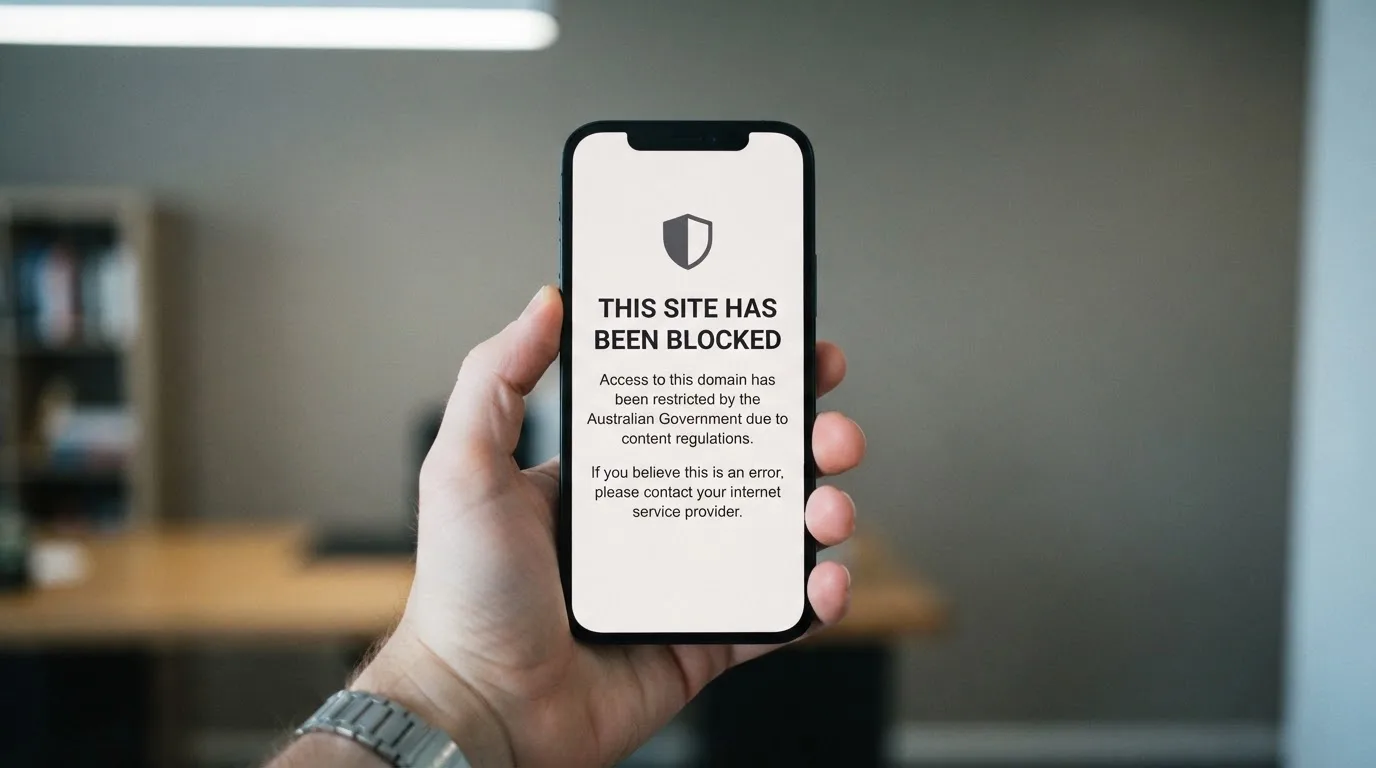
The ACMA investigates suspected breaches, issues formal warnings to the operators behind them, and directs Australian internet service providers to block the offending websites. As reported in June 2026, the ACMA had asked ISPs to block 1,751 illegal gambling and affiliate marketing websites since the first blocking request in November 2019, and more than 230 unlicensed gambling services had left the Australian market since enforcement was strengthened in 2017. In a single round reported on the same day, twelve more sites were referred for blocking: 7Signs, ChromaBet, Donbet, Duospin, Freshbet, Slots Gem, Jacks Club, Lucky Start, Pointsbetz, Spinrise, Vinyl Casino and Wildsino.
The individual player is not prosecuted. The IGA targets the provider. The player’s exposure is to an offshore operator that gives no Australian consumer protection, no complaints body and no recourse if a withdrawal is refused, and the site can be blocked with a balance still on it.
The Northern Territory exception
The Northern Territory Racing and Wagering Commission regulates fifty-two of Australia’s online bookmakers — Sportsbet, Bet365 and Ladbrokes among them — licensed in the Territory for tax reasons. The commission has no full-time staff and meets once a month in Darwin. That is the regulatory depth behind the only licensable form of online gambling available to Australians at scale, and the licence it issues does not extend to online casino games or online pokies.
What an Australian actually loses to illegal sites
H2 Gambling Capital’s 2025 report estimates that Australians lose about A$3.9 billion a year to illegal gambling sites, and that the share of gambling going through legal channels fell from 74% in 2021 to 64%. The fall is the gap between the licensed offer and the offshore offer, and the dollar figure is the price Australians pay to access the second.
The 2026 reform
The Interactive Gambling Amendment (Gambling Reform) Bill 2026 passed Parliament on 19 August 2026; its advertising and inducement measures commence on 1 January 2027. Law with a start date, not yet in force on a 2026 page.
Tax
Gambling winnings of a recreational player are not assessable income, under section 6-5 of the Income Tax Assessment Act 1997, and losses are not deductible. The exception is the player who carries on a business of gambling, where the ordinary income rules apply. For an ordinary player, a win is tax-free and a loss is non-deductible, and the casino’s withholding at source is not a feature of the Australian market.
Player safeguards and the BetStop register
The Australian framework puts the safeguards on the player side, not the casino side, because the casino is the layer the prohibition removes.
BetStop — the National Self-Exclusion Register
BetStop went live in August 2023 and binds every Australian-licensed online and phone wagering service. A player who registers with BetStop cannot open a new account with a participating licensed bookmaker for the chosen exclusion period, and the existing accounts are closed. The register is administered by the Australian Communications and Media Authority, and the data is held against the player’s verified identity.
The key word is “licensed”. An offshore casino is not connected to BetStop, and a self-exclusion through BetStop does not stop the offshore site from accepting the player’s deposit. The exclusion covers the licensed market only.
The 2026 reform and what changes for inducements
The 2026 reform package reaches the licensed market’s advertising and inducement rules, not the offshore market. The changes take effect on 1 January 2027, and the substantive changes — restrictions on bonus offers, sign-up inducements and the like — apply to licensed operators. An offshore site is unaffected, because it is not a participant in the licensed system.
The bank’s gambling block
The block sits at the card level, and the four majors run one in roughly the same form. Westpac refuses to authorise transactions registered under the merchant category code “Betting/Casino Gambling” on eligible personal credit and debit cards. ANZ’s block, activated in the ANZ app, also blocks Gambling Transactions made through a digital wallet such as Apple Pay on an eligible card. Commonwealth Bank’s lock, applied through the CommBank app, blocks most gambling transactions, with the same caveat from the bank that not every gambling-related purchase can be guaranteed stopped.
Once ANZ’s gambling block is on, removing it again requires a 48-hour waiting period. That waiting period is the structural feature that makes the block a real commitment: a player who turns the block off cannot turn it back on for two days, which is enough time for a planned deposit to cool off.
Help lines
The National Gambling Helpline is 1800 858 858, free, twenty-four hours a day. Chat is available at Gambling Help Online. The helpline is staffed by counsellors, not by an enforcement body, and the conversation is confidential. The bank-side blocks and the helpline are independent of each other, and a player can use either without using the other.
What the safeguards do and do not cover
BetStop covers the licensed market. The bank’s block covers the card and the wallet. The helpline covers the player, anywhere in Australia. None of them covers the offshore site, and that is the player-facing consequence of the prohibition. A player who decides to deposit anyway has decided to step outside the safeguard frame, and the safeguards do not follow.
How often blocking lands — the arithmetic of ACMA enforcement
The prescribed calculation for this page is the blocking rate, expressed as a band with its condition.
Take the running total of 1,751 blocked sites reported by the ACMA in June 2026, against the date of the first blocking request in November 2019. Across roughly six and a half years, that is a rate of about 270 sites blocked per year on average, or roughly five a week. The rate is not constant. Enforcement was strengthened in 2017, the first blocking request came in November 2019, and the ACMA’s own rounds have accelerated: the June 2026 round alone added twelve sites in one batch.
State the result as a band, with its condition: the ACMA has been blocking illegal gambling and affiliate marketing sites at a long-run pace of roughly 250-300 sites per year since November 2019, and the current batch rate is faster than that long-run average. The pace reflects the regulator’s active enforcement, not the regulator’s exhaustion of the target set. A reader who reads the band as a forecast is reading more than the figure earns: the band says how the past has gone, and the regulator’s future pace is a separate question.
The conditions the band does not cover matter as much as the band itself. The 1,751 figure counts sites, not brands, and a brand may run several sites; the eleven brands in this article’s shortlist sit across a small number of those 1,751 sites. The 230-services-left figure is a separate count, and the two are not summed. Both are reported on the regulator’s published record and the rate is the band of the published record rather than the band of the live market.
What the rate does not show
The blocking rate is the regulator’s response to a moving target. New sites appear, and the rate reflects the regulator’s working pace rather than the size of the underlying pool. A reader looking for a “we’re winning” or “we’re losing” reading of the band is asking the wrong question: the band is a measure of activity, not a measure of the target’s exhaustion.
How to read the offer as an Australian reader
The first decision is not which casino to choose; it is whether to play at one of these brands at all. The IGA prohibits the offer, the ACMA enforces that prohibition against the operator named on the formal warning, and the bank’s gambling block can refuse the transaction before the deposit clears.
For a player who decides to play anyway
The PayID name check is the cleanest pre-deposit signal. The transfer screen shows the name registered to the receiving PayID before the transfer is confirmed, and a mismatch with the brand is a clear flag. A PayID that does not resolve is a clearer flag, and a deposit request that arrives with urgency attached — limited-time offer, account closure, balance forfeiture — is the third flag. None of these checks are legal advice; all three are the kind of pre-deposit check that costs the player ten seconds.
For a player who decides the lawful route is the right route
Licensed Australian wagering services run on debit cards, bank transfers, PayID/Osko and BPAY; credit cards, credit-related products and digital currency have been banned as payment for licensed online wagering since 11 June 2024. The 50 licensed online bookmakers the NTRWC regulates cover racing and sport, not casino games and not pokies; the licensed venue for those is a land-based casino or a licensed pub with poker machines. The licensed Australian market does not include the online casino product the page’s title describes.
For a player who needs to step back
BetStop is the right tool for the licensed market. The bank-side gambling block is the right tool for the card. The National Gambling Helpline at 1800 858 858, free and twenty-four hours a day, is the right tool for a conversation. The three are independent, and the choice between them is the player’s, on the player’s own time.
The arithmetic of a session, restated
A bonus is a price; the price is the turnover. A session is a price; the price is the expected loss. The two prices are different in kind, and a player who confuses them is reading the offer the marketing copy wants the player to read.
A worked example on the bonus
A A$2,000 deposit, a 50% match and a 35x wagering multiple on the bonus gives a bonus of A$1,000 and a required turnover of A$35,000. At A$1 a spin, thirty-five thousand spins; at five seconds a spin, roughly forty-nine hours of continuous play. At a 96% RTP, the expected loss over those spins is about A$1,400, before any winnings are subtracted from the bonus’s playthrough requirement.
A worked example on the session
The same A$2,000 deposit, played without a bonus at the same stake and interval, runs to a session length of roughly two hours and forty-six minutes. The expected loss over a session is the number of spins times the stake times the house edge — about A$80 over the full two-hour-and-forty-six-minute session, against a deposit of A$2,000. The session is cheaper than the bonus by a factor of more than seventeen.
Why the bonus looks like more money
The bonus is real money in the sense that it sits in the balance and can be played. It is not real money in the sense that it cannot be withdrawn until the wagering multiple is cleared, and the clearing takes the turnover’s house-edge haircut regardless of the bonus’s headline. The bonus is a longer session with a smaller deposit, priced at the cost of the longer session. The arithmetic is mechanical; the conclusion is sharp.
Frequently asked questions
What deposit level typically qualifies a player as a high roller at a casino?
The market has no single definition, but a tier usually starts in the A$1,000-2,000 range, with a higher tier above A$5,000 and a VIP tier above that. The operator sets the tiers, and the tiers are a marketing construct rather than a regulated threshold. A reader looking for an industry-wide definition will not find one; a reader looking for the threshold at a specific brand reads the brand’s VIP page.
Do high-roller bonuses usually come with higher wagering requirements?
The wagering multiple on a high-roller bonus is not always higher than the multiple on a standard offer, but the absolute turnover required is, because the bonus is larger. A 35x multiple on a A$1,000 bonus is a smaller turnover than a 30x multiple on a A$2,000 bonus. The multiple and the dollar figure are separate readings, and the player’s real cost is the turnover’s house-edge haircut, not the multiple itself.
Is it legal for an online casino to offer high-roller bonuses to Australians?
No. The Interactive Gambling Act 2001 prohibits offering online casino games to anyone in Australia, and a high-roller bonus attached to such an offer is part of the prohibited service. The ACMA’s formal-warning register records the operators that have crossed that line. The player is not the target of the prohibition; the operator is.
Can high-roller status be reached through a PayID deposit?
PayID is a payment rail; high-roller status is a marketing tier. A PayID deposit large enough to qualify for a tier does the same thing as a debit-card deposit large enough to qualify, with the bank-side gambling block sitting underneath the transfer either way. The rail and the tier are independent, and the rail’s name-check is the more useful pre-deposit test.
Are high-roller tables or limits offered at licensed Australian land-based casinos?
Yes. Land-based casinos in Australia, including Crown Melbourne, The Star Sydney and the Queensland and South Australian casinos, run high-roller rooms with table limits well above the standard pit. The limits are set by the venue and the regulator, and the offer sits inside the Australian licence frame rather than alongside it.
What should a high-spending player check before trusting a casino site?
The first check is whether the site is licensed in Australia, which no online casino product is. The second is the ACMA register, which records the operators that have crossed the prohibition. The third is the bank’s gambling block, which can refuse the transaction at the card level. The fourth is the PayID name check, which resolves the receiving account before the deposit is sent. None of these checks is a guarantee; together they are the pre-deposit discipline an Australian reader can apply without leaving the bank app.
A short reading list for the player who wants more
The data on this page comes from the ACMA’s formal-warning register and blocking-request record, the Reserve Bank of Australia’s review of merchant card payment costs and the mobile-payments statistics paper, Australian Payments Plus’s pages on PayID, Osko and BPAY, AUSTRAC’s threshold-transaction-report rule page, and the National Self-Exclusion Register’s published record at BetStop. The H2 Gambling Capital 2025 report carries the market-size figures cited on the losses to illegal sites. The Northern Territory Racing and Wagering Commission’s regulatory footprint is the reference for the licensed online wagering sector.
For the player considering the lawful Australian offer, the licensable product sits with the licensed bookmakers on racing and sport, the licensed land-based casinos on casino games and pokies, and the licensed lotteries and keno operators on those products. For the player who needs to step back from gambling, the National Gambling Helpline at 1800 858 858 is free, twenty-four hours a day, and confidential.