
Highest payout online casino australia: what the figure on the page actually costs
A casino promising a 99% return-to-player rate reads like a generous deal. Put it next to a prohibition that has been enforced for years, a list of brands the regulator has warned, and a withdrawal queue that the operator itself controls, and that percentage starts to look like a price tag rather than a gift. The figure on a marketing page is what an offshore site is willing to say about itself. What it costs an Australian who tries to claim it is something the page does not print.

This page works through the highest-payout claim from the ground up: what a payout percentage actually measures, why the figure an operator advertises and the figure a player walks away with are not the same number, which brands the ACMA has formally warned for offering prohibited casino games to Australians, and what changes when a withdrawal is processed through an operator that has no Australian licence to lose.
Currency and date stamp: figures current as of 29 October 2026, checked against the Australian Communications and Media Authority’s published enforcement actions and the Reserve Bank of Australia’s card-payments review.
Table of Contents
- What “highest payout” actually means in a casino’s marketing
- The Australian prohibition that sits over every “highest payout” claim
- Why a higher advertised payout does not improve the odds on any single spin
- The comparison that does not favour any of these brands
- The brands the regulator has named
- The cost that compounds regardless of the advertised rate
- The blocking rate: how fast the regulator is closing the list
- The payment routes that do and do not work for an Australian
- The number H2 Gambling Capital puts on the illegal market
- Why the regulator’s warnings are the only source that matters for this list
- The cost of “highest payout” when the offer is prohibited
- What the responsible-gambling frame adds
- Where this leaves the comparison
- Frequently asked questions
What “highest payout” actually means in a casino’s marketing
Return-to-player is a long-run average, expressed as a percentage of every dollar a game takes in that the game pays back to players across millions of spins. It is not a guarantee about the next spin, the next session, or the next month. It is the figure an operator quotes when it wants to look generous, and it is the figure a player who has just lost is most likely to read.
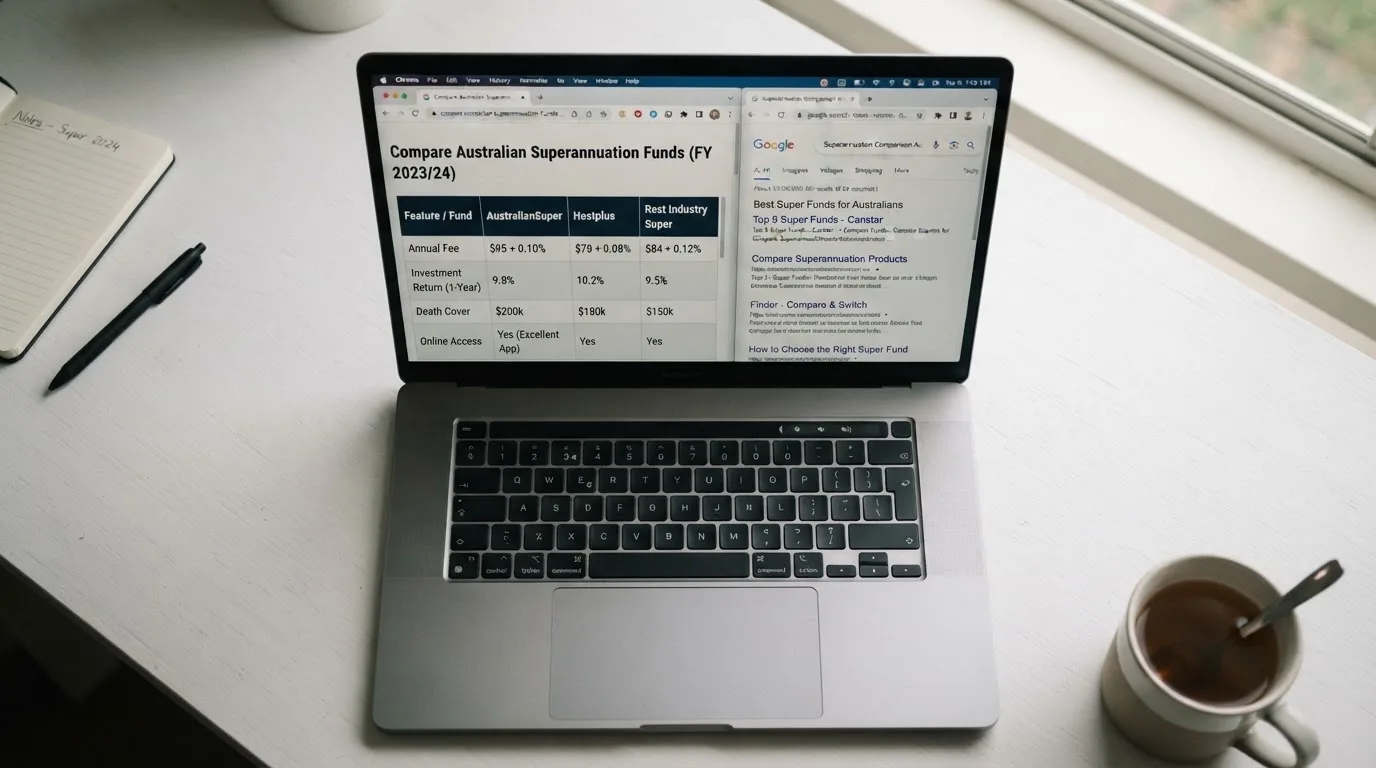
Two things follow from that, and both are easy to lose sight of:
The percentage is an average over a large number of plays. A 96% RTP slot is programmed, at the software level, to return 96 cents of every dollar wagered over the lifetime of the game. Any single session of a few hundred spins will sit somewhere on a distribution that can swing well below or well above that average. A player who joins a session expecting to lose 4% of their bankroll and instead loses 40% has not been cheated — they have watched one short slice of a long statistical curve.
The percentage is fixed per game and uniform per player. The slot does not know who is sitting at it, and the casino does not tweak the rate by player or by deposit size. What changes between sessions is the volatility — the variance around the average — and how long the player sits at the machine. A high-volatility slot at 96% RTP can take a thousand spins without ever returning its long-run average, which is exactly the experience most players remember.
That is the gap the marketing copy sits in. The word “highest” in “highest payout online casino” usually means the operator has picked the games with the highest advertised RTP, dropped them onto a comparison page, and let the percentage do the talking. It does not say what happens to a player who redeems a bonus and discovers the wagering requirement swallows the long-run return several times over.
How RTP differs from the house edge
The two figures are arithmetic twins and marketing opposites. A 96% RTP slot has a 4% house edge — the slice of every wagered dollar the casino expects to keep over the long run. One number describes what the player gets back, the other describes what the house keeps, and they always add to 100%. The reason both phrases appear on the same site is framing: “house edge” sounds like a cost, “return to player” sounds like a benefit, and the same percentage reads differently depending on which way the sentence is built.
Why two slots at the same RTP can pay out very differently
RTP measures the average; volatility measures the spread. A low-volatility slot at 96% RTP pays out small amounts often, which feels generous over a short session but grinds a bankroll down in a familiar way. A high-volatility slot at 96% RTP can go thousands of spins without returning anything significant, then pay a large multiple of the bet in a single hit. Both games carry the same advertised rate. A player who switches from one to the other and wonders why their balance behaves differently is not looking at the wrong number — they are looking at half of it.
The Australian prohibition that sits over every “highest payout” claim
Online casino games — slots, table games, live dealer, online pokies — cannot be lawfully provided to a person in Australia. The Interactive Gambling Act 2001, tightened by the Interactive Gambling Amendment Act 2017, makes the supply of those games a civil offence for the provider. No state or territory issues an online casino licence. The Northern Territory Racing and Wagering Commission supervises 52 of Australia’s online bookmakers for tax reasons, but that licence covers wagering on sport and racing placed before the event, not casino games.
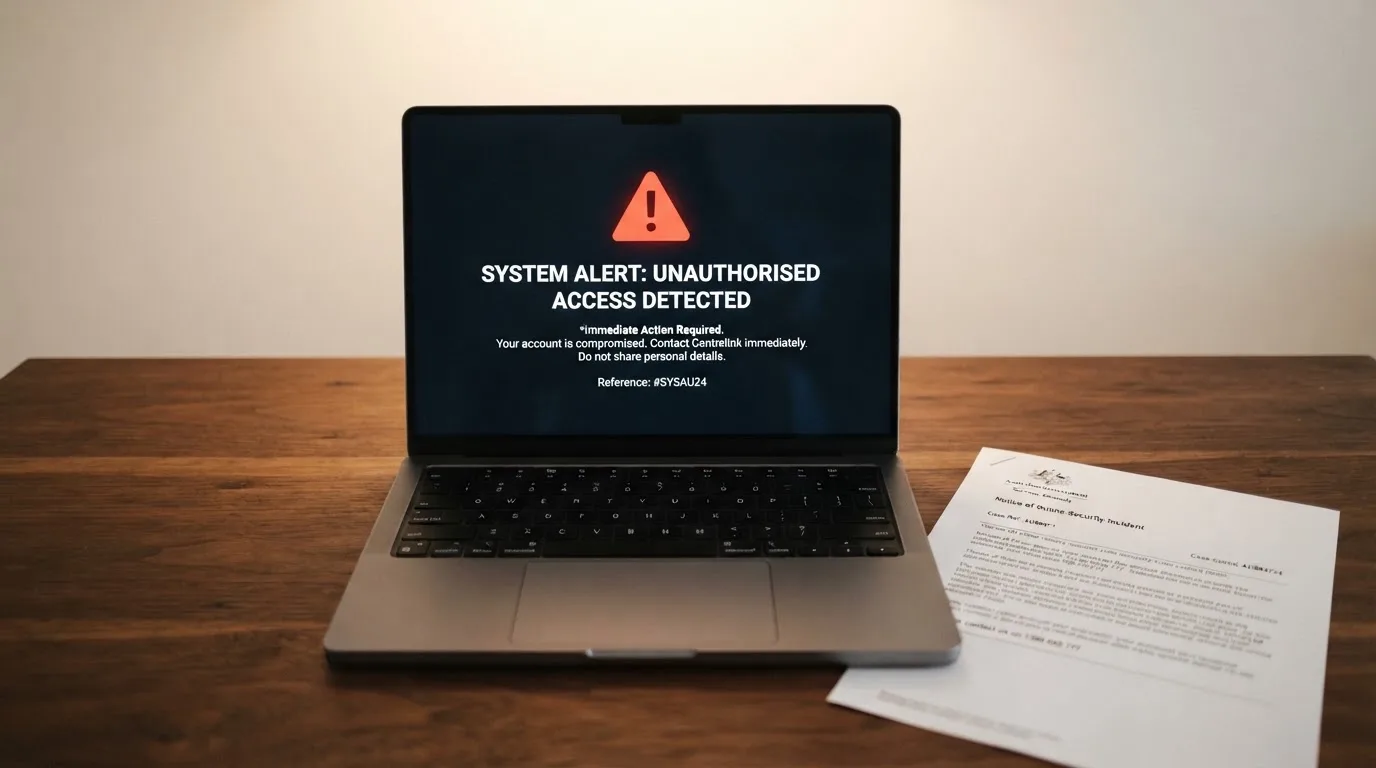
The rule applies no matter how high an operator’s advertised payout percentage is. A site claiming a 99% RTP and running on a Curaçao sub-licence is, for an Australian resident, an illegal service. The figure on the page does not change the legal status of the offer.
What the IGA does not do is prosecute the player. The Act targets the provider — the company hosting the games, the operator running the cashier, the marketing arm drawing Australians in. An Australian who signs up, deposits and plays is not personally exposed to prosecution. They are exposed to everything else that comes with dealing with an offshore operator that has no Australian licence to lose: no Australian consumer protection, no complaints body with jurisdiction, and no practical way to recover a balance when the operator decides not to release it.
How the ACMA enforces
The ACMA’s tools are formal warnings and website blocking. A formal warning is published, names the operator and the brand, and is the regulator’s public record that it has found the site in breach. Repeated warnings can lead to civil penalties, and from November 2019 the ACMA has additionally been able to ask Australian internet service providers to block illegal sites at the domain level.
According to the ACMA, as reported in June 2026, a total of 1,751 illegal gambling and affiliate marketing websites had been blocked since the first blocking request in November 2019, and more than 230 unlicensed gambling services had left the Australian market since enforcement was strengthened in 2017.
The 26 June 2026 blocking round alone added 12 sites: 7Signs, ChromaBet, Donbet, Duospin, Freshbet, Slots Gem, Jacks Club, Lucky Start, Pointsbetz, Spinrise, Vinyl Casino and Wildsino. The blocking list is not a one-off — it is a running log, refreshed every few weeks, and the sites on it are exactly the brands an Australian searching for the “highest payout” is most likely to find.
What the prohibition leaves the player with
The legal wagering channels in Australia are racing, sports betting placed before the event, lotteries and keno. None of those products is what the questions behind this page are addressing. The page exists because Australian players do search for online casinos, do find offshore sites, and do open accounts. The honest reading of that search is not “where do I find the best deal” — it is “what does the best deal on offer actually cost me, given that every site on the list is operating in breach of Australian law?”
Where the Bill that follows sits
The Interactive Gambling Amendment (Gambling Reform) Bill 2026 passed Parliament on 19 August 2026. Its advertising and inducement measures commence on 1 January 2027. For the remainder of 2026 the rules under which these sites operate are the IGA as amended in 2017 and 2023. The Bill adds new advertising restrictions but does not, on the schedule published, change the underlying prohibition on supplying online casino games to Australians.
Why a higher advertised payout does not improve the odds on any single spin
A player who has read a 98% RTP figure and sat down at the game is sitting at a 98% RTP game. The next spin is unaffected. The math behind that is straightforward: the long-run average is built into the random number generator at the game level, and every spin is independently sampled from that distribution. A high RTP does not raise the probability of any individual outcome; it raises the expected return over a very large sample.
What it does change is the size of the edge the house takes, and that compounds in a way the marketing page does not explain. A 94% slot gives the house 6 cents of every dollar over the long run. A 98% slot gives the house 2 cents. Over 10,000 spins at $1 each, the difference is $400 in expected loss — the high-RTP game is cheaper to play in expectation, but the cost is still there, and a session of 200 spins will not move the needle by anywhere near that amount.
The single most common misreading of RTP is to treat it as a session forecast. A player who starts with $100 at a 96% slot and expects to walk away with $96 has misunderstood both the figure and the time scale. The honest forecast for a single session of a few hundred spins is a wide distribution centred on $96 in expectation but easily reaching $0 or $200 in practice. The advertised percentage is a property of the game, not a promise about the player.
The comparison that does not favour any of these brands
The table below lists every brand this page covers, the date the ACMA published a formal warning over it, and the operating company the regulator named. The marketing case for any of them — the headline payout rate, the welcome package, the game list — is independent of the legal status set out below. Every brand here is offering online casino games to Australians in breach of the Interactive Gambling Act 2001. The payout percentage advertised by any of them sits on top of that fact, not beside it.
| Brand | ACMA action and date | Operator named by the ACMA | Subject support |
|---|---|---|---|
| RocketPlay | Formal warning, March 2026 | Pulsup Ltd (RocketPlay); earlier Dama N.V., May 2022 | — |
| Level Up Casino | Formal warning, May 2022 | Dama N.V. | — |
| Woo Casino | Formal warning, March 2025 | Dama N.V. | — |
| Spirit Casino | Formal warning, May 2025 | Dama N.V. | — |
| National Casino | Formal warning, July 2025 | Consolutetish S.R.L. | — |
| Bizzo Casino | Formal warning, July 2025; earlier 2022 | Consolutetish S.R.L.; earlier TechSolutions | — |
| Ignition Casino | Formal warning, July 2025 | Bamboo Media | — |
| Instant Casino | Formal warning, February 2025 | EOD Code SRL | — |
| Jackbit | Formal warning, April 2026 | Ryker B.V. | — |
| Casino Intense | Formal warning, April 2025 | Sterplay Holding Ltd | — |
| Sky Crown | Formal warning (Hollycorn N.V.) | Hollycorn N.V. (Sky Crown, Blue Leo) | — |
The brands sit in date order from earliest to most recent ACMA action. The pattern that runs through the table is not subtle. Dama N.V. alone accounts for four brands across more than three years of enforcement. Consolutetish S.R.L. and its predecessor TechSolutions appear twice for the same two brands, Bizzo and National Casino. The regulator is naming the same operating companies repeatedly, and the same brand names are being put under fresh operators faster than the warnings can be acted on.
The right column — subject support — is empty across every row. The pages that rank these brands on payment methods or payout speed are affiliate marketing outlets, not consumer guides, and the page does not carry their figures forward as if they were independent data. A reader who needs to know whether a specific deposit method works on a specific brand gets no answer from this column, by design.
The brands the regulator has named
RocketPlay
The ACMA’s most recent formal warning over RocketPlay is dated March 2026 and names Pulsup Ltd as the operator of RocketPlay. A separate, earlier Dama N.V. warning from May 2022 covered RocketPlay alongside five other brands. An Australian resident on RocketPlay is dealing with an operator the regulator has told, twice, to stop offering prohibited services. The site’s advertised payout rate, whatever its size, sits on top of a chain of enforcement actions that have not changed the operator’s behaviour.
Level Up Casino
Level Up Casino sits on the May 2022 Dama N.V. warning, one of six brands named in a single enforcement round. A site that has been on the ACMA’s list for close to four years without visible change in its Australian offering is not an outlier — it is the rule the table above illustrates.
Woo Casino
Woo Casino was the subject of a fresh Dama N.V. warning in March 2025, three years after the same operator was warned over Level Up and five other brands. The pattern is one operator, different brand, repeat action.
Spirit Casino
Spirit Casino joined the Dama N.V. warning list in May 2025, two months after Woo Casino. The brand sits in the same operator group as four other entries in the table.
National Casino
The ACMA named Consolutetish S.R.L. over National Casino in July 2025. The same operator was named, in the same round, over Bizzo Casino. A reader weighing the two brands against each other on payout rate is comparing two sites operated by the same company and warned over in the same enforcement action.
Bizzo Casino
Bizzo Casino carries two warnings: the 2022 warning to TechSolutions (CY) Group Limited and TechSolutions Group N.V., and the 2025 warning to Consolutetish S.R.L. The operator identity has changed across the gap, which is a familiar pattern in this market — the brand survives, the registered company does not.
Ignition Casino
The ACMA warned Bamboo Media over Ignition Casino in July 2025. Bamboo Media does not appear elsewhere in the table, which makes Ignition one of the few brands here tied to a single, isolated enforcement action.
Instant Casino
Instant Casino is the brand at the centre of the ACMA’s February 2025 warning to EOD Code SRL. It is the brand the regulator chose to single out at the start of 2025, ahead of the round of Dama N.V. warnings that followed.
Jackbit
Jackbit sits under Ryker B.V., the operator named in the ACMA’s April 2026 warning alongside CasinOK. Jackbit is the most recent brand in the table that is not a RocketPlay line.
Casino Intense
Sterplay Holding Ltd was the operator named over Casino Intense in April 2025. The brand does not recur elsewhere in the table.
Sky Crown
Hollycorn N.V. is the operator named over Sky Crown and Blue Leo in the September 2022 warning the ACMA has published. The brand has not been the subject of a more recent ACMA action; that is the most that can be said for it.
The cost that compounds regardless of the advertised rate
The arithmetic the marketing page does not do is the one that matters. A $1,000 bankroll at a 96% RTP slot has an expected long-run loss of $40 for every 1,000 spins. The same $1,000 at a 98% RTP slot loses $20 for every 1,000 spins. Both figures are tiny against the bank’s edge on a few hundred spins, and both are invisible against the size of a single bonus-chasing session.
The compounding effect appears when the bonus terms are attached. A bonus with a wagering requirement, even at a high-RTP slot, multiplies the expected loss by the number of times the bonus must be turned over. A bonus that pays $100 with a 40x wagering requirement means the player must wager $4,000 before the bonus is withdrawable. At a 96% RTP slot, the expected loss on that $4,000 turnover is $160. The bonus has paid the player $100 and cost them $160 — a net $60 deficit on a “free” offer. A 98% RTP slot narrows that deficit to $80 of expected loss against $100 of bonus, leaving a $20 shortfall. Either way the player is paying for the bonus; the RTP only decides how much.
This is the move that the marketing page conceals. The percentage quoted is a per-spin number, applied to the full turnover the bonus requires, which is several times the deposit. A 2% edge over 4,000 spins is $80 of expected loss, not $20. The reader who saw “98% RTP” on the comparison page and skipped the wagering terms in the small print has paid for the omission.
The blocking rate: how fast the regulator is closing the list
The blocking figure is the most measurable part of the picture. The ACMA’s first blocking request went out in November 2019, and as of June 2026 the running total of blocked sites stood at 1,751. The arithmetic on that is straightforward and the result is a band, not a single number.
1,751 sites blocked over the period from November 2019 to June 2026 is roughly 80 months of enforcement. That works out to an average of about 22 sites blocked per month, or roughly one site every 33 hours. The average smooths over uneven rounds — the 26 June 2026 round added 12 sites in a single batch, while other months add fewer than five — but it is the only figure that does not depend on which specific month the reader happens to be looking at.
The condition that turns the average into something a reader can use: the rate is for the period since the first blocking request, not for the period since the IGA was passed. November 2019 is when the ACMA first had the power to direct ISPs to block; everything before that sits outside the calculation. Sites the ACMA has named in formal warnings but not yet moved to block are also outside it — the figure counts blocking, not warning.
That distinction matters for the table on this page. Every brand in the table is on a formal warning; not every brand in the table is on the blocking list. The two enforcement tools move on different timelines, and the rate above is the rate at which the second tool is being applied. The first tool has been running longer.
What the rate does not say
A blocking rate of 22 sites a month does not say that 22 new illegal casinos appear in Australia every month. Many of the blocked sites are mirror domains, affiliate pages and rebranded shells that the same operator puts up after the previous domain is taken down. The number is the regulator’s workload, not the size of the market. From the player’s perspective, the relevant question is whether the brand they signed up with is the one the regulator is currently looking at — and the answer, for every brand on the table, is yes.
The payment routes that do and do not work for an Australian
What the licensed channels use
A wagering service that holds an Australian licence — a sportsbook or a racing book — accepts deposits through debit cards, bank transfers, PayID/Osko and BPAY. Credit cards, credit-related products and digital currency are banned as payment for licensed online wagering since 11 June 2024, with penalties up to $247,500 for operators who breach the rule.
PayID and Osko are the parts of the Australian payments stack that move money in under a minute, 24/7, between participating banks. By April 2025 more than 25 million PayID identifiers had been registered on the New Payments Platform. Osko is the brand name for the instant-transfer service; PayID is the addressing layer that lets a payer use an email, phone number or ABN instead of a BSB and account number. BPAY, the older bill-payment service that has operated since 1997, is also still live in over 140 banks.
None of those payment methods is designed for offshore casino deposits. An Australian-licensed wagering operator routes them through the Australian banking system, which is where the credit-card ban and the transaction-monitoring rules sit. An offshore casino routes deposits through its own payment processors, usually in a currency other than AUD, and the Australian bank never sees the merchant category.
What the player’s own bank will sometimes refuse to send
Several Australian banks now offer a card-level gambling block. ANZ, Commonwealth Bank and Westpac all maintain versions of the feature, and ANZ’s block covers not just the physical card but digital-wallet transactions such as Apple Pay on the same card. The bank’s block works by refusing authorisation of transactions registered under the merchant category code “Betting/Casino Gambling” on the eligible card.
Two caveats matter here. The first is that the bank states it cannot guarantee that every gambling transaction will be blocked, or that every blocked transaction is a gambling one — false positives are possible. The second is that the block is at the card level, not the merchant level: an offshore casino routed through a different merchant code, or through a wallet that does not pass the MCC through, may still get authorisation. The block raises the friction; it does not close the door.
Apple Pay and the digital-wallet route
Apple Pay, Google Pay and Samsung Pay together accounted for around 45% of all card payments in Australia by number at the end of 2025. The convenience is genuine; the surcharge-free claim is also genuine — Apple itself does not charge consumers for using the wallet, and any surcharge at the checkout is the merchant’s own card-processing fee, not Apple’s.
The relevant Australian restriction is on the funding card, not on the wallet. The credit-card ban that took effect on 11 June 2024 applies to credit-related products, and a credit-funded digital wallet such as Apple Pay on a credit card falls under the same prohibition for licensed wagering. The Reserve Bank of Australia’s July 2025 review proposed removing surcharges only on eftpos, Mastercard and Visa transactions, leaving American Express outside the proposed surcharge ban. None of that changes the underlying question for an Australian looking at an offshore casino: the wallet route to the casino is not a path the wallet or the bank is going to bless, and the bank-level gambling block, where it is on, treats the wallet transaction as a card transaction.
Why a fast payout is not the same as a guaranteed payout
Osko deposits arrive in under a minute, but an Osko deposit is the easy direction. The withdrawal direction runs through the casino’s own settlement review, and that review is where offshore operators take their time. A site advertising the “highest payout” is usually advertising two things at once: the return-to-player percentage of its games and the speed of its withdrawal queue. The first is a property of the game software; the second is a property of the operator’s own back office. Neither is independently audited at the level a player can rely on.
This is the practical version of the rule above. A fast withdrawal on a high-RTP slot is what every offshore operator puts on its homepage, and what every player who has won enough to withdraw discovers the operator does not necessarily honour. The fact that the ACMA has warned over the brand is not, on its own, evidence that withdrawals are refused. It is evidence that the brand is operating in a regulatory grey zone where the player has no Australian complaints body to escalate to if a withdrawal stalls.
The number H2 Gambling Capital puts on the illegal market
The most-cited figure on the Australian offshore gambling market is the A$3.9 billion per year that H2 Gambling Capital’s 2025 report estimates Australians lose to illegal gambling sites. The same report estimates that the share of gambling going through legal channels fell from 74% in 2021 to 64%. The decline is not a rounding error — it is a ten-percentage-point drop in the legal channel’s share over four years.
The figure is an estimate, not an audited number. Offshore gambling is by definition not reported to any Australian authority, so the basis is modelled rather than measured. The direction of the change, however, is consistent with what the blocking rate and the warning list both show: the offshore market is large, the regulator is acting against it, and the proportion of Australians who use offshore sites rather than licensed wagering is going up, not down.
For the reader comparing two offshore brands on payout rate, that A$3.9 billion is the market the brands are competing for. It is also the amount Australians collectively spend, every year, on a category of gambling the Australian regulator has been trying to shut down for the better part of a decade.
Why the regulator’s warnings are the only source that matters for this list
Every brand in the table above has been named by the ACMA in a formal warning. That is the only piece of independent information this page carries about any of them. There is no equivalent, in Australia, of the UK Gambling Commission’s public licence register that a reader can use to check whether an offshore operator is licensed at home. The brands here are licensed in Curaçao, in Anjouan, or in whichever small jurisdiction is currently issuing sub-licences to operators the ACMA has told to stop.
Two consequences follow. First, the consumer protections an Australian player might expect — dispute resolution, segregation of player funds, advertising standards — are not enforced against these brands by any Australian regulator. The licence the brand displays is enforced by a regulator that has no jurisdiction over an Australian player. Second, the ACMA’s warning list is, by default, the only published Australian record of which offshore brands have been caught offering prohibited services. It is incomplete — only what the regulator has got around to formally warning is on it — but it is the list a player should consult before opening an account, and every brand this page covers is on it.
The cost of “highest payout” when the offer is prohibited
The arithmetic is simple and the marketing page is structured to obscure it. An Australian who opens an account at one of the brands in the table has, on the regulator’s own published record, joined a site that has been formally warned for offering prohibited services to Australians. The site’s advertised payout rate is not a basis for setting that aside. The percentage describes the game’s long-run return; it does not change the operator’s legal status, the absence of Australian consumer protection, or the regulator’s standing view that the site should not be accessible from Australia.
The cost of the offer to the player runs through four layers:
The expected loss on the games, which the high RTP narrows but does not eliminate.
The bonus terms, which multiply the expected loss by the wagering turnover and can leave a net deficit even at a high payout rate.
The withdrawal queue, which is under the operator’s control and against which the player has no Australian recourse.
The blocking risk, which is non-zero for every brand on the regulator’s list and which can strand a balance on a site the player can no longer reach.
A reader who saw the headline figure on a comparison page and skipped the rest of this page has read one layer and missed three. The percentage on the marketing page is the cheapest part of the calculation; the operator’s regulatory status, the bonus terms and the withdrawal queue are where the actual cost is decided.
What the responsible-gambling frame adds
A high advertised payout rate does not guarantee any individual session will end in a win, and treating it as a reason to chase losses is the failure mode this page is partly written to head off. The mechanism is familiar: a player on a losing streak moves to a higher-RTP game on the assumption that the percentage will rescue the session, when in fact the percentage is the same property of the game on the losing streak as on the winning one. The RTP is what the game does over millions of spins; it is not what the player’s next spin will do.
Australia’s responsible-gambling infrastructure is built around licensed wagering. BetStop, the National Self-Exclusion Register, has been live since August 2023 and binds Australian-licensed online and phone wagering services. An offshore casino is not connected to BetStop. A player who has self-excluded from Australian wagering and then opens an account at an offshore casino has not breached the self-exclusion — BetStop does not cover the offshore site — but has also not solved the problem that prompted the self-exclusion.
The National Gambling Helpline is 1800 858 858, free, 24/7, with chat at Gambling Help Online. The helpline and the chat service are not offshore-specific; they are general gambling-harm support, and they are the right service to call whether the gambling in question is licensed or not.
What to read before depositing on any of these brands
If a reader has decided to open an account at one of the brands on this page despite the regulator’s record, the minimum list of documents to read is:
The bonus terms, in full, with the wagering multiple, the max-cashout cap and the game-weighting rules clearly noted. The advertised payout rate does not apply uniformly across games, and bonus play is usually restricted to a subset.
The withdrawal terms, including the maximum withdrawal per day or per week, the internal review period the operator reserves, and the documentation the operator will ask for at cashout. The fastest advertised payout speed is for the first small withdrawal; the slow part begins when the amount gets larger.
The regulator’s published warning over the brand, which is in the public record at acma.gov.au. A reader who has read the regulator’s case for the warning has read the case for the regulator’s view of the brand.
The bank’s own gambling-block setting, which is the only piece of friction the Australian side of the transaction can apply. ANZ’s block covers Apple Pay and Google Pay on the same card, with a 48-hour waiting period to remove it. Commonwealth Bank’s CommBank app offers a similar lock. Westpac refuses authorisation at the merchant-category level on eligible personal credit and debit cards.
None of those readings changes the legal status of the offer. They change what the player is committing to, and what recourse the player has if the offer does not deliver.
Where this leaves the comparison
A ranking of offshore casinos by advertised payout percentage is not what this page is. Every brand the page covers is on the ACMA’s published warning list, and the regulator’s view of an Australian-facing offshore casino is uniform across the table: the service is prohibited, the operator has been formally warned, and the player has no Australian consumer protection.
What the table does is name the brands the regulator has caught, in the order the regulator caught them, with the operating company the regulator named at the time. It does not pick a “highest payout” winner. It does not say one brand is safer than another to deposit at. It says, for each row, what the Australian regulator has already said about it.
The reader who arrived at this page looking for the offshore casino with the best return-to-player percentage has arrived at a table that does not answer that question and explains why. The page’s contribution to that search is the layer the comparison page skipped: the percentage is real, the operator is named in the warning list, and the cost of the offer to the player includes everything the percentage does not cover.
Frequently asked questions
What does a casino’s advertised payout percentage actually measure?
A casino’s advertised payout percentage — usually labelled return-to-player or RTP — is the share of every dollar wagered that the game pays back to players over a very large number of spins, typically millions. It is set in the game’s software and audited at the certification stage, not at the live session the player is sitting at. A 96% RTP slot returns 96 cents of every dollar wagered across its lifetime, not across the next hundred spins.
Does a high return-to-player rate mean a player is more likely to win on any single spin?
No. The RTP is a long-run average; every spin is independently sampled from the same distribution. A 98% RTP game does not raise the probability of any individual outcome; it raises the expected return across a very large sample. A player sitting down at a high-RTP slot has the same per-spin odds of a win or a loss as the long-run average implies — which is to say, the house still has an edge, and a single session can land anywhere on a wide distribution around the average.
How is an online casino’s payout rate different from a single game’s house edge?
The two figures are arithmetic twins and always add up to 100%. A 96% RTP game has a 4% house edge — the slice of every wagered dollar the casino expects to keep over the long run. Marketing pages use “RTP” because it sounds like a benefit; the same number described as the “house edge” sounds like a cost. The percentage is identical either way.
Can an advertised payout percentage be independently verified by a player?
Not at the level a player can rely on during a live session. Independent testing houses such as eCOGRA, iTech Labs and GLI certify games in batches, and the certificate covers the software version submitted for testing. The certificate does not run continuously on the live game, and it does not confirm the operator is running that exact software version with that exact configuration. The player can read the certificate and trust the operator not to have swapped versions, which is a thinner check than it sounds.
Does a higher payout percentage change how quickly a withdrawal is processed?
No. The RTP describes the game’s long-run return to players; the withdrawal speed is set by the operator’s own settlement review. The two numbers are independent. A high-RTP slot on an operator with a slow or selective withdrawal process can pay out 98% in the long run and still leave the player waiting weeks for a cashout the operator has decided to hold. The advertised payout percentage tells the player nothing about how the operator will behave when the player wins enough to withdraw.
Why might a game’s real-world payout differ from its advertised long-run average?
The long-run average is by definition an average over a very large number of plays, and any individual session is a small slice of that distribution. A high-volatility slot at 96% RTP can go thousands of spins without returning its long-run average. The advertised figure is what the game does across millions of spins, not what it does for any one player over any one session. The honest reading is that the average will appear over time, and a short session can sit well above or well below it.
Can the advertised RTP be independently checked?
No reliable public audit exists at the game level for an individual player. Independent testing houses such as eCOGRA, iTech Labs and GLI certify games in batches, and the certificate covers the software version submitted at the time. The certificate does not run continuously on the live game the player is sitting at, and it does not confirm the operator is running that exact software version with that exact configuration. The check the player can do is to look at the certification, look at the game version, and trust the operator to have not swapped one for the other.
That trust sits awkwardly next to the broader fact about Australian-facing offshore casinos: the brands discussed later on this page are all on the ACMA’s published warning list. An operator that the regulator has caught offering prohibited services has, by definition, less of an incentive to keep its advertised configuration intact than an operator whose licence depends on it.