
Pokies in Canberra: What the 2026 Floor Looks Like
Canberra is not a market where a player picks between an online casino and a pub. The decision was made in 2001, tightened in 2017, and again this August, and a punter who searches for “pokies” today meets the same two-layer landscape the rest of Australia meets. On one layer are the licensed venues in the ACT and the one licensed casino in the CBD. On the other are offshore sites that name a “pokies” section and route every deposit through Curaçao or a similar jurisdiction the ACMA has no power to discipline. The Interactive Gambling Act 2001 makes offering online casino games to anyone in Australia unlawful; the operator carries that risk, not the player, but the player also carries the practical consequences — no dispute body, no local recourse, and a withdrawal that can stall behind a blocking order.
A page that sorts that out honestly does three jobs. It points to the venues that are actually licensed to run electronic gaming machines in Canberra. It walks through the ACMA’s published enforcement record against offshore brands that marketed “pokies” sections to Australians. And it sets the practical frame — the cashless card scheme the ACT has rolled out, the self-exclusion register that does not cover a casino floor, and the payment ban that took effect on 11 June 2024. The page does not name a brand as somewhere to play. It tells a reader what the regulator has already decided about each one.
Data current as of 29 October 2026 and checked against ACMA enforcement publications and the ACT Gambling and Racing Commission’s casino register.
Table of Contents
- Game Floors, Paytables, Cashless Cards: How Canberra Pokies Actually Work
- Territory Licensed Venues: Regulatory Overview
- The Top 11 Offshore Brands the ACMA Has Warned: A Comparison
- What “Pokies in Canberra” Actually Means in 2026
- Why Offshore “Pokies” Sites Are a Different Product
- Responsible Gambling: Where the Help Actually Lives
- The Land-Based Landscape: What 2026 Actually Looks Like
- Payments, Payout Percentages, and the 11 June 2024 Ban
- The Offshore Brands the ACMA Has Warned: What Each One Means
- What the Enforcement Picture Looks Like as a Whole
- The Practical Decisions a Canberra Punter Faces
- The Operator Set’s Verdict, in Plain Terms
- Frequently Asked Questions About Pokies in Canberra
Game Floors, Paytables, Cashless Cards: How Canberra Pokies Actually Work
The paytable mechanics that decide a session
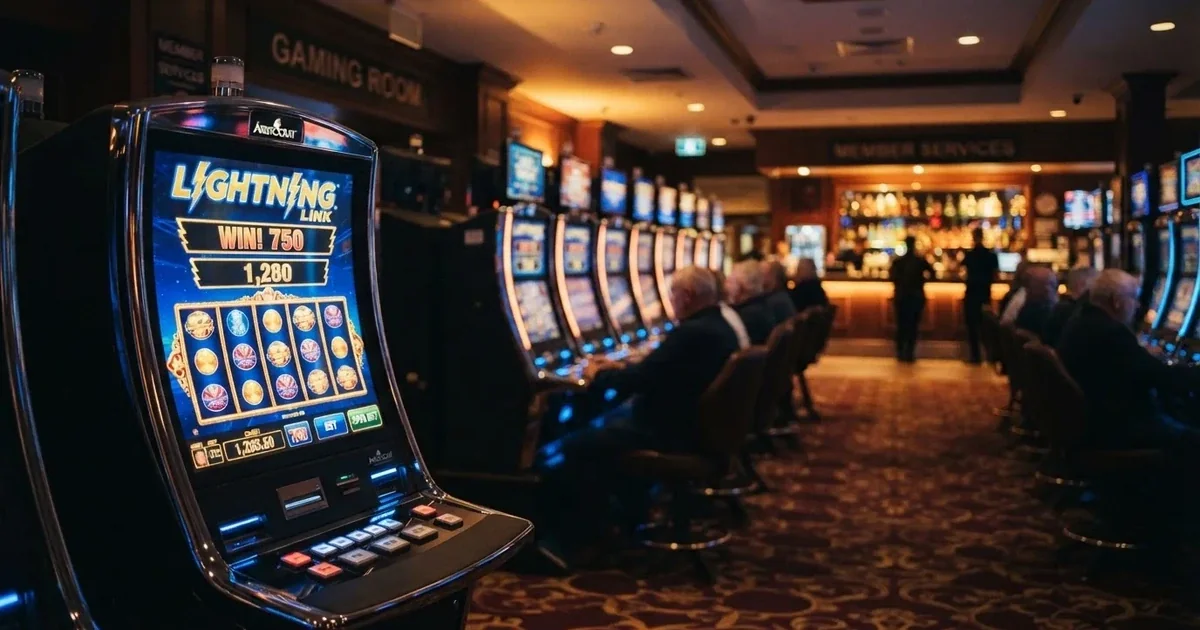
A pokies session in an ACT club or pub runs on the same kind of machine a Melbourne or Sydney venue runs. The screen carries a published return-to-player rate, a volatility class, and a list of feature triggers. The house edge is whatever 100% minus that RTP comes to, and that figure is what an “expected loss” calculation multiplies by turnover — there is no separate “pokies edge” beyond it. South Australia sets a statutory floor of 87.5% RTP outside Adelaide Casino, with a A$5.00 general maximum bet; the ACT does not publish a like-for-like national floor and most ACT venues display 87% to 92% on the help screen.

A Canberra punter choosing a machine is choosing between two variables the screen prints: hit frequency (how often a spin returns anything at all) and volatility (how much of the total return lives in the rare large feature). Low volatility is what makes a A$40 session feel busy; high volatility is what makes a single bonus round decide the whole night. Neither is “better” on its own terms — a low-volatility high-hit-frequency machine eats bankroll slowly, a high-volatility machine returns less often and pays more when it does. A player with a fixed budget for a night picks by what they want the session to feel like, not by which screen looks newer.
What the ACT’s cashless card scheme changes at the machine
The ACT has rolled out a cashless gaming card scheme across its licensed clubs and pubs. The mechanics are practical. A player loads funds onto the card at a kiosk, inserts it at the machine in place of cash or a ticket, and the machine credits the balance directly. The card also enforces the pre-commitment limits a player sets — a daily, weekly or monthly cap that the machine will not let a session blow past. For a punter who plays in venues outside the ACT, this is the model most other states are now moving toward; for a Canberra punter, it is already the default.
The card does not change RTP or house edge. It changes the visible cost of a session. A player who used to feed cash through a machine and walk out without counting can now sit down at session end and read the card balance against what they loaded. The ACT Government framed the rollout as a harm-minimisation measure; the practical effect on a single punter is that the budget they set is the budget they cannot exceed without a deliberate decision to raise it at the kiosk. Whether that changes behaviour on the floor is what the harm-minimisation research will eventually answer. What it changes for a punter tonight is the friction between “I meant to stop” and “I actually stopped”.
24-hour access and the venues that offer it
The phrase “24-hour pokies in Canberra” turns up in search traffic and does not map cleanly onto the territory. Casino Canberra in the CBD operates continuously, subject to its own licence conditions, and is the single venue that genuinely answers the search literally. Clubs and pubs in the ACT trade more constrained hours — most open from late morning and close their gaming floors in the early hours of the morning, with the exact closing time set by each venue’s licence and by the responsible-gambling conduct rules the ACT Gambling and Racing Commission enforces. A punter who arrives at 3am with the intent of finding a working machine in Civic has one realistic option, not eleven.
The one casino that does not run pokies
Casino Canberra, in Binara Street, was the first legal casino in the ACT and sits on land excised from Glebe Park under a 99-year lease. It is also the only casino in Australia not licensed to operate poker machines. The floor carries 39 gaming tables for blackjack, roulette, baccarat and similar games, a poker lounge and a sports lounge; the slot floor, if a player expects one, is not there. A punter searching specifically for “pokies” inside a casino setting will not find a Canberra equivalent; the Adelaide Casino in South Australia runs 950 gaming machines alongside its 90 tables, and Brisbane’s Star at Queen’s Wharf runs a comparable footprint, but Casino Canberra is a table-only operation by design and by licence.
Territory Licensed Venues: Regulatory Overview
| Venue type | Location/Status | Gaming machine count |
|---|---|---|
| Licensed Clubs | 46 venues | 3,587 (operating) |
| Casino Canberra | Civic (Binara St) | 0 (table-only) |
| Total (Territory) | Licensed venues | 3,587 machines |
The Top 11 Offshore Brands the ACMA Has Warned: A Comparison
The table below lists operators that have been subject to formal ACMA warnings regarding prohibited online casino services. Each row includes the operator named by the regulator, the warning date, and its current listing status. Listing here indicates an enforcement action, not an endorsement of the brand’s services.
| Brand | ACMA action and date | Operator named by the ACMA | Subject support |
|---|---|---|---|
| RocketPlay | March 2026 | Pulsup Ltd | No data |
| Level Up Casino | May 2022 | Dama N.V. | Listings-only |
| Woo Casino | March 2025 | Dama N.V. | Listings-only |
| Spirit Casino | May 2025 | Dama N.V. | No data |
| National Casino | July 2025 | Consolutetish S.R.L. | Listings-only |
| Bizzo Casino | July 2025 | Consolutetish S.R.L. | No data |
| Ignition Casino | July 2025 | Bamboo Media | No data |
| Instant Casino | Feb 2025 | EOD Code SRL | No data |
| Jackbit | April 2026 | Ryker B.V. | No data |
| Casino Intense | April 2025 | Sterplay Holding Ltd | Listings-only |
| Sky Crown | Sept 2022 | Hollycorn N.V. | Listings-only |
A reader comparing this table to the previous year’s should notice what has changed and what has not. The set of named operators has thickened — three fresh warnings in 2025 and 2026 alone (Rocketplay.com.au in March 2026, Jackbit and CasinOK in April 2026, the Ryker B.V. action) — and the same operator names recur. Dama N.V. alone accounts for four of the rows. That recurrence is the ACMA’s enforcement pattern, not a coincidence: when one holding company rebrands or spins up new skins, each new skin attracts its own warning. A punter who treats a name change as evidence the operator has “cleaned up” is treating marketing copy as fact.
The table is not a shortlist. It is the regulator’s own index of the brands that have marketed casino games — including sections labelled “pokies” — to Australians. None of them is a place a reader can legally play from Canberra, and none of them carries an Australian consumer-protection pathway if a withdrawal is refused. The brand names appear here because the ACMA published them; their appearance is a record of enforcement, not a recommendation.
What “Pokies in Canberra” Actually Means in 2026
The licensed floor, in numbers
The ACT carried 3,587 gaming machines operating across 46 venues on 1 November 2023, with another 1,504 approved but not yet on a floor. Player losses across the territory for the 2022-23 financial year ran to A$0.19 billion. That figure is the cost the territory’s electronic gaming machines extracted from players in a single year — not the gross amount put through the machines, not the winnings paid back, but the net retained. For a per-adult comparison the South Australian figure gives a sense of scale: South Australia recorded about A$0.92 billion in losses outside Adelaide Casino in the same period, roughly A$497 per adult, against a larger machine base of 11,672 gaming machines in 471 venues in September 2023. Queensland carries the heaviest concentration at 21,122 gaming machines across 351 venues in October 2023.
A reader comparing these figures should hold two things at once. The ACT is a small jurisdiction with a smaller machine base, and its per-venue loss figure reflects that. The ACT’s 87% to 92% RTP band is also broadly comparable to the statutory 87.5% floor South Australia enforces outside its casino, which means a punter in Canberra is not paying a structurally higher house edge than a punter in Adelaide or Brisbane. What differs is the cap on bet size and the cashless card regime; the RTP band does not.
The single licensed casino
Casino Canberra sits at 21 Binara Street in the CBD, built on land excised from Glebe Park under a 99-year lease. The licence was issued to Aquis Canberra Pty Ltd on 23 December 2014 under section 22 of the Casino Control Act 2006 and is now held by Casino Canberra Limited. The casino is regulated by the ACT Gambling and Racing Commission under the Casino Control Act 2006 and Casino Control Regulation 2006; the same commission issues casino employee licences, with short-term licences valid up to 6 months and full licences valid for 3 years. Casino Canberra is the only casino in Australia not licensed to operate poker machines — the floor runs 39 gaming tables and the supporting lounges, no slots. A punter walking into the venue expecting the Adelaide or Brisbane casino footprint will find a smaller, table-only operation.
The venue has no hotel, no theatre and no retail; it is a gaming-floor-only operation by design. The 99-year lease on the Glebe Park land gives the operator long-term certainty the venue will remain in its current footprint for the duration of the lease, and the ACT’s single-casino policy means there is no second ACT licence against which to benchmark service standards. The casino carries the territory’s full table-game footprint; the territory’s pokies footprint sits in the 46 licensed clubs and pubs the rest of this page covers.
The licence frame: ACT and federal
The ACT Gambling and Racing Commission administers the territory’s casino, liquor and gaming-machine regulation. The federal layer is the Interactive Gambling Act 2001, which prohibits the supply of online casino games, online pokies and in-play betting to a person in Australia, regardless of where the operator is incorporated or what licence that operator holds offshore. The 2017 amendments strengthened the ACMA’s enforcement powers; the Interactive Gambling Amendment (Gambling Reform) Bill 2026 passed Parliament on 19 August 2026 and brings further advertising and inducement measures into force on 1 January 2027. The Act targets the provider, not the player; the player is not prosecuted for using an offshore site, but the offshore site itself can be formally warned, directed to be blocked by Australian ISPs, and shut out of the Australian market.
How a punter is identified before play
The ACT’s venues require identification before letting a patron onto the gaming floor or into the casino. Casino Canberra checks photo ID at the door against the venue’s exclusion register and the ACT’s self-exclusion list. The ACT clubs and pubs require proof of age on entry to the gaming floor and run the cashless gaming card on the machines themselves, which records play activity against the registered cardholder. BetStop, the National Self-Exclusion Register launched on 21 August 2023, does not cover Casino Canberra’s table games or the ACT’s pokies machines in clubs and pubs; ACT residents who want to self-exclude from Casino Canberra use the ACT Gambling Harm Prevention team’s own process, available for exclusion periods of 6 months to 3 years. A punter who has registered with BetStop and assumes that registration bars them from Casino Canberra is mistaken — BetStop binds Australian-licensed online and phone wagering services only.
The cashless card enforces identification at the machine even in venues that do not check ID at the door. A player who loads a card at a kiosk has identified themselves to load the funds, and the machine logs play against that card. A punter who tries to bypass identification by playing cash on a machine that accepts it will find fewer and fewer of those machines as the rollout completes across the territory.
Why Offshore “Pokies” Sites Are a Different Product
The legal position, plainly stated
The Interactive Gambling Act 2001 prohibits offering online casino games — including online pokies — to a person physically in Australia. No state or territory licenses them. The phrase “no-data” or “listings-only” against an operator in the comparison table above is not a comment on the operator’s quality; it is a comment on what research could verify about whether the operator’s “pokies” offering had any Australian-facing content at all. The legal position is the same either way: an offshore site offering “pokies” to an Australian is operating unlawfully under the IGA, and the operator carries that risk, not the player.
A reader who treats “Australian dollar accepted” or “AUD-friendly banking” as evidence of legitimacy is reading the marketing copy and missing the legal frame. An offshore operator accepting AUD is an offshore operator who has decided to serve Australian customers in Australian dollars; the IGA does not exempt them because the deposit is in the local currency. The Interactive Gambling Amendment (Gambling Reform) Bill 2026 extends the advertising and inducement restrictions further from 1 January 2027, which means the marketing reach these operators can lawfully deploy will narrow again.
The blocking rate, as the ACMA records it
The ACMA’s blocking programme began with the first formal blocking request in November 2019. As reported in June 2026, the cumulative count of illegal gambling and affiliate marketing websites the ACMA has asked Australian ISPs to block had reached 1,751, with more than 230 unlicensed gambling services leaving the Australian market since enforcement was strengthened in 2017. The June 2026 round alone asked ISPs to block a further 12 sites: 7Signs, ChromaBet, Donbet, Duospin, Freshbet, Slots Gem, Jacks Club, Lucky Start, Pointsbetz.com, Spinrise, Vinyl Casino and Wildsino.
The arithmetic belongs to this page. From the first blocking request in November 2019 to the most recent published count in June 2026 is roughly 79 months. Across that span the ACMA’s enforcement moved the count from zero to 1,751 blocked websites, an average pace of just over 22 blocking actions per month, with the additional 12 of the June 2026 round stacked on top of an already-saturated enforcement record. The pace has not been uniform: the early years after the 2017 amendments were slow as the ACMA built its case files, and the recent rounds have been larger and faster as the formal warning process matured. A punter who reads the cumulative figure as evidence the ACMA is “losing the fight” is reading the cumulative figure as if it were a net measure of illegal sites still operating; it is a gross count of blocking actions, not a measure of what is still standing.
The total is a band, not a point. The early portion of the period — November 2019 through mid-2022 — accounts for the first wave of blocking actions against the most-prominent offshore brands. The later portion — 2023 through June 2026 — covers the rapid expansion of small and short-lived operator skins, many of which the ACMA has warned by holding company and which have rebranded faster than the regulator can publish individual actions against each skin. The rate is a band of roughly 10 to 30 blocking actions per month, with the upper end dominated by affiliate marketing pages and the lower end by the named operators themselves.
A second figure widens the picture. H2 Gambling Capital’s 2025 report estimates that Australians lose about A$3.9 billion a year to illegal gambling sites, and that the share of gambling going through legal channels fell from 74% in 2021 to 64%. The blocking programme is removing the sites; the money is still moving offshore. The block-and-leave pattern is what the H2 figures describe: the ACMA removes the storefront, the punter and the deposit channel move with the next brand the affiliate network promotes. The enforcement record is not the same figure as the harm reduction outcome.
The practical consequences for a player
The player using an offshore site carries the consumer-protection consequences the operator does not. The IGA targets the provider, so the punter is not at risk of prosecution for playing. What the punter is at risk of is a withdrawal that stalls, a balance that vanishes behind a blocking order, a bonus term written into an offshore jurisdiction’s contract law rather than Australian consumer law, and a complaints pathway that points back to the operator’s own support email. The dispute resolution bodies that cover Australian-licensed operators — the ACT Gambling and Racing Commission for the territory’s casino, the state regulators for the relevant onshore bookmakers — do not have jurisdiction over an offshore site.
A punter who is considering an offshore “pokies” section for any reason should weigh the practical frame honestly. The site is unlawful under the IGA. The blocking record is long and growing. The site’s own consumer-protection framework is whatever the operator publishes in its terms. A punter who accepts those three facts has the information they need to make their own decision; the page’s job is to lay those facts out, not to make the decision for them.
Responsible Gambling: Where the Help Actually Lives
The 24/7 helpline and what it covers
The ACT Gambling Support Service runs a free, 24/7 Gambling Helpline on 1800 858 858. The line offers telephone, online and face-to-face gambling and financial counselling, and is funded by the ACT Gambling Harm Prevention and Mitigation Fund. The same service is reachable through Gambling Help Online for chat-based support. The service is free at the point of use, confidential, and available to a punter who is deciding whether to walk into a venue as much as to one who has already walked in and wants help. The line is staffed by counsellors trained for gambling-specific financial and emotional support, which is a different brief from a general mental-health line.
For a punter outside the ACT the equivalent service is the National Gambling Helpline on the same number, routed through the state-specific Gambling Help Online provider. The federal funding for these services runs through the Department of Social Services; the ACT’s service is funded specifically by the territory’s harm-prevention fund, which is the same fund that pays for the cashless gaming card rollout.
Self-exclusion: what BetStop covers and what it does not
BetStop, the National Self-Exclusion Register launched by ACMA on 21 August 2023, binds Australian-licensed online and telephone wagering services. A punter who registers with BetStop is excluded from every Australian-licensed online bookmaker that has integrated with the register. What BetStop does not cover is in-venue gambling. BetStop does not exclude a punter from Casino Canberra, from the ACT’s licensed clubs and pubs, or from the gaming floor at any other Australian casino. The register is a wagering product, not a venue product.
ACT residents who want to self-exclude from Casino Canberra use the ACT Gambling Harm Prevention team’s own self-exclusion process, which is available for exclusion periods of 6 months to 3 years. The same ACT process covers the territory’s licensed clubs and pubs. A punter who has registered with BetStop and assumes the registration bars them from Casino Canberra is mistaken, and the ACT Gambling Harm Prevention team’s intake process exists precisely to close that gap for ACT residents.
Pre-commitment limits on the ACT cashless card
The ACT’s cashless gaming card carries pre-commitment settings a punter sets at the kiosk: a daily, weekly or monthly cap on losses. The machine will not let a session exceed the cap, and raising the cap requires a deliberate decision at the kiosk — not a tap on a screen, but a deliberate act at a separate device. The friction is intentional. Pre-commitment does not change RTP, does not change the house edge, does not change the maths of any individual spin. It changes the cost of continuing past the limit a punter set when they were not on the floor.
For a punter who plays across multiple venues, the pre-commitment limit is set per card, and the ACT’s cashless scheme is designed to interoperate across the territory’s licensed clubs and pubs. For a punter who also plays at Casino Canberra, the table games there do not run on the cashless card; pre-commitment at the casino floor is a different conversation, set with the casino’s responsible-gambling staff rather than at a kiosk.
The Land-Based Landscape: What 2026 Actually Looks Like
Canberra’s clubs and pubs carry the territory’s pokies footprint
The ACT’s 46 licensed venues carried 3,587 gaming machines operating on 1 November 2023, with another 1,504 approved but not yet on a floor. The venues are clubs and pubs licensed by the ACT Gambling and Racing Commission, and the gaming-machine count varies by venue from a handful to several hundred. The cashless gaming card is being rolled out across these venues; a punter expecting a cash-fed machine will find fewer of them as the rollout completes. A punter who wants to know the machine count, the opening hours and the cashless status of a specific venue can ask the venue directly, ask the ACT Gambling and Racing Commission, or look at the territory’s published venue list.
Casino Canberra in context
Casino Canberra’s table-only licence sets it apart from the Adelaide and Brisbane equivalents. Adelaide Casino (SkyCity Adelaide) sits in the heritage-listed Adelaide railway station building on North Terrace, runs 90 gaming tables and 950 gaming machines, and is the sole licensed casino in South Australia under the Casino Act 1997. Its table-game monopoly was extended to 30 June 2035 under a licence formalised on 11 October 2013, and the licence allows expansion to up to 200 gaming tables and 1,500 gaming machines subject to redevelopment. The 2015-2021 Riverbank precinct redevelopment, worth about A$330 million, added the EOS by SkyCity tower with 120 hotel rooms and expanded gaming space. The Star Brisbane at Queen’s Wharf began a staged opening on 29 August 2024 at the A$3.6 billion precinct developed jointly by Star Entertainment Group and Hong Kong-based Chow Tai Fook Enterprises, with Treasury Casino closing on 25 August 2024 to make way.
The relevance to a Canberra punter is what these venues tell the reader about Casino Canberra by contrast. Casino Canberra is small, table-only, and runs without a hotel, theatre or retail footprint. The way a punter thinks about Casino Canberra is the way a punter thinks about a venue that is intentionally narrow in scope — the gaming-floor-only model is the model’s whole point. The licence is held by Casino Canberra Limited, formerly Aquis Canberra Pty Ltd, which took the licence on 23 December 2014 under section 22 of the Casino Control Act 2006.
A note on the NTRWC
The Northern Territory Racing and Wagering Commission regulates 52 of Australia’s online bookmakers — including Sportsbet, Bet365 and Ladbrokes — which are licensed in the Territory for tax reasons. The commission has no full-time staff and meets once a month in Darwin, a fact an April 2026 ABC report flagged as part of a broader NT push to reform what is effectively Australia’s de facto national online wagering regulator. The relevance to a punter looking for “pokies” is that the NTRWC licenses wagering services, not casino games; the territory’s bookmakers are licensed for racing and sport betting, which the IGA permits, and the same bookmakers do not hold a licence to offer online casino games to Australians. The ABC’s framing of the NTRWC as under-resourced is a regulatory-capacity observation, not a player-protection rating; the regulator’s formal jurisdiction is over wagering services, not casino products.
Payments, Payout Percentages, and the 11 June 2024 Ban
The credit-card ban and what it leaves on the table
Credit cards, credit-related products and digital currency are banned as payment for licensed online wagering in Australia since 11 June 2024, with penalties of up to A$247,500 for operators that breach the ban. Legal deposit routes for licensed wagering are debit card, bank transfer, PayID/Osko and BPAY. The ban applies to Australian-licensed online and phone wagering services — it is one of the federal measures that targets the licensed market, not the offshore one. An offshore site asking an Australian for a credit card or a crypto deposit is operating outside the Australian rules regardless of the site’s own payment policy; the site has no Australian licence to lose, and the IGA does not require it to comply with the credit-card ban because the IGA does not recognise the site as a lawful operator in the first place.
For a punter using a licensed Australian bookmaker, the practical effect is that the deposit routes are limited. For a punter using an offshore site, the practical effect is that the deposit routes offered are whatever the offshore site accepts — and that may include credit cards, crypto, or e-wallet rails that would not be lawful for an Australian-licensed operator to offer.
Return-to-player rates and what they mean
The ACT does not publish a statutory RTP floor for gaming machines outside the casino. South Australia’s floor is 87.5% outside Adelaide Casino, and most Australian gaming machines display RTP figures between 87% and 92% on the help screen. Adelaide Casino itself has no maximum-bet limit, unlike the A$5.00 general maximum bet outside South Australian casinos. Casino Canberra’s table games do not carry a published “pokies” RTP because the venue does not run pokies; the tables run their own published house edges, which are the standard published edges for blackjack, roulette, baccarat and the relevant poker variants. A punter comparing the ACT to Adelaide or Brisbane on RTP is comparing machine floors to a casino with no maximum-bet limit, which is not a like-for-like comparison.
Settlement times a punter can expect
For licensed Australian wagering services the settlement time on withdrawals is governed by the operator’s own published terms and by the Australian consumer-law framework that applies to the licensed operator. For offshore operators the settlement time is whatever the operator publishes in its own terms, enforced by whatever consumer-protection framework the operator’s jurisdiction provides — which is not the Australian framework. A punter who has had a withdrawal delayed by an offshore operator has no Australian-licensed complaints body to escalate to, and the ACMA’s blocking action against the site does not include returning the punter’s balance.
The Offshore Brands the ACMA Has Warned: What Each One Means
Each section below carries the brand name, the ACMA-published enforcement action, the operator the ACMA named as responsible for the brand at the date of the warning, and what research could verify about the brand’s “pokies” offering as it related to Australian-facing players. The reader should treat each entry as the regulator’s own record, not as a recommendation or a review. Where research could not verify a particular claim about the brand’s content, the entry says so plainly.
RocketPlay
The ACMA issued a formal warning to Pulsup Ltd over Rocketplay.com.au in March 2026 under the Interactive Gambling Act 2001. Dama N.V. was the subject of an earlier formal warning in May 2022 that named Rocketplay among others. The ACMA’s warnings represent its official record of the brand marketing prohibited services. We found no evidence of any “pokies” content tailored to a Canberra audience; the brand’s mention is strictly due to regulatory action.
Level Up Casino
The ACMA issued a formal warning to Dama N.V. in May 2022 that named Level Up among six casino brands — Bambet, Dazard, Level Up, Rocketplay, Wild Tornado and Cobra Casinos — for offering prohibited interactive gambling services to Australians. Such games are unlawful under Australian law, regardless of the licence displayed. Our research identified Level Up in aggregator listings; the brand’s appearance here reflects the ACMA’s published enforcement action.
Woo Casino
The ACMA issued a further formal warning to Dama N.V. over Woo Casino in March 2025 under the Interactive Gambling Act 2001. This action is consistent with the regulator’s oversight of Dama N.V. listings. We identified Woo Casino in aggregator indices; the inclusion here aligns with the ACMA formal warning record.
Spirit Casino
The ACMA issued a formal warning to Dama N.V. over Spirit Casino in May 2025 under the Interactive Gambling Act 2001. Interactive gambling services are unlawful for Australian residents. We found no specific “pokies” content targeted at Canberra; the operator is listed as a matter of record following the regulator’s intervention.
National Casino
The ACMA issued a formal warning to Consolutetish S.R.L. over National Casino in July 2025 under the Interactive Gambling Act 2001. Interactive gaming is prohibited in Australia. Our research identified National Casino on aggregator sites; the brand is noted following the ACMA formal warning.
Bizzo Casino
The ACMA issued a formal warning to Consolutetish S.R.L. over Bizzo Casino in July 2025 under the Interactive Gambling Act 2001. Bizzo Casino had already been the subject of a 2022 formal warning to TechSolutions (CY) Group Limited and TechSolutions Group N.V. The company involved has changed, but the brand’s history of regulatory issues remains. Our research did not find Canberra-specific pokies; the brand is included to reflect the formal ACMA warning.
Ignition Casino
The ACMA issued a formal warning to Bamboo Media over Ignition Casino in July 2025 under the Interactive Gambling Act 2001. Offering such services to Australians is illegal. Our research did not uncover pokies content specifically for Canberra players; the brand is cited due to the regulator’s enforcement.
Instant Casino
The ACMA issued a formal warning to EOD Code SRL over Instant Casino in February 2025 under the Interactive Gambling Act 2001. Online casino games cannot be licensed anywhere in Australia. Research did not verify any specific “pokies” content tailored to a Canberra audience; the brand is listed solely due to the formal ACMA warning.
Jackbit
The ACMA issued a formal warning to Ryker B.V. over Jackbit and CasinOK in April 2026 under the Interactive Gambling Act 2001. Services of this type are prohibited in Australia. We have not found any evidence of pokies content specific to Canberra; the brand’s inclusion represents a documented enforcement action.
Casino Intense
The ACMA issued a formal warning to Sterplay Holding Ltd over Casino Intense in April 2025 under the Interactive Gambling Act 2001. Providing these games to Australians is unlawful. We identified Casino Intense on aggregator sites but found no Canberra-specific content; the brand is noted following the regulator’s formal warning.
Sky Crown
The ACMA issued a formal warning to Hollycorn N.V. over its Sky Crown and Blue Leo casino services, published in September 2022, under the Interactive Gambling Act 2001. Online casino games cannot be licensed anywhere in Australia. Research identified Sky Crown in listings pages that index offshore casinos but did not verify any specific Canberra-facing pokies content; the brand’s inclusion here reflects the published ACMA record.
What the Enforcement Picture Looks Like as a Whole
The eleven brands above are not a competitive ranking. They are the regulator’s published record of operators that have marketed prohibited casino services to Australians under a “pokies” section or equivalent. Three patterns dominate that record.
First, the same holding companies recur. Dama N.V. appears four times (Level Up, Woo Casino, Spirit Casino, and the earlier Rocketplay warning). Hollycorn N.V., TechSolutions Group N.V., and Sterplay Holding Ltd appear once each; Consolutetish S.R.L. appears twice (National Casino and Bizzo Casino). A punter who treats a rebrand as evidence the operator has changed is treating marketing copy as fact — the regulator’s record is the record of the holding company, not the brand name.
Second, the formal warnings accelerate. The earliest warning in this table dates to 2022; five of the eleven were issued in 2025 or 2026. The pace reflects the ACMA’s enforcement capacity post-2017 amendments, not the volume of new operators; many of the 2025-2026 warnings are over operators that were already operating under earlier names.
Third, the blocking programme sits alongside the formal warnings. The June 2026 round alone asked ISPs to block 12 further sites, taking the cumulative count to 1,751 since November 2019. The blocking record is the cumulative measure of how often the ACMA has had to escalate from formal warning to directed blocking — a brand that gets warned and does not withdraw from the Australian market is a brand that will be blocked, and the ACMA does both.
A punter who wants to think clearly about the offshore “pokies” market in 2026 has the ACMA’s enforcement record as the only honest source. The aggregator pages that rank and review these operators are affiliate marketing; the regulator’s warning publication is the record.
The Practical Decisions a Canberra Punter Faces
Deciding where to play
The licensed options in the ACT are the clubs and pubs that carry the territory’s 3,587 gaming machines and Casino Canberra’s 39 table games. Casino Canberra does not run pokies. A punter who specifically wants pokies chooses among the licensed clubs and pubs; a punter who wants table games chooses Casino Canberra. The two offers are not in competition — they are different products, run under different licences, in different premises, with different house edges on different games.
The offshore “pokies” market is a different product again. It is unlawful to offer it to Australians under the Interactive Gambling Act 2001. The brands in the comparison table above are the brands the ACMA has warned for offering it. A punter who is considering one of them is weighing the consumer-protection consequences the regulator does not cover — a withdrawal dispute with no Australian complaints body, a balance that can be stranded behind a blocking order, and a marketing operation that treats a rebrand as a reset. This calculation is provided for context, not as a recommendation.
Setting a budget that takes a stop
The ACT’s cashless gaming card carries a pre-commitment limit a punter sets at the kiosk. The limit is enforced at the machine, not at the venue door; a punter who has set the limit cannot exceed it without a deliberate decision at a separate device. For a punter who plays at the casino’s table games, the equivalent conversation happens with the casino’s responsible-gambling staff, not at a kiosk.
The 24/7 ACT Gambling Support Service helpline on 1800 858 858 is reachable before, during or after a session. A punter who has set a budget and is thinking of raising it is a punter the helpline exists for. The call is free, confidential and does not require a commitment to action.
Reading the marketing copy
The phrase “AUD-friendly” on an offshore site’s banking page is a marketing line, not a licence. The phrase “licensed and regulated” on the same site’s footer is a statement about the operator’s offshore licence, not about Australian law. The phrase “responsible gambling” on the same site’s footer is a description of the operator’s own policy, not of any Australian regulator’s oversight. A punter who reads those phrases as evidence the site is operating within Australian law is reading them as the site intends, and not as the ACMA’s record of the brand reads.
The Operator Set’s Verdict, in Plain Terms
A table of eleven offshore brands the ACMA has warned is not a comparison a reader uses to pick a casino. It is a comparison a reader uses to confirm which operators the regulator has already decided are operating outside Australian law. Every brand in the table carries the same legal status: prohibited interactive gambling service. The differences between the rows are in date and in holding company, not in the legal frame.
A reader looking for the best pokies in Canberra in 2026 has two honest paths. The licensed path runs through the ACT’s clubs and pubs and the cashless gaming card, with the responsible-gambling supports the territory funds behind it. The illegal path runs through the offshore brands the ACMA has warned and continues to block, with the consumer-protection consequences the operator carries and the player absorbs. The page does not pick the path. The regulator has.
Frequently Asked Questions About Pokies in Canberra
Which venues in Canberra are licensed to operate pokies?
The ACT’s 46 licensed clubs and pubs carry the territory’s 3,587 operating gaming machines under licences issued by the ACT Gambling and Racing Commission. Casino Canberra, the territory’s single licensed casino, does not hold a licence to operate pokies and runs 39 table games only. A punter looking for pokies in the ACT has the licensed clubs and pubs as the only lawful option.
Are pokies in Canberra available around the clock?
Casino Canberra operates continuously, subject to its own licence conditions, and is the single venue that offers genuinely round-the-clock gaming. The ACT’s licensed clubs and pubs trade more constrained hours, with most opening from late morning and closing their gaming floors in the early hours of the morning. A punter arriving at 3am with the intent of finding a working machine in Civic has one realistic option, not eleven.
What identification do venues in Canberra require before letting someone play pokies?
Casino Canberra checks photo ID at the door against the venue’s exclusion register and the ACT’s self-exclusion list. The ACT’s clubs and pubs require proof of age on entry to the gaming floor and run the cashless gaming card on the machines themselves, which records play activity against the registered cardholder. The cashless card enforces identification at the machine even in venues that do not check ID at the door.
Can visitors to Canberra use self-exclusion schemes at local pokies venues?
BetStop, the National Self-Exclusion Register launched on 21 August 2023, binds Australian-licensed online and phone wagering services only and does not cover Casino Canberra’s table games or the ACT’s pokies machines in clubs and pubs. ACT residents wanting to self-exclude from Casino Canberra or the territory’s clubs and pubs use the ACT Gambling Harm Prevention team’s own self-exclusion process, available for exclusion periods of 6 months to 3 years.
How does the payout percentage on Canberra pokies compare with other Australian cities?
Most ACT gaming machines display RTP figures between 87% and 92% on the help screen, broadly comparable to the 87.5% statutory floor South Australia applies to non-casino machines. Adelaide Casino has no maximum-bet limit, unlike the A$5.00 general maximum bet outside South Australian casinos, and Casino Canberra’s tables carry their own published house edges rather than a pokies RTP. The ACT is not paying a structurally higher house edge than other Australian jurisdictions; the difference is in the cashless card regime and the bet-size cap, not the RTP band.
Is it legal for an online casino to advertise ‘pokies’ in Canberra the same way a pub or club does?
No. The Interactive Gambling Act 2001 prohibits offering online casino games, including online pokies, to a person in Australia. The 2017 amendments strengthened the ACMA’s enforcement powers; the Interactive Gambling Amendment (Gambling Reform) Bill 2026 passed Parliament on 19 August 2026 and brings further advertising and inducement measures into force on 1 January 2027. The Act targets the provider, not the player; an offshore casino offering “pokies” to Australians is operating unlawfully under the IGA, and the ACMA’s formal warnings and ISP blocking orders are the published record of that enforcement.