
Best video slots Australia 2026: where the line is drawn and where the spinning actually happens
29 October 2026 · checked against the ACMA register of formal warnings and blocking orders, and against state gaming-machine counts published by Liquor & Gaming NSW, the Victorian Gambling and Casino Control Commission and the Queensland Office of Liquor and Gaming Regulation.
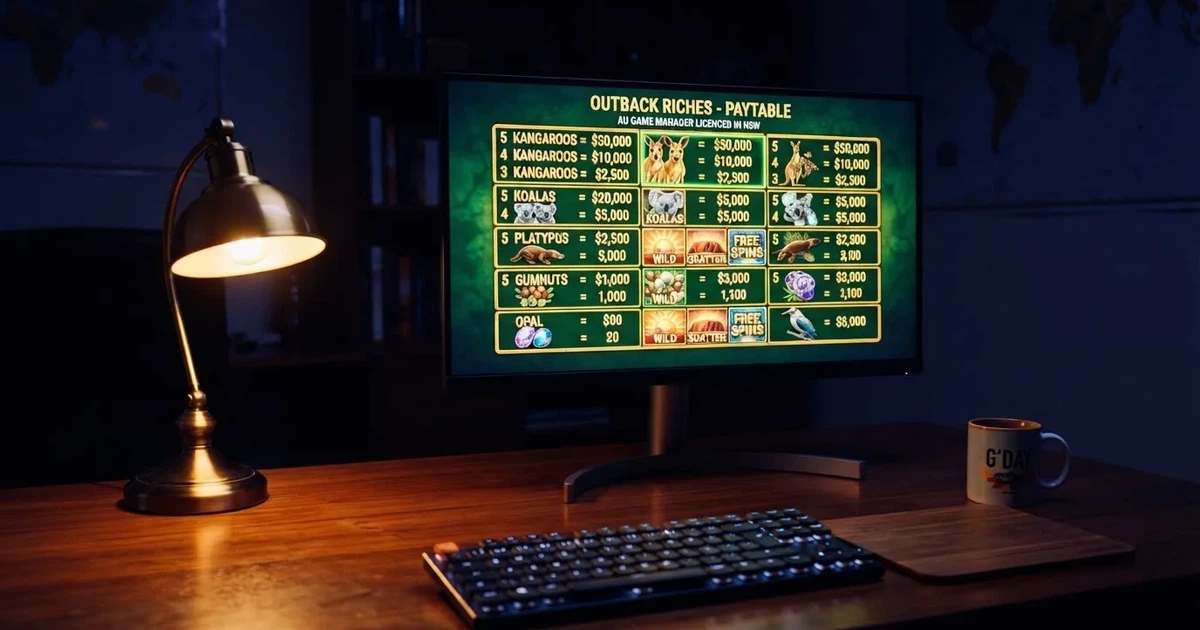
The honest answer to anyone searching for the best video slots Australia 2026 is uncomfortable: the offshore sites that advertise “video slots” to Australians are doing so illegally. The machines Australians can actually play live in pubs, clubs and casinos under state-issued licences — and those are the ones this page is built around. What follows is what separates a modern video slot from a classic three-reel pokies machine, how the regulatory picture changed in the last eighteen months, which offshore operators the ACMA has formally warned, and how a real shortlist of where to play gets put together.
Table of Contents
- What “video slot” actually means on a screen
- How the law actually treats this in 2026
- Player protection: the parts that work
- The bonus structure that the offshore industry uses to sell this product
- How a real video slot behaves on a mobile screen
- The eleven operators the ACMA has formally warned
- The blocking rate the regulator has set
- How a shortlist of where to play is actually built
- Frequently asked questions about video slots in Australia
What “video slot” actually means on a screen
A modern video slot is a five-reel (sometimes six or seven) digital machine whose outcomes are produced by a random number generator and whose visual layer is a video screen rather than physical reels. Charles Fey’s 1890s three-reel mechanism, which paid ten nickels for three Liberty Bells in a row, was mechanical; Bally’s 1963 Money Honey added the bottomless payout hopper; the first true video slot, built by Fortune Coin in 1976, moved the reels onto a cathode-ray tube. Today’s titles sit on top of that lineage: fifty or more symbols per reel, multiple paylines, animated bonus rounds, free-spin features and, in some cases, a “Megaways” engine that varies the symbol count on every spin.

The combination math gets severe quickly. A classic three-reel machine with about ten symbols per reel offers roughly 1,000 possible combinations. A five-reel video slot with fifty symbols per reel can produce odds as high as 300 million to one against a top combination — a number that explains why jackpots are advertised as “life-changing” and why they almost never hit. Volatility, not line count, is what decides what an individual session feels like.
The mechanics that separate a modern video slot from a pokies machine
The four levers that actually move the experience:
| Mechanism | Feature |
|---|---|
| Reel Count | 5+ reels common |
| Payline Structure | 243+ ways to win |
| Bonus Features | Free spins, multipliers |
| Volatility | Low to high variance |
- Reel and symbol count. Five reels is the floor; six or seven are common; the symbol count per reel sits between 50 and 80 in most contemporary titles, against ten on a classic machine.
- Payline structure. Twenty fixed lines was the old ceiling; 243 ways to win, 1,024 ways to win, and the Megaways-style engine (up to 117,649 ways on a single spin) are now standard.
- Bonus features. Free-spin rounds, cascading reels, expanding wilds, pick-a-prize minigames, and progressive jackpot tiers sit behind symbols that trigger them.
- Volatility class. A low-volatility title pays small amounts often; a high-volatility title pays rarely and irregularly, with longer dry stretches between hits.
A reader who holds those four levers in mind will spot a marketing pitch faster than one who holds a screenshot.
Where Australian players actually encounter these machines
In Australia, “video slots” exist in three settings:
- Pubs and clubs. State-licensed electronic gaming machines under schemes such as the NSW Clubs and Hotels scheme, the Victorian Gaming Machine arrangements, the Queensland regulated machine framework, and their equivalents in South Australia, Western Australia, Tasmania, the ACT and the Northern Territory. As of mid-2026, New South Wales holds the largest non-casino fleet with 87,298 machines, followed by Victoria at 26,380, Queensland at 21,122, South Australia at 11,672 and the ACT at 3,587. Western Australia runs a much smaller restricted-player arrangement through Burswood Casino only.
- Casinos. Crown Melbourne, Crown Sydney, The Star Sydney, The Star Gold Coast, Treasury Brisbane, Adelaide Casino, Wrest Point, Country Club Tasmania, Lasseters in Alice Springs and Skycity Darwin run approved gaming floors under the relevant state Casino Control Act. Baccarat variants, blackjack tables and electronic gaming machines sit under the same licence; the VGCCC in Victoria, the Casino Liquor and Gaming Authority of NSW and Liquor & Gaming NSW are the regulators who approve game rules.
- Online, to an Australian IP. This is the line in the sand. No state or territory issues an Australian licence to an online casino or to online pokies. The offshore sites that take Australian deposits operate under licences issued in Curaçao, Anjouan, the Kahnawake territory or the Philippines — none of which authorise them to offer prohibited interactive gambling services to a person in Australia.
How the law actually treats this in 2026
The Interactive Gambling Act 2001 (IGA), as tightened by the Interactive Gambling Amendment Act 2017, makes it a strict-liability offence to provide a prohibited interactive gambling service — online casino games, online pokies, online in-play betting — to a person physically in Australia. The provider, not the player, is the target of enforcement. The minimum age for any form of gambling in Australia is 18.
What is licensable in Australia: wagering on races and sport placed before the event, lotteries, keno, and the state-licensed gaming machines inside pubs, clubs and casinos. Online wagering on sport and racing is licensed, in practice, by the Northern Territory Racing and Wagering Commission, which regulates 52 online bookmakers including Sportsbet, Bet365 and Ladbrokes. The NTRWC has no full-time staff and meets once a month in Darwin — a thin regulatory layer over a large industry, and one that has been the subject of NT Parliament scrutiny in 2026.
What is not licensable, anywhere in Australia: an online casino, online pokies, in-play betting online, or a “social casino” that takes a real-money deposit and pays a real-money prize. The ACMA’s enforcement stance has hardened over three years, and a series of formal warnings and blocking orders has reshaped what an Australian actually sees when they search.
What enforcement looks like
The ACMA investigates complaints, issues formal warnings naming the operator and the offending domain, and directs Australian internet service providers to block illegal sites. The agency does not need a court order to request a block; it issues an “investigation notice” and the ISPs comply. As of the round reported on 26 June 2026, a cumulative 1,751 illegal gambling and affiliate marketing websites have been blocked since the first blocking request in November 2019, and more than 230 unlicensed gambling services have left the Australian market since enforcement was strengthened in 2017.
The most recent published round asked ISPs to block 12 more domains: 7Signs, ChromaBet, Donbet, Duospin, Freshbet, Slots Gem, Jacks Club, Lucky Start, Pointsbetz, Spinrise, Vinyl Casino and Wildsino. The list leans heavily into the offshore casino segment rather than the sportsbook segment, and the publishing of the round is itself the warning to the next ten operators on the regulator’s desk.
H2 Gambling Capital’s 2025 estimate puts Australian losses to illegal gambling sites at about A$3.9 billion per year, with the share of gambling going through legal channels falling from 74 per cent in 2021 to 64 per cent. A reader who lives in Australia and sees only the offshore marketing would, on that evidence, be part of a market whose legal-channel share is shrinking year on year.
The 2026 reform that did and did not land
The Interactive Gambling Amendment (Gambling Reform) Bill 2026 passed both houses of Parliament on 19 August 2026. Its advertising and inducement measures — the parts aimed at “free spins” promotions, sign-up bonuses and affiliate influencer marketing — commence on 1 January 2027. The Bill is law with a start date; the 2026 reader is reading under the old regime, and the new inducement rules have not yet taken effect. A page on 2026 that promises the new rules are “in force” is publishing a future-tense provision as a present one.
What this means for a punter trying to play offshore
Three consequences worth naming plainly.
First, an offshore site gives no Australian consumer protection. The site’s own licence — Curaçao, Anjouan, Kahnawake — does not bind it to handle a complaint from a person in Australia, and the ACMA cannot compel a refund. If a withdrawal is delayed, a bonus is voided, or a balance disappears, the punter has no recourse.
Second, the balance can be stranded. The same ISP block that prevents a punter from loading the site also prevents them from logging in to withdraw a balance. ACMA guidance on this point is plain: a blocked site is a closed site, and a closed site cannot pay out.
Third, payment protection is gone. Credit cards, credit-related products and digital currency are banned as payment for licensed online wagering in Australia since 11 June 2024, with penalties of up to A$247,500 for the operator that breaches this. An offshore site that asks for a credit card or a Bitcoin deposit is operating outside the Australian rules by design; the punter has no chargeback path through an Australian bank.
Player protection: the parts that work
The Australian player protection system was built for the licensed industry. Two of its pieces are worth knowing in detail because they bind the legal market, not the offshore market.
BetStop — the National Self-Exclusion Register. Live since August 2023, BetStop lets a person register for a self-exclusion period of three months or longer, up to a permanent exclusion. The exclusion binds every Australian-licensed online and phone wagering service. It does not bind an offshore casino: the offshore operator has no integration with BetStop and no obligation to honour the registration. A punter who registers on BetStop to stop gambling has, on the offshore side, excluded themselves from nothing.
Spending and deposit limits. Australian-licensed wagering providers must offer deposit limits, loss limits and time-out tools. The offshore site, again, is not connected to these systems and offers its own controls on its own terms. The controls on a Curaçao-licensed site are set by the operator and can be lifted on request.
Where to find help: the National Gambling Helpline on 1800 858 858, free, 24/7, with a chat option at Gambling Help Online. State-level services (Gambling Help NSW, Gambler’s Help Victoria, Gambling Help Queensland and their interstate equivalents) run free face-to-face and telephone counselling. A punter in trouble gets a real response from these; an offshore casino’s “responsible gambling” page gets them a marketing email.
The bonus structure that the offshore industry uses to sell this product
The free-spin offer is the single most common hook in offshore casino marketing. It works like this: a punter signs up and deposits, and the casino credits a number of free spins on a named slot — typically a well-known title with a visible RTP. The winnings from those spins are paid as bonus funds, not cash. The bonus funds carry a wagering requirement, usually expressed as a multiple of the bonus amount, before any of it can be withdrawn. The wagering requirement is where the marketing stops and the arithmetic starts.
A 35x wagering requirement on a A$100 bonus means the punter has to place A$3,500 in qualifying bets before the bonus balance becomes withdrawable. On a slot with a 96 per cent RTP, the expected loss over those A$3,500 in bets is about A$140 — A$3,500 × 4 per cent. The bonus is “free” in the sense that the casino gives it; the cost is paid by the punter during the playthrough. The “winnings” the punter is clearing belong to them only after they have run them through the house edge once, and sometimes several times.
Three structural features make these offers harder to evaluate than they look:
- Game weighting. Slots typically contribute 100 per cent to wagering; table games often contribute 10–20 per cent or nothing. A punter who tries to clear a bonus on blackjack will move the meter roughly five times slower than the same stake on slots.
- Maximum cashout caps. A “free spin winnings capped at A$100” line in the terms means the punter can clear A$500 of bonus money and walk away with A$100. The marketing says “free spins win you up to A$100”; the terms say “you can keep A$100”.
- Expiry windows. Most bonus funds expire seven days from credit, sometimes thirty. The wagering requirement has to be cleared inside that window or the bonus, and the winnings tied to it, is forfeit.
The bonus, in honest language, is a multiplier on the punter’s expected play rather than a free stake. The marketing treats it as the second; the arithmetic treats it as the second’s mirror.
The induction offer that the new law will catch
The 2026 reform package, in force from 1 January 2027, targets inducement advertising — “sign up and get X free spins” — rather than the offers themselves. Until that date, the offers remain lawful to advertise in jurisdictions where the operator is permitted to advertise at all. After that date, the inducement language on licensed Australian media becomes restricted. Offshore sites, which never complied with Australian advertising rules in the first place, are not directly caught — but their Australian-facing marketing affiliates are.
How a real video slot behaves on a mobile screen
A video slot on a mobile browser is the same game engine as on a desktop, in the technical sense: the RNG, the RTP, the paytable and the symbol distribution are identical, because the math lives on the provider’s server, not on the device. What changes between desktop and mobile is everything around the math.
Load and session. A 2018-era mobile slot would take 8–15 seconds to load over 4G; a current-generation HTML5 title loads in 2–4 seconds on the same connection. The game state is held server-side, so a dropped mobile connection does not lose the bet in flight — when the connection comes back, the spin either completed or it did not, and the outcome is what the server recorded.
Touch vs mouse. The hold-to-spin and swipe features that some providers ship for mobile are usability layers; they do not change the game. A punter who holds a spin button for two seconds on mobile is triggering the same RNG call as a punter who clicks a mouse.
Orientation. Some titles force portrait; some force landscape; some offer both. The landscape titles tend to be the older five-reel layouts, since they were designed for a 16:9 canvas; the portrait titles are the newer Megaways and cluster-pay layouts.
App vs browser. Australian-licensed wagering providers offer dedicated mobile apps that sit in the Apple App Store and Google Play, and that integrate with BetStop and the state-level deposit-limit frameworks. Offshore casino apps, where they exist, sit outside the Australian app-store ecosystems — Android users install them as APKs from the operator’s site, iOS users typically use the browser version because Apple does not permit real-money casino apps outside licensed jurisdictions. The browser version is the safer and more common route on the offshore side; the app is the standard route on the licensed side.
What changes between providers
The provider layer — the company that designs the math, the symbols and the bonus features — is the more useful point of comparison than the casino wrapper. The same video slot is offered at every casino that carries the provider; the casino adds the bonus terms and the payment rails around it. Two readers searching “video slots Australia 2026” will get the same game under different conditions.
The biggest cross-provider differences:
- Volatility distribution. A NetEnt catalogue skews to mid-volatility; a Hacksaw catalogue skews to high-volatility; a Pragmatic Play catalogue runs the full band. The punter who likes long sessions on a small bankroll picks differently from the punter who chases feature buys.
- RTP variance by jurisdiction. Some providers ship two RTPs per title — a 96 per cent version for the mainstream market and a 94 per cent version for licensed jurisdictions that cap theoretical returns. An Australian punter on an offshore site is playing the higher version; an Australian punter on a state-licensed pub machine is playing whatever the state regulator has approved.
- Bonus feature cadence. Some providers build features to trigger every 30–50 spins on average; others build them to trigger every 150–300. The cadence drives how the title feels over a one-hour session.
The punter comparing two casinos for the “same” video slot is, in practice, comparing bonus terms, withdrawal speed and customer service — not the slot itself.
The eleven operators the ACMA has formally warned
This is not a shortlist of “best” video slots. It is a list of the offshore casino brands the ACMA has formally named in published warnings over the last four years, ordered as research carries them. Each brand is presented here for what it is: a name on a regulator’s list, with the operator behind it and the date the warning was issued. No bonus terms are given — the only sources for those terms are affiliate marketing pages that do not meet the standard for a fact a punter might rely on.
A punter reading this list is reading the ACMA’s own evidence of non-compliance. The relevant comparison is the warning date and the operator, not the marketing.
1. RocketPlay
The ACMA formally warned Pulsup Ltd over RocketPlay in March 2026. The same brand had earlier been named in a May 2022 formal warning to Dama N.V., which then operated the site. The brand has changed hands, the warning has not.
2. Level Up Casino
The ACMA formally warned Dama N.V. in May 2022, with Level Up Casino among six brands named in the same warning. A formal warning is a step the regulator takes before litigation; the regulator’s publication of the warning is the public record. The operator’s own licence — Curaçao in this case — authorises it to take deposits from jurisdictions that permit offshore online casinos, which excludes Australia.
3. Woo Casino
The ACMA issued a formal warning to Dama N.V. over Woo Casino in March 2025. Dama is the operator named in the warning; the brand sits behind a Curaçao licence. The pattern across Dama — RocketPlay in 2022, Woo in March 2025, Spirit in May 2025 — is one operator attracting multiple warnings across multiple brands, which is the regulator’s way of saying the corporate behaviour has not changed.
4. Spirit Casino
The ACMA issued a formal warning to Dama N.V. over Spirit Casino in May 2025. The warning is a public record; the operator’s licence is not.
5. National Casino
The ACMA issued a formal warning to Consolutetish S.R.L. over National Casino in July 2025. The brand has been listed in offshore casino aggregators as carrying a Curacao licence; the warning is on the ACMA register.
6. Bizzo Casino
The ACMA issued a formal warning to Consolutetish S.R.L. over Bizzo Casino in July 2025. Bizzo had earlier been named in a 2022 formal warning to TechSolutions (CY) Group Limited and TechSolutions Group N.V. Two operators over three years on the same brand is a record the operator has not been able to clear.
7. Ignition Casino
The ACMA issued a formal warning to Bamboo Media over Ignition Casino in July 2025. Bamboo Media is the operator the ACMA named in the warning; the brand’s licence, where one is displayed, sits outside Australia.
8. Instant Casino
The ACMA issued a formal warning to EOD Code SRL over Instant Casino in February 2025. The operator named in the warning is EOD Code SRL.
9. Jackbit
The ACMA issued a formal warning to Ryker B.V. over Jackbit and CasinOK in April 2026. Two brands named in one warning is the regulator’s way of working through a single operator’s portfolio.
10. Casino Intense
The ACMA issued a formal warning to Sterplay Holding Ltd over Casino Intense in April 2025. Sterplay Holding Ltd is the operator named in the warning.
11. Sky Crown
The ACMA issued a formal warning to Hollycorn N.V. over Sky Crown and Blue Leo in September 2022. The operator named in the warning is Hollycorn N.V. The formal warning remains the public record the regulator has on file.
How to read this table
| Brand | ACMA action and date | Operator named by the ACMA | Subject support |
|---|---|---|---|
| RocketPlay | Formal warning, March 2026 (earlier May 2022 to Dama N.V.) | Pulsup Ltd | — |
| Level Up Casino | Formal warning, May 2022 | Dama N.V. | — |
| Woo Casino | Formal warning, March 2025 | Dama N.V. | — |
| Spirit Casino | Formal warning, May 2025 | Dama N.V. | — |
| National Casino | Formal warning, July 2025 | Consolutetish S.R.L. | — |
| Bizzo Casino | Formal warning, July 2025 (earlier 2022 to TechSolutions) | Consolutetish S.R.L. | — |
| Ignition Casino | Formal warning, July 2025 | Bamboo Media | — |
| Instant Casino | Formal warning, February 2025 | EOD Code SRL | — |
| Jackbit | Formal warning, April 2026 | Ryker B.V. | — |
| Casino Intense | Formal warning, April 2025 | Sterplay Holding Ltd | — |
| Sky Crown | Formal warning, September 2022 | Hollycorn N.V. | — |
The “subject support” column sits empty across the table because none of these operators have an Australian entitlement to offer the product the page is about. A cell that said “yes” would contradict the regulatory frame every other cell describes.
The blocking rate the regulator has set
The arithmetic the regulator’s own numbers permit is the cumulative site-blocking rate since the first request in November 2019. By the round reported on 26 June 2026, the ACMA had asked Australian ISPs to block 1,751 illegal gambling and affiliate marketing websites — a figure that runs from the first blocking request in November 2019 to the reporting date.
The average block rate over that window sits between 250 and 300 sites per year, depending on whether the rounding is done by calendar year or by the agency’s own reporting rounds. The bandwidth matters: in some years the agency issues one large blocking round in Q2 and a follow-up in Q4; in others the rounds are smaller and more frequent. A reader who wants the regulator’s pace of work in plain terms sees an industry that is being pruned by between four and seven sites per working week on average, with spikes that can clear a single offshore network in one round.
What the rate does not measure is the number of sites that have come online since the first request. The 230+ unlicensed services that have left the Australian market since 2017 are services that took the warning and withdrew; the 1,751 blocked sites are services that did not. The reader is looking at the part of the market that did not comply with a warning, plus the part that ignored the block and re-appeared under a new domain — which the regulator tracks through domain registration patterns rather than through headline numbers.
How a shortlist of where to play is actually built
A real shortlist for the Australian reader in 2026 does not start with offshore casino comparison sites. It starts with what the law permits, which narrows the field to three categories:
Licensed pub and club gaming. The state-based gaming-machine schemes are the dominant channel for non-casino play. New South Wales clubs and hotels operate 87,298 machines; Victorian venues operate 26,380; Queensland operates 21,122; South Australia operates 11,672; the ACT operates 3,587. Western Australia restricts EGMs to Burswood Casino. A reader who wants a modern video slot on a licensed floor picks the state, then the venue type (club vs hotel) and the location, then the title — not the operator, because the operator is the state regulator’s approved list.
Licensed casino gaming. Crown Melbourne, Crown Sydney, The Star Sydney, The Star Gold Coast, Treasury Brisbane, the Adelaide Casino, Wrest Point, Country Club Tasmania, Lasseters Alice Springs and Skycity Darwin run approved gaming floors. Baccarat variants (Traditional Baccarat, Crown Baccarat and 2 to 1 Baccarat at Crown Melbourne), blackjack variants with VGCCC-approved rule changes, and the full electronic gaming machine catalogue sit under one state casino licence per venue.
Licensed online wagering. Sportsbet, Bet365, Ladbrokes and the other 49 NTRWC-licensed bookmakers run online wagering on sport and racing. The product is not “video slots”; it is pre-event wagering. A reader looking for the slot product on this channel will not find it, because the channel does not offer it.
The criteria that separate one option from another inside those three categories:
- State regulator and venue type. Two NSW clubs on the same street can carry different RTP floors depending on the local government area approval. A reader who cares about the title catalogue starts with the club, then the title.
- Jackpot network. The “linked jackpot” EGMs in NSW, Victoria and Queensland pool a contribution from every machine on the network into a single prize. A reader who wants a chance at the large prize plays on a linked machine; a reader who wants a steadier return plays on a stand-alone machine.
- Casino loyalty program. Crown’s program, The Star’s program, and the smaller operators’ programs offer points on play that can be redeemed for food, beverage, accommodation and event access. The 2026 reader who plays a meaningful volume inside a casino will be enrolled in one of these by default.
The criteria the offshore comparison sites use — bonus size, game catalogue size, payment method variety — do not apply in this market, because the products themselves are not lawfully available. A reader who compares offshore operators on those criteria is, by definition, choosing among unlawful offers.
Frequently asked questions about video slots in Australia
What makes a video slot different from a classic three-reel pokies machine?
A classic pokies machine has three mechanical or simulated reels with about ten symbols per reel and roughly a thousand possible combinations. A modern video slot has five or more digital reels, fifty or more symbols per reel, multiple paylines, animated bonus features and free-spin rounds — and the symbol combinations can run into the hundreds of millions on the top jackpot tiers.
Do video slots typically include bonus rounds that classic machines don’t have?
Yes. The bonus round — a free-spin feature, a pick-a-prize minigame, an expanding-wild mechanic, a cascading-reel feature — is the single biggest behavioural difference. Classic pokies machines outside casinos in NSW and Victoria offer a “feature” button in some approved configurations, but the depth and variety of the modern video slot’s bonus layer is the central reason players who enjoy features migrate from three-reel to five-reel.
Are video slots on a mobile browser the same game as the desktop version?
Mechanically, yes. The random number generator, the paytable, the RTP and the symbol distribution are identical because they live on the provider’s server, not on the device. The mobile version adds touch controls, portrait-or-landscape handling, and a smaller screen; the math does not change. The Australian punter who plays the same title on a phone browser and on a desktop browser is playing the same game.
How many paylines does a typical modern video slot use?
There is no single answer because the term “payline” has changed. A 2010-era title might have 25 fixed lines; a current Megaways title can offer up to 117,649 ways to win on a single spin, which is not a payline in the traditional sense but a “ways to win” calculation based on matching symbols on adjacent reels. A typical mid-volatility video slot in 2026 runs between 20 fixed lines and 243 ways to win.
Why do video slots vary in volatility even within the same provider’s catalogue?
Volatility is a design choice that determines how often the game pays and how large those payments tend to be. A low-volatility title pays small amounts frequently and feels like a long, slow ride; a high-volatility title pays rarely and irregularly, with longer dry stretches but larger top-end wins. Providers ship both because they sell to different player preferences — some readers want the long session, some readers want the shot at the large prize. The provider’s catalogue carries the full band because both audiences are buying.
Which Australian state has the most licensed gaming machines outside casinos?
New South Wales, by a wide margin. As of mid-2026, NSW operated 87,298 non-casino gaming machines — more than three times Victoria’s 26,380, and roughly the combined total of Victoria, Queensland (21,122), South Australia (11,672) and the ACT (3,587). NSW’s licensed gaming machine network is the largest in the country by machine count, by per-capita density and by venue count.