
English-speaking dealers at a live roulette table do not change the law that applies to one
Current as of 29 October 2026. Verified against the Australian Communications and Media Authority’s published register of formal warnings and the Interactive Gambling Act 2001, as it stands after the Interactive Gambling Amendment Act 2017.
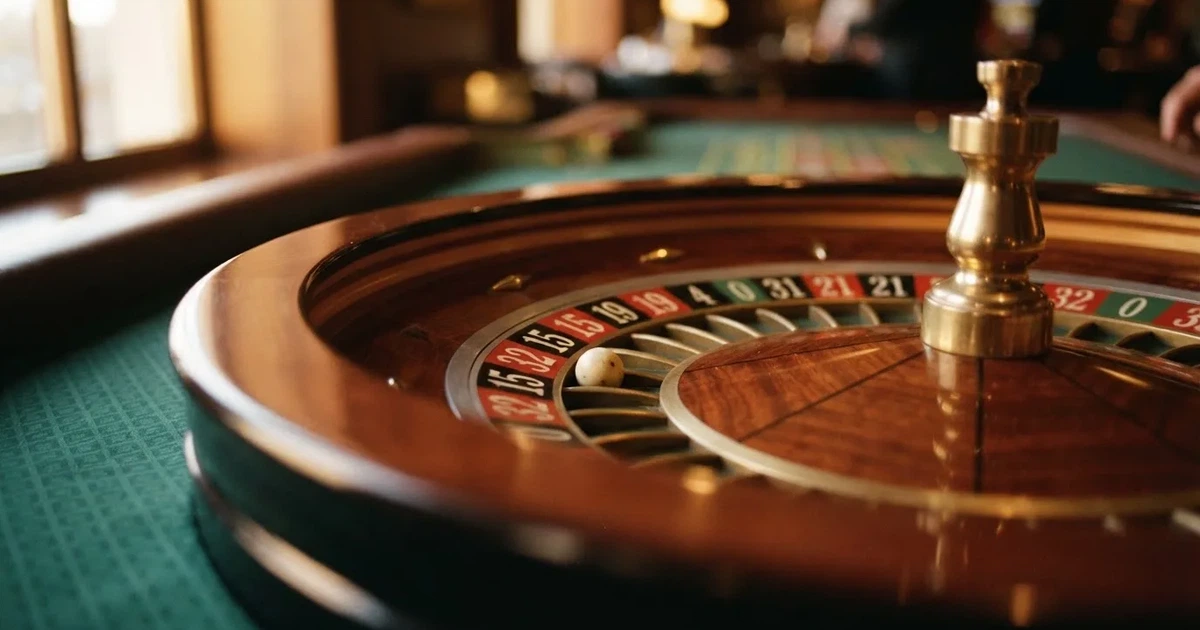
A live dealer spinning a real wheel on a video stream looks different from a slot machine on a phone. It is the same kind of product under Australian law. The Interactive Gambling Act 2001 prohibits the supply of online casino games to a person in Australia, and a roulette table run from a studio in Tallinn, Malta or Curaçao, streamed over the internet and paid for with bitcoin or PayID, sits squarely inside that prohibition. The dealer’s language is not a carve-out.
The page below works through what is actually on offer at a “live roulette with English-speaking dealers” page: which wheels the tables run, how payouts queue, what an Australian deposit route does and does not do, and which operators the Australian regulator has already named. The bracket is small on purpose. The Interactive Gambling Amendment (Gambling Reform) Bill 2026 is law with a start date, but its advertising and inducement measures commence 1 January 2027 — not yet in force on this page.
Table of Contents
- The wheel itself: single-zero, double-zero, and a third pocket few Australian players know
- Why a live roulette page advertises English-speaking dealers at all
- Watching a spinning wheel repeatedly, and why a fixed loss limit matters more than a pattern
- Bitcoin, PayID, and the deposit routes the offshore sites accept
- The eleven operators the ACMA has already named
- How the brand write-ups break down, and what each one’s verdict turns on
- The picture the eleven brands draw together
- The Australian-resident summary of what this page covers
- Frequently asked questions about live roulette with English-speaking dealers for Australian players
The wheel itself: single-zero, double-zero, and a third pocket few Australian players know
A live roulette table runs one of three wheel formats. Knowing which one is in front of you is the single biggest decision a roulette player makes, because the house edge is set by the wheel and only the wheel.

A single-zero (European) wheel has 37 pockets — the numbers 1 to 36 plus a single zero — and a house edge of 2.70%. A double-zero (American) wheel has 38 pockets — 1 to 36, a zero and a double-zero — and a house edge of 5.26%. The extra pocket nearly doubles the house’s take on every bet that does not specifically hedge it. Some live studios also offer a triple-zero wheel with 39 pockets (0, 00, 000 and 1-36), which carries a house edge of 7.69% — a version of the game the major Australian-facing studios have not been eager to put on camera, but which does appear at a handful of offshore sites.
Roulette’s parent game is Biribi, an Italian lottery-style contest, and the modern form emerged in 18th-century France with documented play in Paris from 1796. The double-zero wheel is a 19th-century American addition. A few European single-zero tables also offer an “en prison” or “la partage” rule — an even-money outside bet that lands on zero is either held for another spin or half returned to the player, which trims the effective house edge on those bets below the standard 2.70%.
The figures above come from Wizard of Odds and from the standard roulette reference material. They are exact, and they are the only numbers that matter about the wheel.
What the dealer controls, and what the wheel still controls
A live dealer announces the result, settles the wagers and chats through the betting window. The dealer does not decide the number — the ball does, in a physical pocket. Nothing the dealer says changes the house edge. A “hot number” callout between spins is part of the show, not a forecast; each spin is independent.
This is also where a quiet cost sits. A real wheel takes 30 to 60 seconds between spins, sometimes longer. The same A$10 stake per spin on a single-zero table costs the same A$10 per spin on a double-zero table, but the per-spin loss rate at 5.26% is roughly twice what it is at 2.70%. Over a 200-spin session at A$10 a spin, the expected loss is A$54.00 on a single-zero table and A$105.20 on a double-zero table — and a player who does not know which wheel they are at cannot read the difference from one spin to the next.
Side games that look like roulette and are not
A live dealer does not only run roulette. Several of the offshore studios whose tables show up at “English-speaking dealer” casinos also run live baccarat and live blackjack from the same booth. Baccarat’s banker bet carries a 1.06% house edge, the player bet 1.24% and the tie 14.36%, all lower than roulette’s 2.70% — which is part of why a live studio puts baccarat on the schedule even when the headline product is roulette.
Live blackjack at optimal play runs about 0.28% house edge under liberal Las Vegas Strip rules and about 0.43% under Atlantic City rules. Craps, where it is offered, sits at 1.41% on the Pass and Come bets. None of these figures change the legal status of the table for an Australian resident; the IGA treats them all the same way.
Why a live roulette page advertises English-speaking dealers at all
The “English-speaking dealer” badge is a marketing label, and it answers a market question rather than a legal one. Live dealer studios in Europe and Latin America hire multilingual staff because the studios sell into dozens of countries where the table language is a real filter: a Spanish-speaking punter may want a dealer who speaks Spanish at the felt, a Mandarin-speaking high roller may want one who speaks Mandarin. English is the lingua franca of online gambling — and of the offshore studios’ largest customer bases, which are not Australia.
The label therefore tells a player that the studio has staffed English into the rotation. It does not tell them the studio is licensed for Australia, that the table is lawful in Australia, or that the dealer is seated in any particular country. The Australian-facing live roulette pages with English-speaking dealers are not separate, regulated tables — they are the same tables the rest of the world plays, with a dealer who happens to be working the English shift.
The legal framing an Australian player has to read first
The Interactive Gambling Act 2001, strengthened by the Interactive Gambling Amendment Act 2017, makes it an offence to provide online casino games — roulette, blackjack, baccarat, craps and the rest of the felt and the reel set — to a person physically in Australia. There is no state or territory licence for an online casino. What is licensed in Australia is wagering on races and sporting events placed before the event, lotteries and keno; in practice most online bookmakers — Sportsbet, Bet365, Ladbrokes — are licensed by the Northern Territory Racing and Wagering Commission, which regulates 52 of the country’s online bookmakers, has no full-time staff and meets once a month in Darwin.
The minimum age for any licensed Australian gambling product is 18. The individual player is not prosecuted under the IGA — the law targets the provider — but the law does target the provider, and the ACMA has been issuing formal warnings under it since 2017. An offshore site gives no Australian consumer protection: no complaints body, no Australian recourse if a withdrawal is refused, no guarantee that the site will not be blocked by an Australian ISP with a balance still on the account.
The enforcement record so far
The ACMA’s enforcement work has produced two visible numbers. The first is the blocking list: as reported in June 2026, a total of 1,751 illegal gambling and affiliate marketing websites had been blocked since the first blocking request in November 2019. The second is the formal-warning register: the ACMA has named the operators behind many of those sites, including the eleven brands discussed later on this page.
In the round reported on 26 June 2026, the ACMA asked Australian ISPs to block a further 12 sites: 7Signs, ChromaBet, Donbet, Duospin, Freshbet, Slots Gem, Jacks Club, Lucky Start, Pointsbetz.com, Spinrise, Vinyl Casino and Wildsino. The blocking list is the easiest part of the picture to read, because each name on it is a site Australians can no longer reach through a domestic ISP without a workaround.
Watching a spinning wheel repeatedly, and why a fixed loss limit matters more than a pattern
Watching a wheel for any length of time produces an illusion of pattern. Eleven reds in a row feels like a streak. In a game with independent spins, it is no streak at all — the wheel has no memory, the ball has no memory, and the next spin’s odds are the same as the spin before it. A player who raises the stake after a “loss” streak and lowers it after a “win” streak is responding to a pattern that does not exist.
That is the responsible gaming note this page leads with. A fixed loss limit — a number written down before the first spin, and walked away from when it is reached — does more for a player’s bankroll than any betting system the live dealer page may suggest. The Victorian Gambling and Casino Control Commission, which has regulated Crown Melbourne’s table games under the Casino Control Act 1991 since 1 July 2022, publishes approved-rule changes for the casino floor; the consumer protection that comes with that register is one of the things an offshore live dealer site does not provide.
The Australian help line that is open right now
The National Gambling Helpline is 1800 858 858 — free, 24/7, with chat through Gambling Help Online. BetStop, the National Self-Exclusion Register, has been live since August 2023. It binds Australian-licensed online and phone wagering services. An offshore live roulette site is not connected to it. A player who has self-excluded through BetStop and then opens an offshore account has not undone their exclusion, but the offshore account is not subject to the same hold.
Bitcoin, PayID, and the deposit routes the offshore sites accept
A bitcoin-funded live roulette table spins the same physical wheel as a card-funded one. The difference is the payment rail: bitcoin in, bitcoin out; or PayID in, bank transfer out. Neither payment method alters the house edge, the odds of any particular bet, or the legality of the table for an Australian resident. They do change the queue.
A live roulette payout, like any other casino withdrawal, waits on the operator’s internal review process. PayID and Osko settle in near-real-time once the operator releases the funds; a standard bank transfer settles on the next business day. Bitcoin settles when the blockchain confirms it, which is typically an hour but can stretch longer when the network is congested. A withdrawal request that has not been reviewed by the operator is the slowest part of any of these rails, and the rail only matters once the operator has approved the payment.
What an Australian player can and cannot use at a licensed Australian bookmaker
At a licensed Australian wagering service, the payment rules are different. Since 11 June 2024, credit cards, credit-related products and digital currency are banned as payment for licensed online wagering — with penalties of up to A$247,500 for an operator that breaks the rule. The legal deposit routes for a licensed wagering service are debit card, bank transfer, PayID/Osko and BPAY.
A site asking an Australian for a credit card or a bitcoin deposit is operating outside the Australian wagering rules. That is a tell about the operator, not about the player — and a live roulette table that takes bitcoin is, by definition, not operating under the Australian wagering licence that bans bitcoin deposits.
The eleven operators the ACMA has already named
The list below is not a ranking and not a recommendation. Each of the eleven brands is here because the ACMA itself issued a formal warning under the Interactive Gambling Act 2001 for offering prohibited online casino services to Australians. No bonus terms are given for any of them — the only sources for those terms were affiliate marketing pages, and this page is about what the offer is worth, not how it is claimed.
| Brand | ACMA action and date | Operator named by the ACMA | Subject support |
|---|---|---|---|
| RocketPlay | March 2026 (Pulsup Ltd); earlier May 2022 (Dama N.V.) | Pulsup Ltd; Dama N.V. | — |
| Level Up Casino | May 2022 | Dama N.V. | listings-only (BGaming) |
| Woo Casino | March 2025 | Dama N.V. | — |
| Spirit Casino | May 2025 | Dama N.V. | — |
| National Casino | July 2025 | Consolutetish S.R.L. | listings-only (Wikipedia) |
| Bizzo Casino | July 2025 (Consolutetish S.R.L.); earlier 2022 (TechSolutions) | Consolutetish S.R.L.; TechSolutions (CY) Group Ltd; TechSolutions Group N.V. | — |
| Ignition Casino | July 2025 | Bamboo Media | — |
| Instant Casino | February 2025 | EOD Code SRL | — |
| Jackbit | April 2026 | Ryker B.V. | — |
| Casino Intense | April 2025 | Sterplay Holding Ltd | listings-only (ABC, ACMA, Crown Melbourne) |
| Sky Crown | September 2022 (Hollycorn N.V.) | Hollycorn N.V. | — |
A formal warning under the IGA is not a blocking order and not a prosecution — it is the regulator telling the named operator that its offering to Australians is prohibited, and recording the warning on the public register. The pattern in the operator column above is more informative than any single line: the same corporate group appears under several brands. Dama N.V. surfaces four times. Hollycorn N.V., TechSolutions, Consolutetish S.R.L. each appear more than once. Where an ACMA action names the operator behind the brand, it is naming the entity the regulator has been able to identify; a brand rotating through a fresh company is the same warning dressed in a new shirt.
The blocking-rate calculation
The blocking register is the easiest part of the ACMA’s enforcement work to measure. As of the round reported on 26 June 2026, 1,751 illegal gambling and affiliate marketing websites had been blocked since the first blocking request in November 2019. That is roughly 79 to 80 blocks a month averaged across the 81 months between November 2019 and the June 2026 reporting date — and the monthly rate has been climbing. The earlier years of the register ran at a few dozen a month; the rounds reported through 2025 and into 2026 have run at well over a hundred a month, with the June 2026 round alone adding 12.
Stated as a band: the running rate of ACMA site blocks now sits in a band of roughly 80 to 120 per month across the lifetime of the regime, with the recent quarters consistently running at the top of that band. The condition is the blocking request, not the blocking action — the ACMA directs ISPs to block, and the figure is what has been directed since the regime started. A reader who wants the live number should check the ACMA’s own register; the figure above is the figure the register carried through 26 June 2026.
H2 Gambling Capital on the cost side of the same ledger
H2 Gambling Capital’s 2025 report estimates that Australians lose about A$3.9 billion a year to illegal gambling sites, and that the share of gambling going through legal channels fell from 74% in 2021 to 64%. The two figures together — 1,751 blocked sites and A$3.9 billion in losses to illegal operators — describe the same market from two sides. The blocks are the regulator’s view; the A$3.9 billion is the player spend that the regulator is trying to redirect.
How the brand write-ups break down, and what each one’s verdict turns on
Each operator below is one of the eleven brands the ACMA has acted against, named in the order they appear in the register. The verdict at the end of each is the page’s own judgement of the brand on this specific subject — not on a generic casino comparison, not on a wagering offer, and not on a recommendation. Where the subject of the page cuts against a brand’s profile, the mismatch is named.
RocketPlay — the most recent Dama N.V. surface
The ACMA issued a formal warning to Pulsup Ltd over Rocketplay.com.au in March 2026; Dama N.V. was warned over the same brand in May 2022, alongside Bambet, Dazard, Wild Tornado and Cobra Casinos. The brand has therefore been warned twice, under two different operating-company names, in roughly four years. A player looking at the brand today is looking at an operator the regulator has had to write to twice to get the message across.
The subject support field for this brand carries no listing data. There is no entry on a third-party game provider’s page that confirms what the brand does or does not offer to a live roulette player, and this page does not put one in the brand’s mouth. The brand’s verdict on the subject of this page is simple: it has been warned, it is still operating under the same kind of licence it was warned about, and an Australian resident playing live roulette on it is the same kind of player the warning was about.
Level Up Casino — the May 2022 cluster, six brands deep
Level Up Casino sits inside the May 2022 warning to Dama N.V. that named six brands at once: Bambet, Dazard, Level Up, Rocketplay, Wild Tornado and Cobra Casinos. The brand carries a third-party listing on BGaming’s site, which is a directory record and not an endorsement — it tells a reader which game provider supplies the brand, not whether the brand is licensed anywhere an Australian player can rely on. A listing on a provider’s page is not a statement from the regulator that the brand is lawful for Australians.
The brand’s verdict on the subject of this page: it was named in the 2022 cluster, the warning was not lifted, and a brand that has been on the ACMA’s register for four years is not a brand that has resolved the warning. The BGaming listing does not undo the warning; it tells a reader which games are wired into the brand.
Woo Casino — the March 2025 Dama N.V. escalation
The ACMA issued a further formal warning to Dama N.V. over Woo Casino in March 2025, then again over Spirit Casino in May 2025. These are the 2025 additions to the cluster of brands under Dama N.V.; they are not the first warnings the operator has received, and the regulator’s register records them as follow-on actions rather than first contacts.
The subject support field for Woo Casino carries no listing data. There is no entry to confirm what the brand offers to a live roulette player. The brand’s verdict: a 2025 warning, an operator that already had 2022 warnings on its file, and a brand that the regulator has had to address twice. The English-speaking dealer label on the live roulette page does not change what the ACMA has on file.
Spirit Casino — the May 2025 follow-on
Spirit Casino was named in the May 2025 warning to Dama N.V. alongside Woo Casino. The pattern across the Dama N.V. cluster — four brands on the public register by mid-2025 — is a single corporate group with multiple brand surfaces, and the regulator writing to it on each. A player reading the regulator’s register sees one operator’s name appearing four times; a player reading an affiliate page sees four different “casinos” to choose from.
The brand’s verdict: a 2025 warning under the IGA, on the same Dama N.V. corporate file that already carries Level Up and Rocketplay. The English-speaking dealer page does not change what the warning covers.
National Casino — the July 2025 Consolutetish cluster
National Casino was named in the July 2025 warning to Consolutetish S.R.L., alongside Bizzo Casino. The brand carries a third-party listing on Wikipedia, which is an encyclopaedia entry rather than a regulatory endorsement — it tells a reader what the page says about the brand, not whether the brand is licensed for Australians.
National Casino was formally warned by the ACMA in July 2025, an action shared with Bizzo Casino. The brand’s position is clear: it operates under a formal warning for prohibited services, and this page provides no evidence of a change in its compliance status.
Bizzo Casino — the dual-warning brand
Bizzo Casino carries two warnings. The first was a 2022 formal warning to TechSolutions (CY) Group Limited and TechSolutions Group N.V. The second was the July 2025 warning to Consolutetish S.R.L. The brand has therefore changed its operating-company name between warnings, and the regulator has had to address the brand twice under two different corporate entities. A change of operating-company name does not change the brand the player sees on the page.
The subject support field for Bizzo carries no listing data. The brand’s verdict: a brand on the ACMA’s register twice, under two different corporate names, both warnings still standing. An English-speaking live roulette table on this brand is the same product the regulator has warned about, under either company name.
Ignition Casino — the Bamboo Media warning
The ACMA issued a formal warning to Bamboo Media over Ignition Casino in July 2025. Bamboo Media does not appear elsewhere on the ACMA’s register of warnings covered on this page, and the warning is the only public action against this operating-company in the data this page draws on.
Ignition Casino was similarly warned in July 2025. It remains an offshore entity named by the Australian regulator, and with no independent verification of its live dealer operations, it presents the same regulatory profile as the other warned brands.
Instant Casino — the February 2025 EOD Code action
The ACMA issued a formal warning to EOD Code SRL over Instant Casino in February 2025. EOD Code SRL does not appear elsewhere in the warnings this page covers. It remains a named operator under a current warning, with no verifiable documentation on the specific roulette games it offers to Australians.
Jackbit — the April 2026 Ryker cluster
The ACMA issued a formal warning to Ryker B.V. over Jackbit and CasinOK in April 2026. Jackbit sits in a cluster of two brands under one operator. The brand’s verdict: a 2026 warning, representing the most recent Ryker B.V. cluster, with no independent directory data available on its specific game lobby.
Casino Intense — the April 2025 Sterplay warning
The ACMA issued a formal warning to Sterplay Holding Ltd over Casino Intense in April 2025. The brand carries third-party listings on ABC News, the ACMA’s own register and the Crown Melbourne site — none of which is a regulatory endorsement for an Australian-facing live roulette offering; they are records the page can point to for the brand’s existence and the warning on its file.
The brand’s verdict: a 2025 warning, an operator the regulator has named, and a brand that has been on the register through the period in which other Dama N.V. and Consolutetish S.R.L. clusters have been acted against.
Sky Crown — the September 2022 Hollycorn warning
The ACMA issued a formal warning to Hollycorn N.V. over its Sky Crown and Blue Leo casino services in September 2022. The warning is the oldest of the eleven on this page, and the brand has carried the warning for the longest stretch without a recorded follow-on action in the data this page draws on.
The brand’s verdict: a 2022 warning, an operating company that surfaces two brands (Sky Crown and Blue Leo), and no third-party listing to confirm what the brand’s live roulette offering does for an English-speaking player.
The picture the eleven brands draw together
The eleven brand write-ups above are not eleven separate cases. They are the ACMA’s register broken into eleven surfaces, and the register itself is the picture. Dama N.V. appears four times. Consolutetish S.R.L. appears twice. TechSolutions appears once under Bizzo, twice in total. Hollycorn N.V. appears once but operates two brands.
What this means for an Australian player: a “live roulette with English-speaking dealers” page on any of these eleven brands is an offshore casino offering a prohibited service, and the operating company behind it has been told so by the regulator. The English-speaking dealer label is a marketing layer above the same product the regulator has warned against. A player who chooses one of these eleven brands is choosing the warning.
What changes in 2026 if the reform bill kicks in
The Interactive Gambling Amendment (Gambling Reform) Bill 2026 passed Parliament on 19 August 2026. Its advertising and inducement measures commence 1 January 2027. On this page, dated to 2026, the bill is law with a start date — not yet in force. Once the inducement measures take effect, the affiliate marketing pages that link Australian residents to offshore casinos are expected to come under fresh enforcement. The eleven brands above are already on the ACMA’s register; whether their affiliate footprints come under the new regime is a question the bill answers from 2027.
The Australian-resident summary of what this page covers
A live roulette table with an English-speaking dealer is a real table, with a real wheel, run by a real dealer, on a video stream. The wheel is either single-zero (2.70% house edge), double-zero (5.26%) or, in rarer cases, triple-zero (7.69%). The house edge does not move with the dealer’s language.
For an Australian resident, the table is a prohibited interactive gambling service under the Interactive Gambling Act 2001. The ACMA has issued formal warnings over eleven of the operators hosting such tables, and has directed Australian ISPs to block 1,751 sites since November 2019. The deposit rails at a licensed Australian wagering service — debit card, bank transfer, PayID/Osko, BPAY — are closed to bitcoin and to credit cards by the rules that took effect on 11 June 2024. A live roulette page asking an Australian for bitcoin is operating outside those rules.
The National Gambling Helpline is 1800 858 858. BetStop, the National Self-Exclusion Register, is live since August 2023. Neither undoes the legal status of the table the player is sitting at; both are the consumer-protection layer an offshore site does not provide.
Frequently asked questions about live roulette with English-speaking dealers for Australian players
Is it legal to play live roulette for real money at an online casino in Australia?
No. The Interactive Gambling Act 2001, as amended in 2017, prohibits the supply of online casino games to a person in Australia, and a live roulette table streamed from an offshore studio sits inside that prohibition. The dealer’s language does not move the table out of the prohibition. The individual player is not prosecuted, but the provider is, and the ACMA has issued formal warnings over eleven of them.
What is the practical difference between a single-zero and a double-zero roulette wheel?
The single-zero (European) wheel has 37 pockets and a house edge of 2.70%. The double-zero (American) wheel has 38 pockets and a house edge of 5.26%. The extra pocket nearly doubles the house’s take on every bet that does not specifically hedge it. A player who does not know which wheel is in front of them cannot read the per-spin cost difference from one spin to the next.
Why might a live roulette table specifically advertise English-speaking dealers?
Because the live studios sell into dozens of countries and English is the lingua franca of online gambling. The label tells a player the studio has staffed English into the rotation. It does not tell them the studio is licensed for Australia, that the table is lawful in Australia, or where the dealer is seated. The label is a marketing filter, not a regulatory fact.
Does a bitcoin-funded live roulette table use a different wheel to a card-funded one?
No. A bitcoin-funded live roulette table spins the same physical wheel as a card-funded one. The only difference is the payment rail: bitcoin in, bitcoin out, or card in, bank transfer out. Neither rail alters the house edge, the odds of any particular bet, or the legal status of the table for an Australian resident. The rail does change the queue, and the rail only matters once the operator has approved the payment.
Can betting patterns based on previous spins improve the odds on a live roulette table?
No. Each spin is independent. The wheel has no memory, the ball has no memory, and the next spin’s odds are the same as the spin before it. A streak — eleven reds in a row — is no streak at all. A fixed loss limit written down before the first spin and walked away from when it is reached does more for a player’s bankroll than any betting system based on the last few results.
How is a live roulette payout processed compared with a slot machine payout?
Both payouts wait on the operator’s internal review. PayID and Osko settle in near-real-time once the operator releases the funds; a standard bank transfer settles the next business day; bitcoin settles when the blockchain confirms it. The slowest part of any rail is the review, and the rail only matters once the operator has approved the payment. Neither rail changes the legal status of the table for an Australian resident.