
What Playson Casinos Mean in Australia, and Why That Question Has a Different Answer Than It Seems
A player searching for a Playson-branded online casino in Australia is not browsing a list — they are stepping into a question that the Interactive Gambling Act 2001 has already answered for them. Playson makes slot software, and slot software cannot lawfully be sold online to a person in Australia. The consequence lands later than the search: a balance held by an offshore operator that gets blocked by an Australian internet service provider, a withdrawal that never arrives, a complaint with no Australian body to file it with. The rest of this page is what that looks like in 2026, which sites the ACMA has acted against, and what the reader can actually do with the information.
Current as of 29 October 2026. Licence claims verified against the ACMA’s formal-warning register and the UK Gambling Commission’s public register.
Table of Contents
- Payments, Settlement Times, and What an Offshore Playson Site Actually Delivers
- Bonuses, Free Spins, and What the Marketing Word Actually Costs
- Mobile Play, Browser or App, and What the Touchscreen Adds
- Playson Slot Mechanics, Paytables, and What a Player Reads Before They Spin
- The Eleven Operators, Side by Side
- The Calculation: How Fast the Block Rate Has Run
- What Playson Itself Is, and Where Its Games Actually Run
- Legality Under the Interactive Gambling Act 2001
- Responsible Gambling and What the Australian Frame Offers
- Frequently Asked Questions
Payments, Settlement Times, and What an Offshore Playson Site Actually Delivers
The pitch on most Playson-branded casino sites reads the same way: instant deposits, same-day withdrawals, crypto in, crypto out. The figures that follow are typical of the offshore sites the ACMA has acted against, and they should be read against a frame the sites themselves rarely volunteer: an offshore operator is not bound by Australian settlement rules, has no obligation to release funds within a stated window, and offers no recourse when it doesn’t.

Deposit routes that appear most often across the brands in this guide are Visa and Mastercard debit, a handful of e-wallets (MiFinity, Skrill, Neteller, Jeton), vouchers such as Neosurf and CashtoCode, and Bitcoin, Ethereum, Litecoin, Tether and Bitcoin Cash on every site that bothers to mention them. PayID and Osko, the standard instant-pay routes for Australian wagering, do not appear — these are not Australian-licensed platforms, and Australian rails are not on offer.
Withdrawal times on the same sites are quoted as 24 to 72 hours once the account is verified, with crypto “typically” cleared inside an hour. The qualifier is doing real work: verification is not a one-off at signup, it is repeated at withdrawal, and the operator decides what counts as enough. Several brands in this guide list the same three triggers — first withdrawal above a threshold, change of method, cumulative withdrawals past a dollar amount — each one a chance to delay. A player who assumed crypto meant instant has not been told about the queue that sits between approval and broadcast.
The credit-card ban that took effect on 11 June 2024 under the Interactive Gambling Amendment (Credit and Other Measures) Act covers licensed Australian wagering only. An offshore Playson site is not bound by it, and several still list Visa and Mastercard credit on their cashier pages. The Australian rule does not reach them; the consequence, if the reader uses a credit card, is theirs alone.
The dollar side of payment friction on these sites is not the processing fee — there usually isn’t one — but the ceiling. Minimum deposits cluster around A$20 to A$30, minimum withdrawals around A$30 to A$50, and several sites cap daily withdrawals low enough that a single large win takes a week to walk out. None of these terms are negotiable with an Australian body.
Bonuses, Free Spins, and What the Marketing Word Actually Costs
A welcome package on a Playson-branded offshore site typically reads as a percentage match on the first deposit, a smaller match on the second and third, sometimes a free-spin bundle on a named Playson title. The figure on the page is never the figure the player keeps — the wagering requirement, the game-weighting table and the max-cashout cap are where the offer’s real price lives.
Wagering requirements in the segment the ACMA has acted against run from 35× the bonus amount on the lighter end to 50× and above on the heavier packages. A “100% match up to A$500” with 40× wagering is a A$20,000 turnover obligation before any of the bonus balance becomes withdrawable, and that figure is the bonus’s true size — not the headline number, which is what the page advertised. Free-spin winnings on Playson titles routinely carry their own wagering multiplier, separate from the deposit match, on top of a max-cashout cap that converts a multi-thousand-dollar spin into a few hundred dollars at most.
Game weighting is the second lever. Playson slots typically contribute 100% to wagering on these sites, which sounds generous until the reader sees the rest of the table: table games at 5% to 10%, live dealer at 0% to 10%, jackpots often excluded entirely. A player who mixes the bonus across games to keep it interesting burns through the requirement faster than the wagering number implies, because most of their action is not counting in full.
The free-spin offer is the most carefully worded. A “200 free spins on Solar Queen” line rarely comes with the cap printed next to it; the cap is in the bonus terms, and the cap is what decides whether the spins were worth taking. On most of the brands in this guide the cap sits at five to ten times the spin value, and the wagering multiplier on the resulting winnings is the same as the deposit bonus. The arithmetic of the marketing word and the arithmetic of the terms do not describe the same offer.
None of this is hidden — every term is published, in the bonus policy page most players don’t reach until the withdrawal is refused. The frame that decides whether a Playson bonus is worth taking is therefore not the headline number. It is the multiplier, the cap and the weighting table read together, before the first deposit is made.
Mobile Play, Browser or App, and What the Touchscreen Adds
Playson builds in HTML5, which is the same technology that makes its slots run in a mobile browser without a separate download. Every site in this guide serves the games through a browser wrapper on iOS and Android, and none of them is a native app — the App Store and Google Play do not host real-money casino apps in Australia, and offshore operators don’t ship one through those channels.
Load times on a current-generation phone over 4G are in the two-to-five-second range for most Playson titles, with the heavier 3D slots (Solar Queen, Book of Gold, the Buffalo Power series) sitting closer to the longer end. Battery and data use are modest — a single slot session of an hour is roughly the same data as a short video stream — but live dealer and table games are heavier, and the phone gets warm over a long session.
The trade-off for not having an app is the cashier. Mobile browsers on these sites handle deposits and withdrawals through the same page as the desktop version, which means the same friction — a one-off verification on signup, a repeat on first withdrawal, document uploads, sometimes a selfie. On a phone the upload step is the one that breaks: a blurry photo of a driver’s licence on a kitchen counter is the most common cause of a stalled account, and it costs the player the same week they would have lost on a desktop.
Push notifications, the small piece of native-app functionality mobile browsers do not offer, are not relevant on these sites for the reason that would matter: Australian-licensed wagering operators cannot send real-money inducements by push under the 2024 amendments, and offshore sites have no incentive to imitate a rule that doesn’t apply to them.
Playson Slot Mechanics, Paytables, and What a Player Reads Before They Spin
A Playson slot is built around a five-reel, three-row grid with twenty to thirty paylines, medium-to-high volatility and an RTP that clusters between 95% and 96.5%. The mechanic that defines most of the catalogue is the hold-and-win bonus — a respin feature with locked symbols and a jackpot ladder — layered on top of free-spin rounds with expanding symbols. Solar Queen, Buffalo Power: Hold and Win, Book of Gold: Double Chance and the Legend of Cleopatra series are the titles that get repeated free-spin offers across the sites in this guide.
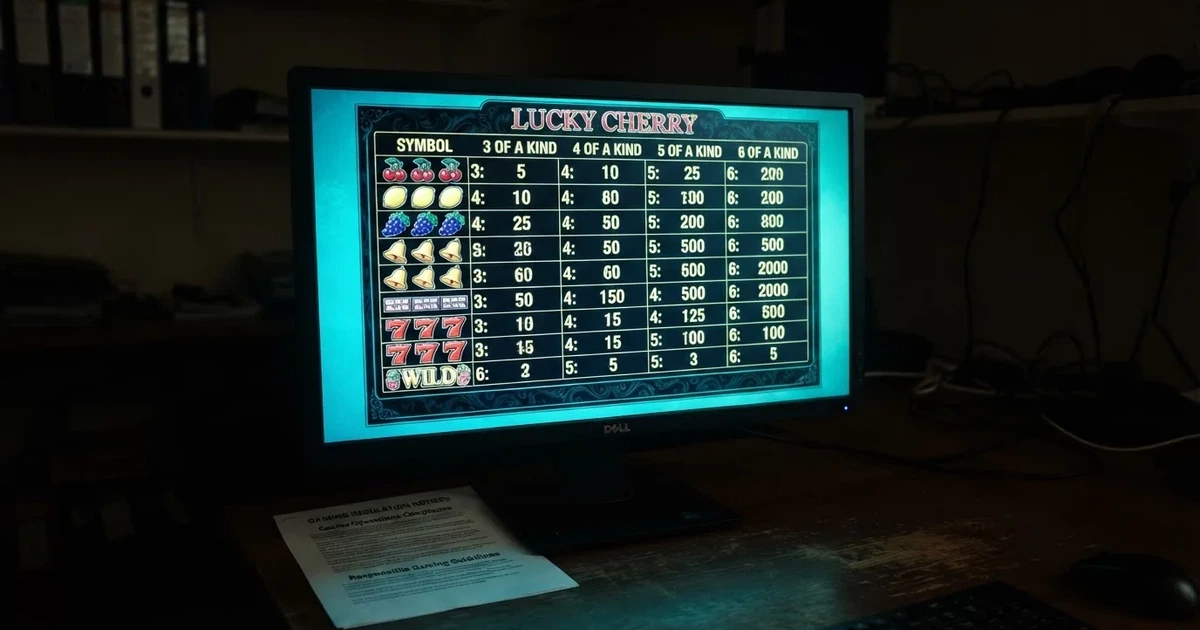
The paytable on any of these titles rewards the player for reading it. Most Playson games show the symbol values behind a small “i” or question mark in the corner; the wild, scatter and bonus-symbol payouts are listed there, along with the line-hit threshold and the bonus-trigger condition. The high-value symbols pay on three-of-a-kind at the minimum; the bonus is usually three scatters anywhere on the reels, not on a payline, and that distinction is what makes a “near miss” feel so common — three scatters on adjacent reels but on different rows counts as nothing.
RTP is published by Playson per title and varies by operator: a slot can run at one RTP at one site and a lower RTP at another, and the player rarely knows which is in play until the game loads. The version with the higher RTP costs the player less per spin, and the version with the lower RTP costs the player more — same game, different return, different casino. There is no public register of which RTP is live at which site.
Volatility is what a bankroll feels over a session. Playson titles are mostly medium-to-high volatility, which means a session is a long stretch of small returns punctuated by the occasional larger hit; low-volatility titles flatten that curve, but they appear less often in Playson’s catalogue. A player with a small bankroll is better served by smaller bets on a medium-volatility title than the maximum-coin option on the high-volatility one the bonus was advertised against.
What the player cannot read from the paytable is whether the game is the version that has been audited. Playson holds a UK Gambling Commission remote gambling software licence (041337-R-321523-016) that has been live since 1 July 2015, and a remote casino licence under the same account from 14 April 2016. Both are real, both are verifiable on the UK register, and neither reaches a player in Australia. The licence governs what Playson can supply to a UK-licensed operator; it does not govern what an offshore operator does with the file once it has it.
The Eleven Operators, Side by Side
The brands below are not a shortlist. They are the brands the ACMA has issued a formal warning over, in the order the ACMA’s register gives them, and each row carries the same line: online casino games cannot be licensed anywhere in Australia, whatever licence the site displays. The columns the table carries are brand, the ACMA action and date, the operator named in the ACMA’s action, and whether the sites themselves list Playson titles. Where a brand lists a Playson slot, that is what the casino’s own lobby says — it is not an endorsement and it does not change the licensing position.
| Brand | ACMA action and date | Operator named by the ACMA | Subject support |
|---|---|---|---|
| RocketPlay | Formal warning — March 2026; earlier Dama N.V. action May 2022 | Pulsup Ltd (RocketPlay); Dama N.V. | — |
| Level Up Casino | Formal warning — May 2022 | Dama N.V. | Listings-only (Wazdan) |
| Woo Casino | Formal warning — March 2025 | Dama N.V. | — |
| Spirit Casino | Formal warning — May 2025 | Dama N.V. | — |
| National Casino | Formal warning — July 2025 | Consolutetish S.R.L. | Listings-only (Betsoft, Pragmatic Play) |
| Bizzo Casino | Formal warning — July 2025; earlier 2022 | Consolutetish S.R.L.; TechSolutions | — |
| Ignition Casino | Formal warning — July 2025 | Bamboo Media | — |
| Instant Casino | Formal warning — February 2025 | EOD Code SRL | — |
| Jackbit | Formal warning — April 2026 | Ryker B.V. | — |
| Casino Intense | Formal warning — April 2025 | Sterplay Holding Ltd | Listings-only (1spin4win, Playson entries on partner registers) |
| Sky Crown | Formal warning — September 2022 | Hollycorn N.V. | — |
The right column is honest about its limits: where Playson titles appear in a brand’s lobby by listings the providers’ own pages report, the table says so; where the lobby does not document the integration, the row stays empty. None of this makes the ACMA’s position move. The brands themselves list Playson-style slots because the files are available; the ACMA acts because the offer to an Australian player is the offence, regardless of whose software is on the reels.
RocketPlay
The most recent ACMA action in this set: a formal warning to Pulsup Ltd over RocketPlay in March 2026, on top of a 2022 action against Dama N.V. that named the same brand. The site lists a typical offshore casino lobby — slots, live dealer, table games, a sportsbook — and the cashier carries debit cards, e-wallets, vouchers and a wide crypto stack. RocketPlay’s 2026 warning is the freshest marker on the ACMA’s register for any brand in this guide, and that is the line that decides how a reader should weigh the rest of the offer.
Level Up Casino
First named in the ACMA’s May 2022 warning to Dama N.V., which covered six casino brands in one action. Level Up’s published lobby lists titles from a wider set of providers than the RocketPlay-style single-platform brand, and Wazdan’s own partner register places it as one of the operators carrying Wazdan content. The same offshore frame applies: Australian players are not the audience the licence covers, and the ACMA’s action is on the record.
Woo Casino
A March 2025 ACMA formal warning to Dama N.V., whose portfolio has come up repeatedly in enforcement rounds — Bambet, Dazard, Level Up, Rocketplay, Wild Tornado, Cobra Casinos in 2022, then Woo and Spirit in 2025. Woo’s published terms are standard offshore: a tiered welcome package, weekly reloads, a VIP ladder. The product is well-established; the legal position has not changed.
Spirit Casino
A May 2025 formal warning, again to Dama N.V., six months after Woo. The two warnings together are the ACMA’s signal that the operator group has not responded to the earlier action, which is why the second round was issued rather than the matter being treated as resolved.
National Casino
A July 2025 formal warning to Consolutetish S.R.L., alongside Bizzo Casino in the same action. National’s lobby carries titles from Betsoft and Pragmatic Play by the providers’ published partner registers, and the same Playson-branded marketing appears across the lobby as on the other sites in this set. The bonus structure is a tiered welcome package and weekly reloads, and the wagering requirements sit in the same 35× to 50× band as the rest.
Bizzo Casino
The same July 2025 formal warning to Consolutetish S.R.L., on top of a 2022 formal warning to TechSolutions (CY) Group Limited and TechSolutions Group N.V. Two formal warnings across four years for what is, on the surface, a relaunch under new ownership. The pattern matters: a brand that has cycled through operators is not a brand that has resolved its Australian exposure.
Ignition Casino
A July 2025 formal warning to Bamboo Media, which is the operator behind both Ignition and several other brands the ACMA has acted against. Ignition’s Australian offering runs through a mirror site that the ACMA has separately blocked, and the consequence for a player who signed up before the block is a balance they cannot withdraw from Australia and an operator that has no obligation to pay out from elsewhere.
Instant Casino
A February 2025 formal warning to EOD Code SRL, and one of the cleaner illustrations of the timing problem: the warning was issued, the site stayed accessible to Australian IP addresses for several months afterwards, and the ACMA’s blocking request followed in a later round. A player who opened an account in the window between warning and block is not protected by the ACMA’s later action.
Jackbit
An April 2026 formal warning to Ryker B.V. over both Jackbit and CasinOK in the same action. Jackbit runs as a crypto-first operator with no fiat cashier at all, which removes the credit-card question but raises a different one: the Australian ban on digital currency as a payment method for licensed wagering is not in play on an offshore site, and the consequence of using crypto on Jackbit is the consequence of using any other payment on any other offshore site in this guide.
Casino Intense
An April 2025 formal warning to Sterplay Holding Ltd. Casino Intense’s published lobby lists titles from 1spin4win by that studio’s partner register, and Playson itself appears on the UK Gambling Commission’s published partner register for the software licence under which Casino Intense operates. The line the ACMA draws is the same line that runs through the rest of this set.
Sky Crown
The earliest formal warning in this set, issued to Hollycorn N.V. in September 2022 and covering both Sky Crown and Blue Leo. Three years later the same offshore position holds, and the licence Sky Crown displays is the licence of the jurisdiction it chose to incorporate in.
The Calculation: How Fast the Block Rate Has Run
This section breaks down the official blocking figures. The ACMA’s blocking programme has been running since November 2019, and the running total reached 1,751 blocked sites by the June 2026 reporting round — a cumulative figure across more than six years of enforcement. The calculations show the scale of enforcement, and the page states it as a band with its condition, not as one figure.
Across the 79 months between November 2019 and June 2026, the cumulative total of 1,751 blocked sites works out to an average of roughly 22 sites blocked per month — that is the rate if the enforcement has been even, which it has not. The early rounds ran at single-digit monthly counts as the ACMA built the blocking-request framework; the 2024 to 2026 rounds, with twelve to twenty sites per round and rounds running every four to six weeks, lift the recent rate above thirty per month. A reader who reads “more than 230 unlicensed operators have left the Australian market since 2017” should know that “left” includes exits, not blocks, and the overlap with the 1,751 figure is partial.
The consequence is the part the calculation does not contain: a site that was live at signup can be on the blocking list at withdrawal. The ACMA’s enforcement does not grandfather existing accounts, and an Australian player with a balance at a newly blocked site has no Australian body to complain to and no obligation on the operator to release funds once the site is unreachable from inside Australia. The 1,751 figure is what the ACMA has done; the consequence is what an Australian player carries when one of those 1,751 happens to be the site they chose.
What Playson Itself Is, and Where Its Games Actually Run
Playson is a slot studio, not a casino. The distinction matters: Playson supplies software to operators, and an operator is the entity the ACMA acts against. Playson Limited is based at 12 Tigne Place, Office M4, Tigne Street, Sliema, Malta, and its active UK Gambling Commission licences (a remote gambling software licence from 1 July 2015 and a remote casino licence from 14 April 2016) govern what it can supply to UK-licensed operators. Neither licence reaches Australia, and neither is what an offshore operator displays when it carries a Playson slot in its lobby.
The studio’s footprint in Australia is land-based rather than online. Aristocrat Leisure, the largest gambling-machine manufacturer in Australia, runs an online arm called Aristocrat Interactive — formed in April 2024 from the merger of Aristocrat’s Anaxi unit with the NeoGames group — that holds the regulated-online piece of the local market. Aristocrat itself was listed on the ASX in 1996 under the ticker ALL and reported 2025 revenue of A$6.30 billion, normalised net profit after tax and amortisation of A$1.55 billion and 7,400 employees. None of Aristocrat’s online operation is a Playson site, and the path from Playson-branded slots to a player in Australia does not pass through any Aristocrat-licensed channel.
What this means for a player: the Playson file they see in an offshore casino lobby is the same file a UK-licensed operator serves, but the operator carrying it is not UK-licensed, and the ACMA’s position is that the offer to an Australian player is the offence. The frame the player reads the slot through — RTP, volatility, bonus mechanics — is Playson’s; the frame the offer sits inside — wagering terms, payment rules, complaint rights — is the offshore operator’s, and that frame is the one with no Australian reach.
Legality Under the Interactive Gambling Act 2001
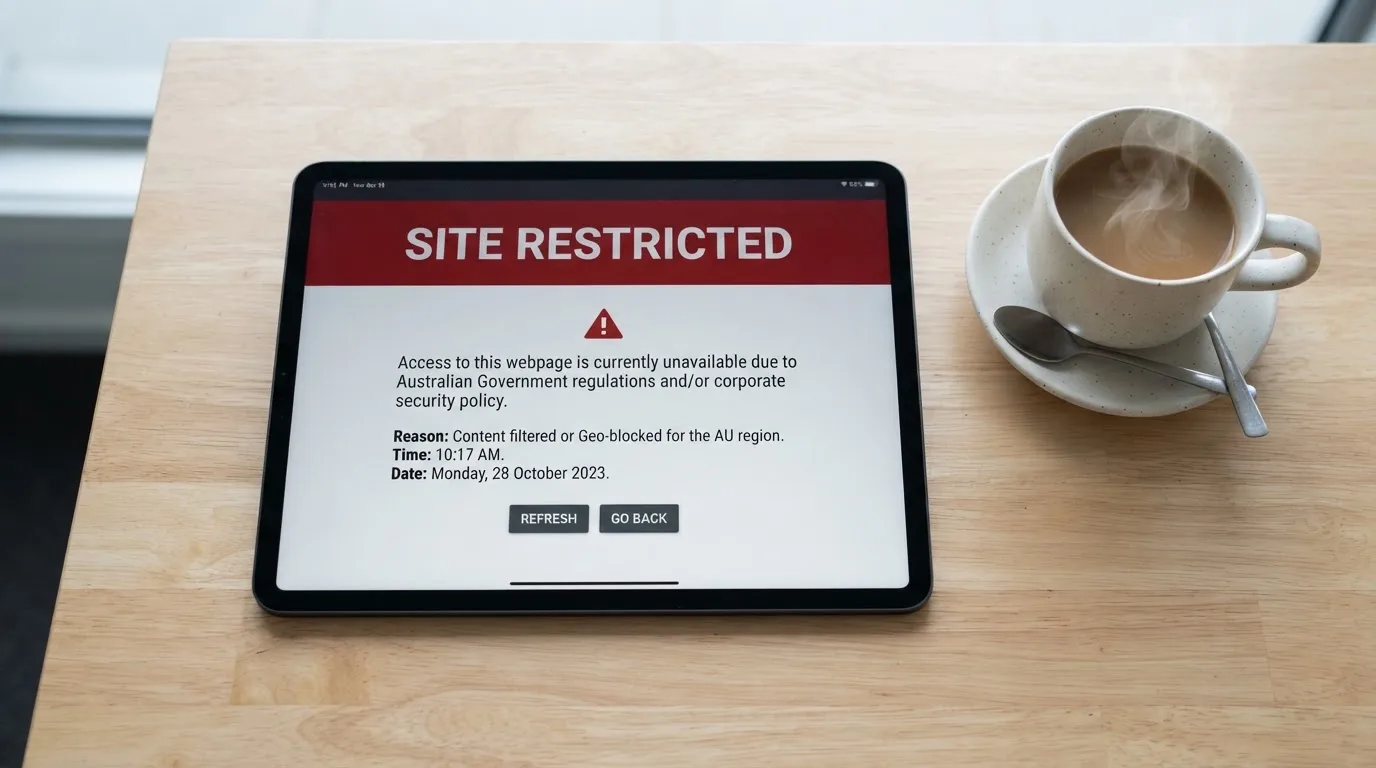
The Interactive Gambling Act 2001, strengthened by the Interactive Gambling Amendment Act 2017, makes it an offence to provide online casino games, online pokies or in-play betting to a person in Australia. No state or territory licenses them, and the ACMA is the body that investigates, issues formal warnings and directs internet service providers to block illegal sites. The IGA targets the provider, not the player — an Australian who opens an account on an offshore site is not committing an offence — but the practical frame for the player is the same: no Australian consumer protection, no complaints body, no recourse if a withdrawal is refused.
The Interactive Gambling Amendment (Gambling Reform) Bill 2026 passed Parliament on 19 August 2026, with its advertising and inducement measures commencing on 1 January 2027. The bill is law with a start date, not law in effect on a 2026 page, and the rules that apply on the date this page is read are the pre-amendment IGA plus the 2024 credit-and-crypto ban. A reader who sees an offshore site advertising “2026-compliant” terms is reading a marketing claim against a regime that has not yet commenced.
The minimum age for any form of licensed Australian gambling is 18. The age check on an offshore site is the offshore operator’s age check, which is whatever the operator’s own terms page says — and several in this guide say 18, several say the player’s local jurisdiction, and several do not publish an age rule at all.
Responsible Gambling and What the Australian Frame Offers
The Australian responsible-gambling framework is built around BetStop, the National Self-Exclusion Register (live since August 2023), which binds every Australian-licensed online and phone wagering service. An exclusion applied through BetStop is enforced across Sportsbet, Bet365, Ladbrokes and the rest of the Northern Territory-licensed bookmaker set — the same bookmakers the ACMA acknowledges under the NTRWC framework — but it does not reach an offshore Playson site. The exclusion the player registers is real; the protection it offers stops at the Australian-licensed perimeter.
The National Gambling Helpline is 1800 858 858, free, 24/7, with chat at Gambling Help Online. Both are Australian-funded services, and both are the right first call regardless of whether the gambling in question happened on a licensed Australian site, an offshore site, or a land-based venue.
The estimated A$3.9 billion a year Australians lose to illegal gambling sites, on H2 Gambling Capital’s 2025 figures, is the size of the market the offshore operators are competing for. The share of gambling going through legal Australian channels fell from 74% in 2021 to 64% on the same data, and the gap between the two numbers is the offshore operators’ growth, not the legal channel’s contraction. A reader who treats the offshore offer as a substitute for the licensed Australian product is reading the wrong frame.
The credit-card and crypto ban that took effect on 11 June 2024 closes the payment routes into licensed Australian wagering that the ACMA considers harmful, with penalties up to A$247,500 for operators that breach it. The legal deposit routes that remain are debit card, bank transfer, PayID and Osko, and BPAY. None of these routes reaches an offshore Playson site, and an Australian player using one of them at an offshore operator is using a domestic rail on a non-domestic platform — the rail works, the protection it implies does not.
Frequently Asked Questions
Is Playson legally available to players in Australia?
No. The Interactive Gambling Act 2001 prohibits the supply of online casino games and online pokies to people in Australia, and Playson slots fall inside that prohibition when they are offered by an offshore operator. Playson Limited holds a UK Gambling Commission software licence, but that licence governs supply to UK-licensed operators, not to Australian players.
What kinds of games does Playson make?
Playson is a slot studio. Its catalogue runs to HTML5 video slots built around five-reel, three-row grids with hold-and-win and free-spin features. Live dealer and table games are not part of the studio’s own catalogue, though they may appear alongside Playson slots on the same offshore site.
Are Playson games offered at land-based venues in Australia?
Playson itself does not publish a land-based presence in Australia, and the slot machines in Australian clubs, pubs and casinos are manufactured by Aristocrat, IGT and a smaller set of local makers. The path from a Playson-branded slot to an Australian player passes through an offshore online operator, not through a venue.
How can Australians check whether a Playson title is fair before ever considering play?
The audit certificate on a Playson title is held by Playson Limited against the UK Gambling Commission’s standards, and the RTP and volatility are published on the studio’s own game pages. Neither covers the version of the title running on a particular offshore site; the operator can host the file at a different RTP, and the player cannot tell which is live from the casino lobby.
Why do offshore sites keep advertising Playson games to Australian visitors?
Because the Australian market is large enough to make the breach profitable. H2 Gambling Capital’s 2025 estimate puts Australian losses to illegal sites at about A$3.9 billion a year, and the share of gambling going through legal channels has fallen from 74% in 2021 to 64%. The ACMA’s enforcement has removed more than 230 services since 2017 and blocked 1,751 sites since November 2019, and the offers keep coming.
What should an Australian do if they see a Playson game promoted by an unlicensed site?
The right response is to treat the offer as one the ACMA has the standing to act against, and the player does not. A reader who wants to report the site can do so through the ACMA’s complaint page, and a reader who is already playing and wants to stop can register with BetStop (which covers Australian-licensed wagering only) and call the National Gambling Helpline on 1800 858 858.