
Dragon Link online pokies in Australia: the legal ground, the linked jackpot, and what an Australian punter is actually being offered
Dragon Link sits in an odd position in Australian gambling vocabulary. Ask any regular at a NSW club or a Queensland pub what their favourite cabinet game is and the answer is likely to be one of the Dragon Link reel sets, the way the answer used to be a single line of Aristocrat kit. The cabinet version is licensed, regulated state by state, and tied to a hold percentage that each jurisdiction publishes. The same game offered through a browser to a person sitting in Sydney, Melbourne or Brisbane is a different matter entirely. Under the Interactive Gambling Act 2001, no online casino game — Dragon Link included — can be provided to a person physically in Australia, and the ACMA has spent the last several years naming the offshore operators that have tried it anyway.

Data current as of 29 October 2026; ACMA formal warnings and blocking orders verified against the ACMA register.
Table of Contents
- The legal frame that decides whether Dragon Link online pokies exist for an Australian at all
- The mechanics that make Dragon Link the cabinet game Australians actually sit down to
- Dragon Link on a phone: the app question, written honestly
- How Dragon Link fits the wider game catalogue Australians actually play
- How many sites the ACMA has actually moved against, and at what pace
- The eleven operators the ACMA has formally named
- The shape of the offshore offer, and what it costs an Australian who takes it
- A reader’s decision tree at the moment of being offered an offshore site
- The bottom line on Dragon Link online pokies for an Australian reader
- Frequently asked questions
The legal frame that decides whether Dragon Link online pokies exist for an Australian at all
What the Interactive Gambling Act actually prohibits
The Interactive Gambling Act 2001, tightened by the Interactive Gambling Amendment Act 2017, creates an offence of providing a prohibited interactive gambling service to a person in Australia. The list of prohibited services is short and unambiguous: online casino games, online pokies and in-play betting on sporting events. Online wagering on races and sport placed before the event is licensable; lotteries and keno are licensable; everything else that spins, deals or pays a line-bet jackpot is not. Dragon Link is a slot-format pokie, so when it is offered through a website or an app to an Australian resident, that offering falls inside the prohibition. The minimum age for any licensed wagering activity in Australia is 18.

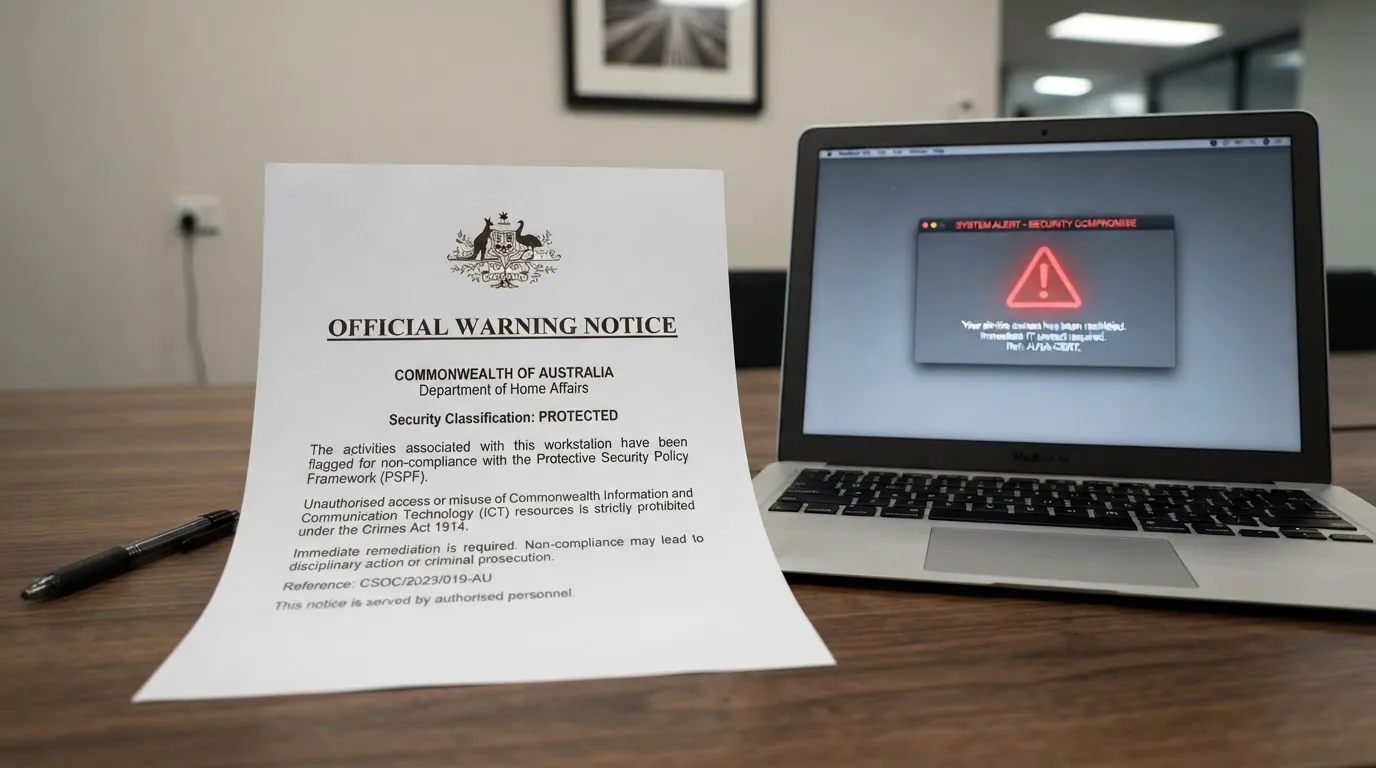
Enforcement runs through the Australian Communications and Media Authority, the ACMA. The regulator’s main levers are formal warnings — published on its website with the operator and the brand named — and written directions to Australian internet service providers to block offending domains. A first blocking request under the modern regime went out in November 2019; by June 2026 the ACMA had asked ISPs to block 1,751 illegal gambling and affiliate marketing websites, and reported that more than 230 unlicensed gambling services had withdrawn from the Australian market since enforcement was strengthened in 2017. The June 2026 round alone added twelve domains: 7Signs, ChromaBet, Donbet, Duospin, Freshbet, Slots Gem, Jacks Club, Lucky Start, Pointsbetz, Spinrise, Vinyl Casino and Wildsino.
The IGA targets the provider, not the player. A punter who opens one of these offshore sites from a Sydney apartment does not face prosecution under the Commonwealth law. What they do not have is the consumer protection that comes with a domestic licence. There is no Australian complaints body to approach when a withdrawal stalls. There is no BetStop binding the operator to the National Self-Exclusion Register, which since August 2023 has covered Australian-licensed online and phone wagering only. If a balance is sitting on a blocked site on the morning the domain goes dark, that balance is the player’s loss, not the regulator’s problem to resolve.
What offshore licensing actually means in this market
The offshore casino that displays a Curaçao or Anjouan seal at the foot of its homepage is not licensed in Australia, because Australia does not license online casinos. Some of those offshore sites operate under licence regimes that are real in their own jurisdiction; none of those regimes gives an Australian player the protections an Australian licence would. They cannot bind themselves to BetStop, because the register covers Australian licensees only. They are not subject to the credit-card and digital-currency ban that took effect for licensed Australian online wagering on 11 June 2024, which is why a number of them accept the payment methods that no Australian-licensed operator can take. The point is not that offshore licences are worthless; the point is that they are not Australian licences, and the Australian rules were written with Australian licences in mind.
The 2026 reform package and its start date
The Interactive Gambling Amendment (Gambling Reform) Bill 2026 passed Parliament on 19 August 2026. The advertising and inducement measures it carries do not commence until 1 January 2027, so for the rest of this calendar year the rules a reader is operating under are the 2017 amendments plus whatever formal warnings and blocking orders the ACMA has issued since. A reform with a future commencement date is law on the statute book and not yet in force on a page written before that date, and the difference matters when a marketing email lands in an inbox promising inducements the new section will eventually forbid.
How the Australian dollar flows through this market
The H2 Gambling Capital 2025 estimate puts annual losses by Australians on illegal gambling sites at around A$3.9 billion, and reports the share of gambling going through legal channels falling from 74% in 2021 to 64%. That is a multi-billion-dollar flow into sites the ACMA is actively blocking, and it is the context every warning letter and every blocked domain sits inside. The arithmetic is unflattering. Legal channels collect roughly two thirds of what Australians spend; the rest leaks to operators the regulator has named by name.
The mechanics that make Dragon Link the cabinet game Australians actually sit down to
The hold percentage by jurisdiction — why the same cabinet pays back differently in different states
Australian gaming machines are licensed state by state, and each jurisdiction sets its own minimum return-to-player. New South Wales, the Northern Territory, Queensland and (generally) Victoria fix the floor at 85%, with Crown Melbourne running at 87%. The Australian Capital Territory and Tasmania both require 87%, South Australia 87.5%, and Western Australia 90%. Two cabinets running the same Dragon Link reel set therefore return at different rates depending on which state they sit in, and the difference is not a marketing flourish — it is the rule the regulator wrote into the licence. New South Wales alone had 87,298 gaming machines outside casinos across 2,195 venues as of June 2023, with player losses on them of A$8.18 billion in 2022–23. Queensland logged 21,122 machines in 351 venues in October 2023, and Victoria had 26,380 outside Crown Casino in 488 venues in 2021–22 under a statewide ceiling of 30,000. Western Australia has banned poker machines in pubs and clubs since Crown Perth opened in 1985; Crown Perth’s own machine count has grown from roughly 200 in 1985 to about 2,500 today, approved by the state’s Gaming and Wagering Commission.
The headline figure for the country as a whole is the one that gives the cabinet game its scale. In 2020–21 Australians bet almost A$150 billion through gaming machines and lost A$12.18 billion on them. Australia holds about 3% of the world’s pub and club poker machines, with 0.3% of the global population — a share of machines wildly out of proportion to the country’s share of people. The reason an Australian-facing Dragon Link page keeps coming back to legal status is partly that the legal market is this large; offshore operators see it from the other side.
The linked jackpot feature, and why it is built the way it is built
A Dragon Link cabinet is not a single machine. It is a cluster of linked reel sets — Happy and Prosperous, Pearl, Autumn, Sapphire, and others — each carrying its own paytable and a shared progressive jackpot tier. A standalone progressive, the older cabinet format, builds a jackpot from one machine; a linked progressive builds it from every cabinet on the network, which is why the top prize reaches the figures it reaches and why a single venue cannot fund a meaningful prize on its own. The bonus round is the trigger for the linked jackpot feature: when a player lands the bonus symbols, they enter a hold-and-spin format in which each new bonus symbol locks in place and resets the spin counter, building toward the prize. The mechanic is the same one Aristocrat’s Lightning Link and the Buffalo-style linked family use, and it is the part of the game that the marketing materials lead with because the mechanic is what makes the round feel like a round worth chasing.
Why a feature like this is built to keep a player watching the reels
A linked jackpot feature has been engineered, deliberately, to extend a session. The hold-and-spin mechanic stalls the moment of resolution — every locked symbol is a reason to watch the next spin, and the jackpot meter ticking upward is a continuous prompt rather than a discrete event. That is the design, and a page about the game owes a reader honesty about what the design does. A fixed time limit matters more for a cabinet of this shape than any in-game prompt; once a player has decided to sit down, the cabinet decides for them how long the round feels. Anyone reading this page because a search led them to “dragon link slot bonus” should know what the bonus round is built to do before they sit down in front of one.
Where land-based play ends and the prohibited online version begins
Australia’s first legal poker machines were registered clubs, in New South Wales, from 1956. Tasmania granted the Federal Group a monopoly over its poker machines from 1968; legislation passed in November 2021 ended that monopoly and moved oversight of the machines to the Tasmanian Liquor and Gaming Commission, which had also been due to roll out mandatory pre-commitment cards under a reform that was delayed until late 2025. None of that history changes the position for online play. The land-based machines are licensed state by state; the online version of those machines, including any web deployment of Dragon Link, is prohibited to a person in Australia under the Interactive Gambling Act 2001. The Tasmania pre-commitment card reform is a model for what a state can do at the cabinet; the IGA is what the Commonwealth does about the browser.
Dragon Link on a phone: the app question, written honestly
What “dragon link app” actually delivers to an Australian user
The searches that lead readers to this page — “dragon link pokies app”, “dragon link casino app”, “dragon link slot app”, “dragon link slots app” — all reach the same answer. Any app claiming to run Dragon Link pokies on a phone is offering the same unlicensed activity as a desktop site, regardless of how the package is wrapped. The app-store listing does not change the provider; the provider is still the offshore operator the ACMA has warned or blocked, and the IGA applies to that provision whether the medium is a browser tab, an iOS app or an APK sideloaded from a third-party store. The fact that the medium is portable does not move the activity out of the prohibition.
Where the legitimate app boundary sits
What an Australian can lawfully install on a phone, in this market, is a wagering app from a licensed Australian bookmaker — Sportsbet, Bet365, Ladbrokes, Betfair and the like, all licensed through the Northern Territory Racing and Wagering Commission for tax and regulatory reasons. The NTRWC regulates 52 of Australia’s online bookmakers, has no full-time staff and meets once a month in Darwin, which is the institutional shape behind the licensing architecture an Australian punter sits on top of. None of those apps offers Dragon Link pokies, because none of them is licensed to offer casino games. The licensed phone product is racing and sport; the cabinet product is a club or casino; the IGA keeps the two from merging through a mobile app.
Why offshore apps feel more polished than the licensed product
The licensed Australian wagering apps carry the credit-card ban, the digital-currency ban, the BetStop bind, the consumer-protection regime, and the inducement rules that the 2026 reform will tighten from 1 January 2027. The offshore app carries none of those. The polish that an offshore app markets — the gamified loyalty wheel, the push-notification cadence, the tailored bonus offer — is built in the regulatory space the Australian regime has chosen not to occupy. Comparing the two products on look and feel alone is comparing two products designed under different rule books, and the rule book is the part that determines what a player can recover if something goes wrong.
How Dragon Link fits the wider game catalogue Australians actually play
Baccarat and blackjack as the table games the same cabinets host
Baccarat and blackjack are the two table formats that share Australian casino floors with the pokies, and a reader comparing Dragon Link to the rest of the licensed Australian catalogue will want both held up to the light. Baccarat’s house edge is 1.06% on the Banker bet, 1.24% on the Player bet and 14.36% on the Tie — the Tie number is the giveaway, the marketing line that flatters a game whose best bet still gives the house more than one percent. Baccarat’s origins are disputed: some accounts place it in nineteenth-century France, others credit an Italian introduction at the end of the fifteenth century during the reign of King Charles VIII. Punto banco, the variant most played today, was developed in Havana during the 1940s; the casino banks the game at all times and plays both hands by fixed drawing rules, unlike variants such as chemin de fer — French for “railway” — where players choose. In baccarat, cards two through nine count at face value, ten and the face cards count as zero and aces count as one, with hand totals taken modulo ten; punto banco is dealt from a shoe of six or eight decks.
Blackjack’s house edge is much lower at the top end — about 0.28% under liberal Las Vegas Strip rules and about 0.43% under Atlantic City rules with optimal play. Its predecessor was the English game vingt-un, and Miguel de Cervantes described a related game called veintiuno in his Rinconete y Cortadillo, written around 1601–1602; formal rules for the game were published in Britain in 1800 and the modern name “blackjack” came into use around 1899, with Klondike prospectors of 1896–99 credited with giving the game its current name. The number cards count as their number, jack/queen/king count as ten, and an ace counts as one or eleven; a starting two-card total of 21 is a “blackjack” or “natural” and is the strongest hand. Established variants include Spanish 21 (played without tens but with player-favourable rules), Double Exposure Blackjack (both dealer cards face-up), Blackjack Switch (players can swap cards between two hands) and Super Fun 21 (up to four splits).
The reason these games sit on the same page as a pokies article is not that they are similar — they are not — but that a reader who lands here from a “dragon link slot bonus” search may also be weighing whether to take a table seat instead of a cabinet seat. The two-decimal-place difference between a banker bet and a basic-strategy blackjack hand is the kind of arithmetic a reader should carry across to a pokies comparison, where the hold is set by the jurisdiction and runs from 85% to 90% — and that range, on a per-spin basis, is the gap the cabinet operator has accepted as the cost of doing business.
How a Crown venue or a club floor regulates the games it offers
Under section 66 of the NSW Casino Control Act 1992, a casino operator must not permit a game such as baccarat to be played unless the game and its rules are approved by the regulator, and the operator must make a copy of the approved rules available to patrons on request. Crown Melbourne offers three baccarat variants — Traditional Baccarat, Crown Baccarat and 2 to 1 Baccarat — as approved table games regulated by the Victorian Gambling and Casino Control Commission, which replaced the VCGLR as Victoria’s casino regulator on 1 July 2022. The same approval logic covers pokies, although the regulator’s instrument is the cabinet licence rather than the per-game approval. The licensed Australian product is shaped, end to end, by a regulator who has signed off on it.
Where the comparison breaks down: the offshore site has no regulator on the other end
An offshore casino offering Dragon Link pokies to an Australian reader is not subject to any Australian regulator’s sign-off. There is no per-game approval, no venue cap, no BetStop binding, no payout-time rule. The marketing claim that a site is “licensed and regulated” is a claim about a licence the IGA does not recognise for the Australian market, and the reader is the one who bears the consequences when the marketing and the regulatory reality diverge.
How many sites the ACMA has actually moved against, and at what pace
The arithmetic of the blocking regime
The ACMA reported in June 2026 that 1,751 illegal gambling and affiliate marketing websites had been blocked since the first blocking request in November 2019. That is the running total, accumulated over roughly six and a half years of active enforcement. The first year, the early years, the period when the 2017 amendments were bedding in — the totals for those years were smaller. The most recent rounds have moved at a faster clip, with 230 unlicensed gambling services having withdrawn from the Australian market since 2017. The arithmetic is what matters here: blocking is a steady-state activity, not a one-off raid, and the 1,751 figure is the cumulative count of domains the regulator has directed Australian ISPs to take offline.
A pace estimate: the average over the full period from November 2019 to June 2026 comes out at roughly 260–270 blocked domains per year, with the trajectory steepening in the more recent rounds. The exact per-year split is not published in a single table; the ACMA reports blocking rounds as they occur, and the cumulative total is the figure that gets restated. State it as a band: more than two hundred blocked domains a year on average, with the most recent rounds sitting well above that baseline.
The brand-level picture: the same parent keeps coming back under a new name
Several of the names the ACMA has acted against are not first-time offenders. Dama N.V. drew a formal warning in May 2022 covering six casino brands — Bambet, Dazard, Level Up, Rocketplay, Wild Tornado and Cobra Casinos. The same operator drew further formal warnings over Woo Casino in March 2025 and Spirit Casino in May 2025. TechSolutions (CY) Group Limited and TechSolutions Group N.V. drew a 2022 warning that covered Bizzo Casino; Consolutetish S.R.L. drew a July 2025 warning over both National Casino and Bizzo Casino — same brand, different operator name on the warning letter. The pattern is consistent: a parent company exits one set of brand names, registers a new set under a fresh corporate vehicle, and the ACMA writes another formal warning. The 1,751 domains blocked is the count of attempts the regulator has stopped; the underlying churn of brands behind those domains is faster than the domain count suggests.
What a formal warning actually changes
A formal warning under the IGA is published on the ACMA’s website with the operator and the brand named. It is the regulator’s first serious step — a public record that the regulator has identified the offering as a prohibited service and has put the operator on notice. It does not, on its own, block the site. Blocking follows a separate written direction to Australian ISPs, and the ACMA moves from warning to blocking once it has built the file it needs to make the direction stick. A site that has been warned but not yet blocked remains reachable from an Australian IP for as long as the ISP direction is pending; a site that has been blocked is unreachable through mainstream Australian internet connections. The enforcement ladder is warning, then blocking, then — for services that ignore both — referral for civil penalty proceedings.
The eleven operators the ACMA has formally named
The list that follows is not a ranking. Each operator is on it because the ACMA itself issued a formal warning under the Interactive Gambling Act 2001 over the brand, naming the corporate vehicle the regulator pursued. The warnings have been published on the ACMA’s website. No operator in this section is recommended to the reader as a place to play; under the IGA, none of them can lawfully provide the service they offer to a person in Australia.
| Brand | ACMA action and date | Operator named by the ACMA | Subject support |
|---|---|---|---|
| RocketPlay | Formal warning, March 2026 | Pulsup Ltd | — |
| Level Up Casino | Formal warning, May 2022 | Dama N.V. | listings report the brand as a Dragon Link carrier (Bgaming) |
| Woo Casino | Formal warning, March 2025 | Dama N.V. | — |
| Spirit Casino | Formal warning, May 2025 | Dama N.V. | — |
| National Casino | Formal warning, July 2025 | Consolutetish S.R.L. | listings report the brand as a Dragon Link carrier (en.wikipedia.org) |
| Bizzo Casino | Formal warning, July 2025 (earlier 2022) | Consolutetish S.R.L. (earlier TechSolutions) | — |
| Ignition Casino | Formal warning, July 2025 | Bamboo Media | — |
| Instant Casino | Formal warning, February 2025 | EOD Code SRL | — |
| Jackbit | Formal warning, April 2026 | Ryker B.V. | — |
| Casino Intense | Formal warning, April 2025 | Sterplay Holding Ltd | listings report the brand as a Dragon Link carrier (Abc.net.au; acma.gov.au; Crownmelbourne.com.au) |
| Sky Crown | Formal warning, September 2022 | Hollycorn N.V. | — |
The cluster of Dama N.V. warnings — May 2022, March 2025, May 2025 — is the cleanest illustration of the parent-company pattern. The cluster of TechSolutions / Consolutetish warnings around Bizzo Casino — 2022, then July 2025 — is the second. Where a subject-support column carries a listing source rather than a confirmation, the page reports only what those listings report; it does not claim the brand hosts Dragon Link as a fact about the operator.
RocketPlay
The ACMA issued a formal warning to Pulsup Ltd over Rocketplay in March 2026, on top of the earlier Dama N.V. warning of May 2022 that also named Rocketplay. Two warnings from two corporate vehicles, both for the same brand, illustrate exactly the corporate reshuffle the ACMA’s blocking regime is built to chase. The reader who lands here because a search engine carried them to an affiliate page promoting a Rocketplay bonus offer is being shown the same product the regulator has now warned twice.
Level Up Casino
Level Up Casino sits inside the original Dama N.V. cluster, named in the May 2022 warning along with five other brands. Listings on third-party game-provider pages place the brand in the Dragon Link carry category, which is what those listings report; the ACMA record is the action the regulator has taken, not a product endorsement. For a reader weighing the brand on its appearance in search results, the warning letter and the listing are the two sides of the picture, and they point in different directions.
Woo Casino
The Dama N.V. formal warning over Woo Casino came in March 2025, three years after the original 2022 warning that named six other brands. The intervening years are the period during which the operator continued to offer services to Australian residents; the formal warning is the regulator’s response. A reader who arrived at Woo Casino through an affiliate link in that window was using a site whose regulator had not yet spoken publicly about it.
Spirit Casino
Spirit Casino drew the May 2025 Dama N.V. warning, the third in the cluster. The gap between the 2022 warning and the 2025 warning is the operational history the ACMA’s enforcement has now caught up with; the warning is what the regulator publishes, and the published text is what the reader can verify.
National Casino
National Casino was named in the July 2025 Consolutetish S.R.L. warning, which also covered Bizzo Casino. Listings on Wikipedia-class reference pages place the brand in the Dragon Link carry category, again as a listing report rather than a confirmed hosting claim. The corporate vehicle on the warning letter is the regulator’s choice of defendant; the brand name is what an Australian punter saw in the marketing.
Bizzo Casino
Bizzo Casino carries two warnings on the ACMA’s record: the 2022 warning to TechSolutions (CY) Group Limited and TechSolutions Group N.V., and the July 2025 warning to Consolutetish S.R.L. Two corporate vehicles, one brand, two separate enforcement actions. The pattern is the one the ACMA’s enforcement ladder is built around: warn, wait, warn again under a new operator name when the old one is restructured.
Ignition Casino
The July 2025 warning to Bamboo Media named Ignition Casino. Ignition has been a long-running offshore brand in the Australian-facing affiliate ecosystem, and the ACMA’s 2025 letter is the regulator’s first formal warning over this corporate vehicle for this brand. A reader weighing a brand on tenure is weighing the wrong metric — tenure tells them how long the marketing has been running, not whether the regulator has moved against it.
Instant Casino
Instant Casino drew a formal warning to EOD Code SRL in February 2025. The warning pre-dates the most recent blocking round, but the brand sits inside the same ACMA enforcement envelope as the eleven others on this list. A formal warning is a published record; a reader who wants to verify it can pull the warning text from the ACMA’s website directly.
Jackbit
Jackbit was named in the April 2026 warning to Ryker B.V., which also covered CasinOK. Two brands, one corporate vehicle, one warning letter. The April 2026 timing puts the action close to the most recent blocking round the regulator has published, and the warning is part of the same enforcement push that produced the June 2026 blocking list of twelve domains.
Casino Intense
Casino Intense drew a formal warning to Sterplay Holding Ltd in April 2025. Listings on Australian media and regulator pages (Abc.net.au, acma.gov.au, Crownmelbourne.com.au) place the brand in the Dragon Link carry category — a listings report, named here as what those listings report. The ACMA’s warning is the action; the listing is the affiliate ecosystem; the two records describe the same brand from different sides.
Sky Crown
Sky Crown was named in the September 2022 formal warning to Hollycorn N.V., which also covered Blue Leo. Sky Crown is the earliest of the eleven on the timeline, and the warning has been on the ACMA’s record since 2022. The brand has been in the Australian-facing market continuously since the warning; the warning is the regulator’s settled position, and it does not require a second letter to remain the regulator’s settled position.
The shape of the offshore offer, and what it costs an Australian who takes it
What an Australian cannot recover if the site stops paying out
The consumer-protection regime an Australian-licensed operator sits inside is what makes a withdrawal complaint actionable. The Australian-licensed operator has a regulator it answers to; the offshore operator has a regulator in a jurisdiction the IGA does not recognise, and the operator’s own terms of service are the contract. A refusal to pay a withdrawal is a contractual dispute under the operator’s own law, and the Australian punter is the party with the least leverage in that dispute. The 1,751 blocked domains and the A$3.9 billion in estimated annual losses to illegal sites are the scale at which this plays out; the individual dispute is small, and it is small on purpose.
The payment-method tell
Since 11 June 2024, Australian-licensed online wagering has been banned from accepting credit cards, credit-related products and digital currency as payment, with penalties of up to A$247,500 for operators that take them. Legal deposit routes for a licensed Australian wagering account are debit card, bank transfer, PayID/Osko and BPAY. A site that asks an Australian for a credit card or a crypto deposit is operating outside the Australian rules by definition, because the Australian rules would not let it take that payment. The payment-method screen is the cheapest single check a reader can run before going further.
The BetStop tell
BetStop, the National Self-Exclusion Register, has been live since August 2023. It binds Australian-licensed online and phone wagering services; an offshore casino is not bound by it, which means the self-exclusion a punter sets through BetStop does not extend to a site on the ACMA’s blocking list. A reader who has set a BetStop exclusion and is still seeing gambling marketing land in their inbox is seeing marketing from an operator BetStop does not reach.
What the National Gambling Helpline is for
The National Gambling Helpline is 1800 858 858, free, 24 hours a day, with chat support through Gambling Help Online. It is the right number for a reader who has run into trouble with an offshore site or who wants to talk through a self-exclusion decision before making it. The service is paid for by the Australian government and is independent of any operator.
A reader’s decision tree at the moment of being offered an offshore site
Where the licensed alternative actually sits
The licensed Australian wagering market is racing and sport placed before the event, plus lotteries and keno, regulated state by state and licensed federally through the Northern Territory for the largest operators. The licensed product does not include online casino games, which is the IGA’s structural decision. A reader who wants a casino game in Australia goes to a licensed venue — a club, a pub with the right state authorisation, or a casino — and sits down in front of the cabinet. The cabinet is where Dragon Link is. The browser is not.
The bottom line on Dragon Link online pokies for an Australian reader
Dragon Link is a real game, well known to Australian players, and the cabinet version is regulated state by state with a minimum return-to-player that runs from 85% in New South Wales, the Northern Territory, Queensland and most of Victoria, up to 90% in Western Australia. The online version offered to a person in Australia is a prohibited interactive gambling service under the Interactive Gambling Act 2001, and the ACMA has spent several years moving against the operators that have offered it. The 1,751 blocked domains, the A$3.9 billion in estimated annual losses to illegal sites, the formal warnings published by name — those are the record. An Australian reader who searches for “dragon link online pokies” is being shown a product the regulator has decided they should not be able to buy, and the operators still offering it have been told so in writing.
Frequently asked questions
Is Dragon Link available to play online for real money in Australia?
No. Online casino games, including online pokies such as Dragon Link, are a prohibited interactive gambling service under the Interactive Gambling Act 2001 when offered to a person in Australia, and no Australian state or territory licenses them. The cabinet version is licensed state by state; the online version is not.
What actually triggers the bonus round on a Dragon Link cabinet?
The bonus round triggers when a player lands the bonus symbols on the reels, entering a hold-and-spin format in which each new bonus symbol locks in place and resets the spin counter. The round is built to extend a session — the design choice is deliberate and worth knowing about before sitting down in front of one.
Is Dragon Link available at regulated land-based venues in Australia?
Yes. The cabinet format is licensed state by state and is in clubs, pubs and casinos across the country, with New South Wales alone holding more than 87,000 gaming machines outside casinos as of June 2023. Each jurisdiction sets its own minimum return-to-player, ranging from 85% to 90%.
How does a linked jackpot differ from a standalone jackpot?
A standalone progressive builds from one machine; a linked progressive builds from every cabinet on the network. Dragon Link is a linked format, which is why the top prize reaches the figures it reaches and why a single venue cannot fund a meaningful top prize on its own. The shared progressive is the structural feature of the game.
Does a Dragon Link app on a phone offer a different game to the desktop version?
No. Any app claiming to run Dragon Link pokies on a phone is offering the same unlicensed activity as a desktop site, regardless of how the package is wrapped. The medium — browser, iOS, Android — does not move the activity out of the IGA prohibition, and the offshore operator behind the app is the same operator the ACMA has warned or blocked.
What separates the different Dragon Link reel sets from each other?
The reel sets — Happy and Prosperous, Pearl, Autumn, Sapphire and others — each carry their own paytable and theme, while sharing the linked progressive jackpot tier that defines the family. The reel-set choice is the player’s; the linked jackpot is the same across all of them.
The first question — is the site licensed in Australia?
If the answer is no, which it is by definition for any site offering online casino games to a person in Australia, then the rest of the questions are about how much risk the reader is taking on, not about whether the site is lawful. The IGA has answered the lawfulness question upstream; what remains is the consumer-protection calculus.
The second question — what is the site asking for as payment?
Credit card or crypto is the offshore tell. A licensed Australian operator cannot take either. The payment-method screen sorts the licensed product from the unlicensed product faster than any other single check.
The third question — does the site appear on an ACMA warning or blocking list?
The ACMA publishes formal warnings by operator name and blocking orders by domain. A reader can check the ACMA website directly before depositing. The check takes a minute; the deposit, once made, is not reversible through the ACMA.
The fourth question — is BetStop the right tool for this reader?
If the answer is yes, BetStop covers the licensed Australian wagering market and does not cover the offshore site the reader is considering. That is the structural gap, and it is the gap a reader needs to understand before deciding whether the offshore site is a workable substitute for the activity they have excluded themselves from.