
Reading the Paytable: High-RTP Slots and the Australian Market
A punter chasing the “best RTP slots Australia” market is really asking two things at once. First, which slot games return the most to players over the long run, and what determines that figure. Second, whether the sites offering those games are even allowed to take Australian money. The second question answers the first in a way most marketing pages never say out loud: every site publishing high-RTP slot games for Australian players is operating offshore, unlicensed for this jurisdiction, and that fact shapes what RTP means in practice.
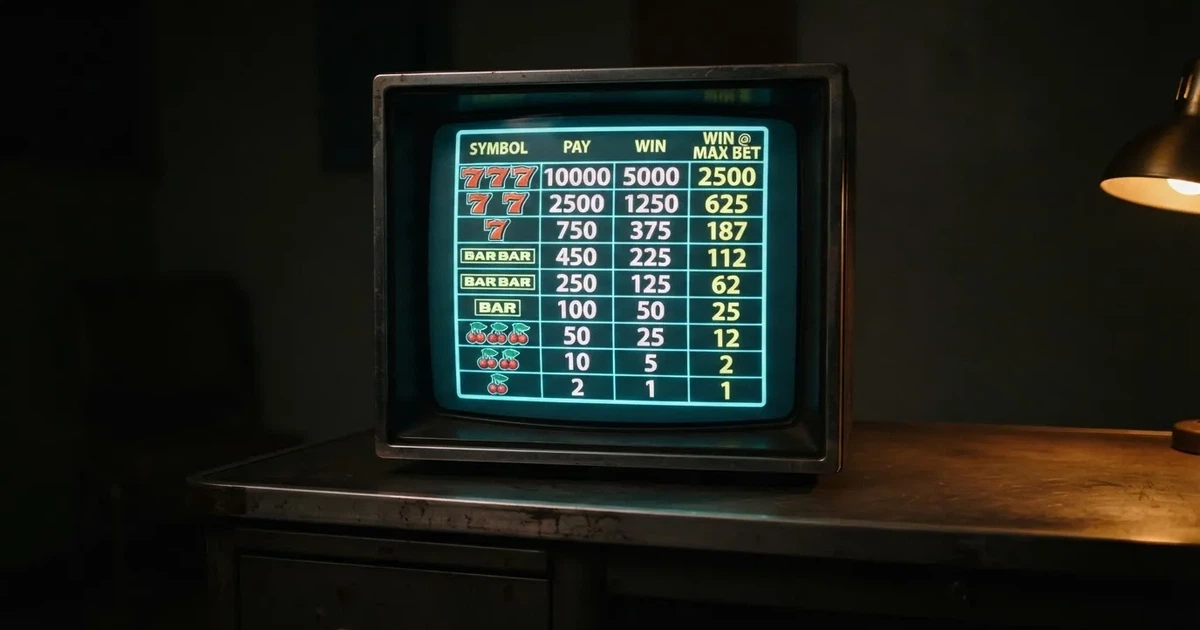
This page works through both questions. It looks at how return-to-player is calculated, what counts as a high figure on a modern video slot, and how those numbers are or aren’t tested. It then turns to the regulation of online gambling in Australia, which is what makes the “online” half of the search term a moving target. Each section closes on what the material actually means for someone comparing options.
The figures and dates throughout were checked against the ACMA’s formal warning register and the agency’s published blocking actions as of 29 October 2026.
Table of Contents
- What RTP actually measures
- How the Australian slot floor looks from the outside
- The legal frame around online slots in Australia
- Responsible gambling and the offshore gap
- What high-RTP slot play actually looks like in practice
- The blocking arithmetic
- ACMA enforcement history across the featured brands
- A closer look at the featured operators
- How the ACMA’s enforcement rate shapes the market
- Picking a slot by more than the headline percentage
- Reading ACMA actions in order
- A practical view of what high-RTP play means in Australia
- Frequently asked questions
What RTP actually measures
Return to player, written as a percentage, is the share of all money wagered on a slot that the game is programmed to pay back across its lifetime. A 96% RTP slot, over millions of spins, returns A$96 of every A$100 wagered. The remaining A$4 is the house edge, sometimes called the hold. The two figures always sum to 100.

The calculation runs across the game’s full cycle. Modern video slot machines can carry five or more reels with fifty or more symbols per reel, producing odds against the top combination as steep as 300 million to one, while a classic three-reel machine with about ten symbols per reel offers only around 1,000 possible combinations. The shift from mechanical reels to video reels in the 1970s and after is what made RTP a number worth quoting in the first place: with that many possible outcomes, no individual player will ever come close to the long-run average.
The single number on the paytable is therefore a statistical average, not a session promise. A player who sits down for an hour will almost certainly finish ahead of, or behind, that average by a wide margin. The percentage describes the shape of the game, not what it does on any given evening.
The math that sits behind the percentage
RTP is derived from the sum of every possible payout multiplied by its probability of occurring. Picture a slot with three reels and a single payline, one symbol on each reel that pays the top prize of 100 coins, and ten thousand other outcomes that pay nothing. If the top combination occurs once in 12,000 spins, the slot returns (1 × 100) ÷ 12,000 of every unit wagered, or about 0.83%. That figure multiplied by all the smaller combinations and weighted by their frequencies produces the published RTP.
The point that gets lost in marketing is that the denominator is the total amount wagered, including all the losing spins, not just the bets that won something. A 96% RTP does not mean A$96 back on a A$100 bet. It means A$96 back across all the A$100 bets a machine receives, averaged over the long run.
Where published RTP figures come from
Game developers calculate theoretical RTP when they design a slot, run simulations across millions of spin outcomes, and then submit the game to independent testing houses. Return-to-player figures are independently tested before a slot is released, though what “tested” covers varies by jurisdiction. In Australia, online slot games are not licensed at all, so the testing regime that applies is the one the offshore operator voluntarily submits to. The presence of a certificate from a named laboratory is meaningful; the absence of one is a flag.
For licensed Australian venues, the picture is different. State regulators approve gaming machines and their payback percentages before the machines are installed in pubs, clubs, or casinos. New South Wales, Victoria, Queensland, South Australia, and the ACT each set their own requirements for how much a gaming machine must return over its cycle, and the figures are not identical across state lines.
How RTP compares to other casino games
Slots tend to carry a higher house edge than table games with optimal play. In craps, the Pass/Come bet has a house edge of 1.41%, while Don’t Pass/Don’t Come sits at 1.36%. In baccarat, the house edge is 1.06% on the Banker bet, 1.24% on the Player bet, and 14.36% on the Tie. With optimal play under liberal Las Vegas Strip rules, blackjack’s house edge falls to about 0.28%. These figures sit well below the typical online slot, which generally returns 94-97% depending on the title. The comparison matters because a punter choosing a game by house edge alone would not choose a slot, and that is precisely why “best RTP” needs unpacking rather than treating it as the only number on the page.
How the Australian slot floor looks from the outside
A slot played at a pub in Sydney, a club in Melbourne, or a casino in Brisbane is regulated by the state authority where the machine sits. A slot played online from an Australian address sits in a different legal category entirely, because no Australian licence covers it. That gap drives everything that follows.
The 1992 NSW Casino Control Act gave the state its framework for approving casino games. Under section 66 of that Act, a casino operator must not permit a game such as baccarat to be played unless the game and its rules are approved by the regulator, and the operator must make a copy of the approved rules available on request. Victoria works under the Casino Control Act 1991, with the Victorian Gambling and Casino Control Commission (VGCCC) — successor to the VCGLR from 1 July 2022 — required to approve any rules for table games and any change to those rules before they go live at the Melbourne casino.
Crown Melbourne currently offers three baccarat variants approved by the VGCCC: Traditional Baccarat, Crown Baccarat, and 2 to 1 Baccarat. The same regulatory pattern applies to slots and other table games: the state knows what is on the floor, what its return is, and what its rules are. None of that oversight extends to a site that takes bets from Australia via an offshore licence.
The scale of the onshore market
Pokies-style slot machines outside casinos numbered 87,298 in New South Wales as of June 2023. Victoria counted 26,380 machines in 2021-22. Queensland had 21,122 machines as of October 2023, South Australia 11,672 in September 2023, and the ACT 3,587 in November 2023. Per capita, that puts Australia at roughly five times the United States rate for gaming machines outside casinos, a figure that dates to a 2010 estimate and has shifted modestly since but not enough to change the ranking.
The sheer number of machines on Australian floors shapes what “high RTP” means in conversation. Players asking for “the highest RTP slots” are often asking a question that exists only in the offshore world, where a 97% video slot can be promoted as a top performer and a 92% slot as a low performer. On the licensed Australian floor, the spread is narrower and regulated by state, and the marketing language around individual titles largely disappears.
Why two slots with the same theme carry different RTPs
The same theme can appear under different return percentages when a developer offers configurable RTP and an operator picks the lower setting for its market. A game set at 96.5% on one site may sit at 94% on another, with no visible change to the reels, the paytable, or the bonus rounds. The difference shows up only in the help screen or the published game information, and most players never check.
This is one of the quietest ways the offshore market cheats the search term “best RTP slots Australia.” A site can advertise the title and stay silent on the figure, or advertise a strong figure and quietly serve a weaker version to players who never compare. Independent testing labs exist to catch the discrepancy, and their certificates are what gives a slot’s published RTP some weight, but enforcement against an operator who quietly serves a different configuration is not a thing.
The legal frame around online slots in Australia
The Interactive Gambling Act 2001, as strengthened by the Interactive Gambling Amendment Act 2017, makes it an offence to provide online casino games, online pokies, or in-play betting to a person physically in Australia. No state or territory issues a licence for those products. What is licensable is wagering on races and sport placed before the event, lotteries, and keno, and the bulk of online wagering licences sit with the Northern Territory for tax reasons.
The Northern Territory Racing and Wagering Commission regulates 52 of Australia’s online bookmakers, including Sportsbet, Bet365, and Ladbrokes. The commission has no full-time staff and meets once a month in Darwin, a structural detail that matters because it explains how a jurisdiction with one of the smallest populations holds most of the country’s online wagering licences.
The Interactive Gambling Amendment (Gambling Reform) Bill 2026 passed Parliament on 19 August 2026. Its advertising and inducement measures commence 1 January 2027, which makes the new law a fact with a start date that has not yet arrived on a 2026 page. The bill’s existence is news; its operative date is a year away.
What the ACMA actually does
The ACMA investigates complaints, issues formal warnings, and directs Australian internet service providers to block illegal sites. According to the agency as reported in June 2026, a total of 1,751 illegal gambling and affiliate marketing websites have been blocked since the first blocking request in November 2019. More than 230 unlicensed gambling services have left the Australian market since enforcement was strengthened in 2017.
A single blocking round, reported on 26 June 2026, asked Australian ISPs to block twelve more sites: 7Signs, ChromaBet, Donbet, Duospin, Freshbet, Slots Gem, Jacks Club, Lucky Start, Pointsbetz, Spinrise, Vinyl Casino, and Wildsino. Each of those names has appeared in promotional material aimed at Australian players; each is now on the block list.
The cost of the offshore market
H2 Gambling Capital’s 2025 report estimates that Australians lose about A$3.9 billion a year to illegal gambling sites. The same report put the share of gambling going through legal channels at 64%, down from 74% in 2021. The trend is what concerns regulators more than the absolute figure: a larger share of Australian gambling dollars is leaving the country, and the consumer protections that come with a domestic licence do not travel with the money.
What enforcement does not cover
The IGA targets the provider, not the player. An Australian who places a bet on an offshore site is not prosecuted. What the player loses is the protection an Australian licence would have provided: no local complaints body, no local recourse if a withdrawal is refused, no automatic channel into the Australian Financial Complaints Authority, and the real possibility that a site blocked by the ACMA mid-week still holds a balance it never pays out.
Payment rules tell a parallel story. Credit cards, credit-related products, and digital currency are banned as payment for licensed online wagering since 11 June 2024, with penalties up to A$247,500 for operators who accept them. Legal deposit routes for licensed wagering are debit card, bank transfer, PayID and Osko, and BPAY. A site asking an Australian customer for a credit card number or a crypto wallet address is operating outside the Australian rules, and that single signal tends to identify who is on which side of the line.
Responsible gambling and the offshore gap
The Australian system offers three things a player should know about before opening any account, licensed or otherwise.
Gambling Help Online is the main support channel, with a 24/7 phone line at 1800 858 858 and a chat function at gamblinghelponline.org.au. The service is free and confidential, and the line works regardless of whether the caller has been playing on a licensed or offshore site.
BetStop, the National Self-Exclusion Register, has been live since August 2023. It binds Australian-licensed online and phone wagering services, which means a self-excluded player is blocked from licensed operators but not from an offshore casino that has no connection to the register. The list of providers who honour BetStop is a list of licensed Australian operators, and nothing else.
State-level self-exclusion schemes exist for land-based gaming, including the one in Victoria and the one in New South Wales. Each state runs its own register for venues, and each covers only venues within its jurisdiction. Players who move between states or between venues and online sites need to register separately in each.
What offshore sites cannot offer
A player signing up with an offshore casino gives up three things in exchange for access. First, the deposit and stake protections built into Australian wagering law, including the credit card ban and the affordable-play measures under review in the 2026 reform bill. Second, the complaints and dispute resolution channels that flow from an Australian Financial Services licence or a state casino licence. Third, any automatic link to BetStop, which means self-exclusion has to be enforced manually and only after the player remembers to do it across every site they use.
A responsible-gambling framework in this market has to acknowledge that the most relevant supports may not reach the platforms where many Australians actually play. Gambling Help Online reaches players whoever they play with; BetStop does not.
What high-RTP slot play actually looks like in practice
The slot history that matters for this market starts with Charles Fey of San Francisco, who developed the first automatic slot mechanism in the late 19th century: a three-reel machine with five symbols (horseshoes, diamonds, spades, hearts, and the Liberty Bell), where three bells in a row paid the top prize of ten nickels. That machine was a mechanical device with no theoretical RTP number attached to it, only the payout for its top combination.
Bally’s Money Honey, released in 1963, introduced a bottomless hopper and automatic payout of up to 500 coins without an attendant. The first video slot machine followed in 1976, developed by Fortune Coin Co. in Kearny Mesa, California. NSW legalised slot machines in 1956, and by 2010 Australia operated an estimated 97,103 gaming machines outside casinos.
The progression from three reels to fifty symbols per reel is what made the theoretical RTP number both meaningful and negotiable. With 300-million-to-one odds against a top combination, the game’s behaviour could be summed up in a single percentage, and that percentage became the thing sites compete on.
How shortlists of “best” slots are actually built
The phrase “best RTP slots” has no fixed definition. A shortlist combining high-RTP slot games is usually built from four inputs: the theoretical RTP figure the developer publishes, the configuration an operator has actually loaded on its site, the volatility rating that determines how that RTP is delivered, and whether the title appears on the testing lab’s certificate.
The first input can be checked independently. The second often cannot, because operators do not always publish the configuration they run. The third is the one that bites a player hardest: a 97% RTP slot with high volatility pays rarely and in large chunks, while a 94% RTP slot with low volatility pays often and small. The mathematical expectation is the same directionally; the lived experience is radically different.
What changes when a slot is played on an unlicensed site
The game does not change. The reels, the bonus rounds, the theoretical RTP, and the random number generator continue to operate as designed. What changes is the context: the player has no domestic recourse if the site refuses a withdrawal, no automatic link to BetStop, no guarantee that the published RTP is the configuration actually loaded on the server, and the real possibility that the site’s payment system requires a credit card or a crypto deposit that an Australian operator could not lawfully accept.
The honest version of the question “which slot returns the most” therefore becomes: which slot returns the most in theory, on a site that can lawfully take Australian money, under rules the player can read. The first and second of those criteria pull apart in this market.
The blocking arithmetic
The ACMA’s blocking programme, measured against the first blocking request in November 2019, gives a rate of roughly 250 sites blocked per year across the six-and-a-half years of operation. The headline figure as of June 2026 is 1,751 sites blocked since that first request. That works out as a band of roughly 14 to 38 sites blocked per month when spread evenly, though the actual pattern is closer to one large round per quarter than a steady monthly drip.
The pace tells its own story. A single round in June 2026 added twelve names to the list. Earlier rounds added comparable batches. The blocking rate is high enough to clear a meaningful share of the unlicensed market but low enough that new sites appear faster than old ones leave. The H2 Gambling Capital estimate of A$3.9 billion a year in losses to illegal sites, against 230 services that have left the market since 2017, suggests the market has expanded roughly in step with enforcement.
The 2026 reform bill’s start date, 1 January 2027, introduces a variable that changes the arithmetic for the next reporting cycle. Advertising and inducement measures will apply to a wider set of actors once the start date arrives, and the next year’s blocking round may shift in composition and pace. On a 2026 page, that is a forward-looking note rather than a number to count against today.
ACMA enforcement history across the featured brands
The table below covers the operators the ACMA has formally warned for offering prohibited interactive gambling services to Australians. None of the listed services is licensed for online casino play in this country, and the table records ACMA action against each, not the operator’s own claims.
| Brand | ACMA action and date | Operator named by the ACMA | Subject support |
|---|---|---|---|
| RocketPlay | March 2026 (Pulsup Ltd); earlier May 2022 (Dama N.V.) | Pulsup Ltd, Dama N.V. | — |
| Level Up Casino | May 2022 | Dama N.V. | Bgaming.com listings |
| Woo Casino | March 2025 | Dama N.V. | — |
| Spirit Casino | May 2025 | Dama N.V. | — |
| National Casino | July 2025 | Consolutetish S.R.L. | en.wikipedia.org listings |
| Bizzo Casino | July 2025; earlier 2022 (TechSolutions) | Consolutetish S.R.L., TechSolutions | — |
| Ignition Casino | July 2025 | Bamboo Media | — |
| Instant Casino | February 2025 | EOD Code SRL | — |
| Jackbit | April 2026 | Ryker B.V. | — |
| Casino Intense | April 2025 | Sterplay Holding Ltd | Abc.net.au, acma.gov.au, Crownmelbourne.com.au listings |
| Sky Crown | September 2022 | Hollycorn N.V. | — |
A table like this is what the search for “best RTP slots Australia” actually returns at the operator level, rather than anything the marketing language around each brand would suggest. The way to read it is as a record of enforcement, not a guide to play.
What the warning pattern shows
The ACMA’s enforcement record runs against the operator that holds the licence, and warnings against the same holding company recur. Dama N.V. appears across four of the eleven brands on the list, covering five separate actions between 2022 and 2025. Consolutetish S.R.L. appears across two brands with a single warning action in July 2025. The TechSolutions entities, which held the earlier licence for Bizzo Casino, are now associated with a different operator name but the same brand.
What that means for a player is that rebrand is cheap. A casino that gets a formal warning can move to a new holding company, rebrand its sites, and continue to accept Australian customers without changing a single game on the floor. The blocking rounds address the URL; the warning addresses the entity behind it. Neither addresses the next name the holding company will register.
How a formal warning happens
A formal warning is the first step in the ACMA’s enforcement process under the Interactive Gambling Act. It runs after an investigation identifies an operator offering a prohibited service, and it gives the operator a chance to cease the conduct before further action. Continued operation after a warning can lead to civil penalty proceedings, infringement notices, or formal blocking requests to ISPs.
The warning is published on the ACMA’s website. The brand names that appear in those publications are the ones that have actually been investigated, not the brands that the ACMA suspects of operating in the market. The list runs to roughly fifty named actions across the past five years, which is a fraction of the broader unlicensed market.
A closer look at the featured operators
Each operator below is one the ACMA has formally warned for offering prohibited interactive gambling services to Australians. The notes that follow describe what each brand’s footprint looks like, what the ACMA action records, and what — if anything — the public sources say about their slot offering. None of these is recommended; the descriptions are a record of what is publicly known about a service that cannot be lawfully offered in this jurisdiction.
RocketPlay
RocketPlay’s Australian-facing site, RocketPlay, was the subject of an ACMA formal warning to Pulsup Ltd in March 2026. The brand had previously been linked to a 2022 warning issued to Dama N.V. alongside five other brands. What the public sources do not say is anything specific about the brand’s slot offering or its RTP configuration, because the official record on each side covers the licence and the conduct rather than the game catalogue. The verdict that fits this record is that the operator has been warned twice under different holding companies, which is the pattern a brand shows when the business continues regardless of who owns it.
Level Up Casino
Level Up Casino was named in the May 2022 warning to Dama N.V., which covered six brands at once. The brand’s name appears in listings of games operated by BGaming, a developer whose catalogue is widely hosted on offshore casino sites. A BGaming listing is not a statement about Level Up’s RTP configuration, only about which developer’s games appear on the platform. What this brand offers in slot terms is what its game catalogue offers, and what the catalogue offers is what the operator has loaded onto its servers. None of that is verifiable from outside.
Woo Casino
Woo Casino received a March 2025 warning to Dama N.V., the same holding company named across the May 2022 warning. The brand sits inside a group with at least three other named warnings (Level Up, Spirit, and the wider 2022 batch), and the pattern across the group is consistent operation across brand rebrandings. The public record gives no information on the slot catalogue or its configurations.
Spirit Casino
Spirit Casino was named in the May 2025 warning to Dama N.V., three months after the Woo Casino warning and three years after the first wave. The consecutive pattern within a single holding company is what makes the warning register worth reading in order rather than as a one-off list. The brand has no documented RTP configuration in the public sources.
National Casino
National Casino received a July 2025 warning issued to Consolutetish S.R.L., alongside Bizzo Casino. The brand is listed at en.wikipedia.org among the wider international gaming market, which records the brand’s existence rather than its offerings. What the listing does not say is anything about National Casino’s specific RTP figures or slot configurations, and the listed source is a directory rather than a regulator.
Bizzo Casino
Bizzo Casino was the subject of a July 2025 warning to Consolutetish S.R.L. and an earlier 2022 warning to TechSolutions (CY) Group Limited and TechSolutions Group N.V. The earlier action at TechSolutions sits in the same enforcement era as the May 2022 batch against Dama N.V., and the dual entry here shows the same brand moving from one holding company to another across the warning record. The brand’s current RTP offering is not documented in the public sources.
Ignition Casino
Ignition Casino was named in a July 2025 warning to Bamboo Media. The brand’s presence in the Australian context is what the warning records, not anything on its own terms. The public sources do not document its RTP configuration or its slot catalogue.
Instant Casino
Instant Casino received an ACMA formal warning to EOD Code SRL in February 2025. The warning names the operator and the date but says nothing about which slot games the operator offers or which configurations it loads. The brand sits inside a holding company that has no other named actions in the warning register.
Jackbit
Jackbit was named in an April 2026 warning to Ryker B.V., alongside CasinOK. The brand appears in the same enforcement round as CasinOK under the same holding company, which is the kind of cross-listing the ACMA has used to expose multi-brand operations. The brand’s specific game offering is not in the public sources.
Casino Intense
Casino Intense received an April 2025 warning to Sterplay Holding Ltd. The brand appears in listings at Abc.net.au (reporting on the broader regulatory environment), the ACMA’s own register, and Crownmelbourne.com.au (in coverage of the regulated Australian casino market). Those listings record the brand’s existence in coverage of the regulatory story, not anything about Casino Intense’s own slot catalogue. The brand’s RTP figures are not documented.
Sky Crown
Sky Crown was the subject of a formal warning to Hollycorn N.V., published as a PDF in September 2022 alongside Blue Leo Casino. Sky Crown is the older entry in the warning register on this list and the one with the simplest single-finding structure: a holding company, a brand, a date, and a prohibition of the same kind the IGA sets for every other name on the table. The brand’s RTP configuration is not documented in the public sources.
How the ACMA’s enforcement rate shapes the market
The blocking rate of roughly 250 sites per year across the past six and a half years is the visible side of a much larger enforcement effort. Underneath the blocked URLs sit civil penalty proceedings, infringement notices issued to operators, and an investigation pipeline that turns complaints into formal actions over months rather than weeks. The headlines announce the blocks; the substance is in the regulatory work behind each block.
For a player comparing operators, the operational consequence is that any name promising “best RTP slots Australia” carries an above-average chance of being on the ACMA’s list within twelve months. That probability is part of why the marketing language runs ahead of the substance: a site that expects to be blocked has limited reason to invest in long-term customer relationships.
Picking a slot by more than the headline percentage
A punter who wants to choose a slot by something closer to its real behaviour needs four numbers, only one of which is on the paytable.
Return to player is the first. Look for 96% or above on a video slot, and remember that the figure is an average over millions of spins rather than a session predictor. Some of the most widely played online slots sit in a band from the low 90s to the high 90s, depending on the developer and the configuration.
Volatility is the second, and the more telling number for most sessions. A low-volatility slot pays frequently and in small amounts, keeping a bankroll ticking along while eroding it slowly. A high-volatility slot pays rarely but in large amounts, which produces the long losing streaks and occasional big wins that the marketing around “best RTP slots” tends to obscure. The mathematical expectation is closer than the experience, and the experience is what the player actually has.
Hit frequency, where published, is the third. A slot that hits on 30% of spins will feel different from one that hits on 12% of spins, even at the same RTP. The hit frequency is not the same as the RTP, but it explains why two slots at the same percentage can feel like different games.
Maximum win and stake range are the fourth. A slot capped at 1,000x the stake will never deliver the headline payouts that some marketing promises; a slot with a stake range from A$0.10 to A$100 reaches both ends of the bankroll market and asks the player to pick their spot.
For an Australian player on an offshore site, those four numbers are also about the only verifiable claims about a game. Everything else — bonus terms, payout times, withdrawal reliability — sits outside what the regulator covers.
Reading ACMA actions in order
The pattern of ACMA warnings shows what the regulator considers the most pressing areas of its caseload. The 2022 wave covered Dama N.V.’s cluster of brands. The 2024 reform bills and the 2026 amendment focused on advertising and inducements. The 2025 warnings expanded across new operators, including Bamboo Media, Consolutetish S.R.L., EOD Code SRL, and Sterplay Holding Ltd. The 2026 wave added Pulsup Ltd and Ryker B.V. to the list, completing the picture for the period covered by this page.
What that progression tells a player is that the set of brands the regulator has acted against changes faster than the wider market changes. A warning issued in 2022 to one holding company may resurface in 2025 against a different entity for the same brand, and the difference between “we warned them” and “we blocked them” is largely a function of how many times the warning has been ignored.
A practical view of what high-RTP play means in Australia
Three conclusions hold across the material above.
First, return to player is a real and verifiable number, but it is a single figure in a longer list. Volatility, hit frequency, and stake range shape how that figure behaves in a session. A punter choosing by RTP alone has chosen a number that describes a long-run average, not what happens tonight.
Second, the Australian market’s licensed offering is regulated by state, not federal, and the figures published by state regulators are what an Australian venue’s slot machines actually deliver. Cross-state comparisons show the differences in scale (NSW 87,298 machines, Victoria 26,380, Queensland 21,122) more clearly than they show differences in machine RTP, because the headline figures cluster around the same percentage band across jurisdictions.
Third, the offshore market in which “best RTP slots Australia” is most often advertised is a prohibited service, enforced by warnings and blocked at the ISP level. The 1,751 sites blocked since November 2019, the 230 services that have left since 2017, and the A$3.9 billion in estimated annual losses to illegal sites are the background against which any offshore offer sits.
The honest version of the search is that an Australian player wanting high-RTP slots has two routes: the regulated machines on the licensed floor, with their published payback percentages and consumer protections, or the offshore market, where the published RTP is a number on a screen that the operator may or may not have configured. The first route keeps the protections; the second route keeps the marketing language and loses the protections. The choice between them is the one this page exists to make explicit.
Frequently asked questions
How is a slot’s RTP percentage calculated over the long run?
The published RTP is the sum of every possible payout multiplied by its probability of occurring, run across millions of simulated spins. A 96% slot pays back A$96 of every A$100 wagered over its full cycle, while keeping A$4 as house edge. The figure is derived from the game’s design rather than measured from real-world play.
Does a slot’s RTP figure guarantee any result over a single session?
No. The percentage is an average across the full cycle of the game, which runs into millions of spins. A session of an hour or two will almost certainly finish ahead of, or behind, that average by a wide margin. The RTP describes the shape of the game rather than what any individual player takes home on a given evening.
Are RTP figures independently tested before a slot is released?
Yes, in licensed markets. Independent testing laboratories run simulations on the game and certify that the published RTP matches what the developer’s math produces. The level of regulatory oversight varies by jurisdiction, and for offshore sites accepting Australian players the testing regime is whatever the operator has voluntarily submitted to.
How many licensed gaming machines operate outside casinos in Queensland compared with New South Wales?
New South Wales recorded 87,298 pokies-style machines outside casinos as of June 2023, while Queensland had 21,122 as of October 2023. NSW operates roughly four times the number of Queensland machines, reflecting the longer history of legalised slots in NSW (since 1956) and the higher cap on machine numbers.
Why do two slots with the same theme sometimes carry different RTP figures?
Developers of widely distributed slots often offer configurable RTP settings, and operators select which configuration to load on their site. The same game can sit at 96.5% on one platform and 94% on another, with no visible change to the reels or the paytable. The configuration is usually shown only in the game’s information screen and is not always disclosed prominently.
Can a player request the RTP figure for a specific licensed pokies machine in Australia?
The rules depend on the state. Under section 66 of the NSW Casino Control Act 1992, a casino operator must make a copy of the approved rules available on request. For pub and club machines, the relevant state regulator typically publishes the approved payback percentage as part of the game’s approval documentation. The information is generally available, but a player may need to ask the venue or check the regulator’s register to find it for a specific machine.