
Best Australian Pokies Online in 2026
The honest answer to a search for the best Australian pokies online is that no such licensed product exists. Under the Interactive Gambling Act 2001, online pokies are prohibited outright for anyone in Australia, and no state or territory issues a licence for them. The closest legal equivalent is a poker machine inside a licensed pub, club or casino, regulated state by state. What this page describes instead is the offshore market that has grown up in that gap: eleven brands the ACMA itself has issued formal warnings over for offering prohibited services to Australians, what those warnings mean in practice, and where the money side actually lands.
Data current as of 29 October 2026, verified against ACMA formal warning publications and the most recent ACMA blocking round reported on 26 June 2026.
Table of Contents
- The Australian Online Pokies Landscape
- PayID and the Money Side of Offshore Pokies
- What Bonuses and Free Spins Actually Cost
- Mobile and App Play Without an Australian Licence
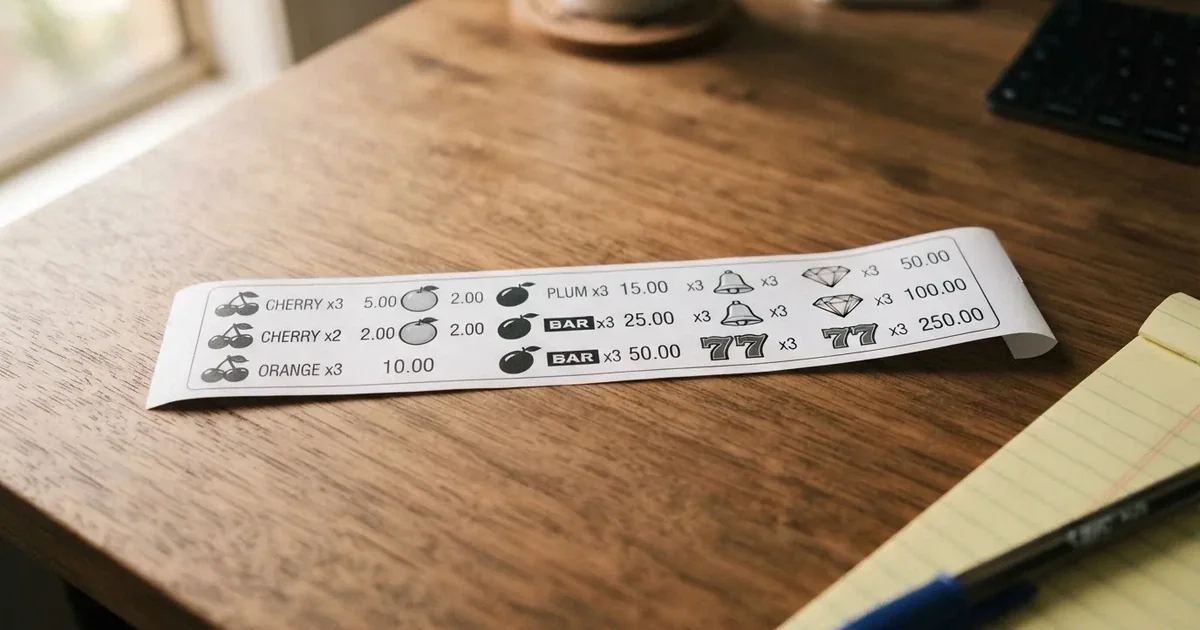
- Pokies Paytables, Symbol Values and Win Lines
- Eleven Offshore Brands the ACMA Has Acted Against
- Australian Legality, Regulation and Enforcement
- Responsible Play and Where Australian Players Get Help
- Where Land-Based Pokies Actually Run
- What a Reader Actually Does With This
- Frequently Asked Questions
The Australian Online Pokies Landscape
The phrase “Australian pokies online” describes something that, in strict legal terms, does not exist as a licensed category. Online casino games, online pokies and in-play betting cannot be supplied to a person physically in Australia under the Interactive Gambling Act 2001, strengthened by the Interactive Gambling Amendment Act 2017. The prohibition runs at the federal level; no state or territory issues an online pokies licence. What the market carries instead is a long tail of offshore sites that accept Australian sign-ups, accept Australian dollars, and accept Australian deposit methods without holding any Australian authorisation to do so.
The scale of that tail is now substantial. As of the latest ACMA reporting in June 2026, a cumulative 1,751 illegal gambling and affiliate marketing websites have been blocked since the first blocking request in November 2019. More than 230 unlicensed gambling services have left the Australian market since enforcement was stepped up in 2017. H2 Gambling Capital’s 2025 report estimates Australians lose about A$3.9 billion a year through illegal gambling sites, and the share of gambling going through legal channels fell from 74% in 2021 to 64%. Those numbers describe an established, mature shadow market, not an emerging one.
What that landscape looks like for a player typing that phrase today is roughly this: a search returns a list of offshore brands, almost none of which display an Australian licence (because none exists for the product on offer), most of which display an overseas licence from Curaçao or a similar jurisdiction, and many of which have been the subject of an ACMA formal warning or blocking request at some point in the last four years. The brands reviewed later in this page are drawn from that warning list specifically, because that list is the one source of who is operating against Australians that comes from the regulator itself rather than from affiliate marketing.
A few terms worth fixing before going further. “Pokies” is Australian English for what most jurisdictions call slot machines or fruit machines; the term traces to the poker-machine dispensing mechanism used in early Australian machines. A “formal warning” is an ACMA publication naming an operator and the prohibited service, issued before blocking action. A “blocking request” is the step that follows, when the ACMA asks Australian internet service providers to make the site unreachable for their customers. Neither action catches the individual player: the IGA targets the provider. What it catches is the site itself, sometimes with player balances still sitting on it.
PayID and the Money Side of Offshore Pokies
PayID is the Australian instant-payment address system that runs on the Osko network, and it has become the deposit route most offshore pokies sites advertise to Australian players because it settles in seconds, looks familiar, and does not require a credit card. A PayID deposit clears through a normal Australian bank account, and the receiving end is a normal Australian bank account held by the operator or its payment processor. That is also where the apparent normality stops.
The credit card ban that took effect on 11 June 2024 applies to Australian-licensed online and phone wagering services, with penalties of up to A$247,500 for operators who breach it. It does not bind an offshore casino. A site that accepts credit cards from Australians is therefore not running under Australian rules at all, regardless of what its footer says. The same applies to cryptocurrency: digital currency is banned as a payment route for licensed Australian wagering, but an offshore site asking for a USDT or Bitcoin deposit is simply not licensed in Australia and therefore not bound by the ban. A PayID-friendly offshore site is, on the available evidence, still an offshore site. The payment method does not change the licensing status of the operator; it only changes the deposit rail.
The withdrawal side carries the same shape. An offshore casino pays out in one of three ways: a bank transfer back to an Australian account, a refund to the same PayID or Osko handle, or a cryptocurrency transfer to a wallet the player controls. None of those routes is supervised by an Australian regulator. If a withdrawal is refused, delayed past the advertised window, or conditionally released only after additional verification, the player has no Australian complaints body to escalate to. The site’s own licence jurisdiction governs, and the practical remedies that jurisdiction offers vary widely and are expensive to pursue from Australia.
What that costs the player depends on the operator. A site that has been on the ACMA warning list and continues to take Australian deposits is one that has already had the chance to wind down its Australian-facing business and has not done so. That history is worth weighing against any speed claim on the deposit page.
What Bonuses and Free Spins Actually Cost
Sign-up bonuses and free spins offered on offshore pokies sites arrive with a wagering requirement, almost always expressed as a multiple of the bonus amount, the deposit, or both. The marketing language reads as free money. The arithmetic reads differently.
A typical welcome package offers a match on the first deposit plus a number of free spins, with a wagering requirement that runs somewhere between thirty-five and fifty times the bonus. A$1,000 in bonus funds at a 40x wagering requirement means A$40,000 of qualifying play before the bonus is withdrawable. Free spins carry their own conversion terms, frequently with a cap on the cash equivalent of any winnings (a “max cashout” clause) and a separate wagering requirement on whatever the spins produce. None of these terms is hidden in the small print of every brand, but the practical effect, the cost of clearing the bonus in expected loss, varies sharply with the wagering multiple, the eligible games and the cap on winnings.
The deeper issue is that no Australian consumer protection applies once the bonus has been claimed. A wagering requirement that turns out to be ambiguous is read against the player by the site’s own terms, in the site’s own jurisdiction. The “free” in free spins is a marketing word. The spins themselves may be free, but the conversion of any resulting balance into withdrawable cash is the part that costs the player.
A reader who treats any such offer as straightforward value will be disappointed. The same reader who treats it as the cost of an extended session, with the marketing claim of “bonus cash” weighed against the playthrough required to extract it, is reading the same page correctly.
Mobile and App Play Without an Australian Licence
There is no Australian-licensed online pokies app, because there is no Australian online pokies licence to attach one to. What a search for “Australian pokies app” actually returns is one of two things: a mobile-optimised browser version of an offshore site, or a downloadable app from an offshore operator distributed outside the Apple App Store and Google Play stores, since both stores enforce their own regional restrictions.
A mobile browser version runs on any modern smartphone, accepts the same deposits and pays out through the same channels as the desktop site, and inherits every licensing and consumer-protection property of the desktop version. None of that changes because the screen is smaller. A downloadable app from an offshore operator, installed through a sideloaded APK or an alternative iOS distribution path, runs outside both the Google Play and App Store review processes. Those reviews do not constitute Australian consumer protection, but they do enforce a baseline of disclosure around in-app purchases, data handling and dispute resolution that a sideloaded app does not receive.
The Commonwealth’s existing approach to illegal gambling content runs through the ACMA’s blocking powers and the internet service providers that act on them. The Interactive Gambling Amendment (Gambling Reform) Bill 2026, which passed Parliament on 19 August 2026, layers advertising and inducement controls on top of that framework, with commencement set for 1 January 2027. That is a forward date, not an in-force provision on a page being read in 2026. What it does signal is the direction of travel: tighter, not looser, around how prohibited services are marketed to people in Australia.
Pokies Paytables, Symbol Values and Win Lines
A pokies paytable is the reference chart that tells a player what each symbol combination pays and how the bonus features trigger. Three things on a paytable matter more than the rest.
First, the symbol values. Standard low-pay symbols, often playing-card ranks from nine through ace, pay small multiples of the line bet when they line up. Themed high-pay symbols pay substantially more, often 10x to 50x the line bet for a five-of-a-kind on an enabled line. Wild symbols substitute for other symbols to complete a win; scatter symbols trigger bonus rounds and usually pay regardless of whether they land on a pay line. Multiplier symbols amplify the value of any win they participate in, with the multiplier stated on the paytable itself.
Second, the win lines. A classic three-reel mechanical pokie had a single horizontal pay line through the centre. A modern video pokie can have twenty, fifty, or several hundred win lines, often called “ways to win” when the system evaluates adjacent symbols in any position rather than fixed lines. The number of lines does not change the house edge by itself; it changes how often a spin produces a paying outcome, and how small that outcome tends to be.
Third, the return-to-player. The legal minimum return-to-player for poker machines in Australian clubs and casinos varies by jurisdiction: 85% in New South Wales, the Northern Territory, Queensland and (generally) Victoria, 87% at Crown Melbourne, 87% in the Australian Capital Territory and Tasmania, 87.5% in South Australia, and 90% in Western Australia. Those figures are the floor, not the ceiling; the actual RTP on a given machine sits above the legal minimum and is published on the machine’s help screen. On an offshore site, the RTP on any given game is whatever the operator has configured, and the player has limited ability to verify that figure independently.
What the paytable never tells a player is when a bonus will land. Modern pokies use random number generators to determine outcomes, and the bonus features are triggered by combinations whose probability is built into the game’s design. The paytable describes the payout structure; it does not, and cannot, predict the next spin.
Eleven Offshore Brands the ACMA Has Acted Against
The brands below are listed because the ACMA itself has issued a formal warning over each for offering prohibited online casino services to Australians. None of them is licensed in Australia, because online casino games cannot be licensed in Australia. None of them is recommended here; the list is a regulatory record, not a recommendation. The order follows §6 of the underlying research, which tracked the order in which the ACMA has acted, and the table that closes this section is the page’s attempt to make that record comparable.
| Brand | ACMA action and date | Operator named by the ACMA | Subject support |
|---|---|---|---|
| RocketPlay | Formal warning, March 2026; earlier May 2022 | Pulsup Ltd; earlier Dama N.V. | — |
| Level Up Casino | Formal warning, May 2022 | Dama N.V. | listings-only |
| Woo Casino | Formal warning, March 2025 | Dama N.V. | — |
| Spirit Casino | Formal warning, May 2025 | Dama N.V. | — |
| National Casino | Formal warning, July 2025 | Consolutetish S.R.L. | listings-only |
| Bizzo Casino | Formal warning, July 2025; earlier 2022 | Consolutetish S.R.L.; earlier TechSolutions | — |
| Ignition Casino | Formal warning, July 2025 | Bamboo Media | — |
| Instant Casino | Formal warning, February 2025 | EOD Code SRL | — |
| Jackbit | Formal warning, April 2026 | Ryker B.V. | — |
| Casino Intense | Formal warning, April 2025 | Sterplay Holding Ltd | listings-only |
| Sky Crown | Formal warning, September 2022 | Hollycorn N.V. | — |
What stands out across the table is the recurrence of a small number of operator names behind many of the brands. Dama N.V. alone accounts for four entries on the list, including two different warnings to two different addresses of the same operator. Consolutetish S.R.L. appears twice. The same operator being warned more than once, and the operator being warned under multiple brand names, is the shape the offshore market takes under sustained regulatory pressure: the brand on the front of the site changes faster than the corporate entity behind it.
Several of these brands are also flagged in third-party listings as carrying games from a particular software provider, and the page records those listings only as what those listings report. A “listings-only” tag means the brand’s relationship to that subject appears on an external index rather than in any document from the ACMA itself. The brands tagged “listings-only” here are Level Up Casino, National Casino and Casino Intense. For the remaining eight brands, the ACMA formal warning is the only documentary record the page draws on.
What none of the table says, and what no reader should infer from it, is that any of these brands offers a legally protected way to play pokies from Australia. They all offer a way to deposit and play; none of them offers one under Australian authority. The protection question is settled before the brand comparison starts.
Australian Payment Methods for Wagering
| Payment Method | Legal for Licensed Wagering | Status for Offshore Sites |
|---|---|---|
| Debit Card | Allowed | Unregulated |
| Bank Transfer | Allowed | Unregulated |
| PayID / Osko | Allowed | Unregulated |
| BPAY | Allowed | Unregulated |
| Credit Card | Prohibited | Unregulated |
| Cryptocurrency | Prohibited | Unregulated |
The ACMA’s blocking powers, exercised by asking Australian internet service providers to make a domain unreachable, are the strongest tool the regulator has against offshore operators. As of June 2026, 1,751 illegal gambling and affiliate marketing websites have been blocked since the first blocking request in November 2019. The most recent blocking round reported on 26 June 2026 added twelve more: 7Signs, ChromaBet, Donbet, Duospin, Freshbet, Slots Gem, Jacks Club, Lucky Start, Pointsbetz, Spinrise, Vinyl Casino and Wildsino.
The arithmetic that gives a reader a sense of scale runs from November 2019 through June 2026, roughly 81 months. Spread across that window, the cumulative count of 1,751 blocked sites implies a pace somewhere in the high teens per month on average, though the actual monthly count is uneven: some rounds add several dozen, others add a handful, and many months pass with no new blocks published. What the rate does not measure is how many of those blocked sites resurface under a different domain, how many player balances are stranded on a blocked site, or how many Australians migrated to a different offshore brand rather than stop playing. Those numbers are not in the ACMA’s published record.
What the rate does say is that the prohibition is being enforced, not merely announced. A reader who takes the prohibition seriously is reading the same record the regulator is publishing; a reader who treats the warning as a marketing formality is reading a different page.
Australian Legality, Regulation and Enforcement
The Interactive Gambling Act 2001 is the federal statute that prohibits the supply of online casino games, online pokies and in-play betting to a person physically in Australia. The Interactive Gambling Amendment Act 2017 strengthened the original act, expanding the prohibited service definitions and giving the ACMA the power to issue formal warnings and direct internet service providers to block offending sites. No state or territory issues an online pokies licence, and the ACMA’s own position is that the prohibition is settled at the federal level.
What is licensable in Australia, and what the Northern Territory Racing and Wagering Commission regulates, is wagering on races and sport placed before the event, lotteries, and keno. The NTRWC regulates 52 of Australia’s online bookmakers, including Sportsbet, Bet365 and Ladbrokes, all of which are licensed in the Territory primarily for tax reasons. The commission has no full-time staff and meets once a month in Darwin. A reader who lands on a page about an Australian-licensed online casino is on a page about something that does not exist; the same reader who lands on a page about a licensed Australian bookmaker is reading about wagering, not pokies.
Minimum age across Australia is 18. Credit cards, credit-related products and digital currency have been banned as payment methods for licensed online wagering since 11 June 2024, with operator penalties up to A$247,500. Legal deposit routes for licensed wagering are debit card, bank transfer, PayID/Osko and BPAY. The Interactive Gambling Amendment (Gambling Reform) Bill 2026, which passed Parliament on 19 August 2026, layers advertising and inducement controls on top of the existing framework; those measures commence on 1 January 2027, which makes them a forward date on a page read in 2026, not an in-force provision.
Enforcement runs through the ACMA, which investigates, issues formal warnings and asks internet service providers to block illegal sites. The individual player is not prosecuted under the IGA: the statute targets the provider. What the player gives up by playing offshore is consumer protection, not criminal liability. An offshore operator offers no Australian complaints body, no Australian regulator to escalate to, and no Australian recourse if a withdrawal is refused or a balance is stranded on a site that gets blocked. The site’s overseas licence jurisdiction governs, and the remedies that jurisdiction offers are real but expensive to pursue from Australia.
Responsible Play and Where Australian Players Get Help
For people whose thinking about online pokies play is starting to feel compulsive, or has already crossed that line, free confidential help is available around the clock through Gambling Help Online and the National Gambling Helpline on 1800 858 858. Both are Australian services, run for Australian players, with chat available through the Gambling Help Online website.
BetStop, the National Self-Exclusion Register, has been live since August 2023. It binds Australian-licensed online and phone wagering services to a player-requested exclusion. An offshore casino is not connected to BetStop, which means a self-exclusion registered through BetStop does not extend to an offshore site the player also uses. A player who has registered with BetStop and then opens an account at an offshore casino has not extended their exclusion; they have started a separate arrangement that no Australian register covers.
Land-based help is also available. Gamblers Anonymous, the various state-based problem gambling counselling services, and the in-venue pre-commitment card systems being rolled out in different states provide additional layers of support. Tasmania in particular had planned nation-leading mandatory pre-commitment cards for its poker machines, though implementation of the reform was delayed until late 2025. The shape of the in-venue intervention differs from state to state; what is consistent across them is that the support exists, that it is free, and that a player does not need to have stopped playing in order to use it.
The responsible gambling framing matters most for a reader who has been on an offshore site for a while and is noticing the signs: chasing losses, playing longer than intended, hiding play from family, or feeling anxious when not playing. Those are the markers that something has shifted. The shift does not need to be resolved alone, and the Australian help lines above are the first call.
Where Land-Based Pokies Actually Run
The licensed alternative to offshore online pokies is the poker machine inside a pub, club or casino, which is what most Australians mean when they say “pokies.” Electronic gaming machines operate in every Australian state and territory, and each jurisdiction separately regulates their design and operation. Registered clubs operated Australia’s first legal poker machines from 1956, in New South Wales.
The scale is substantial. In 2020–21 Australians bet almost A$150 billion through gaming machines and lost A$12.18 billion on them. Australia has about 3% of the world’s pub and club poker machines with 0.3% of the global population. New South Wales had 87,298 gaming machines outside casinos across 2,195 venues in June 2023, with player losses of A$8.18 billion in 2022–23. Queensland had 21,122 gaming machines operating in 351 venues in October 2023; Victoria had 26,380 outside Crown Casino in 488 venues in 2021–22, under a 30,000 statewide limit. Western Australia banned poker machines in pubs and clubs when Crown Perth opened in 1985; Crown Perth’s own machine count has since grown from about 200 in 1985 to roughly 2,500, all approved by the state’s Gaming and Wagering Commission.
The legal minimum return-to-player on these machines varies by jurisdiction: 85% in New South Wales, the Northern Territory, Queensland and (generally) Victoria (87% at Crown Melbourne), 87% in the Australian Capital Territory and Tasmania, 87.5% in South Australia, and 90% in Western Australia. Those figures are published on each machine’s help screen, and they are the only RTPs in Australian pokies that a state regulator has certified.
The Federal Group held a monopoly licence over all of Tasmania’s poker machines from 1968; legislation passed in November 2021 ended that monopoly, moving oversight of the machines to the Tasmanian Liquor and Gaming Commission. Tasmania also planned nation-leading mandatory pre-commitment cards for its poker machines, with implementation delayed until late 2025. Those reforms are land-based, not online; they affect how a machine behaves in a Tasmanian pub, not how an offshore site accepts deposits.
Crown Melbourne offers three baccarat variants, Traditional Baccarat, Crown Baccarat and 2 to 1 Baccarat, as approved table games regulated by the Victorian Gambling and Casino Control Commission, which replaced the VCGLR as Victoria’s casino regulator on 1 July 2022. Under section 66 of the NSW Casino Control Act 1992, a casino operator must not permit a game such as baccarat to be played unless the game and its rules are approved by the regulator, and the operator must make a copy of the approved rules available to patrons on request. Those rules apply inside Australian casinos; they have no reach over an offshore site.
What a Reader Actually Does With This
A reader who has arrived at this page expecting a ranked list of safe offshore pokies sites has not been given one, because no such ranked list exists in any form the ACMA, ASIC or a state gaming regulator would endorse. What has been given is a record of eleven brands the ACMA has formally warned, the legal framework that makes their offers to Australians unlawful, and the alternatives that do sit inside Australian regulation.
For a reader who is looking for licensed Australian wagering, the Northern Territory Racing and Wagering Commission’s register of bookmakers is the place to start. For a reader who wants to play pokies, the licensed machines in pubs, clubs and casinos are the only legal option. For a reader who is worried about their own play or someone else’s, the National Gambling Helpline on 1800 858 858 and Gambling Help Online are free, confidential and available around the clock.
The offshore market is not going to disappear because this page describes it accurately. It is, however, a market that operates outside Australian consumer protection, outside Australian payment rules, and outside any Australian complaints body. That is the shape of it, and it is the shape that matters when deciding what to do with a deposit button.
Frequently Asked Questions
Is “Australian pokies online” a licensed category recognised by any state regulator?
No. Under the Interactive Gambling Act 2001, online casino games and online pokies are prohibited for people in Australia, and no state or territory issues an online pokies licence. What states and territories regulate is land-based poker machines in pubs, clubs and casinos. A site advertising “Australian pokies online” is offering an offshore product, not a locally licensed one.
Is there a legal Australian online pokies app, as opposed to a mobile browser site?
No. A mobile browser version of an offshore site is simply the same offshore site on a smaller screen, with the same licensing and consumer-protection properties. A downloadable app from an offshore operator, distributed outside the Apple App Store and Google Play, runs outside both stores’ review processes and outside any Australian regulatory framework. Neither is an “Australian pokies app” in any licensed sense.
What’s the difference between “Australian pokies online” and pokies in an Australian venue?
The first is prohibited under the Interactive Gambling Act 2001 and offered only by offshore operators with no Australian licence and no Australian consumer protection. The second is licensed state by state, operates in pubs, clubs and casinos, returns a regulator-certified minimum RTP, and sits inside Australian responsible gambling frameworks including BetStop and the state-based counselling services.
Do sign-up bonuses offered on “Australian pokies online” sites come from a local operator?
No. The sign-up bonuses, free spins and matched-deposit packages on these sites come from offshore operators, typically licensed in Curaçao or a similar jurisdiction. The wagering requirements, max-cashout caps and game eligibility rules attached to those bonuses are set by the offshore operator under its own terms and are not subject to any Australian consumer law.
Can a PayID-friendly “Australian pokies online” site still be operating from offshore?
Yes. PayID is the Australian instant-payment system that runs on the Osko network, and an offshore casino can hold an Australian bank account and accept PayID deposits from Australian players without holding any Australian gambling licence. The payment method describes the deposit rail, not the operator’s licensing status, and a PayID-accepting site is still an offshore site under the IGA.
Does the word “Australian” in a pokies site’s name indicate its actual licensing jurisdiction?
No. The name on the site is a marketing choice, not a regulatory disclosure. Several brands on the ACMA warning list carry names with “Australia” or similar in them while being operated by entities incorporated in Curaçao, Cyprus and elsewhere. The licence a site displays in its footer is the one to check; the name in the URL or logo is not.