
Pay-by-phone casinos in Australia: the deposit claim, the licence gap, and what the ACMA has done about it
A deposit by phone bill at an online casino sounds like a clever shortcut: a few taps, the stake lands on the next bill, no card or bank transfer required. The shortcut is real, and so is the legal position behind it. No state or territory in Australia licenses online casino games or online pokies. Every site that takes an Australian punter’s phone-bill deposit is doing so outside the Australian regime, and the Australian Communications and Media Authority has been telling operators and their payment partners exactly that, in formal warnings, for years. This page walks through what carrier billing does, why it does not legitimise a site for an Australian player, and which brands the ACMA has already acted against.
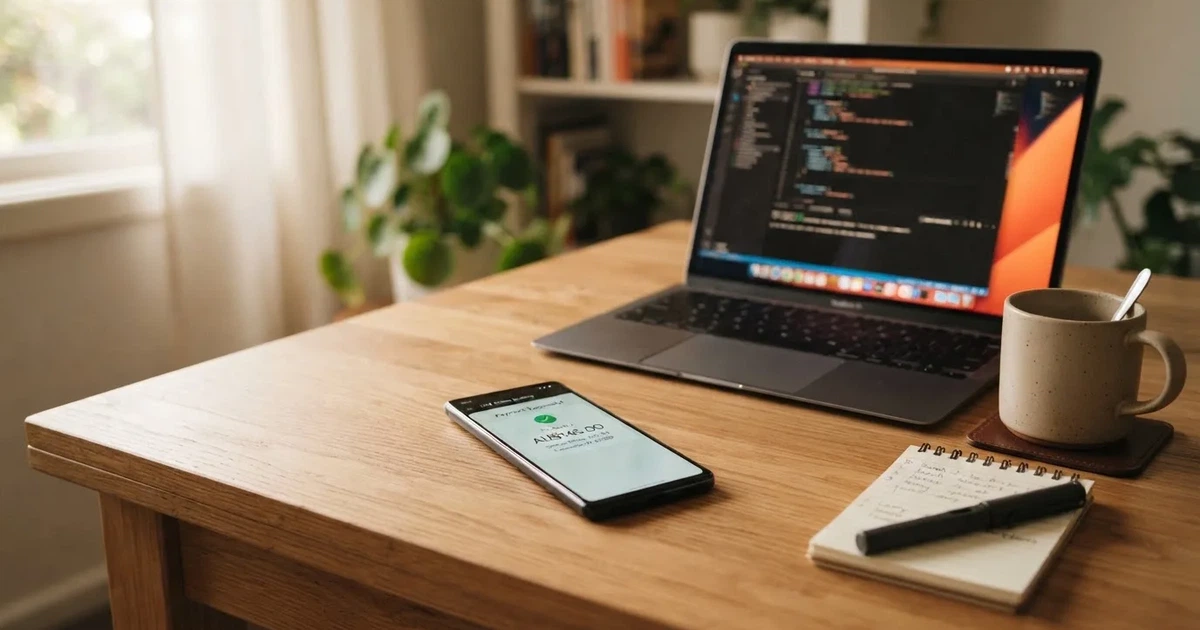
A snapshot of the data: current as of 29 October 2026, cross-checked against the ACMA’s published formal warnings.
Table of Contents
- How carrier billing works at the deposit screen
- What the Australian licence landscape actually looks like
- Pay-by-phone bill casinos in Australia 2026: the ACMA record on the brands you may have seen
- Operators the ACMA has warned over pay-by-phone-style casino brands
- What an Australian player should know about the deposit flow itself
- What a pay-by-phone casino does on a phone
- Slots you can pay by phone bill: the games behind the marketing
- What BetStop and the support services cover
- The cost of a phone-bill deposit: the figures the marketing hides
- The bank-side block layer, and what it does and does not catch
- How the legal frame moves against an offshore phone-bill casino
- What an Australian reader takes away
- Frequently asked questions about pay-by-phone casinos in Australia
How carrier billing works at the deposit screen
The mechanism behind a “pay by phone” casino is direct carrier billing. A processor sits between the casino’s cashier and the player’s mobile network. When the player confirms the deposit, the processor charges the amount to the mobile account rather than to a bank card. The carrier carries the credit risk; the casino gets paid through the processor.

The main carrier-billing processor operating under that name is Boku, a London-headquartered company that floated on the London Stock Exchange’s AIM market in 2017 and has since grown a network the company describes as more than 200 local payment methods across 40-plus markets, with payment licences held in more than 40 countries. Other direct-carrier-billing providers named in industry coverage include Fonix, Bango, Fortumo and Google Pay. The technology itself is older than any of them — direct carrier billing is the general term for charging a purchase to a phone bill instead of to a card or account — and the same rails that put a ringtone on a 2005 Telstra bill are what today’s casino cashier buttons tap into.
For an Australian player, the visible flow is simple: enter a mobile number, confirm by SMS, see the deposit credited, and find the charge on the next mobile statement or, for prepaid accounts, deducted from the balance. The deposit is settled in real time. There is no chargeback right against the carrier in the way there is against a card issuer, which is part of why offshore casinos have liked it. The casino’s risk is that the carrier will not pay out if the user disputes the charge; the player’s risk is that the casino sits behind a Curaçao or Anjouan licence and that the Australian rules around online casino games do not follow the brand offshore.
The “pay by mobile phone” phrasing many sites use points at the same rails. There is no separate scheme: “phone bill” and “mobile phone” both describe a deposit that lands on the carrier invoice. Landline billing — the rarer option that turns up in coverage of pay-by-phone slots — sits on the same principle but is routed through the home phone account rather than the mobile one. Most Australian carriers no longer support that flow on consumer lines, which is why it is harder to find in practice than in marketing copy.
What the deposit screen does not do
A carrier-billing deposit does not create an Australian licence. The processor is licensed for payments, not for gambling; the casino is licensed in whatever offshore jurisdiction the footer of its site names. The Interactive Gambling Act 2001, as tightened in 2017, makes it an offence to provide online casino games or online pokies to a person physically in Australia. The carrier is not the regulated party under the IGA — the site offering the games is — and an Australian-facing casino that accepts phone-bill deposits is therefore accepting them in breach of the Act. The deposit may be technically clean on the payments side and still place the operator on the wrong side of Australian law.
What the Australian licence landscape actually looks like
Australia does license online gambling — but only the parts that are not online casino games. The Northern Territory Racing and Wagering Commission regulates the country’s online bookmakers, 52 of them at last count, including Sportsbet, Bet365 and Ladbrokes, and it does so for tax reasons rather than as a consumer-protection body. The NTRWC has no full-time staff and meets once a month in Darwin. The licence in that jurisdiction covers wagering on racing and sporting events placed before the event, plus lotteries and keno. Online casino games and online pokies fall outside it.
What that means in practice: a sportsbook licensed in Darwin is a legal place for an Australian to bet on the footy, but a casino tab on the same site, offering pokies or table games, is not. The “fully licensed” footer on a Curaçao-licensed casino is a payment licence and an operating licence in that jurisdiction; it is not an Australian licence, and there is no path for an offshore casino to obtain one for casino games under current law.
The credit-card ban tightens the frame further. Since 11 June 2024, Australian-licensed online wagering services cannot accept payment by credit card or other credit-related products. That restriction also constrains gambling use of linked digital wallets such as Apple Pay when the underlying card is a credit one. Debit cards, bank transfer, PayID/Osko and BPAY remain the legal deposit routes for licensed wagering. A site that asks an Australian for a credit card or a crypto deposit is operating outside the Australian rules regardless of where its servers sit.
| Payment Method | Legal Status for Wagering | Notes |
|---|---|---|
| Debit card | Legal | Supported by licensed wagering services |
| Bank transfer | Legal | Includes Osko and PayID transfers |
| BPAY | Legal | Bill payment via online banking |
| Credit card | Prohibited | Banned under 2024 legislation |
| Cryptocurrency | Prohibited | Not a legal payment route |
Pay-by-phone bill casinos in Australia 2026: the ACMA record on the brands you may have seen
The ACMA’s job is to investigate suspected breaches of the Interactive Gambling Act, issue formal warnings where it finds them, and direct Australian internet service providers to block sites that keep offering prohibited services after warnings. By June 2026, the authority had asked for 1,751 illegal gambling and affiliate marketing websites to be blocked since the first blocking request in November 2019, and more than 230 unlicensed gambling services had left the Australian market since enforcement was strengthened in 2017. The blocking rate is the metric that lands the question of consequence: the rate at which the regulator catches up with the operators it warns.
Working that rate: 1,751 blocked sites across the roughly six-and-a-half years between November 2019 and June 2026 gives a long-run average of around 270 blocking actions a year, or about 22 a month. The actual flow is uneven — a single ACMA round in June 2026 alone added 12 more, naming 7Signs, ChromaBet, Donbet, Duospin, Freshbet, Slots Gem, Jacks Club, Lucky Start, Pointsbetz, Spinrise, Vinyl Casino and Wildsino. Read as a band rather than a single figure: somewhere between a steady ~20 blocking actions a month and the spikes that round-by-round reporting catches. Either way, a site appearing on the ACMA’s list today is unlikely to still be taking Australian deposits a few months later.
The H2 Gambling Capital estimate for 2025 puts Australian losses to illegal gambling sites at about A$3.9 billion a year. The same report shows the share of gambling going through legal channels falling from 74% in 2021 to 64%. The unlicensed offshore market is not a rounding error in the Australian economy — it is a multi-billion-dollar flow that runs around the legal wagering system, and the phone-bill deposit is one of the doors it uses.
What a formal warning looks like in practice
An ACMA formal warning is a published document naming the operator behind a brand and the date of issue. It puts the company on notice that the ACMA believes it is providing prohibited interactive gambling services to Australians, and that further enforcement action — including a blocking direction to ISPs — will follow if the conduct continues. The warning is published on the ACMA site and remains visible in regulator searches for years afterwards.
The operator set below is taken straight from the ACMA’s published record. It is not a ranking and not a recommendation: each brand sits on the list because the ACMA itself issued a formal warning over it, and each one of them either accepts or has accepted phone-bill deposits under its branding.
Operators the ACMA has warned over pay-by-phone-style casino brands
The table below lists eleven brands the ACMA has named in formal warnings for offering prohibited interactive gambling services to Australians. The columns matter to different readers in different ways: a player deciding whether to sign up cares most about the most recent action; a researcher cares about the operator name behind a brand; a comparison reader cares about whether a brand touches the subject of this page at all. The last column reflects what the public sources actually say — for most of these brands there is no public confirmation that the cashier offers phone-bill deposits, so the cell is left blank rather than asserted.
| Brand | ACMA action and date | Operator named by the ACMA | Subject support |
|---|---|---|---|
| RocketPlay | March 2026 (Pulsup Ltd); earlier May 2022 (Dama N.V.) | Pulsup Ltd; previously Dama N.V. | — |
| Level Up Casino | May 2022 | Dama N.V. | — |
| Woo Casino | March 2025 | Dama N.V. | — |
| Spirit Casino | May 2025 | Dama N.V. | — |
| National Casino | July 2025 | Consolutetish S.R.L. | — |
| Bizzo Casino | July 2025 (Consolutetish S.R.L.); earlier 2022 (TechSolutions) | Consolutetish S.R.L.; earlier TechSolutions (CY) Group Limited and TechSolutions Group N.V. | — |
| Ignition Casino | July 2025 | Bamboo Media | — |
| Instant Casino | February 2025 | EOD Code SRL | — |
| Jackbit | April 2026 | Ryker B.V. | — |
| Casino Intense | April 2025 | Sterplay Holding Ltd | — |
| Sky Crown | September 2022 | Hollycorn N.V. | — |
The dates cluster in 2025 and 2026 because that is when the ACMA picked up the pace. The earlier warnings — May 2022 for Dama N.V.’s cluster of brands and September 2022 for Hollycorn N.V. — show that the regulator’s view of these operators did not start with the recent round. A reader who recognises a brand from 2022 marketing should not read the later silence as approval; the original warning is still on the record.
RocketPlay — the most recent warning, on a brand with a long paper trail
RocketPlay is the freshest entry. The ACMA issued a formal warning to Pulsup Ltd over Rocketplay in March 2026, the second time the brand has been through the regulator’s formal-warning process; Dama N.V. was warned over it in May 2022 as part of a six-brand cluster. The site shows a Curaçao-style footer and a typical offshore casino cashier, the kind of layout that phone-bill marketing affiliates have been routing traffic to for years. For an Australian player: the brand has been on the regulator’s record across two operators, and the March 2026 warning is the most recent word.
Level Up Casino — warned once, named with five sister brands in 2022
Level Up was one of six brands the ACMA warned Dama N.V. over in May 2022, alongside Bambet, Dazard, Rocketplay, Wild Tornado and Cobra Casinos. That single warning covered six different front doors onto the same operator, a pattern the ACMA has returned to whenever one shell company carries more than one brand. For an Australian player: the warning is now several years old but has not been withdrawn; the underlying operator moved the brand between shells in the years that followed.
Woo Casino — the 2025 warning the ACMA published in March
Woo Casino came back onto the ACMA’s list in March 2025, again tied to Dama N.V., the operator that runs a sizeable stable of offshore casino brands. The interval between the 2022 cluster and the 2025 warning is the interval that says most about how the regulator handles a repeat offender: a brand that has already been warned once does not get a softer touch the second time. The 2025 warning is the active one.
Spirit Casino — Dama N.V.’s May 2025 brand
Spirit Casino sits on the same operator side as Woo Casino: the May 2025 warning names Dama N.V. as the entity behind it. Two of Dama N.V.’s brands warned over within a couple of months is two front doors onto the same operator. The ACMA’s pattern of working shell by shell, rather than brand by brand, is what produces the dense cluster of dates in the table.
National Casino — Consolutetish S.R.L.’s July 2025 brand
National Casino carries a July 2025 formal warning naming Consolutetish S.R.L. as the operator. Consolutetish S.R.L. was warned over two brands in the same round — National Casino and Bizzo Casino — the same shell-company pattern Dama N.V. has used, just under a different corporate name. National Casino has been on affiliate comparison pages under pay-by-phone marketing for years, which is why it sits in a list of brands tied to carrier-billed deposits.
Bizzo Casino — two warnings, two operators, twelve years of paper trail
Bizzo is the brand with the longest regulator history on the list. Consolutetish S.R.L. was warned over it in July 2025; TechSolutions (CY) Group Limited and TechSolutions Group N.V. were warned over it in 2022. Two operator names for one brand tells the reader that the brand has moved between shells, which is the standard operating procedure for offshore casino groups under ACMA pressure. The 2022 warning is still on the record even after the company change.
Ignition Casino — Bamboo Media’s July 2025 brand
Ignition Casino was named in a July 2025 warning to Bamboo Media. The brand has been around under various shells for years and the 2025 warning is the freshest word on it from the ACMA.
Instant Casino — EOD Code SRL’s February 2025 brand
Instant Casino is one of the brands the ACMA warned over in early 2025, with EOD Code SRL named as the operator. The brand has been prominent in phone-bill deposit marketing; the regulator’s February 2025 warning sits directly behind that marketing footprint.
Jackbit — Ryker B.V.’s April 2026 brand
Jackbit and CasinOK sit together in a single April 2026 warning naming Ryker B.V. as the operator. Two brands, one warning, one shell — the same pattern as the other clusters. The April 2026 date is the most recent in the table outside RocketPlay, which makes Jackbit the freshest pair of doors onto the same operator.
Casino Intense — Sterplay Holding Ltd’s April 2025 brand
Casino Intense carries an April 2025 formal warning naming Sterplay Holding Ltd. The brand has been a fixture on pay-by-phone affiliate lists and the warning sits at the operator level rather than at the brand level.
Sky Crown — Hollycorn N.V.’s September 2022 brand
Sky Crown is the older entry. The ACMA’s September 2022 warning to Hollycorn N.V. covered Sky Crown and Blue Leo, a two-brand warning that fits the same shell-company pattern the table shows across newer entries. The 2022 date does not make Sky Crown any less active; it makes the regulator’s interest in it any longer.
What the table shows in aggregate
Read the dates as a stack rather than as a calendar and a clear pattern appears: the ACMA has issued a steady drumbeat of formal warnings across the second half of the 2020s, with the tempo picking up from 2025. The operator names change brand by brand — Dama N.V., Consolutetish S.R.L., Bamboo Media, EOD Code SRL, Sterplay Holding Ltd, Hollycorn N.V., Pulsup Ltd, Ryker B.V. — but the pattern is the same shell with a different brand on top. A reader who knows one of these names knows the operating model behind all of them.
The Subject support column reads as a row of dashes for a reason: there is no public, regulator-issued confirmation that any of these brands processes phone-bill deposits under its own cashier. The brands are listed here because they appear in phone-bill marketing material, in affiliate comparison pages, or in regulator actions — three sources that are not the same as a statement from the brand’s own cashier that the phone-bill button is live. For an Australian reader the gap matters: a brand that markets a phone-bill deposit and a brand that actually settles one on an Australian SIM are two different things, and only the second one carries a deposit risk worth pricing.
What an Australian player should know about the deposit flow itself
The mechanics that make a phone-bill deposit attractive — no card on file, no chargeback right against the carrier, real-time settlement — are the same mechanics that put the player on the wrong side of the Australian rulebook. The deposit is a payment to a site that is not licensed to take it.
The carrier is not the gatekeeper
Australian mobile carriers process carrier-billed transactions as a payment rail, the same way they process app-store purchases. The carrier does not check whether the merchant behind the deposit is licensed to offer gambling to Australians; the merchant category code that banks use to block gambling transactions at card level does not exist in the same form on a carrier-billed charge. Banks do run their own blocks: Westpac refuses authorisation of transactions registered under the merchant category code for betting and casino gambling on eligible personal credit and debit cards, and ANZ’s gambling transaction block, activated in the ANZ app, also blocks gambling transactions made through a digital wallet such as Apple Pay on an eligible card. Those blocks are at the bank-card end of the rail. A direct mobile-bill charge sits outside them.
Removing ANZ’s block takes 48 hours
Once ANZ’s gambling block is on, the bank imposes a 48-hour waiting period before it can be turned off again — a deliberate cooling-off designed to stop an impulse decision to lift the block and deposit. The same page warns that not all gambling transactions will be blocked and some non-gambling transactions might be blocked in error. The block helps; it is not a wall.
Withdrawals do not come back through the carrier
The phone-bill deposit is one-way. The casino pays out through whatever withdrawal rail the cashier offers — bank transfer, e-wallet, occasionally a crypto route — and that rail is where Australian banking rules bite. PayID-based instant transfers are available at more than 100 Australian financial institutions, and paying to a PayID shows the name of the account holder before the transfer is sent. AP+ warns that being asked to transfer money to a PayID on an illegal gambling site almost certainly means a scam site. Osko gets a bank transfer between participating Australian banks to the recipient in under a minute, 24/7 including weekends.
The chargeback right is narrower than a card deposit
A chargeback against a card deposit follows the card network’s dispute rules. A chargeback against a phone-bill charge follows the carrier’s own dispute process, which is narrower: the carrier will investigate a disputed charge, but the casino sits behind a processor rather than behind the carrier, and the operator’s response to a dispute can be slow. The deposit may also be capped low — phone-bill deposits are typically limited to small amounts because of the carrier’s credit exposure — but the cumulative risk across many small deposits is the same as a single larger one.
What a pay-by-phone casino does on a phone
The “mobile” in “pay by mobile phone casino” describes both the deposit and the device. Almost every offshore casino in this segment runs as a mobile-first web app, with no download required and the cashier optimised for a portrait phone screen. Some brands publish native apps in the Apple App Store and Google Play; many more sit at a URL that responds to a mobile browser. The carrier-billing deposit is built into the same mobile cashier the rest of the casino uses.
The flow on the phone is the flow on the desktop, compressed into fewer taps. A player opens the cashier, picks phone-bill or mobile-bill from the payment list, enters the mobile number, confirms the SMS code, sees the deposit credited, plays. On the way out, the casino asks for a withdrawal method, which is usually bank transfer or e-wallet rather than the phone bill — the deposit rail is not the payout rail.
Apple Pay and Google Pay are not the same as phone-bill carrier billing
Both Apple Pay and Google Pay sit on the phone’s payment stack, but they are digital wallets layered on top of a card rather than carrier-billing rails. By the end of 2025, Apple Pay, Google Pay and Samsung Pay transactions collectively accounted for around 45% of all card payments in Australia by number. A casino that lists “pay by phone” alongside Apple Pay and Google Pay is offering two different things in the same row: a digital wallet that charges the underlying card, and a carrier-billing processor that charges the mobile account. The card route falls inside the credit-card ban for licensed Australian wagering and inside the bank gambling-block for credit- and debit-card holders; the carrier-billing route falls outside both.
The Reserve Bank of Australia’s July 2025 review proposes removing surcharges on eftpos, Mastercard and Visa card transactions, explicitly leaving American Express outside the scope of the proposed surcharge ban. That matters because Amex charges are higher to the merchant, and a higher merchant cost is one reason some sites push harder on alternative rails. None of which makes a phone-bill deposit cheaper for the player — the casino’s processing cost is not the player’s fee.
Slots you can pay by phone bill: the games behind the marketing
The titles most often paired with phone-bill deposit marketing are mainstream online slots and online pokies from a handful of providers, with no game-level tie to the payment rail. A phone-bill deposit credits the casino account the same way a card deposit does; the games the account plays are the games the casino stocks.
What changes the picture is the regulatory frame. Online casino games and online pokies are prohibited interactive gambling services under the Interactive Gambling Act 2001. A site that offers them to an Australian player is offering them in breach of the Act, and the deposit rail does not change that fact. The player’s exposure to the games sits behind the same offshore operator whether the deposit comes from a card, an e-wallet or a phone bill.
The slots themselves are the same slots available on licensed offshore sites that do not accept Australian players — NetEnt, Microgaming, Pragmatic Play, Play’n GO and Evolution for the live tables. None of those providers ship a “phone-bill-only” slot. The deposit rail is at the cashier, not in the game client.
Landline phone bill — a rail that has nearly disappeared
“Pay slots by landline phone bill” shows up in coverage of the older UK pay-by-phone market, where a home-phone account could be charged in the same way a mobile account could. Australian consumer landlines no longer carry that flow at retail; the term survives in marketing copy because it indexes the original direct-carrier-billing product rather than because an Australian can charge a slot spin to a home phone account today.
What BetStop and the support services cover
BetStop, the National Self-Exclusion Register, has been live since August 2023. It binds Australian-licensed online and phone wagering services, which means a person who registers with BetStop is excluded from every licensed bookmaker, lottery and keno product in the country. An offshore casino is not connected to BetStop. A self-excluded Australian can still reach an offshore casino’s cashier on a phone, deposit by phone bill, and play — the same way they can still reach a blocked site by changing the DNS.
That gap is the reason the support services matter even for a reader who has decided they will not play. The National Gambling Helpline is 1800 858 858, free, 24/7, with chat at Gambling Help Online. Gambling Help Online also runs a self-exclusion feature, which is what fills part of the gap BetStop cannot reach: it does not bind offshore sites, but it gives an Australian a place to register an exclusion decision that follows them across the legal wagering boundary.
The ACMA record on the brands above is the strongest argument for using those services rather than for using the brands themselves: every brand in the operator set has been told by Australia’s communications regulator that it is offering prohibited services to Australians, and the brands keep doing it. The phone-bill deposit is not a sign that a site is safer than its unlicensed peers; it is a sign that the site is the kind of site the regulator is built to push back on.
The cost of a phone-bill deposit: the figures the marketing hides
Phone-bill deposits are usually capped low — Boku’s standard ceiling is in the tens of dollars per transaction, which is one of the reasons offshore casinos prefer them as a first-deposit route for new sign-ups. The casino’s marketing frames the cap as a feature: “small deposits, no card on file, no overspending.” The regulator’s view frames the same cap as a feature for the casino, not the player: a low cap is a low chargeback risk, and a low chargeback risk is a reason to take Australian deposits that the credit-card ban would otherwise block.
The H2 Gambling Capital estimate of A$3.9 billion a year in Australian losses to illegal sites, combined with the falling share of gambling going through legal channels, says what the cap looks like in aggregate. A player who never intends to deposit more than the cap will not notice the cap; a player who loses more than they meant to at the cap will hit the cap, top up, hit it again, and top up again. The rail is built to keep the casino’s exposure low; it does not keep the player’s exposure low.
The Interactive Gambling Amendment (Gambling Reform) Bill 2026, passed by Parliament on 19 August 2026, adds advertising and inducement measures that commence on 1 January 2027. Law with a start date, not yet in force: a 2026 reader is reading the rule as it stands on the day they read it, not the rule that comes into force next year.
Tax and the Australian player’s bottom line
Gambling winnings of a recreational Australian player are not assessable income (section 6-5 of the Income Tax Assessment Act 1997), and losses are not deductible. The “check with the ATO” line in any tax guide is the right line here: the ATO is the body that decides whether a particular pattern of play looks like a business, and the threshold is not a number that can be quoted on a page. A player who treats gambling as a hobby keeps the winnings tax-free; a player whose pattern crosses the ATO’s business line does not.
AUSTRAC’s threshold-transaction-report rule, which requires reporting of transfers of A$10,000 or more, applies only to physical cash. Ordinary electronic bank transfers — including PayID, Osko and BPAY payments — are not subject to that per-transaction reporting requirement regardless of the amount. A phone-bill deposit is a small charge and does not touch the threshold; a bank transfer to an offshore casino is a different rail and is reported only if the bank or the platform flags it for another reason.
The bank-side block layer, and what it does and does not catch
Australian banks block what they can. Westpac’s gambling block refuses authorisation of transactions under the merchant category code for betting and casino gambling on eligible personal credit and debit cards. ANZ’s gambling block, activated in the app, blocks gambling transactions made through a digital wallet such as Apple Pay on an eligible card as well as the card itself. Removing ANZ’s block requires a 48-hour cooling-off period.
What the bank blocks do not catch is the carrier-billed deposit. The mobile account is not a bank account; the carrier-billing processor is not a card network. A player who has put the bank block on and signs up to an offshore casino from the same phone can still complete a phone-bill deposit, because the carrier rail sits outside the bank’s merchant-category filter. The bank block is the strongest layer for the rail it covers; it does not cover the rail a phone-bill deposit uses.
The bank block also does not catch the withdrawal. An offshore casino that pays out by bank transfer lands the funds in the player’s account, and the bank does not block incoming transfers by merchant category. The player who self-excludes at the bank is protected at the deposit step and exposed at the withdrawal step — the rail asymmetry is the whole point of why the offshore casino’s cashier offers a phone-bill deposit.
How the legal frame moves against an offshore phone-bill casino
The ACMA’s enforcement pathway runs from investigation to formal warning to blocking direction. A site that keeps offering prohibited services after a formal warning is added to a list of domains the ACMA asks Australian ISPs to block. The 1,751-site total since November 2019 is the running count of how many times that pathway has run to completion.
The phone-bill rail does not slow the pathway down. The blocking is at the domain level: the ISP is asked to stop resolving the domain for Australian users, and the player who tries to reach the site gets a notice rather than the casino’s homepage. The deposit method does not change the resolution path.
What an Australian reader takes away
A phone-bill deposit at an offshore casino is a fast, low-cap route onto a site that does not have an Australian licence for the games it offers. The carrier-billing processor is licensed for payments, not for gambling; the casino’s licence is whatever offshore jurisdiction the footer names; the ACMA has been telling operators and their payment partners that the offering is prohibited for years.
A player who wants to play casino games in Australia has no legal site to do it on; a player who wants to bet on racing or sport before the event has 52 licensed bookmakers to choose from, regulated by the Northern Territory Racing and Wagering Commission. A player who wants to put a hard rail between themselves and gambling can turn on their bank’s gambling block, register with BetStop, and call the National Gambling Helpline on 1800 858 858 if the rail slips. The phone-bill deposit is the deposit rail that sits outside the rail’s protection, which is why the regulator talks about it rather than the rail’s users.
Frequently asked questions about pay-by-phone casinos in Australia
Does paying by phone bill actually work as a deposit method at an offshore casino?
Yes — the deposit itself clears. The player enters a mobile number, confirms an SMS code, and sees the deposit credited in real time. The charge appears on the next mobile statement or is deducted from prepaid credit. The mechanism works; the legal position of the casino that accepts it is what makes the deposit different from a deposit at a licensed Australian wagering service.
Does carrier billing make an offshore casino any more legitimate for Australian players?
No. Carrier billing is a payment rail, not a gambling licence. The processor is licensed for payments in the markets it operates in; the casino’s licence is whatever offshore jurisdiction the footer of its site names. The Interactive Gambling Act 2001 makes it an offence to provide online casino games or online pokies to a person in Australia, and that does not change with the deposit method.
Is depositing via a mobile phone bill to an offshore casino something an Australian resident can lawfully do?
The IGA targets the provider, not the individual player. An Australian who deposits is not personally prosecuted for using an offshore site. The provider is the regulated party. The practical risk sits on the player side: no Australian consumer protection, no complaints body, no recourse if a withdrawal is refused, and the site can be blocked while a balance is still on the account.
What is the difference between “pay by phone bill” and “pay by mobile phone” at an offshore casino?
None, as far as the cashier is concerned. Both phrases describe a direct-carrier-billing deposit that lands on the mobile account. Some sites use the two phrases interchangeably in their marketing; the underlying rail is the same.
Why would a landline phone bill payment option even be offered for online slots?
Because direct carrier billing started on landlines before mobile wallets and mobile-bill deposits were available, and the term survives in marketing copy that indexes the original product. Australian consumer landlines no longer carry that flow at retail; the option exists in copy more often than at the cashier.
What happens if a phone-bill casino charge shows up on someone else’s mobile account?
The account holder can dispute the charge with the carrier. The carrier will investigate and may reverse it, but the dispute process is narrower than a card chargeback and the operator behind the deposit can be slow to respond. A disputed phone-bill charge that is reversed leaves the casino with a paid-out balance and an unpaid player, which is one of the reasons offshore casinos prefer the rail for small first deposits.