
RTG casinos in Australia 2026: the offshore offer and the legal line
A reader who types “RTG casinos Australia” is looking for a way to play Real Time Gaming slots from inside the country. The honest answer is that there is no such way the law recognises. The Interactive Gambling Act 2001 prohibits providing online casino games — including RTG titles — to a person physically in Australia. Every site that markets Real Time Gaming slots to an Australian punter is doing so without an Australian licence, and most have already drawn a formal warning from the Australian Communications and Media Authority for it.
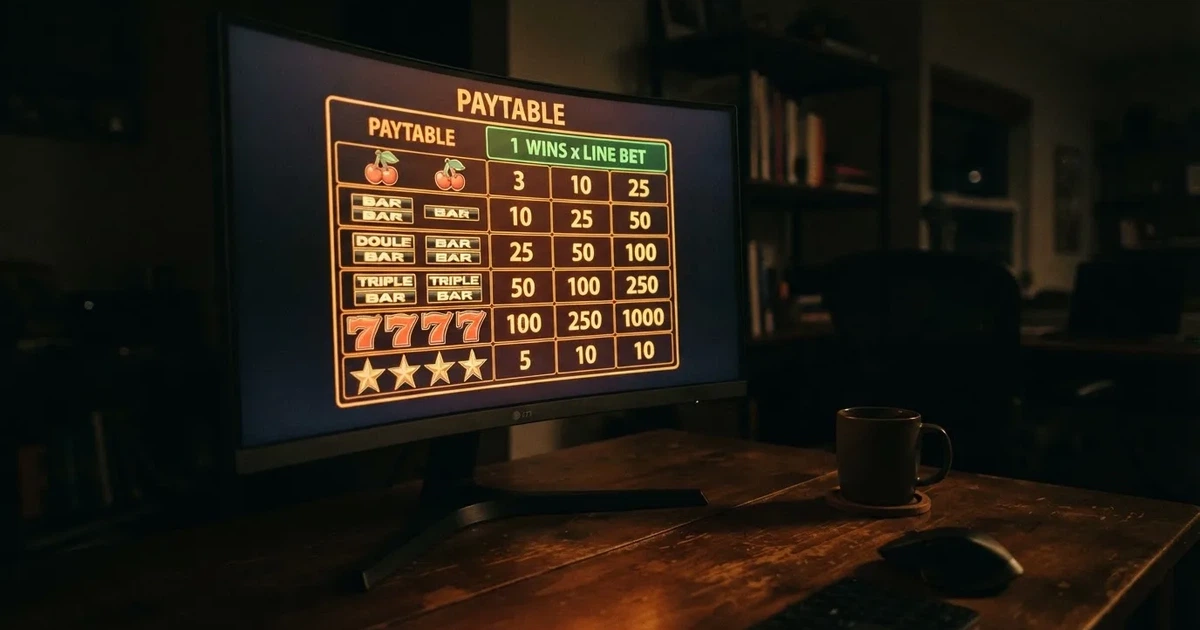
This page is built around what that prohibition costs the reader. Each offshore brand in the lineup below carries a published ACMA action. The mechanics of an RTG slot, the relevant responsible-gambling supports and the offshore-versus-onshore split sit beside that list, not ahead of it.
Current as of 29 October 2026, checked against the ACMA’s public register of formal warnings and blocking requests.
Table of Contents
- How the shortlist of eleven RTG-marketing operators was put together
- What RTG actually is, and why it shows up on Australian-facing sites
- The legal line under every brand on the list
- What enforcement has looked like in practice
- What the ACMA has actually done to the brands on the list
- The offshore offer at the per-spin level, on the maths the player can do
- Responsible gambling supports, and what they cover
- What a reader is actually buying on an offshore RTG site
- The blocking rate, as the page’s own calculation
- What the offshore offer looks like at the moment of enforcement
- Where this leaves a reader who arrived at the page looking for an RTG casino
- Frequently asked questions
How the shortlist of eleven RTG-marketing operators was put together
The eleven brands below are not a ranking. They are the operators the ACMA itself has named in a formal warning or blocking request for offering prohibited online casino services to people in Australia. Several of them carry two warnings — one against an earlier corporate entity, one against the current one — which is itself a piece of information: the ACMA issued the first warning, the operator continued, and the regulator had to repeat itself.
A shortlist built on ACMA actions has one property a reader can use: it is the regulator’s own list of who is in breach, ordered by the date the regulator chose to act. A shortlist built on affiliate “best casinos” pages would rank the same brands by the commission they pay for a click, which is a different ordering and one the reader cannot verify. The two orderings do not agree, and on a topic where the law is what it is, the regulator’s order is the one that tells the reader anything about cost.
Two things every brand on the list shares. Each is incorporated offshore — Curaçao, Cyprus, the Seychelles — and each markets RTG-branded slots to Australian visitors despite the IGA. Several run RTG software as a small slice of a much larger catalogue; a few carry it as the headline product. Where the public listings show no RTG title in the catalogue at all, the brand is named on its other ACMA-published fields and not on its RTG support.
The eleven RTG-marketing operators, in ACMA-action order
| Brand | ACMA action and date | Operator named by the ACMA | Subject support |
|---|---|---|---|
| Sky Crown | Formal warning | Hollycorn N.V. | — |
| Woo Casino | Formal warning, March 2025 | Dama N.V. | — |
| Casino Intense | Formal warning, April 2025 | Sterplay Holding Ltd | listings only — appears in 1spin4win, Wikipedia and the UK Gambling Commission public registers |
| Instant Casino | Formal warning, February 2025 | EOD Code SRL | — |
| Spirit Casino | Formal warning, May 2025 | Dama N.V. | — |
| Ignition Casino | Formal warning, July 2025 | Bamboo Media | — |
| National Casino | Formal warning, July 2025 | Consolutetish S.R.L. | listings only — appears on Betsoft, Wikipedia and Pragmatic Play partner pages |
| Jackbit | Formal warning, April 2026 | Ryker B.V. | — |
| Bizzo Casino | Formal warning, July 2025; earlier 2022 | Consolutetish S.R.L. (2025); TechSolutions Group (2022) | — |
| Level Up Casino | Formal warning, May 2022 | Dama N.V. | listings only — appears on Wazdan’s partner page |
| RocketPlay | Formal warning, March 2026; earlier May 2022 | Pulsup Ltd (2026); Dama N.V. (2022) | — |
Three brands in this list — Sky Crown, Woo Casino and Instant Casino — are the entries whose ACMA actions have no RTG content in the public listings at all. They are here because the ACMA named them, and because removing them would tidy a table at the cost of telling the reader less about the regulator’s actual field of view. The remaining eight show RTG either as a headline catalogue (Level Up, Casino Intense) or as one provider among many in a multi-studio lobby (National Casino, Bizzo, the rest).
What RTG actually is, and why it shows up on Australian-facing sites
Real Time Gaming is one of the older slot studios in the online market. It was established in Atlanta in 1998, moved all development to Heredia, Costa Rica in 2007–2008 and has been under Hastings International of Curaçao since January 2007. Its catalogue is best known for a small set of branded online slots — Aztec’s Millions, Cleopatra’s Gold, Cash Bandits — plus a long tail of five-reel video titles and a handful of table games. The company does not let casino operators alter payout settings on its slot and video poker games, and caps its own liability through maximum-bet restrictions designed to keep any single progressive jackpot payout at or below A$77,000 at today’s exchange.
That cap has a history worth knowing. In 2004 a player won $1.3 million from a $1,000 deposit playing Caribbean 21 on Real Time Gaming software at the Hampton Casino. RTG responded by capping Caribbean 21’s maximum bet at $5 and then removing the game from its portfolio entirely. The cap is the same mechanism in milder form: it bounds what any single spin of any single progressive can pay, on any operator running RTG software. A reader who knows this reads a “win up to A$77,000” line on a progressive differently from a reader who does not.
The reason RTG shows up on so many Australian-facing offshore sites is partly historical and partly structural. RTG integrated with Curaçao-licensed platforms early, and Curaçao remains the most common licence for offshore casino operators; many of those operators never bothered to exclude Australian visitors because, until enforcement tightened in 2017, no one made them. Ozwin Casino, an Australian-facing RTG operator, was one of the early names the ACMA blocked for violating the Interactive Gambling Act 2001. The brand rotation since then — new corporate names for the same RTG catalogue — has not changed the underlying product or the underlying licence.
The legal line under every brand on the list
The Interactive Gambling Act 2001, tightened by the Interactive Gambling Amendment Act 2017, makes it an offence to provide online casino games, online pokies or in-play betting to a person in Australia. No state or territory licenses online casino products. What is licensable is wagering on races and sport placed before the event, lotteries and keno — and in practice most of Australia’s 52 licensed online bookmakers (Sportsbet, Bet365, Ladbrokes and the rest) are licensed by the Northern Territory Racing and Wagering Commission, partly for tax reasons. The NTRWC has no full-time staff and meets once a month in Darwin, which is part of why the IGA’s enforcement is read as an ACMA function rather than a state-by-state function.
What this means for an Australian reader who clicks through to an offshore casino: the site is breaking Australian law by offering its product to you. You are not the target of the IGA — the law names the provider, not the player. You do, however, give up every protection an Australian licence would have given you: no complaints body, no local dispute resolution, no guarantee a withdrawal will be honoured, and the real possibility that the ACMA will direct Australian ISPs to block the site while a balance is still on it.
Payments tighten that line further. Since 11 June 2024, credit cards, credit-related products and digital currency are banned as a payment method for licensed Australian online wagering, with penalties of up to A$247,500 for the operator. A licensed wagering site takes debit card, bank transfer, PayID, Osko or BPAY. An offshore casino asking for a credit card or a crypto deposit is operating outside the Australian rules. The distinction matters because the payment a reader uses is the clearest signal of which side of the line the operator is on.
The Interactive Gambling Amendment (Gambling Reform) Bill 2026 passed Parliament on 19 August 2026; its advertising and inducement measures commence 1 January 2027. That is law with a start date, not yet in force on a page dated 2026, and it sits beside the offshore RTG offers without changing what they are today.
What enforcement has looked like in practice
The ACMA enforces the IGA through formal warnings and through blocking requests to Australian ISPs. The two have different effects: a formal warning puts a public mark on the operator, and a blocking request removes access for Australian residents. Both are public, both are dated, and the ACMA publishes both on its own site.
The blocking rate is what the page can put a number on. According to the ACMA as reported in June 2026, a total of 1,751 illegal gambling and affiliate marketing websites had been blocked since the first blocking request in November 2019. That is roughly 260 sites a year for six and a half years, or about one every 31 hours — a rate that has grown as the ACMA has added affiliate sites and mirror domains to the queue. The blocking number is a useful proxy for the offshore offer’s scale: the operator set the ACMA has blocked is many times larger than the eleven named in the table above.
The same June 2026 round asked ISPs to block twelve more sites: 7Signs, ChromaBet, Donbet, Duospin, Freshbet, Slots Gem, Jacks Club, Lucky Start, Pointsbetz, Spinrise, Vinyl Casino and Wildsino. None of those is an RTG-only site — they are multi-studio offshore brands — but several sit on the same Curaçao platforms that host RTG titles. The ACMA’s field of view is wider than the RTG catalogue alone.
A reader who wants to put a number on the cost of the offshore market has one. H2 Gambling Capital’s 2025 report estimates that Australians lose about A$3.9 billion a year to illegal gambling sites, and that the share of gambling going through legal channels fell from 74% in 2021 to 64%. The fall is the part that matters: legal channels shrank by ten percentage points while illegal channels absorbed the difference. The IGA has not been a static prohibition — it is a prohibition operating against a market that is moving against it.
What the ACMA has actually done to the brands on the list
The table above carries the dates; the prose underneath puts them in order.
The earliest warning in the lineup is Hollycorn N.V. over Sky Crown — the date is published in the ACMA’s September 2022 formal-warning PDF. The May 2022 wave covered six brands operated by Dama N.V.: Bambet, Dazard, Level Up, Rocketplay, Wild Tornado and Cobra Casinos. Three of those reappear in this table — Level Up and Rocketplay directly, and Woo Casino (also Dama N.V.) through a March 2025 follow-up warning. The same Dama N.V. drew a third warning in May 2025 over Spirit Casino. Three warnings against the same operator in three years is the regulator’s record of Dama N.V., and it tells a reader something about how the corporate-rotation trick ages.
TechSolutions Group drew a 2022 warning over Bizzo Casino; Consolutetish S.R.L. drew a July 2025 warning over the same brand. RocketPlay carries the same two-step — Dama N.V. in May 2022, then Pulsup Ltd in March 2026. Where two operators are named against one brand, the picture is the same: a warning, a rebrand, another warning.
Sterplay Holding Ltd drew an April 2025 warning over Casino Intense. Bamboo Media drew a July 2025 warning over Ignition Casino. EOD Code SRL drew a February 2025 warning over Instant Casino. Ryker B.V. drew an April 2026 warning covering both Jackbit and CasinOK. Consolutetish S.R.L. drew a July 2025 warning covering National Casino and Bizzo Casino.
Two patterns sit underneath the dates. First, the operators are mostly Curaçao- or Cyprus-incorporated vehicles — Hollycorn, Dama, Sterplay, Bamboo, EOD, Ryker, Consolutetish, Pulsup, TechSolutions — which is what one would expect from a market the IGA keeps out of Australian incorporation. Second, the warnings cluster: the ACMA does not act on every brand each year; it runs rounds, often in concert with a blocking request, and the dates line up accordingly.
The offshore offer at the per-spin level, on the maths the player can do
An RTG slot is a five-reel video slot with a fixed paytable. The studio does not let operators alter payout settings on RTG slots or video poker games, so a “96% RTP” line on an RTG title means the same thing on every operator running it. That is unusual — most providers let operators dial a setting within a published range — and it cuts both ways. The player gets a known return; the operator cannot sweeten the title to compete, which means the operator’s edge in marketing is bonus terms, not the slot itself.
Two published RTG-adjacent reference points are useful. Betsoft’s Good Girl Bad Girl 2 carries a published 96.22% RTP, “Very High” volatility and a 15.59% hit rate across 5 reels and 20 paylines. The Slotfather, an older Betsoft title live since 13 December 2012, carries a published 95.69% RTP, “Medium” volatility and an 8.17% hit rate across 5 reels and 30 paylines. Neither is an RTG title — Betsoft is a separate studio — but both illustrate the shape of the offshore slots catalogue the ACMA has been acting against, and the volatility spread the reader will find inside it.
The 1spin4win reference sits in the same neighbourhood: a Curaçao-licensed slot provider founded in 2021 by a group of professionals with fifteen years of iGaming experience, more than 190 online slots in its catalogue, more than 1,000 partnerships with online casinos and aggregators, and total bet sum up 46% in the first half of 2025 against the first half of 2024. 1spin4win’s games are built in HTML5 for low-bandwidth connections, which is the technical reason an offshore site can serve an Australian visitor on a regional mobile network without a perceptible drop in quality.
Aristocrat is the Australian counterpoint to all of this. Aristocrat Leisure was founded in 1953 by Leonard Ainsworth and listed on the Australian Securities Exchange in 1996 under the ticker ALL. It is described as the largest gambling-machine manufacturer in Australia and the second-largest slot-machine manufacturer worldwide, behind International Game Technology. In 2025 it reported revenue of A$6.30 billion, normalised net profit after tax and amortisation of A$1.55 billion and 7,400 employees. Its online arms are Product Madness (social casino) and Aristocrat Interactive, the regulated online real-money business formed in April 2024 by combining the Anaxi unit with the newly acquired NeoGames group. Aristocrat machines are the ones an Australian reader will actually find in a licensed venue — a pub, a club or a casino floor — and the comparison with the offshore RTG catalogue is partly a comparison of who regulates what.
Responsible gambling supports, and what they cover
Australian responsible-gambling support is built around licensed wagering, not offshore casino play. Gambling Help Online runs the National Gambling Helpline on 1800 858 858, free, 24/7, with chat. BetStop, the National Self-Exclusion Register, has been live since August 2023 and binds Australian-licensed online and phone wagering services — it does not bind an offshore casino, because the offshore casino is not connected to it. A reader who has registered with BetStop is excluded from every licensed Australian wagering site but can still open an account at a Curaçao-licensed RTG operator and play there. The exclusion is real for the licensed half of the market and silent for the rest.
That asymmetry is the structural cost of the offshore offer, and it is what the responsible-gambling section has to say plainly. Self-exclusion works on the operators who are part of the Australian system. It does not work on the operators the ACMA has been warning. A reader who needs the exclusion needs the licensed half of the market, and the licensed half of the market is wagering, lotteries and keno — not online casino.
What a reader is actually buying on an offshore RTG site
Three things, none of them good, and one of them invisible.
The visible thing is the slot catalogue. RTG titles are well-made, and the fixed-RTP model means the published return is the published return on every operator. A reader who picks the same title across two RTG-marketing sites is playing a slot with identical mechanics — the difference between the two sites is bonus terms, withdrawal rules, customer support, and how fast the operator’s corporate name will rotate when the next ACMA warning lands.
The second thing is the bonus structure. No bonus terms are quoted on this page because the only sources for them were affiliate marketing pages, and a figure drawn from an affiliate page is a figure the affiliate chose to publish for the click it pays. A reader who wants the bonus terms needs them from the operator’s own terms page, and even then needs to read the wagering multiple, the game-weighting table, the maximum-bet cap while a bonus is active, and the maximum cashout. Each of these can convert a stated bonus into something smaller than its headline number, and several of them always do.
The third thing, the invisible one, is the regulatory status. An Australian-licensed wagering site answers to the ACMA, the NTRWC, AUSTRAC and the Australian Financial Complaints Authority. An offshore RTG operator answers to its Curaçao master licence — and Curaçao’s regulator has been the subject of sustained criticism from the European Gaming and Betting Association and from individual member states for the standards it enforces on the operators it licenses. A reader who has a dispute with a Curaçao-licensed operator has, in practice, no local body to take it to. The balance can sit, the withdrawal can stall, and the operator can rebrand.
The blocking rate, as the page’s own calculation
The arithmetic on this page is a rate, not a sum.
Inputs: the running total of blocked sites as published by the ACMA in June 2026, which is 1,751; and the date of the first blocking request, which is November 2019. From November 2019 to June 2026 is roughly six years and seven months, or about 79 months.
The rate: 1,751 blocked sites over 79 months works out to about 22 blocked sites per month, or roughly one every 33 hours, across the full period. The most recent round alone — the 26 June 2026 blocking request — added 12 sites in a single action.
The band: in any given month of the period, the ACMA has blocked somewhere between a handful and a few dozen sites; the average rate is a useful summary and not a forecast, because rounds cluster. The reader-facing point is that the ACMA’s enforcement is continuous rather than periodic, and that the rate has held up rather than tapered off as the offshore market has grown.
What the offshore offer looks like at the moment of enforcement
The ACMA’s June 2026 round is a useful snapshot. The twelve sites blocked — 7Signs, ChromaBet, Donbet, Duospin, Freshbet, Slots Gem, Jacks Club, Lucky Start, Pointsbetz, Spinrise, Vinyl Casino and Wildsino — are all multi-studio offshore brands. None is RTG-only. The ACMA’s June 2026 formal-warning list, taken alongside the blocking list, is the regulator’s working definition of who the offshore market is in the year this page is dated: Curaçao- or Cyprus-incorporated, multi-studio catalogue, Australian-facing marketing, no Australian licence.
The H2 Gambling Capital figure of A$3.9 billion a year in losses to illegal gambling sites is the demand side of the same picture. The legal channel’s share fell from 74% in 2021 to 64% in the most recent estimate — a ten-point swing over four years. The IGA has not lost its force, but the market it polices has grown faster than the regulator’s enforcement budget.
Where this leaves a reader who arrived at the page looking for an RTG casino
There is no Australian-licensed RTG casino. There never has been. The Interactive Gambling Act 2001 prohibits the product, and the ACMA enforces the prohibition through formal warnings and ISP-level blocking requests. The eleven brands in the table above are the regulator’s own list of who is currently in breach; they are not a recommendation and not a ranking. A reader who needs the slots has the licensed Australian wagering market, which does not include RTG titles. A reader who wants RTG titles has the offshore market, and with it the loss of every protection an Australian licence would have given.
The choice is not “which RTG casino”. The choice is whether to play RTG titles offshore, knowing what the offshore offer does and does not come with, or to play regulated Australian wagering, knowing what regulated wagering does and does not include. The cost on one side is the loss of Australian consumer protection and the prospect of the site being blocked with a balance on it. The cost on the other is the loss of the RTG catalogue and the broader offshore slot library. A reader who arrived here for a shortlist will not find one. They will find the legal line, the regulator’s record against it, and the cost on each side of it.
Frequently asked questions
Is RTG legally available to players in Australia?
No. The Interactive Gambling Act 2001 prohibits providing online casino games, including RTG slots, to a person in Australia, and no state or territory licenses the product. Every operator that markets RTG titles to Australian visitors does so without an Australian licence, and most have already drawn a formal ACMA warning.
What kinds of games does RTG make?
RTG’s catalogue is built around five-reel video slots — Aztec’s Millions, Cleopatra’s Gold and Cash Bandits are the better-known titles — with a long tail of branded and unbranded video slots, a small table-game offering and a video poker suite. The studio does not let operators alter payout settings on its slots, and the studio caps any single progressive payout at or below roughly A$77,000.
Are RTG games offered at land-based venues in Australia?
Not as RTG-branded online products. Land-based Australian pokies are made by Aristocrat, IGT and a handful of other manufacturers, regulated state by state. Aristocrat, the largest Australian gambling-machine manufacturer, runs its regulated online arm separately through Aristocrat Interactive.
How can Australians check whether an RTG title is fair before considering play?
There is no Australian-licensed RTG title to check. Offshore RTG operators are typically tested by independent labs — Gaming Labs International, Quinel, iTech Labs — and the published RTP is the same across operators because RTG does not let operators alter payout settings. The check that matters for an Australian reader is whether the site itself is licensed to serve Australians, and on that point the answer is no for every offshore RTG operator on the market.
Why do offshore sites keep advertising RTG games to Australian visitors?
Because the offshore market is large — H2 Gambling Capital’s 2025 estimate puts Australian losses to illegal sites at A$3.9 billion a year — and because the cost of being blocked is a new domain name. The ACMA has blocked 1,751 illegal gambling and affiliate marketing sites since November 2019. The marketing continues because the underlying demand continues.
What should an Australian do if they see an RTG game promoted by an unlicensed site?
The Gambling Help Online national helpline on 1800 858 858 runs 24/7 with chat support, and is the right first call for anyone whose gambling has moved from a choice to a problem. BetStop, the National Self-Exclusion Register, covers every Australian-licensed wagering service; it does not bind offshore casinos. The honest position for a reader who has not started is to read the IGA, read the ACMA’s published warnings, and decide accordingly.