
PayID casinos in Australia: what the eleven PayID-accepting offshore sites actually are
PayID sits inside the online banking of more than a hundred Australian financial institutions, and a player who types a mobile number or an email into a casino’s deposit page will usually see the bank account of the recipient before the transfer is sent. That is the surface the marketing builds on. Underneath it sits a different picture: online casino games cannot be licensed in Australia at all, every operator on this page has been the subject of a formal warning from the ACMA for offering those prohibited services to Australians, and the regulator has asked Australian internet service providers to block 1,751 illegal gambling and affiliate marketing websites since November 2019. This page names the eleven brands, sets out what each one was warned for, and lays out what PayID does and does not change about that.
Currency and licences verified 29 October 2026 against the ACMA’s formal warning register and the Australian Communications and Media Authority’s published blocking notices.
Table of Contents
- Landscape
- How PayID actually works at a casino deposit page
- What the ACMA has actually done, in numbers
- The Interactive Gambling Act and what it actually says
- How PayID sits inside the bank-level gambling blocks
- What a PayID casino actually costs the player
- Reading the warning notices like a regulator
- What a player who is about to deposit should weigh
- What the 2026 reform package actually changes
- The PayID rail, judged by what it is asked to do
- Frequently asked questions
Landscape
Eleven brands surface across the affiliate marketing for “PayID casinos Australia”, and each one is listed below because the ACMA itself issued a formal warning over it under the Interactive Gambling Act 2001. The order follows the regulator’s published warnings; the licence column is omitted because online casino games cannot be licensed anywhere in Australia, so whatever licence a site displays is not for the product an Australian player would be playing. Where the research carries no figure for a brand’s PayID support specifically, the cell reads as a dash — the brand stays in the list on its other fields, never with a fabricated PayID claim bolted on.
| Brand | ACMA action and date | Operator named by the ACMA | PayID support |
|---|---|---|---|
| RocketPlay | Formal warning, March 2026 (earlier warning to a prior operator, May 2022) | Pulsup Ltd | — |
| Level Up Casino | Formal warning, May 2022 | Dama N.V. | Westpac listings only |
| Woo Casino | Formal warning, March 2025 | Dama N.V. | — |
| Spirit Casino | Formal warning, May 2025 | Dama N.V. | — |
| National Casino | Formal warning, July 2025 | Consolutetish S.R.L. | AUSTRAC and public listings only |
| Bizzo Casino | Formal warning, July 2025 (earlier warning, 2022) | Consolutetish S.R.L. | — |
| Ignition Casino | Formal warning, July 2025 | Bamboo Media | — |
| Instant Casino | Formal warning, February 2025 | EOD Code SRL | EcoPayz and PayID listings only |
| Jackbit | Formal warning, April 2026 | Ryker B.V. | — |
| Casino Intense | Formal warning, April 2025 | Sterplay Holding Ltd | AUSTRAC and other public listings only |
| Sky Crown | Formal warning, September 2022 | Hollycorn N.V. | — |
The four “listings only” entries mark brands whose PayID support shows up in third-party directory pages rather than in the ACMA’s own register; the other seven carry no PayID evidence at all and stay out of that column. A dash here means the brand is present in the list on its ACMA action, not on a payment-method claim research could verify.
The honest reading of the table is that every brand has been told by Australia’s regulator to stop offering casino games to Australians, that the warnings stretch from 2022 to 2026, and that two operators — Dama N.V. and the TechSolutions/Consolutetish pair — have been warned twice for different brands in the same stable. None of that is a problem with PayID the payment method; it is a problem with what the payment is being asked to fund.
How PayID actually works at a casino deposit page
PayID is an identifier — a mobile number, an email address, an ABN or an Organisation Identifier — linked to a bank account, run by Australian Payments Plus on top of the Reserve Bank’s New Payments Platform. It was built into the online banking of more than a hundred Australian financial institutions, and as of April 2025 more than 25 million PayIDs were registered across the country. The system runs through Osko, so a transfer between participating banks arrives in under a minute, 24 hours a day, including weekends, whether the payer addresses the recipient by BSB and account number or by PayID.

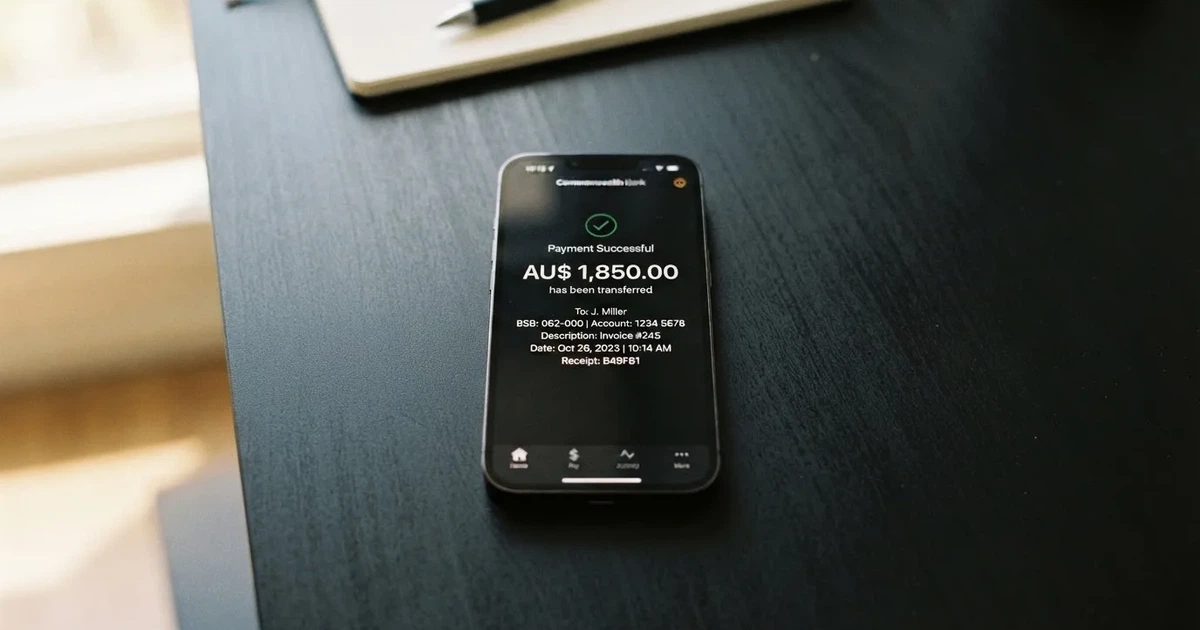
When a casino lists PayID, the deposit flow on the player’s side is the same as paying any other Australian bill. The casino shows a PayID — usually a mobile number, an email or an ABN — and a reference code; the player opens their bank app, picks PayID, types the identifier, sees the name of the account holder before the transfer is sent, and confirms. The settlement lands inside a minute in normal conditions; the casino then needs its own internal reconciliation to credit the balance, which is why a PayID deposit can still take hours to appear as playable funds even though the bank leg has cleared.
A PayID withdrawal reverses the flow. The casino asks for a PayID the player controls, sends the funds to that identifier, and the money arrives in the player’s bank account within minutes through Osko. The settlement is instant; the bottleneck is the casino’s own manual checks. A withdrawal request typically sits in a pending queue while the casino reviews gameplay, KYC documents and any bonus terms, and only after that internal sign-off does the PayID instruction go out. So the answer to “does PayID clear faster than a card” is yes on the bank leg and depends entirely on the operator’s own processing time on the rest.
What PayID does not change
PayID is a payments rail, not a consumer protection. The account-holder name check is the one anti-scam guardrail built into the system, and it works against impersonation — a player will see the name attached to the PayID before they confirm. It does nothing about whether the recipient is licensed to take Australian players, and it does nothing about whether the casino will eventually pay out. Australian Payments Plus warns about this directly: being asked to transfer funds to a PayID on an illegal gambling site is, in their wording, almost certainly a scam site. That sentence is a regulator telling Australian players what the affiliate marketing will not.
The IGA targets the provider, not the player, so an Australian using PayID to deposit at an offshore casino is not personally prosecuted. What they give up is the protection that comes with a licensed Australian operator: no Australian complaints body, no AUSTRAC-mandated transaction monitoring, no connection to BetStop, and no recourse if a withdrawal stalls. A blocked site can also leave a balance on it that the player cannot move. PayID makes the transfer instant; it does not make the recipient trustworthy.
What the ACMA has actually done, in numbers
The ACMA’s enforcement programme has two visible sides. One is the formal warning, a published regulatory step that names an operator and a brand and gives the operator a chance to stop. The other is the blocking request, where the ACMA asks Australian ISPs to take the site offline at the DNS level for Australian users. The numbers below come from the regulator’s published register and from the round reported on 26 June 2026.
Since the first blocking request in November 2019, the ACMA has asked ISPs to block 1,751 illegal gambling and affiliate marketing websites.
| Metric | Detail |
|---|---|
| Total blocked sites (since Nov 2019) | 1,751 |
| Blocking requests per year (average) | ~270 |
| Enforcement start date | November 2019 |
In the most recent reported round, twelve more were added: 7Signs, ChromaBet, Donbet, Duospin, Freshbet, Slots Gem, Jacks Club, Lucky Start, Pointsbetz, Spinrise, Vinyl Casino and Wildsino. The cumulative effect sits across roughly six and a half years of enforcement, which works out at a running average of around 270 blocking requests per year — though the rate has accelerated, with the bulk of the additions landing in the last three years. The page states this as a band, not a single figure: with the round reported on 26 June 2026 bringing the cumulative total to 1,751 since November 2019, the implied annual rate over that window sits in the low-to-mid hundreds, not a tidy constant.
More than 230 unlicensed gambling services have left the Australian market since enforcement was strengthened in 2017. H2 Gambling Capital’s 2025 report puts the cost to Australian players at around A$3.9 billion a year lost to illegal sites, and the share of gambling going through legal channels has fallen from 74% in 2021 to 64%. Those two figures are not about PayID specifically; they are the size of what the offshore market actually is in Australia, and PayID is one of the rails that money flows along.
The Interactive Gambling Act and what it actually says
The Interactive Gambling Act 2001, strengthened by the Interactive Gambling Amendment Act 2017, makes it an offence to provide online casino games, online pokies or in-play betting to a person physically in Australia. No state or territory licenses those products. The individual player is not prosecuted, but the operator is, and an offshore site has no Australian consumer protection to fall back on if a withdrawal is refused.
What is licensable in Australia is wagering on races and sport placed before the event, lotteries and keno. In practice that wagering is licensed by the Northern Territory Racing and Wagering Commission, which regulates 52 of Australia’s online bookmakers including Sportsbet, Bet365 and Ladbrokes, all licensed in the Territory for tax reasons. The commission itself has no full-time staff and meets once a month in Darwin, a structural fact that has drawn political attention in 2026. Sportsbet, Bet365 and Ladbrokes are wagering brands, not casino brands; the distinction matters because the ACMA’s formal warnings cover casino and pokies products, not pre-event sports wagering.
The credit-card ban for licensed online wagering has been in force since 11 June 2024, with penalties up to $247,500 for operators that breach it. That same ban shapes how PayID-linked bank transfers can be used, because a PayID pulls from a bank account rather than a credit product — the legal deposit routes for a licensed Australian wagering operator are debit card, bank transfer, PayID/Osko and BPAY. A site asking an Australian for a credit card or a crypto deposit is operating outside the Australian rules. The Interactive Gambling Amendment (Gambling Reform) Bill 2026 passed Parliament on 19 August 2026, and its advertising and inducement measures commence on 1 January 2027; that is law with a start date, not yet in force on this page.
Where the ACMA’s power stops
The ACMA investigates, issues formal warnings and directs ISPs to block illegal sites. It does not seize player balances, refund losses or compel an offshore operator to pay out. The Northern Territory’s wagering regulator does not regulate casino products. AUSTRAC monitors transactions for anti-money-laundering purposes across the financial system but is not a gambling consumer body. None of those authorities is a complaints channel for an Australian player whose withdrawal stalls at an offshore casino, and that is the practical gap the marketing does not mention.
BetStop, the National Self-Exclusion Register, has been live since August 2023 and binds every Australian-licensed online and phone wagering service. An offshore casino is not connected to it. A player who has self-excluded through BetStop can still deposit at an offshore site using PayID, because that site has no integration with the register and is not bound by it. The National Gambling Helpline, 1800 858 858, is free and 24/7, with chat at Gambling Help Online; both are Australian services and both work regardless of which site the player is using, because the issue is the player’s behaviour, not the operator’s licence.
How PayID sits inside the bank-level gambling blocks
Westpac’s gambling block operates at card level: it refuses authorisation of transactions registered under the merchant category code “Betting/Casino Gambling” on eligible personal credit and debit cards. ANZ’s gambling block, activated in the ANZ app, extends to transactions made through a digital wallet such as Apple Pay on an eligible card, not just the physical card; once turned on, removing it again requires a 48-hour waiting period, and the bank warns that not all gambling transactions will be blocked and that some non-gambling transactions might be blocked in error.
PayID sits outside both of those card-level blocks. It is a bank transfer, not a card authorisation, so a Westpac card block and an ANZ card-plus-wallet block do not stop a PayID deposit by themselves — that leg goes through the account-to-account Osko system rather than the card network. What does stop it is the bank-level gambling transaction block ANZ provides, and whatever equivalent the other major banks put in place over time. Apple Pay, Google Pay and Samsung Pay collectively accounted for around 45% of all card payments in Australia by number by the end of 2025, which is why the bank-level blocks have extended into the wallet layer. PayID is a separate rail and is governed separately.
The Reserve Bank’s July 2025 review proposes removing surcharges only on eftpos, Mastercard and Visa card transactions, and leaves American Express explicitly outside the proposed surcharge ban. Apple does not charge consumer fees for Apple Pay in stores, online or in apps; any surcharge is the merchant’s own card-processing fee. None of that affects a PayID transfer directly, because PayID is a bank-to-bank transfer rather than a card transaction, and surcharging rules apply to card networks rather than to NPP payments.
What a PayID casino actually costs the player
H2 Gambling Capital’s 2025 estimate puts the Australian loss to illegal sites at around A$3.9 billion a year. That figure is the size of the market the offshore operators are fighting over, and PayID is one of the rails that money moves along. The legal-channel share has fallen from 74% in 2021 to 64%, which means the illegal share has grown to roughly a third of total Australian gambling spend. None of those numbers are specific to a single brand or a single session — they are the macro picture the marketing rarely quotes.
For a single player at a single session, the cost is whatever the house edge is on the games they play, paid out of however long the bankroll lasts. There is no Australian consumer protection on the other side: a withdrawal refused, a bonus term enforced against the player, a self-excluded player unable to enforce that exclusion because the site does not recognise BetStop. The IGA’s enforcement tools are aimed at the operator, not at compensating the player, so the player’s recourse is whatever the offshore operator’s own complaints process chooses to do.
PayID does not reduce that cost. It makes the deposit leg near-instant, which shortens the time between deciding to play and being able to play, and that itself is a feature of the product the marketing highlights. A faster rail to an unlicensed operator is not a cheaper one. The account-holder name check protects against a PayID scam impersonating a casino; it does not protect against a real casino refusing to pay out.
Where the data stops
The ACMA’s formal warning register names operators and brands but does not publish per-brand player counts, deposit volumes or complaint statistics. AUSTRAC’s transaction reporting is not public at the brand level. The licensed Australian wagering channel is small — 52 bookmakers in the Northern Territory is the whole regulated sports-and-racing wagering industry — and none of it is online casino. The figure of A$3.9 billion a year lost to illegal sites is H2 Gambling Capital’s estimate, not an audited number. Any per-brand “X% of Australians use this site” claim that surfaces in affiliate marketing is unsourced; this page does not carry it.
Reading the warning notices like a regulator
A formal warning under the Interactive Gambling Act 2001 is the ACMA’s first published step against an operator. The ACMA names the operator and the brand, sets out which provisions of the IGA the regulator believes the operator is breaching, and gives the operator a chance to comply before the ACMA moves to the next step, which is a blocking request to Australian ISPs. Two operators on this page — Dama N.V. and the TechSolutions/Consolutetish pair — have been warned twice for different brands in the same stable, which is what the regulator’s repeat-warning pattern looks like in practice. The RocketPlay entry shows the same brand under two different operators, Pulsup Ltd in March 2026 and Dama N.V. back in May 2022, which is a rebrand or a sale rather than a first-time warning.
The formal warning does not mean a brand is unprofitable or poorly run. It means the ACMA has formed the view that the operator is providing prohibited interactive gambling services to Australians, and has put that view on the public record. A player reading the register should treat a warning as a signal about the product being offered, not about the quality of the operator in any other sense.
What changes between the first warning and the block
The ACMA’s published pattern runs from formal warning to civil penalty proceedings to blocking request to ISP-level block. The blocking request is the lever that takes a site offline at the DNS level for Australian users. The blocked-site total has grown from zero in November 2019 to 1,751 by the round reported on 26 June 2026; that total is the cumulative count of websites the ACMA has asked ISPs to block, and it includes both casino sites and affiliate marketing sites that promote them. The running average over that window sits in the low-to-mid hundreds per year, with the rate higher in recent years than in the first two years of the programme.
A site that is blocked in Australia can still operate in other jurisdictions. A player using a VPN to reach a blocked site is still dealing with an unlicensed operator under Australian law, and the ISP-level block is the practical enforcement the ACMA has, not the consumer protection the player is missing.
What a player who is about to deposit should weigh
The decision an Australian player faces is not which PayID casino pays out fastest; the ACMA’s formal warnings already cover every brand on this page. The decision is whether to deposit at all, knowing that the operator has been formally told to stop offering the product, that there is no Australian consumer protection if the withdrawal stalls, and that the credit-card ban and the gambling transaction blocks do not apply offshore. PayID itself is a clean payment rail for any legitimate Australian bill; the issue is the recipient, not the rail.
A player who has self-excluded through BetStop has done so on the assumption that every Australian-licensed wagering service will refuse them. An offshore casino is not connected to BetStop, so a self-excluded Australian can still deposit at one of these brands. The National Gambling Helpline at 1800 858 858 is free, 24/7, and chats at Gambling Help Online. The licensed Australian wagering channel covers sports and racing before the event, lotteries and keno, and that is the whole of the legal product. Casino and pokies online are not part of it.
For a player who has weighed those points and decided to play anyway, the practical questions are about bankroll and session length rather than about which brand pays out fastest — the answer to that is whichever one processes the withdrawal, and the ACMA’s register is the place to check whether the brand the player is considering has been warned. The brands on this page have all been warned.
What the 2026 reform package actually changes
The Interactive Gambling Amendment (Gambling Reform) Bill 2026 passed Parliament on 19 August 2026. Its advertising and inducement measures commence on 1 January 2027; this is law with a future start date, not in force on this page. The 2023 amendments to the IGA banned credit cards and credit-related products for licensed online wagering from 11 June 2024, which is what shapes the legal deposit routes for licensed wagering — debit card, bank transfer, PayID/Osko and BPAY. The 2017 amendments strengthened the ACMA’s enforcement powers, which is the foundation the blocking programme rests on. None of those changes legalises online casino for Australian residents; they tighten the existing prohibition.
The licensed wagering channel continues to be a small industry — 52 bookmakers in the Northern Territory, no full-time regulator staff, monthly meetings in Darwin. The reform discussion around that regulator is a 2026 story, and a structural one about how wagering licensing is governed rather than about what products Australians can play online. The casino products that the IGA prohibits remain prohibited; the 2026 reform package tightens advertising and inducement rules around licensed wagering rather than opening the casino prohibition.
The PayID rail, judged by what it is asked to do
PayID is a fast, low-friction Australian bank transfer that runs on the Reserve Bank’s New Payments Platform and through Osko. It is built into the online banking of more than a hundred Australian financial institutions and shows the recipient’s name before the transfer is sent, which is the anti-scam guardrail. It is the rail an Australian billpayer uses for a tradesperson, a friend, a school and an ATO payment, and it works the same way at a casino deposit page.
The reason it shows up in casino marketing is the speed: a deposit lands in under a minute and a withdrawal clears inside the same window once the operator sends it. That speed is genuine. The reason the ACMA and AP+ both warn about illegal gambling sites using PayID is the rest of the picture: the recipient is not licensed to take Australian players, and the rail’s speed is what makes the product work for the operator. A faster rail to an unlicensed operator is what the regulator is warning about, and PayID’s own operator says as much in plain language.
Frequently asked questions
Is it legal for an online casino to accept PayID from a player in Australia?
No. Under the Interactive Gambling Act 2001, no online casino may lawfully offer casino games or online pokies to a person in Australia, regardless of the payment method. The ACMA has issued formal warnings to all eleven operators on this page for offering prohibited interactive gambling services, and PayID does not change the legal status of the product on the other end.
What is the smallest deposit a PayID casino site usually asks for?
The ACMA’s register does not publish per-brand minimum deposit figures, and research carries no verified minimum for any of the eleven brands. Affiliate marketing pages often quote a low headline figure, but those pages are not a regulated source. A player should treat any quoted minimum as marketing copy and check the brand’s own deposit page after registering.
Does a PayID withdrawal clear any faster than a card withdrawal at these sites?
The bank leg clears in under a minute through Osko, which is faster than a card refund. The casino’s own internal checks — KYC review, gameplay verification, bonus term sign-off — typically sit ahead of that bank leg, so the player-visible withdrawal time is set by the operator’s queue rather than by the rail. A PayID withdrawal still has to clear the casino’s own process before settlement.
Can PayID be used at every offshore pokies-style site, or only some of them?
PayID is offered as a deposit method at a subset of the offshore casino market. The eleven brands on this page are the ones the ACMA has warned; the wider PayID-accepting market is larger than that. A PayID listing on a casino’s payment page does not imply the casino is licensed in Australia — it implies the casino is willing to accept an Australian bank transfer, which is the rail the ACMA warns about.
Does depositing with PayID add an extra fee at these casino sites?
The ACMA’s register and the research carried no per-brand PayID deposit fee for any of the eleven brands. PayID itself is a bank-to-bank transfer and does not carry a consumer fee from AP+; any fee the player sees would be the operator’s own deposit charge. A player should check the operator’s deposit page directly rather than rely on a marketing headline.
What should a player do if a PayID deposit does not appear in a casino account?
The first step is to check the bank statement: if the PayID transfer has left the bank account but the casino balance has not updated, the casino’s reconciliation is still pending and the funds will normally credit within hours. If the bank statement shows no outbound transfer, the deposit was not sent and the issue is on the player’s bank app side. In either case the player should keep the bank reference and contact the casino’s support, knowing that an offshore operator with an ACMA formal warning has no Australian complaints body to escalate to.