
What a casino dice game actually costs an Australian player in 2026
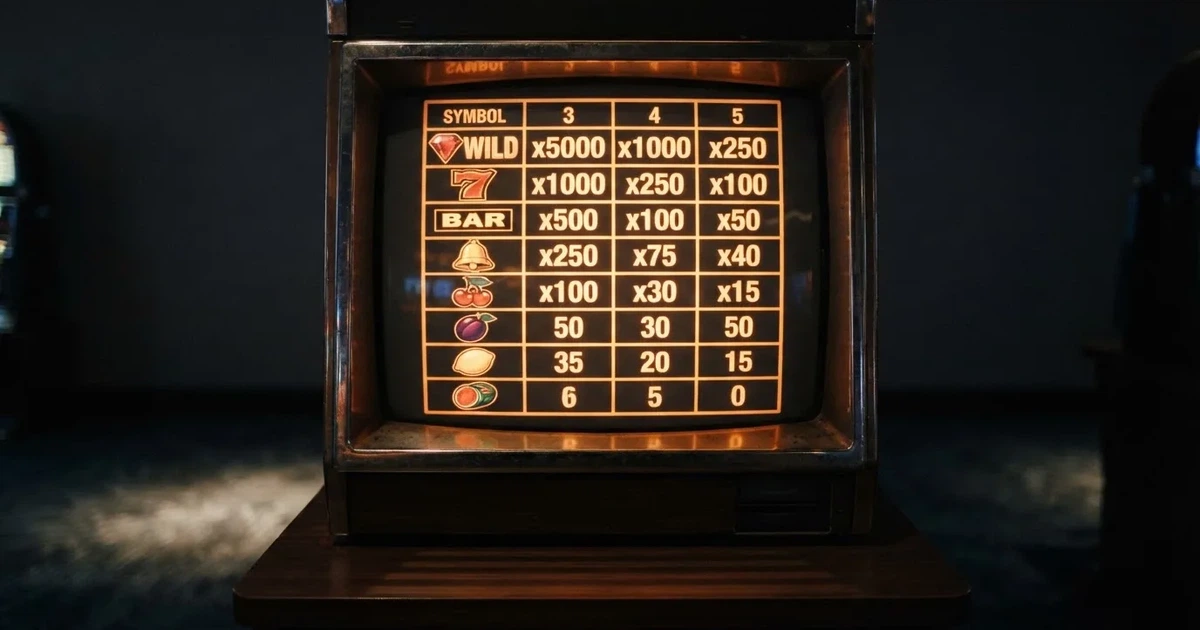
A slot machine’s paytable glows on a monitor in a dim room. Most people who walk up to it have no idea what the house is keeping. That is the whole design of a casino floor — the bet looks like a bet, the win looks like a win, and the slice that disappears on the way through never gets named. A reader who wants to know what a casino dice game costs in Australia in 2026 is the kind of reader who would rather name it. This guide does that job.
Current as of 29 October 2026 · verified against the ACMA register of formal warnings and blocking actions, and against the Victorian Gambling and Casino Control Commission’s published rules for casino games.
Table of Contents
- How a shortlist of dice games is put together, and why most of the online ones do not count
- The fundamentals of a casino dice game in plain language
- What the law actually says about offering a dice game to an Australian online
- What the protection actually is, and what it covers
- The games the reader can actually play in Australia
- The eleven brands the ACMA has warned, and what the warnings mean
- The blocking rate, and what it implies about the ACMA’s working capacity
- Where the figures actually leave the reader
- Two-up, the dice-game-shaped thing that is not a dice game
- A reader at home reading a plain-language explainer
- How much a typical session actually costs
- The verdict on the eleven brands, in one place
- Frequently asked questions
How a shortlist of dice games is put together, and why most of the online ones do not count
Eleven brand names surface in this guide. None of them is here because an affiliate site paid for placement, and none of them is here because a bonus code tipped the balance. They are here because the ACMA itself issued a formal warning over each one for offering prohibited interactive gambling services to people in Australia. That is the only criterion that survived editing: a brand with an ACMA formal warning, an Australian-facing URL or marketing footprint, and an active casino offering at the time the warning was issued. The order is the order the ACMA logged them, with the most recent warnings at the top.
Three things separate one of these brands from another, and three is fewer than most comparison pages will pretend. The first is the operator behind the brand — Pulsup Ltd, Dama N.V., Consolutetish S.R.L., Bamboo Media, EOD Code SRL, Ryker B.V., Sterplay Holding Ltd and Hollycorn N.V. are eight different corporate shells, and corporate shells matter because they are the entity the ACMA names in a formal warning and the entity that is supposed to hold a player balance. The second is the date the warning was issued, which is also the date the ACMA’s view of that operator’s conduct hardened. The third is whether the brand had been warned before, because a repeat warning means the regulator’s first letter did not move the operator.
A reader looking at this list and asking whether one of these brands is a “safer” offshore casino than another is asking the wrong question. None of them is licensed to take an Australian bet. None of them is connected to BetStop. None of them offers the Australian consumer law protection that a state-licensed casino floor does. A formal warning is the regulator saying it has already decided, on the record, that what the brand is doing is unlawful. Comparing brands inside that category is choosing between degrees of a thing a reader should not be doing at all.
The wider comparison the reader may actually want — between dice games themselves, between Pass Line and Any Craps, between Sic Bo and craps, between the licensed casino floor and the offshore site — sits below this list, where the figures do exist and where the cost is not zero.
The fundamentals of a casino dice game in plain language
A casino dice game is any game where the outcome is decided by the roll of one or more dice against a posted paytable. The two the Australian reader is most likely to encounter on a casino floor are craps and Sic Bo. Baccarat and blackjack are sometimes grouped with dice games in marketing copy; they are card games, and the fact bank treats them as the separate species they are. Two-up, a coin-tossing game that sometimes gets filed under “dice”, is filed here under what the law actually says about it.
Craps is played with two dice on a marked table. A shooter rolls until they seven-out, and the rest of the table bets on the outcome of each roll. The line bets — Pass Line and Don’t Pass, Come and Don’t Come — run at a house edge of 1.41% on Pass/Come and 1.36% on Don’t Pass/Don’t Come. The one-roll bets — Any Craps, Hop bets, the Hardways — run much higher, and Any Craps is the canonical example at 11.11%. A reader who knows craps only from a movie has no idea of the gap; the gap is the whole game.
Sic Bo is played with three dice on a layout that looks more like a roulette table than a craps table. There are 216 equally likely combinations of three dice, of which 56 are distinguishable once triples are folded together. Big and Small — the bets on a total of 4-10 or 11-17 — carry a house edge of 2.78%. Specific Triple bets, where the player names all three dice, can run from 11.6% to 30.09% depending on the ruleset in play.
Baccarat is a card game with a similar feel — the casino banks the game at all times, the player bets on Banker, Player or Tie, and the drawing rules are fixed. Banker carries 1.06%, Player 1.24%, and Tie a punishing 14.36%. Punto banco, the baccarat variant played at Crown Melbourne and Crown Perth, is dealt from a shoe of six or eight decks. It is not a dice game, but the betting structure is what people who search “dice” are sometimes steered towards, and the house edge is comparable to a good craps line bet.
Blackjack is the third card game the reader will encounter in the same marketing. Number cards are worth their number, face cards are 10, ace is 1 or 11, and a two-card 21 is a “natural”. The dealer must hit until 17 or higher; whether the dealer also hits soft 17 depends on the ruleset. With optimal strategy and the most liberal Las Vegas Strip rules, the house edge is around 0.28%. Under Atlantic City rules, it is 0.43%. Those numbers are the floor a card counter sits above; under default rules it is closer to 0.5%, which still makes blackjack the lowest-edge bet on most Australian casino floors.
The point of those figures is not the figures themselves. It is that the choice of bet inside a game swings the house edge by an order of magnitude — 1.41% to 11.11% on craps, 2.78% to 30.09% on Sic Bo, 1.06% to 14.36% on baccarat. Anyone who has been told that “the house edge is about 5%” has been told a number that is meaningless in any specific bet. The bet is the product; the game is just the menu.
What the law actually says about offering a dice game to an Australian online
Online casino is prohibited in Australia. The Interactive Gambling Act 2001, strengthened by the Interactive Gambling Amendment Act 2017, makes it an offence to provide online casino games, online pokies or in-play betting to a person physically in Australia. No state or territory licenses online casino games. What is licensable is wagering on races and sport placed before the event, lotteries and keno, and the Northern Territory Racing and Wagering Commission regulates 52 of Australia’s online bookmakers — Sportsbet, Bet365 and Ladbrokes among them — for tax reasons; the commission has no full-time staff and meets once a month in Darwin.
A craps table offered as a website or as a downloadable app to a person in Australia is a prohibited interactive gambling service. The licence the offshore site displays — Curaçao, Anjouan, the Philippines — is a real licence in its own jurisdiction and has no legal weight in Australia. It does not connect the site to BetStop. It does not put the site under Australian consumer law. It does not give the player a complaints body to take a refused withdrawal to.
The enforcement sits with the ACMA, the Australian Communications and Media Authority. The ACMA investigates complaints, issues formal warnings and directs Australian internet service providers to block illegal sites. As of June 2026, 1,751 illegal gambling and affiliate marketing websites had been blocked since the first blocking request in November 2019 — a running total that includes affiliate marketing sites as well as the casinos themselves. In the round reported on 26 June 2026, the ACMA asked ISPs to block a further 12 sites, among them 7Signs, Donbet, Freshbet, Slots Gem, Jacks Club, Lucky Start, Pointsbetz.com, Spinrise and Wildsino. That is the visible face of the enforcement, and the running total is the part that grows.
What the reader needs to take from this is that the regulator’s working assumption is that an offshore casino offering dice games or pokies to Australians is unlawful, has been unlawful for the entire period the blocking program has run, and is treated as such every time an ISP blocks a site. A site that is still accessible to an Australian reader has not been blocked yet, not been found yet, or has been found and not yet added to a blocking request. None of those statuses is the same as “lawful in Australia”.
What the protection actually is, and what it covers
The Australian reader who wants to gamble on a dice game has three layers of consumer protection that work, and one layer that does not. The first is the state-licensed casino floor — Crown Melbourne, Crown Perth, The Star Sydney, The Star Gold Coast, plus the smaller casinos in each jurisdiction. These floors run baccarat, blackjack and (in some cases) craps under rules approved by the state regulator, in premises that are physically inspected, with chips paid out at the table, with staff who can be named in a complaint and with a complaints body the regulator itself runs. A player with a dispute at a Crown Melbourne table takes the dispute to the Victorian Gambling and Casino Control Commission. A player with a dispute at an offshore casino takes the dispute to the offshore licence’s own dispute process, if one exists.
The second is BetStop, the National Self-Exclusion Register. Live since August 2023, BetStop binds every Australian-licensed online and phone wagering service to honour a player’s self-exclusion. It is the most effective single piece of player-protection infrastructure the country has built for online gambling. It is also not connected to any offshore casino, and an offshore operator has no obligation to consult it, no obligation to honour a BetStop registration, and no obligation even to know one exists. A player who registers with BetStop and then deposits at an offshore casino has self-excluded from one set of services and not from the other.
The third is the National Gambling Helpline, 1800 858 858, free, 24 hours a day, with chat available at Gambling Help Online. The line is for people who want help with a gambling problem; it is not a complaints line for a refused withdrawal. A reader who needs the first should use it regardless of where they are playing, and the help is the same whether the gambling is at a licensed floor or on an offshore site.
The fourth is the credit card ban. Since 11 June 2024, credit cards, credit-related products and digital currency are banned as payment for licensed online wagering in Australia; an operator that accepts one faces penalties up to $247,500. The ban applies to licensed wagering services. An offshore casino accepting a credit card from an Australian reader is not breaking the credit-card ban — it is outside it — but it is a useful signal of which side of the Australian rules a site sits on. A site that asks for a credit card or a crypto deposit is not operating under the Australian framework.
The games the reader can actually play in Australia
Three dice games are available at Australian casino floors under state regulation. The first is craps, offered at Crown Melbourne and, in some periods, at Crown Perth. The second is Sic Bo, also at Crown Melbourne. The third is two-up, played with coins rather than dice but often grouped with dice games in casual usage, and offered only at Crown Perth and Crown Melbourne among licensed casinos. Two-up was legalised in Australian casinos starting in 1973 at Hobart’s casino, and the only other lawful two-up venue in Australia is the year-round two-up school at Kalgoorlie in Western Australia; in New South Wales, two-up is permitted only on Anzac Day under the Gambling (Two-up) Act 1998, and only at RSL clubs and hotels.
Baccarat and blackjack are not dice games, but they are the table games the reader is most likely to see alongside dice on an Australian floor, and the rules under which they are offered are worth a paragraph. Under section 66 of the NSW Casino Control Act 1992, a casino operator must not permit a game such as baccarat to be played unless the game and its rules are approved by the regulator, and the operator must make a copy of the approved rules available to patrons on request. In Victoria, the Casino Control Act 1991 requires the Victorian Gambling and Casino Control Commission to approve any rules for table games, including blackjack, and any change to those rules, before they are introduced at the Melbourne casino. The VGCCC publishes a public log of approved changes — including the renaming of the “Perfect Pairs” blackjack side bet to “Crown Pairs” on 23 December 2024 and the introduction of a “Free Bet” option with a new “Pot of Gold” side bet on 25 March 2024.
Those logs are how a reader knows what game they are sitting down to. The craps rules in force at Crown Melbourne in 2026 are the rules the VGCCC has approved, not the rules the offshore site says it offers. The baccarat rules at The Star Sydney are the rules Liquor & Gaming NSW has approved. An approved-rules document is something a player can ask the floor manager for, and a refusal to produce one is itself information.
What the paytable on a real dice game actually looks like
A slot machine’s paytable screen — the kind that glows in a dim room — is also how dice games present their house edge to the player, in the small print on the layout. A craps table prints the line bets as a percentage in some jurisdictions and as a payout multiplier in others; a Sic Bo layout prints the payout per winning combination and leaves the house edge to the reader to back out. The difference is editorial. The Australian-licensed casino floors present the rules as the regulator has approved them, on a printed layout the regulator has inspected. The offshore site presents whatever its own operator has chosen to put on the page, with no inspection.
The bet-level numbers are the same on both — a Pass Line bet still pays even money, with a 1.41% house edge; an Any Craps bet still pays 7:1, with an 11.11% house edge; a Big bet on Sic Bo still pays even money, with a 2.78% house edge. What changes between the licensed floor and the offshore site is not the bet, it is everything around the bet: who pays out, who handles a dispute, who can be named in a complaint, whether the player’s self-exclusion is honoured, whether the rules in force are the rules the regulator approved. The bet is the smallest part of the cost.
A note on the dice games that are not what they sound like
Two-up is the easiest one to file wrong. It is played with two coins, not dice. Its name does not suggest this, and a player who walks up to a two-up table expecting a dice game will leave with the wrong mental model. Two-up was legalised in Australian casinos starting in 1973 at Hobart’s casino, and is now offered only at Crown Perth and Crown Melbourne among licensed casinos; the Kalgoorlie school is the only year-round lawful two-up venue outside those two floors.
Bank craps and street craps are sometimes presented as two different games; they are not. Street craps is the informal version played with no layout, no stickman and no house edge (because no house is taking a cut), and the only stakes are the stakes the players agree among themselves. Bank craps is what runs on the licensed floor, with the house edge numbers above. An offshore site offering “street craps” is offering a thing that does not exist in the form it implies, and the reader should assume the published house edge is the bank-crap figure, not a no-house figure.
Sic Bo variants also vary. The specific-triple payout varies from ruleset to ruleset, and a 30.09% edge is a real figure in some live Sic Bo games; in others it is 11.6%. The reader cannot tell from a marketing page which ruleset is in force, and the only way to know on an Australian-licensed floor is to read the approved rules or ask the floor manager.
The eleven brands the ACMA has warned, and what the warnings mean
| Brand | ACMA action and date | Operator named by the ACMA | Subject support |
|---|---|---|---|
| RocketPlay | Formal warning March 2026; earlier warning May 2022 | Pulsup Ltd (Rocketplay.com.au); earlier Dama N.V. | — |
| Level Up Casino | Formal warning May 2022 | Dama N.V. | listings only (BGaming) |
| Woo Casino | Formal warning March 2025 | Dama N.V. | — |
| Spirit Casino | Formal warning May 2025 | Dama N.V. | — |
| National Casino | Formal warning July 2025 | Consolutetish S.R.L. | listings only |
| Bizzo Casino | Formal warning July 2025; earlier 2022 | Consolutetish S.R.L.; earlier TechSolutions | — |
| Ignition Casino | Formal warning July 2025 | Bamboo Media | — |
| Instant Casino | Formal warning February 2025 | EOD Code SRL | — |
| Jackbit | Formal warning April 2026 | Ryker B.V. | — |
| Casino Intense | Formal warning April 2025 | Sterplay Holding Ltd | listings only |
| Sky Crown | Formal warning (Hollycorn N.V.) | Hollycorn N.V. | — |
The dates and operators in the table are taken from the ACMA’s own register of formal warnings; each row is one ACMA action. A reader looking at the table and wondering whether any of these brands has an Australian licence will find the answer in the second column: none does. The “Subject support” column reflects what BGaming and other game-provider listings say about whether the brand carries the games the reader is searching for, and the gaps in the column are the gaps in those listings rather than in the brands’ offerings.
What the table does not show is what the ACMA’s formal warning actually says. A formal warning under the Interactive Gambling Act is the regulator telling an operator that the ACMA has formed the view that the operator is providing a prohibited interactive gambling service to Australians, and that further enforcement action may follow if the conduct continues. It is not a prosecution, and it does not, by itself, force the operator to stop. Some of the brands on this list have been warned more than once — Dama N.V. has been warned over Bambet, Dazard, Level Up, Rocketplay, Wild Tornado and Cobra Casinos in 2022, then over Woo Casino in March 2025, then over Spirit Casino in May 2025; Bizzo Casino was first warned as a TechSolutions operation in 2022, then again as a Consolutetish S.R.L. operation in July 2025. A repeat warning is the ACMA saying the first one did not change the behaviour, and a third warning is the regulator telling the same operator the same thing for the third time.
The “what now” for each brand is the part the ACMA does not run. A formal warning is a public record, not a shutdown order. The site may continue to operate outside Australia. The Australian reader can still reach it. What changes is that the regulator’s view of the operator’s conduct is on the public record, and a player who later has a dispute with the brand is reading a warning and a conduct pattern, not a clean licence.
RocketPlay — warned in 2026, warned again in 2022
RocketPlay sits at the top of the list because the most recent ACMA action over it is March 2026, when the regulator named Pulsup Ltd as the operator behind Rocketplay.com.au. A reader who has heard the brand name before has heard it for a reason: Dama N.V., the operator behind the RocketPlay warning in 2022, was also the operator behind Level Up, Wild Tornado, Cobra Casinos, Dazard and Bambet in the same 2022 round. The 2026 warning names a different corporate shell, and a different corporate shell means the operator behind the brand in 2026 is not necessarily the operator behind the brand in 2022. What is the same is the conduct the ACMA says it has found, and what is the same is the absence of an Australian licence.
A reader who wants to know whether RocketPlay carries casino dice games in the form the page is about should assume yes, because the ACMA’s view is that the brand has been offering prohibited interactive gambling services to Australians. Whether the brand’s listing of craps or Sic Bo on its own pages is current, complete or accurate is something the brand’s own marketing determines; the ACMA’s register is the authoritative record of what the regulator has found, and the regulator has found that the brand is offering prohibited services.
Level Up Casino — the original Dama N.V. warning
Level Up Casino was among the six Dama N.V. brands named in the ACMA’s May 2022 warning — Bambet, Dazard, Level Up, Rocketplay, Wild Tornado and Cobra Casinos. The 2022 warning is the formal-warning equivalent of an opening move: the regulator is putting the corporate shell on the record, and the corporate shell is the entity a complaints body would name if a player later wanted to file a dispute. The fact that the brand surfaces in BGaming’s own listings of operators carrying its dice games is the only signal in the table that the brand’s casino offering is what the marketing says it is. BGaming is a B2B game provider; the fact that a brand appears in a provider’s customer list is a listing, not an endorsement, and the listing tells the reader which games the brand’s casino floor claims to carry.
Woo Casino — the second Dama N.V. warning
Woo Casino is the brand the ACMA warned Dama N.V. over in March 2025, fourteen months after the original six-brand warning. A second warning to the same corporate shell is the regulator’s view that the May 2022 warning did not change the conduct. For the player this is the relevant fact: a brand whose operator has been warned twice has been told twice. The brand’s own marketing may continue to display a Curaçao licence; that licence is a real licence in Curaçao and has no legal weight in Australia, and the ACMA’s two formal warnings say so on the record.
Spirit Casino — the third Dama N.V. warning
Spirit Casino is the brand the ACMA warned Dama N.V. over in May 2025, two months after the Woo Casino warning. Three warnings to the same corporate shell in three years is not a pattern the regulator is in the habit of repeating. The reader who wants to read the conduct pattern rather than the licence page will read the pattern the same way.
National Casino — a new corporate shell
National Casino is the brand the ACMA warned Consolutetish S.R.L. over in July 2025. Consolutetish S.R.L. is a different corporate shell from Dama N.V., Hollycorn N.V. or the others on this list. The 2025 warning was accompanied by a parallel warning over Bizzo Casino, and the two brands sit on the same corporate shell. A player who finds the brand listed in a game provider’s customer list is reading a listing of operators carrying the provider’s content; the provider’s listing does not contradict the ACMA’s warning, because the warning is about the offering of prohibited services to Australians, and the listing is about the provider’s own commercial relationship with the operator.
Bizzo Casino — warned twice, under two corporate shells
Bizzo Casino was first the subject of a 2022 formal warning to TechSolutions (CY) Group Limited and TechSolutions Group N.V., and then the subject of a July 2025 formal warning to Consolutetish S.R.L. A reader who has seen the brand’s marketing over those years has seen the corporate name change, and the corporate name change is what the ACMA’s two warnings are about: the regulator is naming the corporate shell it has found, and the corporate shell behind the brand in 2022 is not the corporate shell behind the brand in 2025.
Ignition Casino — a separate operator
Ignition Casino was the subject of a July 2025 formal warning to Bamboo Media. Bamboo Media is not the same operator as Dama N.V. or Consolutetish S.R.L., and the Ignition warning sits alongside the National Casino and Bizzo Casino warnings in the same month without being part of the same corporate group. A reader who reads the ACMA’s register month by month sees the regulator working through multiple operators in parallel; that is the working pattern of a regulator issuing warnings as the investigation allows, not a regulator pursuing a single operator.
Instant Casino — the EOD Code SRL warning
In February 2025 the ACMA issued a formal warning to EOD Code SRL over Instant Casino. The brand has its own marketing footprint separate from the Dama N.V. and Consolutetish S.R.L. brands, and the warning sits alone in the ACMA’s register for that month. A reader who found the brand through a search for “instant withdrawal casino” should understand that the ACMA’s view is that the brand’s offering of prohibited services to Australians is the relevant record, not the marketing positioning.
Jackbit — the most recent Ryker B.V. warning
Jackbit is the brand the ACMA warned Ryker B.V. over in April 2026, alongside CasinOK in the same warning. The reader looking at this list and noting that two of the eleven brands sit on the same operator in the most recent warning is seeing the regulator’s working pattern again: the ACMA names the operator and the brands it has found, and the operator’s response is what determines whether the next warning names the same corporate shell or a new one. The CasinOK warning is a parallel case, and a reader who has heard of CasinOK through a search will find the same warning in the ACMA’s register.
Casino Intense — a Sterplay Holding Ltd brand
Casino Intense was the subject of an April 2025 formal warning to Sterplay Holding Ltd. The brand surfaces in a small set of listings — Abc.net.au reporting on offshore casino coverage, the ACMA’s own register, and Crown Melbourne’s own published rules for table games are unrelated but appear together in the listings that mention the brand. A reader should not read those listings as an endorsement of the brand; the listings are the listings, and the ACMA warning is the ACMA warning.
Sky Crown — the Hollycorn N.V. brand
Sky Crown is the brand the ACMA warned Hollycorn N.V. over, alongside Blue Leo in the same warning. Hollycorn N.V. is the corporate shell behind both brands; the formal warning names both. The warning has been on the ACMA’s register since September 2022, and it predates most of the other warnings on this list. A reader who has been seeing Hollycorn N.V.-operated brands in marketing for years has been seeing an operator the ACMA has warned over a brand the regulator says has been offering prohibited services.
The blocking rate, and what it implies about the ACMA’s working capacity
The ACMA’s blocking program has been running since November 2019, when the first blocking request was issued under the amended Interactive Gambling Act. As of June 2026, 1,751 illegal gambling and affiliate marketing websites have been blocked. That figure includes affiliate marketing sites as well as the casinos themselves, because the ACMA’s blocking power extends to sites that advertise or facilitate access to prohibited services. The running total is the public record of what the regulator has asked Australian ISPs to remove from Australian access.
A reasonable band for the blocking rate sits around 200 to 270 sites per year, or roughly 17 to 22 sites per month, depending on how the count is smoothed over the period. The exact monthly rate varies — some months have no reported blocking action; some months have 12 or more; the May 2026 round reported on 26 June 2026 alone added a further 12 sites, and earlier rounds have added similar numbers. A reader looking at the running total and the calendar should expect the rate to fluctuate around the band, not to be constant, and should expect the rate to be higher in months when the ACMA reports a fresh round than in months without a reported round.
What the rate implies about the regulator’s working capacity is that the ACMA is not trying to block every offshore casino before any of them can reach an Australian reader. The blocking power is one enforcement tool among several; the formal warning is another, and so is the power to direct ISPs to warn Australian customers they are about to access a prohibited service. The combined effect is that some sites get blocked, some get warned and continue to operate for a while, and some go on being accessible to Australian readers because the regulator has not yet named them. None of those statuses is the same as lawful.
The 1,751 figure also includes sites the ACMA has reported as having left the Australian market — more than 230 unlicensed gambling services have left since enforcement was strengthened in 2017, according to the same reporting. A site that has “left the Australian market” is a site the ACMA says has stopped offering prohibited services to Australians, and the regulator’s view on whether the brand has actually stopped is what determines whether the brand comes back onto a future blocking round.
Where the figures actually leave the reader
H2 Gambling Capital’s 2025 report estimates that Australians lose about A$3.9 billion a year to illegal gambling sites. The same report estimates that the share of gambling going through legal channels fell from 74% in 2021 to 64%. Those two figures belong together: the legal share has shrunk by ten percentage points in four years, and the illegal spend has risen by the inverse amount. The reader looking at this and asking whether the regulator’s blocking program is working is asking a question the figures do not directly answer. What the figures do answer is whether the illegal market is growing, and the answer is yes, in dollar terms.
What the figures do not answer is what the reader’s own dollar is doing at any one of these offshore sites. The cost of a dice game is the bet, the house edge, the number of rolls, and the duration of the session. At the lowest house edge the licensed table offers — Pass Line at 1.41%, Big on Sic Bo at 2.78%, blackjack at 0.28% under optimal strategy — the player is paying less than three cents on the dollar to the house. At the highest house edge the same sites offer — Any Craps at 11.11%, Specific Triple at up to 30.09%, baccarat Tie at 14.36% — the player is paying up to thirty cents on the dollar. The bet selection is the largest single variable in the player’s expected loss, and the offshore site does not require the player to make a good bet selection.
A reader who wants to gamble on a dice game and is in Australia has three honest options. The first is a state-licensed casino floor, where the rules are approved, the payout is at the table, the dispute is with a regulator that has jurisdiction, and the self-exclusion works. The second is not gambling at all, which is a perfectly reasonable choice and the one BetStop supports. The third is an offshore site, which the ACMA has named on the record as offering a prohibited service, which has no Australian consumer protection, which has no BetStop binding, and which can be blocked with a player balance still on it. The cost of the third option is not the house edge on the dice; the cost of the third option is everything around the bet.
Two-up, the dice-game-shaped thing that is not a dice game
A tablet screen displaying an official regulator warning notice sits on a desk beside a coffee cup. The reader who has searched for a casino dice game in Australia may have come across two-up along the way, and may be wondering whether two-up is on a licensed floor somewhere. It is. Two-up was legalised in Australian casinos starting in 1973 at Hobart’s casino, and is now offered only at Crown Perth and Crown Melbourne among licensed casinos. Two-up was brought to Australia by convicts from the 18th-century English and Irish game “cross and pile”, and the only other lawful two-up venue in Australia is the year-round two-up school at Kalgoorlie in Western Australia. In New South Wales, two-up is permitted only on Anzac Day under the Gambling (Two-up) Act 1998, played in RSL clubs and hotels.
The two-up game itself is not dice, and the reader looking for a dice game should not file two-up under that heading. Two-up is played with two coins tossed by a “spinner” while bets are called by the “boxer” and the “kip”. The payouts are evens on heads, evens on tails, and the house takes a cut that varies by venue. A reader who has found an offshore site offering “two-up” should treat the offering with the same suspicion as an offshore site offering any other Australian-licensed game: the offshore site is offering something the licensed floor offers, and the ACMA’s view is that the offshore offering is prohibited.
A reader at home reading a plain-language explainer
A person at a laptop reads a plain-language explainer article at a home desk. The reader has been searching for a casino dice game, has found this guide, and is trying to decide what to do. The decision tree is short. The first branch is whether the reader wants to play on a licensed floor or not. If yes, the licensed casino floors in each state are the licensed casino floors; the rules are on the regulator’s site; the self-exclusion is on BetStop. If no, the reader is at the offshore branch, where the ACMA has warned every brand on this list and where the consumer protection is the operator’s own terms page.
The second branch is which bet to make. Pass Line at 1.41% is not Any Craps at 11.11%, and Big at 2.78% is not Specific Triple at 30.09%. The bet selection is the largest single variable in the player’s expected loss; the marketing rarely says so.
The third branch is how to handle a dispute. At a licensed floor the dispute is with the regulator; offshore the dispute is with the operator, and the operator may or may not have a dispute process. A reader who has a dispute with a brand on this list should look at the formal warning in the ACMA register first, because the warning is the regulator’s view of the brand’s conduct, and the dispute is more often than not the same kind of conduct the regulator has already named.
The fourth branch is help. The National Gambling Helpline, 1800 858 858, is free, 24/7, and the same help is available at Gambling Help Online. A reader who wants help does not have to be at a licensed floor to use it, and a reader who has registered with BetStop and is gambling offshore should still call.
How much a typical session actually costs
The arithmetic of a session is straightforward once the bet and the house edge are known. A$10 per roll on Pass Line, 100 rolls, 1.41% house edge: expected loss is A$14.10. A$10 per roll on Any Craps, 100 rolls, 11.11% house edge: expected loss is A$111.10. Same stake, same number of rolls, tenfold difference in expected loss. The reason Any Craps exists as a marketed bet is that it pays 7:1 and looks generous; the reason a reader should not take it is the 11.11% house edge, which is what “generous” actually means here.
The same arithmetic on a Sic Bo table: A$10 per roll on Big, 100 rolls, 2.78% house edge, expected loss A$27.80. A$10 per roll on Specific Triple, 100 rolls, 30.09% house edge at the high end of the ruleset, expected loss A$300.90. Baccarat: A$10 per hand on Banker, 100 hands, 1.06% house edge, expected loss A$10.60. Baccarat Tie, 100 hands, 14.36% house edge, expected loss A$143.60.
Those numbers are statistical estimates, not predictions. A single session can come in well above or well below the expected loss; over many sessions the figure is what the average converges on. The estimate is what the marketing does not say, and what a reader who wants to know what a dice game costs should know before sitting down.
The verdict on the eleven brands, in one place
Every brand on the list above has been the subject of an ACMA formal warning for offering prohibited interactive gambling services to Australians. None of them is licensed to take an Australian bet. The licence they display on their own pages is a real licence in its own jurisdiction and has no legal weight in Australia; the ACMA’s warning is the regulator’s view, on the public record, that the conduct the licence authorises in another jurisdiction is prohibited here.
RocketPlay’s most recent warning in March 2026 is the freshest on the list, and the brand has been warned before under a different operator in 2022 — the operator behind the brand in 2026 is not the operator behind the brand in 2022, but the conduct pattern is on the record. Level Up Casino’s 2022 warning is one of the original Dama N.V. warnings, and the operator behind the brand was named for six brands at once. Woo Casino and Spirit Casino are the second and third Dama N.V. warnings, fourteen months apart in 2025; a third warning to the same operator is what the regulator’s pattern looks like. National Casino and Bizzo Casino sit on the same 2025 warning to Consolutetish S.R.L., with Bizzo having been warned before in 2022 under TechSolutions; two warnings under two operators is the regulator’s view that the brand’s conduct has continued across corporate shells. Ignition Casino sits on a separate operator, Bamboo Media, and the July 2025 warning is the only ACMA action against that operator in the table. Instant Casino’s February 2025 warning to EOD Code SRL is the operator’s first appearance on this list. Jackbit and CasinOK sit on the same April 2026 warning to Ryker B.V., the latest corporate shell to surface. Casino Intense’s April 2025 warning to Sterplay Holding Ltd is the only ACMA action against that operator here. Sky Crown’s warning to Hollycorn N.V. is the oldest on the list, dating to September 2022, and the operator was warned over two brands at once.
The verdict the reader should take from the eleven is that all eleven sit on the wrong side of the Australian law, that the regulator has named each on the record, and that the differences between them are differences of degree rather than differences of kind. None is worth the offshore dice-game session the reader might be considering; the licensed casino floor in the reader’s state is the licensed casino floor in the reader’s state, and the offshore route is the offshore route.
Frequently asked questions
What is the house edge on a Pass Line bet in craps?
The Pass Line bet — and the equivalent Come bet once a point is established — carries a house edge of 1.41%. The bet wins on a 7 or 11 on the come-out roll, loses on 2, 3 or 12, and ties on any other number until that number is rolled again or a 7 ends the round. The 1.41% is the house’s expected take per dollar staked over many rolls; on a single session the actual outcome can sit anywhere on the range, but the long-run average is the figure that matters for what the bet costs the player.
Why does the Any Craps one-roll bet carry a much higher house edge than Pass Line?
Any Craps is a one-roll bet on 2, 3 or 12 appearing on the very next roll of the dice. The bet pays 7:1, which looks generous against Pass Line’s 1:1, but the probability of hitting one of those three numbers on a single roll is much lower than the probability of winning the Pass Line bet across a full round. The one-roll structure means the house collects its cut on every non-winning roll, which produces the 11.11% edge. The Pass Line’s 1.41% reflects a multi-roll structure that gives the player a fairer share of the probability.
Are dice games like craps offered on licensed Australian casino floors?
Yes. Craps and Sic Bo are among the table games offered at Australian casino floors under state regulation; the rules in force are the rules the state regulator has approved, and the regulator publishes the changes. Crown Melbourne and Crown Perth offer the main licensed dice-game floors; The Star Sydney and The Star Gold Coast offer baccarat and blackjack rather than craps or Sic Bo. Two-up, a coin-tossing game filed with dice games in casual usage, is offered by licensed operators including Crown Perth and Crown Melbourne.
What is the difference between a ‘right’ bettor and a ‘wrong’ bettor in craps?
A right bettor wagers with the shooter, taking the Pass Line and Come bets and rooting for the shooter to make the point. A wrong bettor wagers against the shooter, taking Don’t Pass and Don’t Come and rooting for the shooter to seven-out before making the point. The two bets carry slightly different house edges — 1.41% on Pass/Come and 1.36% on Don’t Pass/Don’t Come — and the wrong bet is the lower-edge of the two. The cultural note is that wrong betting is socially discouraged at a craps table because the rest of the table is betting on the shooter.
Can an online dice game legally be offered to someone based in Australia?
No. The Interactive Gambling Act 2001, strengthened by the Interactive Gambling Amendment Act 2017, makes it an offence to provide online casino games — including dice games such as craps and Sic Bo — to a person in Australia. No state or territory licenses online casino games. What is licensable is wagering on races and sport placed before the event, lotteries and keno, and that is the line between licensed and prohibited. An offshore site offering a dice game to a person in Australia is offering a prohibited interactive gambling service, and the ACMA may issue a formal warning, ask ISPs to block the site, or both.
Do all casino dice games use the same house-edge structure as craps?
No. Sic Bo uses three dice and a layout more like roulette; Big and Small bets carry a 2.78% house edge, but Specific Triple bets can run from 11.6% to 30.09% depending on the ruleset. Baccarat and blackjack are not dice games but are sometimes marketed alongside them, and the bet-level house edges differ accordingly — Banker in baccarat at 1.06%, blackjack with optimal strategy at around 0.28% under liberal Las Vegas Strip rules. The choice of bet inside a single game swings the house edge by an order of magnitude, and the reader who treats “the house edge” as a single figure for a game is missing the bet-level variation that determines what the game actually costs.