
Live blackjack online casino Australia: what the player actually faces, and what the regulator has already said
A live-dealer blackjack table streamed into Australia is, today, a prohibited service. The Interactive Gambling Act 2001 does not distinguish between a hand dealt by software and one dealt by a real croupier over video — both are online casino games, and online casino games cannot be licensed for Australian customers. The marketing language around “real dealer” tables is built on that distinction, which is why it keeps surfacing in promotional copy: it is the one differentiation the law does not recognise.
Current as of 29 October 2026 — verified against the ACMA’s formal-warning register and blocking-round notices.
The page that follows works through what that prohibition means in practice: which brands the ACMA has formally warned, how those warnings have accumulated against a small group of operators, what a payout looks like when the operator sits offshore, and why a bonus offer attached to a blackjack table usually pays out at a different rate than the same offer attached to slots. The angle throughout is consequence — what follows from each of those facts, and when it shows up for the person sitting at the table.
Table of Contents
- Cryptocurrency and anonymity on a live blackjack table
- Payments, PayID and how long a live blackjack payout actually takes
- Bonus offers and the table-game contribution problem
- What a live blackjack game actually is, and the providers behind it
- The eleven brands the ACMA has formally warned
- How a live blackjack session actually works
- Legality, regulation and what “licensed” means in this market
- What responsible play looks like at a continuous-shoe table
- How this market is shaped by payments
- What the house edge actually is, and why the marketing never leads with it
- The history of the game, briefly
- What this all comes to
- Frequently asked questions
Cryptocurrency and anonymity on a live blackjack table
A bitcoin-funded live blackjack hand is dealt by the same shoe as a card-funded one. The only thing that changes is the route the deposit takes to reach the operator. That single change has three consequences worth working through, and they all show up before the first hand is dealt rather than after.
The first consequence is on the receiving end. An offshore casino processing a bitcoin deposit is operating outside Australian rules; it does not connect to BetStop, it does not file with AUSTRAC under the Australian regime, and a balance sitting on the account is recoverable only through whatever dispute mechanism the operator itself nominates. The second is on the funding end. Crypto is one of the payment categories the 11 June 2024 ban specifically prohibits for licensed Australian wagering — so the fact that the casino accepts it is, by itself, evidence that the casino is not licensed. The third is the one the marketing copy tends to skip: a crypto deposit does not protect the player from anything the offshore operator does wrong, because the same operator decides whether to honour a withdrawal request and the same offshore company decides the dispute.
The more honest framing is that crypto changes the entry, not the experience. The stream, the dealer, the shoe, the doubling rule, the side bet — none of these change because the deposit was bitcoin, ethereum or litecoin rather than a card. The marketing language around “anonymous play” tends to suggest that anonymity extends to the withdrawal, and it does not. The KYC check fires on the first withdrawal at almost every operator, and a deposit that was anonymous five minutes earlier is now attached to a verified identity. Anyone weighing the crypto route on privacy grounds should expect the privacy to end at the payout, which is the moment a player most needs it.
What a crypto deposit actually changes
The route in is the only thing the bitcoin, ethereum or litecoin deposit changes. The shoe does not know what funded the seat. A PayID seat, a card seat, a coin-funded seat and a seat paid by bank transfer all sit at the same table, with the same dealer, the same dealer rule on soft 17, and the same house edge of roughly 0.43% under Atlantic City rules or 0.28% under liberal Las Vegas Strip rules with optimal play. The distinction the marketing makes between “crypto blackjack” and ordinary blackjack is the funding rail, not the game. The audited game library that a listings site attributes to a particular brand — and only a listings site, never the operator itself — is the same library either way.
Payments, PayID and how long a live blackjack payout actually takes
A live blackjack payout is a casino withdrawal that happens to have come from a blackjack table, and it waits on the same review process as any other withdrawal. That sentence does most of the work of this section; the rest is unpacking the consequences of treating it as true.
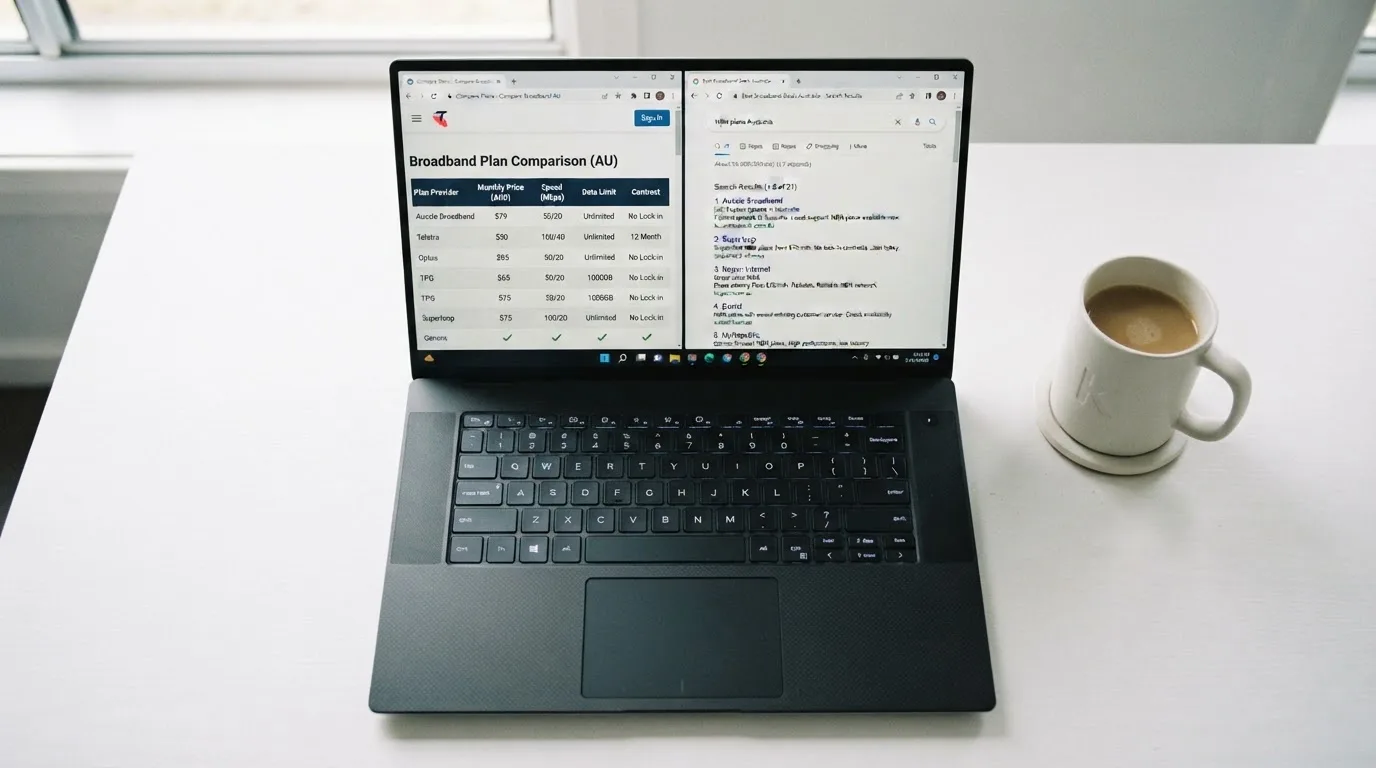
PayID is the instant-transfer rail built into the New Payments Platform and is the fastest legal route an Australian has to move money into or out of a domestic account. A PayID deposit at a licensed Australian wagering service is normally credited in under a minute. The catch is the qualifier: a licensed Australian wagering service. A site asking for a PayID deposit to fund a live blackjack table is, by the structure of the law, operating outside the Australian regime — the deposit arrives fast and the operator on the receiving end is the same offshore operator the ACMA has been issuing formal warnings against for years. The speed of the rail does not change the regulatory status of the destination.
A no-deposit bonus on a blackjack table is a different problem. The offer is described as “no deposit” because the player does not fund the account to receive it, but the wagering terms attached to it almost always treat blackjack wagers differently from slot wagers — typically at a reduced contribution rate, sometimes at zero. A player who reads the headline and skips the contribution table can clear a 35x bonus on slots in an afternoon and never come close on a live blackjack session of equivalent duration. The marketing word “free” attaches to the deposit, not the playthrough, and the playthrough is where the cost lives.
How the payout timeline actually reads
A withdrawal request triggers, in order: a pending window during which the operator can reverse the request, a KYC review on the first withdrawal at most operators, and then the rail. On a licensed Australian wagering service, the rail to a PayID or Osko address is usually same-day. On an offshore casino the same rail often runs several business days, and the failure modes — cancelled withdrawals, additional verification requests, withdrawal limits lower than advertised — are exactly the failure modes an Australian consumer has no domestic recourse against.
A payout-speed comparison in this market therefore measures two things at once: how fast the rail runs, and how often the operator’s own process stops it. The first is a property of PayID, Osko or the card network; the second is a property of the operator. A player who cares about payout speed on a live blackjack table needs to know which of the two is the bottleneck, and the answer for almost every offshore brand in this set is the second one.
Bonus offers and the table-game contribution problem
A blackjack bonus offer usually comes with a wagering requirement that counts table-game bets at a lower rate than slot bets. The headline figure — “100% up to A$500”, “A$200 bonus on first deposit”, “200% match” — is paired with a contribution table in the terms that almost always assigns slots a 100% contribution and blackjack somewhere between 5% and 20%. A player who funds the bonus and sits at a live blackjack table is therefore clearing the requirement at a fifth or a twentieth of the rate the headline implies.
The arithmetic behind this is straightforward. A 35x wagering requirement on a A$200 bonus is A$7,000 of qualifying bets. At 100% contribution that is a slot session of ordinary length; at 10% contribution, the same playthrough is A$70,000 of blackjack action — which, at the stake most live tables accept and at a 0.43% house edge, is a session that lasts hours and costs several hundred dollars in expected loss before it ever clears. The bonus is not free; it is a long, slow commitment of bankroll that the headline did not announce.
A second, less visible problem sits in the side bets. The Perfect Pairs / Crown Pairs side bet on a Crown Melbourne variant carries a much higher house edge than the main bet; on a live-dealer offshore table the side bets are typically the 21+3 and the Perfect Pairs-style wager, both of which sit in the 5-7% house-edge band. A bonus that is “eligible on side bets” is being cleared at a rate that costs the player several times what the same wagering on the main hand would cost. The terms usually permit this; the marketing never mentions it.
What the contribution table actually does
The contribution table is where the bonus’s real price lives, and a player who skips it is reading the offer at the price the casino wants it read at. Two consequences follow. The first is that a “big” blackjack bonus is often smaller than a “modest” slot bonus once the contribution rate is applied, because the slot playthrough clears in the time the blackjack playthrough is still running. The second is that the casino has structured the offer this way on purpose — table-game contribution rates are a deliberate product design choice, not an oversight — and the player who accepts the offer without reading the contribution table is accepting it at the design price, not the headline price.
A useful rule of thumb: divide the headline wagering multiple by the table-game contribution rate and compare that adjusted figure to the slot equivalent at the same operator. A “35x blackjack” offer at 10% contribution is the functional equivalent of a 350x slot offer, and that is the comparison that decides whether the bonus is worth taking at all.
What a live blackjack game actually is, and the providers behind it
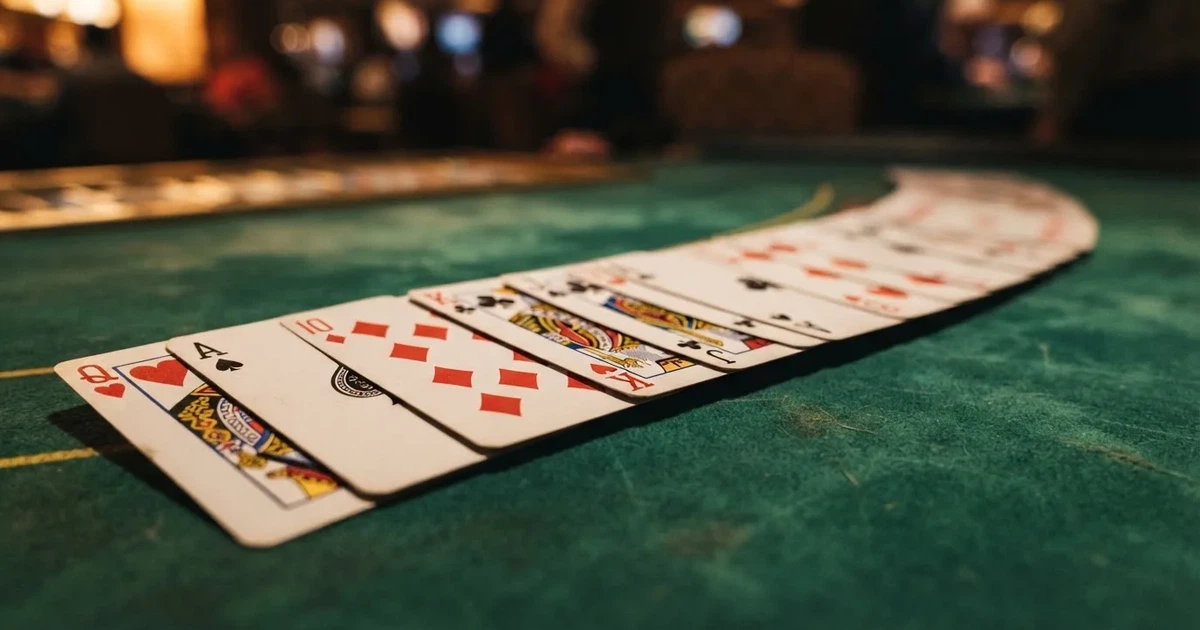
A live blackjack game is a real dealer running hands against multiple players over a video stream. Cards are dealt from a physical shoe, the dealer’s actions are visible on screen, and the betting interface is software overlaid on the video. The standard payout for a blackjack (an ace plus a ten-valued card as the first two cards) is 3:2 — the strongest hand — and the player can hit, stand, double down or split pairs according to the table’s published rules.
The dealer’s drawing rule is what the house edge actually hinges on. A dealer who stands on soft 17 (an ace counted as 11 with the hand totalling 17) gives the player roughly 0.28% house edge under the liberal Las Vegas Strip rule set — dealer stands on soft 17, double on any two cards, double after split, resplit aces, late surrender. A dealer who hits on soft 17 lifts that figure to roughly 0.43% under Atlantic City rules. The single-rule difference is worth more than most of the bonus offers attached to the table, and it is not the rule the marketing copy leads with.
Game variants worth knowing by name
Spanish 21 plays without 10s but gives the player liberal favourable rules to compensate; Double Exposure Blackjack deals both dealer cards face-up at the cost of a tweaked blackjack payout; Blackjack Switch lets the player swap cards between two hands; Super Fun 21 allows up to four splits. Each of these changes the math in a specific direction, and a player who sits at one without checking the rule sheet is paying for a variant they did not budget for. Live-dealer tables in the offshore set lean toward the standard rule set with side bets; the more exotic variants tend to live in the computer-generated library, where the studio can simulate them cheaply.
Crown Melbourne, the Australian land-based casino regulated by the Victorian Gambling and Casino Control Commission, runs a different lineup — Traditional Baccarat, Crown Baccarat and 2 to 1 Baccarat as approved table games, with side bets like Crown Pairs and Free Bet / Pot of Gold added by formal regulator approval. The VGCCC’s public log records the introduction of Free Bet with the Pot of Gold side bet on 25 March 2024 and the renaming of Perfect Pairs to Crown Pairs on 23 December 2024. Those changes are specific to the Melbourne floor, not the offshore stream, and a player who sees the same side bet advertised on an offshore live table should read it as the same name without the same regulator’s sign-off.
The eleven brands the ACMA has formally warned
The table below lists each brand the ACMA itself has named in a formal warning, with the date and the operator the regulator identified. None of these brands is lawful for an Australian customer. The table is not a ranking and not a recommendation; the row order follows research’s own order, which is the order the ACMA issued the warnings.
| Brand | ACMA action and date | Operator named by the ACMA | Subject support |
|---|---|---|---|
| RocketPlay | Formal warning, March 2026 (earlier May 2022 under a different operator) | Pulsup Ltd (March 2026); Dama N.V. (May 2022) | — |
| Level Up Casino | Formal warning, May 2022 | Dama N.V. | listings report the brand |
| Woo Casino | Formal warning, March 2025 | Dama N.V. | — |
| Spirit Casino | Formal warning, May 2025 | Dama N.V. | — |
| National Casino | Formal warning, July 2025 | Consolutetish S.R.L. | listings report the brand |
| Bizzo Casino | Formal warning, July 2025 (earlier 2022 under a different operator) | Consolutetish S.R.L. (July 2025); TechSolutions (2022) | — |
| Ignition Casino | Formal warning, July 2025 | Bamboo Media | — |
| Instant Casino | Formal warning, February 2025 | EOD Code SRL | — |
| Jackbit | Formal warning, April 2026 | Ryker B.V. | — |
| Casino Intense | Formal warning, April 2025 | Sterplay Holding Ltd | listings report the brand |
| Sky Crown | Formal warning, September 2022 | Hollycorn N.V. | — |
The pattern in the table matters more than any single row. Five of the eleven brands — Level Up, Woo, Spirit, Bizzo (in its 2022 incarnation) and RocketPlay (in its 2022 incarnation) — have cycled through Dama N.V. or its predecessors. Another pair — National Casino and Bizzo in 2025 — sits with Consolutetish S.R.L. The ACMA is warning a small number of operators repeatedly, under different brand names, and the brand is being treated by the regulator as the more disposable of the two names. A player who picks a brand to avoid the warning list has not avoided the operator behind it; the same holding company reappears under a different label, and the warning that landed on the old label is informative about what the new label will receive.
How the pattern reads
A reader looking at this list for the first time tends to read it as eleven separate problems. It is, more usefully, two problems: the offshore operator model itself, and the small number of holding companies that operate multiple brands inside it. The ACMA’s blocking record reflects the same structure — by June 2026 the regulator had asked Australian ISPs to block 1,751 illegal gambling and affiliate marketing websites since the first blocking request in November 2019. The brands in the table above are a subset of the same population, narrowed to those the regulator chose to address by formal warning rather than by site-blocking.
For a player choosing a live blackjack table, the practical reading is that no row in this table is safer than any other — each row carries the same legal status, the same absence of Australian consumer protection, and the same exposure to whatever the offshore operator decides to do with a withdrawal request. A comparison of the rows on speed, on bonus generosity, or on library size is a comparison of features that all sit on the same unlawful foundation.
How a live blackjack session actually works
A live blackjack session starts with the player choosing a seat at a table, placing a bet inside the betting window before the dealer’s “no more bets” call, and watching the dealer run the hand. The session is paced by the dealer — typically 50 to 70 hands per hour at a full table, faster at a single-deck or heads-up variant — and the betting window is open only between hands. The shoe is normally a six- or eight-deck shoe that the casino reshuffles at a cut card, and the deck penetration (how deep into the shoe the casino deals before reshuffling) is a property of the table rather than the player.
A standard blackjack payout pays 3:2 on a natural, 1:1 on a regular win, and the insurance bet pays 2:1 when the dealer has a blackjack. Insurance is a separate wager with a house edge of roughly 7%, which is why almost every published strategy chart advises against it. The doubling rule is the player-side rule that most affects the variance of the session — a player who doubles on 11 against a dealer 6 is taking the mathematically largest expected-value bet available on the table.
The shape of an average hand
A standard-rule live blackjack hand lasts roughly 15 seconds of decision time and 5-10 seconds of dealing. At a full table that pace yields about 60 hands per hour; at a half-empty table it can run higher, because the dealer has fewer players to wait on. A player who is also juggling a bonus playthrough is racing against the wagering requirement at roughly A$10-15 per hand on a minimum-bet seat — the same session that produces an entertaining evening at the table produces a slow grind against the playthrough, which is the second-order cost the bonus headline does not announce.
A side-bet-heavy table runs faster still, because side bets resolve instantly and the betting window is short. The cost is on the side bet, not the main hand — and the side bet is where most of the table’s marketing lives, because a 21+3 or Perfect Pairs wager carries a house edge in the 5-7% band that the main hand’s 0.43% makes look generous by comparison.
Legality, regulation and what “licensed” means in this market
Australia prohibits the provision of online casino games to customers in Australia. The Interactive Gambling Act 2001, strengthened by the Interactive Gambling Amendment Act 2017, makes it an offence to provide online casino games, online pokies or in-play betting to a person physically in Australia. Live blackjack is an online casino game for the purposes of the Act — the dealer being real does not move the activity out from under the prohibition. No state or territory licenses online casino games; what is licensed is wagering on races and sport placed before the event, lotteries and keno. The Northern Territory Racing and Wagering Commission (NTRWC) regulates 52 of Australia’s online bookmakers — Sportsbet, Bet365 and Ladbrokes among them — for tax reasons, and the commission operates without full-time staff and meets once a month in Darwin.
A licence displayed on an offshore casino site is a licence issued by another jurisdiction. A Curaçao licence, an Anjouan licence, a Kahnawake licence — none of these authorise the operator to take a bet from an Australian resident on an online casino game, because Australia has not authorised any operator to do so. The presence of a licence footer is a regulatory fact about the operator’s home jurisdiction, not about the operator’s standing under Australian law.
What enforcement looks like in practice
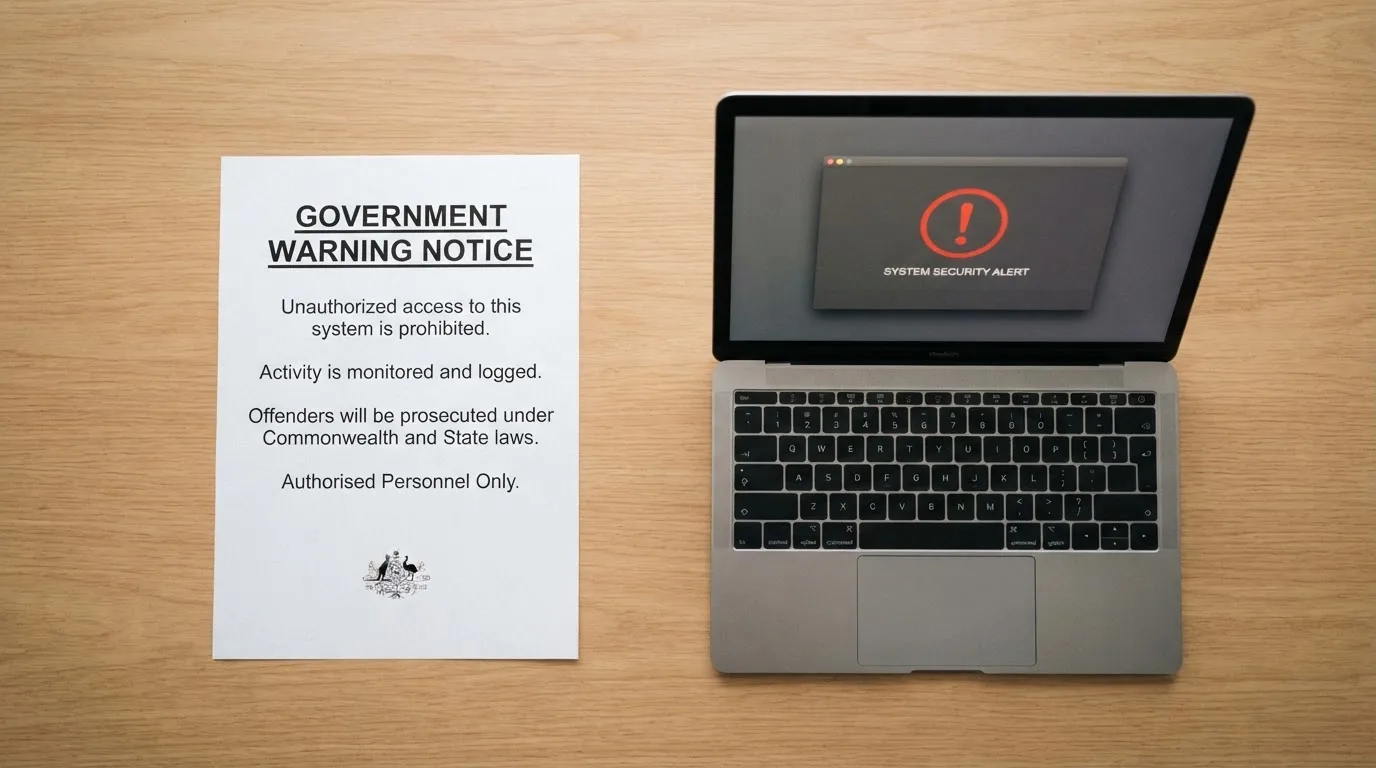
The ACMA investigates, issues formal warnings, and directs Australian internet service providers to block illegal sites. The regulator does not prosecute individual players — the IGA targets the provider — and the consequence for a player who deposits at an offshore site is the absence of the protections an Australian-licensed wagering service would provide. An offshore site gives no Australian consumer protection, no complaints body and no recourse if a withdrawal is refused, and it can be blocked while a balance is still on the account.
The pace of enforcement has been steady for years. The first blocking request went out in November 2019. By June 2026 the regulator had asked ISPs to block 1,751 illegal gambling and affiliate marketing websites, and more than 230 unlicensed gambling services had left the Australian market since enforcement was strengthened in 2017. The June 2026 round alone added twelve more: 7Signs, ChromaBet, Donbet, Duospin, Freshbet, Slots Gem, Jacks Club, Lucky Start, Pointsbetz, Spinrise, Vinyl Casino and Wildsino. The blocking list is updated in rounds of roughly one a month; the formal-warning register is updated on a similar cadence, and the two work together — a warning is often the step before a blocking request.
How the numbers translate into a rate
The blocking-rate arithmetic belongs to the writer. Between the first blocking request in November 2019 and the June 2026 total of 1,751 websites, the regulator has added sites at an average pace that depends on which months you measure. Across the full 80-month window, that is roughly 22 sites blocked per month on average. Across the most recent 12 months it sits closer to 24 per month, and across the most recent quarter it has been higher still — the June 2026 round alone added twelve. The band is therefore “roughly 20 to 25 sites per month over the long run, with the recent pace near the top of that band”. The condition is that the rate has held remarkably steady rather than accelerating sharply; a player reading the regulator’s output as a one-off crackdown is misreading it as a temporary posture when the data shows it as a baseline.
What a 2026 reform does and does not change
The Interactive Gambling Amendment (Gambling Reform) Bill 2026 passed Parliament on 19 August 2026. Its advertising and inducement measures commence 1 January 2027 — law with a start date, not yet in force on a page read in 2026. The reform tightens the rules on how licensed wagering services market themselves; it does not legalise online casino games, and it does not change the status of an offshore live blackjack table for an Australian resident. A player reading news of the reform as evidence that the offshore market is opening is reading past what the bill actually does.
What responsible play looks like at a continuous-shoe table
A live blackjack hand follows a continuous shoe and runs faster than almost any other table game. At a full table the dealer works through roughly 60 hands an hour; at a half-empty table the pace is higher. A session of two hours therefore touches 120-150 hands, and a player who has not set a bankroll limit before joining is making every one of those decisions without a stop rule.
The standard advice applies, but it applies harder here. Set a bankroll limit before joining the table — the amount you are prepared to lose in a session — and stop at it regardless of how the shoe is running. Set a session time limit, because a two-hour session at 60 hands an hour is more hands than most recreational players realise they have played. Avoid the insurance bet, which carries a house edge of roughly 7% and is the worst single wager on the table. Avoid the side bets, which carry a house edge in the 5-7% band and are where the table’s marketing lives.
Where Australian help is and is not available
BetStop, the National Self-Exclusion Register, has been live since August 2023 and binds Australian-licensed online and phone wagering services. An offshore casino is not connected to it; a self-exclusion registered through BetStop does not extend to the brands in the table above. The National Gambling Helpline is 1800 858 858, free, 24/7, with chat at Gambling Help Online. The helpline is the right first call for anyone whose play has moved from entertainment into a problem, regardless of whether the play sits at an Australian-licensed service or at an offshore one.
H2 Gambling Capital’s 2025 report estimates Australians lose about A$3.9 billion a year to illegal gambling sites, and the share of gambling going through legal channels fell from 74% in 2021 to 64%. The downward drift in the legal share is the structural fact behind the offshore live-dealer market, and it is also the reason the ACMA’s blocking list keeps growing.
How this market is shaped by payments
The 11 June 2024 ban on credit cards, credit-related products and digital currency as payment for licensed online wagering set the legal deposit routes for Australian-licensed services to debit card, bank transfer, PayID/Osko and BPAY. A licensed operator accepting a credit card or a crypto deposit from an Australian is operating outside the Australian rules, with penalties of up to A$247,500 per breach.
The same rule is what makes a payment method a kind of litmus test. A site asking an Australian for a credit card or a bitcoin deposit is, by the structure of the rule, not an Australian-licensed wagering service. A site asking for PayID, Osko or BPAY might be — though in the live blackjack market it usually is not, because licensed Australian services do not offer live dealer blackjack. The list of legal deposit routes is short and specific, and a live blackjack site that accepts them is the exception, not the rule.
What that means for the player
The payment method is not just a transaction detail. It is the one piece of information a player can check before depositing that tells them, with reasonable reliability, whether the operator sits inside or outside the Australian regime. A site that accepts credit cards from an Australian customer is outside. A site that accepts bitcoin or ethereum from an Australian customer is outside. A site that accepts only PayID, debit card, BPAY or a bank transfer from an Australian customer is more likely to be inside, though the live blackjack product itself remains prohibited even at the inside operators. The check takes a minute and the conclusion holds for the rest of the session.
What the house edge actually is, and why the marketing never leads with it
The house edge is the casino’s average profit per dollar wagered, expressed as a percentage, over a very large number of hands. Under the liberal Las Vegas Strip rule set — dealer stands on soft 17, double on any two cards, double after split, resplit aces, late surrender — and with optimal basic strategy, blackjack’s house edge is about 0.28%. Under Atlantic City rules, which are closer to what most live tables actually run, the figure is about 0.43%. Both figures are small in absolute terms and large over a session, because a session of 100 hands at A$10 per hand moves A$1,000 through the table and the house’s expected take is A$2.80 to A$4.30 across that A$1,000.
The comparable figure for baccarat is 1.06% on the Banker bet and 1.24% on the Player bet, with the Tie bet at 14.36%. For craps the Pass/Come bet sits at 1.41%, the Don’t Pass/Don’t Come at 1.36%, Any Craps at 11.11%, the Field bet at 5.56% and the Any 7 bet at 16.67% — Any 7 is one of the worst bets on any table in any casino in the world. The free odds bet taken behind a Pass or Don’t Pass in craps carries a 0% house edge because it pays at true odds. None of these figures is the figure the marketing copy leads with.
What the small percentage actually compounds to
A 0.43% house edge over a session of A$1,000 is A$4.30. Over a year of weekly sessions at the same size, with the same edge and no compounding, it is A$223.60. The compounding case is harder, because most players do not reinvest every session, but the linear case is what the regulator’s A$3.9 billion a year figure rests on — millions of players, millions of sessions, a small edge multiplying through volume. The reason the figure is small per hand and large per year is precisely that the volume is large. A player who treats the per-hand figure as the cost of an entertaining evening has misread the relationship between the edge and the spend.
The history of the game, briefly
Blackjack’s immediate predecessor was the English game vingt-un. A related game called veintiuno appears in Miguel de Cervantes’ Rinconete y Cortadillo, written around 1601-1602, and formal rules for the game were published in Britain in 1800. The name “blackjack” dates from around 1899, with prospectors during the Klondike Gold Rush of 1896-99 credited with giving it its modern name — the original blackjack bonus, a ten-to-one payout on a hand containing the ace of spades and a black jack, is the etymology, not the rule.
The game arrived at its current rule set over the twentieth century, with the liberal Las Vegas Strip rules — the 0.28% house edge version — emerging as the highest-value configuration a casino will offer and the Atlantic City rules emerging as the closer-to-standard version most players actually sit at. A live-dealer table is, mechanically, the same game as the land-based game that has run in Australian casinos for decades; the only change is that the dealer is in front of a camera instead of across the felt.
What this all comes to
A live blackjack table streamed to an Australian customer is a prohibited service under the Interactive Gambling Act 2001. The ACMA has issued formal warnings against eleven of the brands that have offered it, against a small group of operators that rebrand faster than the regulator can warn, and against a blocking list that grew from a first request in November 2019 to 1,751 sites by June 2026. The brands in the table above are not a competitive set to choose between; they are a regulatory record to read.
A player who sits at one of these tables anyway is making a choice with three foreseeable consequences. The first is that an Australian consumer protection framework does not apply, and a refused withdrawal is unrecoverable through any Australian channel. The second is that the bonus attached to the table is almost certainly weighted against the player through the table-game contribution rate, with the marketing headline running several multiples ahead of the effective playthrough. The third is that the operator can be blocked while a balance sits on the account, and the block ends the session without ending the exposure.
The legal Australian alternative is not online casino. It is licensed wagering on races and sport placed before the event, lotteries, keno, and the land-based casino floors in Melbourne, Sydney, Perth, Brisbane, Adelaide, Hobart and Darwin — each operating under a state or territory Casino Control Act and each connected to BetStop for self-exclusion. A player who wants a live dealer and is in Australia has a short list of lawful routes, and that list does not include the brands the ACMA has warned.
Frequently asked questions
Is it legal to play live blackjack for real money at an online casino in Australia?
No. The Interactive Gambling Act 2001 prohibits the provision of online casino games to customers in Australia, and a live-dealer table is an online casino game for the purposes of the Act. The offshore operator offering it is the party the regulator acts against, and Australian ISPs are directed to block these sites.
How does a live-dealer blackjack table differ from a computer-generated version?
Cards are dealt from a physical shoe by a real dealer, the dealer’s actions are visible on a video stream, and the betting interface is software overlaid on the video. The rules of the game are otherwise the same — the same paytable, the same doubling and splitting options, the same house edge under the same rule set.
What dealer rule most affects the house edge in blackjack?
Whether the dealer stands or hits on a soft 17. A dealer who stands on soft 17 gives the player a house edge of about 0.28% under the liberal Las Vegas Strip rules; a dealer who hits on soft 17 lifts that figure to about 0.43% under Atlantic City rules. The single-rule difference is larger than most bonus adjustments on the same table.
Does a blackjack bonus offer usually count table game bets the same as slot bets?
Almost never. Table-game bets are typically weighted at 5% to 20% of the slot contribution rate. A 35x bonus that clears in an afternoon on slots can take several long blackjack sessions to clear at the table-game rate, and the expected loss during the playthrough is several times what the same playthrough on slots would cost.
Is a live blackjack app a separate product from a site’s browser-based table?
It is the same product on a different screen. The app and the browser table connect to the same live studio, the same shoe and the same dealer. The interface changes; the rules, the house edge and the underlying operator do not.