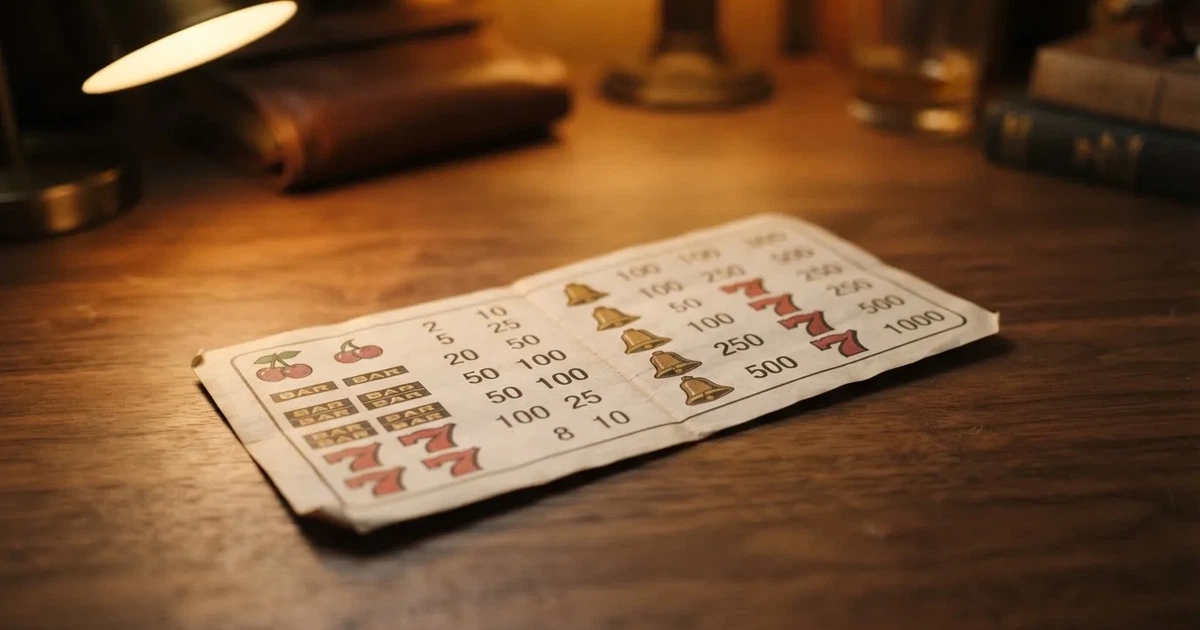
Three-reel slots in Australia — the format, the cost and the rule that frames both
 Available in US
If you have ever watched a row of cherries line up on a single payline and felt the older machine speak, you are looking for a three-reel slot. The shape is simple: three vertical reels, a handful of symbols per reel, one or three paylines, and a payout table printed at the top of the cabinet. It is the form Charles Fey’s Liberty Bell took in the late nineteenth century, the form every video slot on a pub floor still echoes, and the form a generation of Australian players knows well from pubs and clubs in NSW, Victoria and Queensland. What changes in 2026 is that this page is not really about a machine at all. It is about the cost of getting one online — and the rule that makes that question almost impossible to answer honestly without naming the offshore sites it has to point at, the ACMA actions those sites have collected, and the kind of bonus a three-reel online punter is being asked to clear. The reader who stays past this paragraph will know what a three-reel slot actually pays, what the house keeps, why the only place to play one for real money sits outside Australian law, and what that move costs.
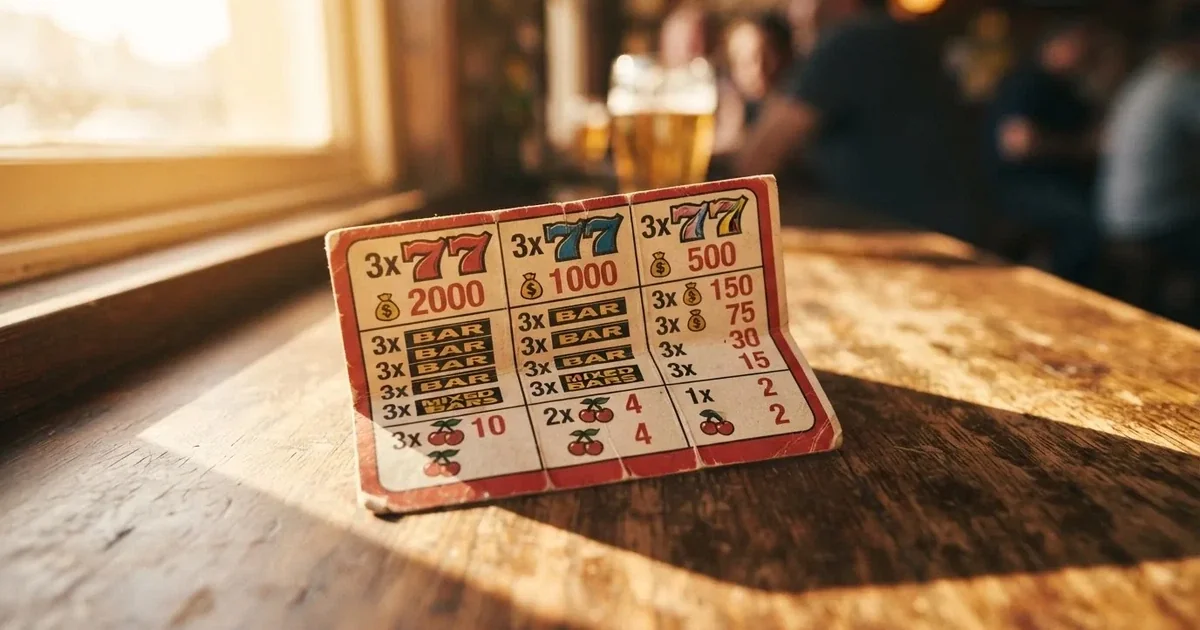
Current as of 23 September 2026 · cross-checked against the ACMA’s register of formal warnings and the Interactive Gambling Act 2001 as amended.
Table of Contents
- What a three-reel slot actually is — the format, the math and the symbols
- The legality — why the only place to play online is offshore
- Responsible gaming — what help looks like when a session stops being fun
- Bonuses and free spins — the marketing word and the offer underneath it
- Games, providers and the practical shape of an offshore three-reel lobby
- The ranking — what a fair comparison of these brands would actually weigh
- What this means if the reader is going to play anyway
- Frequently asked questions
What a three-reel slot actually is — the format, the math and the symbols
A three-reel slot is the oldest format of automatic gambling machine still in commercial use. Each reel carries a small set of symbols — typically eight to twelve — and the machine pays out when a defined combination lands on an active payline, usually the centre line. A classic mechanical machine with ten symbols per reel has a thousand possible three-symbol combinations, and the top prize is set so that the combination paying the jackpot appears on roughly one of those thousand spins. That is the math underneath the format: long odds on a single line, simple paytable, no side games, no second-screen bonus rounds. It is also why the format has not died: a single payline, three symbols and a flat payout table are easier to read at a glance than a modern five-reel video slot with fifty paylines, scatter pays and a free-spin ladder.
Charles Fey built the first version of this mechanism in San Francisco in the 1890s, with five symbols per reel (horseshoes, diamonds, spades, hearts and the Liberty Bell) and a top prize of ten nickels for three bells in a row. The form carried forward largely unchanged until Bally’s “Money Honey” arrived in 1963 with a bottomless hopper that paid out up to 500 coins without an attendant, and then to the first video slot in 1976 from Fortune Coin Co. in Kearny Mesa, California. The three-reel shape stayed because it worked and because it was legible. Modern five-reel video slots can use 50 or more symbols per reel and produce odds as high as 300 million to one against the top combination; a classic three-reel sits closer to the Fey machine’s 1,000. The older format trades spectacle for clarity, and that trade is the reason a player who values a clean paytable keeps coming back to it.

For the Australian punter, the shape is also familiar from the physical floor. NSW had 87,298 pokies-style machines outside casinos in June 2023, Victoria 26,380 in 2021–22, Queensland 21,122 in October 2023, South Australia 11,672 in September 2023 and the ACT 3,587 in November 2023 — the bulk of them three-reel or three-reel-equivalent video machines. That is why the format reads as native to the local gambling culture even though the player who wants one for real money online now has to leave the country to play.
The paytable — what those numbers on the cabinet actually mean
Every three-reel slot prints a paytable that lists each symbol and what it pays for one, two or three on the line. The top payout is the hardest to hit, often set at around 1-in-1,000 spins for the classic mechanical layout, and the smaller combinations hit more often. There is no skill layer; the outcome of every spin is decided before the reels stop, and the paytable exists so the player can see, before any money is committed, what the machine pays and how rare each payout is. That is the entire contract.

There is no Australian standard for what a three-reel slot must pay back. In the United States, state regulation sets a floor: Nevada 75 per cent, Mississippi 80 per cent and New Jersey 83 per cent. Australia has no equivalent minimum for the machines on a pub floor; each state’s gaming regulator sets its own return-to-player range, and a three-reel video poker machine in a NSW pub can sit at a different return from a three-reel video poker machine in a Melbourne casino. The reason it matters for an online comparison is that an offshore three-reel “slot” has no return-to-player number anyone outside the operator has verified. The page says what it says, and the player has no way to check.
Volatility — reel count and paytable structure
Volatility is the word for how a slot’s payouts are distributed: low volatility pays often in small amounts, high volatility pays rarely in larger ones. Reel count and paytable structure are two of the things that drive it. A three-reel slot with a flat paytable — small wins on the lower combinations and a single large jackpot on the top one — is by construction a high-volatility game: most spins lose, and the machine pays its money back through a small number of rare events. A five-reel video slot with frequent small wins and a bonus ladder is, on average, a lower-volatility game even when its top payout is much larger.
The thing this changes for a reader is the framing of a return figure. Two slots with the same advertised return-to-player can feel entirely different to play because the volatility is different — the player on the high-volatility machine will see longer losing runs and rarer big hits, the player on the low-volatility machine will see a steadier series of small wins. Reel count is not the only determinant (the symbol set, the paytable, and the size of the jackpot all matter), but it is one of the first. The honest summary is that a three-reel slot, on the classical layout, is usually a high-volatility machine dressed as a simple one.
The legality — why the only place to play online is offshore
Under the Interactive Gambling Act 2001, as tightened by the Interactive Gambling Amendment Act 2017, it is an offence to provide online casino games or online pokies to a person physically in Australia. No state or territory issues a licence for them. What is licensable is wagering on racing and sport placed before the event, lotteries and keno, and in practice the bulk of that is licensed by the Northern Territory Racing and Wagering Commission — a body with no full-time staff that meets once a month in Darwin and regulates 52 of Australia’s online bookmakers, including Sportsbet, Bet365 and Ladbrokes. The NTRWC is a wagering regulator, not a casino regulator, and the licence a site displays for online casino games is not an Australian one. A three-reel “online slot” played from inside Australia is, by definition, a service supplied from offshore in breach of the IGA.
The individual player is not prosecuted. The IGA targets the provider, and Australian enforcement runs through the ACMA, the Australian Communications and Media Authority. The ACMA investigates complaints, issues formal warnings, and can direct Australian internet service providers to block illegal sites. As of June 2026 the ACMA reported that a cumulative 1,751 illegal gambling and affiliate marketing websites had been blocked since the first blocking request in November 2019, and more than 230 unlicensed gambling services had left the Australian market since enforcement was strengthened in 2017. In a single round reported on 26 June 2026 the ACMA asked ISPs to block twelve more: 7Signs, ChromaBet, Donbet, Duospin, Freshbet, Slots Gem, Jacks Club, Lucky Start, Pointsbetz.com, Spinrise, Vinyl Casino and Wildsino. A site a punter is reading on a Tuesday can be on a blocking list the following week.
Three things follow from that, and they are not optional caveats. First, an offshore site gives no Australian consumer protection — there is no local complaints body and no recourse if a withdrawal is refused. Second, the site can be blocked mid-session, with a balance still on it. Third, H2 Gambling Capital’s 2025 report estimates Australians lose about A$3.9 billion a year to illegal gambling sites, and that the share of gambling going through legal channels fell from 74 per cent in 2021 to 64 per cent. The market for offshore three-reel slots exists; the money it takes out of the country is not small.
The 2026 reform sits in the same frame. The Interactive Gambling Amendment (Gambling Reform) Bill 2026 passed Parliament on 19 August 2026, and its advertising and inducement measures commence on 1 January 2027. It is law with a start date, not law in force, and an 2026 reader who clicks on an affiliate banner for an offshore casino is reading a market that is about to be tightened further.
Credit cards, crypto and the payment rule
Since 11 June 2024, credit cards, credit-related products and digital currency have been banned as payment for licensed online wagering in Australia, with penalties up to A$247,500 for operators. The legal deposit routes for a licensed wagering account are debit card, bank transfer, PayID/Osko and BPAY. An offshore site that asks an Australian for a credit card or a Bitcoin deposit is operating outside the Australian rules — and the payment step is often the first tell that the site is not what its marketing claims.
Tax — what a recreational player actually owes
Gambling winnings of a recreational player are not assessable income under section 6-5 of the ITAA 1997, and losses are not deductible, unless the person carries on what the ATO considers a business of gambling. That is the model answer, not a personalised one; a player with a serious return should check with the ATO. The tax point is mostly relevant because it confirms the recreational framing of a three-reel slot session: a one-off spin is not a taxable event, the way a poker tournament winnings check can be.
Responsible gaming — what help looks like when a session stops being fun
If a session on a three-reel slot starts to feel compulsory rather than chosen, free confidential help is available around the clock. Gambling Help Online runs the National Gambling Helpline on 1800 858 858, with web chat on the Gambling Help Online site, twenty-four hours a day, every day. The cost is zero and the call does not appear on a phone bill in a way that identifies the caller.
BetStop, the National Self-Exclusion Register, has been live since August 2023. A player who registers with BetStop agrees to be excluded from every Australian-licensed online and phone wagering service for a chosen period. The catch for the offshore three-reel slot reader is that BetStop binds Australian-licensed operators only — an offshore casino is not connected to it, so a self-exclusion on BetStop will not stop an offshore site from accepting a deposit. Self-exclusion is one of the tools that works in the legal market; it is partial in the offshore one.
The position this page takes on responsible gaming is the same as the regulator’s: the help exists, the help is free, and the offshore site is the worst place to need it. There is no Australian complaints body for an offshore casino dispute, and a blocked site with a balance on it is a real outcome for real players.
Bonuses and free spins — the marketing word and the offer underneath it
A three-reel online slot promotion, in the affiliate sites that list these offers, is almost always described as a “free” or “bonus” package. The marketing word and the offer underneath it are not the same thing. A bonus is a credit added to a real-money account that has to be turned over a stated multiple of times before any of it can be withdrawn; a free-spin bundle is a fixed number of spins on a named slot at a fixed stake, with the winnings paid as bonus credit and bound by the same kind of turnover rule. The headline number is the headline; the offer underneath is a playthrough requirement on a sum larger than the deposit that funded it.
The page describes this background because the reader comparing offers needs to know what an offer actually costs, and a reader who has already stepped outside the Australian legal market has even less of a safety net if the terms turn out to be heavier than advertised. The reader who takes any of this forward should read the wagering multiple, the maximum cashout cap, the eligible games list and the time limit before claiming — and should not claim at all if any of those four items is not visible before the deposit. None of that is advice about a particular site. It is the cost of reading a promotion honestly.
A worked example makes the cost visible. Assume an offer that adds A$100 in bonus credit with a 35-times wagering requirement on the bonus, played on a three-reel slot at A$1 per spin. The required turnover is 100 × 35 = A$3,500, the number of spins is 3,500 ÷ 1 = 3,500 spins, and the play time at five seconds per spin is 3,500 × 5 ÷ 3,600 ≈ 4.9 hours. That is a single five-hour sitting to clear the bonus, on one slot, at one stake. The expected loss on those 3,500 spins at a typical three-reel online return-to-player of around 95 per cent is 3,500 × 1 × (1 − 0.95) = A$175. The headline was A$100 in “free” credit. The cost is roughly A$175 of expected loss on the way to clearing it, before any win is taken into account.
That number is an average over many spins under the stated assumptions, not a guaranteed outcome for any one player. It is also the cleanest statement of what an offshore three-reel bonus tends to look like once the marketing word is set aside. The cost is not in the headline; the cost is in the playthrough.
Games, providers and the practical shape of an offshore three-reel lobby
The three-reel slots an offshore site lists in its “classic” or “3-reel” lobby are, almost without exception, the same handful of titles repeating across sites. The format is so narrow that the catalogue converges: a “Classic Fruit” or “777” or “Diamond” slot at one site is recognisably the same kind of game as the “Classic Fruit” or “777” or “Diamond” slot at the next. The labels on the lobby page come from a small number of studios that produce both three-reel and five-reel video slots, and a single studio’s three-reel “Hot” slot will appear under twenty different operator banners with a different artwork swap each time.
This similarity is why a detailed look at the studios provides little clarity: the games on offer are largely identical, and the real differences lie in the operator’s bonus terms. A player who has decided to proceed is choosing between bonus packages on a near-identical library, rather than between distinct game products. Focus, therefore, shifts from the studios themselves to the specific terms attached to each offer.
There is one further piece of background worth keeping in mind. The pokies-style slot machines on a NSW pub floor are governed by the relevant state gaming regulator and pay back at a regulator-set range that the player can, in principle, audit. An offshore three-reel slot is governed by whatever the operator posts on its terms page, and the return-to-player figure is the operator’s claim. The audit is a feature of the legal market and is not present in the offshore one.
The ranking — what a fair comparison of these brands would actually weigh
The eleven brands named below are not ranked against each other on quality, value or suitability. They are listed because the ACMA itself issued a formal warning over each of them for offering prohibited services to Australians, and the comparison this page can fairly make is one of ACMA action and operator: who the regulator caught, when, and over what brand. The page does not recommend any of these as a place to play. The page does not compare bonus terms, because the only sources for those terms were affiliate marketing pages and the page does not carry that material. The table below is the only comparison the page is willing to make, and it is the one the ACMA’s own register supports.
| Brand | ACMA action and date | Operator named by the ACMA |
|---|---|---|
| RocketPlay | Formal warning, March 2026; earlier Dama N.V., May 2022 | Pulsup Ltd |
| Level Up Casino | Formal warning, May 2022 | Dama N.V. |
| Woo Casino | Formal warning, March 2025 | Dama N.V. |
| Spirit Casino | Formal warning, May 2025 | Dama N.V. |
| National Casino | Formal warning, July 2025 | Consolutetish S.R.L. |
| Bizzo Casino | Formal warning, July 2025; earlier TechSolutions, 2022 | Consolutetish S.R.L. |
| Ignition Casino | Formal warning, July 2025 | Bamboo Media |
| Instant Casino | Formal warning, February 2025 | EOD Code SRL |
| Jackbit | Formal warning, April 2026 | Ryker B.V. |
| Casino Intense | Formal warning, April 2025 | Sterplay Holding Ltd |
| Sky Crown | Formal warning (Hollycorn N.V., September 2022 publication) | Hollycorn N.V. |
Two patterns are visible in the table and worth saying in prose rather than letting the table carry alone. First, several operators sit behind more than one brand on the list — Dama N.V. accounts for RocketPlay’s earlier warning, Level Up Casino, Woo Casino and Spirit Casino; Consolutetish S.R.L. accounts for National Casino and Bizzo Casino; TechSolutions was the earlier operator of record for Bizzo Casino. A punter moving from one brand to a sibling brand is not necessarily moving to a different company. Second, the dates cluster — six of the eleven warnings were issued in 2025 or 2026, which is consistent with the ACMA’s stepped-up enforcement cadence reported in June 2026 rather than a coincidental run of decisions. The reader looking at the table should see the shape of enforcement, not a quality league.
The blocking rate — how fast the ACMA clears sites, and what that pace costs a session
The arithmetic the page can fairly make from the ACMA’s own numbers is a rate, not a count. The cumulative number of sites blocked since the first blocking request in November 2019 is 1,751, as of June 2026. That is roughly 80 months of enforcement, which gives an average blocking rate of about 22 sites per month across the full period — though the rate has stepped up sharply in the more recent rounds, with twelve more sites added in the single June 2026 round alone. The page states this as a band, not as a single figure, because the long-run average and the most recent month are very different numbers and the right answer depends on what the reader is asking. Over the full enforcement window the regulator has averaged around 22 blocks a month; in the most recent reporting month the rate was twelve blocks in a single round. A session on any offshore site on the table above is being run at the higher end of that band, not the average.
The cost of that pace, for a punter, is that a session begun today can be sitting behind an ISP block next week, with a balance still on the account. There is no Australian complaints body for that outcome and no obligation on the offshore operator to release the funds on request. The blocking rate is the regulator’s output, and it is also the ceiling on how safe any single session can be.
RocketPlay
RocketPlay has been on the ACMA’s record twice. The earliest warning was to Dama N.V. in May 2022 as part of a six-brand batch that included Bambet, Dazard, Level Up, Wild Tornado and Cobra Casinos. The most recent is a March 2026 warning to Pulsup Ltd over Rocketplay.com.au. The same brand, the same service, two operators of record — a familiar shape on this list. The page does not list bonus terms because the only sources were affiliate marketing pages, and the page does not list a return-to-player because the operator’s own page is the only source for that figure and is not audited. For a reader who has already decided to play, the relevant facts are the two warnings and the currency of the second; for a reader who has not, the relevant fact is that the ACMA’s view is on the public record and has not changed.
Level Up Casino
Level Up Casino was named in the May 2022 Dama N.V. warning alongside five sibling brands. The page has no record of a second action against this brand specifically, but the same operator of record (Dama N.V.) has continued to attract ACMA attention on its other brands through 2025, which is the kind of background that tends to be more informative than a single warning date. The brand remains on the ACMA’s published register, serving as a reminder of the original formal warning.
Woo Casino
Woo Casino collected a Dama N.V. warning in March 2025. It is the third brand on the table to sit under Dama N.V., and the one that brought the operator back onto the ACMA’s record three years after the 2022 batch. The warning is recent enough that any site a reader is looking at should be checked against the ACMA’s register directly before any deposit.
Spirit Casino
Spirit Casino collected a Dama N.V. warning in May 2025, two months after Woo Casino and on the same operator of record. The two warnings two months apart are a small but readable signal about how Dama N.V.’s brand portfolio has been handled by the regulator across 2025. The page has no further action to report.
National Casino
National Casino was the subject of a July 2025 warning to Consolutetish S.R.L. The operator is the same as for Bizzo Casino, and the page has no record of a second action against National Casino specifically. The relevant fact for a reader is the warning itself; the broader context of operator-of-record is detailed in the table above.
Bizzo Casino
Bizzo Casino was the subject of a July 2025 warning to Consolutetish S.R.L. and of an earlier 2022 warning to TechSolutions (CY) Group Limited and TechSolutions Group N.V. Two operators of record, two warnings, four years apart — the brand has been on the ACMA’s record across two distinct corporate structures, which is the kind of pattern a reader can fairly weigh without the page recommending anything.
Ignition Casino
Ignition Casino collected a July 2025 warning to Bamboo Media. It is the only brand on the table under that operator of record. The page has no further action to report and no return-to-player figure it is willing to carry.
Instant Casino
Instant Casino was the subject of a February 2025 warning to EOD Code SRL, the earliest of the 2025 actions on this list. The relevant fact for a reader is the warning itself. A comparison against other brands on this list should focus on the operator-of-record rather than the brand itself.
Jackbit
Jackbit was named in an April 2026 warning to Ryker B.V., the same operator of record as CasinOK. The page has no separate return-to-player figure or volatility class for the three-reel games on Jackbit’s lobby, because the operator’s own page is the only source. The relevant fact is the ACMA action and the date.
Casino Intense
Casino Intense was the subject of an April 2025 warning to Sterplay Holding Ltd. The page has no further action to report against this brand specifically. The relevant fact for a reader is the warning itself, which is the primary reason the brand appears on the ACMA’s register.
Sky Crown
Sky Crown was named in the ACMA’s formal warning to Hollycorn N.V. published in September 2022, the same action that covered Blue Leo. It is the oldest warning on this table by publication date, and the relevant comparison runs through the operator-of-record column rather than the brand.
What this means if the reader is going to play anyway
The page has laid out the rule, the cost, the regulator’s action and the shape of the bonus. The reader who decides to play anyway is making a choice the page has named honestly and has not endorsed. Three things follow from that choice that are worth stating in plain English rather than letting the prose trail off.
First, the bonus is the most expensive part of the offer, not the headline. A worked example earlier in this page showed a five-hour sitting at A$175 of expected loss on a A$100 “free” credit package at a 35-times wagering multiple and a 95 per cent return-to-player. The reader who treats the bonus as the centre of the offer is treating the most expensive part as the headline, which is the inverse of how the marketing presents it.
Second, the payment step is the first tell. A site asking for a credit card or a crypto deposit is operating outside the Australian rules that govern licensed wagering. The credit-card ban took effect on 11 June 2024 and is enforced on licensed operators. An offshore site that has not adapted to that rule is one of the more visible signals that the rest of the site is also outside the local frame.
Third, the help exists and it is free. Gambling Help Online on 1800 858 858, web chat on the Gambling Help Online site, twenty-four hours a day. BetStop for self-exclusion from Australian-licensed wagering services. The page repeats these once, here, because the offshore three-reel slot reader is the one most likely to need them and the one least likely to see them on the site they are reading.
Frequently asked questions
What makes a three-reel slot different from a standard five-reel video slot?
A three-reel slot uses three vertical reels with a small symbol set — typically eight to twelve per reel — and one or three paylines, with a flat paytable printed at the top. A modern five-reel video slot can use 50 or more symbols per reel and 20 to 50 paylines, with scatter pays, free-spin ladders and bonus rounds. The three-reel format is the older, simpler shape — easier to read, harder to hit the top combination, and most of the action concentrated on a single line.
Can three-reel slot machines be found in licensed Australian pubs and clubs?
Yes. Most of Australia’s pub and club slot machines are three-reel or three-reel-equivalent video machines: NSW had 87,298 pokies-style machines outside casinos in June 2023, Victoria 26,380 in 2021–22, Queensland 21,122 in October 2023, South Australia 11,672 in September 2023 and the ACT 3,587 in November 2023. These are state-regulated and sit inside the legal Australian market. They are not the same product as an offshore three-reel online slot, even when the symbol set looks similar.
Do three-reel slots typically pay out differently than newer five-reel formats?
The headline return-to-player can be similar, but the distribution of payouts is different. A three-reel slot on the classical layout is by construction a higher-volatility machine — most spins lose, and the paytable pays back through a small number of rare combinations. A five-reel video slot tends to have more frequent small wins and a more elaborate bonus structure, even when the top payout is larger. Two slots with the same RTP can feel entirely different to play because the volatility underneath is different.
Is a three-reel slot online the same game as a three-reel machine on a casino floor?
No. The pub or casino machine is regulated by the relevant state gaming authority, sits on a licensed floor, and pays back at a regulator-set range. An offshore three-reel online slot is supplied from outside Australia, is governed by the operator’s own posted terms, and has no Australian consumer protection, no local complaints body and no recourse if a withdrawal is refused. The format is similar; the legal frame is not.
Are three-reel slots for real money available legally from an Australian-based site?
No. Under the Interactive Gambling Act 2001, as amended in 2017, it is an offence to provide online casino games or online pokies to a person in Australia, and no state or territory issues a licence for them. What is licensable is wagering on racing and sport before the event, lotteries and keno, in practice licensed by the Northern Territory. A three-reel online slot played from inside Australia is supplied from offshore in breach of the IGA, and the ACMA can ask ISPs to block the site.
Do reel count and paytable structure affect how a slot’s volatility is described?
Yes. A three-reel slot with a flat paytable and a single large top payout is usually described as high volatility, because most spins lose and the machine pays its money back through rare events. A five-reel video slot with frequent small wins and a bonus ladder tends to be described as medium or low volatility even when its top payout is much larger. Reel count is not the only driver — symbol set, paytable spread and jackpot size all matter — but it is one of the first things to look at when comparing the feel of two slots with the same RTP.
Written by the editors at Casino Venues Info.