
Big jackpot slots at online casinos in 2026: the shortlist the Australian market will not give you
The page a reader typed a search for and the page that honestly answers them turn out to be different documents. The first wants a ranked shortlist of online casinos with big jackpot slots — eleven names, jackpots in the millions, payout speeds, an honest verdict on each. The second is what can actually be written for someone sitting in Australia: an explanation of why that shortlist is illegal to provide, a record of who has been formally warned for offering it, a calculation of how fast the regulator has been pulling sites off the air, and a clear pointer toward the licensed alternatives that do exist. This page is the second document. The first is not available to write.
Data current as of 29 October 2026, verified against the Australian Communications and Media Authority’s published list of formal warnings and the IGA blocking register.
Table of Contents
- What the Australian market actually offers — and what it does not
- The ACMA’s record, set out plainly
- The shortlist, in the regulator’s own words
- How jackpot slots actually work
- What the law means for someone reading this from Australia
- Responsible gambling, and what offshore play does to the safety net
- What an Australian reader can actually play
- Where the comparison leaves a reader
- Frequently asked questions
What the Australian market actually offers — and what it does not
Australian law draws a hard line around interactive gambling services. Under the Interactive Gambling Act 2001, as tightened by the Interactive Gambling Amendment Act 2017, it is an offence to provide online casino games, online pokies or in-play betting to a person physically in Australia. No state or territory issues a licence for those products. What is licensable is pre-event wagering on races and sport, lotteries and keno — and that side of the industry is licensed in practice through the Northern Territory Racing and Wagering Commission.

That single fact reorganises the whole page. There is no honest way to rank online casinos for jackpot slots for an Australian reader, because the product itself is prohibited. The brands that surface in search results — the ones whose affiliate pages fill the top of the page — are, almost without exception, offshore operators the Australian regulator has already taken action against. The page below lists eleven of them because the ACMA has already named them in a formal warning, not because they belong on a recommended shortlist. Some have been warned twice. One has been the subject of three separate actions.
The angle this page takes is cost — what a jackpot-slots shortlist actually costs a person reading it from Australia, once the regulator’s record is read alongside it.
The ACMA’s record, set out plainly
The Australian Communications and Media Authority runs the only published enforcement record of any consequence in this market, and it is the one source a reader can actually check. The picture it draws is consistent: warnings issued, sites named, repeat offenders escalated to blocking orders, and a running total that now sits in the thousands.
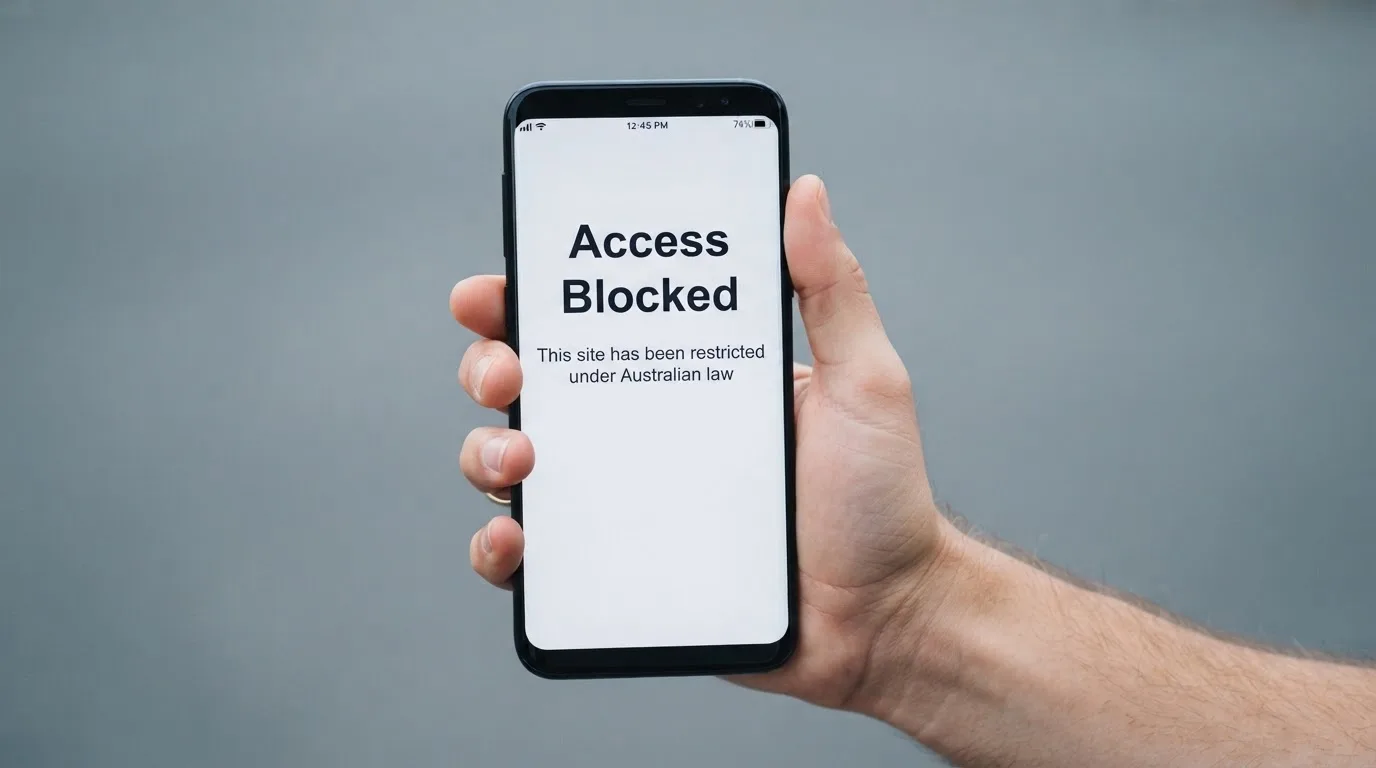
A total of 1,751 illegal gambling and affiliate marketing websites have been blocked since the first blocking request went out in November 2019. More than 230 unlicensed gambling services have left the Australian market since enforcement was strengthened in 2017. The latest single round, reported in June 2026, asked Australian internet service providers to block 12 more sites — 7Signs, ChromaBet, Donbet, Duospin, Freshbet, Slots Gem, Jacks Club, Lucky Start, Pointsbetz, Spinrise, Vinyl Casino and Wildsino — bringing the cumulative total forward.
The blocking rate, taken across the years the ACMA has been issuing these requests, lands in a band worth quoting. From November 2019 to June 2026 is roughly 79 months. Dividing 1,751 sites across that window gives a long-run average of about 22 blocked sites a month, with the obvious caveat that the pace has not been even — the early years were slower, the recent rounds have been heavier, and the 12-site batches in 2025 and 2026 are several times the historical monthly rate. Read as a band rather than a single figure, the regulator has been pulling somewhere between one illegal site off the Australian internet every working day, and roughly four times that, depending on the month.
The economic backdrop is not small. H2 Gambling Capital’s 2025 estimate puts annual losses to illegal offshore gambling at around A$3.9 billion, and shows the share of Australian gambling going through legal channels falling from 74% in 2021 to 64% in the same period. The trend line and the enforcement record point the same way: more money is moving offshore, and the regulator is responding by widening the net rather than narrowing it.
What a formal warning actually means
A formal warning is the ACMA’s published step before a blocking request. The regulator names the operator behind the site, the date of the warning, and the Interactive Gambling Act provision the warning is issued under. It is not a criminal charge, it is not a court order, and it does not by itself take a site offline. What it does is two things at once: it puts the operator on the public record, and it gives the ACMA the standing to ask ISPs to block the site in a subsequent round if the warning is not heeded.
The brands below are the eleven that have featured in a published ACMA formal warning for offering prohibited interactive gambling services to Australians. The page treats each one as a data point in a regulator’s record, not as a destination for a reader.
The shortlist, in the regulator’s own words
Eleven operators have been named in a published ACMA formal warning. Each appears below with the date and the operator entity the warning named, and with no further colour. What makes one operator stand out against another in this set is which regulator actions sit on its file, not which affiliate page ranks it first.
| Brand | ACMA action and date | Operator named by the ACMA | Subject support |
|---|---|---|---|
| RocketPlay | Formal warning, March 2026 (earlier warning to a related operator in May 2022) | Pulsup Ltd | — |
| Level Up Casino | Formal warning, May 2022 | Dama N.V. | listed by Bgaming |
| Woo Casino | Formal warning, March 2025 | Dama N.V. | — |
| Spirit Casino | Formal warning, May 2025 | Dama N.V. | — |
| National Casino | Formal warning, July 2025 | Consolutetish S.R.L. | listed in catalogue listings |
| Bizzo Casino | Formal warning, July 2025; earlier 2022 action | Consolutetish S.R.L. / TechSolutions | — |
| Ignition Casino | Formal warning, July 2025 | Bamboo Media | — |
| Instant Casino | Formal warning, February 2025 | EOD Code SRL | — |
| Jackbit | Formal warning, April 2026 | Ryker B.V. | — |
| Casino Intense | Formal warning, April 2025 | Sterplay Holding Ltd | listed in coverage of licensed AU venues |
| Sky Crown | Formal warning (date as published by ACMA) | Hollycorn N.V. | — |
The table is not a ranking. It is the same eleven brands, listed in the order research carries them, with the regulator’s own line on each. Subject support reflects what third-party listings and press coverage report about the brand’s catalogue — it is not a confirmation that the brand offers jackpot slots to Australians in any lawful sense.
The shape of the table tells its own story. Two operators — Dama N.V. and the TechSolutions / Consolutetish pair — account for five of the eleven warnings, and one of those five has been warned in three separate years. The repeated warnings sit against a small set of corporate shells rather than a broad cross-section of the offshore market.
RocketPlay
The most recent entry on the table. The ACMA issued a formal warning to Pulsup Ltd over RocketPlay in March 2026, the same month the brand was running an Australian-facing mirror site. An earlier warning had already been issued to Dama N.V. over Rocketplay in May 2022, alongside five other brands the regulator named in the same round. RocketPlay is one of three brands on this list with two warnings on its file.
The cost to a reader considering the brand is the cost of the proposition the regulator has now formally warned against twice: a site that cannot lawfully offer its product to an Australian account, with a payments stack built for that prohibited market.
Level Up Casino
The Level Up Casino warning dates to May 2022 and was issued to Dama N.V., the same operator named for five other brands in the same round. The brand is listed by Bgaming as a distributor partner, which is what its subject support reflects: a third-party listing, not a finding that the brand lawfully offers jackpot slots in Australia. There is no record of a subsequent warning, but neither is there any record of the brand having left the Australian market — the ACMA’s blocking record does not show a Level Up domain in the published blocking rounds.
Woo Casino
The ACMA issued a formal warning to Dama N.V. over Woo Casino in March 2025. Woo is one of two Dama N.V. brands the regulator warned in 2025; Spirit Casino, the second, was warned two months later in May 2025. The pair of warnings against the same operator in the same year reads as escalation: a first warning in 2022 for a group of brands, then two more in 2025 for two further Dama N.V. sites.
Spirit Casino
A May 2025 warning to Dama N.V., following the Woo Casino warning two months earlier. The two warnings sit close enough together to be read as one enforcement action against the operator’s Australian-facing sites, with the regulator naming them in turn as each one surfaced. There is no published record of a blocking order against Spirit Casino as of mid-2026.
National Casino
A July 2025 warning to Consolutetish S.R.L. The brand has a presence in industry catalogue listings, which is what its subject support reflects. The same corporate shell — Consolutetish S.R.L. — was also named in a July 2025 warning over Bizzo Casino, and the two warnings were published in the same ACMA round.
Bizzo Casino
Two warnings on file. The earlier one, issued in 2022, named TechSolutions (CY) Group Limited and TechSolutions Group N.V.; the July 2025 warning named Consolutetish S.R.L. The two corporate shells trace to overlapping beneficial ownership, and the regulator’s record treats the brand as a single ongoing case that has now been escalated across two corporate vehicles. Bizzo is the brand on the list with the longest enforcement history — three years and counting between the first and most recent action.
Ignition Casino
A July 2025 warning to Bamboo Media. Bamboo Media does not appear elsewhere on the regulator’s named-operator list, which is what makes this warning worth noting separately: a single warning to a single corporate vehicle, in a round that also named Consolutetish S.R.L. over two further brands. Ignition Casino is not the same brand as Ignition Casino the poker site popular with Australian players in the early 2010s — the operator of that site was a different entity, and the ACMA warning is over the more recent brand.
Instant Casino
A February 2025 warning to EOD Code SRL. The warning predates the 2025 escalation cluster by several months, and reads as the ACMA’s earliest move against what became a longer campaign that ran through the rest of the year. As with the other 2025 warnings, no blocking order has yet been published against the Instant Casino domain in the rounds available.
Jackbit
An April 2026 warning to Ryker B.V. The same operator was named for a second brand, CasinOK, in the same round — a one-operator, two-brand action consistent with the regulator’s pattern of treating shared corporate shells as a single enforcement target. The April 2026 round sits three months after the RocketPlay warning and is the most recent ACMA action against any of the eleven brands on this list.
Casino Intense
An April 2025 warning to Sterplay Holding Ltd. The brand has third-party listings against it in coverage of licensed Australian venues, which is what the subject support column reflects: a brand that surfaces in mainstream coverage of Australian gambling in passing, alongside the formal warning the regulator has issued against it. The two records are not contradictory — a brand can be covered as part of a story about the Australian market and still be operating illegally in that market.
Sky Crown
A formal warning to Hollycorn N.V., covering both Sky Crown and Blue Leo casino services. The ACMA’s published record is the source on date; no published blocking order has followed. Hollycorn N.V. is the only operator on the list other than Dama N.V. and the TechSolutions / Consolutetish pair to appear with multiple brands in the regulator’s record.
How jackpot slots actually work
Progressive jackpot slots have been around long enough that the mechanics are stable and the marketing language around them has drifted well past what the mechanism actually does. A progressive prize is a pool that grows with each losing wager, resets to a predetermined minimum after it is won, and starts accumulating again. The pool is funded out of a portion of the casino’s margin on the machine. There is no “guaranteed” component in the marketing sense — there is only a clock that resets when someone hits it.
Progressive slots come in two structural shapes. Local progressives link machines inside one venue; the prize grows at the speed of one venue’s handle. Wide-area progressives link machines across many venues, sometimes across multiple countries, and that is the model behind the largest prizes on the public record. The first Megabucks progressive, made by International Game Technology, paid out $4,988,842.17 on 1 February 1987 — the first time a single slot machine paid out a prize in the millions. Modern wide-area progressives pay out at multiples of that figure.
The “must-hit-by” progressive is a separate mechanism with a different sales pitch. A random number generator picks the payout amount from a preset range — say, A$1,000 to A$3,000 — immediately after the previous jackpot is won. The player does not need to land a specific symbol combination; the jackpot pays out on its own timer. The ceiling is low and the frequency is high, which is the trade the must-hit format offers against the wide-area progressive’s long quiet stretches and large payouts.
A short line on positive expectation, because the topic comes up in the marketing for any progressive that has run a long time. In some progressive games — certain video poker variants, Caribbean Stud Poker — the prize can grow large enough to push the theoretical return to player above 100%, which turns the bet into a positive-expectation wager. The break-even point is difficult to calculate for slot machines because reel layouts are not published, so the figure a player sees quoted in an affiliate review is almost always a back-of-envelope estimate rather than a derived number. For the vast majority of progressive slots, including most of the well-known jackpot titles, the long-run return sits well below 100%.
What the largest prizes on the public record actually look like
The record online slot jackpot stands at €19,430,723.60, won on 27 April 2021 by a player in Belgium on Napoleon Sports & Casino’s instance of Microgaming’s “Absolootly Mad: Mega Moolah”. Games Global, the business that inherited Microgaming’s progressive catalogue, has since reported further Mega Moolah wins of £11.5 million and £13.5 million. The figures are real and verifiable; the marketing around them — “you could be next”, “any spin can win” — is not.
Between the headline-grabbing payouts, the long quiet stretches are the structural reality. Progressive slots return less between big wins than a non-progressive slot with a comparable base game, because a slice of every wager is being routed to the prize pool rather than to the regular paytable. The marketing word for this is “potential”; the structural word is “variance”.
What the law means for someone reading this from Australia
The legal frame is straightforward to state and difficult to internalise, because it asks a reader to give up the shortlist they came for. The Interactive Gambling Act 2001 prohibits offering online casino games, online pokies and in-play betting to a person in Australia. The 2017 amendments gave the ACMA the standing to issue formal warnings, request site blocking, and pursue civil penalties. The individual player is not the target of enforcement — the IGA targets the provider — but an offshore casino gives no Australian consumer protection, no local complaints body, and no practical recourse if a withdrawal is refused. The site can be blocked while a balance is still on it.
What is licensed in Australia is wagering on races and sport placed before the event, lotteries and keno. The NTRWC regulates 52 of Australia’s online bookmakers, including Sportsbet, Bet365 and Ladbrokes, all licensed in the Territory for tax reasons. The NTRWC has no full-time staff and meets once a month in Darwin, which is the structural detail that sits behind any conversation about how Australian wagering is actually overseen.
Payment rules add a second layer. Since 11 June 2024, credit cards, credit-related products and digital currency have been banned as payment for licensed online wagering, with penalties up to A$247,500 for operators that breach the rule. Legal deposit routes for licensed wagering are debit card, bank transfer, PayID/Osko and BPAY. A site asking an Australian for a credit card or a crypto deposit is operating outside the Australian rules, regardless of what licence it displays elsewhere.
The 2026 reform, in one paragraph
The Interactive Gambling Amendment (Gambling Reform) Bill 2026 passed Parliament on 19 August 2026. Its advertising and inducement measures commence on 1 January 2027 — law with a start date, not yet in force on a page written in 2026. The detail matters for any planning done after the start date, and does not yet change what an Australian reader can and cannot do today.
What a “licence” displayed on an offshore site actually covers
The licences an offshore casino displays — Curaçao, Anjouan, the various smaller jurisdictions — authorise the operator to run a gaming business from that jurisdiction. They do not authorise the operator to take wagers from a person in Australia. The licence a reader sees on a casino’s footer is not, and has never been, a green light for an Australian account. Some operators add a country-exclusion list to their terms, which excludes Australia; others do not, and rely on geolocation to filter the prohibited jurisdictions out. Either way, the prohibition sits in the IGA, not in the licence.
Responsible gambling, and what offshore play does to the safety net
The Australian safety net for online wagering is built around services that are licensed in Australia. Two of them are the ones a reader of this page needs to know about, because both are bypassed the moment a person opens an account with one of the eleven brands above.
BetStop, the National Self-Exclusion Register, has been live since August 2023. A person registers with BetStop and every Australian-licensed online and phone wagering service is required to close the registered account and refuse to accept new ones for the duration of the exclusion period. An offshore casino is not connected to BetStop; the exclusion does not propagate to it. A self-exclusion that only covers the legal market is a self-exclusion that the largest and most heavily-advertised offshore sites do not have to honour.
The National Gambling Helpline is 1800 858 858, free, available 24/7, with a chat service at Gambling Help Online. The helpline is structured to help regardless of whether the person calling is gambling with a licensed or an offshore operator. The practical difference is that the licensed side has a mechanism that can act on the self-exclusion immediately, and the offshore side does not.
A practical aside that earns its place: offshore play also tends to remove the limit-setting tools that licensed wagering operators are required to offer. Deposit ceilings, session reminders, cooling-off periods, and the activity statements that let a person see their own betting history at a glance are largely a licensed-market feature. The absence of those tools is part of what an offshore site is selling when it sells itself as “less hassle”.
The tax note, briefly
Gambling winnings of a recreational player are not assessable income under section 6-5 of the ITAA 1997, and losses are not deductible. The treatment changes if the person carries on a business of gambling. The ATO’s website is the source for any individual position; this page is not.
What an Australian reader can actually play
The licensed alternatives for someone who wants a jackpot-style game are physical, not online. Crown Melbourne offers three baccarat variants — Traditional, Crown and 2 to 1 — regulated by the VGCCC, with rules approved under the Victorian Casino Control Act 1991. Crown’s blackjack catalogue runs alongside, with the Perfect Pairs side bet renamed to Crown Pairs on 23 December 2024 and a Free Bet option with a Pot of Gold side bet introduced on 25 March 2024. Both are real, approved games; both are played in person.
NSW’s framework is similar in shape. Under section 66 of the Casino Control Act 1992, a casino operator must not permit a game to be played unless the game and its rules are approved by the regulator, and the approved rules must be made available to patrons on request. The structure exists in every state and territory that hosts a casino. The licensed venues themselves are the legal route to a jackpot-style game in Australia; the offshore online market is the route the IGA closes.
What this page is not is a review of those venues. The brief is the online shortlist the reader came for, and the answer to that brief is the legal frame, not a side-by-side of Crown Melbourne against The Star Sydney against Treasury Brisbane. The Star Sydney and Treasury Brisbane and the smaller state casinos are not the subject of this page and have not been reviewed in it.
Where the comparison leaves a reader
The angle this page takes is cost, and the cost falls in three places.
First, the financial cost. Around A$3.9 billion a year, by H2 Gambling Capital’s 2025 estimate, moves from Australian accounts to offshore operators that the ACMA has already documented as prohibited. The slice of total Australian gambling going through legal channels has dropped from 74% in 2021 to 64% in 2025. That trend is what the regulator’s blocking record is responding to.
Second, the cost of being unprotected. An offshore site gives no Australian consumer protection, no local complaints body, and no practical recourse if a withdrawal is refused. The same offshore site is not connected to BetStop, which means the self-exclusion register’s coverage stops at the licensed market’s edge. The tools that make licensed wagering safer — deposit ceilings, session reminders, the activity statement — are largely absent from the offshore product.
Third, the cost of being blocked. Eleven operators on this page have already received a formal warning; some have received more than one. The sites move, the warnings accumulate, and a balance left on a blocked account is rarely recovered. The cost is not theoretical; it is the reason the ACMA’s record exists.
The trade-off the offshore shortlist offers is variety and convenience. The trade-off it asks the reader to absorb is the legal prohibition, the regulator’s attention, and the absence of any of the safety infrastructure that the Australian licensed market provides. Read in the regulator’s own words, the trade does not look favourable.
Frequently asked questions
Which single online slot holds the record for the largest jackpot win?
The largest verified online slot jackpot stands at €19,430,723.60, won on 27 April 2021 on Microgaming’s “Absolootly Mad: Mega Moolah” at Napoleon Sports & Casino in Belgium. Games Global, the business that inherited Microgaming’s progressive catalogue, has since reported further Mega Moolah wins of £11.5 million and £13.5 million.
Can a jackpot slot be funded with a cryptocurrency deposit?
Offshore operators commonly accept cryptocurrency deposits, including for progressive jackpot slots. The relevant Australian rule is not about what an offshore site accepts but about what an Australian-licensed wagering service can offer: credit cards, credit-related products and digital currency have been banned as payment for licensed Australian online wagering since 11 June 2024, with penalties of up to A$247,500 for operators.
Is it legal for an online casino to offer jackpot slots to Australians?
No. Under the Interactive Gambling Act 2001, as strengthened by the Interactive Gambling Amendment Act 2017, it is an offence to provide online casino games, online pokies or in-play betting to a person in Australia. No state or territory issues a licence for those products. A foreign licence displayed on an offshore site does not authorise the operator to take wagers from an Australian account.
Why do jackpot slots typically pay out less often between big wins?
Progressive slots route a portion of every wager to the prize pool rather than to the regular paytable. The base game therefore returns less than a comparable non-progressive slot between the large payouts. The marketing language for this is “potential”; the structural word is “variance”. The trade is the long quiet stretch against the headline-grabbing payout.
What happened to the record jackpot won on Mega Moolah in 2021?
The €19.4 million prize was paid out by Napoleon Sports & Casino in Belgium in April 2021. Games Global, the successor to Microgaming, has continued to distribute the Mega Moolah progressive series and has since reported two further wins of £11.5 million and £13.5 million on the same platform.
Is there a way to play jackpot-style slots for real money through a licensed Australian venue?
Yes, in person at Australia’s licensed casinos. Crown Melbourne runs three baccarat variants and a blackjack catalogue approved by the VGCCC, with new blackjack variants and side bets approved in 2024. NSW venues operate under an equivalent framework under section 66 of the Casino Control Act 1992. The product is offered in person, by the licensed operator, under rules the state regulator has approved — and it is the only route to a jackpot-style game that the Interactive Gambling Act 2001 does not prohibit.