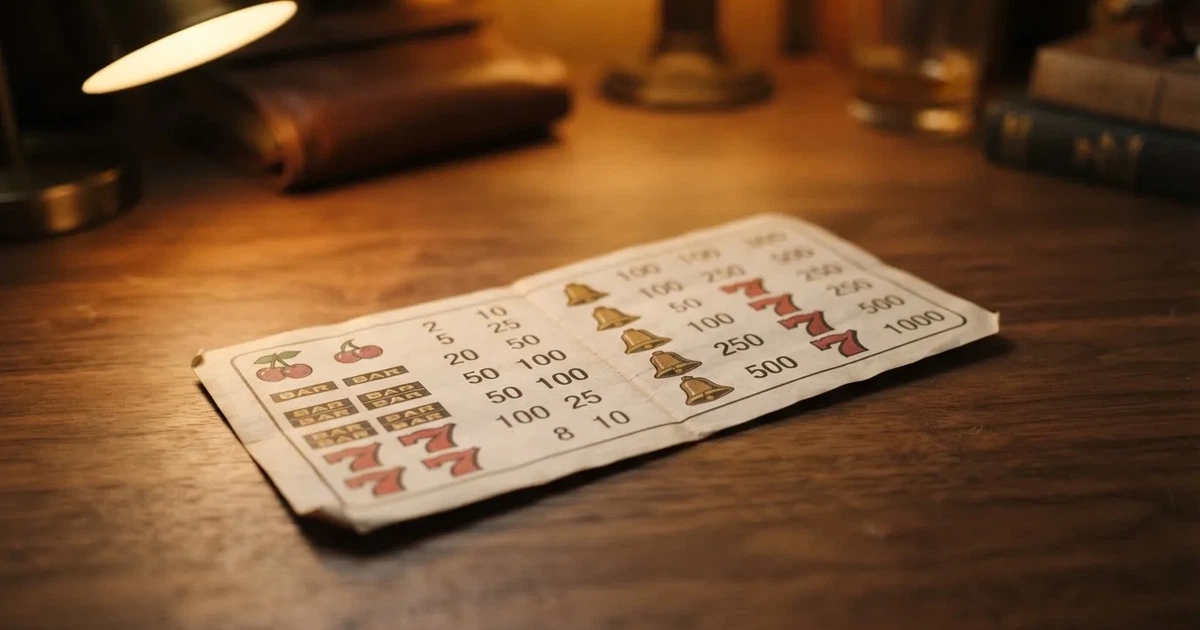
What 7-reel online slots actually mean in Australia this year
 Available in US
A seven-reel slot is one of the older oddities of the slot format — fewer machines ever used it than the five-reel video slot that became standard after the first video cabinets in 1976, and the only places a punter in Australia will ever come across one in a legal setting are the larger casino floors. Online, the picture is shorter and colder. No seven-reel slot, no five-reel slot and no three-reel fruit machine is licensed for real-money play over the internet anywhere in Australia, because the Interactive Gambling Act 2001 prohibits online casino games as a class and no state or territory issues a licence for them. Every offshore site offering 7-reel slots to an Australian IP address is offering a prohibited service, and a long list of them have already been warned, blocked or both by the Australian Communications and Media Authority.
That is the page’s subject in one paragraph. The shelves that follow work through it: the law, what the regulator has been doing about it, what a bonus offer on these offshore sites actually does to a balance, what the seven-reel format itself does and does not change, a comparison of the brands the ACMA has acted against, and a wider overview of the Australian market.
Current as of 23 September 2026 and verified against the ACMA’s formal warning register and the public list of blocked sites.
Table of Contents
- The Australian legal position on online slots of any reel count
- Responsible play and the limits of the Australian safety net
- Bonuses and free spins on offshore 7-reel slots
- What a seven-reel slot actually does at the machine
- What a fair comparison of the ACMA-warned brands would weigh
- The wider Australian gambling landscape
- The arithmetic of the ACMA’s blocking record
- Brand-level write-ups of the ACMA-warned operators
- Closing the shelves
- Frequently asked questions
The Australian legal position on online slots of any reel count
Australia’s gambling law treats online casino games as a single prohibited category. The Interactive Gambling Act 2001, tightened by the Interactive Gambling Amendment Act 2017, makes it an offence for an operator — anywhere in the world — to provide an online casino game, an online pokie or in-play betting to a person physically in Australia. The carve-outs are narrow: wagering on a racing or sporting event placed before the event starts, lotteries and keno. A seven-reel slot machine, the moment it sits behind a website log-in and a real-money balance, is a prohibited interactive gambling service under that statute, full stop. The number of reels does not move the line; if anything, the older and more mechanical-seeming format makes the prohibition more obvious because the Australian alternative, in pubs and clubs, is the physical machine the page returns to below.

What this means in practice is that no Australian-licensed operator offers 7-reel slots for real money online. The Northern Territory Racing and Wagering Commission licences 52 of Australia’s online bookmakers — Sportsbet, Bet365 and Ladbrokes among them — but only for wagering, not for casino games. The commission has no full-time staff and meets once a month in Darwin, a small regulator overseeing a narrow licensed product set. Every seven-reel slot a person sees advertised to an Australian player sits on an offshore site, and the offshore site is operating outside Australian law whatever licence it displays on its footer, because the IGA’s prohibition is not a question of what licence an offshore regulator has issued; it is a question of who is being served.
The prohibition targets the provider, not the individual player. An Australian who opens an account on an offshore site is not prosecuted. The cost lands elsewhere. There is no Australian consumer protection, no complaints body to write to, and no recourse if a withdrawal is refused or a bonus is voided mid-clear. The site can be blocked by an Australian internet service provider on the ACMA’s instruction, and a blocked site takes a player’s balance with it when it goes. The first blocking request the ACMA issued was in November 2019; by the round reported on 26 June 2026, 1,751 illegal gambling and affiliate marketing websites had been blocked in total, and more than 230 unlicensed services had left the Australian market since 2017.
A secondary reform took effect during the year. From 11 June 2024, credit cards, credit-related products and digital currency are banned as a means of payment for licensed online wagering in Australia, with penalties for operators up to A$247,500. The legal deposit routes for a licensed Australian wagering account are debit card, bank transfer, PayID/Osko and BPAY. An offshore casino asking an Australian customer to deposit with a credit card or in crypto is doing so because it is not on the rails the Australian ruleset runs on; the deposit method is itself a tell.
Where the new law stands as of 2026
The Interactive Gambling Amendment (Gambling Reform) Bill 2026 passed Parliament on 19 August 2026. Its advertising and inducement measures commence on 1 January 2027. On a page read in 2026 the bill is law with a start date: in force on the calendar, not yet binding on operator behaviour. The earlier IGA framework above is what governs the offshore casino a reader might encounter today; the 2026 bill governs what licensed operators can say about their products once it commences.

What the offshore licence footer actually means
A footer carrying “ Curaçao ” or “Antillephone” is a description of where the operator is registered, not a statement that the operator is permitted to take Australian customers. The IGA’s prohibition is territorially agnostic — it binds who is being served, not who is serving — so an offshore licence gives the operator the right to run a casino from that jurisdiction and nothing more. The footer is, in practice, the explanation a reader has to read for what it does not say: it says nothing about Australia, because it cannot.
Responsible play and the limits of the Australian safety net
Two tools sit in the Australian safety net, and both of them stop at the border of the licensed wagering market. The first is BetStop, the National Self-Exclusion Register, live since August 2023. A person who registers with BetStop is excluded from every Australian-licensed online and phone wagering service, and the exclusion can run for a chosen period or be set as permanent. It does not bind an offshore casino. Registering with BetStop and then opening an account on an offshore seven-reel slot site leaves the exclusion in place on the Australian-licensed side and doing nothing on the offshore side, which is the side that holds the seven-reel slots. The register covers a real harm — problem wagering on Australian sports and racing products — and the same person’s offshore play is governed only by whatever self-exclusion tool the offshore site happens to offer.
The second is the National Gambling Helpline on 1800 858 858, free, 24/7, with chat at Gambling Help Online. The helpline is the one piece of the Australian safety net that works regardless of which side of the border the play happens on, because it is advice and counselling rather than a binding instruction to an operator. If a reader is thinking about 7-reel online slot play and the thought is starting to feel compulsive or stressful, this is the number to call before the next deposit.
The wider welfare picture is what makes the prohibition above matter. H2 Gambling Capital’s 2025 report estimates Australians lose about A$3.9 billion a year to illegal gambling sites, and the share of gambling going through legal channels fell from 74 per cent in 2021 to 64 per cent. The illegal market is, by that measure, taking close to a quarter of total Australian gambling spend, and it is doing so with no consumer protection and no recourse. The safety net above is built for the legal three-quarters and reaches, by phone, into the illegal quarter.
Bonuses and free spins on offshore 7-reel slots
The bonus shelf on an offshore seven-reel slot site looks, on the surface, like the bonus shelf on any other offshore casino. A deposit match. A bundle of free spins. Sometimes a no-deposit free-spin offer on sign-up, more often a first-deposit match with a stated percentage and a maximum. The mechanics of the offer are familiar to anyone who has read an online casino bonus page before. What is less familiar — and what the rest of this section is about — is what those offers actually do to a real balance.
A bonus is a credit with conditions. The conditions matter more than the headline number, because the headline is the figure the marketing department chose to print, and the conditions are the figure the operator chose to bind it with. Three numbers dominate: the wagering requirement, the maximum cashout and the game-weighting table.
The wagering requirement is the multiplier the bonus (and sometimes the deposit) must be turned over before any of it can be withdrawn. A A$100 bonus with a 40x wagering requirement is A$4,000 of turnover on qualifying games before the bonus balance converts to real money. On a 7-reel slot with a stated return-to-player of, say, 96 per cent, the expected loss during that turnover is about A$160 at population scale — the bonus pays A$100 and the wagering costs about A$160 over the volume required to clear it. The arithmetic is not arithmetic against any one player; it is the average across many players on the same offer.
The maximum cashout is the ceiling on what the bonus can convert into. A “max win A$500” clause caps the upside regardless of how the wagering plays out, and a slot’s top combination is precisely the moment that cap binds. Seven-reel slots have, by virtue of the format, a larger combinatorial space than a five-reel machine — more reels, more symbols per reel in many designs, and odds against the top combination in the range of hundreds of millions to one on some configurations — but the cap on the bonus applies to the actual win, however large. A bonus is, on the more punitive end of the offshore market, a marketing surface over a hard ceiling.
Game weighting is the table that says which games count 100 per cent towards wagering, which count 50 per cent, and which count zero. Slots almost always count 100 per cent; table games often count less. The weighting is set so that the wagering requirement is hardest to clear on the games with the lowest house edge, which is a structural choice rather than a coincidence.
What all three of these conditions do, together, is turn the bonus from a gift into a balance-locked volume requirement. A free-spin offer is the same shape in miniature: the spins are credited, the winnings are bonus money, and the bonus money is then subject to its own wagering requirement and its own cashout cap.
A reader comparing two offshore bonus offers is not comparing the headline numbers. They are comparing the combination of wagering multiple, cashout cap, weighting table and the slot’s own RTP, with an awareness that the slot’s RTP is itself a population average and the player’s actual return over the volume required to clear a bonus is going to be somewhere on the distribution rather than on the mean.
What a seven-reel slot actually does at the machine
The seven-reel format is a small step sideways from the five-reel video slot, not a step backwards to the three-reel mechanical one. The first automatic slot mechanism, developed by Charles Fey in San Francisco in the late 19th century, used three reels and five symbols — horseshoes, diamonds, spades, hearts and the Liberty Bell — and paid the top prize of ten nickels for three bells in a row. Bally’s “Money Honey” of 1963 was the first slot with a bottomless hopper and automatic payout of up to 500 coins, the cabinet that let a slot pay out without an attendant. The first video slot, in 1976, came from Fortune Coin Co. in Kearny Mesa, California, and it is from that point that the reel count became a creative choice rather than a mechanical constraint.
The five-reel video slot became the default for a reason: five reels give enough room on the payline geometry for scatter pays, free-spin rounds and the layered features that define a modern video slot, without the layout cost of a longer reel strip. Seven reels push the geometry further. The number of symbols per reel can be the same as on a five-reel machine, which means a seven-reel slot has a larger combinatorial space and, all else equal, longer odds against the top combination. Modern video slots, with five reels and 50 or more symbols per reel, run odds as high as 300 million to one against the top combination; a classic three-reel mechanical machine with ten symbols per reel offers roughly 1,000 combinations. A seven-reel slot sits between those poles, with the design depending on the symbol set and the reel count.
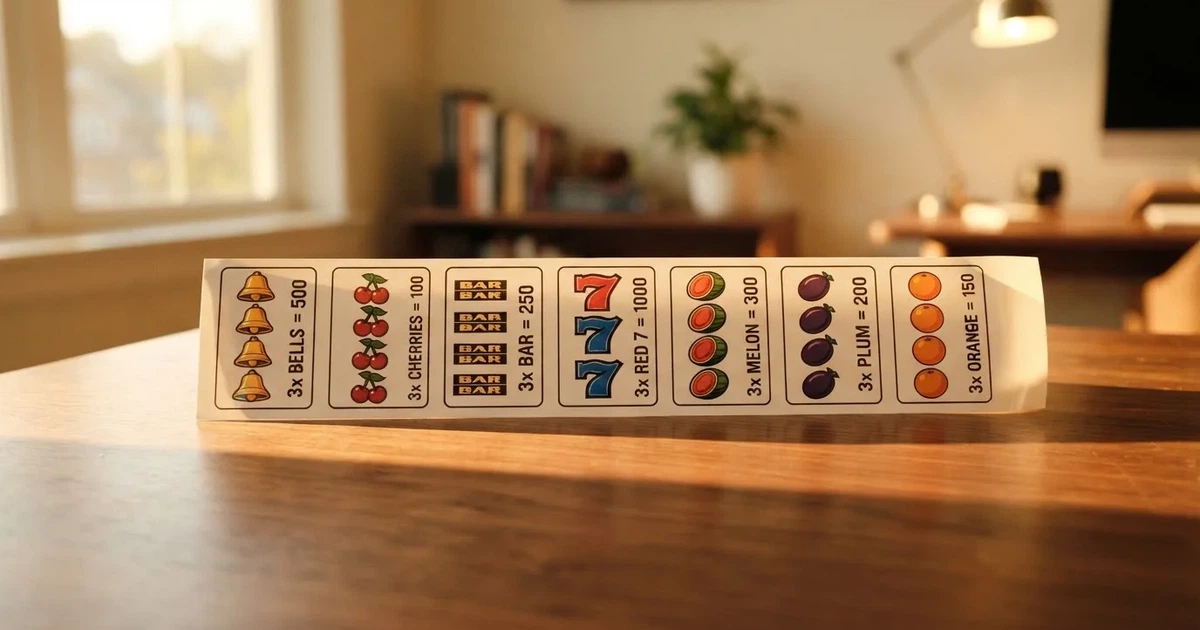
The paytable is the part of the machine a punter actually reads. It shows each symbol, the value of a line of three, four, five, six or seven matching symbols, the value of any scatter pays and the rules of any bonus feature triggered from the base game. The paytable also states the return-to-player percentage where the regulator or operator requires it to be stated; in the United States, state minimum payout percentages vary — Nevada requires at least 75 per cent, Mississippi at least 80 per cent and New Jersey at least 83 per cent. In Australia, no comparable minimum is set for the prohibited online market, because there is no such market to regulate.
What a seven-reel slot does at the machine, then, is offer a slightly different probability profile from a five-reel slot and a markedly different one from a three-reel machine. The gameplay is otherwise familiar: the player sets a stake, the reels spin, the payline evaluates and the balance updates. The format adds an extra column to the decision tree the player makes on each spin and, on the games that lean on it, an extra reel of anticipation.
What the paytable is silent on
A paytable states the symbol values and the rules of the bonus feature. It does not state the long-run return for any specific player, because the long-run return is a population average over millions of spins and any single session is a sample of dozens or hundreds. It does not state the volatility class — the dispersion of outcomes around that average — because the volatility is a property of the design rather than of the symbols printed on the chart. And it does not state the effect of the bet size on the return, because the bet size scales the outcome rather than changing the underlying probabilities. A reader of a paytable is reading the surface of the machine; the depths are at the level of the math model, which the operator does not publish.
The Australian legal alternative: the physical pokie
Outside casinos, Australia operates an estimated 97,103 gaming machines as at 2010. The machine is colloquially a pokie. State breakdowns of the count outside casinos:
| Jurisdiction | Gaming machines |
|---|---|
| New South Wales | 87,298 |
| Victoria | 26,380 |
| Queensland | 21,122 |
| South Australia | 11,672 |
| ACT | 3,587 |
| ACT | 3,587 |
What a fair comparison of the ACMA-warned brands would weigh
A fair comparison of the brands the ACMA has acted against would not be a ranking. The subject is prohibited, so the comparison is between offenders of the same law, not between products a reader should pick from. What it would weigh is the operational company behind the brand, the date the ACMA acted, and whether the operator also appears on the ACMA’s blocking list. The table below sets out the brands the ACMA itself has issued formal warnings against, in the order the regulator’s own publications set them out.
| Brand | ACMA action and date | Operator named by the ACMA | Subject support |
|---|---|---|---|
| RocketPlay | March 2026 (Pulsup Ltd); earlier May 2022 (Dama N.V.) | Pulsup Ltd | — |
| Level Up Casino | May 2022 | Dama N.V. | BGaming listings report it |
| Woo Casino | March 2025 | Dama N.V. | — |
| Spirit Casino | May 2025 | Dama N.V. | — |
| National Casino | July 2025 | Consolutetish S.R.L. | Wikipedia lists it |
| Bizzo Casino | July 2025; earlier 2022 (TechSolutions) | Consolutetish S.R.L. | — |
| Ignition Casino | July 2025 | Bamboo Media | — |
| Instant Casino | February 2025 | EOD Code SRL | — |
| Jackbit | April 2026 | Ryker B.V. | — |
| Casino Intense | April 2025 | Sterplay Holding Ltd | ABC and ACMA listings report it |
| Sky Crown | September 2022 | Hollycorn N.V. | — |
The brand column is the player-facing name. The operator column is the corporate entity the ACMA named in its formal warning publication; a single operator can sit behind several brands. Dama N.V. sits behind Level Up, Woo and Spirit; Consolutetish S.R.L. sits behind National and Bizzo. A reader looking at the offshore footer is more likely to see the corporate name than the brand name, and the corporate name is what the ACMA acted against.
The subject-support column is what third-party listings report — provider directories, encyclopedia entries — about whether the brand lists seven-reel content. Two of the eleven brands appear in those listings. The rest do not, which is not the same as saying they do not offer seven-reel slots; it is saying that the listings we have do not confirm it. A reader who lands on a brand’s site will see a lobby; whether the lobby includes seven-reel games is a question the lobby answers and the listings do not.
What this table makes obvious is that the ACMA’s action is recent and continuous. Seven of the eleven warnings were issued in 2025 or 2026; one — Sky Crown — is dated September 2022 and is the oldest entry. The regulator is not slowing down. The warnings also cluster by operator, which means a single enforcement decision can land on several brands at once: the Dama N.V. round took Level Up in 2022 and reappeared over Woo and Spirit in 2025, the Bizzo entry names the same brand twice under different corporate owners, and the ACMA’s blocking round reported on 26 June 2026 took out twelve further sites in one pass.
What a “no-data” cell actually means in this comparison
A no-data cell in the subject-support column is not a finding that the brand does not offer seven-reel slots. It is the article-language marker for “the listings we have do not say”. The brand may or may not; the listings the audit drew on did not report either way. A reader who lands on the brand’s site and looks at the lobby will see what the lobby shows, which the audit cannot.
What the ACMA’s blocking activity looks like at the population level
The ACMA asked Australian ISPs to block 12 more illegal gambling websites in the round reported on 26 June 2026: 7Signs, ChromaBet, Donbet, Duospin, Freshbet, Slots Gem, Jacks Club, Lucky Start, Pointsbetz, Spinrise, Vinyl Casino and Wildsino. The running total of blocked sites and affiliate marketing pages since the first blocking request in November 2019 is 1,751 as at that round — six and a half years of enforcement, with the rate of blocking accelerating in the most recent year. Across the same period, more than 230 unlicensed gambling services have left the Australian market. The arithmetic of blocking, set against the size of the offshore market the H2 Gambling Capital report estimates at A$3.9 billion a year, is that the ACMA removes a few hundred sites over six years while the spend it removes is a fraction of the total illegal spend. The block list is not the answer to the offshore market; it is the regulator’s pressure on the perimeter.
The wider Australian gambling landscape
Australia’s legal gambling market is, by global standards, narrow and well-defined. The licensed products are wagering on racing and sport (placed before the event), lotteries and keno, and the physical gaming machines in pubs, clubs and casinos. The Northern Territory Racing and Wagering Commission licenses 52 online bookmakers — Sportsbet, Bet365 and Ladbrokes among them — for tax reasons: the Territory’s wagering tax regime attracts operators who then serve the national market. The commission has no full-time staff and meets once a month in Darwin, a regulatory architecture built for a small licensed product set rather than a broad casino one.
The state and territory breakdowns of gaming machines outside casinos tell the same story from the physical side. New South Wales operates 87,298 such machines as at June 2023, Victoria 26,380 in 2021–22, Queensland 21,122 in October 2023, South Australia 11,672 in September 2023 and the ACT 3,587 in November 2023. New South Wales legalised slot machines in 1956, and the per-capita rate in Australia as at 2010 was about five times that of the United States. The physical market is mature and large. The online casino market is prohibited.
What this means is that the answer is, by design, mostly no. There is no licensed Australian 7-reel slot online. There is a regulated physical 7-reel slot on certain casino floors in a handful of jurisdictions. There is an offshore market that offers the product and operates outside Australian law, and a regulator that has acted against a long and growing list of the operators running it. The legal and the offshore are not two products the reader chooses between; the offshore is the only one that offers the product, and the only one that does so in violation of the law the reader is sitting under.
Tax and winnings for the recreational player
Gambling winnings of a recreational player are not assessable income in Australia under section 6-5 of the Income Tax Assessment Act 1997, and losses are not deductible. The position changes if the person carries on a business of gambling, in which case the ATO’s ordinary business rules apply. The reader who plays a 7-reel slot once on a cruise ship and once on an offshore site is, in tax terms, in the recreational category. The reader who plays professionally is in a different category and should check with the ATO or a tax adviser.
Age and the perimeter of the licensed market
The minimum age for any gambling activity in Australia is 18. The licensed wagering and lottery products check age at account opening. The offshore casino may or may not check age, and the IGA’s prohibition is on the provider rather than the player, but a reader under 18 is outside the perimeter of every form of Australian gambling regulation, licensed or not.
The arithmetic of the ACMA’s blocking record
The blocking rate the ACMA has maintained since November 2019 is a key metric: a single number that puts the enforcement record in proportion. The first blocking request was issued in November 2019; the running total reported on 26 June 2026 is 1,751 illegal gambling and affiliate marketing websites blocked. The arithmetic is straightforward — 1,751 sites over the period from November 2019 to June 2026 — but the result is best stated as a band rather than a single figure, because the rate has not been linear and the underlying count includes affiliate marketing pages alongside the gambling sites themselves.
Across roughly six and a half years, the ACMA has blocked sites at an average pace of roughly 270 per year, or about 22 per month. The most recent round, reported on 26 June 2026, took out 12 sites in a single pass. Earlier rounds were larger. The blocking rate has stepped up rather than held steady. Set against H2 Gambling Capital’s A$3.9 billion estimate of annual losses to illegal sites, the blocking record is a regulator removing a few hundred addresses from a market that is taking close to a quarter of total Australian gambling spend, and the rate of removal is accelerating while the spend is not, on this evidence, contracting at the same pace.
The band is the honest form of the result. A precise figure would imply a precision the inputs do not carry; the band is “roughly 250 to 300 blocked sites per year across the period, with the rate higher in the most recent year and lower in the earliest”, and the condition on that band is that the count includes affiliate marketing pages as well as the gambling sites themselves. A reader who wants the underlying annual breakdown can find it in the ACMA’s published blocking-round notices; the rate above is what those notices aggregate to.
What the band tells a reader
The band tells a reader that the ACMA’s blocking record is real, recent and continuous, but that it is not, on its own, closing the offshore market. The 1,751 blocked sites and the A$3.9 billion in estimated illegal-market losses are the same market seen from two ends: the regulator removing addresses, the market still taking spend. The reader looking for a 7-reel slot online is in the gap between those two numbers.
Brand-level write-ups of the ACMA-warned operators
The brands below are the eleven operators the ACMA has issued formal warnings against for offering prohibited interactive gambling services to Australians. They are not a ranking. They are not a recommendation. They are the page’s way of closing the ACMA’s enforcement record at brand level, in the order the regulator’s publications set them out. The verdict at the end of each block is the page’s own judgement of what the brand’s profile amounts to for a reader who lands here.
RocketPlay
RocketPlay sits at the top of the ACMA’s recent activity. The regulator issued a formal warning in March 2026 naming Pulsup Ltd as the operator of Rocketplay; an earlier formal warning, in May 2022, named Dama N.V. The brand has changed corporate hands between the two warnings, which is itself a piece of the offshore market’s pattern — operators cycle through corporate shells faster than the regulator can resolve the new entity, and the ACMA has to issue a fresh warning against the new shell each time. The subject-support column for RocketPlay is no-data: third-party listings do not confirm seven-reel content, and the brand’s lobby is the only place that does. The picture is a brand that has been on the regulator’s radar twice in four years and sits under a new operator for the second warning.
Verdict. RocketPlay is the most recently warned brand on this page and the one that most clearly demonstrates the corporate-shell pattern. A reader who lands here is reading about a brand the ACMA acted against twice in four years; that is a fact about the operator, not about the player’s experience, and the brand’s status under Australian law is unchanged across both warnings.
Level Up Casino
Level Up Casino was named in the May 2022 Dama N.V. round, one of six brands the ACMA warned at the same time. The brand is the second Dama N.V. entry on the page; the corporate pattern is the same as RocketPlay’s, except Dama N.V. held the operator through the entire 2022 round. Third-party listings report the brand under BGaming’s provider directory, which is the closest thing to a subject-support finding the audit carries — a provider confirming a brand’s existence is not the same as a regulator approving it, and it is not a recommendation. The brand has not been re-warned under a new operator name in the ACMA’s record, which sets it apart from RocketPlay on this page.
Verdict. Level Up is the cleanest single-operator example on this page: one warning, one operator, four years without a follow-up. A reader looking for the simplest case of what a formal warning looks like finds it here.
Woo Casino
Woo Casino was named in March 2025 under Dama N.V., part of the second wave of warnings against that operator. The brand sits beside Spirit Casino in the same regulatory round, with the same corporate operator. The subject-support column is no-data. Woo Casino is a 2025 entry on a page otherwise anchored on 2026; the brand is recent to the ACMA’s record but not the most recent.
Verdict. Woo Casino is one of two Dama N.V. brands the ACMA warned in 2025. A reader comparing Woo and Spirit is comparing two brands under the same operator on the same regulator action; there is no difference between them at the regulatory level.
Spirit Casino
Spirit Casino is the second Dama N.V. brand from the 2025 round, warned in May 2025. The pattern is identical to Woo Casino’s: same operator, same regulatory action, same subject-support finding of no-data. The two brands are distinguishable in their marketing and their lobby, and they are indistinguishable in the regulator’s record.
Verdict. Spirit Casino closes the 2025 Dama N.V. pair. A reader who has read Woo Casino has already read Spirit Casino’s regulatory profile; the difference is the lobby, not the law.
National Casino
National Casino was named in July 2025 under Consolutetish S.R.L., a different operator from Dama N.V. and the second of two Consolutetish brands on this page. Wikipedia’s gambling-in-Australia entry lists National Casino among offshore brands, which is the subject-support finding. The brand has not been re-warned under a new operator in the ACMA’s record.
Verdict. National Casino is the Consolutetish S.R.L. brand whose subject-support finding is the most concrete on the page. A reader who wants a brand that has been listed in a public encyclopedia lands here; the listing is not an endorsement, and the regulatory profile is the same as the other Consolutetish entry.
Bizzo Casino
Bizzo Casino is the brand the ACMA has warned twice. The first warning, in 2022, named TechSolutions (CY) Group Limited and TechSolutions Group N.V. The second, in July 2025, named Consolutetish S.R.L. — the same operator that sits behind National Casino. A brand that changes corporate hands twice in three years is a brand the regulator has had to chase twice, and the ACMA’s record makes that visible. The subject-support column is no-data.
Verdict. Bizzo is the clearest case on the page of a brand that has cycled through operators and drawn two warnings under two different corporate names. A reader who sees the brand advertised in 2026 is seeing it under the second of those operator names; the regulatory history travels with the brand.
Ignition Casino
Ignition Casino was named in July 2025 under Bamboo Media, the only Bamboo Media entry on this page. The brand is a 2025 entry and sits in the middle of the ACMA’s recent activity. Subject support is no-data: third-party listings do not confirm seven-reel content, and the brand’s own lobby is the only place that does.
Verdict. Ignition Casino is the standalone Bamboo Media entry. A reader who lands here is reading about a single brand under a single operator; there is no operator pattern to compare it against on this page.
Instant Casino
Instant Casino was named in February 2025 under EOD Code SRL, one of the earliest 2025 warnings on this page. The brand is the only EOD Code SRL entry on the page, and the subject-support column is no-data. The February 2025 date is the earliest of the recent round, which puts Instant Casino near the start of the ACMA’s 2025 enforcement step-up.
Verdict. Instant Casino is the page’s earliest 2025 warning and a single-brand, single-operator entry. A reader who wants the earliest example of the recent step-up finds it here.
Jackbit
Jackbit was named in April 2026 under Ryker B.V., one of the most recent entries on this page. The brand sits beside CasinOK in the same regulatory round under the same operator, though CasinOK is not on this page’s featured set. Subject support is no-data.
Verdict. Jackbit is the most recent warning on this page and the most recent Ryker B.V. entry in the ACMA’s record. A reader who has read RocketPlay has already read the pattern of a 2026 brand under a fresh operator name; Jackbit is the second example of that pattern.
Casino Intense
Casino Intense was named in April 2025 under Sterplay Holding Ltd. The subject-support column is the most populated on the page: ABC News and the ACMA’s own publications have mentioned the brand, alongside Crown Melbourne’s baccarat offerings — the latter is a coincidence of the audit’s listing set rather than a substantive connection, and the reader should not draw a regulatory line from one to the other. The brand is the only Sterplay Holding Ltd entry on the page.
Verdict. Casino Intense is the brand with the broadest third-party mention set on the page, though none of those mentions constitute approval under Australian law. A reader who lands here through a third-party mention is reading about a brand the ACMA has acted against, and the regulatory position is unchanged by the mention.
Sky Crown
Sky Crown was named in September 2022 under Hollycorn N.V., in a formal warning publication that also covered Blue Leo casino. Sky Crown is the oldest entry on this page and the only Hollycorn N.V. brand. The subject-support column is no-data. The 2022 date puts the brand at the start of the ACMA’s recent enforcement pattern; the brand has not been re-warned under a new operator.
Verdict. Sky Crown is the page’s oldest entry and the start of the timeline the rest of the table extends. A reader who reads the table from top to bottom reads it forward in time; Sky Crown is the back end of that timeline.
Closing the shelves
The 7-reel slot question in Australia resolves, on the evidence above, to a regulatory answer rather than a product one. No seven-reel slot is licensed for real-money online play anywhere in Australia because no online casino game of any reel count is licensed under the Interactive Gambling Act 2001. The offshore market that offers the product operates outside Australian law, and the regulator has acted against a long and growing list of the operators running it, with the rate of formal warnings accelerating in 2025 and 2026. The legal alternative is the physical pokie on a casino floor or in a pub or club, where the format is overwhelmingly five-reel and the seven-reel slot is a rarity. The responsible-play tools that bind Australian-licensed wagering do not bind an offshore casino. The bonus offers on the offshore side carry wagering requirements, cashout caps and weighting tables that turn the headline number into a balance-locked volume requirement. The arithmetic of the ACMA’s blocking record is roughly 250 to 300 sites per year since November 2019, with the rate higher in the most recent year, against an illegal market estimated at A$3.9 billion in annual losses.
A reader who arrives at this page looking for a 7-reel slot online in Australia has arrived at the answer before they have read a recommendation, because the answer is structural rather than comparative.
Frequently asked questions
What makes a 7-reel slot different from a standard five-reel video slot?
A seven-reel slot has one more reel than the standard five-reel video format, which extends the payline geometry and, all else equal, increases the combinatorial space against the top combination. The base gameplay is the same: a stake, a spin, a payline evaluation. The paytable is the surface; the underlying math model is what differs between specific titles rather than between reel counts.
Can 7-reel slot machines be found in licensed Australian pubs and clubs?
The Australian pub and club pokie market is overwhelmingly five-reel video, with the occasional three-reel classic; seven-reel pokies are a rarity on the legal floor. The bulk of legal machines — 87,298 in NSW as at June 2023 — are five-reel video. A reader who specifically wants a seven-reel format is most likely to find it on a casino floor in a larger jurisdiction, not in a pub or club.
Do 7-reel slots typically pay out differently than newer five-reel formats?
The payout profile depends on the specific title’s math model rather than on the reel count alone. A seven-reel slot with a given symbol set has a larger combinatorial space than a five-reel slot with the same symbol set, which lengthens the odds against the top combination. The long-run return for any specific title is stated on the paytable where regulators require it; in Australia, no comparable minimum applies because the online market is prohibited.
Is a 7-reel slot online the same game as a 7-reel machine on a casino floor?
The format is the same in principle — seven reels, a paytable, a bonus feature. The setting is different: a casino floor machine is part of a regulated Australian product, an online 7-reel slot is part of an offshore product operating outside Australian law. The reader protections, the complaint routes and the recourse available to the player are not the same across the two settings, and that difference is the one that matters for anyone deciding where to play.
Are 7-reel slots for real money available legally from an Australian-based site?
No. The Interactive Gambling Act 2001 prohibits online casino games as a class, and no state or territory issues a licence for them. Every offshore site offering 7-reel slots to an Australian IP address is offering a prohibited service. The Australian-licensed wagering and lottery products do not include 7-reel slots; the legal alternative for a seven-reel slot is a physical casino floor in a regulated jurisdiction.
Is reel count still a useful way to compare volatility between older and newer slots?
Reel count is a rough proxy for the size of the combinatorial space, which is one input to a title’s volatility profile, but the math model and the symbol set are the primary determinants of how a specific slot disperses its outcomes. Two five-reel slots can sit at very different points on the volatility spectrum, and the same is true across reel counts. The paytable and any published volatility class are the better comparison inputs, where the operator publishes them.
Published by the Casino Venues Info team.