
Best Pokies in South Australia in 2026: The Venues the State Licences, and What an Offshore “Pokies” Page Is Actually Selling
A search for “best pokies in South Australia” tends to return two very different products, and the difference is not about gameplay, payouts or theme. One is a legal, land-based machine sitting in a pub, club or casino under state licence; the other is an offshore website that markets itself to Australian customers in breach of the Interactive Gambling Act 2001. They share a vocabulary — reels, jackpots, free spins — but they sit on opposite sides of the Australian regulatory fence. This page lays out the licensed South Australian landscape first: where the machines actually are, who supervises them, what rules apply to the bettor, and how the payout percentages compare with other Australian jurisdictions. The offshore side comes second, because it has to be covered honestly too — only as a record of formal warnings, blocks and unlicensability, never as a competing offer.
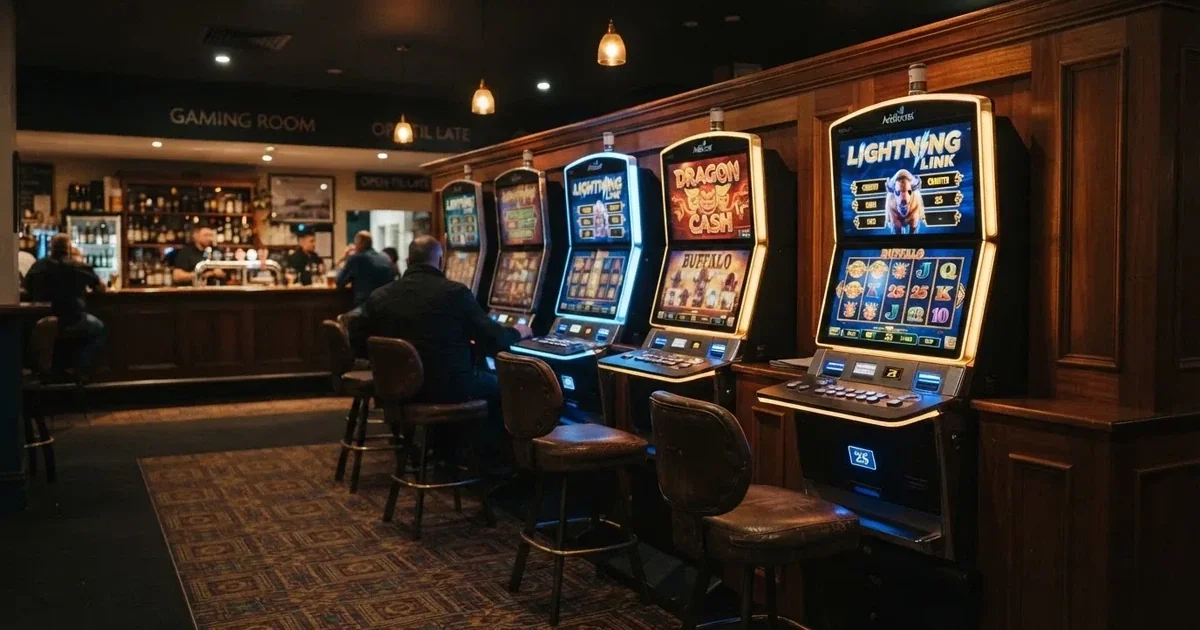
The data behind the page is current as of 29 October 2026 and was checked against the Australian Communications and Media Authority’s published register of formal warnings and blocking requests.
Table of Contents
- Paytable Mechanics at a Licensed South Australian Venue
- Top 11 Offshore Brands the ACMA Has Formally Warned
- How a Pokies Shortlist for South Australia Gets Built
- The Legal Framework Around Pokies in South Australia
- Responsible Gambling Supports for South Australian Pokies Players
- Land-Based Venues Where South Australians Can Play Pokies
- Payments, Cashless Card, and How Pokies Money Moves
- The Blocking Rate of Illegal Australian-Facing Sites
- What a South Australian Punter Should Take From This
- Frequently Asked Questions
Paytable Mechanics at a Licensed South Australian Venue
Every electronic gaming machine in South Australia — outside the state’s single licensed casino — is required to publish its own paytable. The numbers on that paytable are the closest thing a punter has to a contract with the machine. They show what the machine returns over the long run and what it pays for specific symbol combinations.
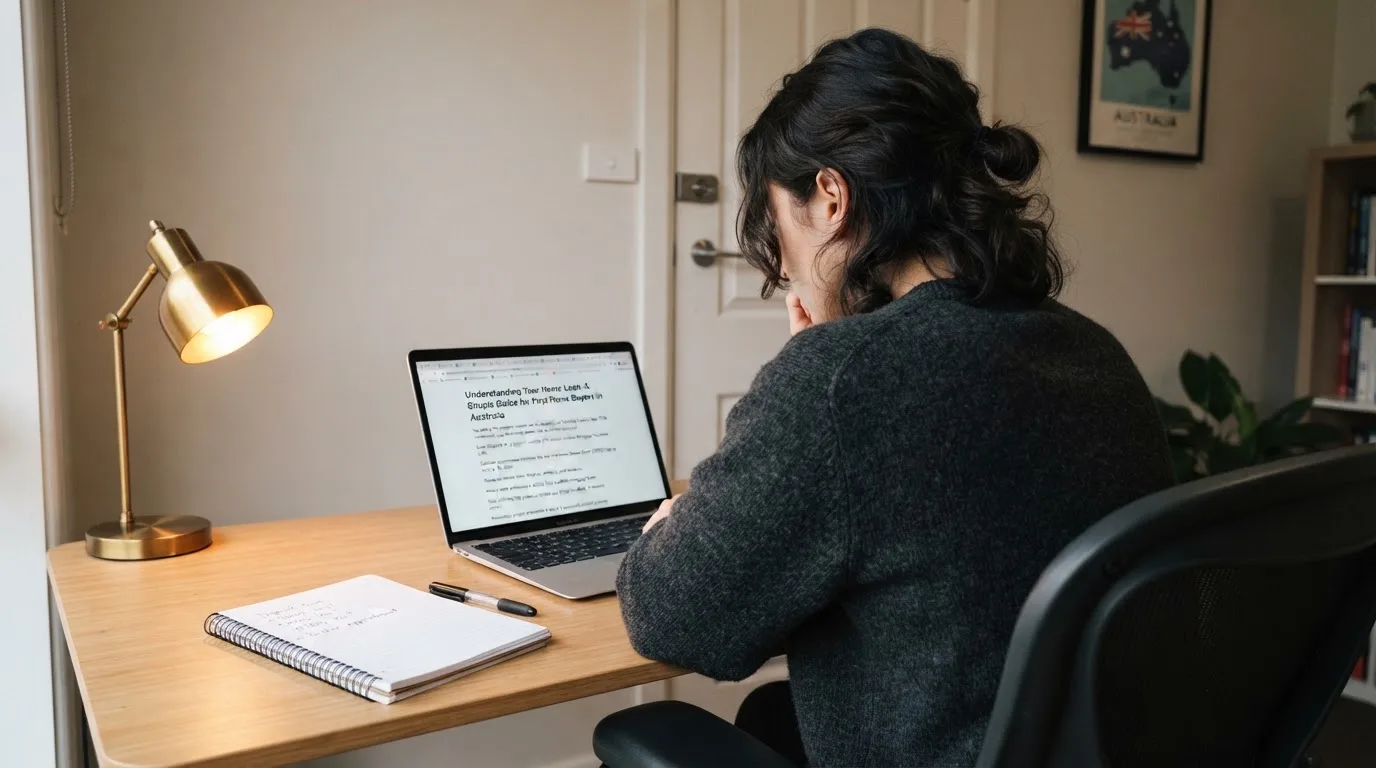
South Australian law sets a floor on what that return can be: gaming machines outside Adelaide Casino must return at least 87.5% to players over the life of the machine. That figure is the minimum, not the typical. Pubs and clubs in metropolitan Adelaide generally run machines in the low 90s as a percentage, with regional venues sitting a point or two lower. Adelaide Casino itself, operating under a separate statutory framework, has no maximum-bet limit and runs a different mix of machines, including higher-denomination titles with longer theoretical cycles.
The paytable also carries the per-spin stake limit. South Australia caps bets on machines outside the casino at A$5.00 per spin — a line that has not changed in years and that shapes which titles venues can stock. A machine designed around A$10 or A$20 stakes is not lawful in a suburban pub, full stop. It also tells the punter whether the machine is a “line” game (payouts calculated across configurable win-lines) or a “ways” game (every adjacent reel combination counts), and whether bonus features are bought directly through a feature-buy button or triggered organically by symbol combinations. None of this is decorative: feature-buy structures, in particular, materially change the volatility profile of a session because they compress the cost of triggering a bonus into a single stake.
The mechanical choices are not the only ones that matter. The Consumer and Business Services branch of the South Australian Attorney-General’s Department — the state’s gambling regulator — requires every machine to display a responsible-gambling message, an identifier linking it back to its venue licence, and a contact line for Gambling Help Online. The paytable is the contract; the on-machine signage is the legal backstop. Both belong on the screen, and both are part of what separates a regulated machine from an offshore imitation.
Top 11 Offshore Brands the ACMA Has Formally Warned
South Australians searching for “pokies” online will quickly encounter offshore brands that market pokies-style games under Australian-facing URLs. None of them can lawfully offer those games to a person in Australia. The Interactive Gambling Act 2001 prohibits the supply of online casino games — including online pokies — to Australian customers, and the Australian Communications and Media Authority has spent the past several years issuing formal warnings to operators that have breached that prohibition. What follows is not a ranking. It is a record, in the order in which the ACMA’s most recent action against each brand was published, of eleven operators the regulator has named in formal warnings over the past four years.
The legal point sits beside every entry: an offshore licence displayed on a footer is not an Australian licence, and no offshore licence authorises the supply of online casino games to a person in Australia. Several of the names below appear repeatedly on affiliate “best pokies” lists that target Australian search terms; their presence there is the reason for the warnings, not a sign that they have been cleared.
The blocking numbers belong to the same story. By June 2026, the ACMA had asked Australian internet service providers to block 1,751 illegal gambling and affiliate marketing websites since the first blocking request in November 2019, and more than 230 unlicensed services had left the Australian market since enforcement was strengthened in 2017. Across the same period, H2 Gambling Capital estimated Australians lose about A$3.9 billion a year to illegal offshore sites, with the share of gambling going through legal Australian channels falling from 74% in 2021 to 64%. That fall is part of why the ACMA’s enforcement pace has not slowed.
The eleven brands, with the ACMA’s published action against each:
| Brand | ACMA action and date | Operator named by the ACMA | Subject support |
|---|---|---|---|
| RocketPlay | Formal warning, March 2026; earlier action against Dama N.V., May 2022 | Pulsup Ltd (RocketPlay); Dama N.V. | — |
| Level Up Casino | Formal warning, May 2022 | Dama N.V. | Listings only — references appear in Wikipedia and Victorian regulator material |
| Woo Casino | Formal warning, March 2025 | Dama N.V. | Listings only — reference appears in Wikipedia |
| Spirit Casino | Formal warning, May 2025 | Dama N.V. | — |
| National Casino | Formal warning, July 2025 | Consolutetish S.R.L. | Listings only — references appear in ABC News and federal infrastructure material |
| Bizzo Casino | Formal warning, July 2025; earlier action against TechSolutions, 2022 | Consolutetish S.R.L.; TechSolutions (CY) Group Limited and TechSolutions Group N.V. | — |
| Ignition Casino | Formal warning, July 2025 | Bamboo Media | — |
| Instant Casino | Formal warning, February 2025 | EOD Code SRL | — |
| Jackbit | Formal warning, April 2026 | Ryker B.V. | — |
| Casino Intense | Formal warning, April 2025 | Sterplay Holding Ltd | Listings only — references appear in ABC News, trade press and South Australian regulator material |
| Sky Crown | Formal warning, September 2022 | Hollycorn N.V. | Listings only — reference appears in Wikipedia |
The recurring thread across the table is Dama N.V., named in formal warnings stretching from May 2022 through May 2025 for at least four separate brands. A second thread is Consolutetish S.R.L., named twice in the July 2025 round. The pattern is what the ACMA’s enforcement architecture looks like in practice: warnings follow the operator of record, not just the brand name, so a rebrand under the same parent company does not put a site outside the regulator’s reach.
RocketPlay is the freshest name in the set. The March 2026 warning to Pulsup Ltd came after the brand had already been the subject of a 2022 warning to a different operator; its position here reflects the most recent ACMA action, not a new brand. Jackbit sits at the same end of the timeline: a warning to Ryker B.V. in April 2026 covering both Jackbit and a sister brand, CasinOK. Across the eleven entries, only Casino Intense has a documented trace in South Australian regulator material — a reminder that the offshore problem intersects with state-level concerns when players attempt to recover funds through local complaint channels.
No row in this table is a recommendation to play. Each row is what the regulator has said about the brand that owns the URL.
How a Pokies Shortlist for South Australia Gets Built
A shortlist of “best” venues is a judgment that has to be made against criteria, not against marketing. The South Australian landscape gives a writer four workable axes, and the right ranking leans on all of them rather than on any one.
The first axis is the licence itself. Adelaide Casino operates under South Australia’s Casino Act 1997 and Consumer and Business Services keeps a daily compliance presence at the venue. Every pub and club machine outside the casino is licensed by Consumer and Business Services through the state’s Liquor and Gambling Commissioner, who took over as the state’s sole gambling regulator when the Independent Gambling Authority was abolished in December 2018. A shortlist that does not start from that licence hierarchy is describing a different market.
The second axis is the machine footprint. South Australia had 11,672 gaming machines outside Adelaide Casino across 471 venues in September 2023, on which players lost A$0.92 billion in 2022–23 — roughly A$497 per adult. Adelaide Casino adds another 950 machines and 90 gaming tables to that count, plus the option of higher-denomination play the suburban venues cannot offer. The arithmetic of where the state’s gambling spend actually sits is uneven, and a venue that overlooks that skews the picture.
The third axis is the regulatory ceiling. The A$5.00 maximum bet outside the casino and the 87.5% minimum return-to-player shape what games can lawfully be stocked at all. A machine that runs at A$20 a spin does not appear in a South Australian pub because it cannot; a machine that returns 80% does not appear because it would breach the floor. Comparing South Australian pubs to a venue in another state without noting those numbers is comparing different products.
The fourth axis is host responsibility. The 2020 reforms gave South Australians stronger protection from gambling harm while keeping the industry viable, and Consumer and Business Services’ on-the-ground compliance presence at Adelaide Casino is structured around how staff interact with patrons. A shortlist that ignores that presence — what it costs, what it asks of venues — is ranking machines, not venues.
The four axes are not equal weight. The licence determines whether the venue is in the comparison at all; the machine footprint determines scale; the regulatory ceiling determines which games the venue can host; host responsibility determines what happens when something goes wrong. A shortlist that elevates one of these over the others, without saying so, is making an editorial choice the reader cannot see.
The Legal Framework Around Pokies in South Australia
South Australia’s gambling law treats online and land-based gambling as different products, and the difference is enforced through separate statutes.
Online casino games — including online pokies — are prohibited at the federal level under the Interactive Gambling Act 2001, strengthened by the Interactive Gambling Amendment Act 2017. The IGA makes it an offence to provide online casino games, online pokies or in-play betting to a person physically in Australia, and no state or territory licence can authorise that supply. The individual player is not prosecuted; the law targets the provider. But the practical consequence is that any site offering online pokies to an Australian customer is operating outside Australian law, regardless of what offshore licence it displays in a footer. The Interactive Gambling Amendment (Gambling Reform) Bill 2026 passed Parliament on 19 August 2026; its advertising and inducement measures commence on 1 January 2027, so the rules are tightening in 2026 but have not yet taken effect on the day this page is read.
Land-based gaming in South Australia sits under a different regime. Adelaide Casino is regulated under the Casino Act 1997. Every pub and club machine outside the casino is licensed by Consumer and Business Services through the Liquor and Gambling Commissioner, the state’s sole gambling regulator since the Independent Gambling Authority was wound up in December 2018. Consumer and Business Services handles policy, licensing and compliance for betting, casinos, gaming machines and lotteries in South Australia, and it maintains a daily on-site compliance presence at Adelaide Casino.
Enforcement against the offshore side is the ACMA’s job. The regulator investigates complaints, issues formal warnings and directs Australian internet service providers to block illegal sites. The blocking request is the practical lever: an offshore site that ignores a formal warning finds itself added to the list of URLs Australian ISPs are required to cut off, and a player with a balance on that site at the moment of the block has no Australian complaints body to approach. The cumulative effect of that lever is what the blocking numbers at the top of this page describe.
One licence regime the page does not describe is the Northern Territory Racing and Wagering Commission’s. The NTRWC regulates 52 of Australia’s online bookmakers — Sportsbet, Bet365 and Ladbrokes among them — because those companies take an NT licence for tax reasons; the commission has no full-time staff and meets once a month in Darwin. Those bookmakers are licensed to take wagers on races and sport placed before the event, and that is the limit of their lawful Australian offering. They cannot lawfully take online casino play, which is why the brands in the warning table above are not on the NTRWC’s list.
Responsible Gambling Supports for South Australian Pokies Players
Responsible-gambling support in South Australia sits on two rails: state-level host responsibility at the venue, and national-level services the punter can reach from home.
The state rail is what happens inside the venue. Consumer and Business Services requires every licensed machine to carry responsible-gambling signage and a contact line for Gambling Help Online. At Adelaide Casino, host responsibility is structured into daily compliance work — staff interactions with patrons are the regulator’s focus, not the regulator’s afterthought. The 2020 reforms reshaped that work, giving venues stronger obligations around patron interaction while keeping the industry’s economic footprint intact.
The national rail is what the punter can use directly. Gambling Help Online is available 24/7 with chat, and the National Gambling Helpline on 1800 858 858 is free from anywhere in Australia. BetStop, the National Self-Exclusion Register, has been live since August 2023 and binds Australian-licensed online and phone wagering services — which is the right tool for someone who wants to stop placing sports or race bets online, and the wrong tool for someone trying to exclude themselves from offshore casino sites, which are not connected to the register. Self-exclusion at a South Australian pub or club venue is a separate, state-level process run through the venue and Consumer and Business Services.
A second rail is the financial one. From 11 June 2024, credit cards, credit-related products and digital currency have been banned as payment for licensed online wagering in Australia, with penalties of up to A$247,500 for operators who breach the rule. Legal deposit routes for licensed wagering are debit card, bank transfer, PayID/Osko and BPAY. A site asking an Australian for a credit card or for a crypto deposit is operating outside the Australian rules; that one signal catches more breaches than the marketing pages reveal. On the recreational tax side, gambling winnings of a non-business player are not assessable income under section 6-5 of the ITAA 1997 and losses are not deductible — model only, “check with the ATO” applies because the ATO is the final word on an individual’s tax position.
The supports above belong to licensed Australian play. An offshore casino is not part of any of them. There is no Australian complaints body that will recover a stuck withdrawal from an unlicensed site, no self-exclusion register that binds it, and no payment rule that stops it accepting a credit card. The legal architecture around responsible gambling in Australia is built around the venues it licences, and the offshore market sits deliberately outside that architecture.
Land-Based Venues Where South Australians Can Play Pokies
The licensed South Australian landscape has a narrow centre and a long tail. The narrow centre is Adelaide Casino, the state’s only licensed casino, sitting in the heritage-listed Adelaide railway station building on North Terrace. It opened on 12 December 1985 under the state-owned Lotteries Commission, was sold to SkyCity Entertainment Group in June 2000, briefly carried the SkyCity Adelaide name from April 2001 before reverting to Adelaide Casino in 2009, and was extended through a 2015–2021 Riverbank redevelopment worth about A$330 million that added the EOS by SkyCity tower with 120 hotel rooms and expanded gaming space. It runs 90 gaming tables and 950 gaming machines, with the licence formalised on 11 October 2013 extending its table-game monopoly to 30 June 2035 and allowing expansion to up to 200 tables and 1,500 machines subject to redevelopment.
The long tail is the 471 venues outside the casino holding the state’s 11,672 gaming machines as of September 2023. These are pubs and clubs across metropolitan Adelaide and regional South Australia, each licensed by Consumer and Business Services to operate a defined number of machines under the state’s A$5.00 maximum-bet cap and 87.5% minimum return-to-player floor. Players lost A$0.92 billion across these machines in 2022–23, roughly A$497 per adult — a figure that includes the regulatory cap on stake size and so reflects the constraints under which the venues operate.
The contrast with neighbouring jurisdictions is part of why the question “where are the best pokies in South Australia” gets asked at all. Queensland had 21,122 gaming machines in 351 venues as of October 2023, almost double South Australia’s non-casino footprint, with the Star Brisbane at Queen’s Wharf having begun a staged opening at the A$3.6 billion precinct on 29 August 2024 — replacing Treasury Casino, which closed on 25 August 2024. Treasury had been a three-level gaming emporium of 80 tables and over 1,300 machines inside Brisbane’s historic Treasury Building, open in refurbished form since April 1995. Star Brisbane itself was developed jointly with Hong Kong-based Chow Tai Fook Enterprises, and its opening sat against a backdrop of formal regulatory concerns about Star Entertainment Group’s licence suitability — concerns that had crystallised in late 2022 after an independent review by former Court of Appeal judge Robert Gotterson found the group had misled regulators and failed its anti-money-laundering duties, with a A$100 million fine on 9 December 2022 and a deferred 90-day licence suspension. Casino Canberra, by contrast, is the ACT’s only legal casino, built on land excised from Glebe Park under a 99-year lease with no hotel, theatres or retail attached.
A South Australian punter asking which venue is “best” is asking inside a smaller machine footprint than a Queensland counterpart, with a single licensed casino as the only place where bets above A$5.00 are lawful. Adelaide Casino is the only venue in the state where the maximum-bet cap does not apply, the only venue running 90 tables alongside its machines, and the only venue carrying the kind of higher-denomination play that other states’ major casinos stock. Every other licensed pokies venue in South Australia is a pub or club bound by the same A$5.00 stake cap and 87.5% return floor.
Payments, Cashless Card, and How Pokies Money Moves
The way money enters and leaves a South Australian pokies session is shaped by the venue type. At Adelaide Casino, the cashless card system lets patrons load funds onto a venue-issued card and move that card between machines and tables, with limits and identity checks structured around the venue’s casino-grade host responsibility. Outside the casino, pubs and clubs accept cash and, in most cases, EFTPOS for top-ups, with the same per-spin A$5.00 cap applying once a session is funded.
The federal credit-card ban that took effect on 11 June 2024 covers licensed online wagering, not in-venue play. A punter at a South Australian pub can still use a credit card at the bar, and the cashless card system at Adelaide Casino is not, in itself, a payment product. What the ban does change is the online picture: a licensed Australian wagering site accepting a credit card deposit is in breach, and an offshore casino asking for a credit card is signalling that it is operating outside Australian rules in two ways at once.
Settlement time is a different question from payment method. At Adelaide Casino, a withdrawal of cash from a cashless card is immediate at the cashier. At a pub or club, a jackpot payout over the venue’s internal limit follows the venue’s own process, which is usually same-day but not always instant. The “payout speed” question that online comparison pages answer with hours does not really apply in the land-based context — the venue cashes you out, the machine prints its own tax invoice, and the host responsibility check (where the win triggers one) is what determines how long the whole interaction takes.
South Australia has also moved into cashless card territory as part of its broader gambling-harm reform agenda, alongside the December 2020 reform package. The cashless card model is intended to give patrons a pre-commitment boundary that holds across machines and sessions, rather than a wallet that replenishes from a bank account mid-session. That distinction matters more than the marketing copy around it: a pre-commitment card has a limit the punter sets; a debit card does not.
The Blocking Rate of Illegal Australian-Facing Sites
The blocking request is the ACMA’s working lever against offshore casino operators, and the cumulative rate at which the regulator has used it is the most concrete measure of how the prohibition is enforced in practice.
Between the first blocking request in November 2019 and the round reported on 26 June 2026, the ACMA asked Australian internet service providers to block 1,751 illegal gambling and affiliate marketing websites. The June 2026 round alone added twelve: 7Signs, ChromaBet, Donbet, Duospin, Freshbet, Slots Gem, Jacks Club, Lucky Start, Pointsbetz, Spinrise, Vinyl Casino and Wildsino. Those twelve are the latest in a sequence that has run continuously across 2026 and the prior three years, and the sequence has been accompanied by more than 230 unlicensed services leaving the Australian market since enforcement was strengthened in 2017.
Reading the cumulative figures as a rate: roughly 260 blocking requests per year across the seven-year window, with a tail of services that exited the market rather than face the next round. The rate is uneven across years — early rounds covered dozens at a time, later rounds cover fewer because the easy targets have already been blocked or have withdrawn — but the underlying pattern holds: a continuous enforcement cadence that no other Australian regulator runs at this volume.
The practical consequence for a South Australian punter is direct. A blocked site is a site Australian ISPs are required to cut off, which means a balance held on that site at the moment of the block has no Australian complaints body to approach, no self-exclusion register that will exclude future play, and no payment rule that stops the operator accepting a credit card or a crypto deposit in breach of Australian norms. The blocking rate is not an abstract statistic; it is the size of the field of operators who are demonstrably unwilling to comply with Australian law.
What a South Australian Punter Should Take From This
Three conclusions hold across the material above.
The first is that the licensed pokies market in South Australia is concentrated and clearly delineated. Adelaide Casino runs the bulk of the state’s casino-grade play, the 471 pubs and clubs outside it carry the bulk of the state’s machine footprint, and the regulatory ceiling — A$5.00 maximum bet, 87.5% minimum return — applies uniformly across those pubs and clubs. A punter choosing between venues is choosing between casino-grade and pub-grade play, not between one brand of pub and another.
The second is that the offshore “pokies” market targeting Australian customers is a different product altogether. The eleven brands in the warning table above are not unlicensed alternatives to Adelaide Casino; they are operators the ACMA has formally warned for offering a product the IGA prohibits. The footer licence is an offshore licence; it does not authorise the supply of online casino games to a person in Australia.
The third is that the responsible-gambling architecture in Australia is built around the venues it licences. Gambling Help Online, the National Gambling Helpline, BetStop, the credit-card ban, the pre-commitment framework at Adelaide Casino — each is part of a system that assumes the punter is playing at a licensed venue. An offshore site is outside every one of those rails, and a punter who chooses one is choosing to step outside them.
A shortlist of the best pokies venues in South Australia is, in practice, a shortlist of two tiers: Adelaide Casino for casino-grade play, and the licensed pub or club network for everything else. The choice between them is a choice of regulatory ceiling and product mix, not a choice of operator versus operator.
Frequently Asked Questions
Which venues in South Australia are licensed to operate pokies?
Adelaide Casino is South Australia’s only licensed casino, operating under the Casino Act 1997 with 90 gaming tables and 950 gaming machines. Outside the casino, 471 pubs and clubs hold licences from Consumer and Business Services to operate the state’s remaining 11,672 gaming machines as of September 2023, each bound by an A$5.00 maximum-bet cap and an 87.5% minimum return-to-player.
Are pokies in South Australia available around the clock?
Adelaide Casino runs near-continuous gaming hours, but pub and club machines in South Australia are subject to the trading hours of the host venue. South Australian licensing law does not require every venue to operate 24 hours, and most pubs and clubs close their gaming floors with the rest of the venue. “24-hour pokies” advertising targeting South Australian search terms typically refers to offshore sites, not to licensed venues.
What identification do venues in South Australia require before letting someone play pokies?
Every licensed South Australian gaming venue requires proof that the player is at least 18 years old. Adelaide Casino runs full identity verification at entry, and Consumer and Business Services requires host-responsibility checks at pubs and clubs when a patron triggers the venue’s interaction thresholds. Identification is also a prerequisite for any responsible-gambling intervention under the 2020 reform package.
Can visitors to South Australia use self-exclusion schemes at local pokies venues?
BetStop, the National Self-Exclusion Register, binds Australian-licensed online and phone wagering services. It does not bind pub or club venues in South Australia, where self-exclusion is a state-level process run through the venue and Consumer and Business Services. A visitor wanting to exclude themselves from local pokies venues should ask the venue directly about the state-level process and contact Gambling Help Online on 1800 858 858 for guidance.
How does the payout percentage on South Australia pokies compare with other Australian cities?
South Australian gaming machines outside Adelaide Casino have a legally mandated minimum return-to-player of 87.5%, and most suburban venues operate in the low 90s. Adelaide Casino’s higher-denomination titles follow a separate framework with no maximum-bet cap. Comparable jurisdictions run different floors; Queensland’s Treasury Casino and Star Brisbane machines sat under different regulatory ceilings at the time of their respective openings, and the small-print payout percentage on any individual machine is what actually determines what a punter gets back over time.
Is it legal for an online casino to advertise ‘pokies’ in South Australia the same way a pub or club does?
No. The Interactive Gambling Act 2001 prohibits the supply of online casino games — including online pokies — to a person in Australia, and the Interactive Gambling Amendment (Gambling Reform) Bill 2026, which passed Parliament on 19 August 2026, will tighten advertising and inducement rules from 1 January 2027. The ACMA has issued formal warnings to eleven offshore brands listed earlier on this page, and has asked Australian ISPs to block 1,751 illegal gambling and affiliate marketing websites since November 2019. An online casino advertising “pokies” to South Australians is operating outside Australian law, regardless of the offshore licence displayed in its footer.