
Big jackpot pokies in 2026: a working shortlist for Australian readers
Every Australian-facing article on jackpot pokies begins with the same constraint, and the constraint is what makes this page possible to write honestly. Online casino games — including jackpot pokies — are prohibited for Australian residents under the Interactive Gambling Act 2001. No state or territory licences them, no offshore licence covers them when they’re offered to a person in Australia, and the Australian Communications and Media Authority has spent years enforcing that prohibition. A “shortlist” of online casinos offering jackpot pokies to Australians, then, is not a comparison of merit. It is a record of who has been warned for offering the prohibited service, paired with a clear description of what is actually available inside the law.
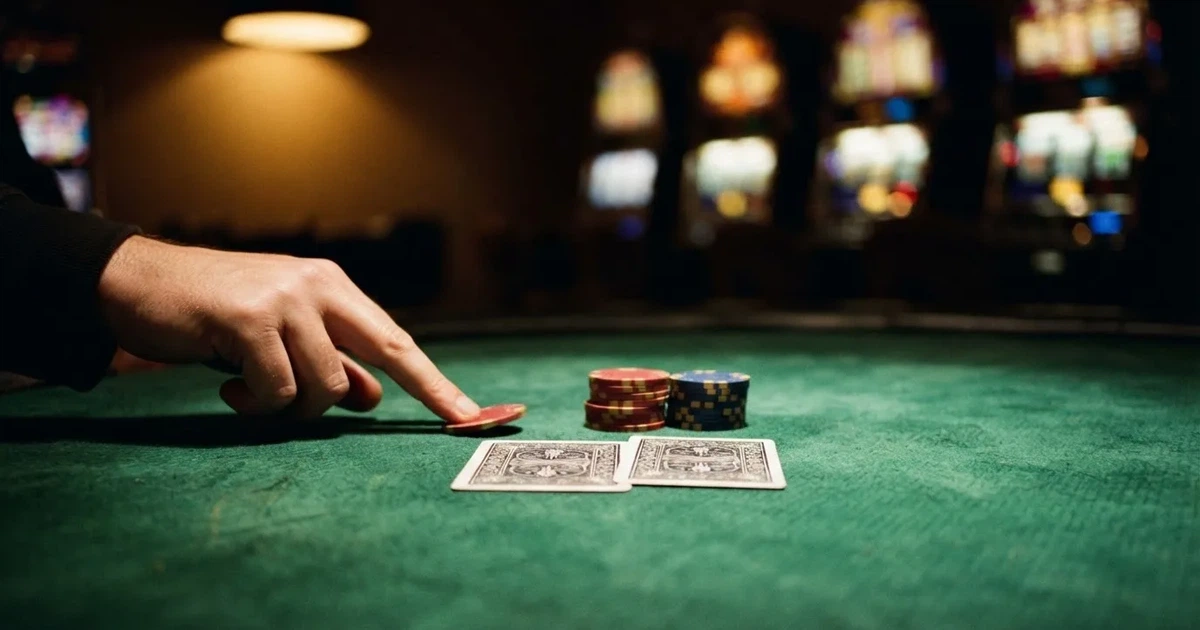
That distinction runs through everything that follows. The ranking on this page names eleven brands the ACMA has itself acted against; each entry sits at the table because the regulator put it there. None is recommended as a place to play. The mechanics of jackpots, the comparison block, the responsible-gaming frame and the FAQ exist to give a reader in Australia the working knowledge they came for, framed against what the law actually lets them do with it.
29 October 2026 · Verified against ACMA formal warning publications, the Interactive Gambling Act 2001, and VGCCC public registers
Table of Contents
- Why an Australian shortlist of online jackpot pokies looks the way it does
- The 2026 enforcement picture for jackpot pokies aimed at Australians
- Where the offshore list sits against the legal one
- Responsible gambling around jackpot pokies in Australia
- What jackpot pokies actually look like to a player
- Other games Australians see in the same casino setting
- What an offshore “shortlist” actually costs a reader
- The eleven brands the ACMA has named — and why the page names them
- The blocking rate, in plain arithmetic
- Where Australians can play jackpot-style pokies lawfully
- Frequently asked questions
Why an Australian shortlist of online jackpot pokies looks the way it does
The shelf the ACMA keeps filling
Between November 2019, when the first blocking request went to Australian internet providers, and the middle of 2026, the ACMA has had 1,751 illegal gambling and affiliate marketing websites blocked, and more than 230 unlicensed gambling services have left the Australian market since enforcement was widened in 2017. A round reported on 26 June 2026 alone added twelve names: 7Signs, ChromaBet, Donbet, Duospin, Freshbet, Slots Gem, Jacks Club, Lucky Start, Pointsbetz, Spinrise, Vinyl Casino and Wildsino. The list does not shrink between rounds; the regulator keeps adding to it.

Australians are estimated to lose about A$3.9 billion a year to illegal gambling sites according to H2 Gambling Capital’s 2025 report. The same report put the share of gambling flowing through legal Australian channels at 64% in 2025, down from 74% in 2021 — a ten-point fall that, if it holds, is the most concrete cost of the offshore market to the regulated one. None of that is a justification for using an unlicensed site. It is the background against which any reader’s decision is being made.
What “big jackpot pokies” actually means
The headline numbers attached to jackpot pokies are not marketing language, they are payouts. The largest online slot jackpot on the public record is €19,430,723.60, won on 27 April 2021 by a player in Belgium playing Microgaming’s Absolootly Mad: Mega Moolah at Napoleon Sports & Casino. Games Global, the business Microgaming became, has continued to administer the Mega Moolah network and has reported later wins of £11.5 million and 13.5 million. The format itself is older than any of these payouts: progressive jackpots were first installed in large casinos in 1986, with the inaugural IGT Megabucks jackpot of US$4,988,842.17 paid on 1 February 1987.

A progressive jackpot grows with each losing wager, resets to a defined minimum once it is won, then begins accumulating again. Machines can be linked across one venue or across many venues in a wide-area network; the casino funds the growth out of a slice of its margin. A variant called a “must-hit-by” jackpot has a random number generator pick the exact payout amount within a preset range — say A$1,000 to A$3,000 — as soon as the previous jackpot is won, with no specific symbol combination needed to claim it. When a progressive grows large enough, the theoretical return on certain video-poker and Caribbean Stud Progressive variants can climb past 100%, producing a positive-expectation bet; the same break-even point is hard to compute for slot machines because reel layouts are not published.
The size of the headline tells a reader two things. It tells them how much the prize fund grew across every wager between wins. And it tells them how rare the win is, which is what makes the fund so large in the first place.
What the page covers, and what it does not pretend to cover
This page covers the legal landscape an Australian reader is operating inside, the ten-and-a-bit brands the ACMA has most recently acted against for offering jackpot pokies and online casino games to Australians, the mechanics of progressive jackpots themselves, and where Australians can play jackpot-style pokies lawfully. It does not offer a single brand as the place to play. A reader who arrived expecting that should keep reading, because the legal picture is the actual content of the question they typed.
The 2026 enforcement picture for jackpot pokies aimed at Australians
What the Interactive Gambling Act 2001 actually prohibits
The Interactive Gambling Act 2001, as strengthened by the Interactive Gambling Amendment Act 2017, makes it a civil offence to provide online casino games, online pokies or in-play betting to a person in Australia. No state or territory issues a licence for any of those services. What is licensable, in practice, is wagering on races and sport placed before the event, lotteries and keno — products regulated mostly through the Northern Territory Racing and Wagering Commission, which sits over 52 of Australia’s online bookmakers including Sportsbet, Bet365 and Ladbrokes from a Darwin base that has no full-time staff and meets monthly. The minimum age for any licensed gambling product in Australia is 18.
The IGA targets the provider, not the player. An Australian who opens an account at an offshore casino does not commit an offence under it. What they give up is the rest of the regulatory frame: no Australian consumer protection, no complaints body, no recourse if a withdrawal is refused or a bonus term is enforced in a way the player never agreed to. A balance sitting on an offshore site when the ACMA asks an ISP to block it can become unreachable overnight.
What enforcement looks like in practice
The enforcement spine has three levers. The ACMA investigates, issues formal warnings naming the operator, and asks Australian internet service providers to block the offending service. Since the first blocking request in November 2019, 1,751 illegal gambling and affiliate-marketing sites have been added to that list. Beyond blocking, more than 230 unlicensed gambling services have left the Australian market since 2017, some pulled by their operators after a warning, others hit with ISP-level blocks.
The history of formal warnings published by the ACMA shows the cadence. Dama N.V. was warned in May 2022 over six brands — Bambet, Dazard, Level Up, Rocketplay, Wild Tornado and Cobra Casinos. The same Dama N.V. was warned again in March 2025 over Woo Casino and in May 2025 over Spirit Casino. Bamboo Media was warned in July 2025 over Ignition Casino; Consolutetish S.R.L. was warned in the same month over National Casino and Bizzo Casino, with Bizzo having already drawn a 2022 warning to two TechSolutions entities. EOD Code SRL drew a warning in February 2025 over Instant Casino; Sterplay Holding Ltd in April 2025 over Casino Intense; Hollycorn N.V. over Sky Crown and Blue Leo; Ryker B.V. in April 2026 over Jackbit and CasinOK; Pulsup Ltd (RocketPlay), March 2026;
A formal warning is the ACMA’s first sanction. It does not by itself remove the site; it is the published step before a blocking request. The brands named in the table further down this page are there because the regulator put them there, in public, with the operator’s name beside them.
What the Interactive Gambling Amendment (Gambling Reform) Bill 2026 changes
The Interactive Gambling Amendment (Gambling Reform) Bill passed Parliament on 19 August 2026. Its advertising and inducement measures commence on 1 January 2027 — law with a start date, not yet in force at the time this page was written. The amendment tightens what licensed Australian wagering operators can do around offers; it does not legalise online casino or jackpot pokies, and it does not create any new category of offshore licence that covers Australian customers. The point of naming it on this page is so a reader who sees a “2026 reform” headline knows what was actually reformed.
Where the offshore list sits against the legal one
The shortlist of brands the ACMA has acted against is the page’s comparison block, and the comparison the table makes possible is not between brands’ bonus terms — bonus and voucher codes are not carried on this page — but between what the regulator has said about each operator. The verdict on every brand is the same: it is named here because the ACMA has named it, and the offer of online casino games or jackpot pokies to a person in Australia cannot be licensed anywhere in Australia.
| Brand | ACMA action and date | Operator named by the ACMA | Where it offers “subject support” |
|---|---|---|---|
| RocketPlay | Formal warning, March 2026; earlier Dama N.V. warning, May 2022 | Pulsup Ltd | — |
| Level Up Casino | Formal warning, May 2022 | Dama N.V. | Listed by Bgaming (listings-only) |
| Woo Casino | Formal warning, March 2025 | Dama N.V. | — |
| Spirit Casino | Formal warning, May 2025 | Dama N.V. | — |
| National Casino | Formal warning, July 2025 | Consolutetish S.R.L. | en.wikipedia.org (listings-only) |
| Bizzo Casino | Formal warning, July 2025; earlier 2022 warning to TechSolutions | Consolutetish S.R.L. | — |
| Ignition Casino | Formal warning, July 2025 | Bamboo Media | — |
| Instant Casino | Formal warning, February 2025 | EOD Code SRL | — |
| Jackbit | Formal warning, April 2026 | Ryker B.V. | — |
| Casino Intense | Formal warning, April 2025 | Sterplay Holding Ltd | Listing surfaces only on the ABC, acma.gov.au and Crown Melbourne (listings-only) |
| Sky Crown | Formal warning as published | Hollycorn N.V. | — |
The “subject support” column is intentionally thin. Two research listings place Level Up Casino on Bgaming.com’s catalog and National Casino on Wikipedia; Casino Intense shows up on the ABC, the ACMA’s own publication and Crown Melbourne’s site — none of those endorsements is the operator’s own claim about what it offers Australians. The rest of the column carries the article-language no-data marker because the regulator’s publication does not. A reader looking for a feature this table does not show — RTP on a specific title, a payment method supported here, a game provider not listed there — should treat the absence as the answer.
What the brand set looks like in aggregate
Eight of the eleven names appeared in formal warnings issued between February 2025 and April 2026. Three — Level Up Casino, Bizzo Casino’s earlier 2022 warning to the TechSolutions entities, and Sky Crown — are older entries that the ACMA is still naming in 2026 summaries. The corporate pattern is also visible: Dama N.V. accounts for three of the eleven entries, and warned-twice Dama brands account for two of those. A reader who has seen any one of these names on a casino comparison site should treat it as part of a recurring shortlist rather than an isolated promotion.
The blocking rate tells its own story. The first Australian ISP-level blocking request went out in November 2019. By the middle of 2026, 1,751 illegal gambling and affiliate-marketing sites had been added to that list. That is roughly 257 sites per year over the seven years from November 2019, or about five a week on average — a sustained enforcement pace that, importantly, has never produced a steady-state list of “all illegal sites accounted for”. The list grows; it does not plateau, because the market it regulates produces new brands faster than the regulator can clear the old ones.
A precise figure with a single condition is misleading here. The relevant band is that the page is written against a list of roughly 1,750 blocked sites accumulated over about seven years, expanding at roughly five sites a week on average, and not trending toward zero. Two conditions hold that band together: that the ACMA continues to publish blocking rounds at the rate research records, and that offshore operators continue to register new domains to replace warned ones. Either condition loosening would change the next year, not the figure on this page.
Responsible gambling around jackpot pokies in Australia
What the regulated frame gives a player
Australian-licensed wagering services are connected to BetStop, the National Self-Exclusion Register, which has been live since August 2023. A person who registers with BetStop is barred from every Australian-licensed online and phone wagering service for a chosen exclusion period. Offshore casinos are not connected to it. Self-excluding only matters if the exclusion covers the products a person actually plays, and the self-exclusion that exists covers wagering and lottery products, not offshore online casino games.
The National Gambling Helpline is 1800 858 858, free, 24/7, with online chat available through Gambling Help Online. State and territory gambling help lines also operate alongside it. For players who want their account closed and their balance handled somewhere with consumer-protection teeth, this is the framework that exists. For players who play jackpot pokies at an offshore site, the framework is one they have stepped outside.
The credit-card and crypto ban that defines a legal deposit
Since 11 June 2024, credit cards, credit-related products and digital currency have been banned as payment for any licensed online wagering service in Australia. The operator penalty for breach is up to A$247,500. Legal deposit routes for a licensed wagering account are debit card, bank transfer, PayID and Osko, and BPAY. A casino asking an Australian customer for a credit-card or cryptocurrency deposit is operating outside the rules the Australian regulator writes; the deposit method, more than the licence emblem, is what gives away the offshore site.
What the tax frame looks like for a recreational player
Gambling winnings of a recreational Australian player are not assessable income under section 6-5 of the Income Tax Assessment Act 1997. Losses are not deductible. Tax obligations change if the ATO considers a person to be carrying on a business of gambling — model only, and a recreational punter is not at that threshold. The point of stating the rule plainly is to head off the easy guess that a big jackpot carries income tax with it.
What jackpot pokies actually look like to a player
The mechanics: paytable, hit frequency and the wide-area network
A jackpot pokie is, at the betting layer, an ordinary pokie with one extra column in its paytable — the progressive jackpot itself. The wagering that feeds the progressive is a small slice of every losing spin; the rest plays through the regular paytable as on any other machine. A wide-area progressive links the same jackpot across many venues, which is what produces the €19.4 million payouts the public record keeps citing: the prize pool only becomes that large because wagers from thousands of machines feed it. A standalone progressive, attached to a single machine, peaks much lower and sooner; the difference in headline numbers is mostly a difference in how many losing wagers sit between wins.
A “must-hit-by” jackpot introduces a separate condition. The random number generator picks the actual payout amount within a preset range the moment the previous jackpot is won. The win condition is no longer “land this combination on the reels”, it is “be the player who happens to be playing when the random number passes the threshold”. The headline reads as a fixed figure; the underlying mechanic is a randomly-drawn figure within a band.
The titles an Australian reader will see named
On a land-based club or pub floor in Australia, progressive jackpot pokies are common — the standalone machines on which the cash jackpot builds across one venue or a small network, and the wide-area networks linking multiple venues. The Australian-licensed online space, because it does not offer casino games online, does not carry progressive jackpot pokies over the internet. The catalogue the reader is searching for exists on licensed floors and in land-based casinos.
Where the labelled jackpots actually appear
The very largest online jackpots are the Mega Moolah network — Absolootly Mad: Mega Moolah and its sister titles — administered by Games Global. The historical high is €19.4 million; later wins on the network have reached £11.5 million and 13.5 million. The IGT Megabucks network set the genre with its February 1987 inaugural payout. Beyond those, individual suppliers carry their own branded wide-area progressives, and a stand-alone pokie in a club may carry a local jackpot that runs into the tens of thousands. The headline number is the cumulative losing-wager figure across the network, not a feature of any single machine.
Other games Australians see in the same casino setting
A reader looking at jackpot pokies on a club or casino floor will sit near tables running other games; the same licensing regime approves them. The constants across the tables are the published house edges and the regulator’s approval of the rules before the table opens.
Blackjack
The pre-Internet predecessor was the English game vingt-un; a Spanish variant veintiuno appears in Cervantes’ Rinconete y Cortadillo, written around 1601-1602, and formal rules for the game were published in Britain in 1800. The game took its modern name around 1899, with Klondike Gold Rush prospectors usually credited. Number cards count at face value, jack/queen/king at 10, and an ace at 1 or 11. A starting two-card total of 21 is the strongest hand, called a natural or “blackjack”.
Under optimal strategy, the house edge on a Las Vegas Strip-style shoe is around 0.28% (dealer stands on soft 17, double on any two, double after split, resplit aces, late surrender) and around 0.43% under Atlantic City rules. Variant rules move that number: Spanish 21 removes all 10s from the shoe but offsets that with player-favourable rules; Double Exposure deals both dealer cards face up; Blackjack Switch lets a player swap the top cards between two hands; Super Fun 21 allows up to four splits.
In Victoria, the Victorian Gambling and Casino Control Commission (VGCCC) — which replaced the VCGLR as Victoria’s casino regulator on 1 July 2022 — must approve the rules for any blackjack variant at the Melbourne casino before it opens, and must approve any later change. The VGCCC’s public log records, among recent changes, the renaming of the “Perfect Pairs” side bet at Crown Melbourne to “Crown Pairs” on 23 December 2024 and the introduction of a “Free Bet” option with a new “Pot of Gold” side bet on 25 March 2024.
Baccarat
Baccarat’s origin is contested — some accounts place it in nineteenth-century France, others at the Italian court at the end of the fifteenth century — with Thierry Depaulis attributing the immediate precursor to the game Macao. Punto banco, the variant played in most casinos today, was developed in Havana in the 1940s. Cards 2 through 9 count at face value, 10/J/Q/K at zero, aces at one; hand totals are taken modulo 10. Punto banco is dealt from a shoe of six or eight decks, the casino banks the game at all times, and both hands are played out by fixed drawing rules.
The house edge is 1.06% on the Banker bet, 1.24% on the Player bet and 14.36% on the Tie. Under section 66 of the NSW Casino Control Act 1992, a casino operator must not permit a game like baccarat to be played unless both the game and its rules have been approved by the regulator, and a copy of the approved rules has to be made available to patrons on request. Crown Melbourne lists three approved baccarat variants — Traditional Baccarat, Crown Baccarat and 2 to 1 Baccarat — under the VGCCC’s approval.
Craps
In craps, the Pass/Come bet has a house edge of 1.41%, Don’t Pass/Don’t Come 1.36%, and Any Craps 11.11%. The come-out roll wins immediately on 7 or 11, loses immediately on 2, 3 or 12, and any other total becomes “the point”, which the shooter must then roll again before a 7 to win the Pass Line bet. Craps surfaces in Australian licensed settings alongside blackjack and baccarat; it is part of the same licensing frame.
What an offshore “shortlist” actually costs a reader
A reader can open an account at any offshore casino. The IGA does not criminalise that. What the reader gives up by doing so is concrete: no Australian complaints body if a withdrawal is refused or a bonus term is enforced against them; no recourse if an algorithm misprices a progressive jackpot win; no protection if the regulator blocks the site while a balance sits on it; no BetStop exclusion feeding into the brand because BetStop covers only Australian-licensed services. The blocking rate is part of the cost: roughly 257 sites added per year under the present enforcement pace is also roughly 257 weeks of promotional spend the offshore sector is writing off, and that spend recovers itself by recruiting replacements.
The cost of legal play is its own thing. On a land-based pokie floor in a licensed club, the RTP, jackpot contribution, and any wide-area linkage are all regulator-approved and the bottom line of a session is bounded by the rules on the published paytable, with complaints pathways that exist. The recreational player’s tax position is the same as on any other gambling product in Australia — winnings are not assessable income and losses are not deductible unless the ATO considers the person to be carrying on a business of gambling. None of this changes whether the reader plays; it changes the consequences of where they play.
The eleven brands the ACMA has named — and why the page names them
RocketPlay
RocketPlay draws two formal warnings from the ACMA. The first went to Dama N.V. in May 2022 as part of a six-brand batch; The second, in March 2026, went to Pulsup Ltd, naming the Rocketplay.com.au domain. Both are steps in an open-enforcement sequence; the regulator has had cause to publish its concerns about the brand twice in four years. The repetition, more than either warning alone, is the picture this brand presents in 2026.
Level Up Casino
Level Up Casino sits in the May 2022 Dama N.V. six-brand batch. Research turns the brand up as a listing on Bgaming.com’s catalog — that is the only “subject support” the research file carries for it, alongside the ACMA’s published action. The brand’s standing here is defined by one warning and a third-party catalog entry, and nothing else.
Woo Casino
Dama N.V. drew a second batch of formal warnings over Woo Casino in March 2025. That is one warning from one operator in the ACMA’s own publication; the rest of Woo Casino’s profile reflects the available records, with nothing in the research file to fill any further gaps.
Spirit Casino
Spirit Casino is the second Dama N.V. brand warned in the second batch, in May 2025. Two Dama brands warned within two months of each other is the same pattern that produces the ACMA’s six-brand 2022 batch; the corporate link is what the published record shows.
National Casino
Consolutetish S.R.L. drew a warning in July 2025 over National Casino. The research file places a National Casino listing on Wikipedia; that is the only “subject support” the brand carries beyond the regulator’s warning. The pairing — one warning, one encyclopaedic listing — is the picture research supports.
Bizzo Casino
Bizzo Casino is the brand with the longest published history on this page. The first ACMA formal warning over it went to two TechSolutions entities in 2022. The second, in July 2025, names Consolutetish S.R.L. — the same operator that drew the July 2025 warning over National Casino. A brand warned twice under two different operator names is a brand the regulator has had reason to publish about across multiple enforcement rounds.
Ignition Casino
Ignition Casino is named in the July 2025 formal warning to Bamboo Media. Beyond that published action the research file does not turn up anything more, and the brand’s entry on this page is exactly what that one named action gives it.
Instant Casino
The ACMA issued a formal warning to EOD Code SRL over Instant Casino in February 2025. That is the only “subject support” the research file carries — there is no third-party listing beyond the regulator’s own publication, and nothing in the file fills the gap.
Jackbit
Ryker B.V. drew a formal warning in April 2026 over Jackbit (and the same warning names CasinOK). The pairing matters because the ACMA’s warnings sometimes cover more than one brand at the same operator; Jackbit’s entry on this page is one warning for one brand and one co-listed sibling.
Casino Intense
Sterplay Holding Ltd drew a formal warning in April 2025 over Casino Intense. The research file lists the brand only as a listing on Abc.net.au, acma.gov.au and Crownmelbourne.com.au — three downstream sources, none of them endorsements by the brand.
Sky Crown
Hollycorn N.V. drew a formal warning over Sky Crown and Blue Leo, as the ACMA’s September 2022 publication records. Sky Crown remains on the regulator’s list as a legacy entry from that period.
The reader takeaway
The brand-level verdict is the same on every row of the table: each brand sits there because the ACMA has named it, and offering online casino games or jackpot pokies to a person in Australia cannot be licensed. The differences across rows are chronological — when the regulator acted, whether the same operator has been warned before, whether a third-party catalog still places the brand somewhere. None of those differences changes the standing position. They change what “still public” means, which is the only information research gives the reader to weigh.
The blocking rate, in plain arithmetic
The arithmetic on this page is the blocking rate the ACMA has produced since November 2019. The first ISP-level blocking request went out in November 2019; the ACMA reported in June 2026 that 1,751 illegal gambling and affiliate-marketing websites had been added since. Spread across the roughly 80 months between those two anchor points, that is about 257 new sites blocked per year, or about five per week on average.
The point of presenting this as a band rather than a single figure is that the regulator’s pace has not been uniform across those eighty months. Some blocking rounds added twelve names in one report; other rounds added two or three. The first blocking request set the starting count at one; the June 2026 round reports the same cumulative total. The condition that holds the band together is precisely that the regulator keeps publishing blocking rounds at a comparable pace — if the cadence slows or stops, the band changes, and the figure on this page will go out of date with it.
What this means for a reader is that an offshore casino brand on this page is part of a list that grows, not a list that closes. The brand has not been cleared because the regulator considers the issue resolved; it is on the published record because the regulator considered the issue worth publishing. The freshest of the eleven brands on this page was warned in April 2026, less than three months before the regulator’s June 2026 summary. The oldest is the September 2022 Hollycorn N.V. warning, still on the record after almost four years. The shelf is not being emptied.
Where Australians can play jackpot-style pokies lawfully
Licensed venues and the club-and-pub floor
The legal place to play jackpot pokies in Australia is on a licensed club, pub or casino floor. Every state and territory has its own regulator; the rules, RTP disclosures and jackpot contribution rates are published. New South Wales and Victoria carry the largest concentrations of licensed gaming machines; the Northern Territory’s pubs and clubs carry the smaller share. The cashier’s desk and the gaming-room signage are the only places the regulator’s jurisdiction visibly operates — every machine, every progressive link, every wide-area network on the floor has been approved in advance by the local regulator.
Land-based casinos
Crown Melbourne, Crown Perth, Crown Sydney, The Star Sydney, The Star Gold Coast, Treasury Brisbane, Adelaide Casino and the casino floors at Sky City Darwin are the licensed casino venues in Australia. Baccarat, blackjack, craps and other table games run alongside the pokie floors under each venue’s licence; the regulator’s approval covers both the games and the rules under which they are played. Online play of any of those games, including jackpot pokies, is not approved for Australian customers anywhere, including by these casinos.
What “online jackpot pokies” means inside the law
There is no regulated Australian online casino product because the IGA prohibits the offering. BetStop covers licensed Australian wagering services — sports, racing, lotteries — not casino games. The deposit rules that govern licensed wagering (no credit cards, no crypto since 11 June 2024) are a property of those products, and the offshore sites that target Australians do not have to follow them. A reader who wants to play jackpot pokies inside Australian consumer-protection law plays them on a licensed floor, in person, with a carded venue at the address on their licence.
Frequently asked questions
What is the largest jackpot ever recorded on an online slot?
The largest online slot jackpot on the public record is €19,430,723.60, won on 27 April 2021 by a Belgian player on Microgaming’s Absolootly Mad: Mega Moolah at Napoleon Sports & Casino. Games Global, which now distributes the Mega Moolah progressive series, has reported later Mega Moolah wins of £11.5 million and 13.5 million on the same network.
How does a progressive jackpot pokie differ from a fixed-prize one?
A progressive jackpot grows with each losing wager across the linked network until it is won, then resets to a defined minimum and starts accumulating again. A fixed-prize pokie offers the same top payout on every spin regardless of how long the machine has been idle. Progressive jackpots may also be linked across a single venue or across a wide-area network of many venues, which is what produces the multi-million-euro headline totals.
Is it legal for an online casino to offer jackpot pokies to Australians?
No. The Interactive Gambling Act 2001, as strengthened by the Interactive Gambling Amendment Act 2017, makes it a civil offence for an offshore operator to provide online casino games, online pokies or in-play betting to a person in Australia, and no state or territory issues a licence for the service. The player is not the subject of an offence; the operator is. The ACMA enforces this through formal warnings and ISP-level blocking of offending sites.
Can a free version of a jackpot pokie show the real jackpot total?
No. A free version of a progressive jackpot pokie plays through the same reels and bonus rounds, but the progressive prize pool is tied to real wagers on the paid version of the game. The figure shown in a free version is usually the last known paid-network total or a static display, not the live pool growing in real time. To see the live total grow, the wager has to be on the paid game with the network connected.
Are jackpot-style pokies common on licensed Australian club and pub floors?
Yes. Licensed Australian venues carry progressive jackpot pokies, both as standalone machines linked across one venue and as wide-area networks that link multiple venues under a single jackpot pool. The headline numbers are smaller than the multi-million-euro online networks because the contributing pool of machines is smaller, but the format itself is standard on Australian floors under each state’s regulator.
What determines how quickly a progressive jackpot grows?
Three things. The size of the slice of every wager that is allocated to the progressive pool, the total volume of wagers being fed into the network (so a wide-area network of many venues grows faster than a single standalone machine), and the level at which the jackpot is set to reset after a win — the higher the reset floor, the longer the next growth cycle runs before the next payout. A wide-area network with a low per-wager contribution and a low reset can still produce rapid cumulative growth, which is what makes a multi-million-euro online network possible.