
Casino sites that accept a credit card from Australia in 2026
Updated as of 29 October 2026 against the Australian Communications and Media Authority’s published register of formal warnings and blocking requests.

A credit card looks like the simplest way to move money into an online casino, and offshore marketers lean hard on that simplicity. The legal shape around it is anything but. Since 11 June 2024 no Australian-licensed online wagering service is allowed to take a credit card, a credit-related product, or a digital currency as payment, with civil penalties up to A$247,500 for non-compliant operators. Online casino games and online pokies are not licensable anywhere in Australia at all, under the Interactive Gambling Act 2001 as amended in 2017, so a “credit card casino” aimed at Australian players is by definition operating outside the local regime. What follows is the picture that gives a reader: what the card can and cannot do at the checkout, which issuers and apps already block the transaction before it leaves the wallet, what an ACMA formal warning means when one appears on a brand’s record, and the eleven operators the regulator has acted against most recently. The angle is cost — what a credit-card deposit really costs the person paying it, in fees, in blocked authorisations, and in the absence of any Australian complaint channel if a withdrawal is refused.
Table of Contents
- The current shape of credit cards at Australian online casinos
- The legal frame the card sits inside
- Why a bank may block the transaction at the checkout
- How deposits and withdrawals move through the system
- The blocking-rate picture since 2019
- The eleven operators on the ACMA’s recent record
- What responsible play looks like at this intersection
- The cost the player is actually paying
- The short version
- Frequently asked questions
The current shape of credit cards at Australian online casinos
The starting point is the simplest one: the category itself is mostly a fiction. The 2024 ban closed the lawful route, and the only places still offering “credit card accepted” to an Australian IP are offshore operators running on licences issued elsewhere, Curaçao and Anjouan among them, and serving a market the local regulator treats as prohibited.

What that means for a player sitting in Sydney or Perth is a tidy paradox. The marketing page says yes. The card-issuing bank may say no. The merchant-code system that drives both answers is the same one, and the bank wins.
Macquarie Bank moved first among the Australian majors, blocking any transaction classified as gambling under the merchant codes on its credit cards from 1 July of the year it announced. The other three majors followed a different route: instead of a flat ban, they let the customer switch on a gambling transaction block through the mobile app. CommBank customers do it in NetBank or the CommBank App’s card settings; ANZ customers do it in the ANZ app; NAB customers do it through the NAB app; Westpac customers do it through online banking’s card services menu. Westpac’s block works at the card level and refuses authorisation of any transaction registered under the merchant category code “Betting/Casino Gambling” on eligible personal credit and debit cards. ANZ’s block goes further: it blocks gambling transactions made through a digital wallet such as Apple Pay on an eligible card, not just the physical card, and once it is on, removing it again requires a 48-hour waiting period. The bank warns in the same notice that not all gambling transactions will be blocked and some non-gambling transactions might be blocked in error, which is the honest summary of any merchant-code system.
The shape of an offshore “credit card casino” is therefore a checkout that may decline at the issuing bank, a balance on the casino side that is governed by a Curaçao or Anjouan licence rather than the Interactive Gambling Act, and a regulator on the Australian side that has been steadily adding formal warnings to operators in this space. The H2 Gambling Capital 2025 report estimates that Australians lose about A$3.9 billion a year to illegal gambling sites, and that the share of gambling going through legal channels fell from 74% in 2021 to 64%.
The legal frame the card sits inside
The Interactive Gambling Act 2001 is the controlling statute, and the 2017 amendments did the work that matters here. It is an offence to provide online casino games, online pokies or in-play betting to a person physically in Australia; no state or territory licences those products. What is licensable is wagering on races and sport placed before the event, lotteries and keno, and in practice most online bookmakers (Sportsbet, Bet365, Ladbrokes among them) are licensed by the Northern Territory Racing and Wagering Commission for tax reasons. The commission has no full-time staff and meets once a month in Darwin, which is its own footnote on what “licensed” means in this market.
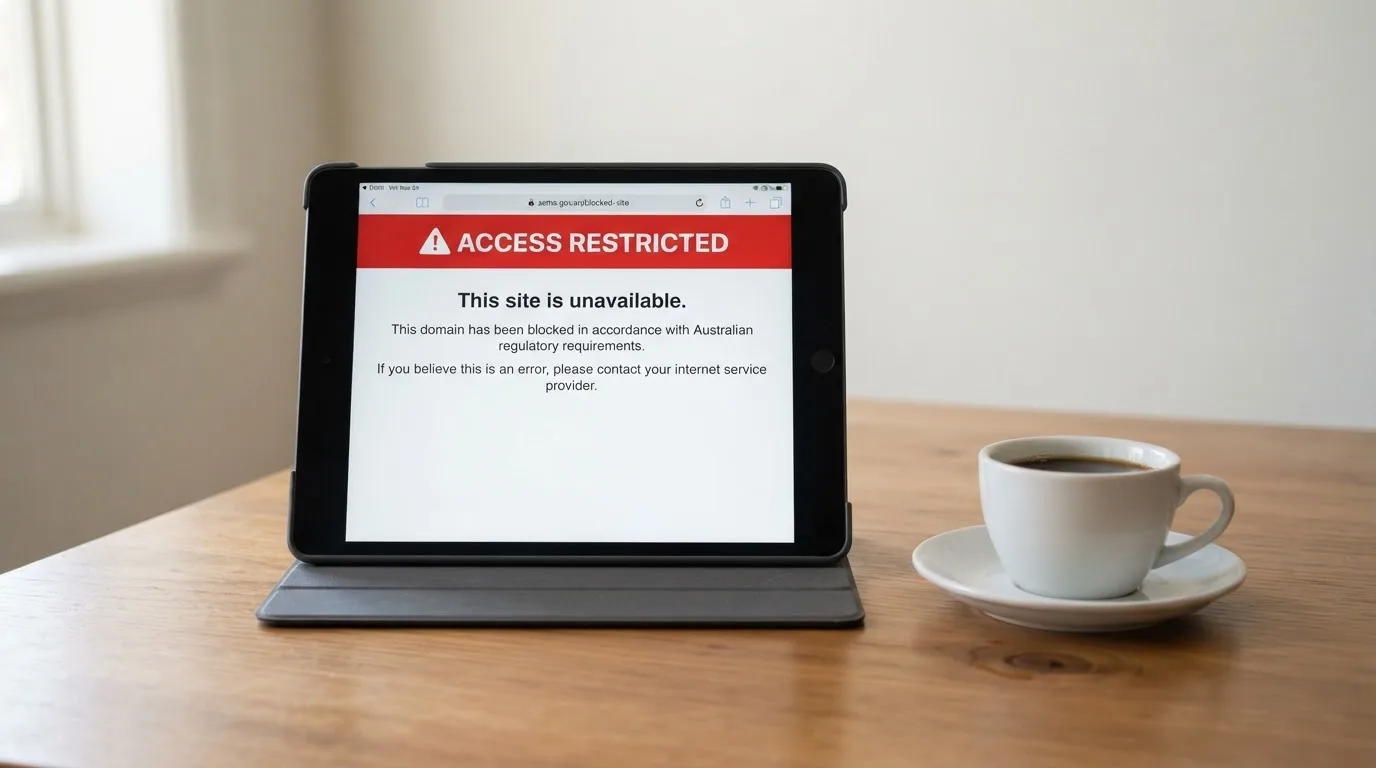
The 2024 credit-card ban was a separate reform that sat on top of the 2018 ban on online wagering providers offering credit to Australian customers. From 11 June 2024 the prohibition extends to credit cards, credit-related products such as digital wallets, and digital currencies, with the ACMA overseeing compliance. Penalties for non-compliant operators run up to A$247,500.
The 2026 reform sits further down the track. The Interactive Gambling Amendment (Gambling Reform) Bill 2026 passed Parliament on 19 August 2026, with its advertising and inducement measures commencing 1 January 2027, so on a page read in 2026 it is law with a start date, not yet in force.
What the frame does to a player is the relevant part. The IGA targets the provider, not the punter, so the individual player is not prosecuted for placing a bet through an offshore site. What the punter does not get is the other half of the bargain. There is no Australian consumer protection, no local complaints body, no recourse if a withdrawal stalls, and the site can be blocked by an Australian ISP with a balance still sitting on it. BetStop, the National Self-Exclusion Register, has been live since August 2023 but binds only Australian-licensed online and phone wagering services, so an offshore casino is not connected to it. The National Gambling Helpline is 1800 858 858, free, 24/7, with chat at Gambling Help Online.
A side note that matters for credit cards specifically: Skrill warns that funding gambling with a credit card can make the card issuer charge a “cash advance” fee. That is a separate cost from any surcharge the merchant would pass on, and it sits on top of the interest a credit-card balance already accrues. From 1 October 2026 the Reserve Bank is removing surcharging on debit, prepaid and credit card payments on the designated eftpos, Mastercard and Visa networks, with American Express, BNPL services and Diners Club outside the scope of the ban, so the surcharge line item is going away on most cards, but the cash-advance treatment is a card-issuer rule and survives the change.
Why a bank may block the transaction at the checkout
The mechanism behind the bank-side block is the merchant category code. Every transaction a card-issuer sees is tagged with one, and “Betting/Casino Gambling” is one of them. When the issuer sees that code, it decides whether to authorise the transaction based on the customer’s settings: a card-level ban on gambling (Macquarie’s default for credit cards), a customer-switched gambling block (the other three majors), or neither. The same transaction is then visible to the merchant’s acquirer, which is how a casino with a Curaçao licence sees it as a “credit card deposit” and an Australian bank sees it as a gambling transaction.
A few consequences follow from the mechanism. A digital wallet does not get around it, because the wallet’s transaction still carries the underlying card’s merchant code, and ANZ explicitly warns that its gambling block applies to Apple Pay on an eligible card, not just the physical card. A debit card is governed by the same code, so the gambling block on a Westpac debit card works exactly the same way as on a credit card. Surcharges are going away on eftpos, Mastercard and Visa from 1 October 2026, so the merchant-cost argument for using a credit card over a debit card is thinning out for everyone except American Express, BNPL and Diners Club, which sit outside the ban. Apple Pay itself does not charge consumers a fee in stores, online or in apps, so any surcharge a casino attaches is the merchant’s own processing cost, not Apple’s. Transaction limits and PIN requirements for Apple Pay purchases are set by the card issuer or merchant, not by Apple.
The practical shape: a player with a gambling block on, even one turned on for safety, will see most offshore credit-card casino deposits declined at the issuing bank. A player with no block on will see the deposit go through, will see a cash-advance fee on the statement if the issuer classifies it that way, and will have no local complaint channel if the withdrawal is then refused. Both paths are decisions.
How deposits and withdrawals move through the system
A credit-card deposit at an offshore casino is, on the casino side, the same kind of transaction as buying a pair of shoes online. The merchant’s acquirer takes the card details, the issuer authorises or declines, and on approval the funds settle into the casino’s merchant account. The settlement time is usually a few minutes for the deposit to appear in the casino balance, and on the cardholder side the transaction posts on the next statement.
Withdrawals are the slower part. Most offshore casinos will not pay a withdrawal back to a credit card; the typical pattern is that the casino pays out to a bank transfer, an e-wallet, or a digital currency, and the player waits on the casino’s processing queue first. The 2024 ban does not change any of this for offshore sites, because the ban binds only Australian-licensed online wagering services.
The Australian alternative rail is faster than the casino one. Osko, the instant-transfer layer on Australia’s New Payments Platform, moves money between participating Australian banks in under a minute, 24/7 including weekends, whether addressed to a BSB and account number or to a PayID. The New Payments Platform went live to the public on 13 February 2018 and is owned by New Payments Platform Australia Ltd, a non-profit company whose 13 shareholders include the Reserve Bank of Australia and the country’s major banks; participants must keep the platform’s monthly outages to no more than two minutes, and in 2021 the ACCC authorised merging NPP Australia with BPAY and eftpos into a single company, Australian Payments Plus. PayID-based instant transfers are available at over 100 Australian financial institutions, and more than 25 million PayID identifiers were registered on the platform as of April 2025. Paying to a PayID shows the name of the account holder before the transfer is sent; AP+ warns that being asked to transfer money to a PayID on an illegal gambling site almost certainly means a scam site.
For a licensed Australian wagering service the lawful deposit routes are debit card, bank transfer, PayID and Osko, and BPAY. A site asking an Australian for a credit card or a crypto deposit is operating outside the Australian rules.
AUSTRAC’s threshold-transaction-report rule, which requires reporting of transfers of A$10,000 or more, applies only to physical cash; ordinary electronic bank transfers are not subject to that per-transaction reporting requirement, regardless of the amount sent.
The blocking-rate picture since 2019
The arithmetic that belongs to this page is the rate at which the regulator has been closing sites since the first blocking request. By June 2026, the ACMA had asked Australian ISPs to block a total of 1,751 illegal gambling and affiliate marketing websites since the first blocking request in November 2019, and more than 230 unlicensed gambling services had left the Australian market since enforcement was strengthened in 2017. The June 2026 round alone added 12 more: 7Signs, ChromaBet, Donbet, Duospin, Freshbet, Slots Gem, Jacks Club, Lucky Start, Pointsbetz, Spinrise, Vinyl Casino and Wildsino. Read as a band, the regulator is now closing somewhere between roughly 200 and just over 300 sites a year across blocking requests and voluntary exits, with the rate sitting in the middle of that range in any given twelve-month window and the figures above pinning the endpoints. The relevant condition is that the total is a running count, not an annual one, so any single year’s share depends on which calendar slice is being measured.
For a player, the picture is not that the regulator is chasing one operator at a time. It is that the category is shrinking slowly, and that any operator who is still on the list is there because the regulator has not got to them yet, not because they have been cleared.
The eleven operators on the ACMA’s recent record
The list below is not a ranking and is not a recommendation. Each brand is included because the ACMA itself issued a formal warning over it for offering prohibited services to Australians. No bonus terms are given for any of them, because the only sources for those terms were affiliate marketing pages, and printing them would have meant reproducing marketing rather than reporting it.
Settling the picture on credit-card casino checks
| Operator | ACMA action and date | Operator named by the ACMA | Credit-card support |
|---|---|---|---|
| RocketPlay | Formal warning, March 2026; earlier warning to a related operator, May 2022 | Pulsup Ltd (Rocketplay.com.au); earlier Dama N.V. | — |
| Level Up Casino | Formal warning, May 2022 | Dama N.V. | Westpac listings report the brand as a known gambling merchant |
| Woo Casino | Formal warning, March 2025 | Dama N.V. | — |
| Spirit Casino | Formal warning, May 2025 | Dama N.V. | — |
| National Casino | Formal warning, July 2025 | Consolutetish S.R.L. | AUSTRAC and public reporting list the brand as a known gambling merchant |
| Bizzo Casino | Formal warning, July 2025; earlier warning, 2022 | Consolutetish S.R.L.; earlier TechSolutions (CY) Group Limited and TechSolutions Group N.V. | — |
| Ignition Casino | Formal warning, July 2025 | Bamboo Media | — |
| Instant Casino | Formal warning, February 2025 | EOD Code SRL | EcoPayz and PayID listings name the brand as a known gambling merchant |
| Jackbit | Formal warning, April 2026 | Ryker B.V. | — |
| Casino Intense | Formal warning, April 2025 | Sterplay Holding Ltd | AUSTRAC, ITNews and NAB listings name the brand as a known gambling merchant |
| Sky Crown | Formal warning, September 2022 | Hollycorn N.V. | — |
None of these brands is licensed to offer online casino games to a person in Australia. The Interactive Gambling Act 2001 makes the product itself prohibited, so any licence the site displays from another jurisdiction does not change the position in Australia. A “credit card accepted” line on the cashier page is therefore a feature of the offshore merchant, not a sign that the product is lawful locally. Several of the brands have been the subject of more than one formal warning; Dama N.V. alone has been named by the ACMA over four of them across 2022 and 2025, and a 2022 warning to TechSolutions over Bizzo Casino is a separate line on the same brand from a different operator-entity.
RocketPlay
Pulsup Ltd picked up the most recent warning over Rocketplay.com.au in March 2026, and the brand had already been the subject of a May 2022 warning to Dama N.V. under a different operating entity. The product on offer is online casino games, which the Interactive Gambling Act prohibits from being supplied to a person in Australia at all. The brand has been named by the ACMA across two separate actions over four years, which is more regulatory attention than most operators on this list have received, and it remains a brand a reader will see marketed through affiliate channels rather than a brand with an Australian licence. The honest read is that the regulator has not finished with it, and the reader who arrives through an offshore affiliate link is buying into a product whose legal status in Australia has been stated twice on the public record.
Level Up Casino
Dama N.V. took the May 2022 warning over Level Up Casino, alongside five other Dama brands named in the same action, and the brand remains on the affiliate marketing circuit. The Westpac listings report Level Up as a known gambling merchant, which is the data point that connects the brand to the merchant-code system at the Australian bank end. The card-issuer side of the picture is therefore documented in the listings the major banks publish; the regulator side is documented in the ACMA’s warning register. A player looking at Level Up through either lens is seeing the same product from two different angles.
Woo Casino
Dama N.V. was the named operator on the March 2025 formal warning, and the brand sits on the long Dama list of ACMA-named properties. No Australian licence covers what Woo Casino offers, and the warning is a public record of the regulator’s view. The brand is one of the smaller properties on this list by marketing footprint, but the regulatory footprint is the same shape as the larger ones: an offshore operator offering a prohibited product to Australian players.
Spirit Casino
Dama N.V. again, this time for a May 2025 warning. The pattern is the same: offshore operator, prohibited product, formal warning on the regulator’s record. Spirit Casino is a useful case for the reader because it illustrates how the Dama group of brands accumulates regulator attention over time without the warnings producing a change in the underlying Australian legal position.
National Casino
Consolutetish S.R.L. took the July 2025 warning, and the brand appears on AUSTRAC and on the public-facing merchant listings as a known gambling merchant. National Casino is one of the more heavily marketed Dama-adjacent properties on the affiliate circuit, and the AUSTRAC listing is the part of the picture that connects the brand to the anti-money-laundering reporting side of the Australian regime, which is separate from the ACMA’s consumer-protection side. The two listings together give a fuller picture of how an offshore casino shows up in the Australian regulatory architecture.
Bizzo Casino
Two separate warnings sit on the same brand. The July 2025 warning names Consolutetish S.R.L.; an earlier 2022 warning named TechSolutions (CY) Group Limited and TechSolutions Group N.V. over the same brand. That is the clearest illustration on this list of an offshore operator cycling through shell entities while keeping the brand name live in front of Australian players, and the ACMA has followed the brand across both. A reader seeing a “new operator” claim on an affiliate page for a brand that has been the subject of two ACMA warnings is being shown marketing, not a change of ownership in any meaningful sense.
Ignition Casino
Bamboo Media was the named operator on the July 2025 warning. Ignition Casino has a long history on the offshore circuit under various operator names, and the ACMA’s July 2025 action is the most recent Australian-side record of the regulator’s view. The product is the prohibited one; the operator name is the one on the warning; the licence the site displays is not an Australian one.
Instant Casino
EOD Code SRL took the February 2025 warning, and the brand is named on the EcoPayz and PayID merchant listings. The PayID listing in particular is the relevant one for a reader trying to understand how an offshore casino shows up on the Australian payments-side data. AP+ warns that being asked to transfer money to a PayID on an illegal gambling site almost certainly means a scam site, and Instant Casino is on the list of merchants PayID has visibility on. A player who tries to deposit through PayID at an Instant Casino cashier is therefore doing something the Australian payments infrastructure has data on, separately from whatever the casino’s own cashier page says.
Jackbit
Ryker B.V. took the April 2026 warning, alongside a sister brand, CasinOK, in the same action. The warning is the most recent on this list, and it sits at the front edge of the ACMA’s published register. Jackbit is marketed as a crypto-and-card casino, and the 2024 ban’s prohibition on digital currencies as payment for licensed wagering is the relevant Australian-side frame, though Jackbit is not licensed in Australia in the first place.
Casino Intense
Sterplay Holding Ltd took the April 2025 warning. The brand appears on the AUSTRAC, ITNews and NAB listings as a known gambling merchant, which means the brand is in three independent Australian data sources outside the ACMA register itself. NAB in particular carries a gambling-block setting in its mobile app, so the brand’s appearance on NAB’s merchant data is the operational data point behind why a player with the block switched on would see a Casino Intense deposit declined.
Sky Crown
Hollycorn N.V. took the warning published in September 2022, with the formal warning covering Sky Crown and Blue Leo. The warning is older than most on this list, and Hollycorn is one of the larger operator groups on the offshore circuit, which is why a single 2022 action names multiple brands. The September 2022 date is worth holding onto as a reminder that the ACMA’s register runs back further than the recent activity, and that older warnings do not expire.
What responsible play looks like at this intersection
The responsible-gaming supports relevant to credit-card gambling in Australia are the same supports relevant to gambling in general, with one twist: most of them are designed for the licensed product and do not reach the offshore one.
BetStop, the National Self-Exclusion Register, binds only Australian-licensed online and phone wagering services. An offshore casino is not connected to it, which is the part most readers do not know. Registering with BetStop will exclude a player from every Australian-licensed sports and racing bookmaker, and from licensed keno and lottery products online, but it will not stop a deposit at an offshore site.
The National Gambling Helpline is 1800 858 858, free, 24/7, with chat at Gambling Help Online. The counselling service is the channel that reaches people regardless of which product they have been using, because the helpline operates on the side of the person, not the side of the licence.
The bank-side block is the practical layer that does reach the offshore product, because it operates at the merchant-code level rather than the licence level. A player who has turned on a gambling transaction block with their issuer will see offshore casino deposits declined at the issuing bank, including at brands the player cannot otherwise identify as offshore. The block is the most reliable single layer of practical protection available to an Australian player, and the major-bank apps make it easy to switch on. The cost is the same 48-hour waiting period ANZ imposes on switching the block off, and the same warning every issuer carries: not every gambling transaction will be blocked, and some non-gambling transactions might be blocked in error.
Gambling Help Online and the state-level help lines (Victorian, NSW, Queensland, Western Australian and the rest) are the routes for someone who wants to talk to a counsellor. The minimum age for any gambling product in Australia is 18.
The cost the player is actually paying
Three costs sit on top of one another when an Australian player puts a credit card into an offshore casino. None of them are advertised at the cashier.
The first is the cash-advance fee the card issuer may charge. Skrill’s published fees warn that funding gambling with a credit card can make the card issuer charge a “cash advance” fee, and the cash-advance treatment also carries a different interest rate from a normal purchase, which is the second cost: the interest rate on the unpaid balance from the day the transaction posts, which is the standard cash-advance rule and not a casino-specific one. The third cost is the absence of any Australian consumer protection if the withdrawal is then refused or stalled, which is not a fee in dollars but is a cost in recourse. None of these are visible on the deposit screen.
The merchant-cost side is moving in the other direction. From 1 October 2026 the Reserve Bank is removing surcharging on debit, prepaid and credit card payments on the designated eftpos, Mastercard and Visa networks, so the surcharge line item the casino might have passed on is going away on those three networks. American Express, BNPL services and Diners Club are outside the scope of the ban, and the Reserve Bank’s July 2025 review explicitly left American Express outside the proposed surcharge ban. That is a real saving for a player using a Mastercard or Visa credit card at any merchant in Australia, and it does not change the legal position at an offshore casino.
The legal position is the line that does not move. Online casino games and online pokies cannot be licensed in Australia. The Interactive Gambling Act 2001 as amended in 2017 makes the product prohibited, and the 2024 credit-card ban adds the payment-method prohibition on top of it. A “credit card accepted” line on the cashier page of an offshore site is a description of what the merchant’s acquirer can process, and not a description of what is lawful for an Australian player.
The short version
A credit card is a payment method, and offshore casinos advertise it because it works at the merchant-code level for players whose bank has not blocked it. The 2024 ban closed the lawful route for any Australian-licensed product, and no Australian-licensed product offers online casino games or online pokies in the first place. What remains is the offshore category, and the ACMA’s running blocking rate since November 2019 is the clearest single measure of how steadily that category is being closed down: somewhere between roughly 200 and just over 300 sites and exits a year across blocking requests and voluntary departures, with 1,751 sites blocked in total by June 2026 and 230 services having left the market since 2017. The bank-side gambling block is the practical layer that reaches the offshore product, and it is the one a reader can switch on through a major-bank app in a few minutes. The cost the player pays when the block is off is a cash-advance fee on the card, a cash-advance interest rate on the balance, and the absence of any Australian complaint channel if a withdrawal stalls. None of those are advertised.
Frequently asked questions
Is it legal for an offshore casino site to take a credit card from an Australian visitor?
No Australian-licensed operator offers online casino games or online pokies, and the Interactive Gambling Act 2001 makes that product prohibited. An offshore site offering credit-card deposits to an Australian IP is therefore offering a product the local regime treats as prohibited; the “credit card accepted” line describes what the merchant’s acquirer can process, not what is lawful for an Australian player. The 2024 ban closed the credit-card route for any Australian-licensed online wagering service on top of that.
How quickly does a credit-card transaction typically settle at an offshore casino?
Deposits usually appear in the casino balance within a few minutes of authorisation, and the transaction posts on the cardholder’s next statement. Withdrawals back to a credit card are uncommon at offshore casinos; most pay out to a bank transfer, an e-wallet or a digital currency instead, and the wait depends on the casino’s processing queue rather than the card network.
Does paying by credit card offer any buyer protection if an offshore site refuses to pay out?
No. The Interactive Gambling Act targets the provider, not the punter, and an offshore site gives no Australian consumer protection, no local complaints body and no recourse if a withdrawal is refused. A chargeback through the card issuer is the only buyer-protection route available, and the card issuer’s willingness to run it on a gambling transaction is a separate question from the legal position.
Can a credit card be used to fund a licensed Australian venue the same way it is used online?
No. Since 11 June 2024 Australian-licensed online wagering services have been banned from accepting credit cards, credit-related products such as digital wallets, or digital currencies as payment, with penalties up to A$247,500 for non-compliant operators. A land-based venue at a licensed Australian premises takes the card at the counter through the retail card network, which is a separate channel from the online wagering one and is governed by the retail card surcharging rules.
What deposit limits are commonly attached to credit-card payments at offshore casino sites?
Offshore casinos publish their own deposit limits per transaction, per day and per week, and the limit is set by the merchant rather than by the card network or the Australian regulator. Most operators in this space set per-transaction limits well below the A$10,000 AUSTRAC threshold, but the limit varies by brand and is the kind of figure a player should read before claiming any promotion, because the casino’s stated limit is what the cashier enforces.
Why might a bank block a credit-card transaction flagged as gambling-related?
The merchant category code on the transaction is “Betting/Casino Gambling”, and the card issuer’s gambling-block setting decides whether to authorise it. Macquarie Bank’s default for credit cards is to block any transaction with that code; the other three majors let the customer switch a block on through the mobile app. ANZ’s block also covers digital-wallet transactions on the same card, and removing the block again requires a 48-hour waiting period.