
Online Pokies No Deposit Free Spins Australia
Current as of 29 October 2026, verified against the Australian Communications and Media Authority’s published formal warnings and blocking notices.
The offer sounds generous — sign up, get a stack of free spins on a pokie, no deposit asked. The marketing lives in that gap between “free” and “cost the player nothing,” because that gap is where the sign-up happens. In Australia the gap is wider than it is in almost any other market, and what sits in it is not a bonus but a prohibition: no offshore site offering online pokies no-deposit free spins to Australians is licensed to do so, every one of them operates under an interactive gambling prohibition the ACMA enforces, and the “free” sits inside a wagering requirement the page below unpacks rather than the page-top tagline sells.

Table of Contents
- Online Pokies No Deposit Free Spins Australia: Legal Check
- What the regulator has formally warned
- Keeping the offer in perspective
- How players pay — and what an offshore site asks for
- How no-deposit free-spins offers actually work
- The arithmetic: how long and how much to clear
- Why the marketing reach has shifted offshore rather than local
- What reading the regulator’s blocking rate shows
- How to read a free-spins offer as a cost
- Where this leaves the comparison table
- Reading list: the regulator’s record
- FAQ
Online Pokies No Deposit Free Spins Australia: Legal Check
The Interactive Gambling Act 2001, tightened by the 2017 amendments, makes it an offence to supply online casino games — including online pokies — to a person in Australia. No state or territory issues a licence for them. What gets licensed is wagering on races and sport placed before the event, lotteries and keno, and even that sits with the Northern Territory Racing and Wagering Commission for tax reasons rather than with the player’s home state.
The 2017 amendment strengthened the prohibitions on in-play betting and online casino games, gave the ACMA the power to direct Australian internet providers to block offending sites, and raised the penalties for suppliers. By the regulator’s own tally in June 2026, 1,751 illegal gambling and affiliate marketing websites had been blocked since the first blocking request in November 2019. The same June 2026 round named a fresh batch of twelve sites — 7Signs, ChromaBet, Donbet, Duospin, Freshbet, Slots Gem, Jacks Club, Lucky Start, Pointsbetz.com, Spinrise, Vinyl Casino and Wildsino — asking ISPs to cut access from Australian connections.

The individual Australian player is not the target. The Interactive Gambling Act aims at the provider, not at the punter, and no Australian has been prosecuted for the act of placing a bet with an offshore casino. The cost the law imposes on the player is not criminal but practical: no Australian consumer protection, no complaints body, no recourse when an offshore withdrawal stalls, and a real chance the site gets blocked with a balance still sitting in it. There is also no offshore operator for whom an Australian player can claim the ordinary protections — segregated player funds, dispute resolution, identity-verified withdrawals — that a licensed Australian bookmaker is required to provide.
A separate reform sits on the horizon but has not started. The Interactive Gambling Amendment (Gambling Reform) Bill 2026 passed Parliament on 19 August 2026, and its advertising and inducement measures commence on 1 January 2027. The day these bonuses appear on a page is, in the law’s reckoning, the day the new measures start biting at the marketing around them — not the operators the page lists, all of whom already operate outside the existing regime.
What the regulator has formally warned
Formal warnings are not rankings. They are the regulator’s published record of a specific operator found to be supplying a prohibited interactive gambling service. The eleven brands this page discusses are the ones the ACMA has named in those warnings — with the date the ACMA issued each one and the operating company on the warning. None of the table’s brands operates under an Australian licence, and describing them is not the same thing as recommending them.
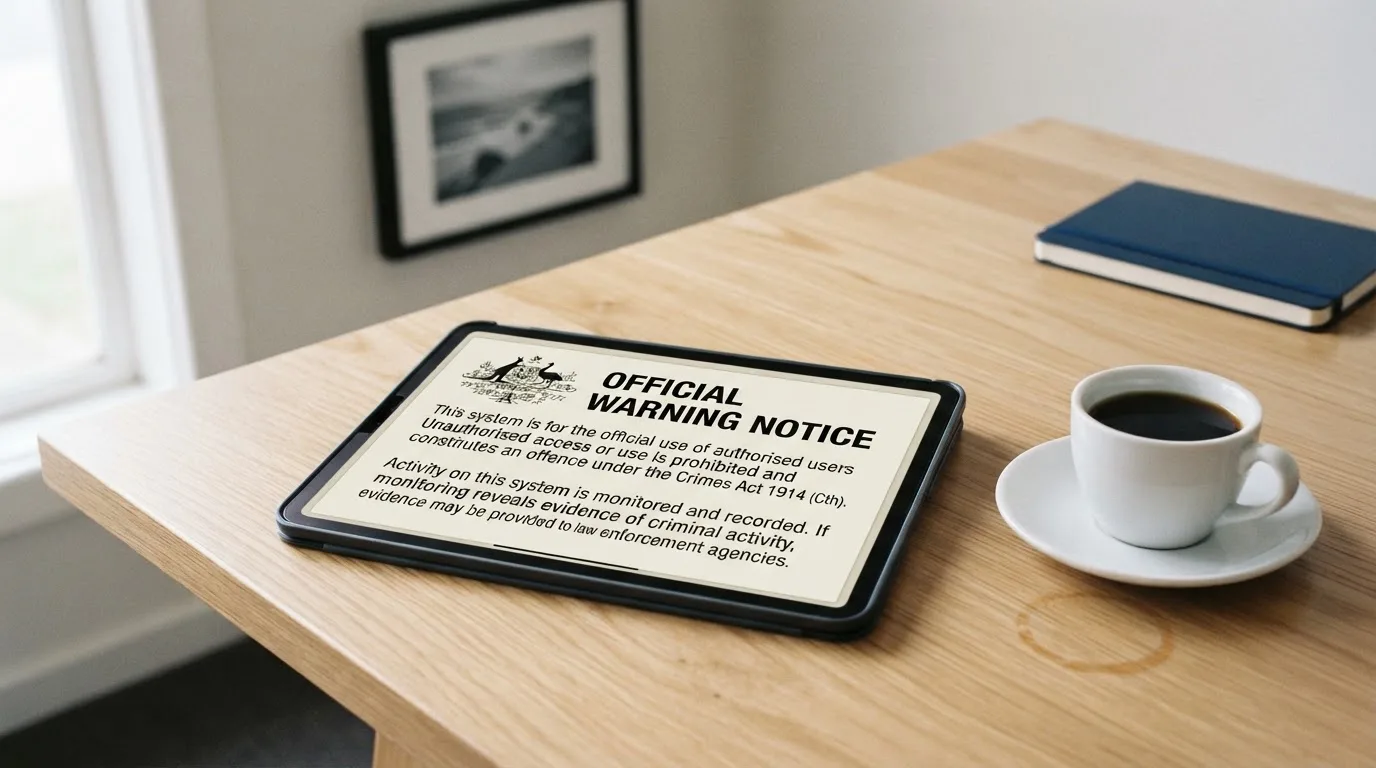
The block sits ahead of the comparison precisely because the comparison is not the point. The point is the cost.
| Brand | ACMA action and date | Operator named by the ACMA | Subject support |
|---|---|---|---|
| RocketPlay | Formal warning, March 2026 (earlier Dama N.V., May 2022) | Pulsup Ltd | — |
| Level Up Casino | Formal warning, May 2022 | Dama N.V. | provider listings only |
| Woo Casino | Formal warning, March 2025 | Dama N.V. | — |
| Spirit Casino | Formal warning, May 2025 | Dama N.V. | — |
| National Casino | Formal warning, July 2025 | Consolutetish S.R.L. | provider listings only |
| Bizzo Casino | Formal warning, July 2025 (earlier TechSolutions, 2022) | Consolutetish S.R.L. | — |
| Ignition Casino | Formal warning, July 2025 | Bamboo Media | — |
| Instant Casino | Formal warning, February 2025 | EOD Code SRL | — |
| Jackbit | Formal warning, April 2026 | Ryker B.V. | — |
| Casino Intense | Formal warning, April 2025 | Sterplay Holding Ltd | provider listings only |
| Sky Crown | Formal warning (Hollycorn N.V. action) | Hollycorn N.V. | — |
The “Subject support” column follows the operator listings: where the ACMA file names a software provider the operator uses (a listing on a developer’s site, a directory entry), the cell states that as a background fact; where it has nothing on file, the cell stays blank. The blank is not a denial — it is the absence of a listing the regulator’s record reaches.
What the table cannot carry is the rate at which the regulator’s list is growing. Read it as a snapshot of one regulatory year. Some operating companies reappear under multiple brand names — Dama N.V. alone runs four of the eleven here — and the same platform can be re-licensed under a new corporate name within months. Treating any of these brands as one operator rather than a sequence of fronts misses the practical question, which is what happens to a balance held in any of them the morning an ISP is told to block the address.
RocketPlay
The ACMA’s most recent action here is March 2026, naming Pulsup Ltd over Rocketplay.com.au — the .com.au suffix marking an Australian-facing mirror rather than the offshore generic. That sits on top of an earlier 2022 warning to Dama N.V. covering Rocketplay as one of six brands. Two warnings over four years, two operators, and the site still trades. For a player, the operational lesson is the durability of the brand, not the deterrence of the warning.
Level Up Casino
One of the six Dama N.V. brands the ACMA named in May 2022. Outside the regulator’s record there is nothing on file here for the named subject support — provider listings report the casino carries games from a recognised studio, which is what the listing is, not a licence to operate.
Woo Casino
Dama N.V. again, this time in March 2025 — the operator having absorbed the warnings over the intervening years without withdrawing the brand from the Australian market.
Spirit Casino
Also Dama N.V., two months after the Woo Casino action. The pattern of a single corporate vehicle running several front brands is consistent enough that the regulator could reasonably take the view these are not eleven competing sites but a smaller number of operators under rotating names.
National Casino
A different vehicle: Consolutetish S.R.L., warned in July 2025. National Casino is the second of two brands the regulator named in the same warning notice.
Bizzo Casino
The same July 2025 Consolutetish S.R.L. warning, plus an earlier 2022 action against TechSolutions — both as operator and as a sister group — making Bizzo the entry with the longest enforcement tail on the table.
Ignition Casino
Bamboo Media is the named corporate entity on the July 2025 warning. Distinct again from the Dama and Consolutetish lines.
Instant Casino
EOD Code SRL, named in February 2025 — the earliest of the 2025 actions on the table and the most useful reminder that the regulator’s pace has not slowed since the 2017 amendments.
Jackbit
Ryker B.V., named in April 2026 — the same month as the warning over CasinOK, the pair of brands the ACMA identified together.
Casino Intense
Sterplay Holding Ltd, named in April 2025. Background coverage in Australian press carried the warning at the time. The brand has since appeared in coverage of licensed Australian venues that name it as a comparator — which tells the reader something about how visible these offers remain, and how little visible coverage has to do with local licensing.
Sky Crown
Hollycorn N.V., named in the ACMA’s September 2022 formal warning covering Sky Crown alongside Blue Leo. The earlier action on the table and the only one whose named operator also appears in the regulator’s separate certificate list, which says nothing about a licence to take Australian real-money play.
The column the reader actually needs sits off to the right of this table — what an offshore operation does when a balance sits inside it and the site is on the next blocking list. That is the cost the marketing does not contain.
Keeping the offer in perspective
The legal frame above is not the place to add a responsible-gaming note; the place to add it is wherever a real-money stake is mentioned. A punter reading this far already knows the offer is offshore, knows it has no Australian licence, and the question worth asking is what they plan to do if the offer lands, not whether it ought to exist.
Free, confidential support is available whatever the player decides. The National Gambling Helpline — 1800 858 858 — runs 24 hours a day, free from any Australian phone. Chat is available at Gambling Help Online. BetStop, the National Self-Exclusion Register, binds only Australian-licensed online and phone wagering services; an offshore casino is not on it, which means registering with BetStop does not close an offshore account. Offshore casinos offer their own self-exclusion tools, but a player who has set limits with BetStop should expect no overlap with those tools.
The minimum age for any wagering in Australia is 18. The page is not written for under-18s; the marketing that ends with a click on an offshore sign-up button is.
H2 Gambling Capital’s 2025 estimate put Australian losses to illegal sites at roughly A$3.9 billion a year, with the share of total gambling flowing through legal channels dropping from 74% in 2021 to 64% — a movement the regulator’s blocking actions have not yet reversed. The legal channels exist because state governments tax wagering and lotteries; the illegal channels exist because the Interactive Gambling Act treats the offshore supplier as the regulated party, not the Australian punter.
How players pay — and what an offshore site asks for
Payment-method coverage sits as background information here, because every method named below becomes a question on the deposit form the offshore site presents after the free spins are finished. The shape of the question — credit card or crypto? debit card? — is itself the regulatory fingerprint.
Since 11 June 2024 credit cards, credit-related products and digital currency have been banned as payment for any licensed online wagering in Australia. The penalty for an operator that takes one is up to A$247,500. The legal deposit routes for a licensed Australian wagering service are debit card, bank transfer, PayID or Osko, and BPAY. An offshore site asking an Australian for a credit card or a crypto deposit is therefore operating outside the Australian regime on the payment alone, independent of the offshore-supplier prohibition on the game itself.
The cash-flow point that matters is what an offshore withdrawal looks like when a balance sits on the wrong side of a payment-method ban. A licensed Australian bookmaker will not move funds through a credit card in the first place; an offshore casino can, in principle, accept one. Australian banks do not block credit-card payments to offshore gambling merchants as a class, but the cardholder can ask the issuer to do so, and the consequences for the player if the withdrawal stalls include a chargeback with the card issuer — a remedy available in principle but rarely successful in practice once terms say the bonus was played through at the wagering multiple the player signed off on.
PayID and Osko are real-time bank transfers between Australian accounts — settled in seconds, with the recipient identified by a mobile number, email or ABN. BPAY is bill-payment through a bank, slower but universal. None of these protects an offshore balance: the receiving bank will not see it as a wagering transaction in the regulated sense, because the recipient is not a licensed Australian wagering provider, and the recipient’s terms apply. Australian banks can and do decline to process transactions to sites on the ACMA’s blocking list after the regulator requests that they do so; the user experience of that decline tends to be a generic declined-code message rather than a line about the regulator.
In 2020–21 Australians bet almost A$150 billion through gaming machines and lost A$12.18 billion on them. The land-based pokie sits in a venue in every state and territory except Western Australia’s pubs and clubs, each jurisdiction setting its own minimum return-to-player: 85% in NSW, the Northern Territory, Queensland and Victoria (87% at Crown Melbourne), 87% in the ACT and Tasmania, 87.5% in South Australia, and 90% in Western Australia. NSW alone had 87,298 gaming machines outside casinos across 2,195 venues in June 2023, with player losses of A$8.18 billion in 2022–23; Queensland had 21,122 machines in 351 venues in October 2023; Victoria held 26,380 outside Crown Casino in 488 venues under a 30,000 statewide cap. The online version of these machines is what sits on the other side of an offshore sign-up button, and the version with the licensed RTP — the one in the pub or club — is the one with a regulator the player can reach.
How no-deposit free-spins offers actually work
The marketing headline — “X free spins, no deposit required” — is the surface. Below it sits the structure that turns the spins into a withdrawal decision the player cannot make alone.
A typical marketing offer, drawn from the affiliate pages that promote these brands, packages somewhere between 10 and 50 free spins on a single named pokie, awarded on sign-up before any deposit. Most offers restrict the spins to one title from the operator’s catalogue — sometimes a high-volatility pokie selected for its feature frequency, sometimes a low-volatility one for its long-playing spin count. A small share offer spins across the catalogue rather than locking the player into a single title, but the single-title default is what the listings reach for.
The next clause is the one the marketing skips: wagering requirements. Free-spin winnings almost always carry a playthrough condition before they can be withdrawn — typically expressed as a multiple of the bonus amount, ranging roughly from 20x to 50x for this product type. A A$10 win from free spins at 40x wagering requires A$400 in qualifying bets before withdrawal. A win of A$50 — the kind of return a single bonus feature can produce on a high-volatility pokie — multiplies that figure five times.
Maximum win caps are the second clause that protects the operator rather than the player. Many offers cap the cashable value of free-spin winnings at a fixed ceiling, commonly between A$50 and A$200, irrespective of what the spin itself returned. A bonus feature that pays A$300 in raw spin value is paid out at A$100, or A$200, or whatever the cap names — and the excess is void. The cap makes the offer arithmetic easier for the operator than it does for the player, because the cap is what the player will most often hit.
Game weighting further reduces what counts toward the playthrough. Table games often contribute nothing; certain high-RTP pokies contribute partially or not at all; the named pokie on which the free spins were issued may be the only game that contributes 100%. The player’s effective time-to-clear the bonus depends on what the operator’s contribution table allows, and the contribution table is rarely spelled out at the point of sign-up.
A 7-day expiry window is standard. Some offers allow 30 days; free-spin offers run on the short side, with 24 hours to 72 hours being typical. An unused spin window expires and returns nothing; a partially-completed wagering requirement expired before the playthrough is met forfeits the bonus balance. Time pressure on the player is not the marketing’s friend, but it is the operator’s.
The calculation the page below works through is the rough arithmetic of what it costs to clear one of these offers in time and in expected play loss. It is not a recommendation that the player should try to clear it.
The arithmetic: how long and how much to clear
A representative offer taken from the kind of marketing structure the listings reach for: 30 free spins on a single pokie, no deposit required, valued at A$0.10 per spin, with 40x wagering on the resulting winnings, game contribution 100% on the named pokie only, and a 7-day window.
Assume the spins produce a middling A$6 of bonus balance — a more realistic starting point than the headline A$3 face value, because a typical pokie pays out small wins across a session. Required turnover then becomes A$6 × 40 = A$240 in qualifying wagers, all of which must take place on the one named pokie. At the A$0.10 spin stake the qualifying wagers are 2,400 spins. With a 5-second spin-to-spin interval the time on the pokie becomes 2,400 × 5 / 3,600 ≈ 3.3 hours, well inside a 7-day window. The expected loss over those 2,400 spins depends on the pokie’s RTP. At a 96% RTP — typical for the high-volatility games the offers lean toward — the expected loss sits at A$240 × 0.04 = A$9.60 in raw play loss across the session.
A punter with a strong bonus round feature early in the session can find the expected loss significantly smaller. A punter whose play runs through the wagering without a feature crossing pays closer to that A$9.60 in pure expected loss. A cap of A$100 on the cashable win means the rare spin that genuinely returns more than A$100 — the feature-paying line of high-volatility pokies — is paid out at A$100 with the rest void. The bonus-cost calculation here is the average over many spins under stated assumptions; it is not a forecast of what any one session will pay.
A different profile — the A$50 win case cited earlier, on the same 40x wagering — moves the playthrough to A$2,000 over 20,000 spins at A$0.10, around 27.8 hours of play. Same stake, same pokie, same 96% RTP: expected loss A$80. The play time crosses the 7-day window’s soft limit well before it runs out, but a player working through 27.8 hours in a week has not much other gambling budget left for that week.
That is the arithmetic the marketing does not contain. The “free” sits on top of a wagering schedule the player has to clear alone, on the pokie the operator named, in the time the operator set, against a cap the operator wrote. None of which is illegal — the offshore site operates outside Australian consumer law, but it operates under the laws of the licence it does hold, and those terms are enforceable against the player who signed off on them.
Why the marketing reach has shifted offshore rather than local
Australian-licensed wagering is restricted to racing, sport, lotteries and keno. A licensed Australian bookmaker cannot offer an online pokie spin of any kind, with or without a deposit, because the product is a prohibited interactive gambling service under the Interactive Gambling Act. The same prohibition applies whether the operator is licensed in the Northern Territory for wagering or licensed under any other Australian regime — none of them covers online pokies.
The result is a market gap. The domestic offer for online pokies is empty by design; the demand — a 2023 population that lost A$12.18 billion to gaming machines in venues — is not. Offshore operators fill the gap by accepting Australian sign-ups from outside the regime, and the bonus-and-free-spins promotional structure is the standard marketing vocabulary for that gap-filling offer.
The Northern Territory Racing and Wagering Commission regulates 52 of Australia’s online bookmakers, including Sportsbet, Bet365 and Ladbrokes — a regulatory footprint built on the Territory’s tax treatment of wagering rather than on a state-by-state licensing handshake. The Commission itself has no full-time staff and meets monthly in Darwin. The 2024 reform discussions in the Territory proposed a separate, full-time regulator to oversee that footprint, but the bill had not passed by the time the ABC reported on it in April 2026.
Western Australia is the structural contrast. Poker machines were banned in WA’s pubs and clubs when Crown Perth opened in 1985; Crown Perth’s own machine count has grown from about 200 in 1985 to roughly 2,500 today, all approved by the state’s Gaming and Wagering Commission. Tasmania ran the country differently for decades — the Federal Group held a monopoly licence over all of the state’s poker machines from 1968, until legislation in November 2021 moved oversight to the Tasmanian Liquor and Gaming Commission, with mandatory pre-commitment cards planned to follow. Implementation of those pre-commitment cards was delayed until late 2025.
NSW alone, at 87,298 gaming machines outside casinos in June 2023, carries more than three times the total Victoria does outside Crown. The state-by-state variation is not noise — it is the way Australian gambling policy has been written since 1956, when registered clubs operated the country’s first legal poker machines in NSW.
What reading the regulator’s blocking rate shows
The arithmetic the page calculates below is the rate at which the ACMA is removing access to these offers — and what that rate implies for the balance a player holds.
The regulator’s own tally as of June 2026 puts the cumulative blocking count at 1,751 illegal gambling and affiliate marketing websites, with the first blocking request issued in November 2019. That is roughly 270 months of enforcement, giving an average blocking rate of approximately 6.5 sites per month across the full enforcement period. The June 2026 round alone blocked 12 sites in a single request — close to twice the long-run average in one notice — and the round before it carried a comparable number.
The band rather than the point is what matters: across the enforcement era the ACMA has averaged the better part of one site blocked per working day, with some rounds clearing a dozen or more at once and other quarters producing no new blocks at all. For a player holding a balance with any operator the regulator has not yet named, the practical question is not whether the next round will include this brand, but how many such rounds are coming.
The more than 230 unlicensed gambling services reported to have left the Australian market since enforcement was strengthened in 2017 represents the larger figure. A site that leaves Australia withdraws the Australian-facing mirror but typically keeps the offshore operation running — which means the IP-block from an Australian ISP is the only layer of enforcement the player actually experiences. A site that remains accessible from Australia is one the ACMA has not yet asked an ISP to block, which is a state that can change overnight and without notice on the player’s side.
The rate also frames the decisions an offshore operator makes under pressure. Operators warned by the regulator often rebrand — Dama N.V.’s six 2022 brands have largely been folded into the operations that became its 2025 warning roster — and affiliate-marketing pages continue to rank the new brand names for the same “no deposit free spins” search terms the ACMA has just removed the old ones for. The rate does not collapse demand; it cycles it onto new domain names. The A$3.9 billion a year H2 Gambling Capital estimates leaves Australia through illegal sites does not flow to legal channels just because a block list expands.
How to read a free-spins offer as a cost
A player reading a no-deposit free-spins offer faces three numbers, all of which the marketing buries.
The first is the playthrough multiple. 40x is the median for this product type; 50x is heavy; 20x is the floor of a competitive market. The number the affiliate page rarely states in the headline is the one the rest of the arithmetic depends on — a 40x offer means a A$10 bonus balance requires A$400 in qualifying wagers, and the qualifying wagers have to run on the pokie the offer’s terms name. The player cannot pick a low-house-edge title to make the playthrough cheaper. The operator picks the title; the player clears the wager.
The second is the maximum win cap. A cap below A$100 is the median for sign-up free spins; a cap above A$200 is rare. The cap is the ceiling on the bonus’s payout, irrespective of how much the spin actually pays. A high-volatility pokie that hits a feature worth A$500 in raw value pays the player the cap — A$100, say — and returns the rest as voided bonus balance. The cap is the single clause that decides whether a strong feature outcome is a withdrawal event or a marketing moment.
The third is the expiry window. Most offers give 24 to 72 hours for the spins to be used and 7 days for the wagering to clear. A player who fails to clear the wagering in the window forfeits the bonus balance; a player who fails to use the spins in time forfeits the bonus itself. Time pressure converts the offer from a value transfer into a deadline the player is racing.
Read together, the three numbers describe an offer whose expected value sits well below its headline face value. The “A$3 of free spins” becomes, at a 96% RTP and 40x wagering, a play session requiring 2,400 spins on a single named title, returning an expected loss the calculation above puts at close to A$10 — about three times the face value. The headline says “free”; the arithmetic says “the opposite, with a deadline”.
The cost that no arithmetic captures is the dollar a player has on the wrong side of a block notice when the offer closes. A blocked-site balance becomes a counterparty-risk problem the offshore terms often address with a clause permitting the operator to forfeit balances above a certain threshold when jurisdiction restrictions apply. The player cannot resolve a dispute with an entity that does not operate under Australian consumer law.
Where this leaves the comparison table
The eleven brands above are the comparison the ACMA’s record makes available; they are not a ranking, and they are not a recommendation. The list’s value is the rate at which the regulator is finding them.
A punter who decides to claim a no-deposit free-spins offer at one of these brands should expect three things the marketing does not mention: that the site operates outside Australian consumer law; that the offer will convert into a withdrawal condition whose house-edge, RTP and cap the operator sets alone; and that the site’s address may be on the next blocking request without notice to the player’s account. Each of these is independent of any single brand’s name, balance or recent marketing.
The brands that sit deeper in the table — Sky Crown, Casino Intense, Jackbit — carry the longer enforcement histories on the ACMA’s record but no greater deterrent effect on their ongoing operations. The more recently warned brands — RocketPlay’s March 2026 action, Jackbit and CasinOK in April 2026 — are the ones whose next blocking round, when it comes, will remove from Australian connections.
A punter who chooses not to claim is the one making the only decision the marketing never loses. The decision costs the punter the marketing’s headline value; it costs them nothing in legal exposure or blocked-site balance.
Reading list: the regulator’s record
The Australian Communications and Media Authority publishes its formal warnings on its own site at acma.gov.au. The warnings list is updated as new actions are published, and the warnings themselves are the authoritative source for the dates and operators named in the table above. Where a release date matters to the page — March 2026 for RocketPlay, April 2026 for Jackbit — the ACMA’s publication is the source.
For the underlying prohibition itself, the Interactive Gambling Act 2001 and the Interactive Gambling Amendment Act 2017 are published on the Federal Register of Legislation and are the statutory source for the ban the page above describes. The Interactive Gambling Amendment (Gambling Reform) Bill 2026, passed on 19 August 2026 with advertising measures commencing 1 January 2027, is the reason the start-date language on this page is the language it is.
H2 Gambling Capital’s 2025 report, summarised at igamingbusiness.com, is the source for the A$3.9 billion a year losses figure and for the move from 74% to 64% in the share of gambling flowing through legal channels between 2021 and the 2025 estimate. The Gambling in Australia page on Wikipedia, current as of 18 September 2026, is the source for the jurisdictional counts of gaming machines, the minimum RTP figures state by state, and the historical landmarks including the 1956 NSW introduction and the 1985 WA venue ban.
The Northern Territory Racing and Wagering Commission’s regulatory footprint, the 2026 NT bill to reform it, and Tasmania’s pre-commitment-card delays all sit in ABC News reporting, with the relevant reports from April 2026, July 2024 and November 2021. Crown Melbourne’s table-game line-up and the Victorian Gambling and Casino Control Commission’s regulatory role are confirmed at Crownmelbourne.com.au and vgccc.vic.gov.au, with the regulator replacing the VCGLR on 1 July 2022.
These are the sources the page’s claims rest on. The “no-data” cells in the table above are not gaps left by a search that failed; they are cells the regulator’s published record does not reach. A reader who needs that data should treat its absence as data in itself, not as an unresearched page.
FAQ
How many free spins does a typical no-deposit pokies offer include?
Affiliate pages for offshore operators routinely market offers between 10 and 50 free spins, with 20 to 30 being the most common range. The headline number is the spin count; the value of each spin is set by the operator at typically A$0.10 to A$0.20, and the face value of the offer stays well below the time cost the wagering requirement imposes.
Do these free spins apply to every pokie, or only a selected title?
The single-title restriction is the norm. Operators choose a high-volatility pokie that pays out small wins frequently enough to keep the player engaged, then lock the wagering contribution to that one pokie so the player cannot move the playthrough to a low-house-edge game. A small share of offers open the catalogue, but a punter who signs up expecting to choose the title is usually disappointed.
Is accepting free spins from an offshore pokies site legal for an Australian?
The Interactive Gambling Act 2001 prohibits the supply of online casino games — including online pokies — to people in Australia. The Act targets the supplier, not the player, and no Australian has been prosecuted for placing a bet with an offshore casino; what the player loses is consumer protection, dispute recourse and the ability to complain to an Australian body. A balance held offshore can also be cut off by an ISP-level block under the ACMA’s blocking regime.
What is the difference between a sign-up free-spins offer and a later no-deposit spins offer?
Sign-up offers are one-time packages attached to a brand-new account: a fixed spin count on a named pokie, sometimes with deposit-gated additional stages. Later no-deposit offers reappear on existing accounts as a re-engagement incentive — sent by email or surfaced in a promo tab, often with the same structural terms as the sign-up offer and a tighter expiry. Both sit outside Australian licensing, and both carry the same wagering requirements the rest of this page describes.
Why do so many of these offers cap the maximum cashable win from the free spins?
The cap protects the operator’s book on the bonus. A high-volatility pokie can pay out a feature worth several hundred dollars on a single spin, and without the cap the offer’s expected cost would scale with the title’s variance rather than with its RTP. The cap converts the offer into a fixed-ceiling marketing product whose worst case the operator can underwrite. The cap is the clause that turns a strong bonus outcome into a marketing moment the operator controls.
How does a no-deposit free-spins claim interact with a pokies player’s actual odds?
The free spins themselves run at the pokie’s published RTP; the wagering then runs at the operator’s playthrough multiple. A typical 30-spin no-deposit offer on a 96% RTP pokie with 40x wagering produces an expected loss that is a multiple of the bonus’s face value, depending on how the bonus balance averages out over the spin window. The arithmetic is an estimate averaged over many spins; it does not predict any single session’s outcome, and a strong bonus round early in the playthrough shifts the expected value toward the cap rather than toward the player’s withdrawal.