
Bitcoin Pokies Australia in 2026: The Picture Behind the Marketing
 Available in US
23 September 2026 · figures cross-checked against the Australian Communications and Media Authority (ACMA) register and the Interactive Gambling Act 2001
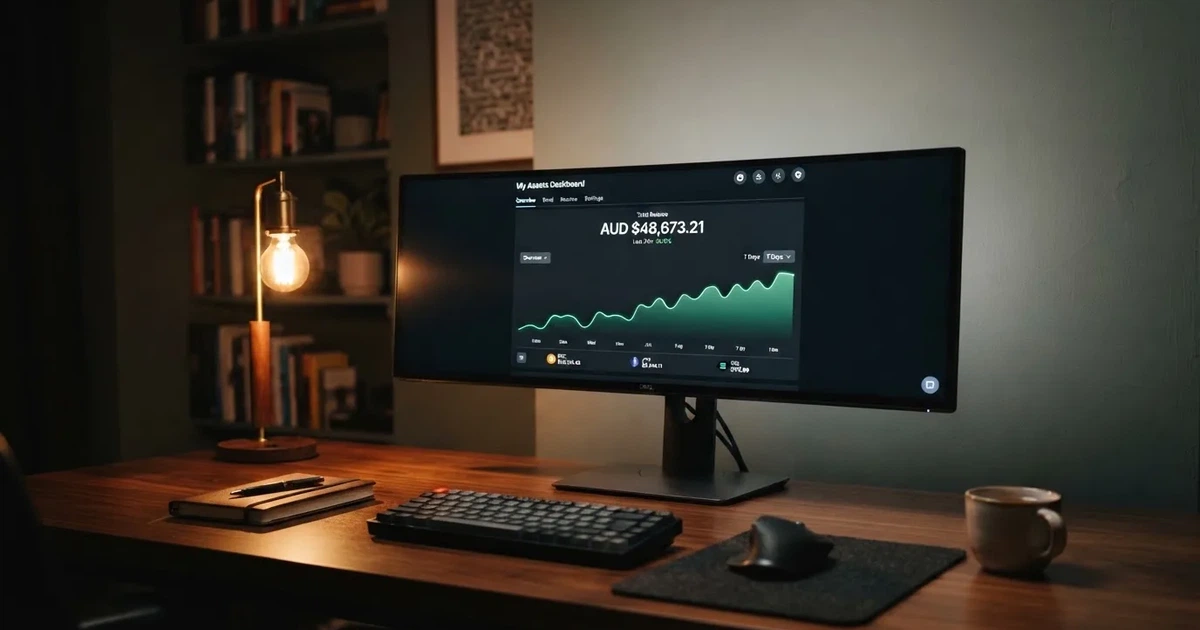
A punter searches “Bitcoin pokies Australia” expecting a list. What they find instead is a wall of offshore sites that accept a coin deposit and call themselves “anonymous” while pitching the same welcome bonus every other unlicensed casino pitches. The product underneath is not new. The legal frame around it has not moved. And the cost of using it is paid by the punter, not by the operator.
Bitcoin pokies are simply online slot machines funded with Bitcoin or other cryptocurrencies rather than Australian dollars. The “pokies” word is Australian shorthand for slot machines, whether you find them in a pub in Melbourne or on a Curacao-licensed website. The crypto part is a deposit method that, in practice, changes very little about the game itself but changes a great deal about who is on the other end of the transaction. The page below treats that difference as the whole story: what changes when a deposit becomes a blockchain transfer, what does not change, and what the punter pays for the convenience.
Table of Contents
- The Australian Landscape: What Offshore Bitcoin Pokies Sites Actually Are
- Legality and Regulation: Why “Licensed Offshore” Is Not the Same as Australian-Legal
- Responsible Gambling: What Applies, What Doesn’t, and Where the Gaps Sit
- Crypto and Anonymity: What Bitcoin Actually Changes
- How a Shortlist Comparing Bitcoin Pokies Sites Is Built
- The Operators: A Side-by-Side Look at What the ACMA Record Shows
- The Math Behind the Block: A Reading of the ACMA’s Pace
- Frequently Asked Questions
The Australian Landscape: What Offshore Bitcoin Pokies Sites Actually Are
There is no Australian-licensed online casino offering pokies with Bitcoin. Online casino games, including online pokies, are prohibited under the Interactive Gambling Act 2001, and no state or territory will issue a licence for one. The Interactive Gambling Amendment Act 2017 tightened that prohibition, and the Interactive Gambling Amendment (Gambling Reform) Bill 2026 passed Parliament on 19 August 2026 to extend it further. From January 2027 new advertising and inducement rules take effect, but the underlying ban on the product itself has stood for years.

What an Australian punter encounters when they search “Bitcoin pokies Australia” is an offshore operator, licensed somewhere in the Caribbean or another permissive jurisdiction, accepting AUD and crypto deposits from an Australian IP address, and offering slot games from the same handful of providers that supply every other unlicensed site. The website itself will often display a “Curacao licence” footer or similar. That licence is real in the sense that some regulator somewhere issued it; it is irrelevant to whether the site may lawfully serve an Australian.
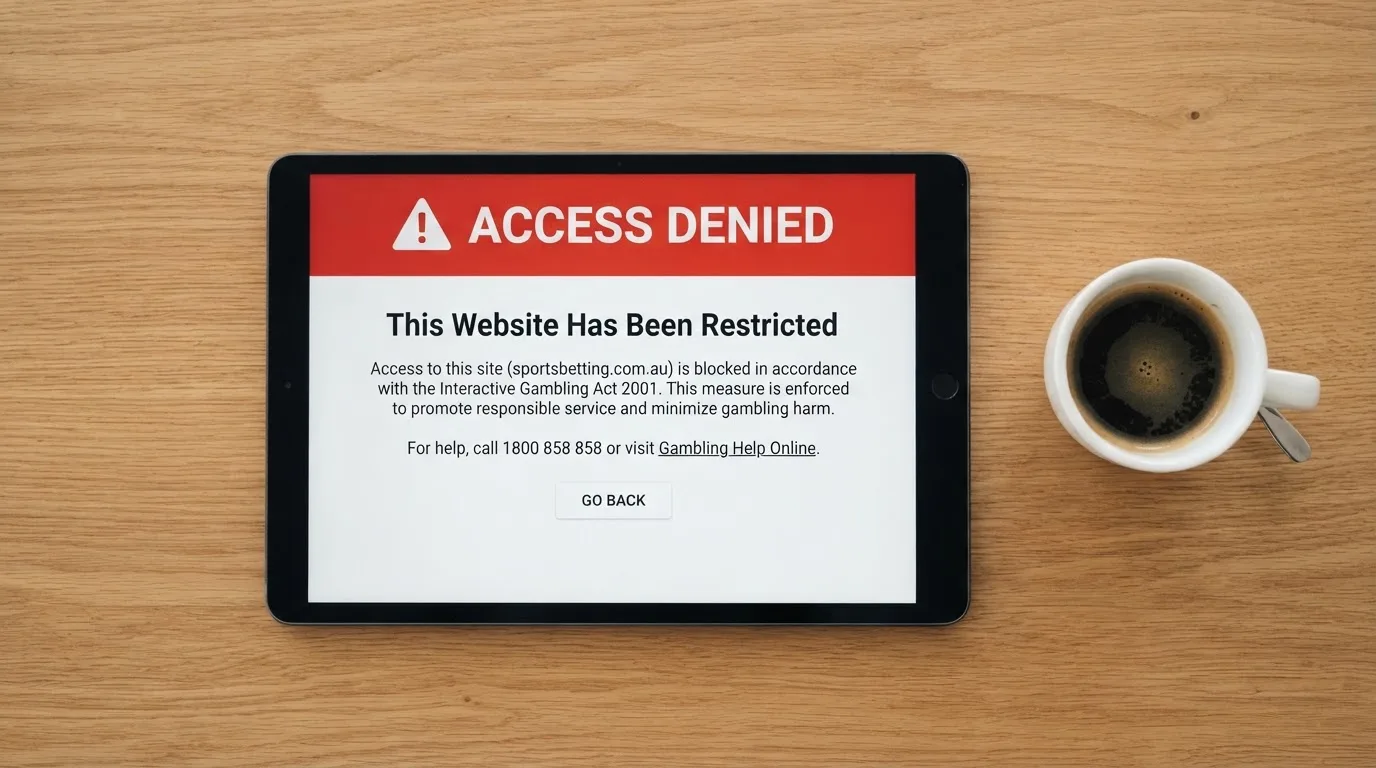
The Australian Communications and Media Authority (ACMA) keeps a running record of which offshore operators have been formally warned for offering prohibited services to Australians, and a separate record of which sites have been blocked at the internet service provider level. As of the most recent published round, 1,751 illegal gambling and affiliate marketing websites had been blocked since the first blocking request in November 2019, and more than 230 unlicensed gambling services had left the Australian market since enforcement was strengthened in 2017. The pace has not slowed. In June 2026 the ACMA asked Australian ISPs to block 12 more: 7Signs, ChromaBet, Donbet, Duospin, Freshbet, Slots Gem, Jacks Club, Lucky Start, Pointsbetz, Spinrise, Vinyl Casino and Wildsino.
| Brand | Blocking Round |
|---|---|
| 7Signs | June 2026 |
| ChromaBet | June 2026 |
| Donbet | June 2026 |
| Duospin | June 2026 |
| Freshbet | June 2026 |
| Slots Gem | June 2026 |
| Jacks Club | June 2026 |
| Lucky Start | June 2026 |
| Pointsbetz | June 2026 |
| Spinrise | June 2026 |
| Vinyl Casino | June 2026 |
| Wildsino | June 2026 |
That is the landscape. Every operator in the comparison further down this page sits inside it. None is licensed to offer online pokies to Australians; all have drawn some form of ACMA action; the product on offer is, by the ACMA’s own framing, prohibited.
The price the market pays for the offshore channel
The cost of this offshore trade is not paid by the operators. H2 Gambling Capital’s 2025 estimate puts Australian losses to illegal gambling sites at roughly A$3.9 billion a year, and the share of gambling going through legal channels fell from 74% in 2021 to 64%. The licensed product shrinks as the offshore product grows. The punter who moves from a TAB account to a Curacao-licensed Bitcoin casino moves outside every protection the Australian system offers and into a market the regulator has been trying to shrink for nearly a decade.
Legality and Regulation: Why “Licensed Offshore” Is Not the Same as Australian-Legal
The Interactive Gambling Act 2001 (IGA) is the centre of gravity for this subject. It prohibits the provision of online casino games, online pokies and in-play betting to a person in Australia. The 2017 amendments turned the prohibition into an enforceable civil penalty regime, with the ACMA as the enforcing body. What remains licensable is wagering on races and sport placed before the event, lotteries, and keno. The Northern Territory Racing and Wagering Commission (NTRWC) regulates 52 of Australia’s online bookmakers, including the household names Sportsbet, Bet365 and Ladbrokes, but the Commission itself has no full-time staff and meets once a month in Darwin. That structural detail matters: the body licensing Australia’s biggest wagering brands is essentially a part-time body, and it does not license online casinos at all.
What the ACMA actually does
Three ACMA tools matter for this subject. First, formal warnings: a public notice that the ACMA believes a service is offering prohibited interactive gambling to Australians. A warning does not, on its own, take a site down. Second, blocking requests: the ACMA can direct Australian internet service providers to block specific domains at the DNS level. Blocking is the heavier tool, and 1,751 sites have been blocked through it since November 2019. Third, civil penalty proceedings against operators who keep providing prohibited services after warning. The 2026 reform Bill adds advertising and inducement restrictions that will bite harder once they commence on 1 January 2027.
The IGA targets providers, not individual players. An Australian punter using an offshore Bitcoin pokies site is not personally committing an offence. That is the one piece of common knowledge worth correcting: legality and personal safety are different questions. An offshore site gives no Australian consumer protection, no complaints body, no Australian recourse if a withdrawal is refused. And it can be blocked with a balance still sitting in the account.
What a “Curacao licence” actually permits
A Curacao licence, or any of the smaller Caribbean jurisdictions that issue them, permits the operator to run a casino from that jurisdiction under that jurisdiction’s rules. It does not permit the operator to advertise or accept custom from Australia. The licence footer on an offshore Bitcoin pokies site is a marketing asset, not an Australian authorisation. Any suggestion to the contrary, on the site itself or in affiliate reviews that link to it, is a sales pitch and should be read as one.
Payment rules that catch Bitcoin even when the game doesn’t
Since 11 June 2024, Australian-licensed wagering operators cannot accept credit cards, credit-related products or digital currency as payment. The penalty for accepting them is up to A$247,500 per breach. The legal deposit routes for a licensed Australian account are debit card, bank transfer, PayID/Osko and BPAY. A licensed site that asks an Australian punter for a Bitcoin deposit is, by definition, not a licensed Australian site. A Bitcoin deposit is a tell, not a feature: it points at an offshore operator running outside the Australian regime.
Responsible Gambling: What Applies, What Doesn’t, and Where the Gaps Sit
Responsible-gambling supports in Australia are built around the licensed product. They do not reach offshore Bitcoin pokies sites. Knowing which applies matters, because a punter who self-excludes from Australian wagering and then signs up to an offshore crypto casino has not self-excluded from anything that site is obliged to honour.
BetStop, the National Self-Exclusion Register, has been live since August 2023. It binds Australian-licensed online and phone wagering services. Offshore operators are not connected to it. A BetStop registration has no effect on an account at a Curacao-licensed Bitcoin pokies site. The National Gambling Helpline, 1800 858 858, is free and 24/7, with online chat at Gambling Help Online. That help is available regardless of where the gambling takes place, and is the right call when a punter needs to talk to someone about losses on an offshore site that BetStop will not touch.
State-level self-exclusion registers work the same way: they apply to the venues and licensed operators that report to them, not to offshore sites that do not. The practical consequence is that an Australian punter who needs to step back from gambling has fewer mechanisms to do so if their gambling happens on a Bitcoin pokies site than if it happens through a licensed Australian account. That is one of the costs the offshore product charges, and it is rarely the one its marketing mentions.
Crypto and Anonymity: What Bitcoin Actually Changes
A Bitcoin deposit at an offshore casino changes three things, and leaves a fourth unchanged. What changes: how money moves in, how money moves out, and what records are visible on the blockchain. What does not change: the underlying game, the operator’s identity, or the legal frame around offering the game to an Australian.
How a Bitcoin transaction actually arrives
Bitcoin’s network produces a new block roughly every 10 minutes on average. That is the average, not a guarantee. Block discovery is probabilistic; a confirmation can arrive much sooner or much later than ten minutes, and the protocol offers no fixed minimum or maximum delay. A punter who deposits Bitcoin and waits for one confirmation is making a bet that the next block arrives within a reasonable window. Two confirmations is what most exchanges and a fair share of casinos ask for; six confirmations is the conservative standard for larger amounts. Six blocks at ten minutes average is one hour, but the variance is wide enough that “roughly one hour” is honest and “one hour” is not.
Bitcoin Cash, the hard fork that split off on 1 August 2017 at block height 478,558, behaves similarly at the protocol level: same SHA-256 proof-of-work, same ten-minute average block target. Its block size was 8 MB at launch and was raised to 32 MB in 2018, so it processes more transactions per block and charges lower fees — its own developers describe transaction fees as “under a penny” and confirmation in minutes. From a punter’s point of view the experience is similar to Bitcoin with cheaper settlement.
Ethereum, by contrast, now produces a block roughly every 12 seconds. It switched from proof-of-work to proof-of-stake in the upgrade called The Merge on 15 September 2022, with Vitalik Buterin’s protocol running underneath. For a punter using ETH rather than BTC, confirmation speed is faster and fees behave differently, but the legal frame around the offshore casino offering it is identical.
What “anonymous” actually means
The offshore marketing line is “anonymous Bitcoin play”. The reality is more limited. Bitcoin’s ledger is public: every transaction is recorded on a chain anyone can read. The address that sent the deposit is, in principle, traceable back through a chain of transactions to whatever exchange first sold those coins. Chain-analysis firms make a business of doing exactly that. An Australian punter who buys Bitcoin on a registered exchange, sends it to an offshore casino, and then sends winnings back to the same exchange has created a record that links the casino account to a verified identity.
True anonymity requires more than a different deposit method. It requires a separate wallet funded through a route that does not tie back to a verified Australian identity, and it requires careful handling of any subsequent conversion back to AUD. The marketing line flattens this into a one-word pitch. The actual setup is work, and most Australian punters who think they are playing anonymously are not.
What the ATO sees on the other end
The Australian Taxation Office treats crypto assets, including Bitcoin, Bitcoin Cash and Ether, as property. Not money, not foreign currency. Most disposals are capital gains tax events: selling Bitcoin for AUD, swapping Bitcoin for another coin, and spending Bitcoin at a merchant (including an offshore casino) are all disposals. The ATO currently allows a 50% CGT discount on crypto assets held longer than 12 months. From 1 July 2027 that flat discount is replaced by CPI indexation of the cost base plus a 30% minimum tax rate on net capital gains. A punter who thinks “crypto is private” should know that the ATO has had crypto reporting obligations on registered exchanges for years, and that the obligation does not depend on whether the punter believes the gambling itself was anonymous.
There is one narrow exemption. A crypto asset held as a personal use asset, costing A$10,000 or less to acquire, is disregarded for CGT purposes. Capital losses on personal use assets are also disregarded, meaning they cannot be used to offset other gains or carried forward. A Bitcoin holding that exceeds A$10,000 is, by the ATO’s own guidance, an investment, and an investment is taxable. The exemption is real and narrow.
What AUSTRAC requires of the exchange on the way in
Under the AML/CTF Act, any business providing digital currency exchange services to Australian customers must register with AUSTRAC as a Digital Currency Exchange (DCE) provider, regardless of where the business is incorporated. Operating unregistered is a criminal offence. From 31 March 2026 the registration requirement was expanded beyond crypto-to-fiat exchange to also cover crypto-to-crypto platforms, digital asset transferors, digital asset custody providers, and stablecoin issuers and distributors. The exchange a punter uses to buy Bitcoin with AUD is, by law, a registered entity that keeps records. The punter who buys through a peer-to-peer route to dodge that record is in a different posture, but the offshore casino they fund will still see the on-chain trail.
Why price volatility is its own tax
Bitcoin’s price has moved enough over a single week to wipe out the value of a casino balance in AUD terms. Holding Bitcoin while it sits in a casino account means holding an asset whose AUD value is not under the punter’s control. A punter who wins A$1,000 worth of Bitcoin on Tuesday and waits a week to withdraw it has made an unhedged bet on the BTC/AUD rate. The casino is happy to be paid in a volatile asset because that volatility is not the casino’s problem. It is the punter’s.
How a Shortlist Comparing Bitcoin Pokies Sites Is Built
A shortlist of offshore Bitcoin pokies sites looks, on the surface, like a comparison: bonus size, number of games, payout speed, whether the site takes Bitcoin. Read that way, every site looks similar because every site is running the same playbook. A list built on those columns produces a ranking of which offshore casino has the largest welcome package this week, which is not the question an Australian punter actually faces.
A useful shortlist starts with three different questions and answers them first.
What does the ACMA’s register say about this operator? A formal warning is not a conviction, but it is a public record that the ACMA believes the operator is offering prohibited services to Australians. A site that has been warned twice, under different parent companies, is not an accident. The ACMA’s published register is the right place to read the record, and it is freely searchable.
Where is the operator actually incorporated, and under which jurisdiction’s rules does it operate? Curacao is the common answer; Anjouan and Tobique are increasingly common. The jurisdiction matters because it determines which regulator, if any, the punter can complain to if a withdrawal is refused. None of them are Australian, and none of them are obliged to follow Australian consumer protection law.
What payment routes does the site actually accept, and does accepting crypto exclude it from Australian-licensed deposit rules? The answer is yes: a licensed Australian operator cannot accept crypto as payment. A site that does accept it is, by that fact alone, not a licensed Australian site. Bitcoin acceptance is therefore a feature and a disqualification simultaneously.
Past those three questions, the secondary criteria that genuinely separate one offshore site from another are thinner than the marketing suggests. Most offshore Bitcoin pokies sites source their games from the same handful of providers. Most carry the same slots. Most run on similar bonus structures with similar wagering multiples. The honest comparison says so: the differences between sites at this layer are smaller than the differences between offshore and licensed.
The criterion nobody puts at the top
The criterion nobody puts at the top of the comparison is whether the operator should be on a list of recommended Australian sites at all. The Interactive Gambling Act prohibits the product they offer. The ACMA’s enforcement record grows every quarter. BetStop does not reach them. An Australian punter reading a comparison is, in effect, choosing which offshore operator to use in spite of the regulatory posture, not because of it. A shortlist that does not say so is leaving that fact for the reader to discover on their own, which is a poor service to the reader.
The Operators: A Side-by-Side Look at What the ACMA Record Shows
The eleven operators below are not a ranking. Each is on this page because the ACMA itself issued a formal warning over it for offering prohibited interactive gambling services to Australians. The order follows the ACMA’s published warnings, most recent first. The table below the write-ups is the place where the cross-brand picture becomes visible; the write-ups are where the texture of each operator’s record sits.
RocketPlay
The ACMA issued a formal warning to Pulsup Ltd over RocketPlay in March 2026. That sits on top of an earlier May 2022 warning to Dama N.V. over a group of brands that included Rocketplay, along with Bambet, Dazard, Level Up, Wild Tornado and Cobra Casinos. The same operator name on a domain is no guarantee of the same parent company, but two formal warnings separated by four years suggests the brand has moved between operators without changing what it offers. The March 2026 warning is the more recent signal and the one a reader should weight more heavily. Rocketplay takes a Bitcoin deposit at the door and is, by that fact, outside the Australian licensed regime.
Level Up Casino
Dama N.V. drew a May 2022 formal warning covering six casino brands, of which Level Up was one. The brand has not, as of the ACMA’s published record, drawn a separate later warning under a different parent — that is a thinner record than RocketPlay’s but no less a prohibition. The product on offer is the same online casino product that is unlawful to provide to Australians under the IGA, regardless of the licence footer the site displays.
Woo Casino
The ACMA issued a formal warning to Dama N.V. over Woo Casino in March 2025. That warning sits on top of the same May 2022 warning to Dama N.V. that covered the wider group, so the operator name has carried the brand through two separate enforcement actions. Woo Casino is a typical offshore crypto casino of the post-2020 wave: Bitcoin deposits accepted, slot-heavy game library, Curacao-style licence footer, no Australian consumer protection pathway.
Spirit Casino
Dama N.V. drew a second separate warning in May 2025, this time over Spirit Casino. Two formal warnings to the same parent in a single calendar year — May 2022 covering Level Up among others, May 2025 covering Spirit — is a record the regulator has been unable to shut down by warning alone, and a pattern the ACMA’s blocking tool is designed to interrupt. Spirit Casino is a newer brand under an older parent, which is a common pattern as operators rotate brand names around the same licence.
National Casino
Consolutetish S.R.L. drew a formal warning in July 2025 over both National Casino and Bizzo Casino. National Casino is the newer of the two in the warning text, but Bizzo Casino had already been the subject of a 2022 formal warning to TechSolutions (CY) Group Limited and TechSolutions Group N.V. Two operators, two warnings, the same brand — a sign that the brand has been passed between parent companies without changing the product.
Bizzo Casino
The Consolutetish S.R.L. warning of July 2025 is the second formal warning over Bizzo Casino. The first, in 2022, was to TechSolutions (CY) Group Limited and TechSolutions Group N.V. A brand that has been warned twice under two different parents is a brand that has kept offering the same product through whatever operator is currently running it. The newer warning is the more current signal, and the regulator’s expectation that the second warning would change behaviour is, on the face of it, the reason for the heavier framing.
Ignition Casino
Bamboo Media drew a formal warning in July 2025 over Ignition Casino. Ignition is one of the longer-running offshore brands serving the Australian market from a poker-and-casino base. The July 2025 warning is the first published formal warning for the brand under Bamboo Media, and the absence of an earlier warning is itself information: Bamboo Media is the operator that drew the ACMA’s attention, not the brand.
Instant Casino
EOD Code SRL drew a formal warning in February 2025 over Instant Casino. The February 2025 warning is the brand’s first in the ACMA’s published record under that parent. Instant Casino is one of the brands that has marketed itself heavily as an “anonymous” Bitcoin casino to Australian visitors. The warning is the ACMA’s response to that marketing: providing prohibited interactive gambling services to Australians is the conduct at issue, and Bitcoin acceptance is not a shield from it.
Jackbit
Ryker B.V. drew a formal warning in April 2026 over Jackbit and CasinOK. Jackbit is one of the more visibly crypto-first brands in this set: Bitcoin, Ethereum and a handful of altcoins are the headline deposit methods, and the site carries fewer of the traditional fiat rails than the older offshore brands. The April 2026 warning sits in the most recent batch the ACMA has published. A newer brand drawing a newer warning is a sign the ACMA’s enforcement has kept pace with the operator refresh cycle.
Casino Intense
Sterplay Holding Ltd drew a formal warning in April 2025 over Casino Intense. Casino Intense is a smaller and less heavily marketed brand than most of the others on this list, and the April 2025 warning is the brand’s first in the ACMA’s record. A less visible brand drawing a formal warning is a reminder that the ACMA’s enforcement is not aimed only at the major operators.
Sky Crown
Hollycorn N.V. drew a formal warning over Sky Crown and Blue Leo, both of which appear in the same ACMA publication. The formal warning is one of the older ones in this set, and the brand has, on the face of the ACMA’s record, been on the regulator’s list longer than most of the others here. The product on offer remains the same prohibited interactive gambling service.
The shape of the record at a glance
Eleven operators, eleven formal warnings, none of them Australian-licensed. The fastest way to read the picture is the table below.
| Brand | ACMA action and date | Operator named by the ACMA | Subject support |
|---|---|---|---|
| RocketPlay | March 2026 (Pulsup Ltd); also May 2022 (Dama N.V.) | Pulsup Ltd | — |
| Level Up Casino | May 2022 | Dama N.V. | — |
| Woo Casino | March 2025 (also in May 2022 group) | Dama N.V. | — |
| Spirit Casino | May 2025 | Dama N.V. | — |
| National Casino | July 2025 | Consolutetish S.R.L. | — |
| Bizzo Casino | July 2025 (also 2022, TechSolutions) | Consolutetish S.R.L. | — |
| Ignition Casino | July 2025 | Bamboo Media | — |
| Instant Casino | February 2025 | EOD Code SRL | — |
| Jackbit | April 2026 | Ryker B.V. | — |
| Casino Intense | April 2025 | Sterplay Holding Ltd | — |
| Sky Crown | September 2022 (with Blue Leo) | Hollycorn N.V. | — |
The table shows what the ACMA record shows: operators rotate around brands, brands persist through operator changes, and Bitcoin acceptance is universal across the set. The “Subject support” column is empty because none of the public-facing crypto-acceptance lists maintained by third parties cover any of these brands in a way research could verify against the ACMA’s own record; this is what the no-data marker looks like in a comparison of this kind, and the marker itself is the information.
How fast the ACMA’s list has grown
The arithmetic of the ACMA’s blocking round tells its own story. The first blocking request went out in November 2019. By the round reported on 26 June 2026, 1,751 illegal gambling and affiliate marketing websites had been blocked. That is 1,751 sites blocked in roughly six and a half years. The blocking rate is somewhere between 200 and 280 sites per year on the running total — closer to the higher end of that band in the most recent quarters, lower in the early years when the ACMA’s tool was new. The point of the band rather than a single figure: the rate is not constant. It has accelerated as the ACMA’s enforcement infrastructure has matured, and a reader comparing this page against a future ACMA round should expect the running total to be higher, not lower. A blocked site is, in many cases, a site that simply reappears under a new domain, which is part of why the count keeps moving.
The Math Behind the Block: A Reading of the ACMA’s Pace
The ACMA’s blocking total is the running figure the regulator publishes with each round. As of the June 2026 round, 1,751 illegal gambling and affiliate marketing websites had been blocked since the first blocking request in November 2019. That works out to somewhere between 200 and 280 sites blocked per year on average across the period — the wider band is honest because the rate has not been constant. The early years, when the ACMA’s blocking tool was new, sat at the lower end of that band. The recent quarters sit closer to the upper end, and the operator refresh cycle (a blocked site reappearing under a new domain) is part of why the count keeps moving upward rather than flattening out.
The implication for a punter reading this page is straightforward. The blocking rate is not a one-off enforcement event; it is a steady pipeline. A site that is online and serving Australian customers this quarter is, on the ACMA’s own pattern, more likely than not to be on a future blocking list, and the punter’s balance on the day of blocking is not protected by any of the mechanisms that protect a balance on a licensed Australian account. The blocking rate is, in that sense, a measure of how often the offshore product goes dark for Australian customers.
Frequently Asked Questions
Does paying with Bitcoin make an offshore pokies site legal for Australians to use?
No. The Interactive Gambling Act 2001 prohibits the provision of online casino games and online pokies to people in Australia, and that prohibition applies to the product the site offers, not to the payment method the site accepts. Bitcoin acceptance is a payment-method feature, not a regulatory authorisation, and a Curacao or other offshore licence footer does not change the position. The Australian Communications and Media Authority has issued formal warnings over multiple offshore operators accepting crypto deposits from Australian customers, and the warning text treats the product offering, not the deposit rail, as the prohibited conduct.
How long does a typical Bitcoin transaction take to confirm?
A new Bitcoin block is produced on average every ten minutes. That is an average, not a guarantee; the actual interval between blocks is probabilistic and can be much shorter or much longer than ten minutes for any given transaction. Most offshore casinos credit a deposit after a small number of confirmations — often one or two — which on average means somewhere between ten minutes and an hour, with the variance wide enough that the figure is better described as a range than as a fixed delay. Bitcoin Cash, with its larger block size, also targets a ten-minute block interval and typically settles in similar timeframes with lower fees.
Why is block confirmation time for Bitcoin described as probabilistic rather than fixed?
Bitcoin’s protocol adjusts the mining difficulty roughly every two weeks to keep the average block interval near ten minutes, but individual blocks are found when a miner happens to solve the proof-of-work puzzle first. That process is random at the level of any single block, which is why confirmation time for any given transaction varies. The protocol gives an average, not a contract; the ten-minute figure is the long-run target, not a guaranteed minimum or maximum delay, and a punter waiting on a single confirmation is making a probabilistic bet that the next block arrives within a reasonable window.
Can licensed Australian pokies venues accept cryptocurrency as payment?
No. Since 11 June 2024 Australian-licensed wagering operators cannot accept credit cards, credit-related products or digital currency as payment, with penalties of up to A$247,500 per breach. The legal deposit routes for licensed Australian wagering are debit card, bank transfer, PayID/Osko and BPAY. A licensed Australian pokies venue asking for a crypto deposit is, by definition, not a licensed venue. The ban is on the payment method as well as on the underlying online casino product, which is why licensed venues and offshore Bitcoin casinos are mutually exclusive categories.
What risk does price volatility add to holding Bitcoin before it’s used anywhere?
Bitcoin’s price moves enough over short periods to change the AUD value of a holding substantially between deposit and withdrawal. A punter who wins an amount denominated in Bitcoin and waits to convert it is making an unhedged bet on the BTC/AUD rate, separate from the bet they made on the pokies themselves. The casino is paid in a volatile asset but the casino’s exposure is on the operator side, not the punter’s; the volatility risk is borne entirely by whoever holds the coins between sessions. Holding crypto for any length of time before using it is, in that sense, a separate speculative position layered on top of the gambling position.
Why do offshore casino sites promote ‘anonymous’ Bitcoin play to Australian visitors?
Because anonymity is a sales pitch, and the pitch is more effective than the reality. Bitcoin’s ledger is public, the on-chain trail of a deposit from a registered Australian exchange to an offshore casino is in principle traceable, and the exchange on the Australian side is, by law, a registered AUSTRAC Digital Currency Exchange provider that keeps records. True anonymity requires a separate wallet funded through a route that does not tie back to a verified identity, and most Australian punters who believe they are playing anonymously are not. The marketing line flattens a careful operational setup into a single word, and the single word sells more deposits than the operational setup describes.
Written by the editors at Casino Venues Info.