
Low-deposit casinos in Australia: the cost of the entry price
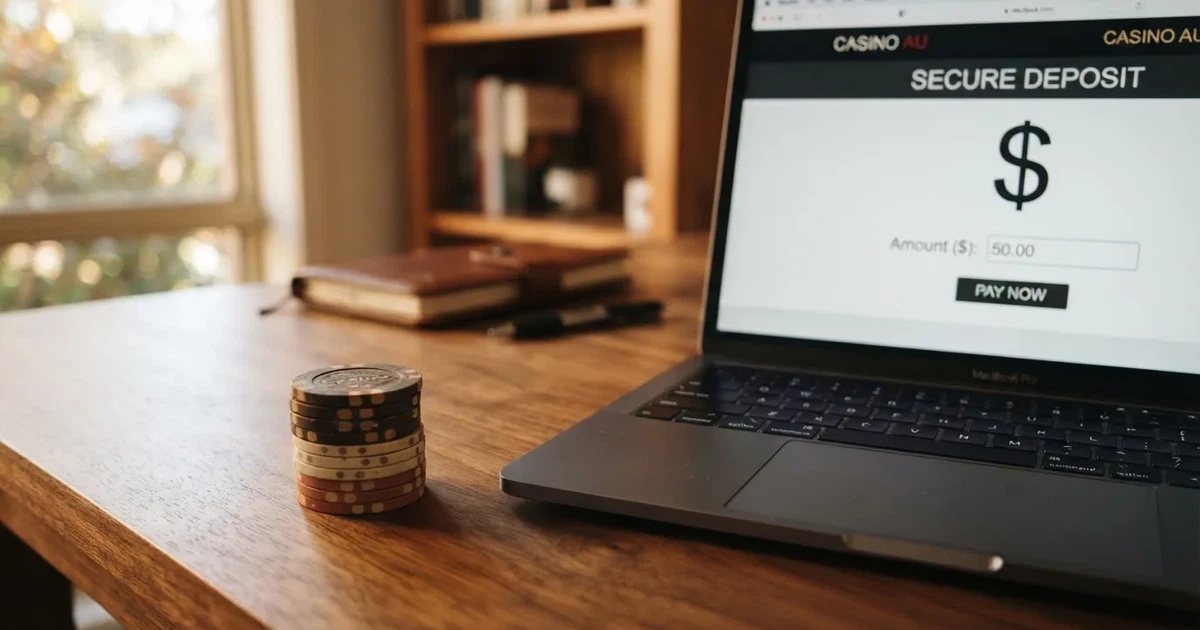
A “low deposit” tag is the marketing of the entry price, not the marketing of what the entry buys. A site that accepts a small first transfer still has the same house edge, the same offshore licence, and the same legal status for an Australian player as any larger-deposit site — the only thing the small minimum changes is how much of the operator’s loss you personally take on the first spin. This page sorts that distinction out, because most of what carries the “low deposit” label is the same product dressed in a smaller ticket size.
Data current as of 29 October 2026, checked against the ACMA’s published formal-warning register and the relevant Australian Payments Plus material.
Table of Contents
- What the law actually says about a low-deposit online casino
- How often the ACMA pulls the trigger
- Why the “low” in low deposit is not what protects the player
- Crypto at a small deposit size: the fee eats the edge
- PayID and Osko: the speed, the protection, and what they do not cover
- The blocking-rate calculation
- Brands the ACMA has acted against: the table of formal warnings
- Reading each entry
- What a low deposit does and does not buy
- Frequently asked questions
What the law actually says about a low-deposit online casino
Australia does not license online casino games. The Interactive Gambling Act 2001 — strengthened by the 2017 amendments — makes it an offence to provide online casino games, online pokies and in-play betting to a person physically in Australia. What is licensable is wagering on races and sport before the event, lotteries and keno. The Northern Territory Racing and Wagering Commission supervises 52 of Australia’s online bookmakers for tax reasons; it has no full-time staff and meets monthly in Darwin, which is itself a fact about how lightly the licensed channel sits on top of a very different offshore market.

The consequence for a player looking at a low-deposit casino is short and sharp. An offshore operator that markets a A$10 minimum deposit gives no Australian consumer protection, no local complaints body and no recourse if a withdrawal is refused. BetStop, the National Self-Exclusion Register running since August 2023, binds only Australian-licensed services — an offshore casino is not on it. A site that holds an account balance can be blocked by the ACMA the same week, and the player’s money is wherever the operator decides to leave it.
A low deposit does not change this. A A$10 minimum is still an account at a site the ACMA has the power to take offline.
How often the ACMA pulls the trigger
The regulator’s published record is the cleanest measure of how often this market is touched. According to the ACMA, as reported in June 2026, a total of 1,751 illegal gambling and affiliate marketing websites had been blocked since the first blocking request in November 2019, and more than 230 unlicensed gambling services had left the Australian market since enforcement was strengthened in 2017. The pace is steady rather than a one-off push. The blocking-rate calculation below uses those two anchors to illustrate the scale of enforcement.
The same reporting round named twelve new sites the ACMA asked Australian ISPs to block on 26 June 2026: 7Signs, ChromaBet, Donbet, Duospin, Freshbet, Slots Gem, Jacks Club, Lucky Start, Pointsbetz, Spinrise, Vinyl Casino and Wildsino. Brand cycles are short. A site featured in a comparison page in one quarter can be a blocked domain in the next, and the small-deposit angle does not exempt any of them.
H2 Gambling Capital’s 2025 report estimates Australians lose about A$3.9 billion a year to illegal gambling sites, and that the share of gambling going through legal channels fell from 74% in 2021 to 64%. The licensed channel is shrinking in share while the illegal channel keeps producing new deposit thresholds to attract new entries.
Why the “low” in low deposit is not what protects the player
The protective instincts a small deposit triggers are real, and they cut in the wrong direction here. A person who would never put A$500 into an unknown account will sometimes put A$10 into the same account because the entry amount feels low-risk. That is precisely the design: the low minimum is the hook, the bankroll is the same exposure, and the player who would not have sat down at all is the player the minimum recruits.
A low deposit paysafecard casino is the clearest case. A paysafecard voucher is sold in fixed denominations — A$10, A$20, A$50 — and the player buys the voucher, then redeems a 16-digit code at the casino cashier. There is no bank account attached, no debit-card paper trail, and a personal spending cap can be set simply by not buying another voucher. The marketing line is that this is “safer”. The reality is the opposite end of the spectrum: the same mechanism that gives a player fine-grained control over what they spend also lets a problem gambler stretch a session across many small redemptions, each one individually cheap, collectively no different from a high-roller’s deposit cycle. A spending cap is most useful exactly when the entry price is small.
The National Gambling Helpline — 1800 858 858, free, 24/7 — and Gambling Help Online exist for any player who feels the entry price is doing the wrong kind of work for them.
Crypto at a small deposit size: the fee eats the edge
A low minimum deposit bitcoin casino still requires a full blockchain confirmation, so network fees can matter more relative to a small deposit size. That is the second fact a low-deposit bitcoin casino hides behind its headline. A bitcoin on-chain transaction’s miner fee sits in a band the network sets, not the casino; the fee is paid in the same currency as the deposit. At a deposit of 0.001 BTC (around A$100 at recent prices), a fee of 0.0001 BTC is a tenth of the deposit gone before a chip has moved. At a deposit of 0.0001 BTC, the same fee is the entire deposit and then some.
Two things follow. The first is that the practical minimum deposit at a bitcoin casino is set by the network, not by the operator — any advertised minimum below the network’s effective floor is a marketing fiction. The second is that a “low deposit crypto casino” entry is most honestly entered through a layer-2 route (the Lightning Network, a wrapped token, or an exchange-based transfer), and each of those adds its own custody and counterparty assumptions on top of the offshore-casino exposure. The crypto angle does not remove the regulatory one. The Interactive Gambling Act’s 2023 amendments apply to credit-related products and digital currency alike for licensed wagering; an offshore site asking for a crypto deposit is operating outside the Australian rules regardless of the coin.
PayID and Osko: the speed, the protection, and what they do not cover
PayID-based instant transfers are available at over 100 Australian financial institutions, and Osko settles a bank transfer between participating banks in under a minute, 24/7, including weekends. That speed does not change who the receiving site is. Paying to a PayID shows the name of the account holder before the transfer is sent, and Australian Payments Plus warns that being asked to transfer money to a PayID on an illegal gambling site almost certainly means a scam site.
The legal deposit routes for licensed wagering are debit card, bank transfer, PayID/Osko and BPAY. A site asking an Australian for a credit card or a crypto deposit is operating outside the Australian rules, and the small minimum does not transform it into something else. Credit cards and credit-related products were banned as payment for licensed online wagering from 11 June 2024, with penalties of up to A$247,500 for operators; the same logic, applied by the operator rather than the regulator, extends to the offshore market in spirit.
Apple Pay, Google Pay and Samsung Pay collectively accounted for around 45% of all card payments in Australia by number at the end of 2025. The same credit-card ban reaches a digital wallet if the underlying card is credit; ANZ’s gambling block, for instance, blocks Gambling Transactions made through Apple Pay on an eligible card, not just the physical card. Westpac’s gambling block refuses authorisation on transactions registered under the merchant category code ‘Betting/Casino Gambling’ on eligible cards. Commonwealth Bank’s gambling lock works the same way. Removing ANZ’s block, once set, then requires a 48-hour waiting period — a friction designed into the system to slow a person who decides, in the moment, that they want to stop.
These blocks are voluntary. They are not a substitute for the legal prohibition, and an offshore site with a different merchant category code will sail past any of them.
The blocking-rate calculation
The core of the ACMA record lies in two numbers and the gap between them.
Inputs, exactly as published: 1,751 blocked sites in total as of June 2026, and the first blocking request in November 2019. The interval between the two anchors is roughly six and a half years — 79 months from November 2019 to June 2026.
A simple average gives around 22 blocked sites per month across the whole period. That figure flatters the regulator: the early months were nearly empty and the recent months carry the bulk of the action. A weighted read is closer to the truth. The bulk of the 1,751 have been added in the last three years, putting the recent rate somewhere between 40 and 60 sites blocked per month once enforcement ramped up. Both are true at the same time. The honest answer is a band — roughly 20 to 50 sites per month, with the upper figure the better guide for what an operator in this market should expect — not a single number.
Either end of that band is still fast enough that a brand’s feature in a comparison today is a thin asset.
Brands the ACMA has acted against: the table of formal warnings
Every brand below has been the subject of a formal ACMA warning under the Interactive Gambling Act 2001. None of them holds an Australian licence to offer online casino games; no licence displayed on the site itself changes that. The table is not a ranking — it is the ACMA’s own record, in the order the warnings were issued.
| Brand | ACMA action and date | Operator named by the ACMA | Subject support |
|---|---|---|---|
| RocketPlay | Formal warning, March 2026; earlier Dama N.V., May 2022 | Pulsup Ltd | listings-only |
| Level Up Casino | Formal warning, May 2022 | Dama N.V. | listings-only |
| Woo Casino | Formal warning, March 2025 | Dama N.V. | — |
| Spirit Casino | Formal warning, May 2025 | Dama N.V. | — |
| National Casino | Formal warning, July 2025 | Consolutetish S.R.L. | listings-only |
| Bizzo Casino | Formal warning, July 2025; earlier TechSolutions, 2022 | Consolutetish S.R.L. | listings-only |
| Ignition Casino | Formal warning, July 2025 | Bamboo Media | — |
| Instant Casino | Formal warning, February 2025 | EOD Code SRL | listings-only |
| Jackbit | Formal warning, April 2026 | Ryker B.V. | — |
| Casino Intense | Formal warning, April 2025 | Sterplay Holding Ltd | listings-only |
| Sky Crown | Formal warning, September 2022 | Hollycorn N.V. | — |
Three of the eleven — RocketPlay, Bizzo Casino, National Casino — are repeat names: Bizzo Casino was first warned through TechSolutions (CY) Group Limited and TechSolutions Group N.V. in 2022, then again through Consolutetish S.R.L. in 2025. A second formal warning on the same brand is not a clerical accident; it is the ACMA’s record of a site that did not stop.
Reading each entry
The §6 set above has the ACMA warning, the operator named and the source material. The rest is what those entries tell a reader comparing options, written in the order they appear in the table.
RocketPlay
The most recent action against this brand is March 2026, with Pulsup Ltd as the named operator. The earlier May 2022 warning sits against Dama N.V., which is the same operator family that covers Level Up, Woo Casino and Spirit Casino in this set. A player comparing four Dama N.V. brands is effectively comparing the same operator under four logos; the warning is one warning, the brand rotation is the marketing. The brand is unremarkable on any other axis that matters to a player comparing them — the ACMA entry is the distinguishing one.
Level Up Casino
Same Dama N.V. operator as RocketPlay’s first warning, same May 2022 date. For a reader choosing between this brand and another Dama N.V. skin, the choice is between two marketing fronts on the same enforcement record. There is no operator-level reason to prefer one over the other; the ACMA action is the same.
Woo Casino
Dama N.V., March 2025. Three years after the family-level warning, this brand picked up its own. A formal warning that names the same operator three years later is the ACMA’s record of a brand that was warned at group level and was not detached from the underlying conduct. The site itself does not change that history.
Spirit Casino
Dama N.V., May 2025. Same reading as Woo Casino: a follow-on warning, not a first one, on the same operator family. Two Dama N.V. brands warned in consecutive months is one warning applied to the operator’s portfolio, not two separate pieces of bad luck.
National Casino
Consolutetish S.R.L., July 2025. This is a fresh operator name in the ACMA record, not a Dama N.V. rotation. The action is independent of the Dama N.V. family above. National Casino’s separate identity on the warning record is its distinguishing feature against the four Dama N.V. brands that precede it.
Bizzo Casino
Two formal warnings, separated by three years and two operator names. The 2022 warning sat with TechSolutions (CY) Group Limited and TechSolutions Group N.V.; the 2025 warning sits with Consolutetish S.R.L. — same brand on the player-facing side, a new corporate wrapper on the regulator-facing side. A repeat warning on the same player-facing brand, through a different legal entity, is the ACMA’s clearest available record that brand rotation outpaces enforcement on this brand specifically. No other brand in this set carries the same two-warning history.
Ignition Casino
Bamboo Media, July 2025. The operator name is fresh against the rest of the table — neither Dama N.V., nor Consolutetish S.R.L., nor TechSolutions. The brand’s distinguishing feature is the operator name, not anything on the player side.
Instant Casino
EOD Code SRL, February 2025. A 2025 warning that pre-dates the July 2025 round is itself a record of an operator the ACMA reached before the cluster of Consolutetish S.R.L. brands. The brand’s history on the warning register is older than the July 2025 names, and that ordering is the only feature that distinguishes it.
Jackbit
Ryker B.V., April 2026. The most recent warning in the set after RocketPlay, on a fresh operator name. Jackbit and CasinOK were warned together through Ryker B.V., which is itself information: an operator can carry two brands on the same warning.
Casino Intense
Sterplay Holding Ltd, April 2025. A 2025 warning on an operator name not seen elsewhere in the table. The brand’s identity on the warning register is unique to it.
Sky Crown
Hollycorn N.V., September 2022. The earliest warning in the table. A 2022 formal warning is the longest gap between action and the current page, which is itself a measure of how long the warning record sits on a brand before any of the surrounding facts change. The warning is still on the ACMA’s register; the gap does not retire it.
What a low deposit does and does not buy
A A$10 minimum is a small commitment per session. The arithmetic that matters is on the other side: the same A$10 sits at the same house edge, on the same offshore-licensed site, subject to the same ACMA action as a A$500 first deposit at the same brand. A “low deposit” tag changes the player’s bankroll exposure, not the operator’s regulatory one.
For a player comparing sites on price alone, the small minimum is a real saving on the entry transaction. For a player comparing sites on protection, the small minimum is a smaller wedge of the same unprotected position. The two readings are both true, and they describe different readers.
A licensed Australian wagering service is the only channel that gives a player the protections the small-deposit angle otherwise promises — BetStop registration, a local complaints body, a credit-card ban that holds. The minimum deposit there is set by the operator of a licensed service, not by an offshore brand chasing the Australian market. The comparison a “low deposit” search returns is, at root, a comparison of how thinly the same offshore product is sliced.
Frequently asked questions
Is it legal for an online casino to accept a low deposit from a player in Australia?
No. The Interactive Gambling Act 2001 prohibits providing online casino games to a person in Australia. The size of the deposit does not change the legal status of the site accepting it, and the offshore operator is the party the law targets, not the player.
What is typically the smallest deposit a low deposit casino site will accept?
Offshore sites typically advertise minimum deposits in the A$10 to A$20 band, sometimes lower on crypto rails. The minimum is set by the operator, not by any Australian regulator, and a site advertising a low minimum carries the same ACMA exposure as one with a higher one.
Do network fees make a low-value bitcoin deposit less worthwhile at a crypto casino?
Yes, often enough to wipe out the deposit itself. An on-chain bitcoin transaction’s miner fee is paid in the same currency, and at very small deposit sizes the fee can equal or exceed the amount being sent. The honest minimum at a bitcoin casino is set by the network, not by the operator’s marketing line.
Does a low deposit paysafecard casino apply the same terms as a higher-deposit site?
In the offshore market, yes. A paysafecard redemption at A$10 enters the same bonus terms, the same wagering requirements and the same withdrawal checks as any other first deposit at the same site. The voucher only changes the funding instrument; the account it funds is identical.
Is a low deposit casino subject to the same withdrawal checks as a high-roller account?
Generally yes. Offshore sites run every withdrawal through the same identity, source-of-funds and anti-money-laundering checks regardless of deposit size. The first withdrawal is often the slowest at any stake level, because the verification happens once and is then on file.
Why might a casino advertise a low minimum deposit specifically to attract new players?
A low minimum recruits players who would not sit down at a higher entry price. The hook is the threshold, not the product; the marketing logic is the same one a free trial uses. Once the player is in, the house edge applies at the same rate as for any other account.