Best casinos for online craps Australia 2026: what the search does not surface
 Available in US
Someone searching for the best casinos for online craps in Australia in 2026 has already run into the wall. The shortlist they want does not exist, and it cannot, because the activity itself is prohibited under federal law. What follows is the shape of that gap: what the Interactive Gambling Act 2001 actually forbids, how the Australian Communications and Media Authority applies it, what the regulator’s recent enforcement record shows, and what is left on the lawful side of the line for a person who actually lives in Australia.
Current as of 23 September 2026, cross-checked against the ACMA’s published register of formal warnings and blocking requests.
Table of Contents
- Legality and regulation in Australia
- Responsible play: what works in Australia
- Bonuses and wagering: what craps bonus offers really cost
- How online craps actually plays
- The AU casino landscape: what an Australian reader is actually choosing between
- A note on what is changing in 2026
- What to do instead, in plain language
- Frequently Asked Questions
Legality and regulation in Australia
The federal framework that governs online wagering in Australia is the Interactive Gambling Act 2001, tightened by the Interactive Gambling Amendment Act 2017. The IGA makes it an offence to provide online casino-style games — craps included — to a person physically in Australia. The penalty schedule is not symbolic: individuals face fines of up to A$220,000 per day and corporations up to A$1.1 million per day for continuing to offer prohibited services.

What the Act does allow is also narrowly drawn. Wagering on racing and sporting events placed before the event is licensable; lotteries and keno are licensable; in-play betting online is not. Online casino games and online pokies are not licensable in any state or territory, despite what an offshore operator’s footer may claim about a Curaçao or Anjouan registration. That licence permits the operator to take bets from where its licence is recognised. It does not transform a prohibited service into a permitted one for Australian customers.
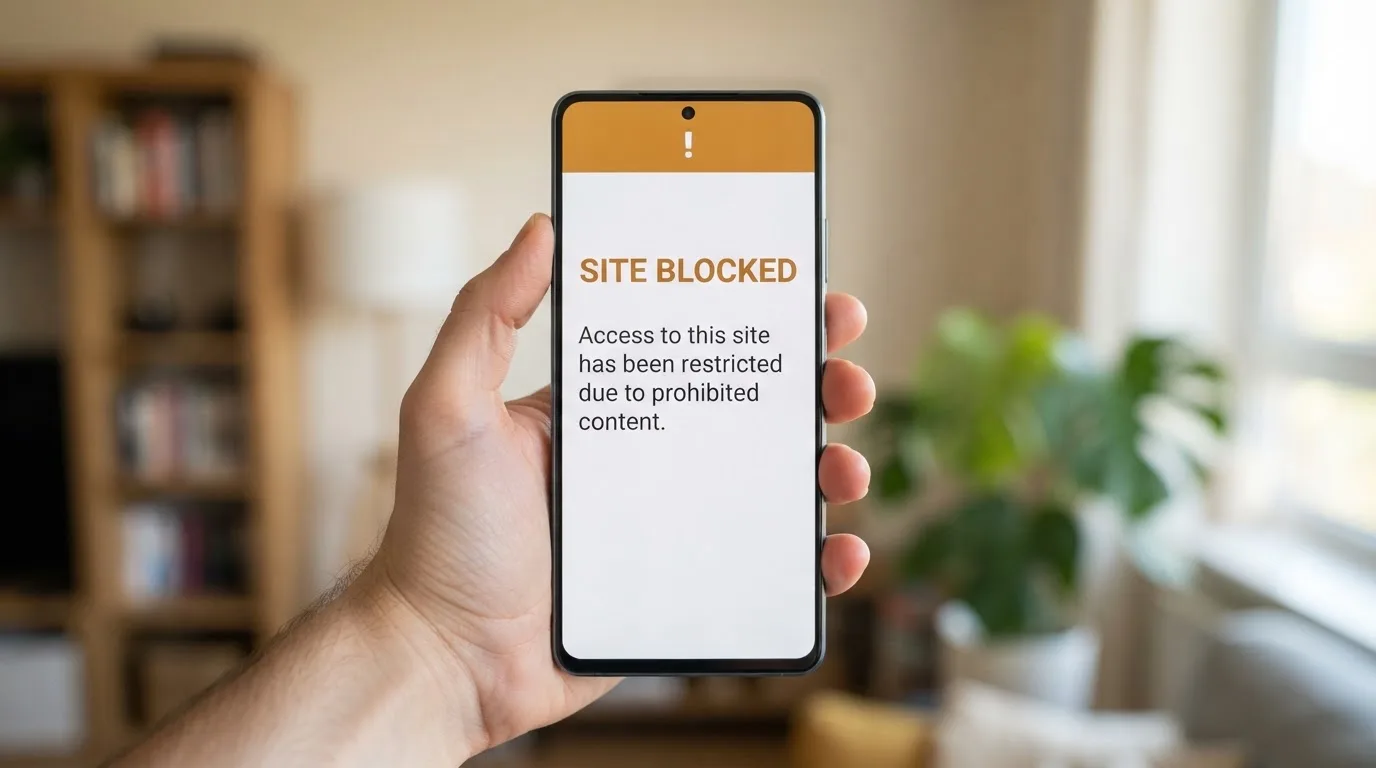
Enforcement sits with the ACMA. It investigates complaints, issues formal warnings to operators it identifies as serving Australian customers, and directs Australian internet service providers to block illegal sites at the domain level. The penalty for the provider is real; the consequence for an individual Australian who plays is indirect but material. An offshore site offers no Australian consumer protection, no recognised complaints body, and no path of recourse if a withdrawal is refused. If the site is blocked mid-week, any balance held on it can be stranded. The risk sits entirely with the player.
The ACMA’s enforcement record, in numbers
The cumulative toll of the ACMA’s blocking programme is now substantial. As of June 2026, a running figure of 1,751 illegal gambling and affiliate marketing websites had been blocked since the first blocking request in November 2019. Over 230 unlicensed gambling services had exited the Australian market since enforcement was strengthened in 2017. A single round reported that month asked Australian ISPs to block 12 further sites — 7Signs, ChromaBet, Donbet, Duospin, Freshbet, Slots Gem, Jacks Club, Lucky Start, Pointsbetz, Spinrise, Vinyl Casino and Wildsino — all operating without local cover.
The blocking rate since 2019 has been steady rather than dramatic. Spread across roughly 79 months between the first blocking request in November 2019 and the snapshot reported in June 2026, the ACMA’s enforcement averages out to about 22 sites blocked per month. That figure conceals a great deal of variation: some rounds name a dozen sites at once, others just one or two, and the operator landscape shifts behind the scenes as some brands disappear and others appear. It does, however, give a reader a sense of the cadence: roughly two dozen new sites added to the block list every month, on average, over six and a half years.
H2 Gambling Capital’s 2025 estimate places Australians’ annual losses to illegal gambling sites at around A$3.9 billion. The same report tracked a decline in the share of gambling going through legal channels from 74% in 2021 to 64%. The arithmetic underneath that shift matters: more spend is leaving the country, less of it is coming back through licensed operators, and the regulators and tax base see none of it.
Formal warnings: how the regulator’s diary reads
The ACMA’s formal warning register is the clearest running record of which operators the regulator has decided to act against, and the timing of those acts. The pattern over the past four years is consistent rather than episodic: warnings are issued in clusters tied to specific operators, and some operators attract repeat attention because the same corporate group runs multiple brands.
In May 2022, Dama N.V. received a formal warning covering six of its brands at once — Bambet, Dazard, Level Up, Rocketplay, Wild Tornado and Cobra Casinos. The same operator drew further warnings in March 2025 over Woo Casino and in May 2025 over Spirit Casino, both of which continue to operate under the same corporate umbrella.
July 2025 brought warnings to two more operator groups. Bamboo Media received a warning over Ignition Casino, and Consolutetish S.R.L. received warnings over both National Casino and Bizzo Casino. Bizzo had already been the subject of an earlier warning in 2022, when it was operated by TechSolutions Group. The recurrence matters because it shows that rebranding or a change of corporate vehicle does not move a brand out of the regulator’s line of sight.
February 2025 saw a formal warning to EOD Code SRL over Instant Casino. April 2025 brought a warning to Sterplay Holding Ltd over Casino Intense. April 2026 added Ryker B.V. over Jackbit and CasinOK. March 2026 brought a warning to Pulsup Ltd over Rocketplay. And Hollycorn N.V. received a warning over its Sky Crown and Blue Leo casino services, recorded in the ACMA’s published register.
The pattern is plain. These are not one-off crackdowns; they are a continuing programme against a long tail of offshore operators. Each warning carries the threat of the next step, which is a domain-level block under section 313 of the Telecommunications Act 1997.
What the NTRWC does, and what it does not
Australia’s online wagering licences are concentrated, oddly, in one jurisdiction. The Northern Territory Racing and Wagering Commission regulates 52 of Australia’s online bookmakers, including Sportsbet, Bet365 and Ladbrokes, licensed in the Territory principally for tax reasons. The commission has no full-time staff and meets once a month in Darwin. This is the body that issues the licences a reader sees in an Australian-facing bookmaker’s footer — and it is not the body that licenses casino games, because no body in Australia does.
The conflation is worth flagging. A licensed Australian bookmaker offers pre-event wagering on racing and sport. It does not offer craps, baccarat, blackjack or roulette online. A reader who sees a “licensed in Australia” line at the bottom of a wagering site has seen a true statement about the licensed product, and an irrelevant one about the unlicensed one.
Responsible play: what works in Australia
A player reading from Australia who wants protection that actually binds has a narrower set of options than the offshore marketing suggests. Two of them work; the rest are window dressing.
BetStop, the National Self-Exclusion Register, has been live since August 2023. Registering with BetStop blocks the person from every Australian-licensed online and phone wagering service simultaneously, for a chosen period from three months up to a permanent exclusion. The mechanism is enforced at the operator end: licensed wagering services must check BetStop before allowing a new account, deposit or bet. The catch is that BetStop binds only Australian-licensed services. An offshore casino does not check BetStop and is under no obligation to honour a self-exclusion a player has registered domestically. The tool works exactly as well as the operator’s geography allows.
The National Gambling Help Line is 1800 858 858 — free, 24/7, with web chat at Gambling Help Online. The line offers confidential support, financial counselling referrals and connections to face-to-face services in every state and territory. For anyone whose gambling has moved beyond what they planned, that number is the most direct route back to control. It is also the one number that works regardless of which site, licensed or not, the call concerns.
A note on payment-level protection. Since 11 June 2024, credit cards, credit-related products and digital currency have been banned as a means of paying for licensed online wagering in Australia, with operator penalties of up to $247,500 for accepting them. The legal deposit routes for licensed wagering are debit card, bank transfer, PayID/Osko and BPAY. An offshore site asking an Australian customer for a credit card or a crypto deposit is operating outside the Australian rules entirely; it is also removing a layer of friction that often stops an impulsive top-up. Choosing the lawful payment route, where it is available, is itself a form of harm reduction.
Self-exclusion limits an Australian reader should know about
BetStop is real and effective at what it covers, and limited at what it does not. For an Australian player who has been playing at offshore casinos and not at licensed Australian wagering services, a BetStop registration will not block access to those offshore sites. The exclusion is enforced by Australian-licensed operators; it has no jurisdiction over a Curaçao-registered brand serving Australian customers in defiance of an ACMA warning. That asymmetry is the structural reason offshore play is more dangerous than licensed play, not less, despite the marketing copy that runs the other way.
The same asymmetry applies to deposit limits. Licensed Australian wagering operators must offer customers deposit limits, time-outs, and activity statements as standard. Offshore operators may offer equivalent tools and many do; the legal obligation to honour them, in Australia, is nil. A player who hits a self-imposed limit at an offshore site has made a private arrangement with a company the ACMA has already warned once, sometimes twice, about its conduct in Australia.
Bonuses and wagering: what craps bonus offers really cost
A craps bonus, where one is offered, follows the same architecture as any other online casino bonus: a headline number attached to a wagering requirement that determines what the player must stake before any winnings become withdrawable. The mechanics do not change because the underlying game is dice rather than slots. The maths does.
A “100% match up to A$500” with a 35x wagering requirement on the bonus means that the player must turn over A$17,500 in bets before the bonus portion of any winnings can be withdrawn — 500 multiplied by 35. The player’s own deposit is unaffected by the wagering requirement but is, of course, at the mercy of the house edge on every spin of the dice until the requirement clears.
Craps complicates the picture because of how the game is structured. The Pass Line and Don’t Pass bets carry a house edge of about 1.41% and 1.36% respectively. The free odds bet, taken behind a Pass or Don’t Pass bet once a point is established, carries a 0% house edge because it pays at true odds. Almost every other proposition on the table — the Field bet at 5.56%, Any Craps at 11.11%, Any 7 at 16.67% — costs the player substantially more per dollar staked. A bonus cleared entirely on Pass Line bets, with odds behind, gives up less of the bonus to the house than one cleared on proposition bets. A bonus cleared on the Any 7 bet alone is being converted into operator margin at roughly one-sixth of every dollar turned over.
The honest reading of a craps bonus, then, is that the wagering requirement is only the headline cost. The actual cost depends on which bets the player chooses to clear it on, and the worst bets on the table are the ones that look the most exciting — a single roll, a big payout, no waiting for a point to be established. The math of “bonus value” is a function of the house edge on the bets used to clear it, and a player who chases the bright bets is paying for the privilege of turning the bonus over quickly.
For Australian readers, the entire conversation is moot. No licensed Australian operator offers online craps, and no craps bonus is on a regulated offer that an Australian can lawfully claim. The bonus architecture described above belongs to the offshore market, and claiming one means using an offshore site that the ACMA has already warned about or, increasingly, blocked.
How online craps actually plays
Craps looks complex on a live table because of the layout and the noise, but the bet structure is simpler than it first appears. The centre of the action is the Pass Line bet, which wins on the come-out roll of 7 or 11, loses on 2, 3 or 12, and otherwise establishes a point — 4, 5, 6, 8, 9 or 10 — that the shooter must roll again before rolling a 7 for the Pass Line bet to win.
Once a point is established, the player can take “odds” behind the Pass Line bet. The odds bet pays at true odds — 2-to-1 on a point of 4 or 10, 3-to-2 on a point of 5 or 9, 6-to-5 on a point of 6 or 8 — and carries no house edge. It is the only bet on a standard craps table with a 0% margin. The Pass Line itself, at 1.41%, is among the lowest-edge bets in any casino game.
The Don’t Pass and Don’t Come bets sit on the other side of the line, betting against the shooter. They carry a marginally lower house edge than the Pass Line — 1.36% — and pay even money. Most craps players ignore them out of table etiquette, because betting against the shooter is taken as poor form, but the mathematics is the mathematics.
Everything else on the table is more expensive for the player. The Field bet, which wins on 2, 3, 4, 9, 10, 11 or 12 on the next roll, carries a 5.56% house edge. The Any Craps bet — a one-roll wager that the next number will be 2, 3 or 12 — carries 11.11%. The Any 7 bet, which simply bets that the next roll will be a 7, carries 16.67%, the worst bet on the standard craps layout.
For comparison, baccarat’s Banker bet carries a 1.06% house edge and the Player bet 1.24%; the Tie bet in baccarat is 14.36%. Blackjack, played with optimal strategy under liberal Las Vegas Strip rules, drops to about 0.28%, and under Atlantic City rules about 0.43%. Craps sits between baccarat and blackjack on the Pass Line, and substantially behind both once the player strays from the line and the odds behind it.
Variants worth knowing
The standard game described above is what an Australian reader would find at Crown Melbourne’s craps tables and at most international online casinos. Variants exist for players who want something different.
Crapless Craps removes 2, 3, 11 and 12 as come-out losing or winning numbers, which changes the dice probabilities on the come-out roll and reshuffles the betting structure. Street craps is the informal version played on a sidewalk or a kitchen table, without a marked layout or casino staff to settle disputes; it is sometimes played for money and sometimes for beer, and the term itself tells the reader most of what they need to know.
Online variants offered by studios that hold a real-money gaming licence in some jurisdiction tend to be the standard game, sometimes with a single zero-edge odds bet and sometimes with side wagers added for promotional reasons. The bonus-eligible bets vary by studio, and a craps bonus that excludes the free odds bet is one a reader should read carefully before claiming.
Where the game came from
Modern craps is a simplification of the English dice game Hazard, which itself was played across Europe for several centuries before reaching the American tables. Bernard Xavier Philippe de Marigny de Mandeville, a Louisiana politician and gambler, is credited with introducing Hazard to New Orleans around 1805; the simplified version that emerged there became known as “Pass”, from the French word for the passing of the dice. Around 1907, a Philadelphia dice maker named John H. Winn introduced the Don’t Pass betting layout that is still standard on casino craps tables today, a change that gave the house an incentive to use fair dice rather than loaded ones. The current shape of the game is, in other words, just over a century old.
The AU casino landscape: what an Australian reader is actually choosing between
| Brand | ACMA action and date | Operator named by the ACMA | Subject support |
|---|---|---|---|
| RocketPlay | Formal warning, March 2026; earlier Dama N.V. warning, May 2022 | Pulsup Ltd (Rocketplay.com.au); earlier Dama N.V. | — |
| Level Up Casino | Formal warning, May 2022 | Dama N.V. | Listings reference BGaming |
| Woo Casino | Formal warning, March 2025 | Dama N.V. | — |
| Spirit Casino | Formal warning, May 2025 | Dama N.V. | — |
| National Casino | Formal warning, July 2025 | Consolutetish S.R.L. | Listings reference Wikipedia |
| Bizzo Casino | Formal warning, July 2025; earlier TechSolutions warning, 2022 | Consolutetish S.R.L.; earlier TechSolutions | — |
| Ignition Casino | Formal warning, July 2025 | Bamboo Media | — |
| Instant Casino | Formal warning, February 2025 | EOD Code SRL | — |
| Jackbit | Formal warning, April 2026 | Ryker B.V. | — |
| Casino Intense | Formal warning, April 2025 | Sterplay Holding Ltd | Listings reference ABC, ACMA, Crown Melbourne |
| Sky Crown | Formal warning, published September 2022 | Hollycorn N.V. | — |
The honest list for an Australian reader in 2026 does not contain online craps. It contains three categories of legal alternative, plus the offshore market the ACMA is actively warning against.
The first category is licensed Australian wagering operators. These are the Sportsbets, Bet365s, Ladbrokes and the rest, all licensed by the NTRWC for pre-event racing and sports wagering. They offer no craps. They offer no online casino games. They offer a regulated product with deposit limits, BetStop enforcement, lawful payment methods and a real complaints process.
The second category is Australia’s licensed land-based casinos, which do offer craps. Crown Melbourne in Victoria runs a craps table, as do the Star in Sydney and the Treasury in Brisbane. A land-based casino is licensed and supervised by the state regulator — the Victorian Gambling and Casino Control Commission in Victoria’s case, Liquor and Gaming NSW in New South Wales, the Office of Liquor and Gaming Regulation in Queensland. A player at one of these venues has the protections of Australian consumer law, the regulator’s complaints process and the venue’s own responsible gambling officers. The activity is permitted. It is also a physical venue, not an online one.
The third category is lotteries and keno, licensed variously by state regulators. Lotteries do not run craps. They are mentioned here only to mark the boundary: they are what is licensed and they are not what a reader searching for craps is looking for.
The fourth category, which dominates online search results and which this page is largely about, is the offshore market. None of these operators holds an Australian licence for casino games. None of them is permitted to offer craps to a person in Australia. Every one of them on the ACMA’s published register has been formally warned, and many have been blocked at the domain level. They continue to advertise, accept deposits and serve Australian customers using payment methods that the Australian rules prohibit. The full list, drawn from the ACMA’s formal warning register, is below.
AU operator landscape: ACMA enforcement
| Brand | ACMA action and date | Operator named by the ACMA | Subject support |
|---|---|---|---|
| RocketPlay | Formal warning, March 2026; earlier Dama N.V. warning, May 2022 | Pulsup Ltd (Rocketplay.com.au); earlier Dama N.V. | — |
| Level Up Casino | Formal warning, May 2022 | Dama N.V. | Listings reference BGaming (not a confirmation) |
| Woo Casino | Formal warning, March 2025 | Dama N.V. | — |
| Spirit Casino | Formal warning, May 2025 | Dama N.V. | — |
| National Casino | Formal warning, July 2025 | Consolutetish S.R.L. | Listings reference Wikipedia (not a confirmation) |
| Bizzo Casino | Formal warning, July 2025; earlier TechSolutions warning, 2022 | Consolutetish S.R.L.; earlier TechSolutions | — |
| Ignition Casino | Formal warning, July 2025 | Bamboo Media | — |
| Instant Casino | Formal warning, February 2025 | EOD Code SRL | — |
| Jackbit | Formal warning, April 2026 | Ryker B.V. | — |
| Casino Intense | Formal warning, April 2025 | Sterplay Holding Ltd | Listings reference ABC, ACMA, Crown Melbourne (not confirmations) |
| Sky Crown | Formal warning, published September 2022 | Hollycorn N.V. | — |
The table is not a shortlist. It is the ACMA’s own list, dressed in their dates and operator names, and what every brand on it has in common is the underlying legal fact: no Australian jurisdiction licenses the product they offer to Australian customers. The subject support column, where it carries anything, reflects what third-party listings report rather than what the operator confirms, and on craps specifically none of these brands has been verified as offering a regulated Australian-facing craps product — because none can.
A reader treating the list as a menu has misread the page. The list is evidence of why the menu does not exist.
Where that leaves a reader who has been searching for this
The page above this paragraph is the honest answer. There is no licensed, regulated, Australian-facing online casino offering craps in 2026. There are offshore sites that offer craps and accept Australian customers in defiance of the IGA, the ACMA’s warnings and increasingly the ACMA’s blocks. The choice a reader actually faces is whether to play at one of those offshore sites despite all of the above, or to play craps at a licensed Australian land-based casino, or to take up one of the lawful Australian online wagering products on a licensed Australian bookmaker.
A reader who wants the game and accepts the cost of playing at a venue rather than from a phone has a real option: Crown Melbourne, the Star Sydney, the Treasury Brisbane, plus the smaller state casinos. The craps table at Crown is regulated by the VGCCC under the Casino Control Act 1991, the same body that approves rule changes — like the renaming of Crown’s “Perfect Pairs” blackjack side bet to “Crown Pairs” in December 2024, or the introduction of a “Free Bet” option with a new “Pot of Gold” side bet in March 2024. That is the regulatory texture an Australian reader can rely on.
A reader who wants online play and accepts that craps is not part of the lawful offering has a different option: a licensed Australian bookmaker, with deposit limits, BetStop enforcement, debit card and PayID deposits, and a real complaints body. The product is racing and sport, not craps. That is the trade.
A reader who wants to play craps online at an offshore site has been told, throughout this page, what they are choosing. The site is offering a prohibited service. The ACMA has, in most cases, has already warned the operator. The withdrawal protections are not Australian. The balance can be stranded by a domain block. The bonus is structured to extract margin through the house edge on the worst bets on the table. None of that is hidden from the regulator; all of it is hidden from the marketing.
A note on what is changing in 2026
The Interactive Gambling Amendment (Gambling Reform) Bill 2026 passed Parliament on 19 August 2026. Its advertising and inducement measures commence on 1 January 2026+1. The bill is law with a start date, not a regime in force on a page written in 2026. By the time it takes effect, the Australian online wagering market will look different in its advertising — what affiliates can say, what inducements licensed operators can offer, what is published in social media — but the underlying prohibition on online casino games including craps will remain.
For a reader who has been following the law from a distance, this is worth knowing. The gap between the search and the law is not about to close for online casino games. It is being closed for advertising around the legal products, which is a real change but a different one. The structural problem this page describes — that the search for online craps in Australia returns a market the ACMA is actively warning against — will continue to be the shape of the answer in 2026+1.
What to do instead, in plain language
For a reader in Australia who wants craps, the lawful path is to a licensed land-based casino. Crown Melbourne, the Star Sydney and the Treasury Brisbane offer the game under state regulation, with real consumer protections and a real complaints process. The activity is permitted, the venue is supervised, and the rules on the table are approved by the state regulator.
For a reader in Australia who wants to wager online, the lawful path is to a licensed Australian bookmaker — Sportsbet, Bet365, Ladbrokes and the rest. The product is racing and sport, not casino games. The site is licensed by the NTRWC. Deposits are limited, self-exclusion works, and the complaints process is real.
For a reader in Australia whose gambling has moved beyond what they planned, the path back is the National Gambling Help Line on 1800 858 858, free and 24/7, with web chat at Gambling Help Online. The line is for any gambling concern, licensed or not, and the call is confidential.
For a reader who wants offshore craps regardless, the path is exactly what this page has described: a site the ACMA has warned, a withdrawal without Australian recourse, a bonus that extracts more than it returns, and a balance that a domain block can strand at any time. The page is not going to recommend that path. It has laid out what it costs.
Frequently Asked Questions
What house edge does the Pass/Come bet carry in craps?
The Pass Line and Come bets carry a house edge of about 1.41%, which is among the lowest of any casino table game outside blackjack played with optimal strategy. The free odds bet taken behind a Pass Line bet, once a point is established, carries a 0% house edge because it pays at true odds rather than at a marked-up multiple.
What is the difference between a Pass Line and a Don’t Pass bet in craps?
The Pass Line bet wins when the shooter wins — a come-out roll of 7 or 11, or the point being rolled before a 7. The Don’t Pass bet is the mirror image, winning when the shooter loses. The Don’t Pass carries a slightly lower house edge, about 1.36% versus the Pass Line’s 1.41%, but most craps players avoid it as a matter of table etiquette. Both bets can be supplemented by a 0% free odds bet once a point is established.
Is it legal for an online casino to offer craps to players in Australia?
No. The Interactive Gambling Act 2001, as amended in 2017, makes it an offence to provide online casino-style games including craps to a person in Australia, with penalties of up to A$220,000 per day for individuals and A$1.1 million per day for corporations. No state or territory licenses online casino games, including craps, and an offshore operator’s licence in Curaçao or Anjouan does not change the position for an Australian customer.
Why is the Any Craps bet considered a poor-value wager?
The Any Craps bet is a one-roll wager that the next roll will be 2, 3 or 12, and it pays 7-to-1. The true odds against winning are 8-to-1, which gives the bet a house edge of 11.11% — roughly eight times the edge on a Pass Line bet. The Any 7 bet, which simply bets that the next roll will be a 7, is even worse: it carries a 16.67% house edge. Both bets are popular because they resolve in a single roll, but the player pays a steep premium for that speed.
Can craps be played at a licensed Australian land-based casino?
Yes. Crown Melbourne in Victoria, the Star Sydney in New South Wales and the Treasury Brisbane in Queensland all offer craps under state regulation. The Victorian Gambling and Casino Control Commission, Liquor and Gaming NSW and the Office of Liquor and Gaming Regulation in Queensland supervise the games, the rules and any rule changes. A land-based casino is supervised; an offshore online casino is not.
What should someone do if they are chasing craps losses online?
The first step is to stop depositing and to stop playing. The second is to register with BetStop, the National Self-Exclusion Register, which will block access to every Australian-licensed online and phone wagering service — though it does not cover offshore casinos. The third is to call the National Gambling Help Line on 1800 858 858, free and 24/7, with web chat at Gambling Help Online. Financial counsellors can help with the practical side of the recovery, and the call is confidential.
Created by the ”Casino Venues Info” editorial team.