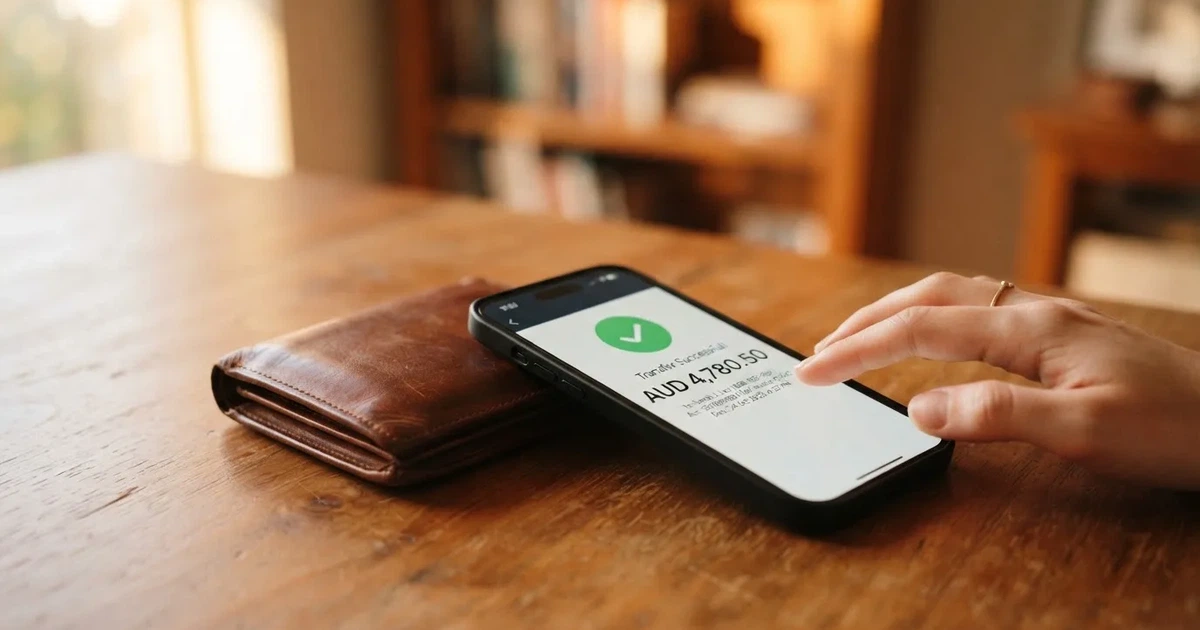
What a $10 PayID no-deposit bonus looks like in Australia in 2026
 Available in US
Current as of 23 September 2026 · verified against ACMA formal-warning notices and the Australian Communications and Media Authority’s published blocking actions.

The phrase “$10 PayID no-deposit bonus” reads like a coupon. In Australia it is closer to a marker for an offshore site the local regulator has already warned. PayID is a real Australian payment rail, and the ACMA has issued formal warnings to eleven offshore casino brands over the last few years — every one of them selling exactly this kind of credit. This page sets out what sits behind the offer, what the Interactive Gambling Act 2001 does to it, and what a player is actually paying for the ten dollars.
Table of Contents
- The Australian legal frame around an offshore $10 credit
- Why the bonus can’t be claimed onshore
- What the $10 no-deposit credit actually costs
- The ACMA’s record against the brands selling this
- PayID at the banking side: what does and doesn’t travel
- The blocking rate, as the regulator reports it
- Responsible play inside an illegal market
- The cost of saying yes
- Frequently asked questions
The Australian legal frame around an offshore $10 credit
The Interactive Gambling Act 2001, tightened by the 2017 amendments, makes it an offence to supply online casino games or online pokies to a person physically in Australia. No state or territory issues a licence for casino-table games or slots — wagering on racing and sport (pre-event only), lotteries and keno are licensable, and the Northern Territory Racing and Wagering Commission (NTRWC) regulates 52 online bookmakers including Sportsbet, Bet365 and Ladbrokes, which is why the regulator itself has been the subject of reform debate. None of those licences covers a slot machine.

The ACMA investigates, issues formal warnings, and can direct Australian internet service providers to block illegal sites. As reported in June 2026, 1,751 illegal gambling and affiliate marketing websites had been blocked since the first blocking request in November 2019, and more than 230 unlicensed services had left the Australian market since 2017. In a single round on 26 June 2026 the ACMA asked ISPs to block another twelve — 7Signs, ChromaBet, Donbet, Duospin, Freshbet, Slots Gem, Jacks Club, Lucky Start, Pointsbetz, Spinrise, Vinyl Casino and Wildsino. Each one of those names sits in the same offshore network a $10 PayID no-deposit bonus would route through.
The player is not the one prosecuted — the IGA targets the provider. The cost falls on the player in other ways: no Australian consumer protection, no local complaints body, no recourse if a withdrawal is refused, and the site can be blocked with a balance still sitting in it. H2 Gambling Capital’s 2025 estimate puts Australian losses to illegal gambling sites at around A$3.9 billion a year, with the share going through legal channels falling from 74% in 2021 to 64%.
Why the bonus can’t be claimed onshore
The $10 credit only exists at offshore operators, and the mechanism that delivers it is the problem. A casino licensed anywhere in Australia — there are none for slots or table games — cannot legally offer one. The site offering it sits outside Australian jurisdiction, displays a Curaçao or Anjouan licence as marketing, and asks for a PayID because the rails between Australian banks are cheap and instant.

PayID itself is genuine and heavily used. It is an easy-to-remember identifier — a mobile number, an email address, an ABN or an Organisation Identifier — linked to a bank account, operated by Australian Payments Plus (AP+) and built into the online banking of over 100 Australian institutions. By April 2025 more than 25 million PayIDs were registered in Australia. Underneath sits the New Payments Platform, launched in February 2018 and overseen by the Reserve Bank of Australia, with the Fast Settlement Service settling each transaction individually in close to real time around the clock.
That reliability is what makes PayID attractive to a scam site. When a player pays to a PayID, the banking app shows the name linked to it before the money is sent — the check that protects against mistaken payments. The same screen, in reverse, gives the casino a real-time confirmation that an Australian bank account has just moved money. AP+ warns directly: anyone asked to transfer funds to a PayID on an illegal gambling site is almost certainly looking at a “scambling” site, which the payments operator defines as slang for illegal online gambling platforms advertised on social media and messaging apps that trick people into gambling on a scam website. The contact line if that happens is the player’s own financial institution, not a regulator.
PayID itself is not the trap. The trap is that the offer behind it is for a prohibited service.
What the $10 no-deposit credit actually costs
A no-deposit bonus is the cleanest version of an inducement: free money in the account on signup, no payment required. The arithmetic the operator builds around it is what determines whether the credit turns into real cash.
The conventional structure runs through three numbers. First, a wagering requirement — a multiple, typically between 20× and 50× the bonus, that must be turned over before any winnings can be withdrawn. Second, a maximum cashout cap, which limits what can ever be taken out of a free-credit win regardless of the size. Third, a list of eligible games, with slots usually counting 100% toward the requirement and table games a fraction of that or zero.
A $10 credit at a 40× wagering multiple means turning over A$400 before withdrawal is permitted. At a 5-second spin interval on a slot staking A$1, that is around 400 spins, or roughly 33 minutes of uninterrupted play to clear the requirement — and the house edge runs through every one of those spins. At a 96% return-to-player that is an expected loss of A$16 on the playthrough alone, against a A$10 bonus that may already be capped at, say, A$50 in withdrawable winnings. The headline number was free. The session’s expected cost sits well above it, and the cap means a freakish win still pays out at the operator’s ceiling, not the spin’s actual result.
That is the calculation behind the offer. A “free” ten dollars, turned over, becomes a net-negative expectation for the player.
The ACMA’s record against the brands selling this
Every brand in the set below has received a formal warning from the ACMA for offering prohibited interactive gambling services to Australians. The table covers what the ACMA has actually published, nothing more — no bonus terms, no payout times, no game libraries, because the only sources for those were affiliate pages.
| Brand | ACMA action and date | Operator named by the ACMA | Subject support |
|---|---|---|---|
| RocketPlay | Formal warning, March 2026 (earlier warning to operator Dama N.V., May 2022) | Pulsup Ltd | — |
| Level Up Casino | Formal warning, May 2022 | Dama N.V. | listings-only |
| Woo Casino | Formal warning, March 2025 | Dama N.V. | — |
| Spirit Casino | Formal warning, May 2025 | Dama N.V. | — |
| National Casino | Formal warning, July 2025 | Consolutetish S.R.L. | listings-only |
| Bizzo Casino | Formal warning, July 2025 (earlier warning to TechSolutions, 2022) | Consolutetish S.R.L. | — |
| Ignition Casino | Formal warning, July 2025 | Bamboo Media | — |
| Instant Casino | Formal warning, February 2025 | EOD Code SRL | listings-only |
| Jackbit | Formal warning, April 2026 | Ryker B.V. | — |
| Casino Intense | Formal warning, April 2025 | Sterplay Holding Ltd | listings-only |
| Sky Crown | Formal warning, September 2022 | Hollycorn N.V. | — |
The progression is the point. Dama N.V. was warned in May 2022 over six brands including Level Up, Rocketplay and Wild Tornado; it was warned again over Woo Casino in March 2025 and Spirit Casino in May 2025. Bizzo Casino was warned as a TechSolutions brand in 2022, then again as a Consolutetish S.R.L. brand in 2025 — a different corporate wrapper for what the ACMA treats as the same service. Hollycorn N.V. was warned over Sky Crown and Blue Leo in September 2022. New names keep appearing: Pulsup Ltd over Rocketplay in March 2026, Ryker B.V. over Jackbit in April 2026. The same pattern shows up in the blocking rounds — twelve fresh domains in a single June 2026 action — which suggests the pipeline is replenishing faster than it is being closed.
PayID at the banking side: what does and doesn’t travel
The bank side matters because that’s where the money actually is. Osko, the instant settlement layer PayID runs on, delivers a bank-to-bank transfer between participating Australian banks in under a minute, twenty-four hours a day including weekends, whether it is addressed to a BSB and account number or to a PayID. That speed and reliability are the reason the marketing copy uses PayID in the first place.
What does not travel with it is protection. Westpac’s gambling block refuses authorisation of any transaction registered under the merchant category code “Betting/Casino Gambling” on eligible personal credit and debit cards. ANZ’s gambling transaction block, set in the ANZ app, blocks gambling transactions made through a digital wallet such as Apple Pay on an eligible card — not just the plastic card itself. Turning the ANZ block on is one tap; turning it off again requires a 48-hour cooling-off period. Neither bank claims the block catches every gambling transaction, and both warn that some non-gambling transactions may be blocked in error, which is a useful reminder that “blocked” and “permitted” are both imperfect signals. Apple Pay itself, for the record, charges no consumer fee — any surcharge is the merchant’s card-processing cost — and Apple is explicit that transaction limits and PIN requirements are set by the card issuer or the merchant, not by Apple.
Under the Interactive Gambling Act 2001 as amended in 2023, Australian-licensed online wagering services cannot accept credit cards or other credit-related products — a restriction that also shapes how PayID-linked bank transfers can be used for wagering. The legal deposit routes for a licensed wagering service are debit card, bank transfer, PayID/Osko and BPAY. A site asking for a credit card or a crypto deposit is, by definition, not running under Australian rules. By the end of 2025 Apple Pay, Google Pay and Samsung Pay collectively accounted for around 45% of all card payments in Australia by number, which is why the wallet question sits on top of the bank question rather than beside it.
The blocking rate, as the regulator reports it
The arithmetic on this page is the rate at which the ACMA’s blocking programme is keeping up with the supply of new illegal sites.
Total sites blocked since the first blocking request in November 2019: 1,751. Total services that have left the Australian market since enforcement was strengthened in 2017: more than 230. The 26 June 2026 round alone added 12 more. The headline figure gives one number; the per-round rate gives the rhythm.
The first blocking request sits at November 2019. The June 2026 total of 1,751, run over roughly 80 months from that first request, gives a long-run average of around 22 sites blocked per month. The pace is not steady — rounds cluster when investigations close — and the per-month figure is a smoothed rate, not a forecast of what next month’s round will hold. Read it as the only band the regulator’s own publication supports: the ACMA is averaging roughly two dozen blocks a month over the life of the programme, with the occasional larger round and the occasional quieter stretch between them. The number that matters for a reader is not the cumulative total but the fact that new sites keep arriving at roughly that pace, which is what makes the operator-level list above a moving target rather than a closed one.
Responsible play inside an illegal market
The responsible-gambling rails the page should name, because they are free and they work, run through Australian-licensed channels only.
BetStop, the National Self-Exclusion Register, has been live since August 2023 and binds every Australian-licensed online and phone wagering service. It does not bind an offshore casino. A player who has registered with BetStop and then signs up at one of the brands above is not protected by the registration, because that brand is not connected to the register. The 1800 858 858 National Gambling Helpline is free, runs twenty-four hours a day, and is reachable by chat through Gambling Help Online. That line and that chat are not gated by where the player has been playing; they are a service to a person, not to an account.
If the topic has started to feel compulsive — checking balances before sleep, chasing a withdrawal, returning after a self-set break — that is the moment to call. Free, confidential, twenty-four hours a day.
The cost of saying yes
A $10 PayID no-deposit bonus is the lightest possible on-ramp to an offshore casino: no deposit, an Australian payment rail, a credit that looks free. The free part is true at the moment the credit lands. What follows it is a wagering multiple that turns ten dollars into a few hundred dollars of turnover, a cashout cap that limits the upside no matter how the spins land, a slot library with a house edge baked into every spin, an operator sitting outside Australian jurisdiction, no local complaints body if a withdrawal stalls, and a regulator that can block the site with a balance still on it. The Interactive Gambling Act 2001 says the service itself is prohibited; the ACMA’s published record says most of the brands selling it have already been warned; AP+ says a PayID request from one of these sites is almost certainly a scam. The arithmetic is the same in every direction: the offer’s sticker price is A$10, and the player’s expected cost runs higher than that before the bonus is even withdrawable.
For anyone comparing offshore to local, the comparison is not close. There is no licensed Australian online casino to compare it to, which is itself the comparison.
Frequently asked questions
Can a casino actually credit $10 to my account the moment I share a PayID?
A no-deposit credit lands in the casino balance quickly — that’s the marketing point. It is not real cash: a wagering requirement and a maximum-cashout cap sit on top of it, and the casino itself is offshore and outside Australian consumer protection. The credit is real; the cash-out is conditional.
Is PayID itself a legitimate, regulated Australian payment service?
Yes. PayID is operated by Australian Payments Plus and runs on the Reserve Bank of Australia–overseen New Payments Platform, with over 100 Australian institutions supporting it and more than 25 million PayIDs registered by April 2025. The payment rail is legitimate; what it is being asked to fund on these sites is not.
Why would an offshore site ask for a PayID before paying out a $10 bonus?
For the same reason a scam site does: an Australian bank transfer via PayID confirms an Australian bank account in real time and settles in under a minute through Osko, which is exactly what the operator wants to verify before releasing any money. AP+ warns directly that a PayID request from an illegal gambling site is almost certainly a scam.
What’s the catch with a $10 no-deposit bonus that only needs a PayID?
The wagering requirement — usually a multiple of the bonus that must be turned over before withdrawal — and a maximum cashout cap. A$10 at 40× is A$400 of turnover, with the house edge running through every spin and a withdrawal ceiling that sits well below the spin’s theoretical maximum. The credit is free at the moment it lands; the session’s expected cost runs higher than the bonus itself.
Does using PayID with an offshore casino count as banking with an Australian institution?
The transfer moves through Australian banks and PayID, but the recipient is an offshore operator. The bank side is Australian; the service on the other end is not licensed in Australia and is not covered by BetStop, by Australian consumer law, or by any local complaints process. Australian Payments Plus calls these sites “scambling” sites and tells anyone caught by one to contact their financial institution directly.
Is a PayID casino bonus offer regulated by ASIC or the ACMA?
No Australian regulator authorises an online casino offering a $10 PayID no-deposit bonus, because no such licence exists under the Interactive Gambling Act 2001. The ACMA issues formal warnings and blocks sites — it does not regulate them. ASIC’s role sits with financial services and corporations, not interactive gambling. The operator sits outside both.
Prepared by the Casino Venues Info editorial staff.