
Pulling real money out through PayID at an Australian online casino in 2026
The promise on the landing page is always the same. Type a PayID, hit withdraw, watch the balance land in your bank before the kettle has boiled. Then the operator goes quiet for three days, the cashier starts asking for a bill and a payslip, and the “instant” turns out to mean instant once you’ve finished the document dance. By the time anyone reads the fine print, the PayID itself is no longer the slow part.
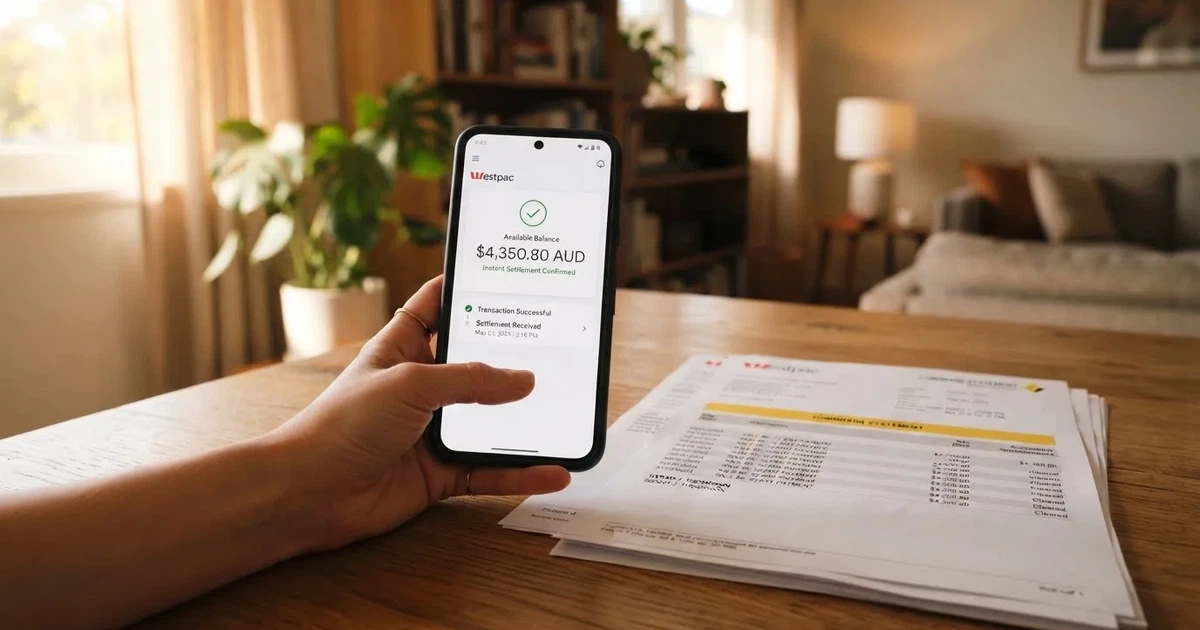
That mismatch is the subject of this page. PayID is genuinely instant — under a minute between participating banks, twenty-four hours a day, weekends included. The slowness lives elsewhere: in which sites are allowed to pay real money to Australians at all, in the identity check that gates a first cash-out, and in the bonus conditions that sometimes convert real cash into locked credit before any PayID has a chance to fail. The latter is what the calculations below measure.
Two things to be clear about before any brand is named. Online casino games and online pokies cannot be lawfully provided to a person in Australia under the Interactive Gambling Act 2001, as amended in 2017. Sites that take Australian players do so under offshore licences; the ACMA’s record of formal warnings is the public history of that. PayID does not change this — a real-money PayID withdrawal at an offshore casino is still an offshore transaction, and the speed of the rail is the least important thing about it.
Data current as of 29 October 2026, verified against the ACMA’s published list of formal warnings and blocking requests.
Table of Contents
- The brands the ACMA has warned over offering casino games to Australians
- How PayID actually moves money in Australia
- What the law actually says about a real-money PayID withdrawal in Australia
- The bank-side picture: gambling blocks, credit cards and digital wallets
- Responsible play around a real-money PayID withdrawal
- The arithmetic of how long a real-money PayID withdrawal actually takes
- Instant Casino
- Casino Intense
- RocketPlay
- Level Up Casino
- Woo Casino
- Spirit Casino
- National Casino
- Bizzo Casino
- Ignition Casino
- Jackbit
- Sky Crown
- What an Australian reader can actually do with PayID and a casino
- Tax and paperwork around a real-money gambling win in Australia
- Frequently asked questions
The brands the ACMA has warned over offering casino games to Australians
A ranking of “best PayID withdrawal casino” for Australia would, on its own terms, be a ranking of unlawful options. The eleven names below appear here for one reason: each one has been the subject of a formal warning from the ACMA for providing prohibited casino games to a person physically in Australia. They are presented in the order the regulator acted on them. Nothing here recommends any of them as a place to play.

| Brand | Latest ACMA action | Operator the ACMA named | Subject support |
|---|---|---|---|
| Instant Casino | February 2025 | EOD Code SRL | Listings-only (PayID-rail mentions in payment enquirers) |
| Casino Intense | April 2025 | Sterplay Holding Ltd | Listings-only (general AU-rail mentions) |
| RocketPlay | March 2026 (earlier Dama N.V., May 2022) | Pulsup Ltd | — |
| Level Up Casino | May 2022 | Dama N.V. | Listings-only (Westpac-rail mentions) |
| Woo Casino | March 2025 | Dama N.V. | — |
| Spirit Casino | May 2025 | Dama N.V. | — |
| National Casino | July 2025 | Consolutetish S.R.L. | Listings-only (AUSTRAC and general AU references) |
| Bizzo Casino | July 2025 (earlier TechSolutions, 2022) | Consolutetish S.R.L. | — |
| Ignition Casino | July 2025 | Bamboo Media | — |
| Jackbit | April 2026 | Ryker B.V. | — |
| Sky Crown | September 2022 (PDF notice on ACMA register) | Hollycorn N.V. | — |
A “—” means the research found no published reference for that brand processing PayID specifically to an Australian account. Where the entry says “listings-only”, that is the strongest statement the record supports: the brand appears on pages that mention PayID, not on pages that prove it as a withdrawal rail for real-money balances at this brand. Treat any brand-level claim that does not belong to one of those two categories as marketing copy.
The full per-brand write-ups follow below, ordered the same way as the table.
How PayID actually moves money in Australia
A PayID is an easy-to-remember identifier — a mobile number, an email address, an ABN, or an Organisation Identifier — linked to an ordinary Australian bank account. You set it up inside your own bank’s app or internet banking, and you can change or delete it at any time. The system is run by Australian Payments Plus, the domestic payments utility, and is supported by more than a hundred Australian financial institutions; by April 2025 the register held more than 25 million PayIDs. The rail beneath it is the Reserve Bank of Australia’s New Payments Platform, which launched in February 2018 precisely so that simply-addressed payments could clear near real-time, around the clock.
For the punter, three mechanics matter.
When you pay someone using their PayID, the payer’s bank shows the name on the receiving account before the transfer is sent. This is the safety check: a transfer addressed to a phone number that resolves to “Joe’s Plumbing Pty Ltd” instead of the expected “Joe Smith” gets caught at that point, and the payment is stopped. AP+ leans on this check hard. The page tells anyone being asked to send money to a PayID on what looks like an illegal gambling site to assume it is a scam — they have a word for it, “scambling” — and to contact their financial institution. Anyone who has already sent funds is told to ring the bank first.
PayID pairs with Osko, the instant transfer service. Osko deposits typically arrive in under a minute, any time of day or night, including weekends and public holidays, whether the transfer uses a BSB and account number or a PayID. That is the “instant” the marketing pages borrow. The window the rail itself opens is genuinely immediate. What sits across that window is the operator’s own cashier, and that is where the speed story has always actually lived.
There is no fee to use PayID from a consumer’s bank. Costs in this story are not on the rail; they are in the conditions the cashier applies before allowing the rail to fire.
What the law actually says about a real-money PayID withdrawal in Australia
The Interactive Gambling Act 2001, tightened by the Interactive Gambling Amendment Act 2017, makes it an offence to provide online casino games, online pokies or in-play betting to a person in Australia. No state or territory grants a licence for those products. What is licensable is wagering on races and sport placed before the event, lotteries and keno — in practice licensed by the Northern Territory through the Northern Territory Racing and Wagering Commission. Even there the regulator is light-touch: it oversees fifty-two online bookmakers including the major names, has no full-time staff, and meets once a month in Darwin.
Enforcement against the provider sits with the ACMA. The regulator investigates complaints, issues formal warnings, and asks Australian internet service providers to block illegal sites at the network level. The first blocking request was made in November 2019; by June 2026 the ACMA had asked ISPs to block 1,751 illegal gambling and affiliate marketing websites in total, and had seen more than 230 unlicensed services leave the Australian market since 2017. In one round reported that same month, it added twelve more names to the block list: 7Signs, ChromaBet, Donbet, Duospin, Freshbet, Slots Gem, Jacks Club, Lucky Start, Pointsbetz, Spinrise, Vinyl Casino and Wildsino. The individual player is not prosecuted — the IGA targets the operator — but the consumer protections that follow from a licence do not follow from a block. No Australian complaints body has jurisdiction over an offshore cashier. A withdrawal can be refused, delayed or simply never paid, and the only appeal is the operator’s own dispute process.
For payment, the IGA as amended in 2023 prohibits Australian-licensed online wagering from accepting credit cards or other credit-related products, with penalties up to A$247,500 per offence for operators. That is why legal deposit routes for licensed wagering are debit cards, bank transfer, PayID via Osko, and BPAY. A site pushing a credit card or a crypto deposit is operating outside the Australian rules. The Interactive Gambling Amendment (Gambling Reform) Bill 2026 passed Parliament on 19 August 2026, and its advertising and inducement measures commence on 1 January 2027 — law with a future start date, not yet in force on this page.
H2 Gambling Capital’s 2025 estimate puts losses to illegal gambling sites at roughly A$3.9 billion a year, with the share of gambling going through legal channels having fallen from 74% in 2021 to 64%. That trend is the practical reason a page on a “PayID withdrawal casino” reads the way it does: the rail is real, the destination is rarely an Australian one.
The bank-side picture: gambling blocks, credit cards and digital wallets
Several Australian banks give customers a way to refuse gambling transactions at card level, and the mechanics of those blocks are the other half of any real-money PayID withdrawal story.
Westpac’s gambling block refuses authorisation of transactions logged under the merchant category code “Betting/Casino Gambling” on eligible personal credit and debit cards. It sits at the card, not at the merchant. ANZ runs a similar block that can be activated inside the app; once on, ANZ warns that not every gambling transaction will be blocked and some non-gambling ones might be blocked in error. The block also covers transactions routed through a digital wallet — Apple Pay, Google Pay or otherwise — on an eligible ANZ card, not just the plastic. Removing the block requires a 48-hour cooling-off period. The cards this kind of block covers are the same cards sitting behind Apple Pay and Google Pay; by the end of 2025, those three wallet brands together accounted for around 45% of all card payments in Australia by number, so a wallet toggle is no longer a side door.
Credit cards are the simpler case. Under the Interactive Gambling Act 2001 as amended in 2023, an Australian-licensed online wagering service cannot accept credit cards or any credit-related product as payment. Because PayID, Osko and direct debit pull from the same deposit account as a card transaction, the credit-card rule and the gambling-block rule reach them by the same logic: the rail matters less than who is on the other end.
Apple Pay itself has no fees for consumers in-store, online or in-app; any surcharge that turns up at checkout comes from the merchant’s card-processing fees, not from Apple. Transaction limits and PIN requirements for Apple Pay purchases are set by the card issuer or the merchant, not by Apple. In other words, the wallet does not weaken the bank’s underlying gambling block. The Reserve Bank of Australia’s July 2025 review proposes removing surcharges only on eftpos, Mastercard and Visa, explicitly leaving American Express outside the proposed ban — a side note, but a useful reminder that card-rail rules in Australia move one scheme at a time.
Responsible play around a real-money PayID withdrawal
The fastest rail in the country makes a poor argument against a budget rule. Two are worth stating plainly.
BetStop, the National Self-Exclusion Register, has been live since August 2023. It binds every Australian-licensed online and phone wagering service, and once a name is on it, marketing must stop and accounts must close. It does not bind offshore casinos. A player who has self-excluded and then opens an account at an offshore site has not been excluded there. That is the limit of the register, and it is the reason offshore play is its own decision with its own discipline.
The National Gambling Helpline on 1800 858 858 is free, 24 hours a day, with chat at Gambling Help Online. A budget set before a deposit, a cap honoured before a withdrawal, and a stop point named in advance are the parts of responsible play that the rail cannot touch. Speed is a separate conversation from harm-minimisation, and treating them as if they were the same is the single commonest mistake this product asks people to make.
The arithmetic of how long a real-money PayID withdrawal actually takes
The blocking-rate calculation on this page measures how quickly the ACMA’s enforcement has consumed the offshore market since the first blocking request. The running total by June 2026 was 1,751 illegal and affiliate sites blocked; the first request went to ISPs in November 2019. That is roughly 80 months of enforcement, averaging a touch over 21 blocked sites per month against the same handful of operator groups. A reasonable working band, given the uneven pace of recent rounds, is 20 to 30 sites blocked per month over the period the ACMA’s enforcement has run. If a new round adds the same dozen names every quarter, that pace continues; if the regulator shifts focus toward affiliate marketing pages or payment routing, the total grows faster.
The number to watch is the operator-cluster, not the single brand. Dama N.V. has been warned over Woo Casino in March 2025 and over Spirit Casino in May 2025 after an earlier May 2022 warning over six brands including Rocketplay and Level Up. Consolutetish S.R.L. was warned in July 2025 over National Casino and Bizzo Casino, the same set TechSolutions was warned over in 2022. A new brand from either cluster turning up on a “best PayID withdrawal casino” list is not a fresh option. It is the same operator re-skinned.
Instant Casino
The ACMA issued a formal warning over Instant Casino to EOD Code SRL in February 2025. The brand turns up on payment-enquirer pages as listing PayID alongside other rails; research did not return a published record of a real-money PayID withdrawal clearing at Instant Casino specifically, so the strongest statement is that listings reference the rail. The site holds no Australian licence, online casino games cannot be licensed in Australia at all, and the ACMA’s action is the public position. The verdict: the rail reference is a marketing listing, not a documented settlement, and the operator is one the regulator has already warned.
Casino Intense
A formal warning to Sterplay Holding Ltd over Casino Intense was issued in April 2025. The brand appears in general AU-rail mentions on payment and industry pages, in the listings-only sense — there is no published record of a real-money PayID withdrawal settling at this brand. The underlying story is the same: offshore licence, no Australian permission for casino games, ACMA action already on file. The verdict: a name that recurs on payment pages but not as a confirmed cash-out destination, and one the regulator has formally warned.
RocketPlay
Pulsup Ltd was warned over RocketPlay in March 2026, on top of an earlier May 2022 warning to Dama N.V. covering six brands including RocketPlay. A brand that has been the subject of two formal warnings from the same regulator is, on the regulator’s own record, one that has not closed the issue. Online casino games cannot be licensed anywhere in Australia, whatever licence the site displays. The verdict: a recurring name on the ACMA’s enforcement record, not a fresh option.
Level Up Casino
Level Up was covered by the Dama N.V. warning of May 2022. The brand appears on payment-enquirer pages as listing Westpac-rail references in the broader sense; research returned nothing more specific on PayID. The verdict: a brand inside a warned operator group with only listings-level evidence of an AU rail at all.
Woo Casino
Dama N.V. was warned over Woo Casino in March 2025, a fresh action after the 2022 umbrella warning. No published reference places a real-money PayID withdrawal at the brand. The verdict: an operator the regulator has come back to twice, and a brand whose AU-rail story is whatever its own marketing says.
Spirit Casino
Dama N.V. was warned over Spirit Casino in May 2025, again after the 2022 umbrella. No published reference attaches the brand to a settled PayID payout. The verdict: the same operator-group pattern, with no evidence of the rail in operation.
National Casino
Consolutetish S.R.L. was warned over National Casino in July 2025. The brand carries AUSTRAC and general-AU references on listing pages. National Casino was not previously under the 2022 TechSolutions warning, which covered Bizzo Casino instead. The verdict: a separately warned brand inside an operator group that has now been hit twice in different corporate shapes.
Bizzo Casino
Bizzo Casino sits at the intersection of two enforcement records — the July 2025 warning to Consolutetish S.R.L. and a 2022 warning to TechSolutions (CY) Group Limited and TechSolutions Group N.V. The same consumer-facing brand, two different operator entities in the regulator’s record. No published reference attaches a PayID payout specifically to the brand. The verdict: the regulator’s clearest example of a brand re-emerging under a new operator name after a warning.
Ignition Casino
Bamboo Media was warned over Ignition Casino in July 2025. No published reference attaches a real-money PayID withdrawal to the brand. The verdict: a brand the ACMA has acted on with no rail evidence to weigh against it.
Jackbit
Ryker B.V. was warned over Jackbit and CasinOK in April 2026. The warning is among the most recent on the regulator’s record. No published reference attaches a PayID payout to the brand. The verdict: a freshly warned operator with no AU-rail evidence to test.
Sky Crown
Hollycorn N.V. was the subject of an ACMA formal warning PDF over its Sky Crown and Blue Leo casino services in September 2022. Sky Crown is not on the recent-blocking-round lists that named twelve new entries; the warning sits earlier and on its own. No published reference attaches a PayID payout to the brand. The verdict: an older warning, unaccompanied by any rail evidence, and the same underlying fact — no Australian licence for these products.
What an Australian reader can actually do with PayID and a casino
There is one outcome that holds together: PayID itself is real, fast and free for the consumer; the operator on the other end, in this market, almost never holds an Australian licence for the product being sold; and the regulator’s record is a list of operator groups, not a list of single brands. The rail is a thing a punter can use today; the destination it reaches, in this corner of the market, is one the ACMA has already named in 2022, 2025, 2026 and every round between.
For an Australian player who wants the PayID experience as a withdrawal rail, the lawful path is licensed wagering — betting on a race or sporting event before it starts, through a Northern Territory-licensed bookmaker. Wagering is the only licensable form of online gambling in Australia; it accepts PayID and Osko; it sits under BetStop, the gambling-harm-minimisation regime, and the credit-card ban. Anything that calls itself an “instant PayID withdrawal casino” is selling casino games, not wagering, and the choice to play it is the choice to step outside the Australian framework.
For an Australian player who has a balance stuck at one of the offshore brands on the regulator’s list, the practical levers are limited. The first move is the operator’s own complaint route, kept in writing. The second is the bank: a card chargeback under the bank’s scheme rules, a direct dispute under the ePayments Code, and a gambling-block turned on inside the banking app so the same card cannot fund the same merchant again. The third is the regulator’s reporting channel: the ACMA takes reports about offshore operators and uses them to inform blocking requests. None of those routes returns the balance as quickly as the rail did.
The picture is bleak for the speed of an honest complaint and clear about the speed of the rail itself. PayID takes under a minute between banks. The rest takes as long as the operator decides it takes, and on the regulator’s record, the operator here has decided slowly, more than once.
Tax and paperwork around a real-money gambling win in Australia
For a recreational player, gambling winnings are not assessable income under section 6-5 of the ITAA 1997, and losses are not deductible. The position is different for someone who carries on a business of gambling, but that is the model only — anyone whose circumstances cross that line is told, by every adviser and by the tax office, to check with the ATO directly.
For an identity check that gates a first real-money PayID withdrawal at an Australian-licensed bookmaker, the document set is the same one any KYC review asks for: photo ID (driver’s licence or passport), proof of address (a utility bill or bank statement issued within the last three months), and sometimes a screenshot of the deposit method showing its owner. Once that single review has cleared, future PayID withdrawals on the same account usually do not re-request the same documents, though anti-money-laundering triggers (a sudden change in deposit pattern, a large withdrawal to a different account) can force another review.
Frequently asked questions
Is it legal for an online casino to pay out real money through PayID to a player in Australia?
No. Online casino games and online pokies cannot be lawfully provided to a person in Australia under the Interactive Gambling Act 2001, as amended by the Interactive Gambling Amendment Act 2017. The speed of PayID does not change that. Only wagering on races or sport placed before the event, lotteries and keno is licensable, and a real-money PayID withdrawal against those products is processed inside the Australian framework.
What is the difference between withdrawing bonus credit and withdrawing real money through PayID?
Bonus credit is money the operator has lent on its own terms — typically with a wagering multiple, a max-cashout cap and a game-weighting rule that decides which titles count toward clearing. Real money is what is left after those terms have been honoured, drawn from a bank account that has already accepted real funds. The PayID rail moves either kind of balance identically; the difference is what the cashier allows to leave the account.
Does a no-deposit bonus balance need to be converted before a real-money PayID withdrawal is possible?
Almost always, yes. A no-deposit bonus is a credit issued by the operator, and a withdrawal of real money from a bonus-funded balance requires the bonus terms to be cleared first — wagering the credit a set number of times, on eligible games, within a stated window, sometimes up to a max-cashout cap. The conversion, where offered, is the rule that decides whether any PayID window opens at all on what started as credit.
What identity documents are usually required before a first real-money PayID withdrawal?
A photo ID such as a driver licence or passport, a proof of address such as a utility bill or bank statement issued within the last three months, and often a screenshot of the deposit method that shows its owner. These are the standard KYC set at Australian-licensed bookmakers. At an offshore site the document set is the operator’s choice and can be more demanding, with no appeal outside the operator’s own dispute channel.
Is there a minimum real-money balance needed before a PayID withdrawal can be requested?
Usually. Most operators set a minimum withdrawal amount — commonly A$10 or A$20 — below which the request cannot be filed. Some operators also apply a maximum-cashout cap on bonus-derived balances. Neither figure is universal; the operator’s own cashier page is where it lives, and the audit is worth doing before the first request.
Why might a real-money PayID withdrawal take longer than an earlier bonus-funded one?
Three things commonly slow a real-money withdrawal past the speed of a bonus-funded one. The first is identity verification — KYC has to clear once before any cash-out to a new beneficiary, and a first withdrawal usually triggers it. The second is the bonus terms — a wagering multiple, a max-cashout cap, or a game-weighting rule that locks the bonus balance until cleared. The third is anti-money-laundering triggers: a change in deposit pattern or a large first withdrawal can force an additional review. The rail itself takes under a minute; the slowdowns live inside the operator’s cashier.