
What sits behind a new PayID pokies site for an Australian player
The phrase “new PayID pokies” puts two ideas next to each other. The first is a payments idea: an instant bank transfer through the New Payments Platform, addressed by a mobile number, email or ABN rather than a BSB-and-account-number. The second is a gambling idea: an offshore casino site pitching itself to Australians with the word “pokies” in its name. Those two ideas have nothing to do with each other legally. A PayID transfer is a perfectly ordinary Australian payments product offered by over 100 banks. A new offshore pokies site is, by definition, illegal to provide to a person in Australia under the Interactive Gambling Act 2001 — the regulator’s name for it is a “prohibited interactive gambling service”, and the Australian Communications and Media Authority has spent the past three years writing formal warnings to operators who offer one anyway.
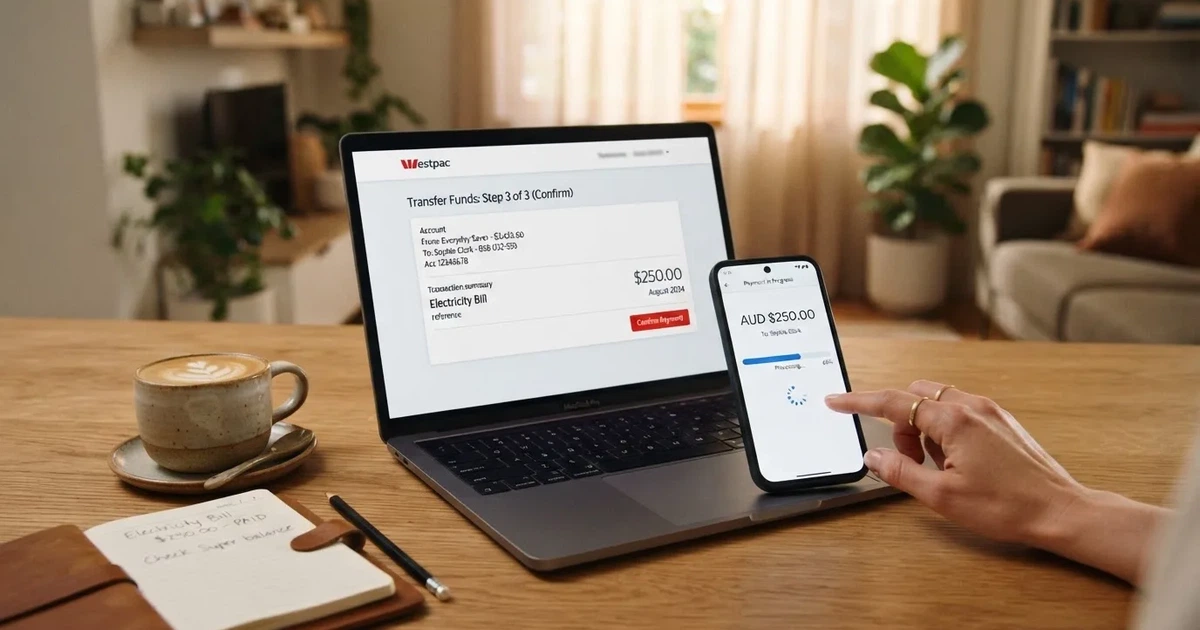
That is the page’s job: to keep those two things separate while looking honestly at the offers that combine them.
Current as of 29 October 2026 · verified against the ACMA register of formal warnings and blocking requests and against Australian Payments Plus’s PayID public materials.
Table of Contents
- The ACMA landscape at a glance
- What PayID actually is
- What the law actually says
- Settlement speed, and what it actually buys
- Responsible gambling, and the Australian frame around it
- The brand set, and what the ACMA’s actions show
- What the blocking rate actually looks like
- What each brand actually shows on PayID
- How the eleven brands sit together
- What a PayID transfer to an offshore casino actually does
- Where the legal frame is moving
- Tax and the Australian reader
- How to read this page against the marketing
- Frequently asked questions
The ACMA landscape at a glance
The market these sites address is, on paper, a “newly launched” cluster of offshore casinos. In practice, the regulator’s view of that cluster is closer to a list of enforcement actions. As of June 2026 the ACMA had asked Australian internet service providers to block 1,751 illegal gambling and affiliate marketing websites since the first blocking request in November 2019, and more than 230 unlicensed gambling services had left the Australian market since enforcement was strengthened in 2017. The most recent reported blocking round, on 26 June 2026, named twelve sites at once: 7Signs, ChromaBet, Donbet, Duospin, Freshbet, Slots Gem, Jacks Club, Lucky Start, Pointsbetz, Spinrise, Vinyl Casino and Wildsino.

| Brand | ACMA action and date | Operator named by the ACMA | Subject support |
|---|---|---|---|
| RocketPlay | Formal warning, March 2026 | Pulsup Ltd | None |
| Level Up Casino | Formal warning, May 2022 | Dama N.V. | None |
| Woo Casino | Formal warning, March 2025 | Dama N.V. | None |
| Spirit Casino | Formal warning, May 2025 | Dama N.V. | None |
| National Casino | Formal warning, July 2025 | Consolutetish S.R.L. | Listed on AUSTRAC and Wikipedia |
| Bizzo Casino | Formal warning, July 2025 | Consolutetish S.R.L. | None |
| Ignition Casino | Formal warning, July 2025 | Bamboo Media | None |
| Instant Casino | Formal warning, February 2025 | EOD Code SRL | Mentioned by ecoPayz and PayID |
| Jackbit | Formal warning, April 2026 | Ryker B.V. | None |
| Casino Intense | Formal warning, April 2025 | Sterplay Holding Ltd | Listed on AUSTRAC, iTnews and NAB |
| Sky Crown | Formal warning, September 2022 | Hollycorn N.V. | None |
What that list measures is enforcement reach, not consumer behaviour. The other side of the same picture comes from H2 Gambling Capital’s 2025 estimate that Australians lose about A$3.9 billion a year to illegal gambling sites, and that the share of gambling going through legal channels fell from 74% in 2021 to 64%. The two numbers point the same way: offshore sites keep finding Australians, and the channel mix is moving against the legal one.
The remainder of this page works through what PayID is, what the regulator has been doing about the sites that advertise it as a deposit method, what “fast settlement” actually means in practice, and what the operator names that recur on affiliate pages look like once the ACMA’s actions are placed beside them. None of the brands discussed below is recommended as a place to play. They are presented because the ACMA itself has acted against them, and a comparison that leaves that out is not a comparison.
What PayID actually is
A PayID is an easy-to-remember identifier — a mobile number, an email address, an ABN or an Organisation Identifier — that points at a bank account. It is operated by Australian Payments Plus (AP+), the country’s domestic payments provider, and sits on top of the Reserve Bank of Australia’s New Payments Platform, which launched in February 2018 to let Australian households, businesses and government agencies make simply-addressed, near real-time payments twenty-four hours a day. The PayID is the address; the New Payments Platform is the railway. As of April 2025 more than 25 million PayIDs were registered in Australia.
What the system does for the user is concrete. Paying to a PayID, the payer is shown the name linked to it before the money is sent. That name check is the protection against scams and mistaken payments — if the name on the screen is not who the payer expected, the transfer is not made. PayID is offered by over 100 Australian financial institutions and is already built into their online banking; nothing extra is downloaded, nothing extra is signed up to. PayID will never contact a customer directly, and emails or text messages claiming to be from PayID are a scam; PayID never asks anyone to send money in order to receive money or to “upgrade” an account.
What PayID is not, despite how it is sometimes marketed by offshore casinos, is a thing the casino controls. The casino supplies a PayID — its own — to deposit into. The transfer is an ordinary Australian bank transfer. The casino does not get to decide the speed; the rail does, and the rail is the same one a person paying a tradie or splitting a dinner bill uses. AP+ puts it more sharply than that, with a direct warning: if a person is asked to transfer funds to a PayID on an illegal gambling site, it is almost certainly a “scambling” website. AP+’s working definition of “scambling” is slang for illegal online gambling platforms advertised on social media and messaging apps that trick people into gambling on a scam website, and the advice to anyone who thinks they have been scambled is to contact their financial institution.
That warning is on AP+’s own page. It belongs at the front of any serious look at PayID as a deposit method at a new offshore pokies site.
What the law actually says
Online casino games and online pokies cannot be licensed in Australia. The Interactive Gambling Act 2001, strengthened by the Interactive Gambling Amendment Act 2017, makes it an offence to provide online casino games, online pokies or in-play betting to a person physically in Australia, no matter where the operator is incorporated and no matter what licence the operator’s homepage displays. What is licensable is wagering on races and sporting events placed before the event, lotteries, and keno. In practice the licensed online bookmakers — Sportsbet, Bet365 and Ladbrokes among them — are licensed in the Northern Territory for tax reasons, through the Northern Territory Racing and Wagering Commission, a body that has no full-time staff and meets once a month in Darwin.
The minimum age to gamble in Australia is eighteen. Under the IGA as amended in 2023, Australian-licensed online wagering services cannot accept credit cards or other credit-related products as payment, a restriction that also shapes how PayID-linked bank transfers can be used for wagering on a licensed service. The credit-card ban took effect on 11 June 2024 for licensed operators, with penalties of up to A$247,500. Legal deposit routes for licensed wagering are debit card, bank transfer, PayID/Osko and BPAY. A site that asks an Australian for a credit card or a crypto deposit is operating outside the Australian rules on top of being outside the Australian licence system.
What that means for “new PayID pokies” specifically. The site is, by definition, illegal to provide. The PayID transfer is, by itself, legal. The illegality attaches to the service being paid for, not to the rail the payment runs on. So an Australian who sends money via PayID to an offshore pokies operator is not the subject of the IGA — the IGA targets the provider — but the person has no Australian consumer protection, no complaints body and no recourse if a withdrawal is refused. And the ACMA can ask ISPs to block the site while a balance is still on it.
A separate piece of law came into force in August 2026. The Interactive Gambling Amendment (Gambling Reform) Bill 2026 passed Parliament on 19 August 2026, and its advertising and inducement measures commence on 1 January 2027. As of a page read in 2026 that bill is law with a start date, not yet in force.
Settlement speed, and what it actually buys
The single technical advantage PayID has over other Australian deposit routes is speed. With Osko — the AP+ brand for instant transfers on the New Payments Platform — a bank transfer between participating Australian banks arrives in under a minute, twenty-four hours a day and seven days a week, whether the transfer is addressed to a BSB and account number or to a PayID. That speed is real and it is the rail’s, not the casino’s. A card deposit, by contrast, is a card-network authorisation and is constrained by the merchant category code the casino’s acquirer is registered under; the funds appear when the issuer clears the transaction, which can be the same day or the next banking day.
What the speed does not do is fix the legal position. A PayID transfer to an offshore casino settles inside a minute because that is how Osko works for everyone. The same transfer would settle inside a minute if it were a payment to a hairdresser. The “instant” claim on a casino’s deposit page is, mechanically, a claim about the rail, not about the casino’s legitimacy.
Speed is also not the same as a withdrawal. A deposit moves on the New Payments Platform; a withdrawal is whatever the casino chooses to send back, on whatever rail it chooses, subject to whatever processing time the casino’s terms set. The two are unrelated. A site that quotes “instant deposits” can still quote a forty-eight-hour withdrawal window for “security review”. A reader comparing two new pokies sites on speed is comparing two halves of a transaction that are not the same transaction.
Responsible gambling, and the Australian frame around it
Australia’s responsible-gambling frame is built around Australian-licensed wagering services, which is to say around sports betting and race betting, not around online casinos. The centrepiece is BetStop, the National Self-Exclusion Register, which has been live since August 2023 and binds every Australian-licensed online and phone wagering service. An offshore casino is not connected to BetStop. Self-excluding through BetStop does not stop a deposit at an offshore site, because the offshore site has no Australian obligation to honour an Australian self-exclusion. The register works where it works.
The other main entry point is the National Gambling Helpline on 1800 858 858. The line is free, runs around the clock and connects to Gambling Help Online, which provides web chat as well. Both are funded for Australian residents and both take calls from people who are not yet in crisis, which is most of the calls. For someone whose gambling has shifted to offshore sites because Australian sites are harder to use, the Helpline is the right first call regardless of whether the offshore site is accessible from where the caller is reading this.
Several Australian banks run their own gambling blocks on top of the legal frame, and these are the parts of the picture that bite hardest in practice. Westpac’s gambling block works at card level: it refuses authorisation of transactions registered under the merchant category code “Betting/Casino Gambling” on eligible personal credit and debit cards. ANZ’s gambling transaction block, activated in the ANZ app, blocks Gambling Transactions made through a digital wallet such as Apple Pay on an eligible card, not just the physical card. Once a customer turns on ANZ’s gambling block, removing it again requires a forty-eight-hour waiting period, and the bank warns that not all gambling transactions will be blocked and some non-gambling transactions might be blocked in error. These blocks are blunt instruments — they will block some legal wagering and miss some illegal gambling — but they are the closest thing to an Australian consumer’s off-switch on deposits to gambling services that look like betting.
Two technicalities are worth flagging. By the end of 2025, Apple Pay, Google Pay and Samsung Pay transactions collectively accounted for around 45% of all card payments in Australia by number. The same Apple Pay transaction is a card transaction underneath, and a bank-level gambling block that targets card-network merchant codes will catch it — that is the point of ANZ’s extension of its block to digital wallets. Apple does not charge fees to consumers for using Apple Pay in stores, online or in apps; any surcharge comes from the merchant’s own card-processing fees, not from Apple, and Apple states that transaction limits and PIN requirements for Apple Pay purchases are set by the card issuer or merchant, not by Apple itself.
None of this changes the offshore position. The IGA’s prohibition is on the provider. The bank’s block is on the customer’s side. The two reinforce each other.
The brand set, and what the ACMA’s actions show
The brand set below is taken from the ACMA’s published formal warnings, in the order those warnings were issued. Each entry names the operator the ACMA named, the date the warning was issued, and where a payment-method connection can be checked against a public source other than the operator’s own marketing. None of these brands is recommended; they appear because the regulator has acted against them.
| Brand | ACMA action and date | Operator named by the ACMA | Subject support |
|---|---|---|---|
| RocketPlay | Formal warning, March 2026 | Pulsup Ltd | — |
| Level Up Casino | Formal warning, May 2022 | Dama N.V. | — |
| Woo Casino | Formal warning, March 2025 | Dama N.V. | — |
| Spirit Casino | Formal warning, May 2025 | Dama N.V. | — |
| National Casino | Formal warning, July 2025 | Consolutetish S.R.L. | Listed on AUSTRAC and on Wikipedia |
| Bizzo Casino | Formal warning, July 2025; prior 2022 | Consolutetish S.R.L. | — |
| Ignition Casino | Formal warning, July 2025 | Bamboo Media | — |
| Instant Casino | Formal warning, February 2025 | EOD Code SRL | Mentioned by ecoPayz and PayID |
| Jackbit | Formal warning, April 2026 | Ryker B.V. | — |
| Casino Intense | Formal warning, April 2025 | Sterplay Holding Ltd | Listed on AUSTRAC, iTnews and NAB |
| Sky Crown | Formal warning, September 2022 | Hollycorn N.V. | — |
The table is built the way it is on purpose. The brand column is the affiliate-facing identity — the name a punter sees on a banner. The “operator named by the ACMA” column is the corporate entity the regulator wrote to, which is often different from the brand. The two are not interchangeable: the ACMA acts against the corporate entity because that is the entity that can be ordered to comply, while the brand is what appears in advertising. A reader who knows only the brand name is not in a position to know which other brands sit behind the same operator; the ACMA’s record is. Several rows above share an operator — Dama N.V. alone covers Level Up, Woo Casino and Spirit Casino, and the warnings stretch from May 2022 to May 2025 — which is part of why the regulator’s published actions are the right primary source rather than a list compiled from marketing pages.
A second reading of the same table. The ACMA’s actions cluster around two time windows: 2022, when the post-2017 enforcement regime was bedding in, and 2025–2026, when the formal-warning regime and the blocking-request regime were both running at scale. The middle years are quieter in the published record but the volume of blocking requests has stayed high. The 26 June 2026 round was a single tranche of twelve sites; there were earlier tranches in the same enforcement posture, and the cumulative number — 1,751 websites blocked since November 2019 — measures the rate at which new sites replace blocked ones. The arithmetic that follows pulls that rate into focus.
What the blocking rate actually looks like
Between the first ACMA blocking request in November 2019 and the published total of 1,751 blocked websites as of June 2026, the regulator has been asking ISPs to block illegal gambling and affiliate sites for roughly six and a half years. Spread evenly across that period, the implied rate is somewhere in the order of 270 blocking requests per year, or around twenty-two per month, against an unknown denominator of how many illegal sites exist at any one moment. The point of the arithmetic is not to land on one figure but to put a band around what “enforcement at scale” looks like in practice. The published rate is high enough that no individual blocking action tells a reader very much about a brand’s prospects, and low enough that brand turnover is plainly happening on a similar cadence: a site blocked in 2022 has plenty of time to be replaced by a 2026 site bearing a similar name.
The condition that drives the band is the unpublished part: how many sites were blocked in each tranche, how many of those came back under a new name, and how many new sites appeared without a prior blocking action. The regulator publishes totals and individual tranche names; it does not publish a survival curve. The honest summary is that the rate is in the low hundreds per year and that the trend over six and a half years has been up, not down.
What each brand actually shows on PayID
Each of the eleven brands above is reviewed below in the ACMA’s published order. The review is built from the same columns as the table — the ACMA action, the named operator, the brand’s own stated payment methods where they can be cross-checked against a public source other than the operator’s marketing. The verdicts at the end of each block are about the brand as it sits in the ACMA’s record and in the broader landscape, not about whether to play there.
RocketPlay — the most recent ACMA action
The ACMA issued a formal warning to Pulsup Ltd over RocketPlay in March 2026. Pulsup Ltd is the operator the regulator named; the site’s Australian-facing domain ends in “.com.au” and the warning was issued in the current calendar year. A prior ACMA action over Rocketplay was issued in May 2022 against Dama N.V. as part of a six-brand warning covering Bambet, Dazard, Level Up, Rocketplay, Wild Tornado and Cobra Casinos, which means the brand has surfaced in the regulator’s record twice in four years. On PayID support specifically there is nothing in the public record beyond the operator’s own marketing; no third-party listing confirms a PayID integration.
The verdict is that the brand sits at the fresh end of the ACMA’s current enforcement cycle, and the regulator’s case against it is recent enough that the legal position is not in dispute. For a reader comparing brands, the recency of the warning is the salient fact, not the brand’s payment-method list.
Level Up Casino — the same operator as three others
Level Up Casino was named in the ACMA’s May 2022 formal warning to Dama N.V. along with Bambet, Dazard, Rocketplay, Wild Tornado and Cobra Casinos. Dama N.V. is one of the more prominent names in the ACMA’s record: it appears again in March 2025 over Woo Casino and in May 2025 over Spirit Casino, which means the same corporate entity is responsible for at least three brands that have surfaced in the regulator’s published actions across four years. On PayID, the public listings reviewed do not name Level Up Casino as a PayID-accepting brand.
The verdict is that Level Up Casino sits inside the cluster of brands the ACMA has treated as a single enforcement problem, and that a reader who has discounted one Dama N.V. brand has discounted three.
Woo Casino — the 2025 warning
The ACMA issued a formal warning to Dama N.V. over Woo Casino in March 2025. The brand sits inside the same operator-level cluster as Level Up Casino and Spirit Casino. No third-party listing confirms a PayID integration at Woo Casino specifically; the operator’s own marketing pages are the only source for that claim.
The verdict is that the Woo Casino warning is a year fresher than the Level Up warning, which means the ACMA’s view of the operator is being tested again rather than resolved.
Spirit Casino — the May 2025 warning
The ACMA issued a formal warning to Dama N.V. over Spirit Casino in May 2025. The brand is the most recent of the Dama N.V. trio to be warned; the ACMA’s pattern over three years has been one warning per Dama N.V. brand on roughly a yearly cadence. No third-party listing confirms a PayID integration at Spirit Casino.
The verdict is that the regulator’s patience with this operator is not visibly running out — the warnings continue rather than escalate to blocking requests — but neither is the operator visibly leaving the Australian market, which is what an Australian-licensed operator would have to do.
National Casino — the AUSTRAC-listed brand
The ACMA issued a formal warning to Consolutetish S.R.L. over National Casino in July 2025. The brand has a third-party footprint that the others lack: National Casino is listed on AUSTRAC’s published materials and on Wikipedia, both of which are public listings the reader can check without going through the operator’s own marketing.
The verdict is that the third-party listings on National Casino cut both ways. They make the brand easier to verify, but they do not change the ACMA position, which is a formal warning under the IGA over a prohibited service. A listing on AUSTRAC is not a licence to offer online casino games to Australians.
Bizzo Casino — the warned-twice brand
The ACMA issued a formal warning to Consolutetish S.R.L. over Bizzo Casino in July 2025, alongside the National Casino warning. Bizzo Casino had already been the subject of a 2022 formal warning to TechSolutions (CY) Group Limited and TechSolutions Group N.V. Two operators, two warnings, four years: the brand has been in the regulator’s published actions under two different corporate names, which is unusual among the brands reviewed here.
The verdict is that the doubled record on Bizzo Casino is the salient fact. The same brand has been warned under two different operators, which means a brand-level comparison that looks only at the current operator misses half the regulator’s history.
Ignition Casino — the 2025 warning
The ACMA issued a formal warning to Bamboo Media over Ignition Casino in July 2025. The brand name is shared with an older US-facing poker site of the same name, which makes name-based verification particularly unreliable here. On PayID, there is no third-party listing for the brand in the public sources reviewed.
The verdict is that Ignition Casino is the brand in this set where name confusion is the highest practical risk for a reader, and the ACMA action is the most reliable disambiguator.
Instant Casino — the brand with the most public third-party coverage
The ACMA issued a formal warning to EOD Code SRL over Instant Casino in February 2025. On PayID, Instant Casino is the brand in this set with the broadest third-party footprint: it appears in ecoPayz’s published materials and on PayID’s own site. The PayID appearance is not an endorsement — it sits on AP+’s scam-alert page, where the warning is that being asked to transfer funds to a PayID on an illegal gambling site almost certainly means a scam site.
The verdict is that Instant Casino is the case where the page’s two threads — PayID as a payments product, and PayID as a casino deposit method — collide most visibly. The brand sits on a regulator’s warning list and on a payments-system warning page at the same time. The fact that PayID’s name appears in connection with Instant Casino at all is because the payments system is warning against it, not because it endorses it.
Jackbit — the April 2026 warning
The ACMA issued a formal warning to Ryker B.V. over Jackbit and CasinOK in April 2026. The same operator is responsible for two brands, both warned in the same action. On PayID there is no third-party listing for either brand in the public sources reviewed.
The verdict is that the Jackbit action is fresh enough that the legal position is current and the brand’s prospects under the ACMA’s enforcement posture are not in the brand’s favour.
Casino Intense — the brand with the deepest Australian third-party footprint
The ACMA issued a formal warning to Sterplay Holding Ltd over Casino Intense in April 2025. On third-party listings, Casino Intense is the brand in this set with the broadest Australian presence outside the ACMA’s own materials: it appears on AUSTRAC, on iTnews and on NAB, which means the brand has been named in the Australian financial press and in Australian banking materials.
The verdict is that the breadth of Casino Intense’s third-party footprint is the salient fact, and it cuts the same way as on National Casino. A brand that is named in Australian financial publications is not a brand that has quietly exited the Australian market; it is a brand the Australian financial system has had reason to write about.
Sky Crown — the 2022 Hollycorn warning
The ACMA issued a formal warning to Hollycorn N.V. over its Sky Crown and Blue Leo casino services in September 2022. Hollycorn is one of the better-known names in the offshore casino market and the warning was issued against an operator that ran two brands at the same time. There is no third-party listing for Sky Crown’s PayID support in the public sources reviewed.
The verdict is that Sky Crown sits at the older end of the ACMA’s published actions and that, unlike the Dama N.V. cluster, no further Hollycorn action has been published in the three years since. That does not change the regulator’s position on the brand, but it does change the picture of how the regulator has been treating it.
How the eleven brands sit together
Read across the table, three patterns are worth holding in mind. First, the corporate operators are concentrated: Dama N.V. alone accounts for three of the eleven brands, Consolutetish S.R.L. for two, and the rest are one operator per brand. A reader comparing brands is, more often than not, comparing corporate entities that already share a regulator history. Second, the ACMA’s actions span 2022 to 2026, which is long enough that the freshness of the warning is itself a variable. A 2022 warning is four years old; a 2026 warning was issued this calendar year. Third, the third-party footprints are uneven: some brands (RocketPlay, Woo Casino, Spirit Casino, Jackbit, Ignition, Sky Crown) have no public listings beyond the ACMA’s own materials, while others (National Casino, Instant Casino, Casino Intense) appear in Australian financial publications and on AUSTRAC.
A reader comparing brands on PayID support specifically will find that the third-party listings confirm PayID for one brand (Instant Casino) and decline to confirm PayID for the rest. The brand with the third-party confirmation is the brand whose name appears on AP+’s scam-alert page. That asymmetry is the most useful single fact on this page: the third-party evidence on PayID integration at offshore casinos is, today, evidence of warning rather than evidence of endorsement.
What a PayID transfer to an offshore casino actually does
A PayID transfer to one of the brands above is, mechanically, an Osko transfer to the casino’s PayID. The transfer will arrive in under a minute. The account holder’s name will be displayed before the transfer is sent, which is the moment a reader who has been told only the casino’s brand name is in a position to see whether the name on screen matches the operator the ACMA wrote to. If it does not, the transfer is not made; that is what the name check is for. If it does, the transfer is made to an entity the regulator has already determined is offering a prohibited interactive gambling service to Australians.
The legal position of the transfer is unchanged by the speed of the rail. The IGA targets the provider, not the payer. The bank’s own gambling block — Westpac’s card-level block, ANZ’s card-and-wallet block — is on the customer’s side and will or will not catch the transfer depending on the bank, the card and whether the transfer is going through a card or directly from a bank account. A PayID transfer that goes from a bank account via Osko is a direct bank transfer; it is not a card transaction and is not caught by a card-level block.
Where the legal frame is moving
The 2026 reform bill — Interactive Gambling Amendment (Gambling Reform) Bill 2026 — passed Parliament on 19 August 2026 and its advertising and inducement measures commence on 1 January 2027. A page read in 2026 is reading a bill that has been passed but not commenced on its main measures. For a reader comparing new PayID pokies sites in Australia, the relevant effect of the bill is on advertising rather than on the underlying illegality of providing the service: the service is already prohibited, and has been since 2001 as amended in 2017. What the bill adds is a tighter frame around how the service is marketed to Australians.
The credit-card ban took effect on 11 June 2024 for licensed operators; it does not bind offshore casinos, which have never been in the licensed set. The 2026 bill does not extend the credit-card ban to offshore sites; it restricts advertising and inducements.
Tax and the Australian reader
Gambling winnings of a recreational player are not assessable income in Australia, under section 6-5 of the ITAA 1997. Losses are not deductible. A recreational player is, for tax purposes, neither up nor down on a session at an offshore casino, and the Australian Taxation Office treats the matter as straightforward for that case. The complication is the case where a person carries on a business of gambling — professional poker players, sports bettors, advantage-play cases — which is not the audience for this page and is the case the ATO treats individually. The honest summary for a reader of this page is that winnings from recreational play at an offshore casino are not taxable in Australia and losses are not deductible.
How to read this page against the marketing
The phrase “new PayID pokies” is doing two jobs. It is presenting a payments method that is real, fast, and Australian-built, and it is presenting a gambling service that is prohibited for an Australian provider and unregulated for the offshore providers that actually offer it. A reader who arrived at the page looking for a deposit method is in the first category; a reader who arrived looking for a casino is in the second. The page is written for both. The PayID part is plain: it is an identifier on the New Payments Platform, it is offered by over 100 banks, it shows the payee’s name before the transfer, and AP+ has a direct warning about illegal gambling sites that ask for PayID transfers. The casino part is plainer: no state or territory licenses online pokies, the ACMA has acted against 1,751 illegal sites since November 2019, and the eleven brands reviewed above are the regulator’s own record of who is offering the service to Australians anyway.
What the reader does with that is the reader’s call. The page’s job is to make the call possible.
Frequently asked questions
What is PayID, and why do new pokies sites keep advertising it as a deposit method?
PayID is an easy-to-remember identifier — a mobile number, an email address, an ABN or an Organisation Identifier — that points at an Australian bank account and is operated by Australian Payments Plus on top of the Reserve Bank’s New Payments Platform. New offshore pokies sites advertise it because Osko transfers settle in under a minute and PayID is offered by over 100 Australian banks, so deposits arrive quickly with no extra sign-up. The speed is real and it is the rail’s, not the casino’s.
Does using PayID make a new offshore pokies site any safer or more legitimate for an Australian player?
No. PayID is a payments rail; it does not certify the service being paid for. Under the Interactive Gambling Act 2001, no Australian-licensed provider offers online pokies, so any new pokies site accepting PayID from an Australian is offering a prohibited interactive gambling service. The transfer is legal; the service is not. AP+ warns directly that being asked to PayID an illegal gambling site is almost certainly a “scambling” website.
How quickly does an Osko transfer through PayID actually settle compared with a card deposit?
With Osko, a bank transfer between participating Australian banks arrives in under a minute twenty-four hours a day, including weekends, addressed either to a BSB and account number or to a PayID. A card deposit is a card-network authorisation, constrained by the merchant category code the casino’s acquirer is registered under; the funds appear when the issuer clears the transaction, which is often the same day but can be the next banking day. The speed gain is real, but it is on the deposit side only; withdrawals are whatever the casino’s own terms say.
Why would a brand-new pokies site suddenly add PayID support?
Because PayID is already built into the online banking of over 100 Australian financial institutions, so adding it is a low-cost way for an offshore site to look Australian-friendly without doing any Australian compliance. As of April 2025 there were more than 25 million registered PayIDs in Australia, so the address space is dense and familiar. The marketing appeal is the speed and the brand recognition; the regulatory appeal is the absence of Australian compliance, which is what makes the AP+ scam warning relevant.
Is it legal for an Australian to send money via PayID to an offshore pokies operator?
The transfer itself is a legal Australian bank transfer. The Interactive Gambling Act 2001 targets the provider of a prohibited interactive gambling service, not the customer. The practical consequences sit with the customer: no Australian consumer protection, no complaints body, no recourse if a withdrawal is refused, and the ACMA can have the site blocked with a balance still on it. The Australian bank may also apply its own gambling block at card or digital-wallet level, and once a block is on, ANZ’s removal period is forty-eight hours.