
What “best aus pokies online australia 2026” actually returns, and what it doesn’t
Someone typing this is looking for a ranked list of the best online pokies sites to play in Australia. The honest answer is shorter than the question. No such list exists, because online pokies are prohibited outright under Australian law — every site that advertises them to a person in Australia is offering a prohibited interactive gambling service, and the regulator has spent the better part of a decade blocking them. What the search returns is a directory of offshore brands the ACMA itself has acted against, dressed up in affiliate marketing. The page below sets out what the search actually delivers, why the framing breaks, what it costs a punter who takes it at face value, and which alternatives sit inside the law.
Data current as of 29 October 2026 and cross-checked against the Australian Communications and Media Authority’s published formal warning register and its blocking round disclosures.
Table of Contents
- Reading a pokie paytable before deciding anything else
- Why a ranked comparison of offshore pokies sites is not what the page delivers
- The shape of online pokies in Australia as it stands
- The legal frame, in one reading
- What the ACMA has done, brand by brand
- How fast the ACMA has been blocking sites, and what that pace means
- Money in, money out: what payments look like on an unlicensed site
- Bonuses on offshore pokies sites, read carefully
- Help if the decision to play becomes the decision to stop
- What a punter comparing this page to an affiliate page should notice
- The eleven brands, what the ACMA named, and what the data does not say
- Frequently asked questions
Reading a pokie paytable before deciding anything else
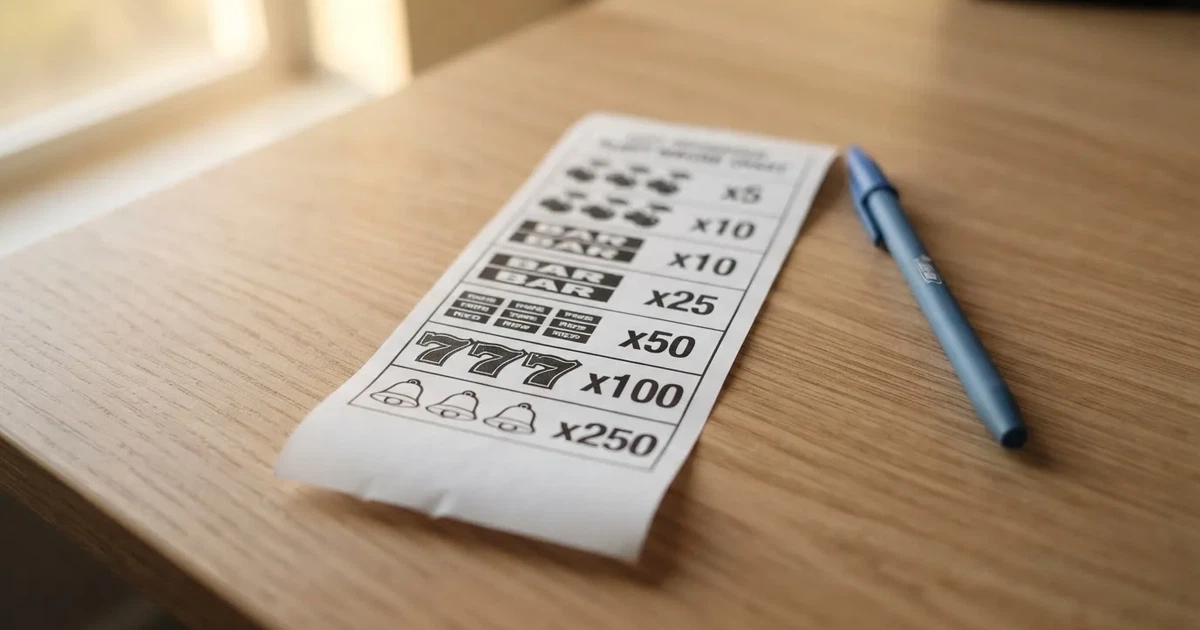
Every spin of a pokie — land-based or online — runs through a paytable, and the paytable is where the house edge lives. Three things always appear. Symbol values rank how much each icon pays when it lines up across a winning combination. Reel setup tells you whether the game plays on three reels, five reels, or a more elaborate grid, and how many paylines run across them. Bonus features are listed alongside their triggers: free spin rounds, hold-and-spin mechanics, pick-a-prize games, multipliers. The headline RTP (return-to-player) and the volatility rating sit at the bottom of the same sheet.
A land-based poker machine in Australia cannot return less than its state-mandated minimum: 85% in New South Wales, the Northern Territory, Queensland and most of Victoria (87% at Crown Melbourne), 87% in the ACT and Tasmania, 87.5% in South Australia, and 90% in Western Australia. Those floors are set by state regulators and enforced by inspectors who test machines on the floor. An online pokie displays whatever return-to-player the operator’s software reports, and there is no Australian inspector checking it. A 96% figure printed on an offshore site’s paytable is the operator’s word for it — not a regulator’s.
Volatility shapes how that return shows up. A low-volatility pokie pays small wins often, so a session ends flat more often than it ends empty. A high-volatility pokie pays rarely, but the wins it does pay are large enough to drag the long-run return back toward the printed RTP. The arithmetic of “what does an hour cost” is identical at the same RTP and the same stake — volatility only changes the rhythm of the loss, not the size of it on average.
The symbols and bonus triggers that fill the rest of the paytable are decorative in the regulatory sense. The Australian minimum RTP is the only number a state enforces; everything else is what the game designer chose to put on the sheet.
What a paytable does not tell a player
A paytable lists winning combinations and their payouts. It does not list the probability of each combination landing, because the game designer does not have to, and the reel strips are typically not public. A player who reads the paytable knows what a line of five scatters pays. A player who reads the paytable does not know how often those five scatters appear. On a licensed Australian machine the regulator has tested those reels. On an offshore site nobody has.

This is the gap the marketing fills. Affiliate pages print “high RTP” and “frequent bonus rounds” as if they were equivalent facts. They are not. RTP is a long-run average over millions of spins; “frequent bonus rounds” is a frequency on a reel strip the player cannot see. Two sites can both advertise 96% RTP and sit on completely different game designs. The figure is comparable; the experience is not.
Why a ranked comparison of offshore pokies sites is not what the page delivers
The natural product of a search like this is a ranked comparison: eleven offshore brands, scored on bonus size, game count, payout speed, mobile compatibility, and presented in order. Every part of that product presupposes a market the Australian player can choose from, and that market does not exist.
The Interactive Gambling Act 2001, tightened by the Interactive Gambling Amendment Act 2017, makes it an offence to provide online casino games, online pokies or in-play betting to a person physically in Australia. No state or territory issues a licence for online pokies. The Northern Territory Racing and Wagering Commission regulates 52 online bookmakers — Sportsbet, Bet365, Ladbrokes among them — but those licences cover pre-event sports and racing wagering, not casino games or pokies. A brand that displays a Curaçao, Kahnawake or Costa Rica licence is licensed somewhere else. It is not licensed in Australia.
A comparison that ranks eleven offshore brands by bonus and payout speed is technically possible. It is also technically beside the point, because every brand on that list is offering a service the reader cannot legally be sold. What the page does instead is name the eleven brands the ACMA itself has acted against, in the order the regulator named them, and describe what the regulator’s intervention actually consisted of. That is not a ranking — it is a register.
What a fair comparison would weigh, if one were possible
If online pokies were licensed in Australia, the criteria a comparison would weigh would include: regulator and licence (Curaçao, Anjouan, Kahnawake, Isle of Man — each with a different complaint mechanism), game library size and provider mix, deposit and withdrawal methods with their fees and limits, payout timeframes advertised and the operator’s history of meeting them, KYC requirements and how they intersect with Australian identity documents, dispute resolution path, and bonus terms — minimum deposit, wagering multiple, max cashout, game contribution percentages. None of those criteria are within the ACMA’s remit to check, because the products themselves are prohibited. A “best” of an unlicensed market is a comparison the regulator does not endorse and a comparison whose subject the regulator has ordered ISPs to block.
The shape of online pokies in Australia as it stands
Pokies are the country’s most-played form of gambling. In 2020–21 Australians wagered close to A$150 billion through gaming machines and lost A$12.18 billion on them — the world’s highest per-capita machine losses. Australia holds around 3% of the planet’s pub and club poker machines with 0.3% of its population. New South Wales alone had 87,298 machines outside casinos across 2,195 venues in June 2023, and players lost A$8.18 billion on them in the year to mid-2023. Queensland ran 21,122 machines in 351 venues in October 2023. Victoria’s 26,380 non-Crown machines sat under a 30,000 statewide cap.
Every one of those machines is a licensed, regulated, on-floor device. Each state sets its own design rules, its own RTP minimum, its own venue licensing, and its own harm-minimisation settings. Some have tried pre-commitment: Tasmania legislated nation-leading mandatory pre-commitment cards, with implementation delayed into late 2025. Western Australia took the other path, banning poker machines in pubs and clubs when Crown Perth opened in 1985; the casino itself holds around 2,500 machines today, all approved by the state’s Gaming and Wagering Commission. None of those machines is “online.” None of them requires a player to set up an account with an offshore operator.
The land-based pokie market is what Australian law permits. It is regulated, it is taxed, and it is on a floor a state inspector can walk into. The online pokie market is what Australian law prohibits. It is unregulated, it is untaxed in Australia, and it runs on a server the ACMA can only try to block. The page below treats the two as separate because the law treats them as separate.
Why the offshore market keeps growing despite the block list
H2 Gambling Capital estimated in 2025 that Australians lose about A$3.9 billion a year to illegal gambling sites, and that the share of gambling going through legal channels fell from 74% in 2021 to 64%. The legal channels lost ground because the illegal channels expanded, not because Australians stopped gambling. The regulator’s response has been to block sites and issue formal warnings. The market’s response has been to spin up new domains. The block list is now in the thousands; the affiliate pages still list the same handful of brands because those are the ones paying them.
This is the situation the search hits. The reader types “best aus pokies online australia 2026” and lands on a page that promises a ranked list. The page is affiliate-funded. The brands on it are, almost without exception, on the ACMA’s warning register. The list looks credible because the writing is fluent and the bonuses are large. The reader does not know, at the moment of clicking, that the product they are about to sign up for is one the Australian regulator has ordered ISPs to take offline.
The legal frame, in one reading
The Interactive Gambling Act 2001 (the IGA) is the federal statute. The Interactive Gambling Amendment Act 2017 is what made the current prohibition work: it extended the offence to providing prohibited interactive gambling services to a person in Australia, even when the provider is offshore. The ACMA is the regulator that investigates, issues formal warnings, and asks Australian ISPs to block illegal services. Since enforcement was strengthened in 2017, more than 230 unlicensed gambling services have left the Australian market. Since the first blocking request in November 2019, the ACMA has directed ISPs to block 1,751 illegal gambling and affiliate marketing websites, as reported in June 2026.
The individual player is not prosecuted. The IGA targets the provider, not the customer. An Australian who signs up with an offshore casino does not face charges. What they do not have is recourse: no Australian consumer protection, no complaints body the ACMA runs for players, no path to recover a balance the operator refuses to pay. A site the ACMA blocks can take a player’s deposit with it. The block protects other Australians from signing up. It does not refund the player who already did.
What is licensable is wagering on races and sport placed before the event, lotteries and keno. The Northern Territory is, in practice, where most of those licences sit — the NTRWC runs them. Online casino games, online pokies and in-play betting sit outside that envelope. The minimum age for any licensed product is 18.
The 2026 reform — the Interactive Gambling Amendment (Gambling Reform) Bill 2026 — passed Parliament on 19 August 2026. Its advertising and inducement measures commence on 1 January 2027. A 2026 page sits six months ahead of that commencement. The law exists; its advertising bite does not yet.
What the ACMA has done, brand by brand
The brands below are not ranked. They are not recommended. They are the brands the ACMA itself has published a formal warning over for offering prohibited interactive gambling services to Australians. The order is the order the regulator’s warning register records them. The table is a landscape, not a leaderboard.
| Brand | ACMA action and date | Operator named by the ACMA | Subject support |
|---|---|---|---|
| RocketPlay | Formal warning — March 2026 (Pulsup Ltd); earlier May 2022 (Dama N.V.) | Pulsup Ltd | — |
| Level Up Casino | Formal warning — May 2022 | Dama N.V. | listings only |
| Woo Casino | Formal warning — March 2025 | Dama N.V. | — |
| Spirit Casino | Formal warning — May 2025 | Dama N.V. | — |
| National Casino | Formal warning — July 2025 | Consolutetish S.R.L. | listings only |
| Bizzo Casino | Formal warning — July 2025 (Consolutetish S.R.L.); earlier 2022 (TechSolutions) | Consolutetish S.R.L. | — |
| Ignition Casino | Formal warning — July 2025 | Bamboo Media | — |
| Instant Casino | Formal warning — February 2025 | EOD Code SRL | — |
| Jackbit | Formal warning — April 2026 | Ryker B.V. | — |
| Casino Intense | Formal warning — April 2025 | Sterplay Holding Ltd | listings only |
| Sky Crown | Formal warning (Hollycorn N.V.) | Hollycorn N.V. | — |
The same operator keeps showing up. Dama N.V. took formal warnings in May 2022 (RocketPlay among six brands), then again in March 2025 (Woo Casino) and May 2025 (Spirit Casino). A parent company changing skins is a strategy the regulator’s register records; the affiliate pages tend to treat each skin as a separate brand. The brands the ACMA names and the brands the affiliate pages list are the same companies operating different domain names. The warning is a fact the regulator publishes. The marketing presents the warning as past news, with a new bonus on top.
Subject support — the only column where this page has anything positive to record — reflects what public listings say about the brand’s presence in any catalogued market context. Most entries carry no such listing: the brand is known to the ACMA’s register and not to any mainstream catalogue the page’s sources cover. Level Up Casino, National Casino and Casino Intense appear in third-party listings; the rest do not. Where a brand is listed, it is listed in those catalogues’ framing, not in this page’s endorsement of it.
RocketPlay — the freshest warning on the register
The ACMA’s March 2026 formal warning to Pulsup Ltd over RocketPlay is the most recent enforcement action the regulator has published against any pokies brand. It follows a May 2022 warning to Dama N.V. covering Rocketplay among six brands. The pattern is the same the regulator records for several brands on the table: a parent company warned, the brand re-emerges under a new operator, the regulator warns again. A punter reading this would not find RocketPlay at the top of any Australian-licensed list, because there is no such list. They would find it on affiliate pages alongside a fresh bonus and a “fast payout” claim, neither of which the ACMA checks.
Level Up Casino — the early Dama warning
Dama N.V.’s May 2022 warning named Level Up alongside five other brands. Third-party listings include Level Up in the catalogues those listings maintain. The ACMA’s record is the fact that matters here; the listing presence is what affiliate pages quote. The two are not the same kind of evidence, and a reader who treats them as equivalent is reading the catalogue as if it carried regulatory weight. It does not.
Woo Casino and Spirit Casino — Dama N.V.’s 2025 reappearance
Dama N.V. took two further warnings in 2025: Woo Casino in March, Spirit Casino in May. Three years on from the May 2022 warning, the parent operator was still running brands the ACMA considered prohibited services to Australians. The names changed. The operator did not.
National Casino and Bizzo Casino — the Consolutetish cluster
Consolutetish S.R.L. took a formal warning in July 2025 covering both National Casino and Bizzo Casino. Bizzo had already been the subject of a 2022 warning to TechSolutions. National Casino appears in third-party listings; Bizzo does not on the sources this page consulted. The two brands share an operator, a warning date and a regulator. They differ in how visible the catalogues make them.
Ignition Casino — Bamboo Media’s July 2025 warning
The ACMA named Bamboo Media in its July 2025 warning over Ignition Casino. No third-party listing this page consulted places Ignition in any catalogue. The brand’s visibility comes from its affiliate marketing, not from any catalogue the regulator or a mainstream directory maintains.
Instant Casino — EOD Code SRL’s February 2025 warning
EOD Code SRL’s February 2025 warning covered Instant Casino. The image of a regulator’s caution is the right frame for this entry: the brand is on the ACMA’s register, the affiliate pages keep listing it, and the reader who lands on one of those pages is being asked to sign up with an operator the ACMA has already told is offering a prohibited service.
Jackbit — Ryker B.V.’s April 2026 warning
Ryker B.V. took a formal warning in April 2026 covering Jackbit and CasinOK. Jackbit is on the ACMA’s register as of this year. No third-party listing this page consulted carries Jackbit.
Casino Intense — the listings-only entry
Sterplay Holding Ltd took an April 2025 formal warning over Casino Intense. The brand appears in third-party listings, alongside the ACMA warning. A reader weighing the two pieces of evidence side by side is weighing a regulator’s formal warning against a catalogue’s mention — and the regulator’s warning is the one that names the service as prohibited to Australians.
Sky Crown — Hollycorn N.V.’s brand
Hollycorn N.V. took a formal warning over Sky Crown and Blue Leo. The warning was published in 2022. Sky Crown remains on the ACMA’s register. No third-party listing this page consulted carries it.
What the table does not show
The table does not show which brand has the largest bonus, the fastest payout, the most games, or the best mobile app. None of those columns are within the ACMA’s record to verify, and the affiliate pages that quote them are quoting operator-supplied data the regulator does not check. A reader who wants a table of bonuses can find one on any affiliate page; a reader who wants a table of ACMA enforcement actions has the one above. The two tables answer different questions, and only one of them is answerable from a public register.
How fast the ACMA has been blocking sites, and what that pace means
The blocking figures the ACMA publishes in June 2026 carry a consequence worth working out. From the first blocking request in November 2019 to the June 2026 round, the regulator directed ISPs to block 1,751 illegal gambling and affiliate marketing websites. That works out to an average of roughly 262 blocks per year, or about five per week, over the seven years the regime has been running.
The pace is not steady, and a flat average hides the year-by-year shape. The early years were slow: the IGA amendment passed in 2017, the first block in 2019, the routine monthly rounds from 2020 onwards. By the time the June 2026 round added another 12 sites to the list — 7Signs, ChromaBet, Donbet, Duospin, Freshbet, Slots Gem, Jacks Club, Lucky Start, Pointsbetz, Spinrise, Vinyl Casino and Wildsino — the register was already running into four figures. A reasonable working assumption is that the ACMA has been blocking between 200 and 300 sites per year over the past four years, with each year’s actual number depending on how many operators re-emerge under new domains after the previous round.
What this means for a punter reading the page is straightforward. The block list is not a one-off clean-up; it is a treadmill. The ACMA blocks a round, the affiliate pages list new domains, the new domains go on the next round’s list. The same parent operators keep showing up under fresh skins. Dama N.V. was warned in May 2022, then in March and May 2025. Ryker B.V. was warned in April 2026. A block list that names the same operators across multiple years is a list the enforcement mechanism has not deterred.
The arithmetic also points the other way. More than 230 unlicensed gambling services have left the Australian market since enforcement was strengthened in 2017 — that is, after a warning and before a block, some operators choose to stop accepting Australians. The block list grows; the active offshore market is smaller than the block list suggests. A reader comparing the block count to the live affiliate count is comparing a cumulative register to a current snapshot, and the cumulative figure will always look worse.
What the pace does not measure
The pace does not measure how many Australians still play on the sites that remain accessible. H2 Gambling Capital estimated in 2025 that Australians lose about A$3.9 billion a year to illegal gambling sites — a figure the ACMA has cited in its enforcement reporting. A block list that grows by a few hundred entries a year while annual losses run into the billions is a list that is not keeping pace with the demand it is trying to suppress. The consequence falls on the punter, not the operator.
Money in, money out: what payments look like on an unlicensed site
The payment side of an unlicensed Australian-facing pokies site is the place where the law and the product meet most visibly. Since 11 June 2024, Australian-licensed online wagering has not been allowed to accept credit cards, credit-related products or digital currency — penalties for operators up to A$247,500. Legal deposit routes for a licensed wagering service are debit card, bank transfer, PayID/Osko and BPAY. A site asking an Australian for a credit card deposit or a crypto transfer is operating outside the Australian rules.
This applies to licensed Australian wagering. It does not bind an offshore pokies site, because the offshore site is not licensed in Australia at all. The site is free to ask for a credit card, a crypto deposit, or any other payment route the offshore operator’s payment processor will handle. The Australian rules the offshore site ignores are the same rules the Australian punter might assume still apply.
What that means in practice is that the payment method is not a sign of legitimacy. PayID, the real-time bank transfer system that runs through Osko, is marketed by affiliate pages as a sign that an offshore site is “Australian-friendly.” It is not. PayID is the payment rail; the operator accepting it is the question. A site that takes PayID and offers online pokies to a person in Australia is an unlicensed operator using a licensed payment rail. The two facts are independent.
The payout side is where the consequence lands. An offshore operator can quote a “withdrawal in 24 hours” figure on its terms page. The figure is the operator’s word. There is no Australian regulator to complain to if the withdrawal does not arrive; there is no Australian dispute resolution service; the ACMA does not mediate player disputes. A punter whose payout stalls has, in practical terms, no path except the operator’s own support email. The block list the ACMA maintains cannot help a player who already deposited.
What a punter can and cannot check before depositing
A punter can check that the site is on the ACMA’s formal warning register. The register is public, and the page’s table covers the eleven brands the ACMA has named. A punter can check whether the operator accepts PayID, debit card, credit card, or crypto. The payment method does not make the operator legal, but it can be a signal of where the operator sits. A punter cannot check the site’s RTP claims against any independent Australian test. A punter cannot check the site’s payout speed against any regulator’s record. A punter cannot complain to an Australian body if the operator declines a withdrawal.
This is what the search delivers. The search returns affiliate pages. The affiliate pages return bonus numbers. The bonus numbers do not check against any Australian register. The registers the punter can check are the warning register and the block list — and those are the registers that say, in the ACMA’s own words, the brand is not a legal option.
Bonuses on offshore pokies sites, read carefully
An offshore pokies site will offer a sign-up package: a percentage match on the first deposit, sometimes a free spins bundle on a named game, occasionally a no-deposit free spin or chip “just for signing up.” The shape of the offer is what an Australian punter would recognise from any online casino bonus: deposit, wager, withdraw.
Three terms travel with every such offer, and they determine whether the offer is worth anything once the marketing page is closed. The wagering multiple says how many times the bonus (or the bonus plus deposit) must be turned over before any withdrawal is allowed. A 35x multiple on a bonus means a A$100 bonus needs A$3,500 of wagered play before withdrawal. The maximum cashout caps what the punter can actually take out of the bonus-derived winnings — a A$100 cap on a bonus that produced A$500 in play means the punter walks with A$100, not A$500. The game contribution table says which games count toward the wagering requirement, and at what percentage — a typical pokies game counts 100%, a typical table game counts 10% or nothing.
The arithmetic of what a bonus is worth, in expectation, follows the same shape across the market. The expected loss during the wagering requirement is the turnover multiplied by (1 − RTP). On a 96% RTP pokie, a A$100 bonus at 35x wagering produces a turnover of A$3,500 and an expected loss of A$140. The punter walks in with the bonus and walks out, on average, A$40 lighter than they started. A cap on cashout that limits withdrawal to the bonus amount means the punter cannot recover from a lucky spin above A$100, even if the spin paid A$500.
This is the offer the affiliate pages describe in the language of “free money” and “extra chances to win.” It is none of those things. It is a turnover obligation with a cashout ceiling, and the ceiling is the most-read clause on the terms page and the least-quoted figure on the marketing page. The punter who reads the wagering multiple without reading the cashout cap has read half the offer.
Why this section is background, not a recommendation
No licensed Australian online pokies product exists. The bonus structures above describe what an offshore site offers. The page records them so a reader who has clicked through from an affiliate page recognises the terms when they see them — and recognises that the regulator’s view of the site offering them is the formal warning table earlier in the article. The page does not recommend signing up, claiming a bonus, or testing the offer. The product is prohibited; the offer is a feature of the prohibited product.
Help if the decision to play becomes the decision to stop
The licensed help lines are open regardless of whether the gambling in question is licensed or unlicensed. The National Gambling Helpline is 1800 858 858 — free, 24/7, with web chat at Gambling Help Online. The counsellors do not ask which site the caller was using. They ask what is happening.
BetStop, the National Self-Exclusion Register, has been live since August 2023. A punter who registers with BetStop is excluded from every Australian-licensed online and phone wagering service. BetStop does not bind offshore pokies sites, because offshore pokies sites are not Australian-licensed services. A punter who wants to be excluded from an offshore site has to ask each operator individually, and the operator is under no Australian obligation to honour the request. The exclusion register the law gives Australians covers the licensed market. The unlicensed market is on the punter.
The harm-minimisation settings that sit inside Australian pub, club and casino machines — pre-commitment cards, time and spend displays, voluntary exclusion at the venue — are settings of the licensed product. None of them is available on the offshore product. A punter who wants to set a hard limit on what they spend at a pokie has a tool for that tool at a licensed venue. The same punter, on an offshore site, is relying on whatever limit-setting the offshore operator’s software exposes — which is typically a deposit limit, sometimes a session reminder, and almost never a hard block the punter cannot override.
Where to start
Gambling Help Online is the front door: web chat, phone, email, around the clock. The National Gambling Helpline is 1800 858 858. BetStop is the register, and a punter who registers is excluded from Australian-licensed services for the period they choose. State-level help lines exist as well — each state runs its own problem gambling program — and a punter who would rather talk to a local service can find theirs through Gambling Help Online’s directory. None of those services turns a punter away for being on an offshore site.
What a punter comparing this page to an affiliate page should notice
The affiliate page opens with a ranked list. The list opens with bonuses. The bonuses open with deposit matches and free spin bundles. The page does not mention the ACMA until somewhere in the footer, if at all.
This page opens with the regulator. The regulator is the reason no Australian-licensed product exists. The regulator is also the reason the affiliate page exists — the affiliate page lists the offshore brands the ACMA is trying to block. The two pages are looking at the same market from opposite ends. The affiliate page lists what an Australian punter could sign up for. This page lists what an Australian punter cannot legally be sold.
A punter who wants to play pokies in Australia has options that do not require an offshore account. Licensed pubs, clubs and casinos hold licensed machines, with state-mandated RTP minimums, state-run harm-minimisation settings, and a regulator on the floor. Crown Melbourne’s baccarat tables, Crown Perth’s poker machines, the NSW pub and club trade — these are what the Australian pokie market looks like inside the law. They are not the product the affiliate page is selling. They are the product the regulator protects.
A punter who is reading this page because they searched for offshore sites has found their way to the regulator’s view of those sites. The view is consistent: the sites are prohibited, the warnings have been issued, the blocks are running into four figures, and the regulator’s view is the one that binds in Australia. The affiliate page’s view is the operator’s view. The choice between the two views is the page’s own subject.
The eleven brands, what the ACMA named, and what the data does not say
To close the loop on the eleven brands the ACMA has acted against: each is on the formal warning register, each is offering a service the IGA prohibits to Australians, and each is still being listed by affiliate pages in 2026. The brands do not have a published, verified Australian ranking because no Australian ranking can exist for a prohibited product. The brands do not have a published RTP that an Australian regulator has tested. The brands do not have a published payout record an Australian complaints body can enforce. The brands do have an ACMA formal warning, and the formal warnings are the only Australian record of them that is enforceable.
The consequence, for a punter weighing whether to sign up, is that the sign-up decision is being made on terms the regulator has already weighed against. The regulator’s weighing is the one an Australian punter cannot ignore. The affiliate pages’ weighing is the one an Australian punter cannot enforce.
Frequently asked questions
Are any online pokies sites actually licensed in Australia?
No. The Interactive Gambling Act 2001, as amended in 2017, prohibits the provision of online casino games and online pokies to a person in Australia. No state or territory issues a licence for online pokies. A site displaying a Curaçao, Kahnawake, Isle of Man or Anjouan licence is licensed somewhere else, not in Australia. The Northern Territory Racing and Wagering Commission regulates online bookmakers, but those licences cover pre-event wagering on racing and sport, not casino games or pokies.
Does PayID make an offshore pokies site Australian or legal?
No. PayID is a real-time bank transfer rail that runs through Osko. It is a payment method, not a regulatory status. A site that accepts PayID and offers online pokies to a person in Australia is an offshore operator using an Australian payment rail. The site is not licensed in Australia for the product it is selling. The payment method does not change that. The site’s licensing and the site’s payment method are two separate questions, and only one of them has anything to do with legality.
How is a licensed pub or club poker machine different from an offshore online pokie?
A licensed pub, club or casino poker machine sits on a venue floor. The state regulator tests it, sets a minimum return-to-player the machine cannot fall below (between 85% and 90% depending on the state), and inspects it on a schedule. Harm-minimisation settings — spend displays, time reminders, pre-commitment cards in some states — are features of the licensed machine. An offshore online pokie is software running on a server the regulator cannot inspect. The RTP printed on its paytable is the operator’s word for it. There is no Australian inspector. There is no Australian harm-minimisation setting.
Can an offshore site advertise a sign-up bonus to an Australian player legally?
No. The Interactive Gambling Act 2001 prohibits the provision of a prohibited interactive gambling service to a person in Australia. A sign-up bonus is an inducement to use that prohibited service. The 2026 reform — the Interactive Gambling Amendment (Gambling Reform) Bill 2026 — passed Parliament on 19 August 2026 and its advertising and inducement measures commence on 1 January 2027. Until then, the inducement itself is not the named offence under the IGA, but the service it induces Australians to use is. The bill tightens that gap from 1 January 2027.
How would an Australian punter verify that an offshore site’s payouts are fair?
There is no Australian body that verifies payouts on offshore sites. The ACMA enforces the prohibition; it does not audit individual operators’ RNGs or payout rates. Third-party testing labs — eCOGRA, GLI, iTech Labs — test games for some offshore operators, and a punter can look for those seals on the operator’s footer. The seals are the testing lab’s certification, not an Australian regulator’s. An Australian punter who wants a regulator’s certification of payouts has to play at a licensed Australian venue, where the state regulator’s inspectors do that work.
Is online pokies covered by the same ban as online casino table games?
Yes. The Interactive Gambling Act 2001’s prohibition covers online casino games — which includes pokies, blackjack, baccarat, roulette and their variants — and online in-play betting, as a single category of “prohibited interactive gambling service.” A site offering online blackjack to Australians is in the same regulatory position as a site offering online pokies: the IGA’s prohibition applies, the ACMA’s enforcement applies, and the consequences for the operator are the same. The licensed alternative for table games is a physical casino — Crown Melbourne’s blackjack and baccarat tables are approved under the Victorian Gambling and Casino Control Commission, for example. The licensed alternative for pokies is a licensed pub, club or casino machine.