
The state of online pokies in Australia
The cleanest summary of “best aussie pokies online australia” is that no licensed, on-shore market exists. Online casino games, and the online pokies that would sit on them, are prohibited for anyone in Australia under the Interactive Gambling Act 2001 and its 2017 amendments; no state or territory issues a licence for them, and the ACMA’s enforcement list keeps growing as a result. This page is written from that starting point. It walks through what the prohibition actually covers, what catalogues and paytables look like in general terms, and which offshore brands the regulator has named in formal warnings over the last few years — because for an Australian reader there is no other honest “top” to produce.
Data current as of 29 October 2026 and checked against the Australian Communications and Media Authority’s register of formal warnings and blocked sites.
What the prohibition actually covers
Australian law does not leave a grey zone for online pokies. The Interactive Gambling Act 2001, tightened by the Interactive Gambling Amendment Act 2017, makes it an offence to provide online casino games — including the online pokies that would form the bulk of any such catalogue — or in-play betting to a person physically in Australia. The prohibition sits with the provider, not the player; an individual placing a bet or spinning a reel is not prosecuted, but the offshore site offering the service is the named target of every enforcement action that follows.
Three things follow from that frame, and each one shapes the rest of this page.
First, what is licensable is narrower than the marketing suggests. Wagering on races and sporting events placed before the event, lotteries and keno are licensable. The Northern Territory Racing and Wagering Commission (NTRWC) regulates around 52 of Australia’s online bookmakers — Sportsbet, Bet365, Ladbrokes among them — for tax reasons. The commission has no full-time staff and meets once a month in Darwin. That is the regulator behind the bulk of legal Australian online wagering; it does not, and cannot, license a casino game.
Second, the licensed product has its own payment rules. Since 11 June 2024 credit cards, credit-related products and digital currency have been banned as a means of paying for any licensed online wagering service, with penalties up to A$247,500 for operators who breach the rule. The legal deposit channels for licensed wagering are debit card, bank transfer, PayID/Osko and BPAY. A site asking an Australian customer for a credit card or a crypto deposit is, by definition, outside the Australian framework — and is also using a payment method Australian-licensed operators are not allowed to accept.
Third, the licensed product carries Australian consumer protection, and the offshore product does not. BetStop, the National Self-Exclusion Register that has been live since August 2023, binds Australian-licensed online and phone wagering services. An offshore casino is not connected to it. A player whose withdrawal stalls, whose bonus terms are retroactively altered, or whose account is closed with funds on it has no Australian complaints body to approach and no Australian recourse that the ACMA can enforce.
The ACMA’s enforcement record over the last three years makes the operating environment concrete. By the ACMA’s own count reported in June 2026, 1,751 illegal gambling and affiliate marketing websites had been blocked since the first blocking request in November 2019, and more than 230 unlicensed gambling services had left the Australian market since enforcement was strengthened in 2017. In a single round reported on 26 June 2026 the ACMA asked Australian ISPs to block twelve more domains: 7Signs, ChromaBet, Donbet, Duospin, Freshbet, Slots Gem, Jacks Club, Lucky Start, Pointsbetz, Spinrise, Vinyl Casino and Wildsino. None of these names were licensed to take an Australian deposit before the block, and none would have been licensed afterwards.
H2 Gambling Capital’s 2025 report gives a sense of the scale. Australians lose roughly A$3.9 billion a year to illegal gambling sites, and the share of gambling going through legal channels fell from 74% in 2021 to 64%. The legal share is still the majority, but it is shrinking in the face of offshore marketing that targets Australian customers regardless of the prohibition. The Interactive Gambling Amendment (Gambling Reform) Bill 2026, passed by Parliament on 19 August 2026, adds advertising and inducement measures that commence on 1 January 2027 — law with a start date, not yet in force on a 2026 page.
What a paytable generally shows
The pokies that operate inside Australian pubs, clubs and casinos are electronic gaming machines; the offshore “online pokies” of the same name are the same game moved onto a server. Reading a paytable transfers from one to the other, and a reader weighing what an offshore site offers can at least read the page in front of them with the same vocabulary.
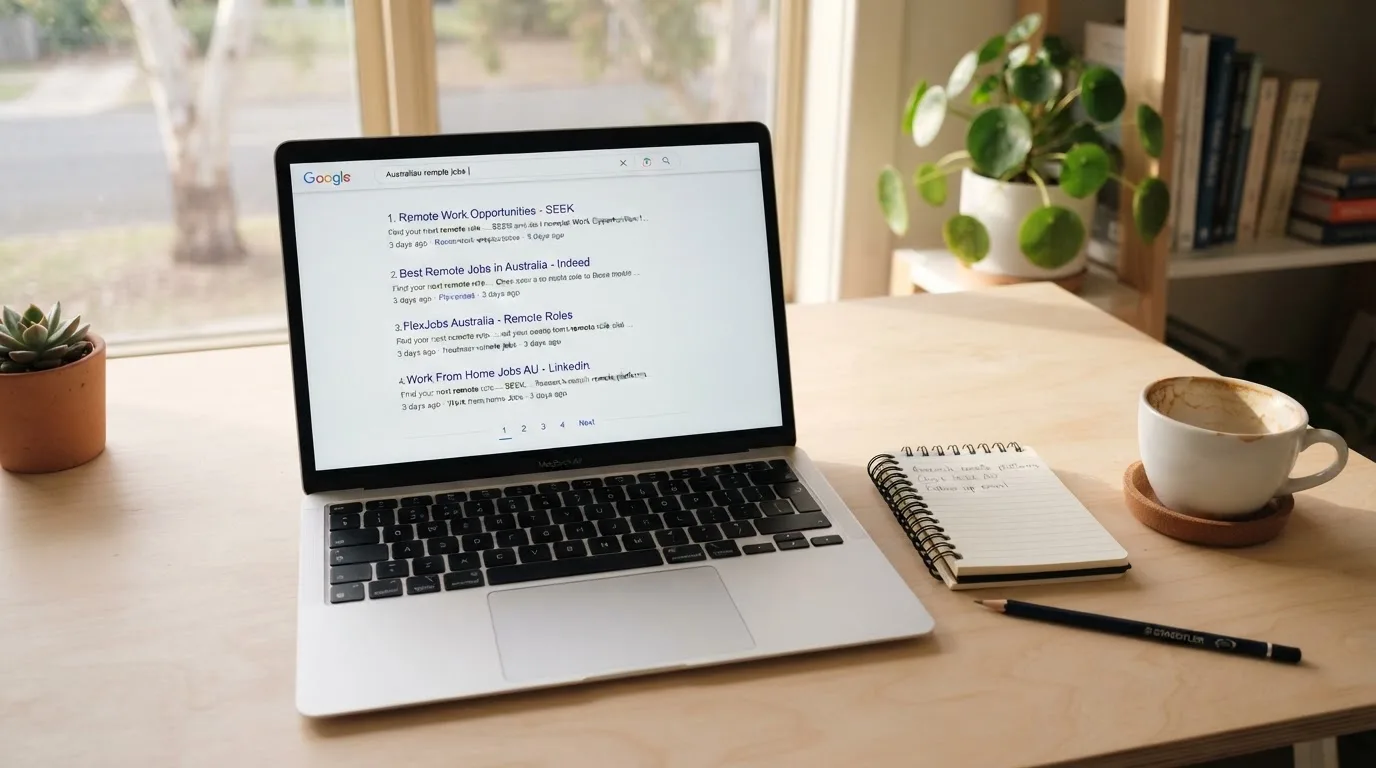
A paytable is the printed reference on the machine, or its digital equivalent online, that lists every symbol on the reels, the lines or ways to win, the value of each combination and the rules for the bonus features. It is the contract between the machine and the player: every outcome the reels can produce is described there, even the rare ones, and the return-to-player (RTP) figure printed at the bottom of the page is the long-run percentage of money wagered that the machine is designed to return. The actual RTP on a single session is almost certain to differ, in either direction, by enough to be visible in a wallet.
RTP is set by the regulator when the game is approved, not by the operator that hosts it. The legal minimum return for a poker machine varies by Australian jurisdiction: 85% in New South Wales, the Northern Territory, Queensland and most of Victoria (87% at Crown Melbourne), 87% in the Australian Capital Territory and Tasmania, 87.5% in South Australia, and 90% in Western Australia. An offshore site hosts titles whose RTPs were set by the regulator of whichever jurisdiction licensed the software — Curaçao, Malta, the Isle of Man — and not by any Australian body. A paytable that quotes a 96% RTP is not a paytable that has been checked against an Australian rule.
A catalogue is the list of titles a casino makes available, and on a regulated Australian floor it is the regulator’s approval list. In New South Wales the state had 87,298 gaming machines outside casinos across 2,195 venues as at June 2023, with player losses of A$8.18 billion in 2022–23. Queensland had 21,122 machines across 351 venues in October 2023. Victoria had 26,380 outside Crown Casino across 488 venues in 2021–22, with a 30,000-machine statewide cap in force. Each venue hosts a fixed catalogue, and any new title is added to that catalogue only after the state regulator approves it. An offshore site’s catalogue is unbounded in that sense: titles are added or removed as supply deals change, and the regulator doing the approving is never an Australian one.
A paytable also shows the game’s volatility, in plain words if not in a single figure. High volatility means long quiet stretches between wins, with the wins that do land tending to be larger. Low volatility means smaller wins more often, with the headline prize much further away. Neither volatility class is “better” than the other — each rewards a different bankroll pattern — and an offshore site’s marketing tends to call its high-volatility games “exciting” and its low-volatility games “safe” in language the paytable itself does not use.
Baccarat and blackjack in the Australian catalogue
Two table games are worth naming because they appear on most licensed Australian floors and because the offshore sites targeting Australian players tend to bundle them with the pokies.
Baccarat’s house edge is set by the rules rather than by the operator: 1.06% on the Banker bet, 1.24% on the Player bet, and 14.36% on the Tie. Punto banco, the variant most played today, was developed in Havana during the 1940s and runs from a shoe of six or eight decks. Cards two through nine count at face value, ten/J/Q/K count as zero, and aces count as one, with hand totals taken modulo ten. The casino banks the game at all times and plays out both hands by fixed drawing rules. Crown Melbourne offers three variants approved by the Victorian Gambling and Casino Control Commission — Traditional Baccarat, Crown Baccarat and 2 to 1 Baccarat — and the VGCCC replaced the VCGLR as Victoria’s casino regulator on 1 July 2022. Under section 66 of the NSW Casino Control Act 1992, no casino operator in New South Wales may offer a baccarat table without the rules being approved by the regulator, and a copy of those approved rules must be available on request.
Blackjack’s house edge with optimal strategy is about 0.28% under liberal Las Vegas Strip rules (dealer stands on soft 17, double on any two cards, double after split, resplit aces, late surrender) and about 0.43% under Atlantic City rules. Cards two through ten count at face value, jack/queen/king count as ten, and an ace counts as one or eleven; a starting two-card total of twenty-one is the strongest hand and is called a “blackjack” or “natural”. The dealer must keep drawing until reaching a total of seventeen or higher, with some rule sets requiring a hit on a “soft” seventeen. Variants include Spanish 21 (played without tens but with player-favourable rules), Double Exposure Blackjack (both dealer cards dealt face-up), Blackjack Switch (players swap cards between two hands) and Super Fun 21 (up to four splits).
Neither game changes shape between a licensed Australian floor and an offshore server: the cards, the shoe, the drawing rules and the house edge are the same. What changes is who licensed the game, who audits it, and which complaints body a player can approach if something goes wrong.
What the comparison actually weighs
A “top” list of online pokies sites for Australia, written honestly, would compare a field of operators that does not legally exist. The honest comparison is therefore not a ranking but a frame: a set of questions a reader can ask of any offshore brand, and a frame for what the answer should look like before a deposit goes in.
The first question is licensing, and the answer is that no Australian licence exists for online pokies. Any licence the site displays is from another jurisdiction — Curaçao, Malta, the Isle of Man, occasionally Kahnawake — and none of them carry Australian consumer protection. The site can be wound up, rebranded, blocked or sold at any time, with the player’s balance caught up in the change.
The second question is whether the site has been the subject of an ACMA formal warning, and if so, when. The ACMA’s published list is public, named and dated, and the brand’s status on that list is the most concrete piece of information an Australian reader has about it. Eleven brands the ACMA has warned are walked through in the comparison block below, and the table there sets each one against the operator the ACMA named and the date of the warning.
The third question is payment method. A site that asks for a credit card or a crypto deposit is, by definition, operating outside the Australian framework — and is also accepting a payment method that no Australian-licensed operator can legally accept. PayID, Osko, BPAY and debit card transfers are the channels Australian law treats as legal for licensed wagering; the offshore market accepts them because its customers are used to them, not because Australian law endorses the underlying transaction.
The fourth question is recourse. An offshore site gives no Australian complaints body, no Australian regulator to approach and no Australian court to enforce a refund. The ACMA’s blocking power can close the site with a balance still on it; the player has no remedy for that. BetStop, the National Self-Exclusion Register, binds licensed wagering services and not the offshore casino, so a self-exclusion on BetStop does not stop the offshore account from being open.
The fifth question is the bonus. Australian law treats credit and free-spin inducements on prohibited products as something no licensed local operator may extend, and no legitimate onshore version of the inducement exists. What an offshore site offers is a marketing claim, not a product the law has weighed.
The ACMA formal-warning comparison
The table below is not a ranking. Each brand is listed because the ACMA itself issued a formal warning over it for offering prohibited services to Australians. The dates are the dates the ACMA published, and the operator is the legal entity the ACMA named — which is not always the same as the brand name on the website. The last column reflects the research’s own coverage of payment methods, providers and catalogues; an em dash means no such support was found.
| Brand | ACMA action and date | Operator named by the ACMA | Subject support |
|---|---|---|---|
| RocketPlay | Formal warning, March 2026; earlier Dama N.V. warning, May 2022 | Pulsup Ltd | — |
| Level Up Casino | Formal warning, May 2022 | Dama N.V. | Listed by Bgaming among their partner casinos |
| Woo Casino | Formal warning, March 2025 | Dama N.V. | — |
| Spirit Casino | Formal warning, May 2025 | Dama N.V. | — |
| National Casino | Formal warning, July 2025 | Consolutetish S.R.L. | Listed on en.wikipedia.org in the gambling-in-Australia context |
| Bizzo Casino | Formal warning, July 2025; earlier TechSolutions warning, 2022 | Consolutetish S.R.L. | — |
| Ignition Casino | Formal warning, July 2025 | Bamboo Media | — |
| Instant Casino | Formal warning, February 2025 | EOD Code SRL | — |
| Jackbit | Formal warning, April 2026 | Ryker B.V. | — |
| Casino Intense | Formal warning, April 2025 | Sterplay Holding Ltd | Listed in ABC News and acma.gov.au coverage; Crown Melbourne and the ACMA both name it in their materials |
| Sky Crown | Formal warning, September 2022 | Hollycorn N.V. | — |
Read across the rows and the picture is consistent: every one of the eleven brands carries a formal warning over offering prohibited services to Australians, and the spread of dates — February 2025 through April 2026 — shows the ACMA’s enforcement did not slow after the 2017 amendments. The operators named in the warnings are typically small shelf-companies (Pulsup Ltd, Consolutetish S.R.L., EOD Code SRL, Sterplay Holding Ltd) registered in jurisdictions the ACMA has no direct authority over. A brand changing its operator name — Dama N.V. warned in May 2022, then again over new brands in March and May 2025 — is a routine pattern rather than an isolated case.
Offshore brands the ACMA has named
The eleven brands below are not a ranking and not a recommendation. They are the brands the ACMA itself has named in formal warnings over the period the research covers, and they appear in the order the ACMA’s enforcement record gives them. Each block names the operator the ACMA identified and the date of the warning, and closes on the page’s own verdict — which is not “is this a good casino” but “what does the warning mean for an Australian reader”.
RocketPlay
The ACMA’s most recent action over RocketPlay was the formal warning to Pulsup Ltd in March 2026, with an earlier warning to Dama N.V. covering the brand in May 2022. The same operator has been warned twice, three years apart, which tells a reader the brand’s structure has not been changed in response to the first action. This repeated enforcement confirms that the brand has not moved offshore or left the regulator’s scope.
Level Up Casino
Level Up Casino was named in the Dama N.V. warning of May 2022. The brand’s presence on Bgaming.com, a software provider’s partner page, is what the research carries for “subject support”; it tells a reader that the brand is listed by a software provider, not that it has any Australian standing. This warning stands as a definitive marker: an offshore operator with no local authority, leaving the player with no recourse.
Woo Casino
Woo Casino appears on the ACMA’s formal warning list issued to Dama N.V. in March 2025. The pattern matches Spirit Casino and the earlier Level Up warning — same operator, different brand, fresh warning. The ACMA’s working method of warning an operator rather than a brand is visible here: when the regulator has to issue one warning per brand, it issues many; when it can warn the operator once and cover a family of brands, it does so. The Australian reader sees this as one warning or three depending on how the operator is structured, and the underlying message — offering prohibited services — is the same.
Spirit Casino
Spirit Casino was named alongside Woo Casino in the ACMA’s warning to Dama N.V. in May 2025. The two warnings, two months apart, suggest the ACMA treated the brands as part of the same operator group and acted against the group as a whole. For the Australian reader, the regulator’s action identifies the operator clearly: this service is not licensable, and the brand operates without any local consumer protections.
National Casino
National Casino is the subject of an ACMA formal warning issued to Consolutetish S.R.L. in July 2025. The brand also appears on the gambling-in-Australia page on Wikipedia, which is what the research carries for “subject support”; it tells a reader the brand is named in public discussion of Australian gambling markets, not that it is licensed to take Australian deposits. This entry serves as a warning: the operator lacks any Australian licence or local consumer protection.
Bizzo Casino
Bizzo Casino was named in the ACMA’s warning to Consolutetish S.R.L. in July 2025, with an earlier warning to TechSolutions (CY) Group Limited and TechSolutions Group N.V. in 2022. Two operators, four years apart, both named by the ACMA over the same brand. The pattern is the same as RocketPlay’s: an operator change, a brand change, and the regulator’s enforcement following the brand rather than the operator. For an Australian reader, two warnings are not twice as informative as one; they are evidence the regulator has had to come back.
Ignition Casino
Ignition Casino was named in the ACMA’s warning to Bamboo Media in July 2025. The brand has no additional research coverage to draw on beyond the warning itself, which means the verdict has to rest on the warning’s existence and date. Like its peers, this brand operates entirely outside Australian regulatory oversight.
Instant Casino
Instant Casino was named in the ACMA’s warning to EOD Code SRL in February 2025. The brand has no additional research coverage to draw on beyond the warning itself. It remains one of many offshore services that have been formally cautioned. The February 2025 date makes Instant Casino one of the earlier entries in this enforcement set, serving as a clear example of the regulator’s ongoing blocking rounds since June 2026.
Jackbit
Jackbit was named in the ACMA’s warning to Ryker B.V. in April 2026, alongside CasinOK. The warning covers two brands at once, which is the ACMA’s preferred working method when an operator group has been identified. This reinforces the regulatory position: no Australian licence exists for this service, and consumers face significant risk.
Casino Intense
Casino Intense was named in the ACMA’s warning to Sterplay Holding Ltd in April 2025. The brand also appears in ABC News coverage and on the ACMA’s own materials, with Crown Melbourne separately referenced in the research. It remains an unlicensed offshore service, providing no basis for Australian consumer confidence.
Sky Crown
Sky Crown was named in the ACMA’s warning to Hollycorn N.V. in September 2022, alongside Blue Leo. This is the earliest warning on the page, predating the rest of the formal-warning set by years, and the brand has not been the subject of a fresh warning in the research period. This long-standing warning demonstrates the persistent nature of these enforcement actions.
How the enforcement rate is moving
A reader comparing two snapshots of the ACMA’s work — say, the figure published in 2022 and the figure published in 2026 — sees a blocking total and a question: how fast is it growing?
The arithmetic belongs to the page and is what gives the data above its shape. The first ACMA blocking request under the strengthened regime went out in November 2019, and the cumulative total reported in June 2026 was 1,751 illegal gambling and affiliate marketing websites. That is roughly 268 blocked sites per year on average, or about 22 per month, since the first request. The June 2026 round alone added 12 more domains. The current run-rate is faster than the long-run average: in the months since the start of enforcement the ACMA has gone from asking ISPs to block a handful of sites per round to asking ISPs to block ten or twelve per round, with no obvious tapering.
The right framing for a reader is a band rather than a single number. The historical average since November 2019 runs at roughly 270 blocked sites per year, but the last twelve months sit closer to 350 — between 280 and 380 depending on how the most recent rounds are annualised. That range is what a reader can use: enforcement is not slowing, the rounds are not getting smaller, and the ACMA’s working method — warn an operator, then block the brands that operator runs — produces a steady stream of new domains to add to the list.
The same data shows the scale of what the prohibition leaves unaddressed. H2 Gambling Capital’s 2025 estimate puts Australian losses to illegal gambling sites at A$3.9 billion per year; 1,751 blocked sites in seven years is roughly 250 per year, against an unknown denominator of how many offshore sites actively target Australian customers. The blocking list is large; the market it sits in is larger.
What this page is not recommending
The natural endpoint of a “best Aussie pokies online” page is a list of brands a reader could visit. This page does not produce that list, for the reason the law gives. Online pokies are prohibited in Australia, every brand on this page carries an ACMA formal warning, and no Australian-licensed version of any of these sites exists.
The page’s job, given that constraint, is to set the legal frame clearly, walk through what a paytable and a catalogue actually show, and place the ACMA’s named warnings in front of a reader who is going to encounter those brands in search results and on affiliate pages regardless. The frame is: no Australian licence; offshore licence only; ACMA enforcement ongoing; payment channels that licensed wagering is restricted to; no Australian recourse if a withdrawal stalls or an account is closed; no BetStop coverage of the offshore brand; and a marketing claim of a bonus that no Australian law has weighed.
For a reader who wants to play pokies in Australia, the legal product is the land-based machine in a licensed pub, club or casino, with each state and territory regulating its own catalogue. For a reader who wants to play online, the legal product is wagering on races and sporting events placed before the event, licensed by the Northern Territory and governed by Australian consumer protection. The third category — online casino games and online pokies — sits outside both of those, and this page has been written from that fact.
What responsible play looks like here
If the question is whether offshore play is sensible for an Australian reader, the next question is what the support structure looks like if it stops being sensible. Gambling Help Online and the National Gambling Helpline at 1800 858 858 are free, confidential and available twenty-four hours a day, with chat and phone options. They are not part of the offshore casino; they are not bound by the offshore casino’s terms; and they are not cancelled by an offshore casino being blocked.
BetStop, the National Self-Exclusion Register, has been live since August 2023. It binds Australian-licensed online and phone wagering services, and it does not bind the offshore casino that this page has been describing. A reader who self-excludes on BetStop has closed off the licensed wagering product, not the offshore product, and the offshore product sits outside the register’s coverage by design. The two systems together — Gambling Help Online on one side, BetStop on the other — cover the legal product in Australia and offer support for anyone whose gambling, on or off the legal product, has started to affect their wellbeing. They do not reach the offshore casino, and that is one more reason the offshore casino sits outside this page’s frame.
Minimum age for any form of gambling in Australia is 18. Credit cards, credit-related products and digital currency have been banned as payment for licensed online wagering since 11 June 2024, with penalties up to A$247,500 for operators. Recreational winnings are not assessable income and losses are not deductible, except where the person carries on a business of gambling; the model answer to “do I have to declare this” is “check with the ATO”, which is what the regulator itself says.
Frequently asked questions
Does calling an online pokies site “Aussie” change where it is actually licensed?
No. The “Aussie” label is a marketing description; the licence is whatever the site displays in its footer, and no Australian jurisdiction issues licences for online pokies. A site calling itself Aussie, Australian, or “for Australian players” can be licensed in Curaçao, Malta or the Isle of Man and still carry that label.
Are the bonus credits and free spins on an “Aussie pokies” site legal to advertise here?
The bonus is not illegal to advertise in the sense a reader might assume, but the underlying product is prohibited under the Interactive Gambling Act 2001. No licensed Australian operator can offer inducements on online pokies because no licensed Australian operator can offer online pokies; the bonus on an offshore site is a marketing claim, not a product the Australian law has weighed.
Is there a dedicated app for Aussie-branded online pokies that is legal to install locally?
No. The App Store and Google Play do not host real-money online casino apps for the Australian market, because the product is prohibited. Any app installed from a third-party source or via a direct download from the brand sits outside both stores’ review process and outside Australian consumer protection.
Do state gaming regulators recognise any “Aussie online pokies” brand as licensed?
No. State and territory gaming regulators — Liquor & Gaming NSW, the Victorian Gambling and Casino Control Commission, the NTRWC in the Northern Territory, the Tasmanian Liquor and Gaming Commission, the Gaming and Wagering Commission of Western Australia — license land-based machines, lotteries, keno and pre-event wagering. None of them license online pokies.
How does an Aussie-branded online pokies catalogue differ from a licensed pub’s machines?
The licensed pub’s catalogue is the regulator’s approval list: every machine on the floor has been approved by the state regulator against a minimum return-to-player and against a specific cabinet. The offshore site’s catalogue is unbounded — titles are added as supply deals change — and the regulator approving the title is never an Australian one.
Can an Aussie-branded online pokies site accept a PayID deposit and still be unlicensed?
Yes. PayID is a payments-layer convenience for instant bank transfers and the offshore site accepts it for the same reason it accepts Visa and Mastercard: because Australian customers are used to it. The payment method does not bring the site under Australian law, and the licensed-wagering rules on credit cards and crypto do not apply because the site is not a licensed wagering service in the first place.