
Best pokie machine to play in Australia: what the choice actually costs
Data current as of 29 October 2026; ACMA formal-warning register checked.
A “best pokie machine” question in Australia doesn’t end at a game name. It ends at a venue, a minimum return set by a state regulator, and a calculation the player runs before the first spin. Most search results for this phrase lead with offshore casinos promising bonuses and crypto deposits. None of those products can be lawfully offered to a person in Australia. This page works through the question inside the Australian frame — what the choices are, what the published numbers mean, and what an offshore site leaves the player without if the balance is still on it when the ACMA blocks the URL.
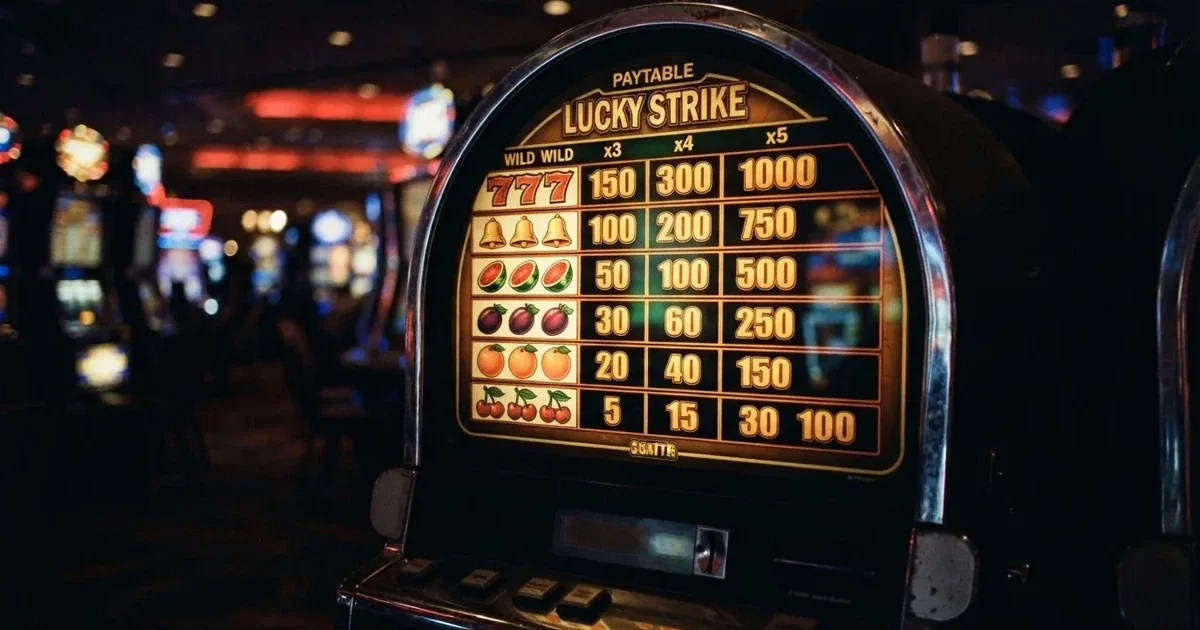
The short version: pokies exist as physical electronic gaming machines in every Australian state and territory except for clubs and pubs in Western Australia, which has kept its ban since Crown Perth opened in 1985. They are state-regulated. Online pokies are a prohibited interactive gambling service under the Interactive Gambling Act 2001, strengthened by the 2017 amendments. What follows works through how the machines are actually built, how the regulations shape the maths, what offshore operators do to reach Australian players anyway, and what recourse a player keeps if a withdrawal is refused.
Table of Contents
- How pokie machines are actually built
- What the licensed Australian market looks like
- Building a shortlist — and why this page doesn’t run one for online pokies
- The eleven operators the ACMA has warned
- Why the offshore option closes off
- The legal frame in plain language
- Responsible play in a jurisdiction where half the floor is offshore
- Payments: what the legal and illegal paths look like
- Mobile play at the licensed venue
- A short reader’s framework
- What follows from the choice
- What happens when the ACMA blocks a site
- Frequently Asked Questions
How pokie machines are actually built
Before any choice of machine, the player is up against four numbers that determine the long-run outcome: return to player, volatility, bet denomination, and number of lines. The first three are set by the venue and the game designer; the fourth is set by the player.

Return to player (RTP) is the share of all money wagered that the machine returns to players over its full life cycle. Every Australian jurisdiction sets a legal floor:
- 85% in New South Wales, the Northern Territory, Queensland, and (generally) Victoria
- 87% at Crown Melbourne specifically
- 87% in the Australian Capital Territory and Tasmania
- 87.5% in South Australia
- 90% in Western Australia, where the only legal machines sit inside Crown Perth
A 90% machine returns A$90 for every A$100 bet across millions of spins. A 85% machine returns A$85 over the same span. Across an evening’s play, the difference between 85% and 90% RTP is roughly A$5 of every A$100 wagered — invisible spin by spin, very real over a session. Western Australia’s machines run closer to the theoretical optimum; everything else runs with a wider house margin built in by regulation.
Volatility describes the shape of the payout curve, not the size of the house edge. A low-volatility machine pays small wins frequently — long sessions, slow bleed. A high-volatility machine pays rarely but in larger bursts. Two machines can both be 87% RTP and behave nothing like each other at the table. A player on a small bankroll generally wants lower volatility; a player chasing a single feature trigger is selecting for higher. Volatility is not printed on the cabinet in most jurisdictions. The game information screen on the machine itself lists the RTP and, in some cases, a published volatility band; where neither is shown, the player is choosing blind.
Bet denomination and lines are the levers the player actually pulls. A 1¢ machine played on all 25 lines is a A$0.25 spin. The same game played on all lines at 10¢ is A$2.50 a spin — ten times the exposure per spin, identical RTP, identical volatility. Raising the bet does not raise the RTP. It raises the size of each payout proportionally, and it raises the speed at which the bankroll is converted into the house’s expected share.
Volatility in practice
Low-volatility machines have a feature-trigger frequency roughly two to three times that of high-volatility machines at the same RTP, with correspondingly smaller average payouts. For a session on a fixed bankroll, this means more spins, more small returns, and a smoother descent toward the long-run loss. High-volatility machines can produce long stretches of zero return punctuated by larger hits — sometimes long enough that the player runs out of bankroll before the feature fires.

The choice between them is the choice between two different kinds of session. A player who wants an evening of play for the price of entry generally picks low. A player who wants a chance at a meaningful payout and accepts that the night may end early picks high. Both pay the same house edge in expectation; they just distribute that edge across the session differently.
The myth of the “due” machine
Slot machines, including Australian pokies, run on a random number generator that produces each spin’s outcome independently. A machine that hasn’t paid in an hour is not “due.” A machine that paid twenty minutes ago is not “hot.” The result of the next spin is unrelated to the result of the last. Casinos know this; regulators know this; the player who walks up to a machine because it looks quiet is reading a pattern that does not exist.
What does matter across a session is the total volume. A machine’s published RTP is the average across millions of spins, not a guarantee for any specific session. Some sessions end up; most end down. The longer the session, the closer the result tracks the published RTP. A player who stops after twenty spins is sampling noise; a player who plays for three hours is sampling the distribution.
What the licensed Australian market looks like
Pokies are not a single national product. They are state by state, with each jurisdiction setting its own machine counts, return floors, and venue rules.
New South Wales held 87,298 gaming machines outside casinos across 2,195 venues in June 2023, with player losses of A$8.18 billion in 2022–23. Queensland had 21,122 gaming machines operating in 351 venues in October 2023. Victoria had 26,380 outside Crown Casino in 488 venues in 2021–22, under a statewide cap of 30,000. Registered clubs operated Australia’s first legal poker machines from 1956, in New South Wales. Tasmania ran under a Federal Group monopoly from 1968 until legislation passed in November 2021 ended that monopoly, moving oversight of the machines to the Tasmanian Liquor and Gaming Commission.
Western Australia banned poker machines in pubs and clubs when Crown Perth opened in 1985; Crown Perth’s own machine count has since grown from about 200 in 1985 to roughly 2,500, all approved by the state’s Gaming and Wagering Commission. The result is that WA residents play in a venue where the only machines available are inside the casino, while everyone else plays in pubs, clubs, and casinos under rules their own state wrote.
Australia has about 3% of the world’s pub and club poker machines with 0.3% of the global population, and in 2020–21 Australians bet almost A$150 billion through gaming machines and lost A$12.18 billion on them.
Tasmania’s pre-commitment delay
Tasmania planned nation-leading mandatory pre-commitment cards for its poker machines, requiring players to set time and spend limits before playing. Implementation of the reform was delayed until late 2025. The delay matters because pre-commitment is the kind of player-protection mechanism that actually changes the math of a session — a player who sets a hard ceiling cannot exceed it, no matter what the machine offers in front of them. Until the cards are issued, Tasmanians play under the same voluntary framework as every other state, and a voluntary limit is only as strong as the player’s willingness to walk away.
Crown Melbourne’s baccarat tables
For players who find their way to a casino floor rather than a pub gaming room, table games sit alongside the machines. Crown Melbourne offers three baccarat variants — Traditional Baccarat, Crown Baccarat and 2 to 1 Baccarat — as approved table games regulated by the Victorian Gambling and Casino Control Commission, which replaced the VCGLR as Victoria’s casino regulator on 1 July 2022. Under section 66 of the NSW Casino Control Act 1992, a casino operator must not permit a game such as baccarat to be played unless the game and its rules are approved by the regulator, and the operator must make a copy of the approved rules available to patrons on request. The house edge in baccarat is 1.06% on the Banker bet, 1.24% on the Player bet and 14.36% on the Tie — the Tie bet is where the casino makes its margin on this game, and any player who treats it as the “rare big win” bet is paying roughly fourteen cents on the dollar for the privilege.
Baccarat’s origins are disputed: some accounts place it in 19th-century France, others say it was introduced from Italy at the end of the 15th century during the reign of King Charles VIII. Punto banco, the variant most played today, was developed in Havana during the 1940s; the casino banks the game at all times and plays out both hands by fixed drawing rules, which is why there is no skill element to learn. Chemin de fer, French for “railway,” is a two-player variant that emerged from baccarat banque in the late 19th century and is named for being quicker to play than the original game — but chemin de fer is not what Crown Melbourne offers, and a player expecting a player-banked game on the main floor will be disappointed.
Blackjack on the same floor
Crown venues and most Australian casinos also run blackjack. With optimal strategy, blackjack’s house edge is about 0.28% under liberal Las Vegas Strip rules and about 0.43% under Atlantic City rules. This is the lowest house edge of any game commonly available on an Australian gaming floor, and it is the only one where the player’s decisions move the outcome meaningfully. Blackjack’s immediate predecessor was the English game vingt-un; a related game called veintiuno was described in Miguel de Cervantes’ Rinconete y Cortadillo, written around 1601–1602. According to card historian Thierry Depaulis, the game was renamed “blackjack” around 1899, with prospectors during the Klondike Gold Rush of 1896–99 credited with giving it its modern name.
The catch: that 0.28% applies to players who know the basic strategy cold and play without deviation. A player who hits on a hard 16 against a dealer 10, or who splits tens, is paying 2% or more to the house — worse than almost any pokie. The strategy is learnable; the discipline to stick to it under pressure is harder. Established variants include Spanish 21, Double Exposure Blackjack, Blackjack Switch and Super Fun 21, each with rule modifications that change the math in specific ways.
Building a shortlist — and why this page doesn’t run one for online pokies
The standard “top 10 pokie machines” article assumes a market in which a reader can choose among ten products. That market does not exist in Australia. Online casino games and online pokies cannot be licensed anywhere in Australia; no state or territory regulator issues such a licence. What does exist is a roster of offshore operators that accept Australian players in spite of that prohibition, and a regulator — the ACMA — that has acted against more than 230 of them since enforcement was strengthened in 2017.
A shortlist that ranks those offshore operators by bonus size or game count is, at best, a ranking of which illegal operators offer the most generous inducements to break the Interactive Gambling Act. A reader who wants to use such a ranking is making a choice the law does not recognise as available.
The honest shortlist, for a reader who wants to choose a pokie machine, is the one this section makes the next:
- The player’s home state. The legal minimum RTP and the venue mix are set there. A Western Australian’s “best pokie machine” question has a different answer than a New South Welsh one’s because the available machines are different and the regulatory floor is different.
- Volatility preference matched to bankroll. A small bankroll wants low-volatility, high-line, low-denomination play. A larger bankroll tolerates higher volatility for the chance at a bigger payout. Neither choice changes the RTP.
- Bet sizing. The same game at 1¢ and 10¢ returns the same percentage. The 10¢ version costs ten times as much per spin and ten times as much per hour for the same expected loss rate, which compounds with the longer sessions a higher bankroll permits.
- Time limit. The single most effective player tool. A pre-set session end time, walked away from regardless of outcome, beats every machine-level decision a player can make.
How the offshore “top pokie” lists get built
Offshore comparison sites that rank “best online pokies for Australia” generally sort by bonus size, game count, and deposit match — none of which is information about the machine itself. The game the offshore site promotes may be the same Aristocrat or Pragmatic Play title that sits in the local pub; what differs is the wrapper. The wrapper is what the ACMA acts against.
When an Australian player follows one of these lists to an illegal site, the player is not getting access to a better machine. They are getting access to the same machine with worse consumer protections — no Australian complaints body, no BetStop registration applying to the site, no Australian-licensed dispute resolution, and the standing risk that the URL will be blocked with the player’s balance still on it.
The eleven operators the ACMA has warned
The table below lists offshore operators the ACMA has formally warned for providing prohibited interactive gambling services to Australians. This is not a recommendation list. The ACMA’s own action is the only qualification these brands share, and the action is the disqualification.
| Brand | ACMA action and date | Operator named by the ACMA | Subject support |
|---|---|---|---|
| RocketPlay | Formal warning, March 2026 (Pulsup Ltd); earlier May 2022 (Dama N.V.) | Pulsup Ltd | — |
| Level Up Casino | Formal warning, May 2022 | Dama N.V. | listings only (BGaming) |
| Woo Casino | Formal warning, March 2025 | Dama N.V. | — |
| Spirit Casino | Formal warning, May 2025 | Dama N.V. | — |
| National Casino | Formal warning, July 2025 | Consolutetish S.R.L. | listings only (en.wikipedia.org) |
| Bizzo Casino | Formal warning, July 2025 (Consolutetish); earlier 2022 (TechSolutions) | Consolutetish S.R.L. | — |
| Ignition Casino | Formal warning, July 2025 | Bamboo Media | — |
| Instant Casino | Formal warning, February 2025 | EOD Code SRL | — |
| Jackbit | Formal warning, April 2026 | Ryker B.V. | — |
| Casino Intense | Formal warning, April 2025 | Sterplay Holding Ltd | listings only (ABC, ACMA, Crown Melbourne) |
| Sky Crown | Formal warning, September 2022 | Hollycorn N.V. | — |
What the table actually shows: a single regulator acting repeatedly against the same parent companies under different brand names. Dama N.V. appears four times across the eleven brands. Consolutetish S.R.L. appears twice. The brand is a marketing surface; the operator behind it is the entity the regulator names, and the regulator has named it more than once in several instances. A player who treats each brand as a separate option is reading a different logo over the same enforcement history.
The table’s last column carries what research could confirm about each brand’s machine library from independent listings rather than the operator’s own marketing. Most rows carry no listing at all; the operator’s own claim about which games it hosts is not a citable source. The em-dash entries are not refusals to say — they are the absence of an independent record.
RocketPlay
Pulsup Ltd operates RocketPlay and received a formal warning from the ACMA in March 2026. An earlier warning covered the same brand under Dama N.V. in May 2022. Two warnings, two operators, one URL — the kind of trail that suggests the brand outlived the first enforcement action by being sold or transferred. The player who opens an account on RocketPlay is opening it on a site the ACMA has specifically told Australians it considers illegal; a balance held there is a balance held on a site the regulator may ask an ISP to block at any time.
Level Up Casino
Level Up Casino sits under the same Dama N.V. umbrella that RocketPlay did in 2022, with a warning issued in May 2022 covering six casino brands: Bambet, Dazard, Level Up, Rocketplay, Wild Tornado and Cobra Casinos. Independent listings show Level Up carrying BGaming content, which is the same studio that supplies many of the offshore white-label operations — the games are licensed software, the venue that hosts them is the unlicensed part.
Woo Casino
Dama N.V. received a further formal warning in March 2025 over Woo Casino, after the May 2022 round. A second action on the same operator within three years is not a regulator giving the operator a second chance — it is the regulator re-asserting the same position it took the first time.
Spirit Casino
Spirit Casino received its Dama N.V. warning in May 2025, the third action on that operator in the ACMA’s published record. The pattern across Dama N.V. brands is the clearest single picture in the table: four of the eleven brands, four formal warnings, one parent company.
National Casino
Consolutetish S.R.L. was named in a July 2025 formal warning covering National Casino and Bizzo Casino. National Casino appears in independent listings as a casino brand, not as a pokie-specific operator — the games are the same kind of white-label catalogue the others offer.
Bizzo Casino
Bizzo Casino carries two formal warnings: one to Consolutetish S.R.L. in July 2025 and an earlier one to TechSolutions (CY) Group Limited and TechSolutions Group N.V. in 2022. Three years between the actions, two different operating companies, same URL — the brand has survived two enforcement rounds.
Ignition Casino
Bamboo Media received a formal warning in July 2025 over Ignition Casino. No independent confirmation of Ignition’s machine library is available from the sources checked; the operator’s own marketing is the only place its game list is published.
Instant Casino
EOD Code SRL received a formal warning in February 2025 over Instant Casino. In February 2025 the ACMA told EOD Code SRL that providing interactive gambling services to Australians is prohibited; the site has remained reachable from Australian IP addresses at various points since. The balance on the site at any moment is a balance on a site the regulator has flagged for blocking.
Jackbit
Ryker B.V. received a formal warning in April 2026 over Jackbit and CasinOK — two brands in one action. The brand was warned the same month the formal action was published, which puts it at the most recent end of the ACMA’s published enforcement timeline.
Casino Intense
Sterplay Holding Ltd received a formal warning in April 2025 over Casino Intense. Independent listings reference Casino Intense as a casino brand without specific confirmation of its machine library.
Sky Crown
Hollycorn N.V. received a formal warning over its Sky Crown and Blue Leo casino services, published in September 2022. Sky Crown is the longest-standing warning in the table; the brand was warned three years before some of the others. The absence of a more recent action does not mean the operator has come into compliance — it means the regulator has not added a second one.
Why the offshore option closes off
Every row in the table above represents a site that takes Australian deposits while the Interactive Gambling Act 2001 says it cannot. The law targets the provider, not the player. The consequence falls on the player anyway.
No Australian complaints body. If an offshore site refuses a withdrawal, the player cannot lodge a complaint with the Victorian Gambling and Casino Control Commission or the NSW Liquor & Gaming NSW or any equivalent state body, because the site is not licensed by any of them. The dispute resolution pathway the operator advertises is its own, internal, and unenforceable.
No BetStop binding. BetStop, the National Self-Exclusion Register, has been live since August 2023, but it binds only Australian-licensed online and phone wagering services. An offshore casino is not connected to BetStop. A player who self-excludes from BetStop can still open an account on an offshore site the next day.
Blocking with a balance. The ACMA asks Australian internet service providers to block illegal sites. According to the ACMA as reported in June 2026, a total of 1,751 illegal gambling and affiliate marketing websites had been blocked since the first blocking request in November 2019, and more than 230 unlicensed gambling services had left the Australian market since enforcement was strengthened in 2017. In a round reported on 26 June 2026 the ACMA asked Australian internet service providers to block 12 more illegal gambling websites: 7Signs, ChromaBet, Donbet, Duospin, Freshbet, Slots Gem, Jacks Club, Lucky Start, Pointsbetz, Spinrise, Vinyl Casino and Wildsino.
A player with a balance when the block lands on their site loses access to that balance at the URL. The site may continue operating from a different domain; it may not. The A$200 still on the account is a real A$200 the player cannot withdraw through normal channels once the block is in place.
The scale of the illegal market
H2 Gambling Capital’s 2025 report estimates that Australians lose about A$3.9 billion a year to illegal gambling sites, and that the share of gambling going through legal channels fell from 74% in 2021 to 64%. The legal share shrank while the illegal market grew — a direction that runs against the ACMA’s enforcement intent and against the consumer protections the legal market offers.
The blocking rate, as a measure of how fast the regulator is clearing the market, is calculable from the published figures. Between November 2019 (the first blocking request) and June 2026, 1,751 sites have been blocked across roughly 79 months — an average rate of around 22 blocked sites per month. The most recent round alone added 12 in one announcement. The pace has been steady, not accelerating; the supply of new illegal sites appears to be keeping up with the rate of removal.
A reader who notices that an offshore site they used yesterday is no longer reachable tomorrow is seeing this arithmetic in action. The site has not voluntarily left; it has been blocked. The next site is already in the queue.
The legal frame in plain language
The Interactive Gambling Act 2001, strengthened by the Interactive Gambling Amendment Act 2017, makes it an offence to provide online casino games, online pokies or in-play betting to a person in Australia. What is licensable is wagering on races and sport placed before the event, lotteries and keno — in practice licensed by the Northern Territory. The Northern Territory Racing and Wagering Commission regulates 52 of Australia’s online bookmakers — including Sportsbet, Bet365 and Ladbrokes — which are licensed in the Territory for tax reasons; the commission has no full-time staff and meets once a month in Darwin.
Minimum age is 18.
The 2026 reform: the Interactive Gambling Amendment (Gambling Reform) Bill 2026 passed Parliament on 19 August 2026; its advertising and inducement measures commence 1 January 2027. The law is enacted with a future start date — it is law but not yet in force as of the publication of this page. The measures the reform introduces are aimed at the inducements offshore sites use to reach Australian players, not at the players themselves.
Tax position
Gambling winnings of a recreational player are not assessable income (section 6-5 ITAA 1997) and losses are not deductible, unless the person carries on a business of gambling. A recreational player who wins A$5,000 on a pokie and loses A$6,000 over the year reports neither. A professional gambler — which the ATO defines narrowly — is in a different position and should check with a registered tax agent. The default position for the player reading this page is that winnings are tax-free and losses are a personal cost.
Responsible play in a jurisdiction where half the floor is offshore
Responsible play in Australia splits into two parallel systems that do not see each other.
The Australian system — Gambling Help Online, the National Gambling Helpline on 1800 858 858, free and 24/7, BetStop — is built for and applies to Australian-licensed wagering and the state-regulated pub and club machines. BetStop binds the licensed operators; the helpline is staffed for Australian players; Gambling Help Online offers chat-based support. The entire stack assumes the player is engaging with venues the regulator recognises.
The offshore system — whatever self-exclusion the site itself offers, whatever reality check popup it displays, whatever cooling-off period the terms page promises — is what the player gets if they go outside that frame. It is the operator’s own compliance, not the regulator’s. The ACMA’s enforcement record is, in part, a record of operators who did not deliver on those in-house promises well enough to avoid the regulator’s attention.
State self-exclusion
Each state and territory runs its own exclusion register for the pub and club machines it regulates. A player who wants to be excluded from NSW pub pokies, for example, applies to Liquor & Gaming NSW. The registers do not cover Crown casinos, which run their own exclusion programs, and they do not cover offshore sites at all. A player who has self-excluded in their home state can still play at an offshore site the same evening.
This is the gap the law currently leaves open. A player who needs to be excluded from gambling entirely needs to use BetStop for the licensed wagering side and recognise that the offshore side is not closed off by the same mechanism. The only practical closure is the player’s own decision to stay out of offshore sites.
What a pre-commitment card does
A pre-commitment card is a card a player inserts into a pokie machine that records time and spend across sessions and enforces limits the player sets in advance. Tasmania’s planned mandatory system was the strongest version proposed anywhere in Australia; the delay to late 2025 has held back the most protective version of the tool. New South Wales runs a voluntary pre-commitment system with much lower uptake. WA’s machines, all inside Crown Perth, are governed by the casino’s own card system.
The mechanism matters because it is the one player-protection tool that runs ahead of the loss rather than after it. A player who has set a A$200 session limit and reached it cannot continue on that machine; the card stops play. Every other tool — self-exclusion, helplines, deposit limits on licensed wagering — is reactive. Pre-commitment is the only tool that intervenes at the moment the loss is being incurred.
Payments: what the legal and illegal paths look like
The legal and illegal payment rails for Australian gambling are now distinct.
Legal wagering deposits. Credit cards, credit-related products and digital currency are banned as payment for licensed online wagering since 11 June 2024, with penalties up to $247,500 for operators. The legal deposit routes for licensed wagering are debit card, bank transfer, PayID/Osko and BPAY. These are the channels an Australian player uses to deposit with Sportsbet, Bet365, Ladbrokes and the other Northern Territory–licensed bookmakers.
Offshore deposits. An offshore casino will, depending on the site, accept credit cards, crypto, e-wallets not connected to the Australian banking system, and occasionally bank transfers routed through intermediaries. The deposit methods themselves are not illegal for the player; what is illegal is the operator offering the product. A player who deposits by crypto to an offshore casino is paying the operator that the ACMA has warned is providing a prohibited service; the deposit rail is the least of the issues with that transaction.
The withdrawal side is where the offshore path actually costs the player. An Australian-licensed operator must pay out under its licence conditions and the regulator can compel payment. An offshore operator pays out under its own terms, in its own currency, on its own timeline — and if it decides not to pay, the player has no Australian regulator to appeal to.
Settlement times on the legal side
Debit card withdrawals through PayID/Osko can arrive in minutes for transfers between Australian banks. Bank transfer withdrawals are typically settled within one to three business days. BPAY withdrawals go through the standard BPAY clearing cycle. None of these are the offshore operator’s “instant crypto withdrawal” pitch; they are slower, but they are also the rails under Australian regulatory supervision.
Mobile play at the licensed venue
The “best pokie machine app” question does not have a meaningful answer in Australia because the product it describes is illegal. What exists is mobile play at licensed online bookmakers — Sportsbet, Bet365, Ladbrokes and their peers — which offer sports and race wagering through iOS and Android apps and through mobile browsers. None offer online pokies, because none can be licensed to offer them.
For the licensed pub and club machines, there is no app — the player walks to the venue. Mobile integration at that level is limited to loyalty cards and venue apps that may link a player’s membership to their machine activity for points tracking, but not for actual play.
A search result that promises a “real pokie machine app” for Australian players is describing an app the ACMA has either warned or will warn. The download link is to an app store outside Australia, the operator is offshore, and the same offshore enforcement gap applies as on the desktop site.
A short reader’s framework
The decision a player is actually making when they ask for the “best pokie machine” in Australia comes down to a handful of practical moves.
Step one: pick the venue before the game. State regulations set the floor; the venue picks how close to that floor its machines sit. Crown Perth’s 90% floor is materially different from a NSW pub’s 85% floor.
Step two: read the game information screen. Every Australian pokie lists its RTP on the help or info screen. If the screen does not list it, the venue has not been required to disclose it; the player is choosing without that information.
Step three: size the bet to the bankroll. A 1¢ machine at one line costs one cent per spin; a 2¢ machine at 25 lines costs fifty cents per spin. Both have the same RTP. The first gives more spins per bankroll; the second gives larger payouts per spin. Neither is “better” — they are different shapes of session.
Step four: set a stop-loss before sitting down. A pre-committed exit point, written down, walked away from. This is the most effective player tool in the entire system.
Step five: recognise the offshore pitch for what it is. A bonus that requires fifty times the bonus in turnover, a “no deposit” offer that locks the withdrawal behind identity verification the player never agreed to, a crypto deposit rail that bypasses the Australian ban — each of these is a feature designed to look like generosity. The generosity is to the operator’s customer-acquisition cost, not to the player’s bankroll.
The arithmetic of session cost is straightforward to estimate in advance. For a session of N spins at a stake of S per spin on a game with RTP R, the expected loss is N × S × (1 − R). A player planning 500 spins at A$0.25 per spin on an 87% pokie is looking at an expected loss of A$16.25, before any feature buy or bonus side-bet. The number is an estimate — actual session results vary around it — and the player who knows the estimate before sitting down has set a reasonable expectation for what the night costs.
What follows from the choice
The angle this page takes is consequence — what follows from each choice and when it shows up.
The choice of machine shows up immediately: a low-volatility game runs longer; a high-volatility game ends sooner or pays larger. The choice of bet size shows up within minutes: a 10¢ player at 25 lines spends ten times faster than a 1¢ player at the same line count, and the session ends earlier for the same bankroll. The choice of offshore over onshore shows up when the balance needs to be withdrawn — the offshore site either pays or doesn’t, on its terms, with no regulator behind the player. The choice to ignore the regulatory floor shows up across millions of spins: an 85% machine and a 90% machine both look the same at the table, and the difference is roughly A$5 per A$100 wagered, accumulated invisibly over a year of play.
What follows from a session that ended down A$200 at the pub is a quieter, more routine consequence: the bank balance is A$200 lighter, the player has paid for the entertainment of the evening, and the state regulator’s tax take has grown by whatever share of that loss flows back to consolidated revenue. None of that is dramatic. The choice that has a dramatic consequence is the offshore one — the block, the unpaid balance, the absence of a complaint body — and the consequence arrives when the player needs the regulator most.
A note on what this page is not
This is not a list of offshore casinos ranked by bonus generosity. The ACMA’s enforcement record is the only authoritative cross-section of offshore operators offering prohibited services to Australians, and a ranking on that list would amount to a ranking of which illegal operators the regulator has reached first. It is not a recommendation to play at any specific licensed venue — the choice of pub, club, or casino is the player’s, made on location, game mix, and what the venue’s information screens disclose. And it is not advice on which licensed wagering platform offers the best odds — that is a different question, with its own comparison.
The page is a frame for the question the search engine received. The answer, in Australia, is not a game name. It is a regulatory floor, a state-by-state machine count, a volatility choice, and a recognition of which products cannot be lawfully offered at all.
What happens when the ACMA blocks a site
The technical process is straightforward: the ACMA issues a request to Australian internet service providers, the ISPs route the blocked domains to a sinkhole, and the URL stops resolving for Australian customers. The cumulative effect, measured from the first blocking request in November 2019 to June 2026, is 1,751 blocked sites — an average of around 22 sites per month cleared across the 79 months of the regime.
The number conceals the dynamic behind it. The 12 sites blocked in the June 2026 round are not the same 12 sites a player might have used two years ago. The market rotates: a blocked site resurfaces under a new domain, an operator sells the brand to a new parent company, an affiliate redirects traffic to a fresh URL. The 1,751 blocked domains represent somewhere between several hundred and a few thousand distinct operator ventures, depending on how aggressively brands rebrand.
The blocking rate, as a measure, answers a specific question: how fast does the regulator’s enforcement output clear the visible market? The answer is steady rather than accelerating — roughly 22 sites per month averaged over the life of the regime, with individual rounds varying from a handful to over a dozen. The supply side has not run out of new illegal venues to launch.
For the player, the consequence of the blocking rate is volatility in access. A site that worked yesterday may not work tomorrow. The site’s operator may continue honouring withdrawals from non-Australian IP addresses for some time, may operate a mirror domain, or may simply take the remaining customer balances and shut down. None of those outcomes has a regulator behind the Australian player.
Frequently Asked Questions
What’s the difference between a low-volatility and a high-volatility pokie machine?
Low-volatility machines return small wins more often and produce a longer, steadier session at the same RTP; high-volatility machines return less frequently but in larger bursts, which can mean long losing stretches before a meaningful payout. Both carry the same published RTP over millions of spins; the difference is in the shape of the distribution, not the long-run house edge. A small bankroll generally wants low volatility; a larger bankroll willing to accept an early end to the session can pick high.
Does bet size change the odds on a pokie machine?
No. The RTP is fixed by the game’s math and does not vary with bet size. Raising the bet from 1¢ to 10¢ per line raises the absolute payout on each winning combination proportionally but does not change the percentage returned to the player. What changes is the speed at which the bankroll is consumed — a ten-times-higher bet produces a ten-times-faster session at the same RTP, for the same duration of play.
Are mobile pokie-machine apps the same as the licensed machines in a pub or club?
No, and they are not the same legal product. Pub and club machines are state-regulated electronic gaming machines; the mobile apps marketed as “real pokie machine apps” are typically offshore casino apps that the ACMA has acted against. The game software may share a studio origin with a land-based title, but the venue offering it to Australians is unlicensed, the consumer protections do not attach, and the balance on the app can be stranded when the regulator blocks the URL.
How can someone find the payout percentage of a specific pokie machine before playing?
The game information screen on the machine itself is the primary source. Every Australian pokie is required to disclose its RTP through the in-game help menu, accessible from the cabinet. If the screen does not show an RTP, the venue has not been required to disclose it; some states set the disclosure floor lower than others, and the player who wants the number is choosing blind. State gaming regulators publish lists of approved games and their RTPs; Liquor & Gaming NSW, the Victorian Gambling and Casino Control Commission, and their interstate equivalents maintain those registers.
Are multi-line pokie machines more likely to pay out than single-line ones?
Multi-line machines are not more likely to pay out in the long run — the RTP is the same — but they pay out more often, in smaller amounts, across multiple lines per spin. A single-line machine pays out less often, in larger amounts, on the one line. A player who wants frequent small returns chooses multi-line; a player who wants the chance at a single large line hit chooses single-line. The total expected loss per dollar is identical between the two structures; only the session shape changes.
Who audits pokie machines in licensed Australian venues?
State and territory regulators approve each game’s maths and audit the random number generator before a machine can be deployed. Independent testing laboratories — typically international firms accredited to ISO/IEC 17025 — perform the underlying certification on behalf of the state regulator. The approval is game-by-game and venue-by-venue; a game approved in NSW is not automatically approved in Victoria or Queensland, and each jurisdiction maintains its own register of permitted games and their certified RTPs.