
Golden Pokies and the Offshore Australian Casino Landscape in 2026
Golden Pokies is an offshore casino site that has been on the Australian regulator’s radar since 2021, when the ACMA ordered internet service providers to block it alongside nine other brands. It has never held an Australian licence, because no Australian licence for online casino games exists to hold. Yet it keeps appearing in search results for Australian players, with promises of a “A$2,000 Bonus” in its page title, no-deposit codes, and a mobile app pitched at the same audience the Interactive Gambling Act 2001 was written to protect from exactly that kind of offer.

This page is a frank look at Golden Pokies, the offshore casino market it sits in, and what an Australian player should weigh before signing up to any of it. Currency figures are current as of 29 October 2026 and have been cross-referenced against the ACMA register and the public warning notices published on acma.gov.au.
Table of Contents
- What Golden Pokies actually is behind the name
- Offshore casino sites the ACMA has acted against, side by side
- How Australia treats online casino — and why it matters here
- Responsible gambling in a market the player has to police themselves
- PayID, Osko, BPAY and the routes an offshore site actually accepts
- What a Golden Pokies no-deposit bonus code actually unlocks
- The blocking rate the ACMA has actually achieved
- What the picture of offshore enforcement actually shows
- RocketPlay
- Level Up Casino
- Woo Casino
- Spirit Casino
- National Casino
- Bizzo Casino
- Ignition Casino
- Instant Casino
- Jackbit
- Casino Intense
- Sky Crown
- How an Australian player should weigh what is on the page
- The law and the loophole
- Closing the comparison — what an Australian player takes away
- Frequently asked questions
What Golden Pokies actually is behind the name
The Golden Pokies brand is one of dozens of similarly themed offshore casinos — “pokies” being the Australian colloquial for slot machines, which offshore operators graft onto a product the local market does not actually allow online. The site presents itself as a full online casino: a catalogue of slot titles, live tables, sign-up offers, free-spin packages, and a mobile app that mirrors the browser experience. The paytable icons, the gold-coin motif and the “A$2,000 Bonus” headline are common across this corner of the offshore market, which is partly why the brand is hard to place in isolation — it shares a visual and structural template with several sister sites the regulator has also acted against.
A “Golden Pokies app” in the sense most Australian players would understand — a downloadable product from the Australian App Store, audited and locally supported — does not exist in that form. What is usually marketed as the Golden Pokies app is either a mobile-optimised browser site wrapped to behave like an app, or an Android package distributed outside Google Play, since Apple and Google both bar unlicensed real-money casino apps from their Australian stores. The browser-based and the “app” experience are functionally the same product, which is the first thing an Australian player should know about any pitch that treats them as separate.
Underneath the branding sits the same game software used across a long tail of offshore sites. The titles themselves — and the paytables attached to them — are typically licensed from third-party studios and reused across many operators, so the catalogue at Golden Pokies looks familiar to anyone who has poked around the offshore market at all. That reuse also means a game’s stated return-to-player (RTP) is set by the studio and surfaced by the operator; the operator has limited ability to alter it, but every other term a player actually feels — the bonus rules, the withdrawal caps, the document checks — is the operator’s own.
The catalogue at a glance
Golden Pokies lists slot titles under its own branding, each with a paytable drawn from the same underlying game software used across many offshore sites. There is nothing unique about the catalogue itself — what differs between brands is the wrapper, the bonus ladder and the small print around it. That is why reviews that compare catalogues across offshore sites tend to read like comparisons of paint colours on identical cars: the engine underneath is shared.
A handful of slot families dominate this market — five-reel video slots with a feature buy, classic three-reelers with a hold-and-spin mechanic, and the Megaways variants that blew out of the industry a few years ago. Live tables — blackjack, roulette, baccarat — are typically supplied by one of the major live-dealer studios and streamed from a single set. None of this is what an Australian player should be weighing, because the question is not which live studio streams the roulette. The question is whether the operator the player is signing up to is one the Australian regulator has acted against, and whether the bonus terms behind that headline figure will let a player keep anything they win.
How the paytab earns its place in the comparison
A paytable — the screen showing each symbol’s payout, the scatter and wild rules, and any feature-buy price — is the only document an offshore casino is obliged to publish that the player can actually read. It is the same document a studio files with its regulator in its home jurisdiction, copied into the operator’s lobby with the brand mark swapped out. That is why an offshore site’s catalogue is the part least worth comparing between brands: the paytables are nearly identical, the studios are the same, and what an Australian player actually notices — the bonus ladder, the deposit route, the withdrawal delay — sits somewhere else entirely. The picture that frames this section is the slot-reel-and-gold-coin image that opens most of these sites’ homepages, and the same image is what an Australian punter sees first when a marketing email lands.
Offshore casino sites the ACMA has acted against, side by side
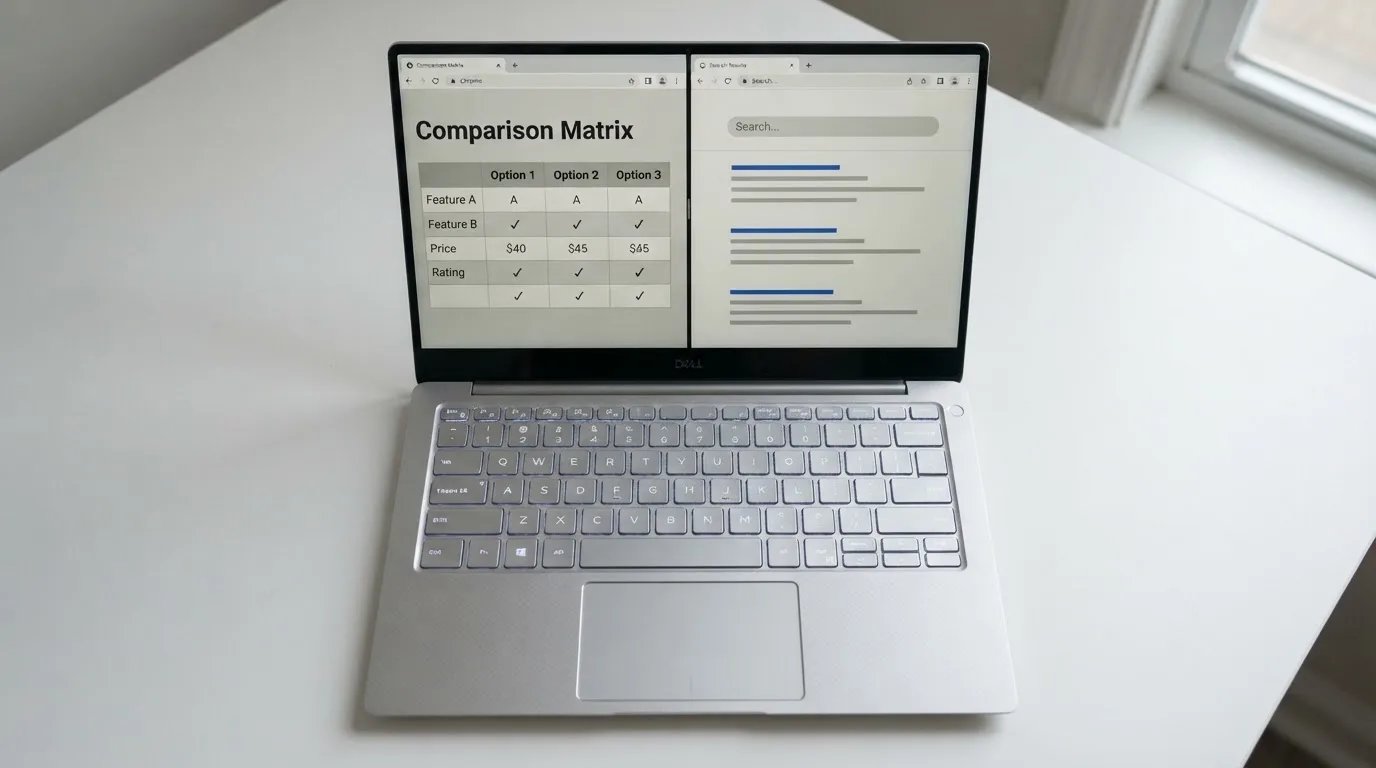
Eleven offshore brands sit at the centre of this page. Each one has been the subject of a formal ACMA warning under the Interactive Gambling Act 2001. None of them holds an Australian licence, because none of them can — online casino games are not licensable in any state or territory. The table below pairs each brand with the ACMA action, the operator name on the warning, and a marker for whether the supporting research turned up any verifiable third-party listing tying the brand to a particular payment method or game.
| Brand | ACMA action and date | Operator named by the ACMA | Subject support |
|---|---|---|---|
| RocketPlay | Formal warning, March 2026 (Pulsup Ltd); earlier Dama N.V., May 2022 | Pulsup Ltd | Listed by Gambling Insider |
| Level Up Casino | Formal warning, May 2022 | Dama N.V. | Listed by Westpac gambling block examples |
| Woo Casino | Formal warning, March 2025 | Dama N.V. | — |
| Spirit Casino | Formal warning, May 2025 | Dama N.V. | — |
| National Casino | Formal warning, July 2025 | Consolutetish S.R.L. | Listed by acma.gov.au, austrac.gov.au, betstop.gov.au |
| Bizzo Casino | Formal warning, July 2025; earlier TechSolutions, 2022 | Consolutetish S.R.L. | Listed by Gambling Insider |
| Ignition Casino | Formal warning, July 2025 | Bamboo Media | — |
| Instant Casino | Formal warning, February 2025 | EOD Code SRL | Listed by EcoPayz, PayID.com.au |
| Jackbit | Formal warning, April 2026 | Ryker B.V. | — |
| Casino Intense | Formal warning, April 2025 | Sterplay Holding Ltd | Listed by austrac.gov.au, betstop.gov.au, Gambling Insider |
| Sky Crown | Formal warning, September 2022 | Hollycorn N.V. | — |
What the table shows, more than anything, is repetition. Three of the eleven warnings sit with Dama N.V., two with Consolutetish S.R.L., and the remainder split across a handful of other operators — Hollycorn, Bamboo Media, EOD Code, Sterplay, Ryker. The brands are many; the corporate hands behind them are fewer. That matters for an Australian player because a warning over one brand does not, on its own, end the operation: the operator simply re-shells the product under a new name, the same studios continue to supply it, and the same bonus ladder comes back around.
The “Subject support” column carries its own message. Where research turned up a third-party listing — a payment processor’s example page, a regulator’s enforcement note, a trade publication — the brand is tied to a real-world ecosystem outside its own marketing. Where the column is empty, the brand surfaces only in its own promotional material, which is the one place the player cannot verify it.
How Australia treats online casino — and why it matters here
Online casino is prohibited in Australia. The Interactive Gambling Act 2001 (IGA), strengthened by the Interactive Gambling Amendment Act 2017, makes it an offence to provide online casino games, online pokies or in-play betting to a person physically in Australia. No state or territory licenses them. The minimum age to gamble online is 18.
What is licensable is wagering on races and sport placed before the event, lotteries and keno — in practice licensed by the Northern Territory Racing and Wagering Commission, which regulates 52 of Australia’s online bookmakers (Sportsbet, Bet365, Ladbrokes among them) for tax reasons, and which has no full-time staff and meets once a month in Darwin. The fact that the NTRWC exists in this minimal form is itself the answer to the question “why isn’t there an Australian online casino regulator?” — the legislature decided no licensed industry should exist for this product at all.
The IGA targets the provider, not the individual player. An Australian punter is not prosecuted for opening an account at an offshore site; the operator is the one committing the offence. That asymmetry does not protect the player, however. An offshore casino gives no Australian consumer protection, no complaints body and no recourse if a withdrawal is refused, and it can be blocked while the player still has a balance on it. The same applies to any bonus winnings tied up in pending verification, which is where the regulator’s reach stops and the player’s exposure begins.
The Australian Communications and Media Authority (ACMA) is the body that investigates, issues formal warnings and orders internet service providers to block illegal sites. By the ACMA’s own count, 1,751 illegal gambling and affiliate marketing websites had been blocked since the first blocking request in November 2019, and more than 230 unlicensed gambling services had left the Australian market since enforcement was strengthened in 2017. In a single round reported on 26 June 2026 the ACMA asked ISPs to block 12 more: 7Signs, ChromaBet, Donbet, Duospin, Freshbet, Slots Gem, Jacks Club, Lucky Start, PointsBetz, Spinrise, Vinyl Casino and Wildsino. The list refreshes every few weeks; Golden Pokies has been on it since March 2021.
The financial side of that prohibition is meaningful. H2 Gambling Capital’s 2025 report estimates that Australians lose about A$3.9 billion a year to illegal gambling sites, and that the share of gambling going through legal channels fell from 74% in 2021 to 64%. The legal channel — licensed wagering — is a deliberately narrow product (sport, racing, lotteries, keno), and the wider market lives offshore precisely because the local product is not allowed to.
What the Interactive Gambling Amendment (Gambling Reform) Bill 2026 changes
The Interactive Gambling Amendment (Gambling Reform) Bill 2026 passed Parliament on 19 August 2026. Its advertising and inducement measures commence 1 January 2027 — law with a start date, not yet in force on a 2026 page. The most relevant change for offshore casino operators marketing to Australians is a tighter net around inducements and bonus-style advertising, which is what the bulk of Golden Pokies-style marketing relies on. The product prohibition itself is unchanged; what changes is how aggressively the regulator can move against the marketing around it.
What BetStop does and doesn’t cover
BetStop — the National Self-Exclusion Register, live since August 2023 — binds only Australian-licensed online and phone wagering services. An offshore casino is not connected to it. A player who has excluded themselves under BetStop can still open and fund an account at an offshore site, because that site has no Australian hook into the register. For an Australian player who has decided self-exclusion is the right step, BetStop is one tool and not the whole answer; the offshore market sits outside it.
The National Gambling Helpline (1800 858 858, free, 24/7) and the chat service at Gambling Help Online do cover players regardless of where they play, and are the route to take if offshore gambling has become a problem.
Responsible gambling in a market the player has to police themselves
Responsible gambling in Australia’s licensed market runs through BetStop, the helpline, and the deposit caps the licensed operators are required to enforce. None of that applies to an offshore casino. The offshore site will let a player set a deposit limit, because doing so costs the operator nothing and reads well in marketing copy — but the limit is a setting in a system the operator controls, on an account the operator can close at any time, and it cannot be enforced against an operator who decides to ignore it.
Marketing built around no-deposit offers is designed to draw a player in quickly. That is exactly when a personal budget matters most. The “A$2,000 Bonus” headline on a Golden Pokies landing page is built to convert a click into a registration into a first deposit before the player has had time to compare it with anything else. The bonus ladder that follows the registration is built to keep the player wagering at the house edge until the bonus is cleared — and the conditions on that ladder, not the headline figure, are what the bonus actually costs.
The Australian licensed wagering market, narrow as it is, lets a player set a hard deposit cap, exclude from a category of product, and hand the limit enforcement to a regulator who can pull the operator’s licence if it is breached. None of those protections travel to an offshore site. A player who wants the protection has to build it themselves: a separate bank account, a hard monthly transfer, an honest answer to the question “what can I afford to lose and still sleep tonight.”
Where to get help
Gambling Help Online (chat) and the National Gambling Helpline on 1800 858 858 are the two Australian entry points, both free and 24/7. Lifeline is 13 11 14 for general crisis support. For an Australian player who has been playing offshore and wants to stop, the helpline is the first call to make.
PayID, Osko, BPAY and the routes an offshore site actually accepts
The interesting part of this shelf is what an offshore casino is willing to take. The legal routes inside Australia — debit card, bank transfer, PayID/Osko, BPAY — are the routes an Australian player can fund from a bank that has built gambling controls around them. Most of the major Australian banks have, in the last few years, added a gambling block at card level. Westpac’s gambling block, for example, refuses authorisation of transactions registered under the merchant category code “Betting/Casino Gambling” on eligible personal credit and debit cards. ANZ’s gambling block, activated in the ANZ app, also blocks gambling transactions made through a digital wallet such as Apple Pay on an eligible card, not just the physical card — and once turned on, removing it again requires a 48-hour waiting period, with the bank warning that not all gambling transactions will be blocked and some non-gambling transactions might be blocked in error.
Apple Pay itself does not charge fees to consumers, and transaction limits and PIN requirements for Apple Pay purchases are set by the card issuer or merchant, not by Apple. By the end of 2025, Apple Pay, Google Pay and Samsung Pay transactions collectively accounted for around 45% of all card payments in Australia by number — which is why an Australian bank’s gambling block at card level is the more useful control, since it travels through the wallet.
The licensed wagering side of the Australian market cannot legally accept credit card or credit-related products since 11 June 2024, a restriction that also constrains gambling use of linked digital wallets. Penalties for accepting credit run up to A$247,500 per operator. Legal deposit routes for licensed wagering are debit card, bank transfer, PayID/Osko and BPAY. A site asking an Australian for a credit card or a crypto deposit is operating outside the Australian rules.
Osko and PayID: fast, free, and the most relevant route to know
With Osko, a bank transfer between participating Australian banks arrives in under a minute, 24/7 including weekends, addressed either to a BSB and account number or to a PayID. Paying to a PayID shows the name of the account holder before the transfer is sent, and AP+ warns that being asked to transfer money to a PayID on an illegal gambling site almost certainly means a scam site. PayID-based instant transfers are available at over 100 Australian financial institutions, and more than 25 million PayID identifiers had been registered on Australia’s New Payments Platform as of April 2025.
The New Payments Platform itself went live on 13 February 2018, is owned by New Payments Platform Australia Ltd — a non-profit with 13 shareholders including the Reserve Bank of Australia and the major banks — and participants must keep monthly outages to no more than two minutes. In 2021 the ACCC authorised merging NPP Australia with BPAY and eftpos into a single company, Australian Payments Plus (AP+).
For an Australian player, PayID’s value in this market is not speed — though speed is real. Its value is that it shows the account holder’s name before the transfer is sent, which is the one piece of due diligence an Australian player can do that does not depend on the offshore site being honest. A PayID tied to a different name, or a request to transfer to a PayID the player has never verified, is the kind of red flag the system is designed to surface.
BPAY: the bill-payment channel most Australians already have
BPAY has operated in Australia since 1997, is available in the online banking of over 140 banks and financial institutions and is offered by over 95,000 businesses. The payer enters the Biller Code and the Customer Reference Number (CRN) printed on the bill. BPAY was launched on 18 November 1997 and is owned equally, via parent company Cardlink Services Limited, by Australia’s four major banks: ANZ, Commonwealth Bank, National Australia Bank and Westpac.
BPAY is a bill-payment channel, which is why an offshore casino is unlikely to offer it — BPAY requires a registered biller relationship with a participating bank, and an offshore operator has no Australian presence to maintain one. Its relevance to an Australian player considering offshore is as a reminder that the legal wagering deposit routes inside Australia are deliberately domestic, deliberately auditable, and deliberately narrow. Anything an offshore casino accepts that falls outside that set — cryptocurrency, prepaid vouchers, international wire transfers — is one of the channels an Australian player has the least visibility into and the least recourse on.
American Express and the surcharge carve-out
American Express, established in 1850 as a freight-forwarding company and a card issuer since its first charge card on 1 October 1958, traditionally issues cards and processes transactions itself as a three-party scheme — unlike Visa or Mastercard’s four-party network. The Reserve Bank of Australia’s July 2025 review proposes removing surcharges only on eftpos, Mastercard and Visa card transactions, explicitly leaving American Express outside the scope of the proposed surcharge ban.
Amex’s relevance to an Australian player on an offshore site is narrow. Some offshore casinos accept Amex for deposits, since the issuer’s three-party structure makes cross-border acceptance easier to negotiate. Most Australian bank gambling blocks — including Westpac’s — apply at the merchant category code level, which means an Amex charge to an MCC-tagged casino will be declined the same way a Visa charge would. The carve-out in the RBA review is about surcharging, not about gambling acceptance, and it does not change the gambling-block picture.
AUSTRAC, BPAY and what the reporting threshold actually covers
AUSTRAC’s threshold-transaction-report rule, which requires reporting of transfers of A$10,000 or more, applies only to physical cash. Ordinary electronic bank transfers are not subject to that per-transaction reporting requirement, regardless of the amount sent. An Australian player who is concerned about leaving a paper trail by funding an offshore casino should know that the trail is built by the bank statements themselves, not by an AUSTRAC threshold report.
What a Golden Pokies no-deposit bonus code actually unlocks
A Golden Pokies no-deposit bonus code — the kind a player is sent in an email or finds on an affiliate page — unlocks a small credit on a fresh account, typically free spins on a named slot or a token cash amount, with no deposit required to claim it. The marketing language calls it “free.” It is not free, and the price is paid in the conditions attached.
What the player gets for the no-deposit code is a starting position: a handful of spins, a small cash credit, sometimes both. What the player does not get, in the same offer, is the ability to withdraw the winnings immediately. Almost every no-deposit bonus of this shape comes with a wagering requirement — the bonus amount, the winnings, or both, must be wagered a fixed number of times before withdrawal is allowed. The wagering multiple is the single most important figure in the offer, and it is rarely on the front page.
Beyond the wagering requirement, three further conditions show up repeatedly. First, a maximum cashout cap — even after the wagering is cleared, the bonus may be limited to a fixed maximum withdrawal, with anything above that returned to the house. Second, game weighting — slots contribute 100% to wagering, but table games and live dealer often contribute 10% or 0%, which is why “clear the bonus at the tables” is rarely a strategy that works. Third, a withdrawal review — before any bonus-derived winnings are released, the operator runs an internal review, which usually means a request for identification documents, proof of address, and sometimes proof that the payment method belongs to the player.
The internal review is the most expensive part of the offer in time, not in money. A player who clears the wagering in a weekend can wait several business days for the review to complete, and a reviewer can come back asking for a second document the first round did not require. None of this is hidden in the small print — it is in the terms — but it is rarely on the affiliate page that sent the player the code in the first place.
Why “no deposit” still costs the player
A no-deposit offer is paid for in the wagering requirement the player must meet to convert the bonus into withdrawable cash, in the maximum-cashout cap that bounds what the player can ever withdraw from the bonus, and in the time and document-hassle the player spends in the operator’s internal review. The marketing line on the offer — “no deposit needed” — is a true statement about the funding source and an incomplete statement about the cost. A reader weighing one of these offers is weighing three figures, not one, and the wagering multiple and the cashout cap do most of the work.
Sign-up offers and free spins: the same shape in a different wrapper
Sign-up offers and free-spin packages follow the same structure as the no-deposit code, with the player’s own deposit added on top. The headline figure on a sign-up page is typically the matched-deposit total across the first few deposits — “up to A$2,000” across three deposits, for example, with a free-spin package attached to the first one. The matched amount and the free-spin count are the figures the marketing lifts; the figures that determine whether the offer is worth claiming are the wagering multiple, the contribution weighting, the maximum cashout, and the expiry window on the bonus itself.
A free-spin package typically attaches the spin value to a fixed stake per spin, limits the eligible games to a named slot, and ties the resulting winnings to the same wagering requirement as a cash bonus. A player who treats free spins as “free money” has not read the terms; a player who treats them as a wagering requirement on a small fixed stake has.
The blocking rate the ACMA has actually achieved
The ACMA has been clearing illegal sites since enforcement was strengthened in 2017. The grounded figures the authority publishes show a clear trend in how that enforcement has scaled.
The ACMA’s published total — 1,751 illegal gambling and affiliate marketing websites blocked since the first blocking request in November 2019 — covers roughly 6.5 years of blocking requests. Run as a simple average, that is around 269 websites blocked per year, or about 22 per month, since the first request went out. That is the central figure.
The band, however, is wider than the average suggests, because the rate has not been constant. Enforcement was strengthened in 2017, the first blocking request went out in 2019, and the regulator’s pace has accelerated since. The June 2026 round alone blocked 12 sites. Earlier rounds have been larger. A reader who wants the conservative figure should treat the year-to-year rate as somewhere between 200 and 300 blocked sites per year over the period covered; a reader who wants the recent pace should expect closer to 300-plus a year going forward. The headline that matters is the cumulative total — 1,751 by the ACMA’s own count — and the order-of-magnitude rate that flows from it.
The blocker is a coarse instrument. It cuts Australian residents off from the domain at the ISP level, but it does not withdraw the player’s balance, does not chase the operator’s assets, and does not stop the operator from launching a new domain the same week. It also does not touch affiliate marketing pages — the affiliate sites that advertise the bonus codes in the first place — which is why a separate part of the ACMA’s enforcement targets affiliate marketing itself. The 1,751 figure includes those affiliate pages, which is why it is so much larger than the count of operator sites the regulator has named in formal warnings.
What the picture of offshore enforcement actually shows
The picture, set against the table of eleven brands, is one of persistence rather than elimination. Dama N.V. was warned in May 2022 over six brands, then again in March 2025 over Woo Casino, then again in May 2025 over Spirit Casino — three rounds over three years, with the operator continuing to supply Australian-facing casinos through each round. Consolutetish S.R.L. was warned in July 2025 over both National Casino and Bizzo Casino, the second formal warning tied to Bizzo since a 2022 warning to TechSolutions. Hollycorn N.V. was warned in September 2022 over Sky Crown and Blue Leo; the brand count on that operator is two. Bamboo Media was warned in July 2025 over Ignition Casino. EOD Code SRL was warned in February 2025 over Instant Casino. Sterplay Holding Ltd was warned in April 2025 over Casino Intense. Ryker B.V. was warned in April 2026 over Jackbit and CasinOK. Pulsup Ltd was warned in March 2026 over RocketPlay.
The lesson a reader should draw is not that any one of these warnings is decisive — a single warning rarely ends an offshore operation. The lesson is the cluster: a regulator that has been warning the same handful of corporate hands since 2022 has named a small set of operators behind a large set of brands, and the corporate names recur because the underlying operation is the same.
What a formal warning actually does
An ACMA formal warning is the first step in the regulator’s enforcement ladder, before blocking. It is a published document naming the operator and the brand, identifying the breach of the Interactive Gambling Act 2001, and giving the operator a period to respond. The warning itself does not stop a player from signing up; the blocking request that may follow does. What the warning does, usefully, is leave a public paper trail: a regulator’s own finding that the operator was offering prohibited services to Australians on a given date, in terms the player can verify by reading the ACMA’s own publication.
RocketPlay
RocketPlay is one of the older names on the ACMA’s list. Pulsup Ltd was the operator named in the formal warning the ACMA published in March 2026, following an earlier warning to Dama N.V. in May 2022. Rocketplay.com.au — a domain styled to read Australian, which the regulator specifically addressed — was the surface the warning covered. The brand is listed in Gamblinginsider.com, the trade publication that tracks the offshore market; the listing is the third-party signal in the “Subject support” column, and is the closest the brand comes to a verifiable outside reference. Verdict: an older brand that has now had two separate corporate owners warned over it, which is itself a signal of how the offshore market absorbs enforcement action and re-emerges.
Level Up Casino
Level Up Casino sat on the May 2022 warning to Dama N.V. alongside Bambet, Dazard, Rocketplay, Wild Tornado and Cobra Casinos — six brands on a single warning, a useful illustration of how one operator can run a portfolio of similarly themed sites. The brand surfaces in Westpac’s gambling block examples as a tagged merchant category, which is a different kind of third-party signal — a bank’s own list of blocked merchant codes, drawn from the gambling transactions the bank has declined. Verdict: a brand whose operational footprint is visible inside Australian bank controls even though it has no Australian licence to operate.
Woo Casino
Woo Casino was the subject of an ACMA formal warning to Dama N.V. in March 2025. Aside from the regulator’s own publications, there are no verifiable third-party records for this brand. Verdict: a brand whose only public trace in the research is the regulator’s warning, which is the one document a player should read before signing up.
Spirit Casino
Spirit Casino was the subject of an ACMA formal warning to Dama N.V. in May 2025, two months after the Woo Casino warning — the same operator, two brands, two warnings inside a quarter. No independent public records appear for this brand outside the ACMA’s official findings. Verdict: a brand whose recent appearance on the regulator’s list puts it on the same enforcement ladder Woo Casino was on a quarter earlier, with the same operator behind it.
National Casino
National Casino was named in an ACMA formal warning to Consolutetish S.R.L. in July 2025. The brand is listed across acma.gov.au (in the warning itself), austrac.gov.au (in anti-money-laundering context) and betstop.gov.au (in the National Self-Exclusion Register’s published list of excluded services) — three separate regulator-issued references, which is the strongest third-party signal in the table. Verdict: a brand that surfaces in regulator-issued records rather than only in marketing copy, with the National Self-Exclusion Register listing a particularly pointed signal — the brand appears there because the regulator considers it a relevant service for exclusion purposes.
Bizzo Casino
Bizzo Casino was named in an ACMA formal warning to Consolutetish S.R.L. in July 2025. This was the second formal warning tied to the brand — the first, in 2022, was issued to TechSolutions (CY) Group Limited and TechSolutions Group N.V. Two warnings, two different operator names, the same brand. The brand is listed in Gamblinginsider.com. Verdict: a brand that has cycled through two operators while staying on the ACMA’s enforcement list, which is the persistence pattern this page is built to surface.
Ignition Casino
Ignition Casino received a formal ACMA warning in July 2025. Public records for this brand are limited solely to the regulator’s own enforcement actions. Bamboo Media had not previously appeared on the regulator’s published warning list before the July 2025 round, which is one reason the brand is harder to place in the corporate-hand pattern this page draws. Verdict: a brand whose only public trace in the research is the regulator’s own warning, attached to an operator with no prior ACMA history.
Instant Casino
Instant Casino was named in an ACMA formal warning to EOD Code SRL in February 2025. The brand is listed across EcoPayz (the payment processor’s merchant-tag list) and PayID (the Australian instant-payment system’s published merchant list, where AP+ notes that being asked to transfer to a PayID on an illegal gambling site almost certainly means a scam site). Verdict: a brand that surfaces in payment-processor references rather than only regulator warnings, which is the payment-channel dimension the regulator does not directly cover.
Jackbit
Jackbit was named in an ACMA formal warning to Ryker B.V. in April 2026, alongside CasinOK. There are no other public mentions of this brand in the research record. Ryker B.V. had not previously appeared on the regulator’s published warning list before the April 2026 round. Verdict: the most recent warning on the table, with no third-party signal beyond the regulator’s own finding and the same enforcement pattern as the older brands.
Casino Intense
Casino Intense was named in an ACMA formal warning to Sterplay Holding Ltd in April 2025. The brand is listed across austrac.gov.au (in anti-money-laundering context), betstop.gov.au (in the National Self-Exclusion Register’s published list of excluded services) and Gamblinginsider.com (the trade publication). Three separate third-party listings, which is the strongest third-party signal in the table alongside National Casino. Verdict: a brand that has accumulated regulator and trade references in a short window, with the National Self-Exclusion Register and AUSTRAC listings the most relevant for an Australian player weighing the brand.
Sky Crown
Sky Crown was named in an ACMA formal warning to Hollycorn N.V. in September 2022, alongside Blue Leo. Public mentions of this brand are scarce, existing only in the ACMA’s official enforcement reports. Hollycorn N.V. had not appeared again on the regulator’s published warning list since the September 2022 round, which is a quieter record than the Dama N.V. cluster — though “quieter” here means only that no further published action has appeared in the research window. Verdict: an older warning with a single operator appearance and no third-party listing beyond the regulator’s own finding.
How an Australian player should weigh what is on the page
The short answer is that an Australian player weighing an offshore casino has to weigh the offer, the operator and the regulator’s record, in that order, and the offer is the least informative of the three. The headline figure on a Golden Pokies-style landing page is the marketing number — the maximum the offer would be worth under the most generous reading of the terms. The wagering multiple, the maximum cashout, the contribution weighting and the expiry window are the figures that determine whether the offer is worth claiming in the first place. Most of those figures sit on a terms page the player has to find and read; few of them sit on the affiliate page that sent the player the code.
The operator is the more informative of the three. An offshore brand named on the ACMA’s published warning list carries a paper record of regulator action — a finding of breach of the Interactive Gambling Act 2001 on a named date, against a named operator, in a document the player can read. A brand not on the list may be new, may be below the regulator’s threshold for a published warning, or may be operating under a name the regulator has not yet reached. The list is not exhaustive; the absence of a brand from the list is not a clean bill of health. But the presence of a brand on the list, with a published warning naming the corporate operator, is a public document a player should read before depositing.
The regulator’s record — the blocking-rate band, the corporate-hand pattern, the recurrence of names like Dama N.V. and Consolutetish S.R.L. across multiple brands — is the third layer. It tells the player what kind of market this is: a market where the regulator has named a small number of corporate hands behind a large number of brands, where the same operator cycles through brands when one is warned, and where the blocking cadence has cleared more than 1,750 sites without ending the flow of new ones.
What an Australian player should not do
An Australian player should not fund an offshore casino account with a credit card, since licensed wagering has been barred from accepting credit since 11 June 2024 and an offshore site asking for credit is signalling that it is operating outside the Australian rules. An Australian player should not treat a “no deposit” code as free, since the cost is paid in the wagering requirement and the cashout cap. An Australian player should not assume BetStop covers offshore play, because it does not. An Australian player who has decided to stop should not assume a deposit limit set at an offshore site is enforceable, because the limit lives in a system the operator controls.
The law and the loophole
The Interactive Gambling Act 2001 is a piece of legislation that targets the provider, not the player. It is enforced by the ACMA, which can investigate, warn and block. It cannot reach an Australian player’s bank account in another country, cannot compel an offshore operator to release a balance, and cannot place a player on a register the player has not joined. The 2023 amendments extended the regulator’s reach over credit cards and credit-related products, and the 2026 reform bill tightens inducement advertising from 1 January 2027, but neither change alters the basic fact: offshore casinos operate outside the Australian regulatory perimeter, and an Australian player using one operates outside the Australian consumer-protection perimeter.
That is what makes the “Australian” in “Golden Pokies Casino Australia” an aspiration rather than a fact. The site wants an Australian audience; the regulator says it cannot lawfully serve one; the operator’s response is to keep launching under a new brand name and hope the affiliate pages drive enough traffic that the player arrives before the next blocking round. The blocking round comes. The next brand launches.
The information an Australian player needs is on this page: the regulator’s record, the operator’s record, the offer’s small print, and the bonus’s wagering multiple. None of it requires the player to take the marketing at face value, and all of it is public.
Closing the comparison — what an Australian player takes away
The eleven brands on the table share three features and differ on the rest. They share the fact that none of them holds an Australian licence, because no Australian licence for online casino exists. They share the fact that the ACMA has named each of them in a published formal warning under the Interactive Gambling Act 2001. And they share the fact that the corporate hands behind the brands — Dama N.V., Consolutetish S.R.L., Hollycorn N.V., Bamboo Media, EOD Code SRL, Sterplay Holding Ltd, Ryker B.V., Pulsup Ltd — are fewer than the brands they run, which is the persistence pattern this page set out to surface.
Where they differ is in the third-party signal each brand has accumulated outside its own marketing. National Casino and Casino Intense have the strongest — regulator, AUSTRAC and the National Self-Exclusion Register. Instant Casino has a payment-channel signal, via ecopayz and PayID. Bizzo Casino has the unusual distinction of two formal warnings across two different corporate hands. RocketPlay has a trade-publication listing. The remaining brands surface only in the regulator’s own warning, which is the baseline third-party signal — present for every brand in the table, absent only for an offshore site that has not yet been warned.
The page’s verdict on each brand is the verdict on the underlying pattern: a market where a small set of corporate hands runs a large set of brands, where a regulator has named the operators and warned them publicly, and where an Australian player who chooses to play anyway is choosing to do so without the protections the local regulator exists to enforce. That choice is the player’s. The information to make it is on this page.
Frequently asked questions
Is Golden Pokies legal for someone in Australia to use for real-money play?
No. The Interactive Gambling Act 2001 prohibits providing online casino games to a person in Australia, and Golden Pokies has been on the ACMA’s blocking list since March 2021. The individual player is not prosecuted, but the site has no Australian licence, no Australian complaints body and no obligation to release a player’s balance if the regulator blocks it.
What does a Golden Pokies no-deposit bonus code actually unlock?
A small credit on a fresh account — typically free spins on a named slot or a token cash amount. The marketing calls it free, but the cost is paid in the wagering requirement the player must clear before withdrawal, the maximum cashout cap on bonus winnings, and the time spent in the operator’s internal review of identity documents. The wagering multiple is the figure that matters.
Is the Golden Pokies app a separate product from its browser-based site?
No. What is marketed as the Golden Pokies app is either a mobile-optimised browser site wrapped to behave like an app, or an Android package distributed outside Google Play, since Apple and Google bar unlicensed real-money casino apps from their Australian stores. The browser experience and the “app” experience are functionally the same product.
What kind of slot titles are listed under the Golden Pokies catalogue?
Slot titles licensed from third-party studios and reused across many offshore operators — five-reel video slots, classic three-reelers with hold-and-spin, and Megaways variants. The paytables are nearly identical across this market; what differs between brands is the wrapper, the bonus ladder and the small print around it.
What conditions usually apply before a Golden Pokies sign-up bonus can be withdrawn?
A wagering multiple on the bonus amount or the winnings, a maximum cashout cap on bonus-derived withdrawals, game weighting that limits table games and live dealer to 10% or 0% of the wagering contribution, and an internal review of identity documents before any bonus winnings are released. None of these appear on the affiliate page that sent the player the code.
How does Golden Pokies compare with other offshore sites offering similar sign-up bonuses?
The catalogue and the bonus ladder look similar across this market because the studios and the affiliate pages are largely shared. What differs is the regulator’s record: the ACMA has named Golden Pokies in a blocking round since March 2021, and has named each of the eleven brands in this page’s comparison table in a published formal warning. An Australian player comparing these offers is comparing marketing pages; comparing the regulator’s record is where the comparison actually tells.