
Pokies Parlour in 2026 and the offshore casino picture around it
The cluster of sites styled as Pokies Parlour sits outside Australian law. No state or territory licenses an online casino to take Australian players, so anything carrying the Pokies Parlour branding is, by definition, offshore and unlicensed for this market. The same goes for most of the lookalike domains that borrow the name and for the wider group of brands the ACMA has acted against in recent years.
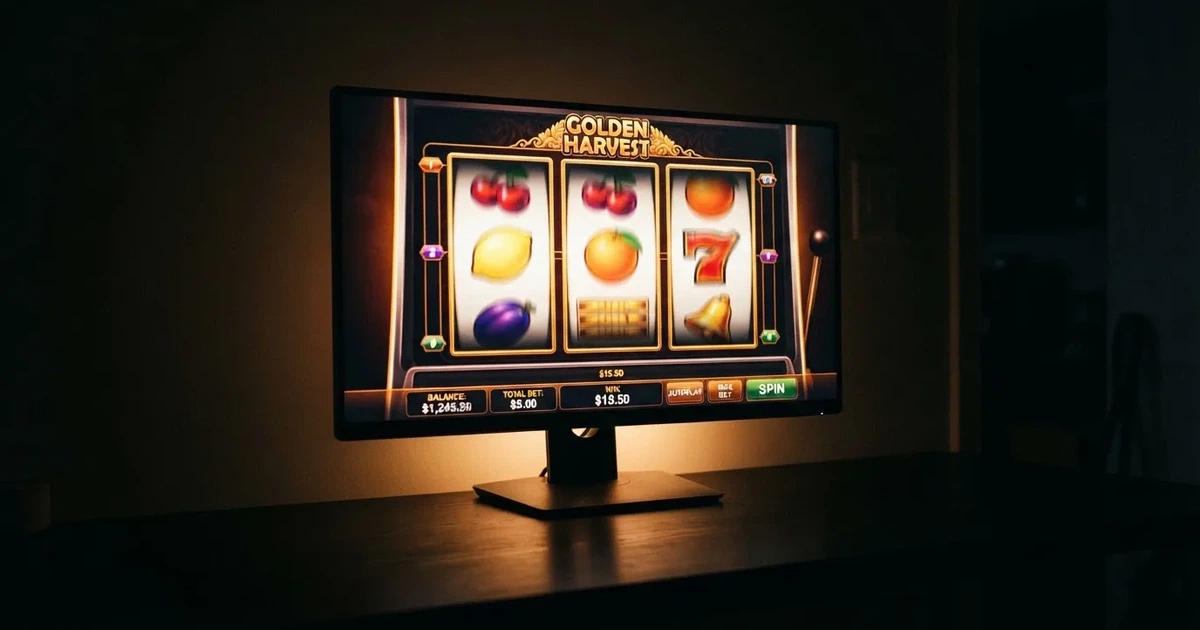
This page works through what is publicly known about the brand and the offshore sites alongside it. It explains what the ACMA has actually done, what the public record says about the offers these sites make, and what an Australian who lands on one of them is dealing with when something goes wrong. It is not a recommendation to play at any of them. None of them is licensed for this market.
Current as of 29 October 2026 · licence claims verified against the ACMA’s own formal-warning register.
Table of Contents
- Paytable claims behind the Pokies Parlour brand
- Eleven brands the ACMA has acted against
- The fundamentals every Pokies Parlour-style site carries
- Prohibition and what ACMA action follows from
- Where the help lines are
- Payment routes and what the cards and banks do
- Bonus claims and what they amount to
- Frequently asked questions
Paytable claims behind the Pokies Parlour brand
The Pokies Parlour brand — and the various domains it travels under — is built around a single, very visible offer: up to A$2,777 in bonus funds spread across the first seven deposits. That single line is the paytable of the brand, in the same way a slot machine’s paytable is the front-of-house statement of what the game pays out. Everything else on the site is constructed around it.
The structure matters because it is not what the headline says. The headline says “A$2,777”, which a casual reader treats as the bonus they will receive on their first deposit. They will not. The A$2,777 figure is a ceiling across seven separate deposits, and the per-deposit match rate is not uniform. The standard offshore paytable of this shape attaches the largest match to the first deposit, smaller matches to deposits two and three, and progressively tighter percentages or bonus caps to deposits four through seven. The total is reached only if a player deposits seven times in full and claims each tranche in turn.
The consequence of that structure arrives later. By the time a player has made the third deposit, they have usually discovered two things: that the bonus funds carry a wagering requirement, and that the wagering requirement is applied to the bonus amount, the deposit amount, or both — depending on which version of the terms is in force at the moment. The deposit-by-deposit spread is, in marketing terms, exactly the structure that maximises the headline number while minimising the chance of any single tranche being fully cleared and withdrawn.
What the terms usually say is that the wagering requirement is a high multiple of the bonus amount — a figure that looks ordinary on a per-deposit basis and punishing in aggregate. The cumulative required turnover across all seven deposits is several times the headline figure in any version of the terms that contains the standard offshore playthrough requirement.
Game weighting makes the arithmetic worse. Slots usually contribute fully to wagering; table games, video poker and most live dealer games contribute a small fraction or nothing at all. A player who deposits with the plan of clearing the bonus at blackjack or roulette will discover that a small contribution rate turns the playthrough obligation into a far larger real-money value before the bonus unlocks.
A max-cashout cap, where it exists, is the third and most painful term. Some offshore bonuses cap the amount a player can withdraw from bonus-derived winnings at a multiple of the bonus. The terms usually say so in plain language; the marketing material never does.
The Pokies Parlour sites are not unique in this structure. Most offshore casino brands use one variant or another of the multi-deposit welcome package, and the same seven-deposit spread is the format at several of the eleven brands the ACMA has acted against, listed in the section that follows. What is specific to Pokies Parlour is the brand identity: the word “parlour” frames the offer in Australian pub-club terms, and the absence of an Australian licence is hidden behind a familiar-sounding name.
Eleven brands the ACMA has acted against
The brands in this section are not a recommendation and not a ranking. Each one is here because the ACMA itself issued a formal warning over it for providing prohibited interactive gambling services to Australians. The order follows the order in which the warnings appear in the ACMA’s published register; the dates in the table and the operator write-ups below come from the same source.
What the ACMA’s register shows, when read across the eleven, is a recurring offshore pattern. Brands appear, get warned, move to a new corporate shell under a different operator name, and resume marketing. Some of the operator names in the register — Dama N.V. especially — appear several times against different brands, which is itself the consequence of the structure this page is about: a single offshore group running multiple casino skins, all of which the ACMA has had to address individually.
The brands below are written up in the order they appear in the ACMA’s formal-warning register. The table that follows carries the same brands with the ACMA action, the operator named in the warning, and the public-source presence — that is, what the publicly available sources confirm about each one beyond the warning itself.
| Brand | ACMA action and date | Operator named by the ACMA | Public-source presence |
|---|---|---|---|
| RocketPlay | Formal warning, March 2026; earlier formal warning, May 2022 | Pulsup Ltd (March 2026); Dama N.V. (May 2022) | Listed by industry publications |
| Level Up Casino | Formal warning, May 2022 | Dama N.V. | Listed on a bank’s self-exclusion page |
| Woo Casino | Formal warning, March 2025 | Dama N.V. | — |
| Spirit Casino | Formal warning, May 2025 | Dama N.V. | — |
| National Casino | Formal warning, July 2025 | Consolutetish S.R.L. | Listed in Australian regulator directories |
| Bizzo Casino | Formal warning, July 2025; earlier formal warning, 2022 | Consolutetish S.R.L. (July 2025); TechSolutions (2022) | Listed by industry publications |
| Ignition Casino | Formal warning, July 2025 | Bamboo Media | — |
| Instant Casino | Formal warning, February 2025 | EOD Code SRL | Listed on payment-processor pages |
| Jackbit | Formal warning, April 2026 | Ryker B.V. | — |
| Casino Intense | Formal warning, April 2025 | Sterplay Holding Ltd | Listed across regulator and industry sources |
| Sky Crown | Formal warning, September 2022 | Hollycorn N.V. | — |
The brands with a dash in the public-source-presence column are not absent because the page has chosen to omit them; the publicly available sources carry no record of them beyond the ACMA warning. The brands with a source listing are those the data has reached in some form — through a regulator directory, a payment-processor page, or an industry publication. None of these listings is an endorsement, and none of them changes the underlying ACMA finding. The write-ups below work through each brand in turn.
RocketPlay: the brand the ACMA has now warned twice
RocketPlay has the longest record on this list. The ACMA issued its first formal warning over the brand in May 2022, naming Dama N.V. as the operator. A second formal warning followed in March 2026, this time naming Pulsup Ltd. The two warnings cover the same brand name, four years apart, against two different operators. The publicly available industry publications list RocketPlay among offshore casino brands, but do not confirm the present operator behind the brand. RocketPlay’s case shows what happens when the same brand name is acted against twice under different operators — and the recurrence is itself the offshore picture this page describes.
Level Up Casino: a Dama N.V. warning from 2022
Level Up Casino was named in the same May 2022 ACMA warning as several other Dama N.V. brands, including RocketPlay at that stage. The warning is now four years old, and the publicly available sources do not confirm who currently sits behind the Level Up brand. The brand does surface on a bank’s self-exclusion page, which is the kind of presence that suggests a deposit flow somewhere in the chain even after the warning. Level Up sits inside the wider Dama N.V. family the ACMA has addressed several times. Four years on, the corporate chain has had time to dissolve and reconstitute; nothing in the public record confirms who currently sits behind the brand.
Woo Casino: a newer Dama N.V. action
Woo Casino was the subject of a separate ACMA formal warning in March 2025, again naming Dama N.V. The warning came three years after the original Dama N.V. action in 2022 and reflects the regulator returning to the same operator group under a different brand skin. Woo Casino’s warning is, on the public record, the first time this particular brand name was named. The same operating group kept marketing to Australians across multiple skins until the regulator caught up with this particular brand name.
Spirit Casino: the latest Dama N.V. action
Spirit Casino received an ACMA formal warning in May 2025, the latest in the Dama N.V. sequence. The warning is recent enough that any withdrawal complaint filed since the date sits on a live enforcement record. Spirit Casino is one of the brands for which the publicly available sources carry no record beyond the ACMA’s own register, so the public-source-presence column for Spirit shows a dash. A regulator that has already named the operator is harder to ignore than one that has not.
National Casino: a brand listed across Australian regulator directories
National Casino was the subject of an ACMA formal warning in July 2025, naming Consolutetish S.R.L. as the operator. Unlike most of the brands on this list, National Casino surfaces across several Australian regulator directories in its own right — including on BetStop and AUSTRAC pages — which is a presence that reflects how often the brand has been marketed into this market. That presence reflects how often the brand has been marketed here; no directory listing is an endorsement.
Bizzo Casino: a brand warned under two different operators
Bizzo Casino has two ACMA formal warnings on the public record. The first, in 2022, named TechSolutions as the operator; the second, in July 2025, named Consolutetish S.R.L. The brand name stayed the same across both warnings. Bizzo’s case is the clearest illustration on this list of what the ACMA means when it describes the offshore chain being reconstituted. The brand did not change; only the corporate shell did. Bizzo is also listed in industry publications, but those listings are not endorsements.
Ignition Casino: a warning issued to a media company
Ignition Casino’s July 2025 formal warning was issued not to a casino operator but to Bamboo Media, a media company. The warning reflects the ACMA’s broadening of its action to reach the marketing side of offshore casino promotion, not just the casino operators themselves. Ignition Casino is one of the brands for which no publicly available source beyond the ACMA’s own register carries any record. ACMA action against marketing intermediaries for offshore casino promotion is now part of the public record; an Australian-facing affiliate site is no safer than the brand it markets.
Instant Casino: a brand that surfaces on payment-processor pages
Instant Casino received an ACMA formal warning in February 2025, naming EOD Code SRL as the operator. The brand is unusual on this list for surfacing on payment-processor pages, including on ecoPayz and PayID. That presence is the consequence of how deposits still reach offshore brands: the ACMA can warn and block the casino site, but the underlying payment routes still pass through the processors and banks unless those intermediaries act on the brand themselves. Instant Casino is the one case on this list where the public record of where the money flows is visible. The deposits still get processed somewhere, which is the one part of the offshore offer the ACMA cannot simply block.
Jackbit: the most recent ACMA action on this list
Jackbit received an ACMA formal warning in April 2026, naming Ryker B.V. as the operator. It is the most recent formal warning on this list. The brand has no real public footprint beyond the ACMA’s own register; the public-source-presence column for Jackbit is therefore a dash. The next ACMA blocking round is the most likely place to read more about Jackbit and the operator behind it.
Casino Intense: the brand with the broadest source coverage
Casino Intense’s April 2025 ACMA formal warning named Sterplay Holding Ltd as the operator. Casino Intense is the brand on this list with the broadest source coverage: it appears in regulator directories including BetStop and AUSTRAC, and in industry publications including Gamblinginsider.com. That breadth of coverage is the consequence of how visible the brand has been in marketing to Australians. Coverage is not endorsement; the brand remains on the ACMA warning register for the same reason as every other entry on this list.
Sky Crown: a warning against an operator with a portfolio of brands
Sky Crown’s ACMA formal warning, published in September 2022, named Hollycorn N.V. as the operator. Hollycorn N.V. runs a portfolio of casino brands, and the ACMA’s finding applies to that portfolio as much as to Sky Crown itself. Sky Crown is another brand with no public footprint beyond the ACMA’s own register. Any sister brand from the same operator family should be approached with the same caution as Sky Crown.
The fundamentals every Pokies Parlour-style site carries
Across the Pokies Parlour domains and the broader group of offshore brands the ACMA has acted against, certain fundamentals repeat. They are not always visible at a glance, and most of them are not the things the marketing pages lead with. They are the bits a reader notices only after they have already deposited, which is part of why they matter.

The first fundamental is the corporate shell. The Pokies Parlour brand has, at various points, been named by the ACMA against operators including Deloraze Limited and Versus Odds (BV) — the two entities the ACMA’s formal warning names together. That warning was issued under section 64A of the Interactive Gambling Act 2001. Neither entity is an Australian company. Both are offshore. The brand identity — Pokies Parlour — sits one step removed from the operator, and the operator sits one step removed from any Australian regulator.
The second fundamental is the platform. The Pokies Parlour sites have, at various times, run on Real Time Gaming software and similar offshore casino platforms. The platforms themselves are licensed in jurisdictions such as Curaçao; the games are not certified for the Australian market. That is the technical sense in which these sites cannot be licensed here: there is no certification framework under Australian law for the games they offer.
The third fundamental is the multi-domain pattern. The Pokies Parlour brand travels under several domain names at once, and the brand identity is stable across them while the domain shifts. This pattern is not unique to Pokies Parlour — it is common to most offshore casino brands — but it is the practical reason a reader who has heard of the brand cannot, by typing a name into a search engine, be sure which domain they are about to land on. The ACMA’s blocking actions tend to target one domain at a time, while the brand remains available under another.
The fourth fundamental is the marketing hook. The “free spins”, “free chip” and “no deposit bonus” claims that surface in review pages for these sites are entry-point offers. They exist to bring a player into the cashier, where the real offer — the deposit bonus — sits. None of the Pokies Parlour-style sites is a recommendation; the marketing hooks are the funnel, and the funnel always ends at a deposit screen.
The fifth fundamental is the absence of consumer protection. The Pokies Parlour sites give an Australian player no complaint route, no AU-licensed dispute resolution, and no recourse if a withdrawal is refused. The payment sits offshore, the operator sits offshore, and the games sit offshore. The only Australian agency with jurisdiction over the brand is the ACMA, and the ACMA’s actions are taken against the operator, not against any individual player complaint. The remainder of this page works through what those actions look like and what an Australian player who lands on one of these sites is actually dealing with.
Prohibition and what ACMA action follows from
The legal position an Australian faces on any of these sites is set by the Interactive Gambling Act 2001, as amended by the Interactive Gambling Amendment Act 2017. The IGA makes it an offence for a provider to supply certain interactive gambling services to a person physically present in Australia. The prohibited services are online casino games, online pokies and in-play betting on sporting events. No state or territory licenses any of these.
What the IGA does license, in practice, is wagering on racing and on sporting events when the wager is placed before the event starts, plus lotteries and keno. Online wagering services — Sportsbet, Bet365, Ladbrokes — are licensed in the Northern Territory through the Northern Territory Racing and Wagering Commission, which regulates 52 of Australia’s online bookmakers. The NTRWC has no full-time staff and meets once a month in Darwin. The arrangement exists for tax reasons; the regulatory depth is light.
The IGA does not, as a practical matter, prosecute the individual player. The offence sits with the provider. An Australian who plays at an offshore casino is not personally at risk of prosecution under the Act. What they are at risk of, however, is the absence of any consumer protection the Act would otherwise provide — and that absence is the practical consequence of the legal prohibition. There is no AU-licensed dispute body to escalate a withdrawal refusal to, no AU ombudsman, and no AU regulator that can compel an offshore operator to pay out a balance.
Enforcement against the providers runs through the Australian Communications and Media Authority. The ACMA has three principal tools: formal warnings under section 64A of the IGA, blocking requests to Australian internet service providers, and the publication of civil penalties and other actions. The ACMA also runs civil penalty proceedings in the Federal Court, where the operator is identifiable and within reach.
The blocking requests are the most visible ACMA action, and they are the data point behind the calculation this section turns to. As of the round reported in June 2026, the ACMA had asked Australian ISPs to block 1,751 illegal gambling and affiliate marketing websites since the first blocking request in November 2019. The June 2026 round alone added 12 more: 7Signs, ChromaBet, Donbet, Duospin, Freshbet, Slots Gem, Jacks Club, Lucky Start, Pointsbetz, Spinrise, Vinyl Casino and Wildsino.
Between November 2019 and June 2026, the ACMA’s blocking requests have averaged about 22 sites a month, or roughly 260 to 270 a year — a band rather than a precise rate, because individual blocking rounds vary in size and timing rather than arriving at a steady monthly tempo. What is consistent is the cumulative direction: more than 230 unlicensed gambling services have left the Australian market since enforcement was strengthened in 2017, and the ACMA’s blocking list grows by hundreds of entries each year on the current pace.
That pace matters because it is the visible speed of the regulator against the speed of the offshore chain. The same ACMA report notes that H2 Gambling Capital’s 2025 estimate of Australian losses to illegal gambling sites is around A$3.9 billion per year, with the share of gambling going through legal channels having fallen from 74% in 2021 to 64%. The block-rate and the loss-rate are not the same metric, but they sit alongside each other in the same enforcement picture. A regulator that blocks hundreds of sites a year is operating against an industry whose annual revenue in Australia is in the billions.
The IGA was further amended in 2023, and the amendments took effect for credit cards and digital currency on 11 June 2024. From that date, Australian-licensed online wagering services cannot accept payment by credit card or by other credit-related products. Penalties for licensed operators who do run up to A$247,500. The ban applies to AU-licensed wagering, not to offshore casinos — but it constrains how an Australian-funded credit card or digital wallet can reach any AU-licensed bookmaker in the first place.
A further reform sits in the Interactive Gambling Amendment (Gambling Reform) Bill 2026, which passed Parliament on 19 August 2026. Its advertising and inducement measures commence on 1 January 2027. The page reflects the law as it stands at the time of writing, and the 2026 bill’s commencement is a future date the ACMA’s enforcement picture will change against from the start of next year.
Where the help lines are
The Australian help infrastructure for someone who is finding their gambling hard to manage runs through three services, none of which is the offshore casino’s own responsibility.
The first is BetStop, the National Self-Exclusion Register, which has been live since August 2023. BetStop lets a person exclude themselves from AU-licensed online and phone wagering services for a chosen period. The exclusion binds AU-licensed operators; it does not bind offshore casinos. A player who has self-excluded through BetStop and then deposits at an offshore casino has not breached the BetStop terms, but they have also not protected themselves through BetStop, because the offshore casino was never on the register to begin with.
The second is the National Gambling Helpline on 1800 858 858. The line is free, runs 24 hours a day, and is staffed by professional counsellors. Chat is available through Gambling Help Online. The helpline is funded by the Australian Government and is independent of any casino operator.
The third is the bank’s own gambling block. Westpac blocks transactions at card level by refusing authorisation of any transaction registered under the merchant category code for betting and casino gambling on eligible personal credit and debit cards. ANZ runs a similar block through its app; once the block is on, it requires a 48-hour cooling-off period to remove, and ANZ warns that not all gambling transactions will be blocked and some non-gambling transactions might be blocked in error. Commonwealth Bank and National Australia Bank run equivalent controls. The bank block does not, on its own, stop every gambling transaction — the merchant category code covers most large operators, but smaller offshore sites can register under different codes — and the block does not stop a player who moves to a payment method the bank cannot see.
The offshore casino itself offers none of these protections. There is no AU-licensed self-exclusion binding on a Pokies Parlour-style site. There is no AU complaints body the player can escalate a withdrawal refusal to. There is no AU consumer protection statute that reaches the operator. The page’s wider point — that these sites are outside Australian law — lands most sharply here, in the help-lines section, because it is in the help-lines section that the absence is most concrete.
Payment routes and what the cards and banks do
The payment routes an Australian would expect to use at an offshore casino are the same routes that AU-licensed operators must restrict. The credit-card ban that took effect on 11 June 2024 applies to AU-licensed online wagering. The bank gambling blocks cover AU-licensed bookmakers and, in some cases, transactions registered under the betting/casino merchant category code more broadly. The result is that the same payment method an Australian uses for everyday purchases has, in many cases, an active block against the gambling merchant category.
Westpac’s gambling block operates at card level. The bank refuses authorisation of any transaction registered under the merchant category code for betting and casino gambling on eligible personal credit and debit cards. The block applies whether the transaction is run through a physical card, a digital wallet, or an online checkout — the bank reads the merchant code at the point of authorisation. The block does not catch every gambling transaction: smaller offshore sites sometimes register under a different code, and some non-gambling transactions can be refused in error.
ANZ’s gambling transaction block, activated inside the ANZ app, covers gambling transactions made through a digital wallet such as Apple Pay on an eligible card, not just the physical card. Once the block is on, ANZ requires a 48-hour waiting period before it can be turned off again. Apple Pay itself does not charge consumer fees and does not set transaction limits — those come from the card issuer or the merchant. By the end of 2025, Apple Pay, Google Pay and Samsung Pay together accounted for around 45% of all card payments in Australia by number.
PayID and Osko, which sit on Australia’s New Payments Platform, are the payment routes the offshore casinos still reach most easily. PayID shows the account holder’s name before a transfer is sent, which is the feature AusPayPlus points to as the safety net: an Australian asked to transfer to a PayID on an illegal gambling site almost certainly is dealing with a scam. Osko transfers between participating Australian banks arrive in under a minute, 24 hours a day, seven days a week. PayID-based instant transfers are available at more than 100 Australian financial institutions, and more than 25 million PayID identifiers had been registered by April 2025.
The New Payments Platform went live on 13 February 2018 and is owned by New Payments Platform Australia Ltd, a non-profit company whose 13 shareholders include the Reserve Bank of Australia and the country’s major banks. Participants in the platform must keep monthly outages to under two minutes. In 2021 the ACCC authorised the merger of NPP Australia with BPAY and eftpos into the single entity now known as Australian Payments Plus.
BPAY, the bill-payment service in online banking, has operated since 18 November 1997 and is available at more than 140 Australian banks and financial institutions. It is run by Australian Payments Plus and owned, via parent company Cardlink Services Limited, equally by the four major banks: ANZ, Commonwealth Bank, National Australia Bank and Westpac. AUSTRAC’s threshold-transaction-report rule — the rule that requires reporting of transfers of A$10,000 or more — applies only to physical cash. Ordinary electronic bank transfers are not subject to the per-transaction reporting threshold, regardless of the amount sent.
The Reserve Bank of Australia’s July 2025 review of merchant card payment costs proposes removing surcharges only on eftpos, Mastercard and Visa card transactions. American Express sits outside the proposed surcharge ban. Amex has been issuing cards and processing transactions since 1 October 1958 and operates as a three-party scheme in a way Visa and Mastercard do not.
The pattern across the Australian payments landscape is that every domestic rail an Australian might use to reach a casino has an active control layer. The credit-card ban covers AU-licensed wagering. The bank gambling blocks cover most card transactions registered to the betting and casino code. PayID shows the recipient name before a transfer goes out. The offshore casino is, in every case, the path that runs outside the control layer. A player who deposits at an offshore site is using a rail that was designed for domestic commerce and is being repurposed for a destination the rail was not designed to reach.
Bonus claims and what they amount to
The Pokies Parlour paytable — up to A$2,777 across the first seven deposits — is the headline number on which the brand is sold. The arithmetic of what that headline is actually worth is what this section turns to, because it is where a marketing number gets turned into a real-money outcome.
The headline number is a ceiling, not a payout. The maximum bonus is reached only if a player deposits seven times in full and claims each tranche. The first-deposit tranche is usually the largest single bonus, and subsequent tranches carry smaller match percentages and lower caps. By the time a player is on deposit five, six or seven, the per-deposit bonus is typically a small match on a small cap.
The wagering requirement is the next layer. Offshore bonuses of this shape carry playthrough requirements that are high by any measure, and the requirement runs against the bonus alone or against the bonus and deposit together depending on which version of the terms is in force at the moment. The playthrough required to clear the bonus is, in real-money terms, several times the bonus amount itself — and every spin of the playthrough happens against a house edge that runs against the player.
Game weighting turns the arithmetic further. A wager on slots usually contributes fully to the playthrough; a wager on table games, video poker or live dealer games typically contributes a small fraction or nothing. A player who prefers table games and tries to clear the bonus there can find that the obligation, in real-money terms, is several times its stated value before the bonus becomes withdrawable.
A max-cashout cap, where the terms include one, is the third layer. Some offshore bonuses cap withdrawals from bonus-derived winnings at a multiple of the bonus — a ceiling that is buried in the small print rather than flagged in the marketing. The seven-deposit spread is the form the marketing takes. What a player actually clears, if anything, is a different and smaller number.
The consequence of all three layers together is that the headline A$2,777 is a marketing number that bears little relation to what a player can actually withdraw. The Pokies Parlour brand is not unique in using a seven-deposit welcome structure; it is one of several offshore brands the ACMA has acted against that runs the same format. The structure is the marketing. The math is what it sells.
Frequently asked questions
Why does the Pokies Parlour brand keep appearing under different domain names?
Pokies Parlour operates through several domains at once. Offshore brands shift domain names when one is blocked or warned, while the brand identity stays stable. An Australian who has heard of Pokies Parlour cannot, by typing the name into a search engine, be sure which domain they will land on.
Is any Pokies Parlour site licensed to take Australian players?
No. Online casino games and online pokies cannot be licensed anywhere in Australia. The Interactive Gambling Act 2001 prohibits the supply of these services to a person physically present in Australia. Any licence displayed on a Pokies Parlour-style site is an offshore licence, typically Curaçao, which is not an Australian authorisation.
What does the typical Pokies Parlour sign-up offer actually include?
The headline is up to A$2,777 in bonus funds spread across the first seven deposits. The actual amount depends on the per-deposit match rate, the per-deposit cap, and how many of the seven deposits the player makes. Each tranche carries a wagering requirement of a high multiple of the bonus and a max-cashout cap on withdrawals.
How can someone tell which Pokies Parlour domain is being advertised to them right now?
The brand travels under several domain names simultaneously. The domain a search engine surfaces may not be the one an advertisement or affiliate link is pointing to. The safest rule is to treat any URL styled as Pokies Parlour as the same brand regardless of the domain, and to recognise that all of them sit outside Australian law.
Why does Pokies Parlour spread a bonus across the first several deposits rather than offering it all up front?
A multi-deposit welcome package keeps a player depositing across several sessions, extending the offer’s reach. It also caps the per-deposit wagering requirement at a smaller absolute figure, so a A$400 bonus with a high playthrough looks lighter than a A$2,777 bonus at the same multiple. The structure is the marketing; the math is what it sells.