
Pragmatic Play online casinos in Australia: the legal line, the offshore pitch, and the pokies in your pub
Current as of 29 October 2026 and verified against the Australian Communications and Media Authority’s published register of formal warnings and blocking actions.
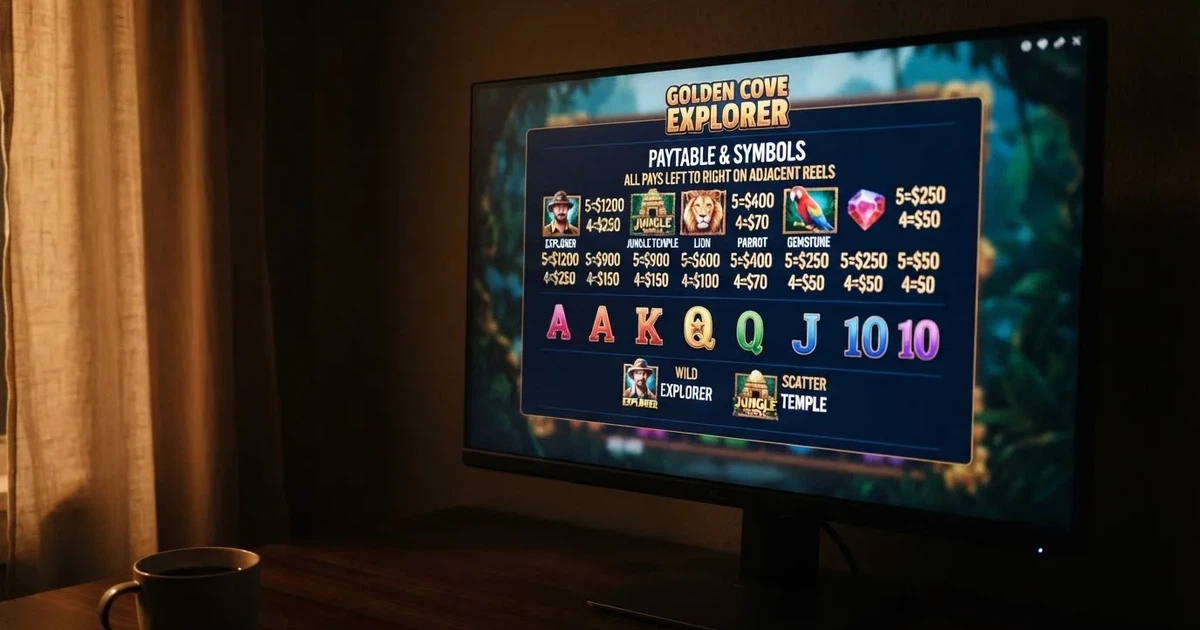
The first thing to settle is what the headline actually asks. “Pragmatic Play online casino” is a phrase that appears almost entirely on offshore sites that have no Australian licence and cannot lawfully take a bet from a person in Australia. Pragmatic Play itself is a real supplier — a Gibraltar-headquartered studio shipping slots and live-dealer tables through a single API, supplying brands such as Flutter, Entain, bet365 and LeoVegas. The catalogue is genuine. What is unlawful is the wrapper around it when the wrapper is an offshore casino aimed at Australian traffic. This page draws the line between those two things, lists the eleven brands the ACMA has acted against for offering exactly that product to Australians, and walks through the legal, financial and protective frame that an Australian punter sits inside whether the offshore site mentions any of it or not.
Table of Contents
- What “Pragmatic Play” actually covers
- How Australian gambling law treats the product
- The Northern Territory’s de facto regulator
- Landscape
- Reading the ACMA’s blocking record in numbers
- Where Pragmatic Play games actually reach an Australian player
- Bonuses, free spins and the inducement layer
- What an Australian punter actually has on the inside
- On tax, on winnings, and on what to keep
- When a casino review page and the ACMA’s record say opposite things
- On advertised payout speeds and what really happens
- What to do when a Pragmatic Play site is promoted to an Australian
- The 2026 reform pipeline
- Reading the eleven brands one at a time
- Practical consequences for the searcher
- What an Australian should do instead
- A note on what this page does not carry
- The line that holds
- Frequently asked questions
What “Pragmatic Play” actually covers
Pragmatic Play launched in 2015 and operates from Gibraltar under CEO Julian Jarvis. Its own corporate materials describe the business as a multi-product supplier: online slots, live casino titles, virtual sports, bingo and a gamification layer that runs across the lot through a single integration. The company says its games are certified in more than 30 jurisdictions and are available in 33 languages and all major currencies, with named operator customers including Flutter, Entain, bet365 and LeoVegas. Game certification is carried out by Gaming Laboratories International, Quinel and Gaming Associates, and the studio holds a UK Gambling Commission licence plus a Class II licence from Romania’s Oficiul Național pentru Jocuri de Noroc.

The catalogue was not built in one go. In June 2018 Pragmatic Play completed its acquisition of the live-casino supplier Extreme Live Gaming from the Novomatic Group; Extreme ran ten tables across roulette, blackjack and baccarat from London studios, and the takeover added live-dealer capability in a single step. The second acquisition was VSoftCo in January 2019, a virtual-sports supplier whose product broadened the studio’s sports-simulated offering. Both transactions are recorded on Pragmatic Play’s own corporate pages and in industry press. Together they make Pragmatic Play one of the larger non-network suppliers of casino content outside the major network aggregators.
Two other studios matter for this page because the ACMA’s published warnings name games on their catalogues. 1spin4win is a Curaçao-licensed slot provider founded in 2021 by a group with 15 years of iGaming experience; the company reports a portfolio of more than 190 slots, more than 1,000 operator partnerships and total bet sum growth of 46% in the first half of 2025 over the first half of 2024. Betsoft was founded in 2006 and describes a catalogue of more than 200 RNG games spanning slots, table games, video poker and specialty titles; its slot Good Girl Bad Girl 2 carries a published RTP of 96.22%, a “Very High” volatility rating, a 15.59% hit rate, and plays on five reels and twenty paylines. Betsoft’s own materials name certification by Quinel and Gaming Labs International and a stated footprint across regulated markets in Europe, Scandinavia, Latin America and Africa.
What none of that changes is where these studios can lawfully place their games for an Australian customer. They can supply licensed wagering and lottery products. They cannot lawfully supply an online casino product to a person in Australia, no matter what licence the wrapper holds offshore.
How Australian gambling law treats the product
The Interactive Gambling Act 2001, tightened by the Interactive Gambling Amendment Act 2017, makes it an offence to provide online casino games, online pokies or in-play betting to a person physically in Australia. No state or territory issues a licence for any of those products. What is licensable is wagering on races and sport placed before the event, lotteries and keno. The minimum age is 18.
The practical regulator is the ACMA — the Australian Communications and Media Authority. It investigates complaints, issues formal warnings, and can direct Australian internet service providers to block illegal sites. The individual player is not prosecuted: the Act targets the provider. But an offshore site gives no Australian consumer protection, no complaints body and no recourse if a withdrawal is refused. It can also be blocked mid-session, with a balance still sitting on it. H2 Gambling Capital’s 2025 report estimates that Australians lose about A$3.9 billion a year to illegal gambling sites, and that the share of gambling going through legal channels fell from 74% in 2021 to 64%.
A separate piece of architecture sits beside the law and changes the question for the punter. From 11 June 2024, credit cards, credit-related products and digital currency are banned as payment for any licensed online wagering in Australia; penalties for an operator that breaches that rule run up to A$247,500. Legal deposit routes for a licensed Australian wagering account are debit card, bank transfer, PayID/Osko and BPAY. An offshore casino that asks an Australian for a credit card or for a crypto deposit is, by definition, not operating inside the Australian rules — whatever licence it claims from Curaçao or elsewhere. That is the cleanest single test the ACMA’s enforcement record keeps producing.
A 2026 reform layer sits on top of all this. The Interactive Gambling Amendment (Gambling Reform) Bill 2026 passed Parliament on 19 August 2026; its advertising and inducement measures commence on 1 January 2027. That is law passed but not yet in force — a piece of statute with a start date that no page read in 2026 should describe as already operative.
The Northern Territory’s de facto regulator
The line between “online casino” and “online wagering” matters because Australia’s licensed bookmaking market is real, large and concentrated in one place. The Northern Territory Racing and Wagering Commission regulates 52 of Australia’s online bookmakers — including Sportsbet, bet365 and Ladbrokes — licensed in the Territory for tax reasons. An ABC report from 7 April 2026 described the commission as having no full-time staff and meeting once a month in Darwin; the same report covered draft legislation intended to reform that arrangement. The product these licences cover is wagering, not casino games, and the ACMA’s enforcement record does not name any of these brands.
The practical implication for this page is that a brand’s Australian-licence status is informative only inside its own category. A licensed Territory bookmaker is not licensed to take an online casino bet from an Australian, because the law does not let anyone be. A site that markets online pokies or live-dealer roulette to an Australian IP is, by definition, off-category for any licence an Australian regulator can issue.
Landscape
The table below is built directly from formal warnings published by the ACMA, with one row per brand. “Subject support” records whether research independently confirmed that the named games studio appears on that brand’s lobby — where it does, that is sourced from the studio’s own listings pages or from the studio’s operator pages; where it does not, the row carries the em-dash marker rather than a guess.
| Brand | ACMA action and date | Operator named by the ACMA | Subject support |
|---|---|---|---|
| RocketPlay | March 2026; earlier Dama N.V. in May 2022 | Pulsup Ltd | — |
| Level Up Casino | May 2022 | Dama N.V. | Wazdan listings |
| Woo Casino | March 2025 | Dama N.V. | — |
| Spirit Casino | May 2025 | Dama N.V. | — |
| National Casino | July 2025 | Consolutetish S.R.L. | Betsoft, Pragmatic Play listings |
| Bizzo Casino | July 2025; earlier TechSolutions in 2022 | Consolutetish S.R.L. | — |
| Ignition Casino | July 2025 | Bamboo Media | — |
| Instant Casino | February 2025 | EOD Code SRL | — |
| Jackbit | April 2026 | Ryker B.V. | — |
| Casino Intense | April 2025 | Sterplay Holding Ltd | 1spin4win, Aristocrat Leisure, UK Gambling Commission listings |
| Sky Crown | September 2022 | Hollycorn N.V. | — |
The picture the table paints is the picture the ACMA has built over five years. Dama N.V. recurs across four of the eleven entries, in 2022 and again in 2025 — a single operator that has been warned, kept going, and been warned again. Consolutetish S.R.L. holds two entries from a single July 2025 round. Two entries — RocketPlay and Jackbit — date from the current year. None of the eleven brands is licensed to offer online casino games in Australia; the ACMA warning line itself reads identically in every case because the product is identically prohibited. What differs is the operator behind the wrapper and the date the ACMA chose to name them.
Reading the ACMA’s blocking record in numbers
Alongside formal warnings the ACMA also asks Australian ISPs to block sites. According to the ACMA as reported in June 2026, a total of 1,751 illegal gambling and affiliate marketing websites had been blocked since the first blocking request in November 2019, and more than 230 unlicensed gambling services had left the Australian market since enforcement was strengthened in 2017. In a single round reported on 26 June 2026 the ACMA asked ISPs to block twelve more: 7Signs, ChromaBet, Donbet, Duospin, Freshbet, Slots Gem, Jacks Club, Lucky Start, Pointsbetz, Spinrise, Vinyl Casino and Wildsino.
The arithmetic on those figures is straightforward and worth doing.
| Metric | Value |
|---|---|
| Total blocked sites | 1,751 |
| First blocking request | November 2019 |
| Unlicensed services left | 230 |
From November 2019 to June 2026 is roughly 79 months. Spread evenly, the ACMA’s blocking requests have averaged somewhere in the order of twenty-two sites per month — about five per week — over that period. The 230 services that have left the market sit at a much slower cadence, closer to three per month across the same window. The asymmetry between the two numbers is the point: a site can be blocked in a week, and the ACMA can churn through many of them in a single quarter, but the operator behind the wrapper often reappears under a new name, sometimes on the same domain a fortnight later. The blocking rate measures enforcement activity; it does not measure how many Australians are still seeing these sites in their search results.
Where Pragmatic Play games actually reach an Australian player
The cleanest legal route is through land-based gaming. Aristocrat Leisure — Australia’s largest gambling-machine manufacturer and the world’s second-largest slot-machine manufacturer behind International Game Technology — develops electronic gaming machines and casino management systems; its North Ryde headquarters in Sydney sits alongside marketing and development offices in South Africa, Russia and the United States. Aristocrat Leisure reported 2025 revenue of A$6.30 billion, normalised net profit after tax and amortisation of A$1.55 billion, and 7,400 employees. The company has been listed on the Australian Securities Exchange since 1996 under the ticker ALL. Its catalogue of poker machines — pokies — is the product an Australian walks into a pub or a club to play, and those machines are regulated by state and territory authorities, not by the ACMA.
Online, Aristocrat’s regulated real-money-gambling business sits inside Aristocrat Interactive, formed in April 2024 by combining the Anaxi unit with the NeoGames group, which includes Aspire Global, BtoBet and Pariplay. Aristocrat’s other acquisitions tell the broader corporate story: Video Gaming Technologies in 2014 for about US$1.3 billion, Plarium in 2017 for US$500 million, Big Fish Games in 2017 for US$990 million, and the roughly US$1 billion acquisition of NeoGames in April 2024. A US$3.7 billion bid for Playtech was rejected by Playtech shareholders in 2021. The point for this page is not the corporate shape but the regulatory one: Aristocrat Interactive is structured to operate inside licensed wagering and lottery verticals, not inside the prohibited interactive casino vertical.
So the practical answer to “where can I play these games in Australia” splits three ways. A punter can play a pokie in a licensed pub, club or casino. A punter with a wagering account can place a bet with a licensed Australian bookmaker on a race or a sporting event. A punter who clicks through to an offshore site advertising Pragmatic Play slots is, by the ACMA’s published record, on a site the regulator has either warned, blocked, or both.
Bonuses, free spins and the inducement layer
The bonuses and free-spin promotions that follow the offshore casino brand around are an inducement, not a feature. Where the law allows them — on a licensed Australian wagering account — they are governed by the same 11 June 2024 credit-card ban and by the inducement rules in the Gambling Reform Bill commencing 1 January 2027. Where the law does not allow them — on an offshore casino aimed at Australians — they are an inducement to use a service the ACMA has already decided is unlawful.
The mechanics the offshore brands describe are familiar. A welcome package matches a first deposit with bonus funds or with free spins on a named slot. Wagering requirements turn those bonus funds into withdrawable cash only after a multiple of the bonus has been turned over. Maximum cashout caps limit what can ever come off a no-deposit offer. Game weighting makes slots contribute 100% to turnover while tables contribute less. None of that changes the legal status of the wrapper.
What this means in practice is that the bonus line on these sites is the part of the offer the ACMA cannot lawfully regulate. The ACMA can block the site, name the operator and refer the matter for civil penalty proceedings, but it cannot claw back a bonus the punter has already claimed. The punter’s protection against the worst terms is the same as their protection against the underlying offer: read what is signed up for, know what jurisdiction the wrapper sits in, and treat any claim that an Australian regulator will help recover funds as marketing fiction.
What an Australian punter actually has on the inside
A licensed Australian wagering account sits inside four protections an offshore site cannot replicate. The first is BetStop, the National Self-Exclusion Register, live since August 2023 and binding on every Australian-licensed online and phone wagering service. An offshore casino is not connected to it. The second is the deposit route: debit card, bank transfer, PayID/Osko and BPAY. The third is the complaints and dispute resolution route that flows from holding an Australian licence. The fourth is the consumer-protection framework the ACMA enforces against the operator, including the credit-card ban and the inducement rules.
The two protective services that sit outside the wagering licence still apply to anyone in Australia. The National Gambling Helpline on 1800 858 858 is free and operates 24 hours a day, with chat available through Gambling Help Online. Gambling Help Online also runs the self-exclusion and limit-setting tools that BetStop administers for the wagering category. Both services are run by qualified counsellors, and both are funded independently of any operator.
A site asking an Australian for a credit card or for a crypto deposit is, by definition, not operating inside the Australian rules. That is the cleanest single test the ACMA’s enforcement record keeps producing, and it is also the test most likely to be ignored in a search-result click.
On tax, on winnings, and on what to keep
Recreational gambling winnings in Australia are not assessable income, and losses are not deductible, unless the person carries on a business of gambling. That sits in section 6-5 of the ITAA 1997 and is the ATO’s standing position. The practical implication is that an Australian punter who plays a pokie in a pub, places a bet with a licensed bookmaker or — by mistake — opens an account with an offshore casino, has the same tax position on the result. The offshore site’s refusal to issue an Australian tax statement changes nothing about whether the result is taxable, because the result is not taxable to begin with.
What an offshore casino’s refusal does change is paperwork. A licensed Australian wagering account issues a transaction record that can be reconciled against bank statements. An offshore casino in Curaçao or in a similar jurisdiction issues whatever its terms page says it will, which in the worst case is nothing. That is part of the wider problem: every protective layer that follows from holding an Australian licence — the deposit route, the complaints body, the consumer-protection framework, the BetStop binding, the credit-card ban — sits behind a regulatory wall that the offshore brand does not sit behind, and the punter who chose the offshore brand sits outside the wall with them.
When a casino review page and the ACMA’s record say opposite things
The most common reason an Australian ends up on an offshore casino is a review page that ranks or rates the brand. The review pages cluster around the search results for phrases like “best Pragmatic Play casino Australia” because that is where the affiliate commissions sit. They do not, as a rule, name the ACMA warning over the brand. Some omit it because they were written before the warning was issued; some omit it because their commercial model does not reward them for doing so; some reproduce marketing claims verbatim without checking any of them. The reader who clicks through from such a page arrives at a brand the ACMA has already named, and the review page is the last chance the reader had to know.
A page that does name the ACMA warning does so because it is doing something other than ranking brands. It is describing what the regulator has done, in the regulator’s own words, with the dates the regulator attached. That is the kind of information a comparison can carry without taking a position on whether any of the eleven brands is “best” — because no ranking of eleven prohibited products is a ranking a reader should act on, and the framing that turns a prohibition into a top-ten is the framing that drops the reader onto the wrong side of the ACMA’s enforcement record.
On advertised payout speeds and what really happens
Offshore casino marketing claims settlement within hours, and the ACMA’s blocking record does not contradict that a withdrawal can be processed quickly. What it does contradict is the implied guarantee that the withdrawal will be processed at all. An offshore brand without an Australian licence has no Australian complaints body the punter can lodge with, no BetStop binding, no ATO-visible transaction trail, and no consumer-protection framework the ACMA enforces against it. A payout speed that is fast on a Tuesday is meaningless if a withdrawal is refused on the Wednesday, and the dispute path the offshore brand offers will run through the licence jurisdiction it chose for itself.
The asymmetry is the message. The offshore brand advertises the metric it controls — payout time — and is silent on the metric the punter cares about — recourse if the payout does not arrive. A licensed Australian wagering brand sits the other way around, with the dispute path enforced by the regulator and the payout time subject to whatever bank-transfer and PayID/Osko routing produces on the day. The licensed product is not perfect; the offshore product is unregulated on the dimension that matters when something goes wrong.
What to do when a Pragmatic Play site is promoted to an Australian
The ACMA’s own process is the first stop. The authority accepts reports from members of the public about illegal online gambling through its website, and the same form can be used to flag an inducement advertisement or a piece of marketing material. Reports feed into the formal-warning process the ACMA publishes on its register, and they also feed into the blocking requests the ACMA directs to ISPs.
The second stop is the betting account the punter already has. Most licensed Australian bookmakers offer deposit limits, time-out tools and self-exclusion as standard, and BetStop binds the same limits across every licensed brand. An offshore brand has none of these by default, and where it offers them at all they sit inside the brand’s own terms page rather than inside an externally enforced register.
The third stop is the financial layer. Closing a deposit route to an offshore casino means closing the credit card the brand asked for, closing the crypto wallet that funded it, and keeping a record of the transactions in case a chargeback becomes the only practical recourse. A licensed Australian wagering account keeps the same deposits inside the PayID/Osko, BPAY and debit-card channels, with the bank’s own dispute process available in the ordinary way.
The 2026 reform pipeline
The Interactive Gambling Amendment (Gambling Reform) Bill 2026 passed Parliament on 19 August 2026. Its advertising and inducement measures commence on 1 January 2027. That is the next meaningful shift in the legal frame: inducements become a regulated object, the rules around advertising tighten, and the gap between what an offshore brand can lawfully offer an Australian punter narrows further. It is also the boundary on what this page can usefully say: anything inside that start date is law with a date attached, not law in force today, and any framing that treats the reform as already operative is a piece of false advertising on a reader.
The Bill does not change the underlying prohibition on online casino games, which the IGA has carried since 2001 and the 2017 amendment sharpened. It changes the inducement surface around that prohibition, which is the part the offshore brands have leaned on hardest. The ACMA’s enforcement record since 2017 is what the reform is built on top of.
Reading the eleven brands one at a time
Each of the eleven brands below is named because the ACMA has itself issued a formal warning over it. The write-ups are built on the ACMA’s published record, on the operator the regulator named, and on the date the regulator attached. No bonus terms are reproduced — the only sources for them were affiliate marketing pages, and an inducement term sourced from an affiliate is exactly the kind of term that should not appear on this page.
RocketPlay
Pulsup Ltd was named in a formal warning issued by the ACMA in March 2026. The same brand had already drawn a Dama N.V. warning in May 2022, which makes RocketPlay the brand with the longest unbroken ACMA trail in this set. The product on offer is an online casino; the product is prohibited for an Australian customer. The verdict here is not “RocketPlay is poor value” — the ACMA warning is a stronger statement than that, and the brand has had five years to address the underlying issue.
Level Up Casino
Dama N.V. was named in the May 2022 warning that covers Level Up Casino along with five other brands. Dama N.V. recurs across four of the eleven entries on this page — the longest single operator footprint in the ACMA’s enforcement record. Independent studio listings mention Wazdan content on Level Up’s lobby, but the ACMA’s warning is over the prohibited wrapper, not over the studio. The brand sits where the others sit, and the warning line is the line that matters.
Woo Casino
The ACMA issued a formal warning to Dama N.V. over Woo Casino in March 2025 — a fresh warning three years after the original Dama N.V. action. The pattern is the same one the 2022 round produced: the operator continues, the regulator names it again, and the product the brand offers remains prohibited. Woo Casino has not been independently confirmed as carrying any specific Pragmatic Play title on its lobby.
Spirit Casino
Dama N.V. drew another warning in May 2025, this time over Spirit Casino. The brand sits inside the same operator footprint as Woo Casino, RocketPlay, Level Up Casino and three other Dama N.V. brands the ACMA has named in this set. The product category is the prohibited one, and the warning date sits inside the current enforcement period rather than at the start of it.
National Casino
Consolutetish S.R.L. was named in a formal warning issued in July 2025, covering National Casino along with Bizzo Casino. Studio listings on the studio operators’ own pages mention both Betsoft and Pragmatic Play content on National Casino’s lobby, which is the strongest “subject support” line on this page: a regulator-named brand that the studios themselves confirm as a customer. That does not change the legal position; it sharpens the description of what the ACMA’s warning covers.
Bizzo Casino
Consolutetish S.R.L.’s July 2025 warning covers Bizzo Casino too, alongside National Casino. Bizzo had already been the subject of a 2022 formal warning to TechSolutions (CY) Group Limited and TechSolutions Group N.V. Two warnings, two operators, one brand. The trajectory mirrors RocketPlay’s: the brand continues, the operator changes, the regulator names it again. The product category is unchanged.
Ignition Casino
Bamboo Media was named in the ACMA’s July 2025 warning over Ignition Casino. The brand’s name is the same one a reader will sometimes see attached to a US-facing poker site; the ACMA’s record is over the brand as it appears in front of Australian traffic. The product is prohibited, and the warning is current.
Instant Casino
EOD Code SRL was named in the ACMA’s February 2025 formal warning over Instant Casino. The brand markets an online casino product to a global audience, and the ACMA’s enforcement record treats it as offshore-with-respect-to-Australia. The product category is unchanged; the warning sits inside the current enforcement period.
Jackbit
Ryker B.V. was named in an ACMA formal warning in April 2026. Jackbit’s product pitch includes a crypto-first deposit route, which is itself a marker of an offshore casino: an Australian-licensed wagering account cannot accept crypto under the 11 June 2024 credit-card and digital-currency ban. The combination of the warning date and the deposit route is the most current enforcement line on this page.
Casino Intense
Sterplay Holding Ltd was named in an ACMA formal warning issued in April 2025. Independent listings pages mention 1spin4win content on the brand’s lobby, alongside references to Aristocrat Leisure material and to UK Gambling Commission-licensed operations elsewhere in the corporate group. The “subject support” line here is the broadest on the page in terms of named studios, but the ACMA’s warning is over the casino wrapper offered to Australians, not over the studios’ licences.
Sky Crown
Hollycorn N.V. was the subject of an ACMA formal warning published as a PDF in September 2022, covering Sky Crown and Blue Leo. The warning is the earliest in the current set, and the regulator’s standing position on the brand has not changed since. Hollycorn N.V. does not appear elsewhere on the ACMA’s published list in this round of warnings, but the September 2022 line still applies.
Practical consequences for the searcher
Three consequences follow from the record above and they sit in a particular order. The first is that any brand on the ACMA’s list is offering a prohibited product to an Australian customer. That is a fixed property of the brand, not a moving one, and it does not change when a new welcome bonus appears in search results. The second is that the legal protections a licensed Australian wagering account carries — BetStop, the deposit-route rules, the complaints body, the inducement framework coming into force on 1 January 2027 — do not extend to the offshore brand. The third is that the licensed product an Australian actually has access to is wagering on races and sport, lotteries and keno, and the land-based pokie in a licensed venue. That is the full set.
A reader who came to this page looking for a “best of” list will not find one. The eleven brands on the ACMA’s list are not differentiated by quality; they are differentiated by date and by operator, and the differentiation a comparison can carry is the differentiation the regulator has already published. A reader looking for a game catalogue will find Pragmatic Play’s catalogue described in the studio’s own materials and in the studios’ certifications, and the same catalogue appears in licensed wagering and lottery verticals inside Australia rather than in the prohibited casino vertical.
The arithmetic on the ACMA’s blocking rate, the eleven warnings on the public list, and the 230 services that have left the market together point to the same conclusion: enforcement has been sustained, the products named are the same products named again under different operators, and the offshore brand’s pitch is built on the gap between the regulator’s reach and the search engine’s results. The reader who closes that gap on their own end has done the work the comparison cannot.
What an Australian should do instead
The legal alternatives are not in short supply. A licensed Australian bookmaker takes a bet on a race or a sporting event before it starts, under a Northern Territory licence for most of the larger brands, with PayID/Osko, BPAY or debit-card deposits, with the credit-card ban enforced since 11 June 2024, with the inducement rules coming into force on 1 January 2027, and with a BetStop registration available across the whole licensed set. A state or territory gaming authority regulates the pokie in a pub, club or casino, with consumer protection enforced through the state-level complaints mechanism rather than through the ACMA. Lotteries and keno sit inside their own state and territory frameworks.
The protective services that sit outside the licence still apply to anyone. BetStop binds self-exclusion across every licensed Australian wagering service. The National Gambling Helpline on 1800 858 858 is free and 24/7, with chat at Gambling Help Online. Both services are independent of the operator and are the right place to start when the line between recreational play and something else has moved.
A reader who clicked through to an offshore casino before reading this page can close the account, close the deposit route, and ask the bank or the crypto exchange about a chargeback where the transactions are recent enough to support one. The ACMA’s report form is the right place to flag the brand for the regulator’s next round of warnings. None of that recovers a lost stake, and none of it changes the legal position the brand was operating under; what it does is move the next reader one step further from the same search result.
A note on what this page does not carry
This page carries no bonus codes, no promo codes, no voucher codes and no “claim here” links. The affiliate sources for such terms are the same marketing pages that omit the ACMA warning, and reproducing their inducement language on a page that names the warning is exactly the gap the ACMA’s enforcement record is built to close. The inducement rules in the Gambling Reform Bill that commence on 1 January 2027 will, when in force, give the regulator a direct line to that language; in the meantime, omitting it is the only honest position this page can take.
The page also carries no ranking of the eleven brands against each other. The brands differ by operator and by date; they do not differ on the underlying legal status, and a ranking of identical statuses is not information a reader can use. Where the brands differ in named studio support — National Casino and Casino Intense carry listings-confirmed content, the rest do not — that difference is captured in the table above and in the individual write-ups. It is not the basis for a recommendation.
The line that holds
The IGA’s prohibition is a fixed line, drawn in 2001, sharpened in 2017, and unchanged by the 2026 reform Bill. The ACMA’s enforcement record is the regulator’s own line on what crosses it. The eleven brands on the published warning list are the brands the regulator has named for crossing it. The licensed wagering and lottery verticals are the verticals the law permits, with their own protections and their own limits. The inducement layer around the offshore casino is the layer the next round of reform is built to close. None of that is news, and none of it is a “best of” — it is the legal shape of online gambling in Australia, and it is the shape every search result for “best Pragmatic Play online casino Australia” sits inside whether the result says so or not.
Frequently asked questions
Is Pragmatic Play legally available to players in Australia?
Pragmatic Play is a licensed supplier, but the casino product it ships is not lawfully offered to a person in Australia. The Interactive Gambling Act 2001 prohibits online casino games and online pokies for Australian customers, and the ACMA’s enforcement record names the offshore brands that have tried to offer them. A licensed Australian wagering account can carry Pragmatic Play content inside the wagering vertical, but not inside the casino vertical.
What kinds of games does Pragmatic Play make?
Pragmatic Play’s catalogue covers online slots, live casino titles, virtual sports, bingo and a gamification layer that runs across all of them through a single API. The live-casino side came from the June 2018 acquisition of Extreme Live Gaming, and the virtual-sports side came from the January 2019 acquisition of VSoftCo. The studio says its games are certified in more than 30 jurisdictions and are available in 33 languages and all major currencies.
Are Pragmatic Play games offered at land-based venues in Australia?
Pragmatic Play’s own catalogue is online-only. Land-based gaming in Australia is dominated by Aristocrat Leisure, which develops electronic gaming machines and casino management systems from its North Ryde headquarters and reported 2025 revenue of A$6.30 billion. A punter in a pub, club or casino is playing an Aristocrat machine, not a Pragmatic Play one, and the regulatory framework is the relevant state or territory authority rather than the ACMA.
How can Australians check whether a Pragmatic Play title is fair before ever considering play?
The studio’s certifications come from Gaming Laboratories International, Quinel and Gaming Associates, and the studio holds a UK Gambling Commission licence and a Class II licence from Romania’s Oficiul Național pentru Jocuri de Noroc. That covers the studio’s own products. It does not cover the casino wrapper the studio’s games are sold into for an Australian customer, and an Australian cannot lawfully place a casino bet on a certified game through an offshore brand without the brand itself sitting inside the Australian rules.
Why do offshore sites keep advertising Pragmatic Play games to Australian visitors?
The offshore casino market earns its revenue by reaching search-engine traffic in jurisdictions where the product is prohibited, and Pragmatic Play is one of the larger non-network catalogues available to those brands. The ACMA’s enforcement record shows that the same operators reappear under fresh brand names after warnings — Dama N.V. alone covers four of the eleven entries on this page. The inducement layer around the marketing is the layer the 2026 reform Bill’s advertising measures, commencing 1 January 2027, are built to address.
What should an Australian do if they see a Pragmatic Play game promoted by an unlicensed site?
The ACMA accepts reports from members of the public about illegal online gambling through its website, and the same form covers inducement advertisements. Closing the deposit route — credit card, crypto wallet, or any other channel the site asked for — is the next step, with a chargeback request to the bank or the exchange where the transactions are recent enough. BetStop is the right tool for self-exclusion across the licensed Australian wagering set, and the National Gambling Helpline on 1800 858 858 is free, 24/7 and confidential.