
Best new online casino sites in Australia 2026: what the ACMA record shows and where an Australian player actually stands
Data current as of 29 October 2026, checked against the Australian Communications and Media Authority register of formal warnings and blocking requests.

The phrase “new online casino” travels around the internet as if it described a category the reader could shop. It does not, in Australia. Every brand in the comparison below has been formally warned by the ACMA for offering prohibited online casino games to Australians, and the product itself — online casino games, online pokies, in-play betting — is the one category the Interactive Gambling Act 2001 names as an offence. What follows is the picture behind the marketing: the legal frame, what offshore sites can and cannot do with a bank account, and where an Australian reader who wants the experience lawfully can actually find it.
Table of Contents
- The eleven brands that surface for an Australian reader, side by side
- What “new” actually means in this market
- The legal frame an Australian reader has to operate inside
- Protecting a player who wants to play
- Crypto, Bitcoin and what anonymity actually buys
- How money moves at a site that will not be on a regulator’s list
- Welcome bonuses and what they actually cost
- Mobile casino apps and what is actually verifiable
- Slots, table games and live dealer content
- What an Australian reader is actually choosing between
- The blocking pace: how fast the ACMA is moving
- The eleven brands, in the order the ACMA’s record presents them
- What the reader should hold after reading this
- Frequently asked questions
The eleven brands that surface for an Australian reader, side by side
Eleven names come up repeatedly when an Australian types “new online casino” into a search box. None of them is a recommendation and none of them is a ranking. Each is on this page because the ACMA itself has issued a formal warning over it for offering prohibited interactive gambling services to people in Australia. The table lays them out as the regulator’s record lays them out: brand, action, the operating company the regulator named, and what kind of record exists for it beyond the warning.

| Brand | ACMA action | Operator named by the ACMA | Subject support |
|---|---|---|---|
| RocketPlay | Formal warning, March 2026; earlier warning under a different operator, May 2022 | Pulsup Ltd (Rocketplay.com.au); earlier Dama N.V. | Listed by industry trackers |
| Level Up Casino | Formal warning, May 2022 | Dama N.V. | Listed by industry trackers |
| Woo Casino | Formal warning, March 2025 | Dama N.V. | No record beyond the warning |
| Spirit Casino | Formal warning, May 2025 | Dama N.V. | No record beyond the warning |
| National Casino | Formal warning, July 2025 | Consolutetish S.R.L. | Listed by the ACMA register and BetStop |
| Bizzo Casino | Formal warning, July 2025; earlier warning, 2022 | Consolutetish S.R.L.; earlier TechSolutions | Listed by industry trackers |
| Ignition Casino | Formal warning, July 2025 | Bamboo Media | No record beyond the warning |
| Instant Casino | Formal warning, February 2025 | EOD Code SRL | Listed in payment-method directories |
| Jackbit | Formal warning, April 2026 | Ryker B.V. | No record beyond the warning |
| Casino Intense | Formal warning, April 2025 | Sterplay Holding Ltd | Listed by AUSTRAC and BetStop |
| Sky Crown | Formal warning, September 2022 | Hollycorn N.V. | No record beyond the warning |
Read across rather than down. The first column tells the reader what was warned; the second tells who the regulator says was operating it; the third tells what else is publicly attached to that name. A “no record beyond the warning” cell means exactly that: nothing else in the public material the regulator, the self-exclusion register and the transaction-reporting authority have on file under that brand name. A “listed by” cell is not a positive endorsement — it is the other public footprints a reader can check.
Three observations frame the rest of the page.
First, the operating companies cluster. Hollycorn N.V., Dama N.V. and Consolutetish S.R.L. each appear more than once in the regulator’s record. The pattern is not that these companies are unusually reckless; it is that a small number of Curaçao-registered vehicles run a long tail of brands that look different on the surface. A reader who recognises one name on a list has met a brand from the same operating group rather than a stranger.
Second, the warnings are recent. Six of the eleven warnings sit in the 2025 and 2026 window. The regulator’s pace has not slowed. Some of these brands are the “new” casinos the searcher is looking for in the strict sense — recent launches — and the regulator has already caught up to them.
Third, no brand carries an Australian licence. The Interactive Gambling Act 2001 prohibits the offer; no state or territory issues one. Whatever licence a brand’s footer displays, it is not from a regime that protects an Australian player.
What “new” actually means in this market
The marketing word “new” does a lot of work in this corner of the internet. A site that opened last week calls itself new; a site that has been re-skinned under a new domain calls itself new; a brand that has cycled through two operating companies calls itself new. The reader looking for what the word actually means needs a different definition.
How a fresh launch looks from the outside
A genuinely new casino site is one with a domain registered recently, a brand name that has not surfaced in earlier ACMA warnings, and an operating company that is either unknown to the regulator or, more often, is one already on the record under a different label. The odds are skewed: the supply pipeline that reaches an Australian searcher is fed by a small set of licensees in Curaçao, the small Caribbean states and a handful of other offshore jurisdictions, and they refresh the brand shelf quickly because the regulator’s enforcement record makes yesterday’s brand harder to promote tomorrow.
A site is not new in any meaningful sense if its operating company has already been warned under a different label, if the payment rails are unchanged from a brand the regulator has acted against, or if the only novelty is a domain. The Dama N.V. cluster shows the pattern plainly: Woo Casino (March 2025), Spirit Casino (May 2025), Rocketplay (under Pulsup Ltd in March 2026, under Dama N.V. in May 2022), and a 2022 warning that covered six brands at once.
How to read the ACMA’s date stamps
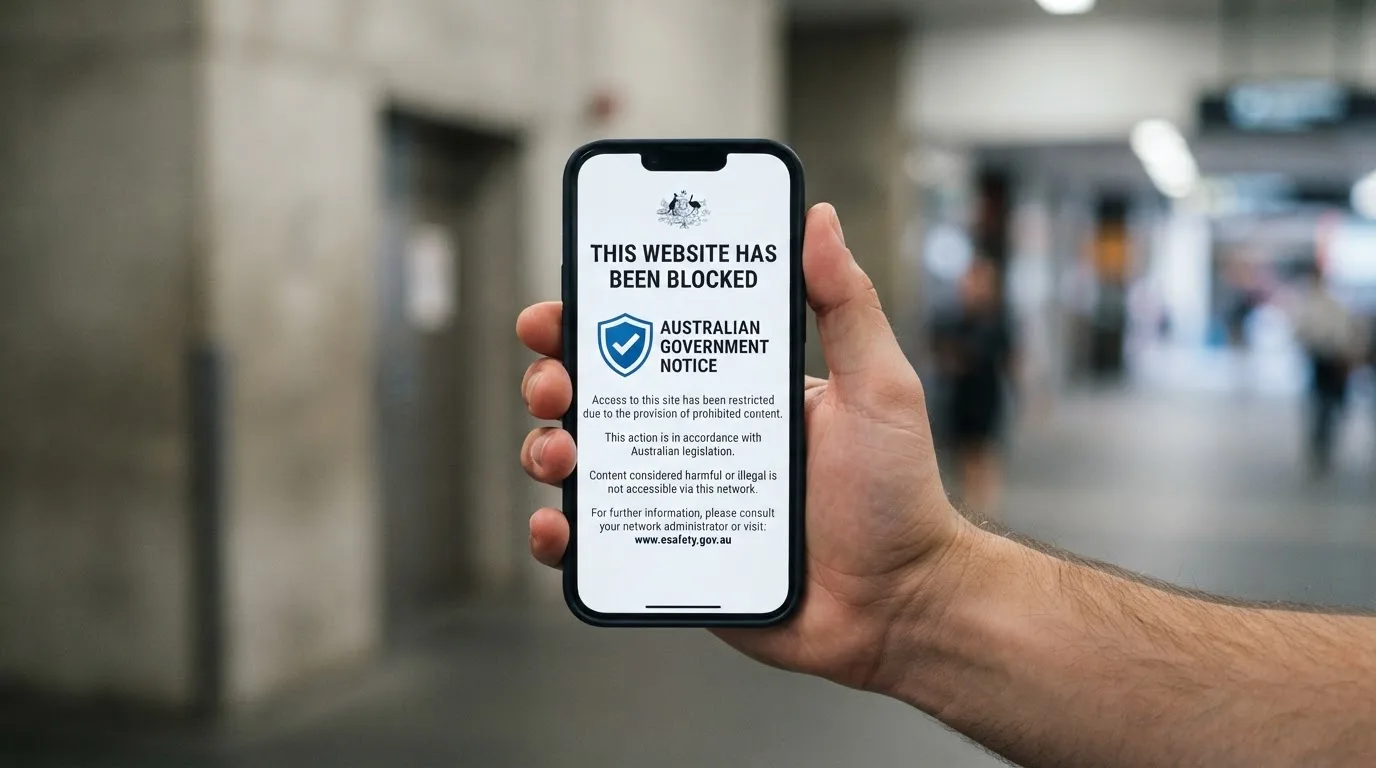
A formal warning is a written notice that a named operator is offering prohibited services to Australians. It is not a fine, not a prosecution and not a takedown. The site stays online for a while, often until the ACMA escalates to a blocking request that the major ISPs act on. Once blocked, the brand usually resurfaces at a new domain within weeks, sometimes under the same operating company. The cycle is part of the picture and the reader should know it: a brand that “launched” yesterday may simply be the same operator under a new wrapper.
The legal frame an Australian reader has to operate inside
The Interactive Gambling Act 2001 makes it an offence to provide certain interactive gambling services to a person physically in Australia. The 2017 amendments tightened the law and brought online casino games and online pokies squarely inside the prohibition. Lotteries, keno and wagering on sport and racing placed before the event remain licensable; in-play online betting does not. Minimum age for any licensed gambling activity is 18.
Who is licensable and who is not
In practice the bulk of Australia’s licensed online bookmakers — Sportsbet, Bet365, Ladbrokes among them — are licensed by the Northern Territory Racing and Wagering Commission, a body with no full-time staff that meets once a month in Darwin and supervises fifty-two operators. The Northern Territory licence covers wagering. No state or territory issues a licence for online casino games. A footer showing a Curaçao licence or an Anjouan licence covers the operator’s home regulator; it does not extend to the player in Australia.
Who enforces and how
The ACMA is the regulator for the prohibition. Its toolkit runs from formal warnings, which it publishes online with the operator’s name and the brand, through to written directions to Australian internet service providers to block offending sites at the DNS level. The individual player is not prosecuted; the IGA targets the provider. The consequence for the player is a different one: an offshore site gives no Australian consumer protection, no complaints body, no recourse if a withdrawal is refused, and the site can be blocked while a balance is still on it. The state of the protection is the reason the prohibition matters as a practical matter, not just a legal one.
The 2026 reform that begins in 2026
The Interactive Gambling Amendment (Gambling Reform) Bill 2026 passed Parliament on 19 August 2026. Its advertising and inducement measures commence on 1 January 2027. This is law with a start date, not law in force on a 2026 page. The reader should know it is on the runway, not on the road.
Protecting a player who wants to play
The Australian system has protections; what it does not have is a way to bolt them onto an offshore casino. The two routes below are the routes that actually work.
BetStop and the limits of what it binds
BetStop, the National Self-Exclusion Register, has been live since August 2023. A person who registers is excluded from every Australian-licensed online and phone wagering service for a period of their choosing. What it does not do is reach offshore casino sites. The exclusion works only on operators connected to the register; an offshore brand is not connected. A player who has registered with BetStop and then signs up at an offshore casino is signing up unprotected; the casino is not bound by the exclusion. For a player whose self-exclusion is the whole point, the lawful routes are the only routes that hold.
The block tools Australian banks offer
The four major Australian banks now offer card-level gambling blocks. Commonwealth Bank applies a gambling lock to eligible cards through the CommBank app; Westpac’s block works at the merchant-category-code level on personal credit and debit cards; ANZ’s block extends to transactions made through a digital wallet such as Apple Pay on an eligible card, and removing it again requires a 48-hour waiting period. Each bank’s own page carries the caveat that not all gambling transactions will be blocked and some non-gambling transactions may be blocked in error. These tools exist because the banks and the regulator agreed they were needed; they cover the lawful end of the market and as much of the unlawful end as the merchant code and the card issuer’s cooperation can catch.
Where to get help
The National Gambling Helpline is 1800 858 858 — free, twenty-four hours a day. Gambling Help Online provides web chat. For someone whose gambling is moving from a choice into a problem, these are the first calls and the first clicks. They predate every brand on the list above and outlast every one of them.
Crypto, Bitcoin and what anonymity actually buys
The marketing pitch for a “new bitcoin casino” is that the player moves money without a bank in the middle. The pitch has two halves and the reader should hold them apart.
What the crypto path changes for the player
A crypto deposit reaches the casino without going through the player’s bank, so the bank’s gambling block does not see the transaction. The casino’s wallet is the only party that does. That is the privacy claim. What it does not change is the legal status of the casino itself. The Interactive Gambling Act 2001 prohibits the offer, not the payment rail. A crypto deposit to an offshore casino is still a deposit at an unlicensed site; the IGA’s prohibitions do not turn on the currency.
What the crypto path costs the player
A crypto transfer is final once the network confirms it. A bank-to-bank transfer has a chargeback path; a stablecoin transfer does not. A player who has a dispute over a withdrawal at a crypto-only casino has no bank to call and no chargeback to file. The same is true of any offshore casino, but crypto removes the friction that might have prompted a player to stop and ask their bank first.
What the Australian rules actually say
Since 11 June 2024, Australian-licensed online wagering services cannot accept payment by credit card, by credit-related products or by digital currency. The prohibition reaches the lawful side of the market. An offshore casino asking for Bitcoin, Ethereum or USDT is not breaking this rule because it is not subject to it; it is signalling that it is not a licensed Australian wagering service. A reader who wanted a crypto deposit is on an offshore site by definition.
How money moves at a site that will not be on a regulator’s list
The mechanics of paying in and getting paid out are where an Australian reader notices the difference between a licensed wagering service and an offshore casino most concretely. The rails are different, the protections are different, and the failure modes are different.
The lawful rails an Australian player can use
PayID links a bank account to a phone number, email or ABN, and the account holder’s name shows before the transfer is sent. AP+, which runs PayID, warns that being asked to transfer to a PayID on an illegal gambling site is almost certainly a scam site — the rail is legitimate, the destination rarely is. Osko, on the same New Payments Platform, settles bank-to-bank in under a minute, twenty-four hours a day, weekends included. BPAY has been in online banking since 1997 and is available through more than 140 Australian institutions. The legal deposit routes for licensed wagering are debit card, bank transfer, PayID/Osko and BPAY. None of these rails is exotic and none of them is the rail an offshore casino will ask for.
What offshore casinos tend to ask for instead
Offshore sites usually take Visa and Mastercard debit (not credit, because credit is banned in the licensed market and the offshore operator’s processor routes around it), a small set of e-wallets, and crypto. American Express is a separate network — Visa and Mastercard are four-party schemes, Amex issues and processes itself — and the Reserve Bank of Australia’s July 2025 review proposes removing surcharges only on eftpos, Mastercard and Visa, leaving Amex outside the proposed ban. Withdrawal times vary from “instant” to “five business days” depending on the brand and the rail, but every withdrawal is one the player cannot appeal to an Australian complaints body if it stalls.
What the player’s own bank does with the transaction
Westpac’s block refuses authorisation of transactions registered under the merchant code ‘Betting/Casino Gambling’ on eligible personal credit and debit cards. ANZ’s block covers Apple Pay on an eligible card too, not only the physical card, and once on it takes 48 hours to remove. Commonwealth Bank’s gambling lock sits inside the CommBank app. These are blunt instruments by design: they cannot tell a Crown Melbourne sports bet from an offshore slot. By the end of 2025, Apple Pay, Google Pay and Samsung Pay accounted for around 45% of card payments in Australia by number, so the wallet path matters: a card-level block has to be wallet-aware to work. The banks know it; the pages linked above say so.
What AUSTRAC’s reporting threshold does and does not cover
AUSTRAC’s threshold-transaction-report rule applies to physical cash transfers of A$10,000 or more. Ordinary electronic bank transfers do not trip a per-transaction report regardless of amount. This is a useful fact for a reader who has heard something different and a useless one for the question of whether a casino is licensed: the threshold report is a financial-intelligence rule, not a gambling rule.
Welcome bonuses and what they actually cost
A “new casino welcome bonus” is the marketing phrase that does the heaviest lifting on the comparison sites. The reader who has never claimed one is being asked to read past it; the reader who has is being asked to read more carefully than last time. The arithmetic below is what a bonus really does, drawn from how the same shape of offer has worked across this market for years.
The shape of a “no deposit” or welcome offer
A new casino’s welcome package is usually built out of three pieces: a deposit match that doubles or matches a percentage of the first deposit, a tranche of free spins on a named slot, and sometimes a “no deposit” tier that credits a small bonus just for signing up. Behind each piece sits a wagering requirement — a multiple, often 35× to 50×, that says how many times the bonus amount must be turned over before any winnings can be withdrawn. Free-spin winnings are usually credited as bonus money, not cash, and the wagering requirement applies to them too.
The arithmetic the marketing does not show
The wagering multiple is what the offer really costs. A A$500 bonus with a 40× wagering requirement asks the player to turn over A$20,000 before a withdrawal unlocks. The expected loss from turning over A$20,000 on a typical slot at a 96% return-to-player is A$800 — that is the cost of clearing the bonus in expected-value terms, before counting the time it takes. A player spinning once every five seconds on a A$1 stake works through 12,000 spins an hour, which is 100 hours of continuous play to clear a single A$20,000 turnover at that pace. Two hundred hours for a A$40,000 turnover. The bonus is not the gift; the wagering requirement is the price, and the expected loss is the floor.
Why the calculation matters more than the headline
A 100% match up to A$500 with “only” 40× wagering is the kind of phrase that lives in the affiliate review. The same offer, written honestly, is: “We will give you up to A$500 of bonus money if you deposit A$500, on the condition that you wager A$20,000 in our games before you can withdraw anything you win along the way.” The expected cost of clearing that bonus is about A$800 in house edge. The reader who reads only the headline pays that cost without knowing it.
Free spins and the cap that follows them
Free-spin offers usually carry a maximum-cashout cap, often a small one — A$100, A$200 — that limits what can be withdrawn from winnings earned on the spin tranche. The cap is the second clause of the offer and the one most often missed. A 200 free-spins package on a named slot can return more than the cap in a lucky session and pay out the cap regardless. The arithmetic the reader should hold in mind: the headline value of the spins, the cap on the withdrawal, the wagering requirement attached to whatever the spins return.
The clause that voids the bonus
Most welcome bonuses carry a “max bet while wagering” clause — a cap, often A$5, on how much can be wagered on a single spin while the bonus is being cleared. A spin above the cap, sometimes even one, voids the bonus and the winnings attached to it. The clause is buried in the terms; the consequence is not. A reader who does not know it can clear 39× of a 40× requirement and lose the whole balance to a single oversized spin. Read the terms before the bonus is claimed; the cost of not doing so is the bonus itself.
Mobile casino apps and what is actually verifiable
A “new mobile casino” pitch is built around an app icon on the home screen. Two facts make the pitch more cautious than it looks.
Where the app actually lives
The Apple App Store and the Google Play Store both restrict real-money gambling apps to operators licensed in the user’s jurisdiction. A casino that targets Australians is not in either store under its real-money product. What a reader sees in the store is usually a free-play or social casino wrapper, not the real-money product the affiliate review links to. The real-money product is reached through a mobile browser and a web app, often with a one-click shortcut the site encourages the reader to add to the home screen. The home-screen icon looks like an app and behaves like an app; it is a webpage.
How to check the underlying site
A reader who wants to verify the underlying site can do three things in five minutes. First, check the ACMA register of formal warnings and the register of blocked sites for the brand name. Second, check BetStop for any record of the brand, which is a positive signal only — BetStop binds Australian-licensed operators, so its absence on a brand’s record does not mean the brand is licensed. Third, check AUSTRAC’s enrolment records for the operating company; AUSTRAC enrolment is also a positive signal, since enrolment is what an Australian reporting entity needs. Three checks; five minutes; the answer to “is this app what the marketing says it is” is usually one of three things: warned by the ACMA, not on any Australian record, or enrolled with AUSTRAC for a different product.
The wallet-side of a mobile session
The same wallet restrictions apply on mobile as on desktop. Apple Pay’s transaction limits and PIN requirements are set by the card issuer or merchant, not by Apple itself; Apple does not surcharge consumers. The bank-level gambling block applies. ANZ’s block reaches Apple Pay on an eligible card. The wallet is not the loophole and the mobile form factor is not the loophole; the only thing the mobile form factor changes is where the player sits when the bank declines the transaction.
Slots, table games and live dealer content
A “new casino slots” pitch leans on the catalogue. The shape of the catalogue is the same across most offshore brands in this market: a long list of slot titles from a handful of providers, a smaller live-dealer lobby, and a thinner table-games section.
Slot mechanics worth holding onto
A slot’s return-to-player is the long-run share of wagers the game returns to players. A 96% RTP means the house keeps 4% on average across millions of spins. Volatility is the spread of outcomes around that average: a high-volatility slot returns less often and in larger amounts; a low-volatility slot returns more often and in smaller amounts. Neither figure predicts a single session. Both are descriptive of the game, not prescriptive of what will happen to the player in front of it.
What “new” slots actually are
Most “new” slots at an offshore casino are new releases from a handful of studios — Pragmatic Play, NetEnt, Play’n GO and a few others — that supply the bulk of the long tail. The novelty is the release date of the title, not the architecture of the game underneath it. A player who has played one Pragmatic Play slot has played most of them in feel if not in theme.
Live dealer and the trust it does not buy
Live dealer games stream a real dealer from a studio. They look more legitimate than a slot because a person is on the other end of the camera. The trust the visual buys is not the trust that matters: the licence on the wall of the studio is the same offshore licence the rest of the site carries. The game runs on the operator’s terms, and a dispute over a hand is a dispute with the operator, not with the dealer.
Table games and the rule of the house
Roulette, blackjack and baccarat at an offshore casino carry the same house edge they would in a regulated venue, plus the operator’s own terms on minimums, maximums and side bets. The difference between a licensed Australian venue and an offshore casino on these games is not the math; it is the recourse. At a licensed venue, the regulator’s door is open. At an offshore casino, it is not.
What an Australian reader is actually choosing between
The reader who arrived at this page is choosing. Three paths are open, and the right one depends on what the reader wants.
Path one: licensed Australian wagering
Sports and racing betting with an Australian-licensed operator is the legal path. The rails are familiar — PayID, BPAY, debit card. The blocks at the bank are real. The protection at the regulator is real. The product is not casino games and never will be under the IGA. This is the path for a reader who wants to bet on the Melbourne Cup, the AFL or the Ashes and is comfortable that the catalogue stops there.
Path two: a licensed pokies venue or a land-based casino
Pokies at a licensed Australian venue, a casino floor at Crown Melbourne, the Star Sydney, the Star Gold Coast, or a state-owned casino in the smaller jurisdictions — these are the lawful ways to play the games the offshore sites offer. The cash-handling is in person. The protection is the venue’s own licence and the state gaming authority behind it. This is the path for a reader who wants the games and wants them in a setting that is Australian, licensed and accountable.
Path three: the offshore casino
The offshore casino is the path the reader probably arrived looking for. It is the path that is prohibited under the IGA, the path the ACMA is actively warning and blocking operators along, and the path that carries no Australian consumer protection. A reader who takes this path is taking it knowing that the regulator’s door is closed, the bank’s block is one switch flip away, and the balance on the account is one blocking request away from being unreachable.
The angle of this page is that the choice is the reader’s. The honest framing is that two of the three paths are open and the third is not, and that the third is the one the marketing is built to direct the reader toward. Where a reader lands depends on what the reader values: the experience of the games, the protection of the regulator, or the friction-free deposit.
The blocking pace: how fast the ACMA is moving
The blocking round reported on 26 June 2026 took the running total to 1,751 illegal gambling and affiliate marketing websites blocked since the first blocking request in November 2019. The June 2026 round alone took in twelve names: 7Signs, ChromaBet, Donbet, Duospin, Freshbet, Slots Gem, Jacks Club, Lucky Start, Pointsbetz.com, Spinrise, Vinyl Casino and Wildsino. Since enforcement was strengthened in 2017, more than 230 unlicensed gambling services have left the Australian market.
What the rate tells a reader
The arithmetic offers a useful look at the scale of the enforcement. Spread across roughly 80 months between November 2019 and June 2026, the average pace is about 22 blocked sites a month — a band that rises and falls as the ACMA announces rounds in clusters rather than continuously. The reader should hold the pace as a band, not a calendar: the regulator announces a blocking round every few weeks and the rounds vary in size. The band that matters is the long-run pace, which is roughly two dozen sites a month added to the blocked register, and the trend, which has been moving upward over the life of the regime. The point is not the exact number; the point is that the regulator has not slowed, and a brand that escaped a 2022 warning has not escaped the regime — it has only delayed the next round that names it.
What the A$3.9 billion figure measures
H2 Gambling Capital’s 2025 report estimates that Australians lose about A$3.9 billion a year to illegal gambling sites, and that the share of gambling going through legal channels fell from 74% in 2021 to 64%. The estimate is a model, not a measurement, and the reader should hold it as the size of the unregulated market rather than as the regulator’s own tally. The 74% to 64% drop is the more important number for a reader thinking about the trend: legal channels are losing share to illegal ones over a four-year window.
The eleven brands, in the order the ACMA’s record presents them
Each brand below is written up because the ACMA itself named it. What the write-up establishes is the regulator’s record against that name and the brand’s place in the wider picture. Each write-up closes on a verdict that is the page’s own judgement of what the record says.
RocketPlay — the brand with two warnings on its record
RocketPlay sits on a longer regulator file than most of the names on this list. The ACMA issued a formal warning over the brand in May 2022 under Dama N.V. — the same warning that also named Bambet, Dazard, Level Up, Wild Tornado and Cobra Casinos — and then a fresh formal warning in March 2026 naming Pulsup Ltd as the operator of Rocketplay.com.au. The 2026 warning is the regulator naming a different vehicle for the same brand. The “new” pitch around RocketPlay is therefore not new in any meaningful sense: it is the same brand under a new operating company inside a four-year span. The verdict: a reader who meets RocketPlay is meeting one of the regulator’s recurring subjects, not a new entrant.
Level Up Casino — the brand named in the 2022 cluster warning
Level Up Casino was one of the six brands named in the ACMA’s May 2022 warning to Dama N.V., alongside Bambet, Dazard, Rocketplay, Wild Tornado and Cobra Casinos. The 2022 warning is the regulator’s record against the brand. There is no subsequent ACMA action on the brand name in the public material. The verdict: the record is the 2022 warning, and the operator on it is Dama N.V. — the same vehicle that runs several other brands on this page.
Woo Casino — a 2025 warning inside the Dama N.V. cluster
Woo Casino received a formal warning from the ACMA in March 2025, with Dama N.V. named as the operator. The warning is recent enough to read as the regulator still catching up to the Dama N.V. cluster rather than finished with it. There is no record of Woo Casino in the AUSTRAC enrolment register or in BetStop; the public footprint is the warning. The verdict: a 2025 warning inside a known cluster is the brand’s record in full.
Spirit Casino — another Dama N.V. brand, warned in May 2025
Spirit Casino received a formal warning in May 2025, again with Dama N.V. named. The pattern is the same as Woo Casino: a recent warning, an operator already on the regulator’s file, and no additional Australian record beyond it. The verdict: a brand whose “newness” is a fresh launch wrapped around the same vehicle.
National Casino — a 2025 warning under a different operator group
National Casino received a formal warning in July 2025, with Consolutetish S.R.L. named. The operator here is not Dama N.V.; the regulator’s record shows a different vehicle. National Casino also surfaces in the BetStop enrolment footprint, which is a positive-side public signal only — BetStop binds Australian-licensed operators, so its presence in a record tells a reader what the regulator has for cross-reference purposes, not that the brand is licensed. The verdict: a recent warning under a separate operator, and the only brand on this page whose record carries a BetStop cross-reference in the public material.
Bizzo Casino — the brand with a second warning, four years after the first
Bizzo Casino was first the subject of a 2022 formal warning to TechSolutions (CY) Group Limited and TechSolutions Group N.V., and then of a July 2025 formal warning to Consolutetish S.R.L. Two warnings, four years apart, two different operating vehicles. The pattern is the same one RocketPlay shows: the brand persists across the regulator’s enforcement cycles even as the operating vehicle changes. The verdict: a brand the regulator has now warned twice, and a reader should read the second warning as confirmation that the first did not change the underlying operation.
Ignition Casino — a 2025 warning under Bamboo Media
Ignition Casino received a formal warning in July 2025, with Bamboo Media named as the operator. Bamboo Media does not appear elsewhere on the ACMA’s public record in the material covered here. The verdict: a single recent warning under an operator that the regulator has not named elsewhere. The brand is “new” in the sense that its regulator footprint is short.
Instant Casino — a February 2025 warning under EOD Code SRL
Instant Casino received a formal warning in February 2025, with EOD Code SRL named. The brand also surfaces in payment-method directories that list it as accepting PayID and an e-wallet processor, which is the kind of detail that matters to a player choosing a deposit rail but does not change the licence position. The verdict: the regulator’s record is the warning; the payment-method footprint is the deposit path, not a defence of the licence.
Jackbit — an April 2026 warning under Ryker B.V.
Jackbit received a formal warning in April 2026, with Ryker B.V. named. The Ryker B.V. file also includes CasinOK, which is named in the same warning. Jackbit’s record is the most recent on this page aside from RocketPlay’s March 2026 action. The verdict: a brand warned under an operator group whose other brand on the regulator’s file is CasinOK.
Casino Intense — a 2025 warning with an AUSTRAC cross-reference
Casino Intense received a formal warning in April 2025, with Sterplay Holding Ltd named as the operator. The brand surfaces in the AUSTRAC enrolment register and in the BetStop cross-reference. The cross-references do not indicate a licence; they indicate that the brand’s name is on the regulator’s broader file for some other reason. The verdict: a recent warning and the most heavily cross-referenced brand on this page outside of the Dama N.V. cluster.
Sky Crown — the 2022 Hollycorn N.V. warning
Sky Crown received a formal warning in September 2022, with Hollycorn N.V. named as the operator and Blue Leo named alongside it. The 2022 date makes Sky Crown one of the older warnings on this page, and the absence of a follow-up does not mean the regulator has stopped looking — it means there has not yet been a follow-up action on this specific brand. The verdict: an older warning inside the Hollycorn N.V. cluster, with no new action in the public material covered here.
What the reader should hold after reading this
The eleven brands on this page are the brands the ACMA itself has named in the period covered by the regulator’s public record. Every one of them is offering a product the IGA prohibits. The cluster pattern — Dama N.V. especially, Consolutetish S.R.L. and Hollycorn N.V. — is the structural fact of the offshore supply side, and the pattern is what the reader meets, not the brand-level novelty.
The choice that sits in front of an Australian reader is the choice the regulator’s record forces: licensed wagering, a licensed Australian venue, or an offshore casino the ACMA is already on its way to blocking. Each path has a price. The licensed path gives the player the regulator’s protection and the catalogue it covers. The licensed-venue path gives the player the games in a setting that is accountable. The offshore path gives the player the full marketing catalogue and no Australian recourse once something goes wrong.
The verdict of this page is the verdict the regulator’s record supports: the offshore path is the path the marketing is built to send a reader down, and it is the path the regulator is actively working against. A reader who reads the table above and still chooses the offshore path is making the choice with the ACMA’s record in front of them, which is more than the marketing gave them.
Frequently asked questions
How can someone tell how new an online casino site really is?
Look at the operating company rather than the domain. A brand that has cycled through a single operating vehicle’s licence file over several years is not new in any meaningful sense — it is the same operator under a different wrapper. The ACMA’s register of formal warnings is the public record of which operating companies have been warned, and a fresh brand name on a familiar operator’s file is the pattern the regulator catches repeatedly. A genuinely new launch shows a new operating company that is not yet on the regulator’s file, and a fresh domain whose registration date is recent.
Do brand-new casino sites carry more risk than established ones?
Both carry the same core risk under Australian law: the product is prohibited. Beyond that, a brand-new site is a thinner paper trail — fewer public complaints, less data on withdrawal behaviour, less of a record with the regulator. An established site that has been warned and kept operating is a different risk profile: the regulator has already named it, the brand has cycled through at least one warning, and the operating company has a known file. The reader’s decision is between known risk and unknown risk, not between risky and safe.
Is it legal for a newly launched online casino to accept Australian players?
No. The Interactive Gambling Act 2001 makes it an offence for an operator to provide online casino games, online pokies or in-play betting to a person physically in Australia. No state or territory issues a licence for these products. The individual player is not prosecuted; the operator is. The site’s licence, whatever jurisdiction it shows in its footer, does not cover the Australian player.
What should someone check before trusting a casino site that just launched?
Three checks, in order. First, the ACMA register of formal warnings and the register of blocked sites — both are public, and a brand on either list is the regulator’s own record against it. Second, BetStop — the National Self-Exclusion Register. A brand on BetStop’s record is positively cross-referenced, though absence on BetStop does not mean a brand is licensed. Third, AUSTRAC’s enrolment register — enrolment is what an Australian reporting entity needs, and enrolment for a different product is the usual reason a brand shows up there. The three checks together give the reader what the affiliate review usually does not.
Do new casino sites typically offer a welcome bonus to attract players?
Yes, and the offer is built to be the hook. The headline figure is the deposit match and the free spins; the real cost is the wagering requirement attached to the bonus — usually 35× to 50× the bonus amount — and the maximum-cashout cap on the free-spin tranche. The expected cost of clearing a A$500 bonus at 40× wagering on a 96% RTP slot is around A$800 in house edge, plus the time it takes to turn over the requirement at a reasonable spin pace. A reader who reads the terms before claiming pays less for the bonus than a reader who reads them after.
Can a new mobile casino app be verified as genuine before downloading it?
The Apple App Store and Google Play restrict real-money gambling apps to operators licensed in the user’s jurisdiction; an offshore casino targeting Australians is not in either store under its real-money product. What appears in the store is usually a free-play wrapper, not the real-money site. A reader who wants to verify the underlying site runs the ACMA, BetStop and AUSTRAC checks on the brand name — the same three checks that work for any new site, mobile or otherwise. The home-screen icon looks like an app; it is almost always a web shortcut.