
Best Casino in Queensland 2026: The Licensed Venues and the Offshore Sites That Cannot Be
Current as of 29 October 2026. Reviewed against the Australian Communications and Media Authority’s published enforcement list, the Office of Liquor and Gaming Regulation register of casino licence holders, and the Casino Control Act 1982 (Qld).
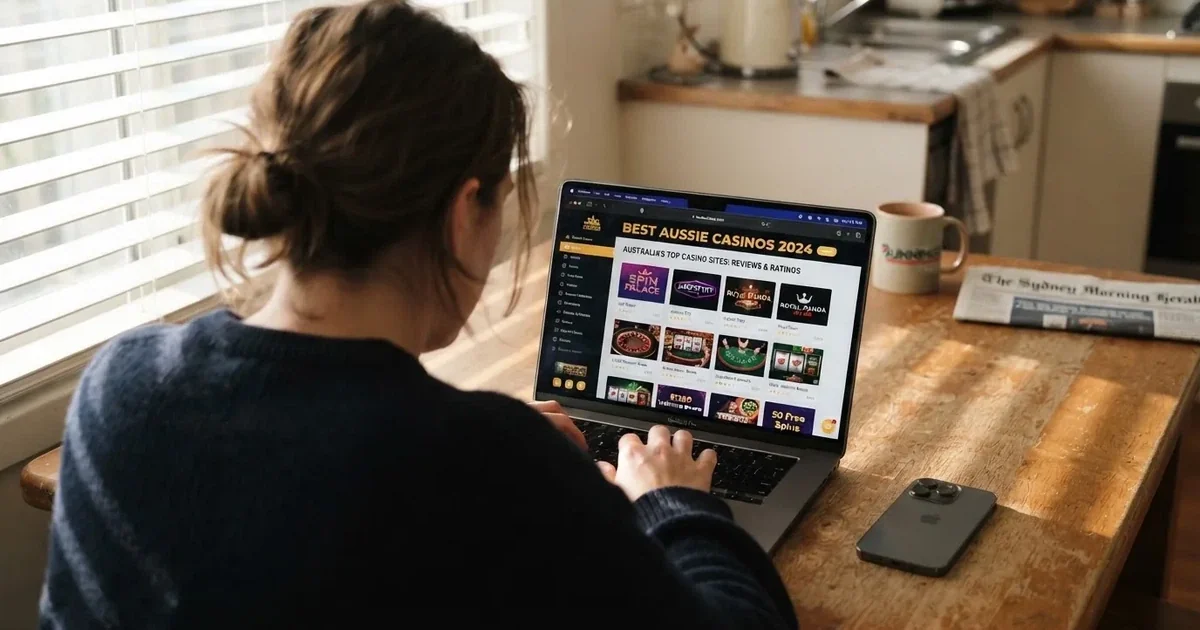
Anyone searching for the best casino in Queensland in 2026 is not really asking for a ranked shortlist of competing venues. The state has four of them, and three are not chasing the same visitors as the fourth. The search, once you read it carefully, is asking what is on offer at the licensed Queensland casino, where it sits, what it costs to get in, and whether any of the offshore websites plastered across review pages are a serious substitute. The honest answer is that Queensland has a single integrated-resort casino at Queen’s Wharf, two long-standing regional properties, and a Gold Coast flagship, and that none of the offshore alternatives advertised to Australians carry an Australian licence, because the law does not allow one to be issued.
That second point is what this page spends most of its time on. The first section walks through the four venues and what each one is actually for. The middle sections set out what the Interactive Gambling Act 2001 (IGA) does, how the Australian Communications and Media Authority (ACMA) enforces it, and what the long ACMA list of formal warnings tells a reader about the offshore sites they may have seen on a comparison page. The closing sections cover responsible-gaming tools that work in Australia and the practical side of getting to a Queensland casino.
Table of Contents
- The Queensland Casino Landscape
- What the Casino Control Act 1982 Actually Regulates
- What Gets Played at a Queensland Casino
- The Offshore Sites: What the ACMA Has Actually Done
- What the IGA Reform Package Actually Changes
- What an Offshore Online Casino Cannot Give an Australian Player
- Player Protection in Australia
- Visiting a Queensland Casino in Practice
- How an Offshore Site Markets Itself to Australians
- A Practical Summary for a Visitor Weighing the Options
- Frequently Asked Questions
The Queensland Casino Landscape
Queensland runs casino gambling under the Casino Control Act 1982, administered by the Office of Liquor and Gaming Regulation (OLGR) inside the Department of Justice. The OLGR holds the licence, runs the suitability reviews, prosecutes the offences, and is the body a complaint eventually lands with. Four venues currently hold that licence. The order below follows the venue’s footprint and what a visitor is most likely to want from it, not a star rating: every one of these is a licensed property, and ranking them on “quality” would be pretending there is a head-to-head where there is not.
Regulatory Roles and Obligations
| Casino Name | Location | Opened | Focus |
|---|---|---|---|
| The Star Brisbane | Brisbane (CBD) | 2024 | Integrated resort |
| The Star Gold Coast | Gold Coast | 1985 | Flagship property |
| The Ville | Townsville | N/A | Regional casino |
| The Reef | Cairns | N/A | Regional casino |
The Star Brisbane at Queen’s Wharf
The Star Brisbane opened in stages from 29 August 2024 inside the A$3.6 billion Queen’s Wharf Brisbane precinct, a joint venture between Star Entertainment Group and Hong Kong-based Chow Tai Fook Enterprises. It replaced Treasury Casino, the heritage-listed property that operated from April 1995 until 25 August 2024, when the building closed to make way for the new precinct. Treasury had run about 80 gaming tables and over 1,300 gaming machines across three levels; The Star Brisbane inherits the role of Brisbane’s CBD casino with a substantially larger footprint and a different kind of property around it.
The main gaming floor and the premium gaming rooms were the first pieces of the precinct to open. The wider development includes hotels, restaurants, a Sky Deck observation platform, and the public realm that links the CBD to South Bank across a new bridge. For a visitor weighing up where to spend an evening in Brisbane, The Star Brisbane is the only integrated-resort casino in the city and the one most reviews describe as the headline property. It is also the one carrying the most operational baggage, for reasons covered in the section on regulation below.
The Star Gold Coast at Broadbeach
The Star Gold Coast was Queensland’s first casino, opening in November 1985 as Conrad Jupiters. It sits in Broadbeach on the Gold Coast and remains the flagship Gold Coast property, with hotel towers, restaurants, and a rooftop bar that is itself a destination regardless of whether the visitor ever places a bet. One percent of its gross gaming revenue is paid into the Gambling Community Benefit Fund, a mechanism established in 1987 that returns money to community organisations across the state. That fund is one of the quieter reasons the venue matters: it is a licensed gambling operation whose tax take is, by design, recycled into community grants.
The Gold Coast property is the venue most often meant when a visitor searches for “casino rooftop bar Queensland”, and it is also the more accessible of the two Star properties for short-stay visitors, sitting between the Pacific Fair shopping precinct and the beach, with multiple hotels within walking distance.
The Ville Resort-Casino, Townsville
The Ville is the only casino in Townsville. It sits on the waterfront and combines a hotel with the gaming floor, restaurants, and conference space. For travellers in North Queensland who do not want to fly south for a casino visit, it is the regional option. It is smaller than the Brisbane or Gold Coast properties by a wide margin, and that is part of its purpose: it serves a regional market that would otherwise have no licensed casino within driving distance.
The Reef Hotel Casino, Cairns
The Reef is the only casino in Cairns and the northernmost licensed casino on the Queensland coast. It is similarly structured around a hotel, a dining offer, and a gaming floor of modest scale. Tourists arriving for the reef and the rainforest often treat it as an evening option rather than a destination in its own right, which is honest about what a single-property regional casino can be.
What the Casino Control Act 1982 Actually Regulates
Every licensed casino in Queensland operates under the Casino Control Act 1982. The OLGR is the regulator, not an industry body, and its role is to decide who gets a licence, run ongoing suitability checks, and prosecute when a licensee breaches the Act. The framework is built around the proposition that a casino is a privileged licence to operate a tightly defined form of gambling, not a normal retail business, and the privileges come with obligations an ordinary venue does not carry.
The Act also defines the criminal offences a casino can be prosecuted for. In August 2023, The Star Entertainment QLD Limited pleaded guilty to eleven offences under the Act, including seven counts of accepting credit wagers totalling more than A$170,000 between 2017 and 2022. The penalty was A$140,000 plus A$3,250 in costs, with no conviction recorded. The numbers are modest against the size of the operator; the principle is what matters, which is that accepting credit for gambling is a statutory offence in Queensland even at a licensed venue.
The OLGR is also the body that, after a formal review, can suspend or cancel a licence. That mechanism has been used against The Star Entertainment Group itself: in December 2022, Queensland’s then Attorney-General fined the operator A$100 million and ordered a 90-day suspension of the casino licences for Treasury Brisbane and The Star Gold Coast. The trigger was the 2022 external review by the Hon. Robert Gotterson AO KC, which found the company unfit to hold a Queensland casino licence, citing major failings in anti-money-laundering controls and responsible-gambling practices, including deliberately misleading banks and regulators about the purpose of China UnionPay transactions.
That suspension was itself overtaken by events. Treasury Brisbane had already closed by August 2024 to make way for The Star Brisbane. The Queensland government has repeatedly deferred any decision on suspending The Star’s Gold Coast licence pending the outcome of the second Bell Inquiry into Star’s New South Wales operations, most recently pushing the deadline to 30 September 2026. The Star Brisbane continues to operate under that licence, and the question of whether its licence will ultimately be renewed, varied, or withdrawn is not settled.
What Gets Played at a Queensland Casino
A Queensland casino floor is a different product from the Australian pub pokies a visitor may be used to. The pub and club machines in Queensland numbered 21,122 operating in 351 venues as at October 2023, with players losing A$3.49 billion on them across the 2022–23 financial year. Those numbers dwarf the casino floor by design: most Australian gambling losses happen on pub pokies, not on the casino property. What the casino adds is a set of games the pub machines do not carry.
Table Games
The integrated Queensland casinos run the standard international table-game suite: baccarat, blackjack, roulette, and craps, with poker variants on dedicated tables. Baccarat is the headline game in the premium rooms at The Star Brisbane and The Star Gold Coast, where the minimum bets climb well above the public-floor tables. Blackjack is run at the standard rules most international visitors will recognise. Roulette is offered in both single-zero and double-zero formats depending on the room. Craps is available at the larger venues, though it tends to sit at the higher-minimum end of the table list.
These are real tables, with real dealers, on a real floor. They are also the games an offshore online casino site will advertise as “live dealer” — a phrase worth pausing on, because the live-streamed product is a different legal animal from a Queensland table under the IGA, and the section below sets out why.
Pokies and Electronic Gaming
The licensed Queensland casinos run gaming machines under the same regulatory roof as the pubs and clubs, but on a different commercial scale. A casino floor in Queensland can carry well over a thousand machines on the larger properties (Treasury ran over 1,300 before its 2024 closure); a single pub is capped at a much lower number per venue. The minimum return-to-player rate that applies to gaming machines varies by state, and within Queensland the rate is set by the OLGR. There is no maximum bet on the casino floor in Queensland — the A$5 maximum-bet limit that South Australia applies outside Adelaide Casino does not apply inside the casino in Queensland.
Poker and Tournament Play
The Star Brisbane and The Star Gold Coast both run poker rooms with cash games and scheduled tournament play. The tournament calendar is the part most casual visitors underuse: a poker room on a Saturday will often have a freezeout or a sit-and-go running at a buy-in that is well below the high-stakes cash game minimums, and it is one of the lower-cost ways to spend a few hours on the floor.
The Offshore Sites: What the ACMA Has Actually Done
The Interactive Gambling Act 2001, as strengthened by the Interactive Gambling Amendment Act 2017, makes it an offence to provide online casino games, online pokies, or in-play betting to a person physically in Australia. No state or territory issues a licence for it. Any site that advertises an “online casino” product to an Australian reader is doing so without an Australian licence, and the question worth asking is what enforcement has actually been taken.
The ACMA is the body that enforces the IGA. Its published enforcement list is the public record of what has been done: formal warnings, investigations that lead to blocking requests, and blocking requests that result in Australian internet service providers being ordered to make a site inaccessible. The numerical scale, as of June 2026, is that 1,751 illegal gambling and affiliate marketing websites have been blocked since the first blocking request in November 2019, and more than 230 unlicensed gambling services have left the Australian market since enforcement was strengthened in 2017. The most recent published round, on 26 June 2026, asked Australian ISPs to block 12 further sites: 7Signs, ChromaBet, Donbet, Duospin, Freshbet, Slots Gem, Jacks Club, Lucky Start, Pointsbetz, Spinrise, Vinyl Casino, and Wildsino.
The blocking-rate calculation below puts these numbers into context. It uses the cumulative total of blocked sites (1,751) and the date of the first blocking request (November 2019) to show how fast enforcement is moving. The total is from June 2026, which is 79 months after November 2019. This averages to roughly 22 blocked sites per month, or about 266 per year, though the pace has increased significantly since the early years. The ACMA is sustaining a steady enforcement pace that the offshore industry continues to outrun.
The Published Warning List
A formal warning from the ACMA is the first public step before a blocking request. The list below covers every brand and operator pair the ACMA has published a formal warning for as part of this subject, in the order research names them.
| Brand | ACMA action and date | Operator named by the ACMA | Subject support |
|---|---|---|---|
| RocketPlay | Formal warning, March 2026 | Pulsup Ltd (Rocketplay) | — |
| Level Up Casino | Formal warning, May 2022 | Dama N.V. | Listings only (Wikipedia, Victorian GC) |
| Woo Casino | Formal warning, March 2025 | Dama N.V. | Listings only (Wikipedia) |
| Spirit Casino | Formal warning, May 2025 | Dama N.V. | — |
| National Casino | Formal warning, July 2025 | Consolutetish S.R.L. | Listings only (ABC, infrastructure.gov.au) |
| Bizzo Casino | Formal warning, July 2025 (earlier 2022) | Consolutetish S.R.L.; earlier Tech Solutions | — |
| Ignition Casino | Formal warning, July 2025 | Bamboo Media | — |
| Instant Casino | Formal warning, February 2025 | EOD Code SRL | — |
| Jackbit | Formal warning, April 2026 | Ryker B.V. | — |
| Casino Intense | Formal warning, April 2025 | Sterplay Holding Ltd | Listings only (ABC, ASGAM, CBS SA) |
| Sky Crown | Formal warning, September 2022 | Hollycorn N.V. | Listings only (Wikipedia) |
A row that reads “—” under Subject support is one where the only public trace is the ACMA warning itself. The “Listings only” rows are brands that also appear on third-party reference pages such as Wikipedia, the ABC, or state regulator sites — that is, sources that simply catalogue the brand without confirming anything about how it operates.
Why the ACMA List Looks the Way It Does
A reader who has never seen this list before usually notices three things about it. First, the same operator names appear repeatedly: Dama N.V. alone accounts for four of the eleven published warnings on this list. Second, the dates cluster: there is no steady weekly trickle, just periodic bursts of warnings issued as the ACMA finishes the work behind each one. Third, the brand names are not the operator names — “RocketPlay” is the consumer-facing label, “Pulsup Ltd” is the corporate entity the ACMA names in the warning, and that is the layer that matters when the ACMA has to prove a breach.
The repeated Dama N.V. warnings are the most instructive case. The ACMA issued a formal warning to Dama N.V. covering six casino brands — Bambet, Dazard, Level Up, Rocketplay, Wild Tornado and Cobra Casinos — in May 2022. It then issued further warnings to Dama N.V. over Woo Casino in March 2025 and Spirit Casino in May 2025. Two of the brands named in the 2022 letter (Rocketplay and Level Up) reappear on later enforcement actions under different operator entities, which is itself a familiar pattern: when a regulator warns one operator, the brand often re-emerges under a new corporate wrapper and the regulator starts again.
The repeated warnings are not a sign that enforcement is failing. They are a sign that offshore casino operators treat the IGA as a cost of doing business — one warning is absorbed, the brand is moved, and a new entity carries on until the next warning. That is the pace the ACMA has been running at for the last several years, and it is the pace the 2026 reform package, set out below, is intended to change.
What the IGA Reform Package Actually Changes
The Interactive Gambling Amendment (Gambling Reform) Bill 2026 passed Parliament on 19 August 2026. Its advertising and inducement measures commence on 1 January 2027. This is a piece of law with a future start date, not yet in force at the time of writing, and the distinction matters: any clause in the Bill is not enforceable today, and any review page that suggests otherwise is wrong.
The reform package is best read as a tightening of what is already prohibited. The IGA already made it an offence to offer online casino games, online pokies, or in-play betting to a person in Australia. The 2026 amendments extend the prohibition to advertising those of the kind of service to Australians, and to inducements aimed at drawing them in. The change does not legalise any product that is currently illegal; it removes the marketing routes that offshore operators have used to reach Australian readers anyway. The blocking requests and formal warnings continue; the 2026 amendments give the ACMA additional grounds to act against the people paying for the marketing as well as the people running the sites.
A second part of the reform discussion, less settled at the time of writing, is whether the ACMA’s enforcement should be supported by additional measures around payment routing and DNS-level blocking. The Australian Banking Association has been engaging on the former; the latter would expand the existing ISP-level blocking regime. Neither has been adopted as policy as of June 2026.
What an Offshore Online Casino Cannot Give an Australian Player
A reader weighing an offshore site against a visit to a Queensland casino is weighing two different products. The legal frame is the easy part: the offshore site has no Australian licence, because no Australian licence exists. The harder question is what is missing in practice, because the offshore site’s marketing rarely mentions what it is not.
The first missing thing is dispute resolution. A licensed Queensland casino is regulated by the OLGR, and a player with a complaint has an Australian regulator to escalate to. An offshore site licensed in Curaçao or Malta is regulated by the regulator of that jurisdiction; the Australian player has no direct route to that body, and the offshore site has no obligation to cooperate with an Australian one. The second missing thing is segregation of player funds. The Queensland casino model requires operator funds to be held separately from player funds in a way that, in principle, returns the player’s balance if the operator becomes insolvent. Offshore licensing regimes vary, and the Australian player has no specific Australian guarantee.
The third missing thing is recourse on a refused withdrawal. The most common complaint the ACMA sees in its published material is exactly that: a player wins, requests a withdrawal, and the offshore operator finds a reason — a “bonus term” the player is said to have breached, a “verification” the player is said to have failed — to delay or refuse payment. The player has no Australian body to complain to. The fourth is self-exclusion: BetStop, the National Self-Exclusion Register, only binds Australian-licensed online and phone wagering services, and an offshore casino is not on it. A player who has self-excluded and then opens an offshore account has self-excluded from the licensed Australian market only.
The fifth is payment. Since 11 June 2024, credit cards, credit-related products, and digital currency are banned as payment for licensed online wagering in Australia, with penalties up to A$247,500 for operators that breach the rule. Legal deposit routes for licensed wagering are debit card, bank transfer, PayID/Osko, and BPAY. An offshore casino that accepts a credit card or a crypto deposit from an Australian is operating outside the Australian rules, and an Australian bank can decline the transaction. That is the practical mechanism a player will meet, well before any regulator acts.
Player Protection in Australia
Age Limits
The minimum age to enter a casino in Queensland is 18. The same minimum applies to any form of licensed wagering in Australia, and it is enforced at the door of every licensed venue. An offshore site that does not verify an Australian customer’s age is not bound by the Australian rule; that is one of the practical gaps the IGA creates, and it is one of the reasons the responsible-gaming tools below exist.
BetStop, the National Self-Exclusion Register
BetStop went live in August 2023. It is the National Self-Exclusion Register, run by the Australian Communications and Media Authority, and it lets a person exclude themselves from every Australian-licensed online and phone wagering service at once. The exclusion periods are set by the person registering and run from a minimum of three months up to a permanent exclusion. Once registered, a BetStop-listed person cannot open a new account with an Australian-licensed wagering provider, and existing accounts are closed. The catch, again, is that BetStop binds the Australian-licensed operators. An offshore casino has no obligation to honour a BetStop registration, and an excluded person who opens an offshore account will not be blocked from doing so.
Gambling Help Online and the National Gambling Helpline
The National Gambling Helpline is 1800 858 858, free, 24/7. The web service is Gambling Help Online, with chat available. Both are free for any Australian, regardless of which state they are in, and the services cover information, counselling, and referral to face-to-face support. The helpline does not require the caller to be self-excluding or to have made a specific complaint; it is a general service for anyone whose own gambling, or someone else’s, has become a problem.
Venue-Level Responsible Gambling at Queensland Casinos
Every licensed Queensland casino operates voluntary exclusion programs at the venue level. A person who excludes themselves from a Star property is excluded from that property specifically; a person who excludes themselves from The Reef is excluded from that venue specifically. The venue-level programs do not substitute for BetStop — they are narrower in scope — but they are useful for visitors who want to remove themselves from a single venue without committing to a national exclusion. The casino also operates a self-imposed barring process for staff, and the OLGR conducts regular audits of responsible-gambling conduct on the floor.
Visiting a Queensland Casino in Practice
Getting In
All four venues have a single main entrance for the gaming floor. Photo identification is required on first entry and is used to set up the venue’s player loyalty program, which a visitor does not need to join to play. Dress codes vary by venue and by room: The Star Brisbane’s premium gaming rooms enforce a stricter dress code than the public floor, and the rooftop bars at The Star Gold Coast are casual. None of the four venues requires a passport-style ID for entry — a driver’s licence is sufficient for an Australian resident — but non-residents should carry their passport.
Money on the Floor
Casino gaming is cash at the table and a mix of cash and ticket-in-ticket-out (TIO) at the gaming machines. The larger properties run extensive ATM networks on the floor. A visitor planning to spend a fixed amount should set that amount in cash before entering; the venue will not stop a player from withdrawing more from an ATM, and the floor is built to make continued play easy. The minimum and maximum table bets are posted at each table; the high-limit rooms are entered separately and have their own minimums.
Where to Stay
Each of the four venues has an attached hotel or is part of an integrated-resort precinct with hotels on site. The Star Brisbane sits inside the Queen’s Wharf precinct, which includes multiple hotels in addition to the casino. The Star Gold Coast has multiple hotel towers attached. The Ville in Townsville and The Reef in Cairns each have a hotel component. Accommodation deals are common at all four; the published “casino accommodation deals” a visitor sees on a search results page are typically rate inclusions (free breakfast, dining credit, late checkout) layered onto the venue’s own published rates, and the value of the deal depends on how much of the inclusion the visitor would have paid for anyway.
How an Offshore Site Markets Itself to Australians
The offshore sites named in the ACMA list above are not a single product. They vary in jurisdiction, ownership, game catalogue, payment options, and bonus structure. What they have in common is that none of them is licensed to offer online casino games to a person in Australia, and the marketing each one runs for an Australian reader is, by definition, advertising for a service the provider is not authorised to offer in this country.
The marketing language is recognisable. “Live dealer” describes a video stream of a real table, often run from a studio in Eastern Europe or Latin America, and is the closest visual analogue to a Queensland casino table. “Pokies” describes a video slot, regardless of jurisdiction. “Welcome bonus” describes a deposit match with a wagering requirement, and is the standard hook. None of those words is misleading on its own; the misleading thing is the implied availability, because the offer is being made to a reader in a country where the offer is prohibited.
The other thing the marketing language omits is the enforcement record. The brand on the front of the site is not always the entity the ACMA named in its warning — Dama N.V. ran six brands through one corporate wrapper; Hollycorn N.V. ran multiple brands under one licence; Consolutetish S.R.L. ran National Casino and Bizzo Casino under one warning. A reader who picks a brand on the basis that the brand name is new has not necessarily picked a different company.
A Practical Summary for a Visitor Weighing the Options
A visitor weighing whether to book a trip to The Star Brisbane, a weekend at The Star Gold Coast, a Townsville or Cairns stay, or a session at an offshore online casino is weighing four licensed Australian venues against a category of unlicensed providers. The four venues share a regulator, an age limit, a complaint body, and a responsible-gaming framework. The offshore category has none of those.
For a Brisbane visitor, The Star Brisbane at Queen’s Wharf is the headline property. For a Gold Coast visitor, The Star Gold Coast at Broadbeach is the one to book around. For a North Queensland visitor, The Ville or The Reef is the regional option. None of the four is the same product as the next, and a shortlist of one is honest for most readers.
For a visitor considering an offshore online casino instead, the practical considerations are: no Australian licence exists for the product; the ACMA has formally warned the operator or one of its sister brands within the last four years in most cases; the player’s only dispute path is the offshore regulator; BetStop does not bind the offshore site; a credit card or crypto deposit will be declined by an Australian bank; and the winnings from recreational gambling are not assessable income in either venue, so there is no tax advantage to either choice.
The two products are not a like-for-like comparison. The Queensland casino is a licensed Australian gambling venue; the offshore site is an unlicensed international one operating in breach of the IGA. A guide to the best casino in Queensland is, at its core, a guide to which of the four licensed venues fits a particular trip, and a guide to what is missing from every offshore alternative.
Frequently Asked Questions
Where is the main casino in Queensland?
The main casino in Queensland in 2026 is The Star Brisbane at Queen’s Wharf, which opened on 29 August 2024 and replaced Treasury Casino as Brisbane’s CBD property. The Queen’s Wharf precinct sits between the Brisbane CBD and South Bank, with multiple hotels on site. The Star Gold Coast at Broadbeach is the second flagship, and The Ville Resort-Casino in Townsville and The Reef Hotel Casino in Cairns are the regional venues.
Are there accommodation deals near the casino in Queensland?
Yes. Each of the four venues has an on-site or attached hotel, and the larger two (The Star Brisbane at Queen’s Wharf and The Star Gold Coast at Broadbeach) sit inside integrated-resort precincts with multiple hotels. The “deals” most commonly advertised are rate enhancements layered onto the venue’s own published rates — typically free breakfast, dining credit, or late checkout — and the value depends on how much of the inclusion the visitor would have paid for anyway. The Star Brisbane’s precinct hotels are the strongest fit for a CBD visitor; The Star Gold Coast’s towers are the strongest fit for a beach holiday.
What is the minimum age to enter a casino in Queensland?
The minimum age is 18. Photo identification is required on first entry, a driver’s licence is sufficient for an Australian resident, and a passport is the safer choice for a non-resident. The same age minimum applies to every other form of licensed wagering in Australia.
Does the casino in Queensland have a baccarat table?
Yes. The Star Brisbane and The Star Gold Coast both run baccarat on the public floor and in the premium rooms, with the higher minimums in the premium rooms. The Ville Resort-Casino in Townsville and The Reef Hotel Casino in Cairns run smaller gaming floors and the baccarat offering varies; visitors planning around baccarat specifically should check the published table list at the regional venue before booking.
Are there bars inside the casino in Queensland?
Yes. Every licensed Queensland casino runs bars on the floor and at least one bar or restaurant with a view. The Star Gold Coast’s rooftop bar is the property most often described as a destination in its own right, with views over Broadbeach and the Gold Coast hinterland. The Star Brisbane’s Sky Deck at Queen’s Wharf is a public observation platform with a bar, separate from the gaming floor and accessible without entering the casino.
Can Australians legally play at an online casino instead of visiting the licensed Queensland venue?
No. The Interactive Gambling Act 2001, strengthened by the Interactive Gambling Amendment Act 2017, makes it an offence to provide online casino games, online pokies, or in-play betting to a person in Australia. No Australian jurisdiction licenses it. An offshore site that offers those products to an Australian reader is doing so without an Australian licence, and the ACMA has issued formal warnings to most of the well-known operators doing so. The player is not prosecuted, but the player has no Australian regulator to complain to, no Australian segregation of funds guarantee, no recourse if a withdrawal is refused, and no BetStop coverage on the offshore site.