
Tasmania’s Casinos in 2026: What Stands, What’s Legal, and What the ACMA Has Blocked
Tasmania has two legal casinos: Wrest Point in Hobart and the Country Club Casino in Launceston. There is no licensed online casino for Australian residents — the Interactive Gambling Act 2001 prohibits it, and every state and territory keeps it that way. This page lays out what actually exists on the ground, what the prohibition costs the offshore industry, and where a player in Hobart, Launceston or anywhere else in the country can turn if gambling stops being fun.

Current as of 29 October 2026 against the ACMA’s formal warning register and the federal Interactive Gambling Act 2001.
Table of Contents
- The legal frame: how Australia handles casino play
- Responsible play: safeguards that actually reach an Australian player
- Tasmania’s two licensed venues
- What the venues offer
- The offshore sites the ACMA has named
- The blocking rate: how fast the prohibition is moving
- How the rankings line up: a shortlist for a Hobart or Launceston visit
- How the Tasmanian licence actually works
- A note on the broader Australian market
- What an offshore site costs an Australian player
- Tax, winnings and the ATO
- Where to get help
- The bottom line on Tasmania’s casinos
- Frequently asked questions
The legal frame: how Australia handles casino play
The Interactive Gambling Act 2001 (IGA) makes it an offence to provide online casino games, online pokies or in-play betting to a person physically in Australia. The Interactive Gambling Amendment Act 2017 strengthened enforcement against the supply side. The result is a clean split: wagering on races and sporting events placed before the event, lotteries and keno can be licensed (in practice, by the Northern Territory), but online casino play cannot be licensed anywhere in the country.
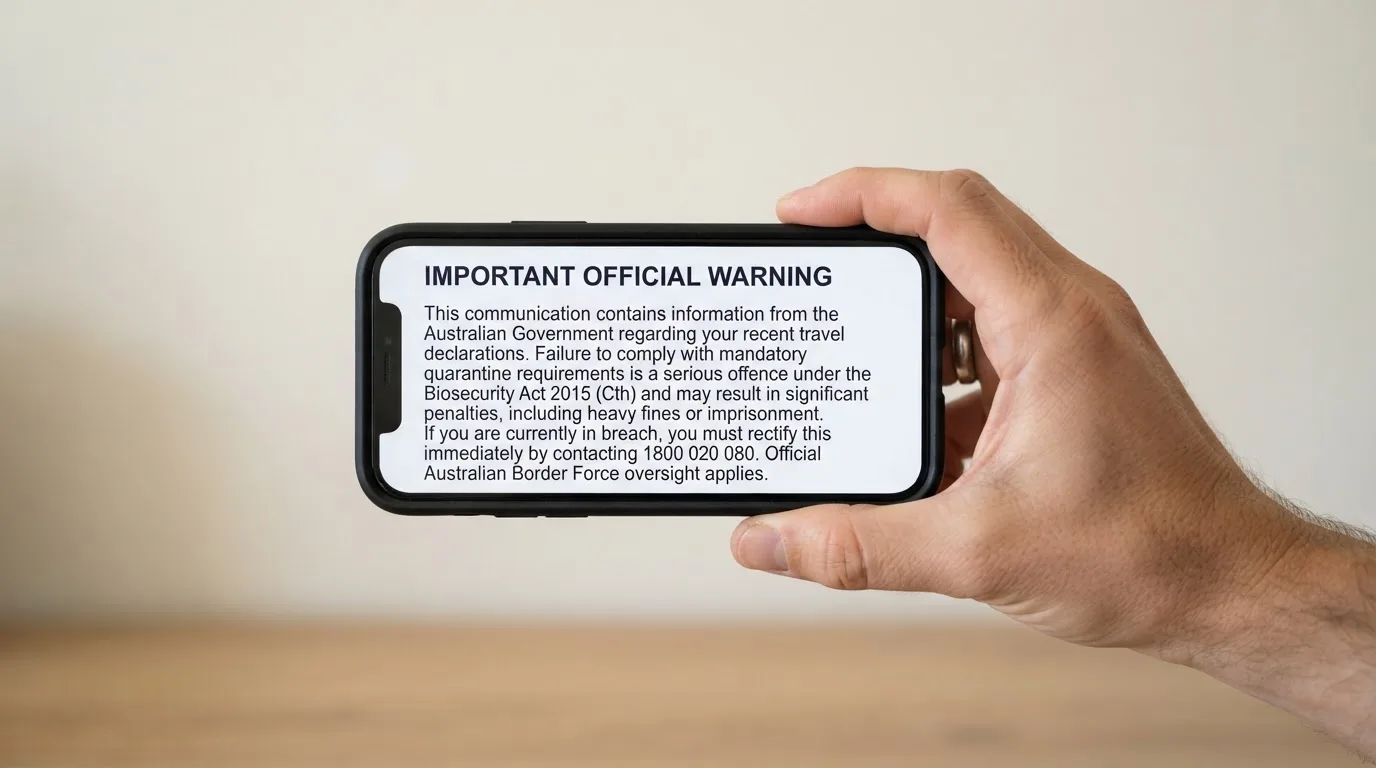
The Australian Communications and Media Authority (ACMA) enforces the prohibition. As of June 2026 the ACMA reported asking Australian internet service providers to block more illegal gambling and affiliate sites than at any previous point — a running total of 1,751 domains since the first blocking request in November 2019, with more than 230 unlicensed services having left the Australian market since enforcement was strengthened in 2017. A further round in June 2026 alone added twelve domains: 7Signs, ChromaBet, Donbet, Duospin, Freshbet, Slots Gem, Jacks Club, Lucky Start, Pointsbetz, Spinrise, Vinyl Casino and Wildsino.
The individual player is not prosecuted — the IGA targets the provider — but that is the thin end of the protection. An offshore site gives no Australian consumer protection, no complaints body, and no recourse if a withdrawal stalls. It can also be blocked with money still sitting in the account.
| Prohibition mechanism | What it means for a player |
|---|---|
| IGA 2001 (as amended 2017) | Offering online casino games to a person in Australia is an offence. |
| ACMA formal warnings | A pre-block step. Brand stays reachable until further action. |
| ACMA blocking requests | ISPs told to remove the domain from their routing tables. |
| Payment bans since 11 June 2024 | Credit, credit-related products and crypto banned for licensed wagering — a signpost that crypto-friendly sites are outside the rules. |
H2 Gambling Capital’s 2025 report estimates Australians lose about A$3.9 billion a year to illegal sites, and the share of gambling going through legal channels fell from 74 per cent in 2021 to 64 per cent. The drift the prohibition is trying to reverse is real, and slow.
Reform on the books
The Interactive Gambling Amendment (Gambling Reform) Bill 2026 passed Parliament on 19 August 2026, tightening advertising and inducement rules. Its advertising provisions commence on 1 January 2027 — law now, force in the new year. Anyone reading this page after that date should treat those measures as live.
Responsible play: safeguards that actually reach an Australian player
Two safeguards are worth knowing by heart, because they are the ones that work for someone in Tasmania irrespective of which site they consider.
BetStop — the National Self-Exclusion Register has been live since August 2023 and binds every Australian-licensed online and phone wagering service. A person registers, picks a duration, and the licensed operators must close them out. A common misconception is that registering with BetStop shuts offshore casinos down too. It does not — an offshore operator has no integration, no account at BetStop, and no obligation to honour the exclusion.
National Gambling Helpline 1800 858 858 is free, 24/7, and staffed by counsellors who can also arrange venue-level self-exclusion in person. The Tasmanian service is run through Anglicare Tasmania’s Gamblers Help program, with face-to-face counsellors based in Hobart, Launceston, Devonport and Burnie. The 1800 number is the front door. Chat is available through Gambling Help Online.
Tasmania’s own framework
The Tasmanian Liquor and Gaming Commission oversees the cashless gaming card system that began mandatory carded play in pubs and clubs from December 2025. Default loss limits are A$100 per day, A$500 per month and A$5,000 per year, and a player can only raise the cap after waiting at least 24 hours. The casino rollout under the same reform was still being scheduled as of September 2024, so the casino floor does not yet run the cashless mandate. The Commission’s oversight, not the venue’s goodwill, is what makes the limit real.
Tasmania’s two licensed venues
Two casinos hold a Tasmanian licence. Both are run by Federal Group, the Farrell-family-owned operator that has been Tasmania’s gambling monopoly holder since the venues opened.
Wrest Point, Hobart
Wrest Point is the older of the two, and the first legal casino anywhere in Australia, opening on 10 February 1973. The complex sits on the waterfront at Sandy Bay, a short drive from central Hobart, with the bar and restaurant wings open to the same Derwent River views the casino floor faces. Hotel rooms, multiple bars and a function centre are on site, so a visitor planning a night in Hobart can do the whole stay without leaving the precinct. Wrest Point carries the city’s first legal casino tag and remains its highest-profile gaming address.
Country Club Casino, Launceston
The Country Club opened in 1982 and was modelled on the stately homes of the American South, with a Georgian design meant to soften the building into the rural landscape north of Launceston. The venue combines a casino, an 18-hole golf course and a resort hotel, and the Tamar Valley wine region spreads out around it. Launceston’s CBD is a short drive away, but the Country Club is the only address in northern Tasmania with a casino floor. The setting is the draw, and the architecture is the part of the visit that lingers.
What the venues offer
A player walking onto either floor will find the standard casino catalogue, weighted toward the games Australians actually bet on.
Table games
Both Wrest Point and the Country Club run baccarat, blackjack, craps and roulette. Baccarat and blackjack carry the heaviest limits and the most tables. Roulette wheels in both venues run American and European layouts. Craps is offered at both venues — the dice game is less common in Australia than it is in North America, and not every provincial casino stocks it. A player who walks in expecting to find every variant on a floor the size of Crown Melbourne will be disappointed; a player who walks in expecting a full-service local casino will not.
Pokies and slots
Electronic gaming machines sit on both floors. The distinction between “pokies” and “slots” in Australian English is regional rather than technical — they are the same machines. The two Tasmania casinos are separate from the pub and club poker machine network that the Federal Group historically monopolised outside its walls, before that monopoly was relinquished in August 2017. The reform that let pubs and clubs hold their own licences is the same reform that pushed the cashless gaming card onto those machines from December 2025.
The rooftop bar
The Wrest Point rooftop bar is what people mean when they put “casino rooftop bar Tasmania” into a search. Perched above the Derwent, it is open to non-gaming visitors and operates as a standalone bar — patrons do not need to step onto the casino floor to sit down. Hobart’s most photographed casino view is from this rooftop, and the venue uses it as a draw for hotel guests and functions.
Nearby hotels and food
Wrest Point’s on-site hotel is the most-walked-to option for any visitor planning to play, eat and sleep at the same address. The Country Club’s own resort is the equivalent up north. Outside the precinct, Hobart’s Sandy Bay hotels and Launceston’s city-centre options are both within short driving distance of their respective casino. Multiple bars and restaurants sit inside each complex, and neither venue relies on a single signature chef. Dining and accommodation are part of the package, not a separate plan.
The offshore sites the ACMA has named
Every brand below has had an ACMA formal warning issued for offering prohibited online casino play to people in Australia. The table is what the ACMA register itself publishes; it is not a ranking, a recommendation, or an endorsement. Listing a brand here is the same as the ACMA naming it — descriptive, not promotional.
| Brand | ACMA action and date | Operator named by the ACMA | Subject support |
|---|---|---|---|
| RocketPlay | Formal warning, March 2026; earlier Dama N.V., May 2022 | Pulsup Ltd (RocketPlay), Dama N.V. | — |
| Level Up Casino | Formal warning, May 2022 | Dama N.V. | Listings-only (Wikipedia; VGCCC) |
| Woo Casino | Formal warning, March 2025 | Dama N.V. | Listings-only (Wikipedia) |
| Spirit Casino | Formal warning, May 2025 | Dama N.V. | — |
| National Casino | Formal warning, July 2025 | Consolutetish S.R.L. | Listings-only (ABC; Infrastructure Australia) |
| Bizzo Casino | Formal warning, July 2025; earlier TechSolutions, 2022 | Consolutetish S.R.L.; TechSolutions (CY) Group Limited; TechSolutions Group N.V. | — |
| Ignition Casino | Formal warning, July 2025 | Bamboo Media | — |
| Instant Casino | Formal warning, February 2025 | EOD Code SRL | — |
| Jackbit | Formal warning, April 2026 | Ryker B.V. | — |
| Casino Intense | Formal warning, April 2025 | Sterplay Holding Ltd | Listings-only (ABC; ASGAM; CBS SA) |
| Sky Crown | Formal warning, September 2022 | Hollycorn N.V. | Listings-only (Wikipedia) |
None of these brands holds an Australian licence for casino play. The licence some of them display — a Curaçao eGaming number, an Anjouan registration — applies to the country that issued it, not to Tasmania. The ACMA’s action is a step before a blocking request; a brand that persists after a formal warning typically moves onto the blocking list.
What the ACMA has done to Dama N.V.
Dama N.V. is the operator most named in the ACMA’s casino register, and the case shows how a single corporate group can draw the regulator’s attention across many brands. In May 2022 a single warning covered six brands at once: Bambet, Dazard, Level Up, Rocketplay, Wild Tornado and Cobra Casinos. Two more warnings followed — Woo Casino in March 2025 and Spirit Casino in May 2025 — and a separate warning to a different operator, Pulsup Ltd, covered Rocketplay again under its .com.au address in March 2026. The pattern is ordinary: warnings stack up before any site is added to the blocking list. Rocketplay is the clearest example — a brand that has now been warned twice, under two operators, in four years.
What the ACMA has done to TechSolutions, Consolutetish and Bamboo Media
A second cluster shows how a brand can outlive its operator. Bizzo Casino was first warned as a TechSolutions (CY) Group Limited / TechSolutions Group N.V. property back in 2022, and the same consumer-facing brand was named again in July 2025 under Consolutetish S.R.L. The 2025 warning also covered National Casino. Bamboo Media drew a separate warning that month, over Ignition Casino. Each of these is a brand that has changed hands at least once since the ACMA first named it — the regulator’s interest follows the brand, not the corporate wrapper.
How the warnings escalate
A formal warning is the ACMA’s first public step. Some warnings sit on the register for years without escalation. The blocking requests — 1,751 domains over the seven years from November 2019 to June 2026 — represent the next step, and 12 of them came in one June 2026 round. The blocking rate is the arithmetic that tells you how aggressive the enforcement really is.
The blocking rate: how fast the prohibition is moving
The ACMA’s enforcement story is a rate, not a count. The total stood at 1,751 blocked domains by the round reported in June 2026, with the first blocking request having been made in November 2019. That is roughly 265 domains blocked per year on average over the seven-year window, or about five per week. A band of two hundred and sixty to two hundred and seventy per year is the realistic read for that period.
The annual rate has not been steady. Early rounds were small and incremental; by 2024-2026 the blocking requests had grown into larger batches, with twelve sites at once in the June 2026 round. A reader weighing a brand today should not infer from “no blocks yet” that a brand is safe — the warning register is the registry that matters first, and the blocking list catches up.
Three concrete reads from the rate:
- A brand that has only ever held a formal warning is more likely to still be reachable than one on the blocking list. Reachable is not the same as safe.
- The Payment-ban regime of June 2024 — credit, credit-related products, and crypto banned for licensed wagering — is the strongest consumer-side signal. A site that still accepts crypto from an Australian player is outside the licensed framework altogether.
- A brand that has cycled through multiple operators under repeated ACMA action — Rocketplay is the cleanest example — is the textbook case of a brand that the regulator will not lose interest in.
Where the warnings sit relative to the blocks
Between formal warning and blocking request there is a third, less visible stage: domain and affiliate-marketing de-listing, payment-channel pressure, and listing removal. H2 Gambling Capital’s 2025 figure of A$3.9 billion lost to illegal sites is the loss side of the same equation; the ACMA’s 1,751 blocked domains are the supply side. Both numbers are moving in the same direction.
How the rankings line up: a shortlist for a Hobart or Launceston visit
A reader who searched “best casino in Tasmania” is usually after a venue recommendation, not a brand sweep. There are only two licensed options, so the ranking is short by design.
| Rank | Venue | Setting | Why it stands out |
|---|---|---|---|
| 1 | Wrest Point | Hobart waterfront, Sandy Bay | Australia’s first legal casino (1973); rooftop bar; on-site hotel. |
| 2 | Country Club Casino | Launceston, rural estate | Georgian resort style; Tamar Valley wine country around it; golf on site. |
The shortlist is short because Tasmania is short on options. The deeper choice is geographic — Hobart versus Launceston — and the comparison above makes the trade-off obvious. Wrest Point wins on fame and proximity to Hobart’s tourist core. The Country Club wins on setting and on being the only licensed casino north of Hobart.
Who each venue is for
Wrest Point suits a visitor planning a Hobart weekend who wants dining, a bar, accommodation and a casino under one roof. The rooftop bar in particular pulls non-gambling visitors into the precinct. The Country Club suits a visitor planning a Tamar Valley wine trip, a golf weekend, or a stay that uses the casino as one element of a longer regional break. Both venues accept the same minimum age (18), the same proof-of-identity rules, and the same responsible-conduct codes. The choice between them is about setting, not about the games on offer.
Practical visiting details
Both venues are open to walk-in patrons. A bring-along photo ID is standard practice — drivers licence or passport. Dress codes are smarter than a pub, looser than a city members’ club; runners and workwear are usually turned away at the table. The two venues charge no entry fee. Hotel rates at Wrest Point fluctuate by season; the Country Club’s rooms are typically bundled with the resort’s leisure product rather than sold on a pure room-only basis. Cash and EFTPOS work on the gaming floor; a player who needs to withdraw winnings can do so at the cashier.
How the Tasmanian licence actually works
Tasmania’s two casinos sit under the Gaming Control Act 1993, with Federal Group the long-running licence holder. Outside the casino walls, the same Act used to grant Federal Group an exclusive licence to operate poker machines in pubs and clubs — a monopoly that ended in August 2017 when the company relinquished it. From that point, individual pubs and clubs have held their own machine licences, and the casino licence has remained a separate, two-venue arrangement.
The cashless card reform that began for pub and club machines in December 2025 sits under the Tasmanian Liquor and Gaming Commission. The same Commission oversees the casino licence, so the rollout onto casino floors will come through the same regulator.
A note on the broader Australian market
The two-venue Tasmanian picture is unusual. South Australia has one casino — Adelaide Casino, known commercially as SkyCity Adelaide — with 90 gaming tables and 950 gaming machines inside the heritage railway station building on North Terrace. South Australia’s table-game monopoly at that single casino was extended to 30 June 2035 under a 2013 licence that allows expansion up to 200 tables and 1,500 machines. A 2015-2021 Riverbank redevelopment added the EOS by SkyCity tower, 120 hotel rooms, and expanded gaming space; the venue is regulated by the state’s Independent Gambling Authority and the Liquor and Gambling Commissioner. Queensland has rebuilt around a single Brisbane address — Treasury Casino closed on 25 August 2024 to make way for the new Star Brisbane at Queen’s Wharf, with a staged opening from 29 August 2024. Tasmania is the only mainland state with more than one licensed casino, and the two-venue split is part of why Federal Group’s profit growth has stayed visible — the company’s Mulawa Holdings arm reported profit nearly doubling from A$13.9 million to A$24.4 million in the year to 30 June 2018, on revenue of A$543 million, with about A$75 million paid in gaming taxes and licence fees to the Tasmanian government.
What an offshore site costs an Australian player
The visible cost of using an offshore site is the wagering loss — the same number it would cost on any regulated site. The invisible cost is everything else.
A site licensed in Curaçao or Anjouan gives no Australian complaint pathway, so a stalled withdrawal becomes a private dispute under a foreign jurisdiction. A site blocked by an ACMA request can vanish overnight with a balance in the account. A site asking for a credit card or a crypto deposit sits outside the June 2024 payment regime — the A$247,500-per-operator penalty under the licensed rules is the regulator’s read on what those transactions signal.
Reputable offshore sites do exist. The clearest evidence a site is not one is whether it has been the subject of an ACMA formal warning or blocking request. Eleven of the brands in the table above are exactly that.
Tax, winnings and the ATO
Gambling winnings of a recreational player in Australia are not assessable income, and losses are not deductible. The legal basis is section 6-5 of the Income Tax Assessment Act 1997 — a person carrying on a business of gambling is the only case the ATO treats as assessable. A casual Hobart punter on Wrest Point’s tables or pokies is a recreational player under the standard reading, and the model is to “check with the ATO” for any position more ambitious than that.
Where to get help
For a player who is worried about their own play or someone else’s, the right numbers are:
- National Gambling Helpline 1800 858 858 — free, 24/7, with chat at Gambling Help Online.
- Gamblers Help Tasmania — the local face of that helpline, run through Anglicare Tasmania, with face-to-face counsellors in Hobart, Launceston, Devonport and Burnie. The service can also arrange a venue-level self-exclusion.
- BetStop — the National Self-Exclusion Register. Binds every Australian-licensed online and phone wagering service; an offshore casino is not on the system.
These three front doors work for any Australian player, including anyone at Wrest Point, the Country Club, or anywhere else in Tasmania.
The bottom line on Tasmania’s casinos
The best casino in Tasmania is, by the standard of historical firsts and Hobart’s tourist reach, Wrest Point — the country’s first legal casino, on the waterfront, with the rooftop bar that everyone ends up at least once. The Country Club is the obvious second choice, and the right one for a visitor whose plan centres on Launceston, the Tamar Valley or a golf-and-wine weekend.
There is no third option that is licensed in Tasmania for casino play. Every online casino targeting Australian players is operating outside the Interactive Gambling Act, regardless of the licence it advertises. The brand table is a record of who has already been told so by the ACMA in writing. The two venues on the ground are the whole of what is on offer, and that is a deliberate feature of the regime, not a gap in the list.
Frequently asked questions
What is the name of the main casino in Tasmania?
Wrest Point Hotel Casino, on the Hobart waterfront in Sandy Bay. It opened on 10 February 1973 and is the country’s first legal casino. The second licensed casino is the Country Club Casino and Resort in Launceston.
Where is the casino in Tasmania located?
Wrest Point is at 410 Sandy Bay Road, Hobart. The Country Club Casino is at Country Club Avenue, Prospect Vale, just outside Launceston. Both sit inside their respective Federal Group precincts.
What is the minimum age to enter the casino in Tasmania?
Eighteen. The federal minimum age for gambling in Australia is 18, and Tasmanian venues enforce it at the door with photo ID checks. A driver licence or passport is the standard identification requested.
Does the casino in Tasmania offer table games such as blackjack and baccarat?
Yes. Both Wrest Point and the Country Club run baccarat, blackjack, craps and roulette. A visitor can also play poker machines on either floor. The full table-game catalogue is on the venue’s own page if a specific variant matters.
Are there hotels within walking distance of the casino in Tasmania?
Wrest Point has its own on-site hotel, which is the closest address to the Hobart casino. The Country Club has its own resort rooms on the same estate. In Hobart, several Sandy Bay hotels are a short walk or drive from Wrest Point; in Launceston, the city’s CBD hotels are within a short drive of the Country Club.
Can Australians legally play at an online casino instead of visiting the casino in Tasmania?
No. The Interactive Gambling Act 2001 prohibits offering online casino games to a person in Australia, and no state or territory issues a licence for it. The ACMA enforces the prohibition by issuing formal warnings and asking ISPs to block offshore sites — 1,751 blocking actions have been issued since November 2019. A licensed wagering account can be used for racing and sports bets placed before the event, but not for casino games.