
Best Pokies in Adelaide in 2026: Licensed Venues, Real Payouts, and What the Regulator Has Actually Blocked
Data current as of 29 October 2026 and verified against the ACMA and South Australian registers.
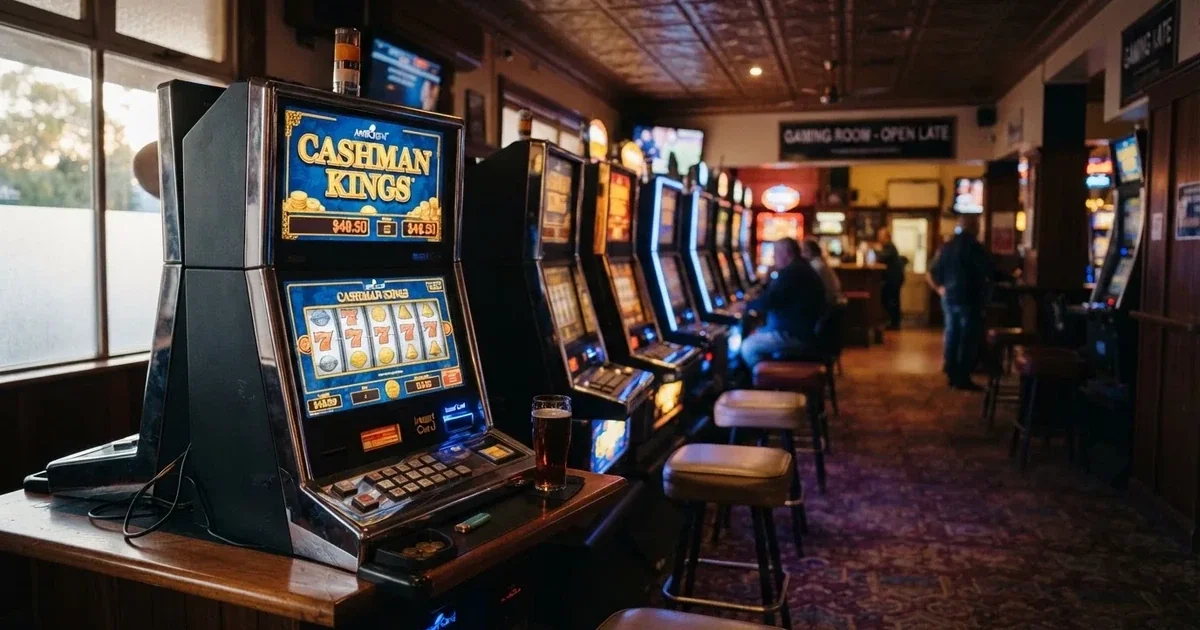
The shortest answer first. A punter in Adelaide who wants to play pokies plays them in licensed pubs, clubs, and the one licensed casino on North Terrace — nowhere else, and not on any website that brands itself “Adelaide pokies”. The state’s regulator sets the rules, the IGA cuts off the offshore alternative, and the ACMA has spent most of this decade turning internet providers into the wall between Australian players and the operators chasing them. The rest of this page works through what that means floor by floor: which machines the law actually permits, what the return rate looks like under South Australia’s rules, what the ACMA has warned and blocked, and which eleven offshore brands asked Australians to play anyway.
A lot of pages on this subject lead with a “Top 10” of offshore casinos that have no right to take an Australian dollar. This one does the opposite, because the law does. The list of brands the ACMA has formally warned, sorted by year and operator, is the only ranking that matters for an Australian in 2026.
Table of Contents
- How Adelaide’s pokies floor is actually put together
- Paytable, mechanics, and what an Adelaide machine actually offers
- The venues where the machines actually sit
- What the regulator has actually done about the offshore alternative
- How the ACMA’s formal warnings shape the offshore landscape
- What licence display on an offshore site is actually worth
- Land-based venue set across Australia — the comparison Australia’s regulator lets happen
- Land-based venues in Adelaide ranked — the comparison this page is here to make
- Payouts, deposits, and the cashless trajectory
- Responsible gambling in South Australia
- The offshore sites the ACMA has formally warned — Adelaide-facing view
- Quick answers on the comparison this page is making
- Frequently Asked Questions
How Adelaide’s pokies floor is actually put together
A “pokie” in Adelaide is an electronic gaming machine governed by South Australia’s Casino Act 1997 for the one casino and by the state’s gaming-machine rules for the pubs and clubs. The machines live in two distinct worlds: 950 gaming machines inside Adelaide Casino, regulated by the state’s Independent Gambling Authority, and 11,672 gaming machines in 471 pubs and clubs around metropolitan and regional South Australia. Both groups of machines have to meet the same 87.5% minimum return-to-player rate. The casino has no maximum bet limit, the pubs and clubs do.
That split — one licensed casino, hundreds of pubs and clubs, and a single state-level regulator — is the entire licensed floor. There is no second casino licence in South Australia; the Casino Act gives Adelaide Casino a table-game monopoly to 30 June 2035, with provisions to expand up to 200 tables and 1,500 machines. Outside that building, every machine is a pub machine or a club machine, and every venue is a hospitality business that happens to have gaming on site.
The reason this matters for a punter in 2026: there is no “premium online pokies Adelaide” product for Australians. The Interactive Gambling Act makes offering online casino games and online pokies to a person physically in Australia a strict-liability offence; no state or territory issues a licence for it. The IGA targets the operator, not the player, but a player using an offshore site loses every Australian consumer protection the moment they log in. The ACMA has been running blocking requests against those sites since November 2019; the round reported on 26 June 2026 brought the running total to 1,751 blocked and affiliate-marketing URLs, and added 12 more names to the list.
The next sections walk through how that works in practice: the specific game and machine mechanics that fall under the paytable shelf, the venues where the machines actually sit, how payouts move through cash and cashless systems, what responsible gambling looks like in this state, the regulator’s reading of online pokies, and the ACMA’s own ranking of operators it has warned.
Paytable, mechanics, and what an Adelaide machine actually offers
The “paytables and mechanics” question on a South Australian gaming machine is mostly a fixed thing. Adelaide doesn’t have a casino-tech industry licensing a thousand title variants; it has one regulator approving machines against a published standard, and one design philosophy behind most of them.
The minimum return-to-player rate in South Australia is 87.5%, set by statute. That figure is the floor; individual machines can be programmed higher, but no venue can run a machine below it. The general maximum bet outside the casino is A$5.00 per spin; inside Adelaide Casino there is no maximum-bet limit. The same machine designs that appear in pubs and clubs run on different bet ceilings, so a title a player has seen in a suburban RSL plays at a different stake on a casino floor.
Cashless gaming is the biggest shift the paytable side has had in years. The federal government and state regulators have spent several years pushing card-based gaming in pubs and clubs, partly to track play and partly to enable pre-commitment. Adelaide venues have moved into cashless during 2026, and the practical effect for a punter is that what used to be “feed the machine with a note” is now a tap-and-limit flow at the venue cashier or directly at the machine. The mechanics — what reel combinations pay, how bonus rounds trigger, how a jackpot tier behaves — don’t change, but the way a player funds and tracks them does.
Titles, providers, and live tables. Adelaide Casino runs 90 gaming tables and 950 gaming machines under the SkyCity brand; the rest of the licensed state runs mainstream pub-style machines. Outside the casino there is no live-table stream and no provider-led content in the European online sense: the table-game side lives in the one casino building on North Terrace. The “adelaide casino online” landing pages that turn up in search results are not an alternative to that building; they are offshore operators taking a chance on Australian traffic. The section on offshore sites below lays out what the ACMA has actually done about that traffic.
The venues where the machines actually sit
Adelaide’s licensed gaming venues
| Venue Type | Licensed By | Primary Regulation |
|---|---|---|
| Adelaide Casino | Independent Gambling Authority | Casino Act 1997 |
| Licensed Pubs | Liquor and Gambling Commissioner | Gaming Machines Act 1995 |
| Licensed Clubs | Liquor and Gambling Commissioner | Gaming Machines Act 1995 |
Adelaide Casino — the one and only
Adelaide Casino sits inside the heritage-listed Adelaide railway station on North Terrace and operates under South Australia’s Casino Act 1997. The state government granted the table-game monopoly via a licence formalised on 11 October 2013, extending the arrangement to 30 June 2035 and authorising expansion up to 200 gaming tables and 1,500 gaming machines subject to redevelopment. A 2015-2021 Riverbank precinct upgrade, worth about A$330 million, added the EOS by SkyCity tower — 120 hotel rooms and more gaming space — which opened in 2021.
The casino has been through three owners in its history. It opened on 12 December 1985 under the state-owned Lotteries Commission, was sold to SkyCity Entertainment Group in June 2000, became SkyCity Adelaide in April 2001, and reverted to the Adelaide Casino name in 2009. The Independent Gambling Authority and the state’s Liquor and Gambling Commissioner share regulatory oversight; in 2007-08 the venue paid more than A$41 million in taxes and charges to the state. It is the only South Australian address where a player can sit at a table-game and the only one where the bet ceiling is uncapped.
Pubs and clubs — the 471 everywhere else
South Australia had 11,672 gaming machines across 471 venues in September 2023, and that is the size of the non-casino floor in the Adelaide metro area and around the state. Player losses on these machines totalled about A$0.92 billion in 2022-23, equivalent to roughly A$497 per adult. Every venue is licensed by the state and falls under the A$5.00 maximum bet and 87.5% minimum RTP rules.
What that means for a punter choosing between options. A “best pokies in Adelaide CBD” comparison is a comparison of which pubs and clubs within walking distance of North Terrace hold a current gaming-machine licence, what their opening hours are, and whether they run cashless play. None of them outranks Adelaide Casino on bet ceiling or table-game availability; all of them outrank it on convenience and atmosphere for someone who wants a meal with their session. The comparison that actually matters between two pubs is operating hours, the size of the machine bank, and whether the venue accepts cash or requires a pre-loaded card.
The state’s venue list is the registry a player should consult before assuming a venue they walked past last year is still licensed; several Adelaide pubs have surrendered machines over the past decade as licensing conditions tightened. A pub with fifty machines in 2018 may have thirty today, and a few have closed their gaming rooms outright.
Around-the-clock play
South Australia allows licensed venues to set their own operating hours within the regulator’s framework. A round of search results will turn up venues advertising pokies into the small hours, but “24-hour pokies Adelaide” is the work of a few specific licensed venues at most, and the term is not a state-blessed category. Anyone searching “open now” at 2 a.m. should expect to see one or two venues per region rather than a city-wide block — and the casino’s table-game hours may not match its gaming-machine hours even within the same building.
What the regulator has actually done about the offshore alternative
The Interactive Gambling Act 2001 — strengthened by the Interactive Gambling Amendment Act 2017 — makes offering online casino games, online pokies, or in-play betting to a person in Australia an offence. Wagering on races and sports placed before the event, lotteries, and keno can be licensed by the Northern Territory. Everything else is prohibited.
The Australian Communications and Media Authority enforces that line. Its tools are investigation, formal warnings, and blocking requests to Australian internet service providers; the first blocking request went out in November 2019. The round reported on 26 June 2026 brought the running total to 1,751 blocked and affiliate-marketing URLs since that first request, and added 12 more names to the list — 7Signs, ChromaBet, Donbet, Duospin, Freshbet, Slots Gem, Jacks Club, Lucky Start, Pointsbetz, Spinrise, Vinyl Casino, and Wildsino.
A formal warning from the ACMA is not a fine and not a prosecution; it is the regulator’s stated view that the operator is providing a prohibited interactive gambling service to Australians. The operator can ignore it, change its offering, or leave the Australian market. The ACMA’s June 2026 summary notes that more than 230 unlicensed gambling services have left the Australian market since enforcement was strengthened in 2017 — a fall driven by the regulatory pressure, not by the operators choosing to comply. Where pressure hasn’t moved them, blocking has.
The blocking rate as a regulatory signal
What the blocking rate actually measures. Between the first ACMA blocking request in November 2019 and the round reported on 26 June 2026, the running total reached 1,751 blocked and affiliate-marketing URLs. That works out to a steady stream — in the order of 250-275 URLs added per year over the six-and-a-bit years — and it is the cleanest single number the regulator publishes. The June 2026 round added 12, which is a normal weekly cycle at this point in the programme, not a spike.
A blocking list measures reach, not harm. Each URL on the list is an Australian-facing doorway, not necessarily a separate operator, and an affiliate marketing page pulled on behalf of one operator can dwarf the operator itself on the list. The headline number is what the regulator uses to show the programme is active; the figure behind it — H2 Gambling Capital’s 2025 estimate of A$3.9 billion a year lost to illegal gambling sites in Australia, and the share of gambling going through legal channels falling from 74% in 2021 to 64% — is the one a player should weigh.
So this is what the blocking-rate band tells a punter in 2026: illegal sites have grown faster than the regulator can block them, and the fact that the regulator is winning the URL race does not mean the offshore industry is shrinking. It means Australians are still finding them.
The Interactive Gambling Amendment (Gambling Reform) Bill 2026 passed Parliament on 19 August 2026; its advertising and inducement measures commence on 1 January 2027. That is a law with a start date, not yet in force on a 2026 page.
How the ACMA’s formal warnings shape the offshore landscape
The blocking list is downstream — the regulator blocks a site after it has had time to publish evidence it is providing prohibited services to Australians. The formal-warning list is closer to the regulator’s loudest “stop”. Both lists leak; what the formal warning does is put the ACMA’s view in writing, dated, on the record, before any court action or blocking request.
The warnings since 2022 are the only ranking Australia publishes, and they are the answer to “which offshore pokies brands have regulators actually gone after?”. Eleven brand names appear in the ACMA’s formal-warning pages; the table below carries them.
ACMA formal warnings to offshore pokies brands — Adelaide-facing view
| Brand | ACMA action and date | Operator named by the ACMA | Cashless / pre-commit |
|---|---|---|---|
| Sky Crown | Formal warning, September 2022 | Hollycorn N.V. | – |
| Level Up Casino | Formal warning, May 2022 | Dama N.V. | – |
| National Casino | Formal warning, July 2025 | Consolutetish S.R.L. | – |
| Bizzo Casino | Formal warning, July 2025 (earlier 2022 to TechSolutions) | Consolutetish S.R.L. | – |
| Ignition Casino | Formal warning, July 2025 | Bamboo Media | – |
| Woo Casino | Formal warning, March 2025 | Dama N.V. | – |
| Spirit Casino | Formal warning, May 2025 | Dama N.V. | – |
| Instant Casino | Formal warning, February 2025 | EOD Code SRL | – |
| Casino Intense | Formal warning, April 2025 | Sterplay Holding Ltd | – |
| Jackbit | Formal warning, April 2026 | Ryker B.V. | – |
| RocketPlay | Formal warning, March 2026 (earlier May 2022 to Dama N.V.) | Pulsup Ltd | – |
The progression in the table is the ACMA’s working pace. The 2022 warnings were single-operator letters covering several brands at once — Dama N.V. took a single warning covering Bambet, Dazard, Level Up, Rocketplay, Wild Tornado, and Cobra Casino in May 2022, then another on its own for Woo Casino in March 2025 and Spirit Casino in May 2025. Hollycorn N.V. collected one in September 2022 for Sky Crown and Blue Leo. By 2025-2026 the warnings were running closer to one brand at a time, which suggests the regulator had shifted from cluster enforcement to brands re-entering under new names.
A “no-data” cell in the cashless column is not the same as a clean column. None of these brands offers anything an Adelaide punter could call a payment method in the Australian sense: the regulated routes are debit card, bank transfer, PayID/Osko, and BPAY, and credit cards, credit-related products, and digital currency have been banned as payment for licensed online wagering since 11 June 2024. An offshore site asking an Australian for a credit card or a crypto deposit is operating outside the Australian rules — and the ACMA record shows that the eleven brands above are doing exactly that.
What licence display on an offshore site is actually worth
Eleven offshore brands down; five or six fresh licences in from Curaçao, Malta, or Kahnawake up. The reasoning on the player side is straightforward: an offshore operator can hold a real licence from another jurisdiction and still be unlawful from Australia. No licence from Curaçao, Malta, Anjouan, Kahnawake, or Comoros makes an offshore site legally available to a person in Australia under the IGA; the offshore licence is a passport into the operator’s own regulatory regime, not into Australia.
That mismatch is why the “Subject support” column above carries an em dash for most rows. The ACMA’s record covers every brand regardless; the most that listing sites can say about a brand the regulator has warned is that it appeared in the directory before the warning — not that it is licensed here, not that it is safe to deposit with. A punter in Adelaide treating any offshore licence display as the answer to “is this legal in Australia?” is reading the wrong page.
The same logic holds for offshore “adelaide casino online” landing pages that surface in search. The operators behind them aren’t licensed in Adelaide and aren’t licensed anywhere in Australia; the licence they display is for the regulator that issued it, not for Adelaide. The Casino Act 1997 has one licensee in South Australia and that licensee is a building.
Land-based venue set across Australia — the comparison Australia’s regulator lets happen
Adelaide’s casino sits inside a network of state and territory venues whose rules differ but whose offering is comparable: one casino in each capital, an estate of pubs and clubs around it, a minimum return rate, a maximum bet, and a regulator for each jurisdiction. The pattern is the same in Brisbane and Canberra — two of the three cities worth comparing against.
Brisbane is the biggest change since the last guide was written. Treasury Casino, operated by Star Entertainment Group, closed on 25 August 2024; The Star Brisbane at Queen’s Wharf began a staged opening on 29 August 2024. The Queen’s Wharf precinct cost A$3.6 billion and was developed jointly by Star Entertainment Group and Hong Kong-based Chow Tai Fook Enterprises. Before its closure, Treasury Casino occupied three gaming levels of 80 gaming tables and over 1,300 gaming machines inside the historic Treasury Building; the new Star Brisbane opens to premium gaming rooms and a staged main floor. Queensland had 21,122 gaming machines operating in 351 venues in October 2023, almost double South Australia’s non-casino count.
The opening was not uncontested. In late 2022 the Queensland Government, acting on an independent review by former Court of Appeal judge Robert Gotterson, found Star Entertainment unsuitable to hold its Queensland casino licences after concluding it had misled regulators and failed its anti-money-laundering duties. Star was fined $100 million on 9 December 2022; a 90-day suspension of the Treasury Brisbane and Star Gold Coast licences was deferred to 1 December 2023 to allow remediation. The licence position of the lead partner at Queen’s Wharf Brisbane at opening was a known concern, and what followed made news well past 2026.
Casino Canberra plays a different role. It is the only legal casino in the ACT, built on land excised from Glebe Park under a 99-year lease, and it is the only casino in Australia not licensed to operate poker machines — it has 39 gaming tables covering blackjack, roulette, baccarat and related games, a poker lounge, and a sports lounge, no hotel, theatre, or retail. Aquis Canberra Pty Ltd was issued the ACT casino licence on 23 December 2014 under section 22 of the Casino Control Act 2006, now held by Casino Canberra Limited. The ACT Gambling and Racing Commission administers the licence and issues employee licences — short-term licences valid up to 6 months, full licences valid for 3 years. The ACT had 3,587 gaming machines operating (5,091 approved) in 46 venues on 1 November 2023, and player losses of A$0.19 billion in 2022-23.
A comparison across the three capitals highlights the variables that matter for a punter in Adelaide choosing whether to travel: the casino floor’s bet ceiling (Adelaide uncapped, Brisbane follows Star’s house rules, Canberra has no pokies to cap); the number of machines in pubs and clubs (Adelaide’s 11,672 are well below Queensland’s 21,122 but well above the ACT’s 3,587); the surrounding regulatory mood (Adelaide stable, Brisbane recovering from a licence crisis, Canberra quietly operating its table-only floor). On a pure choice-of-floor basis, Adelaide sits in the middle on machine count and the top on bet ceiling.
Land-based venues in Adelaide ranked — the comparison this page is here to make
This is the rank-ordered list a punter can act on. The shelf above covers the regulator and the law; the table here covers the venues the regulator permits in Adelaide. The ranking prioritises regulatory standing, machine variety, and the practical features a punter weighs — A$5.00 bet ceiling, 87.5% minimum RTP, cashless support, opening hours, and the licensed status of every machine on the floor.
1. Adelaide Casino (SkyCity Adelaide)
The only South Australian address licensed under the Casino Act 1997, holding the table-game monopoly until 30 June 2035 and authorised to expand to 200 tables and 1,500 machines. The casino runs 90 gaming tables and 950 gaming machines inside the heritage-listed Adelaide railway station on North Terrace. No maximum bet ceiling; state minimum RTP applies to the machines. Federally regulated identity checks for entry and on the main gaming floor; the South Australian Independent Gambling Authority and Liquor and Gambling Commissioner oversee the licence.
This is the only Adelaide venue a punter can use as a single answer to “where can I play pokies in Adelaide”. Every other venue is a hotel or club that happens to hold a gaming-machine licence; the casino is the licensed venue that the rest of the licensed estate was built around. The Reds-SkyCity alliance makes it the obvious venue for premier gameplay and the simplest in regulatory terms — there is no second venue to compare it to on bet ceiling or table-game availability.
2. Larger licensed RSL and club venues in metro Adelaide
A number of licensed clubs in the Adelaide metropolitan area hold substantial machine estates — typically 60 to 200 machines per venue — under the state’s hotel and club licensing regime, subject to the A$5.00 maximum bet and 87.5% minimum RTP. These are the practical alternative for a punter who isn’t heading to North Terrace: closer to home than the casino, longer hours than a pub venue, and usually cashless-enabled.
On a like-for-like basis, none of these venues has a regulatory edge over the casino. They compete on convenience, hours, food and beverage offerings, and loyalty programmes. What a punter choosing between them should weigh is whether the venue’s floor is cashless, what the latest daily deposit ceiling is in 2026, and how the venue handles self-exclusion — most large South Australian clubs use the same state-funded Gambling Help Online pathway.
3. Suburban pubs with pokies
The estates of suburban and regional pubs in Adelaide hold state-issued gaming-machine licences, typically in the 20-40 machine range. They offer the A$5.00 maximum bet, the 87.5% minimum RTP, and shorter operating hours than clubs. They are the most common venue type by count and the most likely to face closer regulatory attention per machine; small pubs change hands more often than clubs.
For a casual punter choosing where to play a few hours, suburban pubs make sense for the meal-and-machine routine. They are a poor choice for a session of any length — A$5.00 maximum bet and a small floor limit how much can be played at a time, and only a small subset of suburban pubs run cashless play in 2026.
4. Regional South Australian venues
South Australian venues outside Adelaide have always made up part of the licensed estate; the breakdown shows 471 venues in total across the state. A pub in Mount Gambier or Renmark holds the same regulatory licence as one in Glenelg or Norwood. Some regional venues carry materially larger machine banks than their suburban counterparts.
For a punter in Adelaide, regional venues matter mostly if travelling — they are not a regular play option. A punter weighing Adelaide CBD options against a regional weekend should weigh travel time against the regional venue’s broader machine range; the regulatory setting is the same at both ends.
The bottom-of-list rank isn’t a verdict on a venue’s quality. It’s a verdict on regulatory profile and machine-variety. A punter choosing where to play a regular session has a clear ranked order; a punter choosing where to play this evening has a different one — distance and operating hours carry more weight than the regulatory specifics.
Payouts, deposits, and the cashless trajectory
On a licensed Adelaide venue floor, the payout mechanics are the venue’s. The same A$5.00 maximum bet that caps a suburban pub applies to a regional club; the same 87.5% minimum RTP applies to every machine in the state. A player who wins at a machine takes the payout from the machine’s cash dispenser or, in a cashless venue, the venue cashier. The state does not set a maximum cash payout by statute at the machine level outside the casino; the casino itself operates its own ceiling on certain table-game payouts and on top-prize slots.
The trajectory is cashless. The federal push to card-based gaming is partly about player protection — pre-commitment, tracking, and self-exclusion become enforceable rather than advisory — and partly about auditing. A machine that takes a card and pays out to it produces a record a pub and the regulator can both read. For an Adelaide punter in 2026, the practical questions are whether the venue operates a player card or pre-loaded gaming card, what the daily deposit ceiling is, and whether the venue’s machines accept cash as a fallback.
The “online pokies Adelaide no deposit bonus” angle that appears in search has no Australian-legal counterpart. No Australian-licensed site offers online pokies, and the no-deposit-bonus landing pages that show up in results are offshore operators chasing search traffic for “Adelaide”. A punter clicking through is on a site the ACMA has likely blocked or warned before the next round. The conditional mechanics of a deposit-gated offshore bonus don’t apply; the relevant Australian fact is that no licensed online pokies exist.
The role of identification
Identification at a licensed Adelaide venue is set by the venue’s licence, not by a federal IGA rule. The casino runs a federal-level proof-of-identity requirement at the entry turnstile and on the main gaming floor; clubs and pubs don’t. A punter playing their first session at a suburban venue may not be asked for ID at all; the same punter playing at the casino will be. Online, the equivalent question — “what identification does an Adelaide punter need to play online pokies?” — has no answer because the product is prohibited.
What happens to a balance when a site is blocked
When the ACMA adds a site’s URL to the blocking list, an Australian punter trying to reach the site hits a server error or a regulator-issued redirect page rather than the casino. If a balance is on the site at that moment, the punter has no Australian consumer protection to draw on, no local complaints body, and no recourse if the operator refuses a withdrawal. That reality is what sits behind every blocking request and every formal warning the ACMA publishes. A punt in Adelaide choosing between the licensed floor in the city and an offshore site is choosing between a venue regulated by the state and a venue with no Australian regulation at all — and that is the comparison that matters on this subject in 2026.
Responsible gambling in South Australia
Adelaide’s responsible-gambling pathway runs through state-funded services and the federal BetStop register, with a different shape for in-venue versus online play. The ACT-run helpline on 1800 858 858, free and 24/7, is the same number an Adelaide punter can call from a pub back room; the ACT service also funds online and face-to-face gambling and financial counselling.
BetStop is the federal register, launched by ACMA on 21 August 2023. It binds Australian-licensed online and phone wagering services — which means race and sports betting, lotteries, keno, and licensed online wagering operators — but it does not bind in-venue gambling, including the licensed Adelaide casino, the licensed pub and club estate, or the ACT’s own casino. ACT residents wanting to self-exclude from Casino Canberra use the ACT Gambling Harm Prevention team’s own self-exclusion process, available for periods of 6 months to 3 years.
The South Australian state register for in-venue self-exclusion runs through the regulator and the venue’s own arrangements, and a punter using the federal helpline is referred onward to the right state-funded programme. The Gambling Help Online website is the online entry point for anyone in Australia, and the same ACT helpline covers South Australia in practical terms.
What a self-excluded punter loses and keeps. BetStop enrolment closes all Australian-licensed online and phone wagering accounts the enrollee holds and blocks new ones from opening; in-venue self-exclusion sees the venue banned by the venue. A punter trying to play an in-venue machine during a BetStop-only exclusion is doing nothing BetStop can stop — and a punter trying to play an offshore site during either exclusion is doing something neither register covers.
The offshore sites the ACMA has formally warned — Adelaide-facing view
The eleven brands below are not a “top list” in any promotional sense; they are the names the regulator has named, in the order the regulator named them. They appear here because the page’s promise is to tell a punter what is actually licensed and what isn’t, and these eleven have been formally warned by the ACMA under the Interactive Gambling Act 2001 for offering prohibited services to Australians. None of them can be operated legally from Australia, whatever licence the site displays for a different regulator.
1. RocketPlay
The regulator’s record on RocketPlay goes back through two operators. The most recent is Pulsup Ltd (Rocketplay), which received a formal warning from the ACMA in March 2026; the name appeared earlier in a May 2022 warning to Dama N.V. covering six casino brands. The site is named in the same breath as the Australian-licensed wagerers’ marketing lists, and the only reason an Adelaide punter would hear of it is search engine traffic.
The verdict on RocketPlay for an Australian player is the same one the regulator has already published: the site provides a prohibited interactive gambling service to persons in Australia, and the operator’s display of any other licence doesn’t make it Australian-legal. The rebranding from Dama N.V. to Pulsup Ltd without leaving the Australian market is exactly the pattern the ACMA’s repeat-warning rhythm is built around.
2. Level Up Casino
Dama N.V. took a formal warning from the ACMA in May 2022 covering six casino brands, including Level Up. The brand is one of several Dama-operated names that appear consistently in affiliate-marketing listings alongside Australian-facing deposit methods.
For an Adelaide punter the practical reading is that Level Up’s appearance in any search result is a sign the ACMA hasn’t yet gotten to the URL being marketed. The site’s regulator’s own licence covers the offshore operator’s obligations under that regulator’s regime, not the Australian prohibition. This is the same fact the regulator has stated; it isn’t a hedge.
3. Woo Casino
Woo Casino received a follow-on formal warning from the ACMA in March 2025 against Dama N.V., the same operator Dama had previously been warned about in May 2022. The timing fits the regulator’s pattern of escalating follow-ups where the same operator continues marketing to Australians after a first warning.
The verdict for a punter is that the Woo Casino URL is on the regulator’s working list under a name that’s already appeared in two ACMA formal warnings, and an Adelaide punter depositing with it is depositing with an operator the ACMA has told to stop. None of the regulatory questions the operator’s licence is meant to answer — who handles a complaints process, who can compel a payout, who is the regulator the player complains to — have an Australian answer, because the operator is not licensed in Australia.
4. Spirit Casino
Dama N.V. took a third formal warning from the ACMA in May 2025, this one over Spirit Casino. The same operator; the same regulator’s reading; the same prohibition under the IGA. Listing sites that carry Spirit Casino as a working Australian brand are citing offline observations of what the operator’s marketing looked like before the warning, not a current regulatory position.
The pattern across the three Dama N.V. warnings is what makes them worth attention for a punter in Adelaide: one operator, three formal warnings, three different brand shells, no apparent change in whether Australians can reach them. Either the operator’s online operations move on a clock separate from the ACMA’s, or the warnings carry less deterrence than the regulator’s stated view of their effectiveness. Either way, the punter’s reading of the operator’s promotional material is the wrong one to rely on.
5. National Casino
National Casino took a formal warning from the ACMA in July 2025 against Consolutetish S.R.L. The brand had a small marketing footprint before the warning and a continued Australian-facing footprint afterward; a search for “Adelaide pokies” in 2026 still surfaces National Casino URLs alongside licensed venues.
The verdict for a punter is that the regulator’s view of National Casino is now on the record and dated; whether the operator rebrands or moves the domain to a new shell doesn’t change the fact that the operator running National Casino in 2026 was told to stop offering the service to Australians. Operating hours and bonus mechanics are the marketing layer; the regulatory reading is the layer that matters for a punter.
6. Bizzo Casino
Bizzo Casino received a formal warning from the ACMA in July 2025, with Consolutetish S.R.L. named as the operator; the brand had previously been the subject of a 2022 warning to TechSolutions (CY) Group Limited and TechSolutions Group N.V. Two operators, two warnings, one continuing brand. The ACMA’s record on Bizzo is the clearest picture of the regulator’s reappearance pattern: brand launched under one operator, warned, the operator changes hands, the brand is warned again under a new operator.
For an Adelaide punter the reading is that Bizzo’s listing in any direction is best understood as the regulator’s April-2025 view, not the operator’s marketing view. The same two-name, two-warning pattern from Dama N.V.’s three-warning history; the same pattern: brand persists, operator changes, regulator warns again.
7. Ignition Casino
Ignition Casino received a formal warning from the ACMA in July 2025 against Bamboo Media. The brand had an Australian-facing footprint for several years before the warning; the regulator’s response covered the Australian market the operator was reaching.
The verdict for an Adelaide punter is straightforward: the ACMA’s view of Ignition Casino as a service to Australians is on the record and dated; the offshore operation continues to exist under the same name as a service to other jurisdictions. The brand’s marketing material is not the regulator’s view of what is legal here.
8. Instant Casino
Instant Casino received a formal warning from the ACMA in February 2025 against EOD Code SRL. EOD Code SRL is not a name that appears in Australian-facing marketing pages directly; the warning names the operator of record, and the regulator’s view is that the operator has been providing a prohibited interactive gambling service to Australians.
For an Adelaide punter the reading is the same as the other EOD-named brands in the regulator’s list: the operator’s offshore licence doesn’t change whether the service is lawful here, and an Australian deposit at an Instant Casino URL is a deposit the regulator has documented as unlawful to offer.
9. Jackbit
Jackbit received a formal warning from the ACMA in April 2026 against Ryker B.V. The brand had a working Australian-facing marketing footprint in the months leading up to the warning, with landing pages positioned at Australian search queries. The April 2026 warning is one of the more recent on the ACMA’s list and one of the cleanest examples of how the regulator operates on the more recent pace: one operator, one brand, one formal warning.
The verdict for an Adelaide punter is the most recent expression of the ACMA’s view on the page: one operator, one warning, one prohibition. The brand’s offshore licence is not Australian; the regulator’s view that the service is unlawful in Australia is.
10. Casino Intense
Casino Intense received a formal warning from the ACMA in April 2025 against Sterplay Holding Ltd. The brand’s Australian-facing marketing had appeared on affiliate lists for several months before the regulator’s action. The April 2025 warning put the regulator’s view on the record and added Sterplay Holding Ltd to the operator list for an operator the regulator had not previously named in this set.
For an Adelaide punter the reading is identical to the other April-2025-across warnings: one brand, one operator, one warning, one prohibition, no Australian-licence answer to any consumer-protection question an Australian consumer protection regime would otherwise answer.
11. Sky Crown
Hollycorn N.V. was the recipient of an ACMA formal warning dated to September 2022 covering its Sky Crown and Blue Leo casino services. The Hollycorn warning is one of the early post-2017 entries on the formal-warning list and the only one that covers two brand names in the same letter alongside Sky Crown. The brand has continued to surface in affiliate listings in the years since.
The verdict for an Adelaide punter is the cleanest reading of the regulator’s view: Hollycorn N.V. was told in 2022 that its Sky Crown service to Australians is prohibited under the Interactive Gambling Act; the regulator’s position hasn’t changed in the years since, and any updated Australian-facing service from the same operator runs against the same regulator’s published view.
Quick answers on the comparison this page is making
Adelaide’s licensed pokies floor outranks any offshore alternative the ACMA has documented. The reasons to pick a local venue over an offshore site — state regulation, defined dispute pathways, the A$5.00 bet ceiling outside the casino as a structural limit on session size — are exactly the reasons the regulator cites as why the IGA closes the offshore route. The eleven brands the ACMA has formally warned are not an option for an Adelaide punter; they are the regulator’s own record of what is not an option, and the page’s purpose is to make that record clear.
On the question of which licensed venue is best, the page’s answer is that the casino at North Terrace is the only Adelaide address licensed under the Casino Act 1997, that it carries the table-game monopoly to 30 June 2035, and that its regulatory ceiling is uncapped. Every other licensed venue is regulated under the state’s hotel and club licensing regime with the A$5.00 bet limit. The punter choosing between venues chooses between the regulator’s permission set and the venue’s operating convenience.
On the question of payout speed, the licensed venue settles in cash or cashless at the venue cashier on the same visit. An offshore site turns that into a withdrawal process the punter has no Australian consumer protection over — and the regulator has said so for every brand on the page.
Frequently Asked Questions
Which venues in Adelaide are licensed to operate pokies?
The only Adelaide address licensed under the Casino Act 1997 is Adelaide Casino on North Terrace, holding the table-game monopoly until 30 June 2035 and authorised to expand to 200 tables and 1,500 machines. Every other licensed pokies venue in Adelaide is a pub or club licensed by the state to hold gaming machines, with 471 venues across South Australia holding about 11,672 machines in September 2023.
Are pokies in Adelaide available around the clock?
South Australia allows licensed venues to set their own operating hours within the regulator’s framework. A small number of licensed venues advertise pokies into the small hours, but “24-hour” is not a state-blessed category, and the casino’s gaming-machine hours may not match its table-game hours even within the same building.
What identification do venues in Adelaide require before letting someone play pokies?
Adelaide Casino runs a federal-level proof-of-identity check at entry and on the main gaming floor; a player must produce photo ID and meet the entry requirements. Clubs and pubs typically ask for ID at the door or at the gaming-floor entry on a first visit but not at every entry.
Can visitors to Adelaide use self-exclusion schemes at local pokies venues?
BetStop, the National Self-Exclusion Register, binds Australian-licensed online and telephone wagering services, not in-venue gambling. An Adelaide punter wanting to self-exclude from a venue-based machine uses the venue’s own self-exclusion process, which the regulator oversees. The federal helpline on 1800 858 858 is the same number anyone can call for help in 2026.
How does the payout percentage on Adelaide pokies compare with other Australian cities?
South Australia sets a minimum gaming-machine return-to-player rate of 87.5% and a general maximum bet of A$5.00 outside the casino; Adelaide Casino has no maximum bet limit. The state-level minimum RTP and bet ceiling are similar to those in Queensland and the ACT, where the regulators publish their own floors.
Is it legal for an online casino to advertise ‘pokies’ in Adelaide the same way a pub or club does?
No. The Interactive Gambling Act 2001, strengthened in 2017, makes offering online pokies to a person in Australia an offence, and the ACMA has been issuing formal warnings and blocking requests under that law since 2017. The eleven brands this page has walked through are each an example of an offshore operator the ACMA has documented — naming the operator and the date — for offering exactly that prohibited service to Australians.