
Best pokies in New South Wales in 2026: the licensed venues, the maths behind the machines, and the offshore sites that copy their names
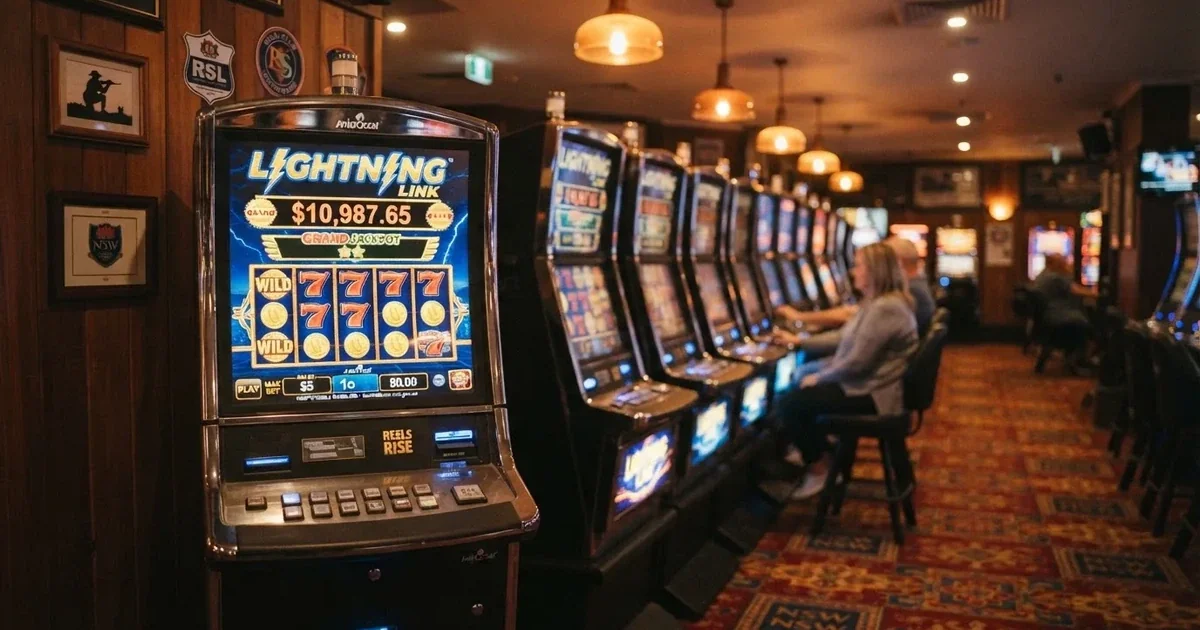
What does it actually cost to play pokies in New South Wales in 2026? That is the question this page sets out to answer, because the answer splits sharply depending on which “pokies” you mean. The NSW clubs and pubs running more than 87,000 gaming machines are licensed, regulated and taxed in the open. The offshore websites styled as “online pokies” with Australian-sounding names and koala mascots are not — and the Australian Communications and Media Authority has been writing formal warnings to the operators behind them on a roughly monthly cadence through 2025 and into 2026. The comparison that matters is not casino against casino. It is licensed machine in a registered club, against the foreign website that simply borrows the word.
Current as of 29 October 2026 · Verified against the ACMA register of formal warnings and blocking requests, the NSW Independent Casino Commission media releases, and the NSW Liquor & Gaming NSW gaming-machine data.
Table of Contents
- The legal ground: why “online pokies” is not a thing for Australians
- Responsible gambling: where help actually reaches NSW players
- Payments and what “cashless pokies” actually changes in NSW
- Paytables and venues: what actually differs between NSW, SA, QLD and the ACT
- The shortlist: how the comparison is put together
- The offshore brands named by the ACMA, in detail
- The math behind the blocking rate
- What this page leaves on the table
- The fundamentals: what every NSW player should know before they walk in
- What the next twelve months hold for NSW pokies
- What the responsible-player frame looks like in practice
- Frequently asked questions
The legal ground: why “online pokies” is not a thing for Australians
The Interactive Gambling Act 2001, strengthened by the Interactive Gambling Amendment Act 2017, makes it an offence to provide online casino games — including online pokies — to a person physically in Australia. No state or territory licenses them. The Northern Territory Racing and Wagering Commission regulates 52 online bookmakers, including Sportsbet, Bet365 and Ladbrokes, but those licences cover wagering on sport and racing placed before the event, lotteries and keno. Online casino is a different product, and it is prohibited.
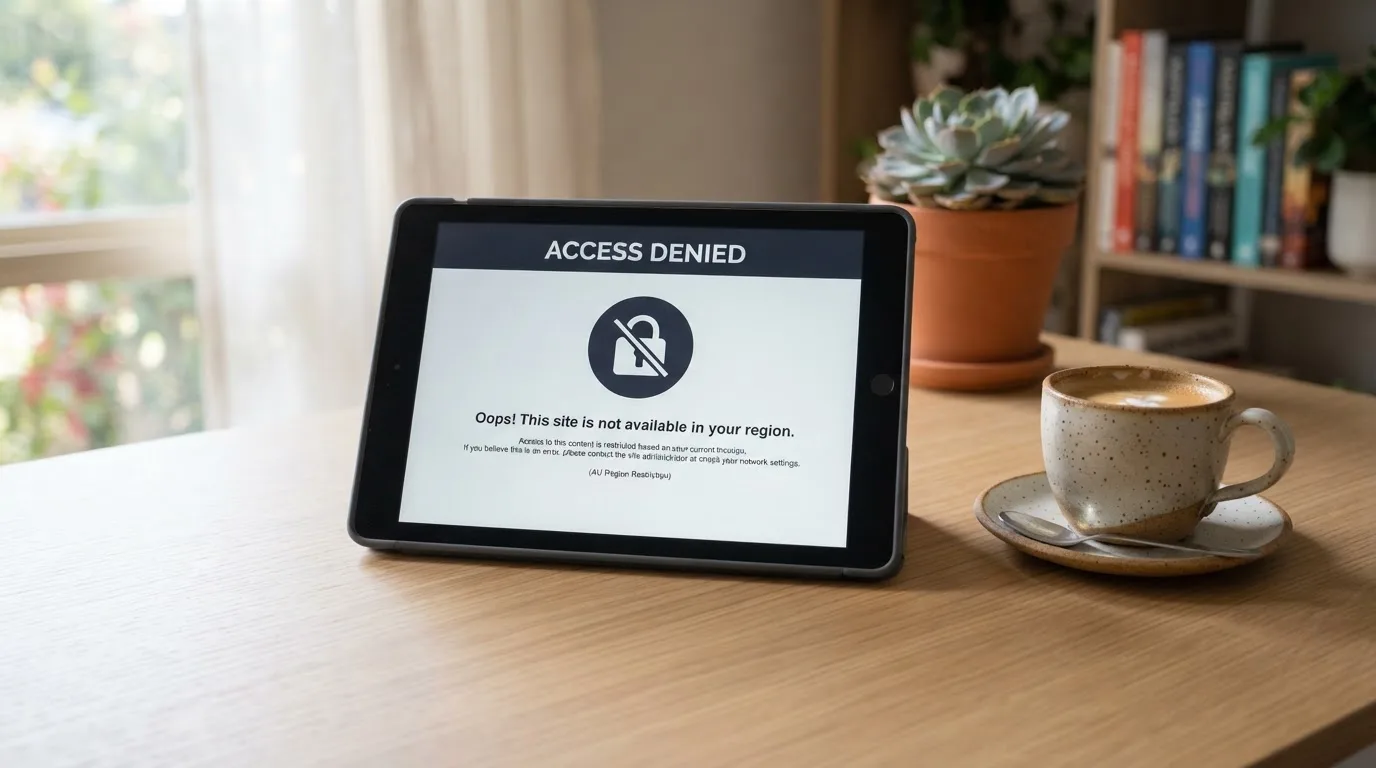
The ACMA does not chase the individual player. It goes after the provider. Since the first blocking request in November 2019 the regulator has asked Australian internet service providers to block 1,751 illegal gambling and affiliate marketing websites, and more than 230 unlicensed services have left the Australian market since the 2017 amendments took effect. In the round reported on 26 June 2026 another twelve names went on the block list — 7Signs, ChromaBet, Donbet, Duospin, Freshbet, Slots Gem, Jacks Club, Lucky Start, Pointsbetz.com, Spinrise, Vinyl Casino and Wildsino — and those were only the ones that round reached.
The legal shape matters because it is the one thing the marketing copy never says. A site presenting a Curacao-issued licence, an “Australian” web address or a kangaroo logo is not licensed in Australia. It cannot be. The page that follows is built around that distinction: the NSW venues you can walk into are one thing; the websites that mimic their vocabulary are another.
Responsible gambling: where help actually reaches NSW players
The cost question is not only about money. New South Wales gaming-machine players outside casinos lost A$8.18 billion in 2022–23, roughly A$986 per adult. NSW is not a high-roller state by accident; it is one by volume, because there are more machines in more venues than anywhere else in the country. The clubs and pubs carry 87,298 gaming machines across 2,195 venues, more than any other state. Hitting the same machine harder, in a country with this many machines, is what aggregate losses add up to.
When a player decides to stop, the routes that work are Australian ones. BetStop, the National Self-Exclusion Register, has been live since August 2023 and binds every Australian-licensed online and phone wagering service. It does not bind a pub pokies machine — that exclusion sits with the state. The National Gambling Helpline runs free, 24/7, on 1800 858 858, with online chat at Gambling Help Online. Both channels are Australian, both are free, and neither one has anything to say about a Curaçao-registered casino that ignored a self-exclusion request sent to a customer-service inbox.
For someone whose gambling has moved past the level they want to sustain, the help line is the first call and a BetStop registration is the structural one. The clubs and pubs themselves run their own self-exclusion arrangements through Liquor & Gaming NSW, which is the right venue for machine-level exclusion.
Payments and what “cashless pokies” actually changes in NSW
Cashless card technology is the NSW-specific piece that has been moving through the venue network since the late 2010s. The system links every machine play to a player card, so cash becomes optional rather than required. The change matters in three directions at once: it lets a venue enforce a venue-wide pre-commitment limit; it lets the player see, on a printed receipt or a phone app, exactly what was spent on what machine on what date; and it gives the regulator a complete machine-level data feed. None of those existed under cash.
The paytable side is the part that gets attention and is also the part most easily misread. South Australia sets a minimum gaming-machine return-to-player of 87.5% and a general maximum bet of A$5.00 outside the casino, while Adelaide Casino itself has no maximum-bet limit. NSW sits in a different regulatory camp: there is no statewide A$5 cap, but venues cluster around their own denomination floors, and the higher-stakes machines are typically placed in casino floors rather than club floors. The payout percentage conversation for NSW is therefore a conversation about where you are playing, not what state you are in.
For offshore sites, the payment story is the warning sign that the legal ground does not apply. Credit cards, credit-related products and digital currency are banned as payment for licensed Australian online wagering since 11 June 2024, with penalties up to A$247,500 for operators who take them. Legal deposit routes for Australian-licensed wagering are debit card, bank transfer, PayID/Osko and BPAY. A site asking an Australian player for a credit card or a crypto deposit is operating outside the Australian rules entirely. That fact alone is enough to put it on the other side of the line this page is drawing.
Paytables and venues: what actually differs between NSW, SA, QLD and the ACT
The machines themselves are Australian-made. Aristocrat Leisure Limited, listed on the ASX and headquartered in Sydney, is the dominant manufacturer of pokies in NSW pubs and clubs, with IGT and Konami as the other large players. The brand on the front of the cabinet tells you the manufacturer, but the paytable tells you what the venue has actually set. The same Aristocrat cabinet can sit at a 90% return-to-player in one venue and an 87% return-to-player in another — it is the venue’s choice, not the manufacturer’s.
What “pokies near me” looks like in NSW in practice
“24-hour pokies” is a phrase that returns a lot of searches and meets a much narrower reality. NSW does not have a statewide rule that forces every pub to close its gaming floor at midnight. Some registered clubs in Sydney and the regions run 24-hour gaming for their members, but most venues — particularly in residential areas — close the gaming floor in line with their liquor licence. The phrase lives online because players want to know whether the venue around the corner is open. The answer for most players, most of the time, is no. The two NSW casinos — The Star Sydney and Crown Sydney at Barangaroo — are the only large-scale, round-the-clock gaming operations in the state.
The casino floors in NSW and what the regulator has been doing
The Star Sydney is the state’s long-established casino, and Crown Sydney at Barangaroo opened in December 2020. The NSW Independent Casino Commission has had both under sustained enforcement action. In a coordinated enforcement action on 19 August 2026 the regulator fined Crown Sydney A$1.75 million and The Star Sydney A$500,000 for allowing a minor to enter each venue. On 2 June 2026 the commission announced A$10 million in total fines for The Star Sydney along with an enforceable undertaking. The pattern is not a one-off. It is a regulator that has decided the casino licence is conditional on the operator getting the basics right and is willing to spend public money making that point.
What the ACT, South Australia and Queensland look like, for comparison
Casino Canberra, in the Canberra CBD, was the first legal casino in the ACT and was built on land excised from Glebe Park under a 99-year lease. It is the smaller end of the casino market by footprint. Adelaide Casino, known commercially as SkyCity Adelaide, sits in the heritage-listed Adelaide railway station building on North Terrace, with 90 gaming tables and 950 gaming machines, and is the sole licensed casino in South Australia under the Casino Act 1997. South Australia had 11,672 gaming machines outside Adelaide Casino in 471 venues in September 2023. Brisbane’s Treasury Casino, operated by Star Entertainment Group, closed on 25 August 2024 to make way for the new Star casino at Queen’s Wharf, and The Star Brisbane began a staged opening at the A$3.6 billion Queen’s Wharf Brisbane precinct on 29 August 2024. Queensland had 21,122 gaming machines operating in 351 venues in October 2023. Across all three jurisdictions, the volume looks similar to NSW — the difference is concentration: NSW has more machines, more venues, and a longer tail of smaller clubs, while Queensland has fewer, larger venues and Brisbane carries the bulk of casino floor activity.
NSW cashless pokies: the change most venues are now running
The cashless card system is no longer a pilot. It is the default for new venue installations and is rolling out through the existing club estate. For a player the visible difference is small: the machine accepts the card the same way it once accepted a fifty, but every session is logged, every venue limit is enforced, and a national self-exclusion request is read on the next card tap. The data side is what the regulator has wanted for a long time, and it is what most of the harm-minimisation arguments now lean on.
The shortlist: how the comparison is put together
This page is not a comparative ranking of NSW venues. The reason is simple: the licensed venues in NSW are pubs and clubs that hold a gaming-machine entitlement under the NSW Liquor & Gaming NSW framework, and they differ on local factors (location, opening hours, machine mix, food and beverage offering) rather than on product. A Sydney CBD club with a high-denomination bank is a different proposition from a suburban RSL with a low-denomination floor. The comparison that earns its space is the one that names the difference, and that is what the venue sections do.
The offshore brands, by contrast, are listed because the ACMA has acted against them. They are not ranked. There is no “best” offshore site for Australians, because every one of them is operating in breach of the Interactive Gambling Act. The list below is the answer to the question “which of these names has the ACMA written to, and when,” because that is the only question the regulator’s actions let a comparison ask.
ACMA formal warnings to offshore operators marketing to Australians
| Brand | ACMA action and date | Operator named by the ACMA | Subject support |
|---|---|---|---|
| RocketPlay | Formal warning, March 2026 (earlier to Dama N.V., May 2022) | Pulsup Ltd | — |
| Level Up Casino | Formal warning, May 2022 | Dama N.V. | listings-only |
| Woo Casino | Formal warning, March 2025 | Dama N.V. | — |
| Spirit Casino | Formal warning, May 2025 | Dama N.V. | — |
| National Casino | Formal warning, July 2025 | Consolutetish S.R.L. | listings-only |
| Bizzo Casino | Formal warning, July 2025 (earlier to TechSolutions, 2022) | Consolutetish S.R.L. | — |
| Ignition Casino | Formal warning, July 2025 | Bamboo Media | — |
| Instant Casino | Formal warning, February 2025 | EOD Code SRL | — |
| Jackbit | Formal warning, April 2026 | Ryker B.V. | — |
| Casino Intense | Formal warning, April 2025 | Sterplay Holding Ltd | listings-only |
| Sky Crown | Formal warning, September 2022 | Hollycorn N.V. | listings-only |
The “Subject support” column records what external listings say about these brands — where a reputable listing carries a record on a brand, it is noted as listings-only, and where there is no such record, the cell stays empty. The empty cells are not the same as a green light: they reflect the absence of independent verification, not the presence of endorsement.
The offshore brands named by the ACMA, in detail
RocketPlay
The ACMA issued a formal warning to Pulsup Ltd over Rocketplay.com.au in March 2026. The same brand had previously drawn a formal warning to Dama N.V. in May 2022, part of a six-brand notice covering Bambet, Dazard, Level Up, Rocketplay, Wild Tornado and Cobra Casinos. The pattern — same brand, different operating entity — is the one the ACMA has been tracking since the 2017 amendments gave it the tools to act. Subject support for the brand carries no independent listing record beyond the regulator’s own action. Verdict: the ACMA has now written to the operator behind this name twice, in two different corporate vehicles, and the brand remains a prohibited product for Australians regardless of which licence stamp the site carries.
Level Up Casino
Level Up Casino was named in the May 2022 Dama N.V. formal warning, one of six brands on that notice. Subject support carries listings-only references in external industry listings. Verdict: the ACMA wrote to its operator three years ago; nothing on the regulator’s published record shows the warning has been withdrawn, and the brand is still named among Dama N.V.’s properties in industry listings.
Woo Casino
The ACMA issued a formal warning to Dama N.V. over Woo Casino in March 2025. Subject support carries listings-only references. Verdict: the same operator group, three years after the May 2022 warning, still drawing regulator action over a different brand under the same corporate umbrella. The brand is not licensed for Australians.
Spirit Casino
The ACMA issued a formal warning to Dama N.V. over Spirit Casino in May 2025. Subject support carries no independent listing record beyond the regulator’s own action. Verdict: the ACMA has written to the operator behind this brand on five separate occasions across its portfolio since 2022. A new brand under an existing operator is not a clean slate.
National Casino
The ACMA issued a formal warning to Consolutetish S.R.L. over National Casino in July 2025. Subject support carries listings-only references in external industry listings. Verdict: the brand is on the same operator’s record as Bizzo Casino, and the Consolutetish S.R.L. notice was the regulator’s first action against that particular corporate vehicle.
Bizzo Casino
The ACMA issued a formal warning to Consolutetish S.R.L. over Bizzo Casino in July 2025. Bizzo had already been the subject of a 2022 formal warning to TechSolutions (CY) Group Limited and TechSolutions Group N.V., so the brand has now been named in two notices, in two different operating-company names. Subject support carries no independent listing record beyond the regulator’s own action. Verdict: a brand that the ACMA has now written to twice over four years, in two different corporate vehicles, does not present as a low-risk choice for anyone in Australia.
Ignition Casino
The ACMA issued a formal warning to Bamboo Media over Ignition Casino in July 2025. Subject support for the brand provides no data beyond the regulator’s own action. Verdict: a relatively recent formal warning, against an operator that does not appear elsewhere on the ACMA’s published list. The regulator’s letter is the only public record.
Instant Casino
The ACMA issued a formal warning to EOD Code SRL over Instant Casino in February 2025. Subject support is limited to the regulator’s own file. Verdict: the only ACMA action on record against this brand, but it is a formal warning under the Interactive Gambling Act 2001 — the same statutory basis that supports every blocking request since 2019.
Jackbit
The ACMA issued a formal warning to Ryker B.V. over Jackbit and CasinOK in April 2026 — a single notice covering two brands under the same operator. Subject support consists solely of the regulator’s own public notice. Verdict: the most recent ACMA action among the brands listed here, against an operator that has not previously appeared on the published list.
Casino Intense
The ACMA issued a formal warning to Sterplay Holding Ltd over Casino Intense in April 2025. Subject support consists of industry listing references. Verdict: a brand that has drawn regulator attention in 2025, with independent listings that confirm its existence outside the ACMA’s file but say nothing about its standing for Australian players.
Sky Crown
The ACMA issued a formal warning to Hollycorn N.V. over its Sky Crown and Blue Leo casino services, published in September 2022. Subject support carries listings-only references in external industry listings. Verdict: the longest-dated notice on the table. The 2022 action has been on the public record long enough that the brand’s name still appears in industry listings, and the regulator has not withdrawn the original notice.
The math behind the blocking rate
The blocking-rate calculation sits at the centre of the regulator’s enforcement story, and it is the one piece of arithmetic this page offers the reader. From November 2019, when the first blocking request went out, through to the round reported on 26 June 2026, the ACMA asked Australian ISPs to block 1,751 illegal gambling and affiliate marketing websites. Spread across roughly six and a half years of enforcement, that is an average blocking rate in the order of 270 sites per year — or, at a finer grain, close to 22 sites per month when measured over the lifetime of the regime.
The arithmetic is conditional on what gets measured. The 1,751 figure counts every URL the ACMA has asked to be blocked, including affiliate-marketing pages and mirror domains, and the rate therefore reflects the regulator’s case-load rather than the number of distinct operators. A single offshore casino group can account for several blocked URLs across mirror sites, regional front-ends and tracking pages. The rate is what the ACMA is willing to spend political and operational capital on, and the cost of an enforcement action has been falling as the regulator has built up its standard-issue blocking-request template. The headline number — that more than 230 unlicensed gambling services have left the Australian market since the 2017 amendments — is the second figure the same machinery produces. Both are slow-moving, but they are moving.
For a reader, the rate matters because it changes what an offshore site represents over time. A site that has been on the market for two years without an ACMA action is more likely to be on a future blocking list than a site that drew a formal warning in 2022, because the regulator’s record on the older brand is already public and a second notice is easier to draft than the first. The blocking rate is, in that sense, the regulator’s own production line.
What this page leaves on the table
H2 Gambling Capital’s 2025 report estimates that Australians lose about A$3.9 billion a year to illegal gambling sites, and that the share of gambling going through legal channels fell from 74% in 2021 to 64%. The figure is the one that should sit in the front of any reader’s mind, because it is what the ACMA’s enforcement work is trying to reverse. The legal channels in NSW are the clubs, pubs and the two casino floors. The illegal channels are the offshore websites this page has spent its middle section naming. The cost question is not “which casino pays out the most.” It is “which side of the line are you on, and what protection do you have if the answer goes wrong.”
The 2017 amendments strengthened the Interactive Gambling Act because the previous regime gave the regulator little to act on. The result, measured in blocking requests and formal warnings, is the production line described above. For a player looking at a “pokies” page with a Curacao-issued licence and an Australian-sounding domain, the regulator’s record is the only public, dated, source-named list of which operators have already been written to. The list is on this page.
The fundamentals: what every NSW player should know before they walk in
A few facts hold for every licensed NSW venue, and repeating them is the point. Minimum age is 18. Every licensed venue is connected to Liquor & Gaming NSW’s regulatory framework, with venue-level self-exclusion available on request. Cashless card technology is rolling out across the estate, so the venue will be able to read a player’s pre-commitment limit at the card reader. The cashless rollout is the part that has changed most over the past five years, and it is the part that gives the player the most control they have ever had on the floor. The Star Sydney and Crown Sydney are the only NSW venues that operate as full casinos, and both are under active enforcement by the NSW Independent Casino Commission.
Offshore sites are a different story. The ACMA has written to the operators behind eleven brand names in the table above, and a player who arrives at any of those sites from inside Australia is using a service the regulator has already decided is prohibited. A credit card deposit or a crypto deposit request is the strongest single signal that the site is not operating under Australian rules. A licence displayed on the site footer is not a substitute, because no Australian state or territory issues licences for online casino games.
What the next twelve months hold for NSW pokies
The Interactive Gambling Amendment (Gambling Reform) Bill 2026 passed Parliament on 19 August 2026. Its advertising and inducement measures commence 1 January 2027, so they are law with a start date, not yet in force on a 2026 page. The shape of the change is that offshore operators will find it harder to advertise to Australians through mainstream channels, and licensed Australian operators will face new restrictions on bonus messaging and inducements. For a player, the practical effect is that the gap between what the licensed market is allowed to say and what the offshore market is willing to say narrows — which the regulator has been trying to do since 2017. The blocking rate, the formal warnings and the advertising reform are three different tools aimed at the same outcome.
For NSW venues specifically, the rolling cashless card programme continues. The venue-by-venue pace is set by Liquor & Gaming NSW and the individual club’s installation budget, but the direction is set. By the time the 2027 advertising measures are in force, the cashless infrastructure will be the part of the NSW pokies experience that has changed most under the regulator’s current enforcement regime.
What the responsible-player frame looks like in practice
The responsible-gambling conversation for NSW pokies is one that starts with the venues the player can actually visit. The clubs and pubs that hold NSW gaming-machine entitlements are connected to Liquor & Gaming NSW’s self-exclusion framework and to the National Gambling Helpline on 1800 858 858. BetStop, the National Self-Exclusion Register, is the structural lever for licensed Australian online and phone wagering. The offshore sites this page has named are connected to none of these.
For a player with a budget question, the right starting point is the venue, not the website. The licensed venues publish their machine return-to-player at the machine; the offshore sites publish marketing copy that does not survive contact with the ACMA’s record. The licensed venues take PayID, BPAY and bank transfer through their licensed wagering providers, where those products are available; the offshore sites often take credit cards and crypto, both of which are banned as payment for Australian-licensed wagering. The pattern holds in every direction.
For a player whose gambling has moved past the level they want to sustain, the right next step is the helpline, then the self-exclusion registration, then the venue-level exclusion. None of these require a casino account, a credit card or a crypto wallet. They require a phone call.
Frequently asked questions
Which venues in New South Wales are licensed to operate pokies?
NSW gaming-machine entitlements are held by pubs and registered clubs under the Liquor & Gaming NSW framework, with 87,298 machines across 2,195 venues in June 2023 — more than any other state. The two NSW casino floors are The Star Sydney and Crown Sydney at Barangaroo. Both casino operators hold separate licences issued by the NSW Independent Casino Commission, which has had both under active enforcement action through 2026.
Are pokies in New South Wales available around the clock?
Most NSW pubs and clubs close their gaming floor in line with their liquor licence. Some registered clubs, particularly in Sydney and regional centres, run 24-hour gaming for their members. The two NSW casino floors are the only large-scale, round-the-clock gaming operations in the state. A search for “24-hour pokies near me” most often returns registered clubs that hold extended gaming hours as part of their venue licence, not pubs running through the night.
What identification do venues in New South Wales require before letting someone play pokies?
A player must be 18 or older and must produce identification on entry to the gaming floor. The cashless card rollout links every machine play to a player card, which is itself tied to verified identification, so the venue has both the entry-time check and the per-session log. For the casino floors, the identification requirement is enforced under the NSW Independent Casino Commission’s licence conditions, including recent enforcement around minors entering gaming floors.
Can visitors to New South Wales use self-exclusion schemes at local pokies venues?
Yes. The NSW self-exclusion arrangements are run through Liquor & Gaming NSW and apply to the gaming floors of licensed venues, regardless of whether the person seeking exclusion is a resident or a visitor. BetStop, the National Self-Exclusion Register, applies separately to Australian-licensed online and phone wagering services. Offshore casino sites are not connected to either scheme.
How does the payout percentage on New South Wales pokies compare with other Australian cities?
South Australia sets a minimum gaming-machine return-to-player of 87.5% outside the casino, while Adelaide Casino itself has no maximum-bet limit. NSW does not operate under the same A$5 statewide maximum that South Australia does, but venue-by-venue denomination floors are common. The casino floors in NSW carry higher-denomination machines than the club floors, and the per-machine return-to-player is set by the venue, not the manufacturer. The brand on the cabinet tells you the maker; the paytable screen tells you the venue’s choice.
Is it legal for an online casino to advertise ‘pokies’ in New South Wales the same way a pub or club does?
No. Online casino games, including online pokies, are prohibited under the Interactive Gambling Act 2001 for anyone in Australia, regardless of how the site describes itself. The Interactive Gambling Amendment (Gambling Reform) Bill 2026, which passed Parliament on 19 August 2026, will tighten the advertising side further when its inducement measures commence on 1 January 2027. An offshore site that uses the word “pokies,” an Australian web address or a Curacao-issued licence stamp is not licensed in Australia and cannot be, because no Australian state or territory licenses online casino games.